Is thousands of pounds of camera kit really living in your spare room?
You spend a Saturday shooting a ceremony from six in the morning until the couple leave the reception. You drive home in the dark with two camera bodies, four lenses, a pair of lighting stands, softboxes, flight cases and a backdrop rolled up in the boot. Then you do it again on Sunday. Somewhere in that kit pile is tens of thousands of pounds of glass and electronics, and it lives in the spare room, or it does not quite fit, and the garage has a damp problem you keep meaning to sort out.
If you are looking at self storage as a home for that kit, this page is for you. We will not send you toward climate control, because we do not offer it and we will not sell you something we do not have. What we will do is tell you exactly what a clean, dry and secure unit with smart entry from 6am actually gives you, and what it asks of you in return.
Is a self storage unit right for your camera kit?
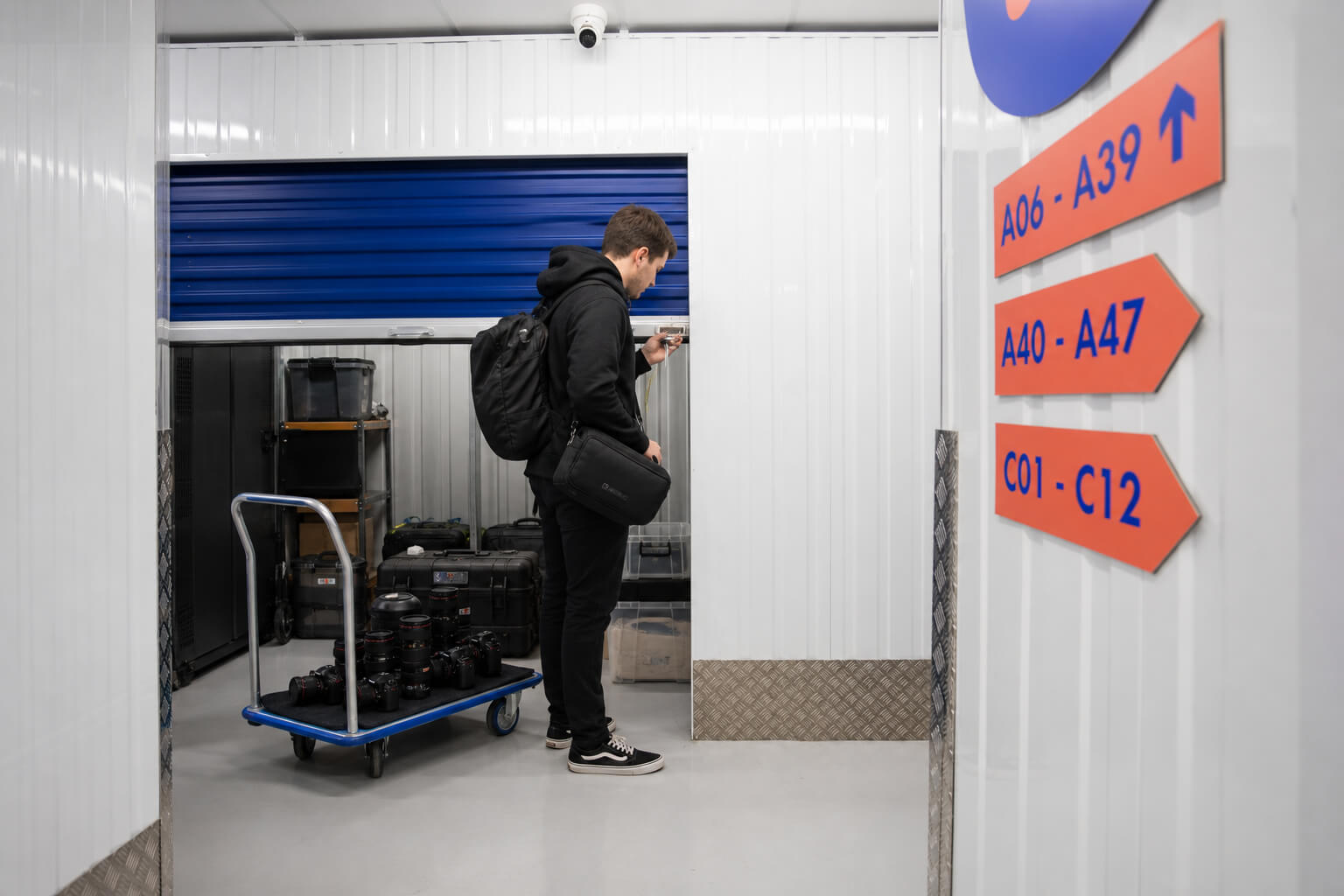
Yes. A self storage unit is a practical and secure home for professional photography equipment, and the vast majority of wedding shooters keep their kit in good condition in one with nothing more than basic preparation. The honest boundaries are these: you control the space, you are the only one who handles your gear, and the unit is not a managed photo lab or a climate-controlled studio. It is a clean, dry and secure room that holds your kit safely between shoots.
When home runs out of safe space
Most photographers hit the point where the spare room is full. A growing body count, accumulated lenses, a set of light stands, a backdrop stand with three rolls, flight cases that take up half the floor. The kit that pays the bills has nowhere sensible to live.
A garage feels like the obvious answer until you stand in it in November and feel the cold coming through the walls. Damp garages and valuable glass are a bad combination, and you already know that. A self storage unit is a proper building with proper floor space, dry walls, and a door you lock with your own padlock. It does not have a spare bed in the corner and it is not open to the rest of the household.
What you can and cannot expect from a self storage unit
A good self storage unit gives you a clean, dry and secure space that you control entirely. What it is not is a managed service. Nobody is checking on your gear, dusting it off, or monitoring the atmosphere inside. That responsibility sits with you, which is as it should be.
The one thing you may have seen talked about across photography forums and storage comparison sites is climate control. Almost every competitor will recommend it as the default. We will say this plainly: climate control is a managed regulation of temperature and humidity. Wigwam units are clean, dry and secure. They are not climate-controlled, and we will not tell you otherwise. For most kit, stored properly, that is completely sufficient. The section below explains why.
Keeping kit dry without climate control
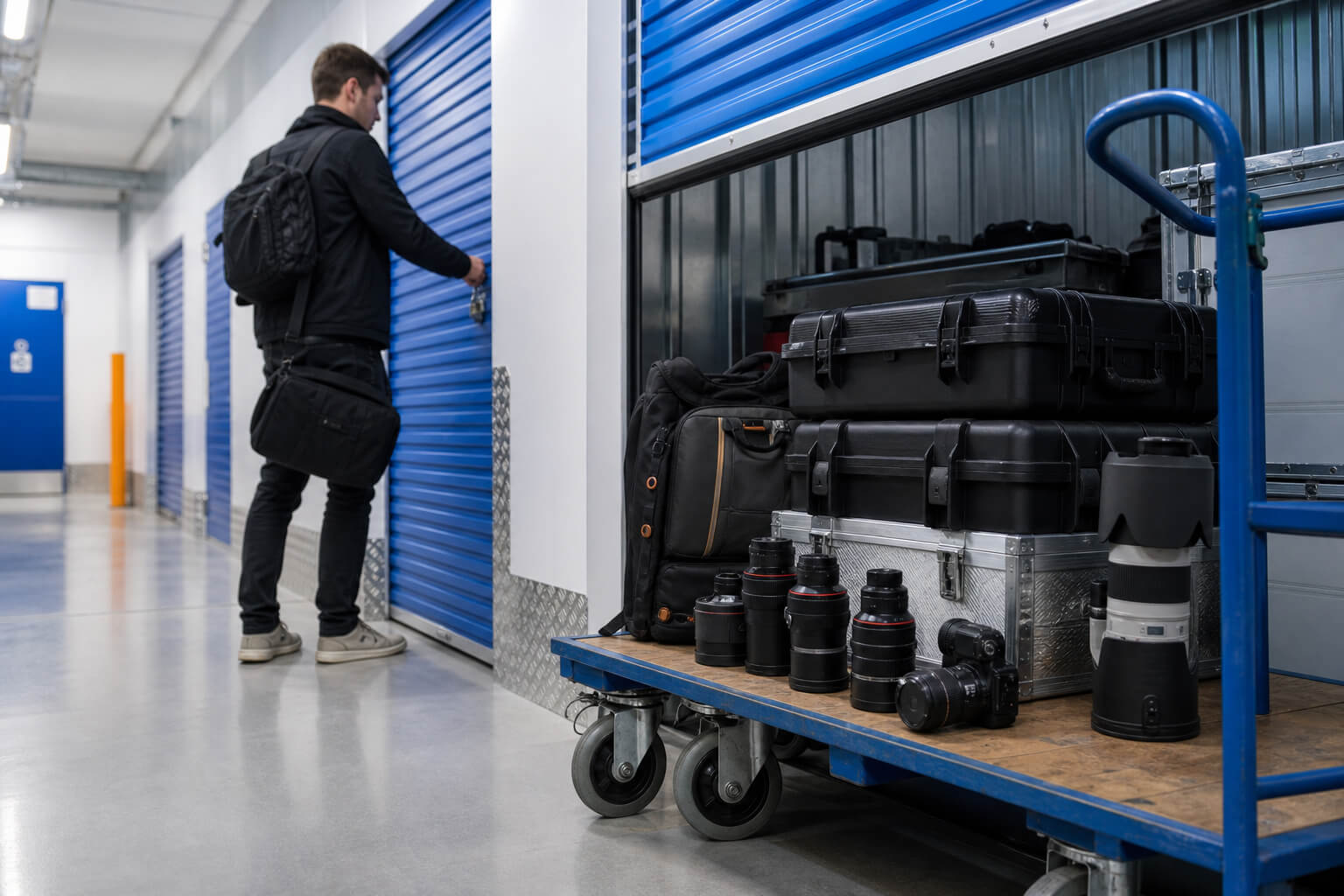
The short answer is that a clean, dry unit plus the right preparation does the real work. The longer answer follows, but if you are scanning: damp enters through inadequately protected gear, not through the walls of a dry unit.
Why clean, dry and secure does the real work
Lens fungus is a genuine risk in damp environments. Photography forums and storage comparison sites make a lot of it, and the fear is understandable when you are talking about L-series glass or specialist wedding primes. But the origin of the problem is almost always one of three things: moisture already present on the glass when it was stored, a soft bag allowing condensation to collect, or a genuinely damp environment.
A dry unit solves the third problem completely. The first two are in your hands, and the section below covers both. Clean, dry and secure is the verified claim for our units, and it means exactly that: no damp walls, no standing water, no environment that creates the conditions for fungal growth. A camera body sitting in a hard case with fresh desiccant inside a dry unit is not at meaningful risk.
One more honest note: the RSA Self Storage Customers’ Goods contents cover that applies at Wigwam units excludes atmospheric and climatic damage. That is a standard exclusion and it is honest. It also reinforces the message that the preparation you put in before the door closes is what protects your glass.
Hard cases, desiccant and elevating gear off the floor
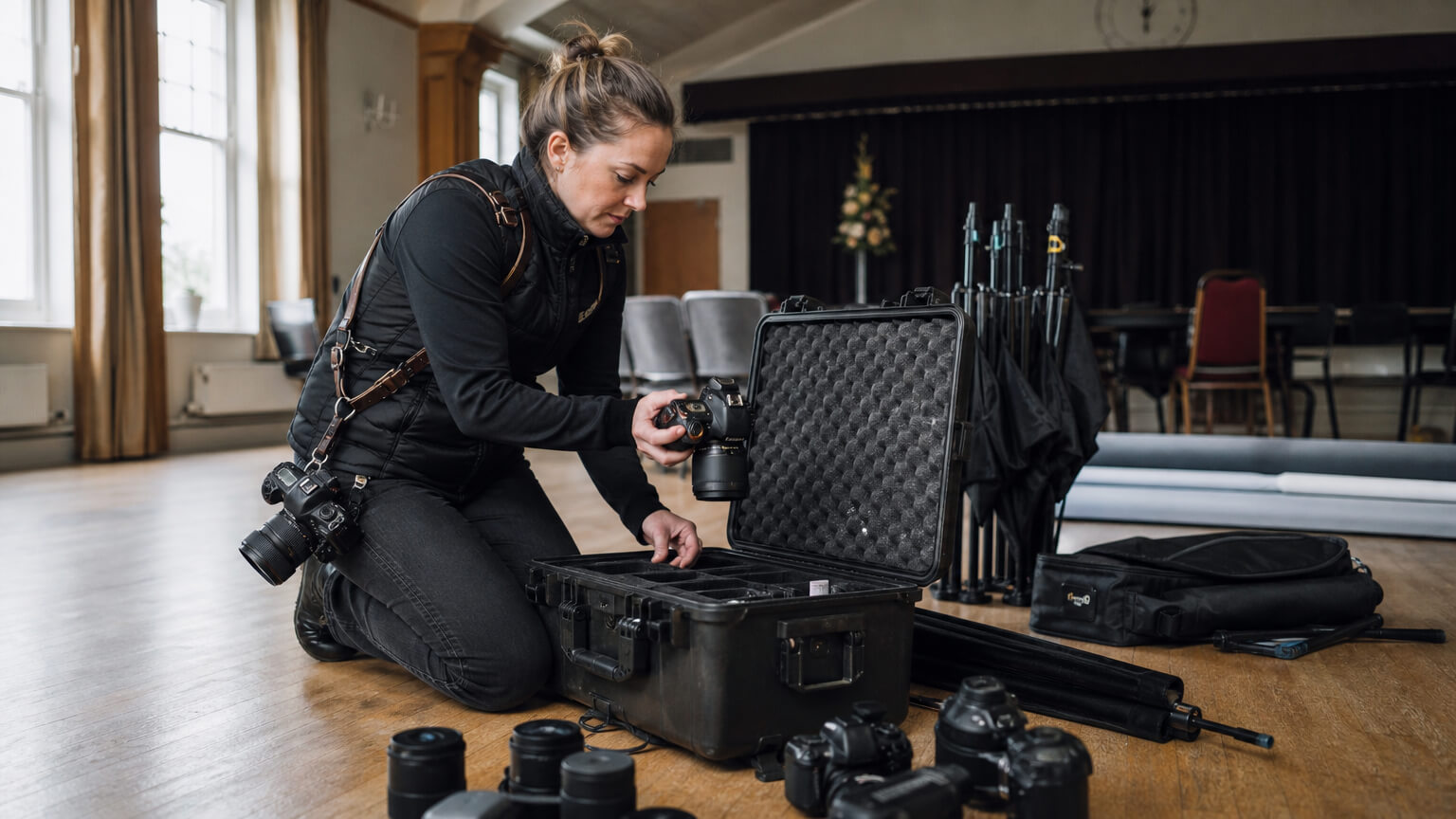
If you use hard cases already, you are most of the way there. A hard case (Pelican, SKB or equivalent) forms a sealed environment around your gear that is independent of the storage unit around it. Add fresh silica gel desiccant sachets inside each case before you store. Replace them every few months or whenever you notice they have changed colour if you use indicating beads.
Keep everything elevated off the floor. Put gear on shelving units or, at minimum, on a pallet. Concrete floors are cooler than ambient air and moisture tends to settle at floor level. This is simple and it makes a real difference.
If you are storing for longer periods between seasons, loosen strap buckles on bags, leave case latches unclipped if they are in a sealed box already, and allow a little air movement rather than compressing soft materials against each other.
Are camera dry cabinets worth it?
A dry cabinet is a sealed box with a controlled dehumidifying element inside. For photographers with very high-value glass, particularly long telephoto primes or specialist lenses used only a few times a year, putting a dry cabinet inside a dry unit is a belt-and-braces approach that makes sense.
It is not required. A dry cabinet is a photographer’s choice for their own kit management, not something Wigwam supplies or recommends as a substitute for proper preparation. If you have a collection that justifies the outlay, it is a sensible addition. If you have two bodies and four lenses in hard cases, fresh desiccant and a shelf are genuinely sufficient.
How to prepare your gear before storing
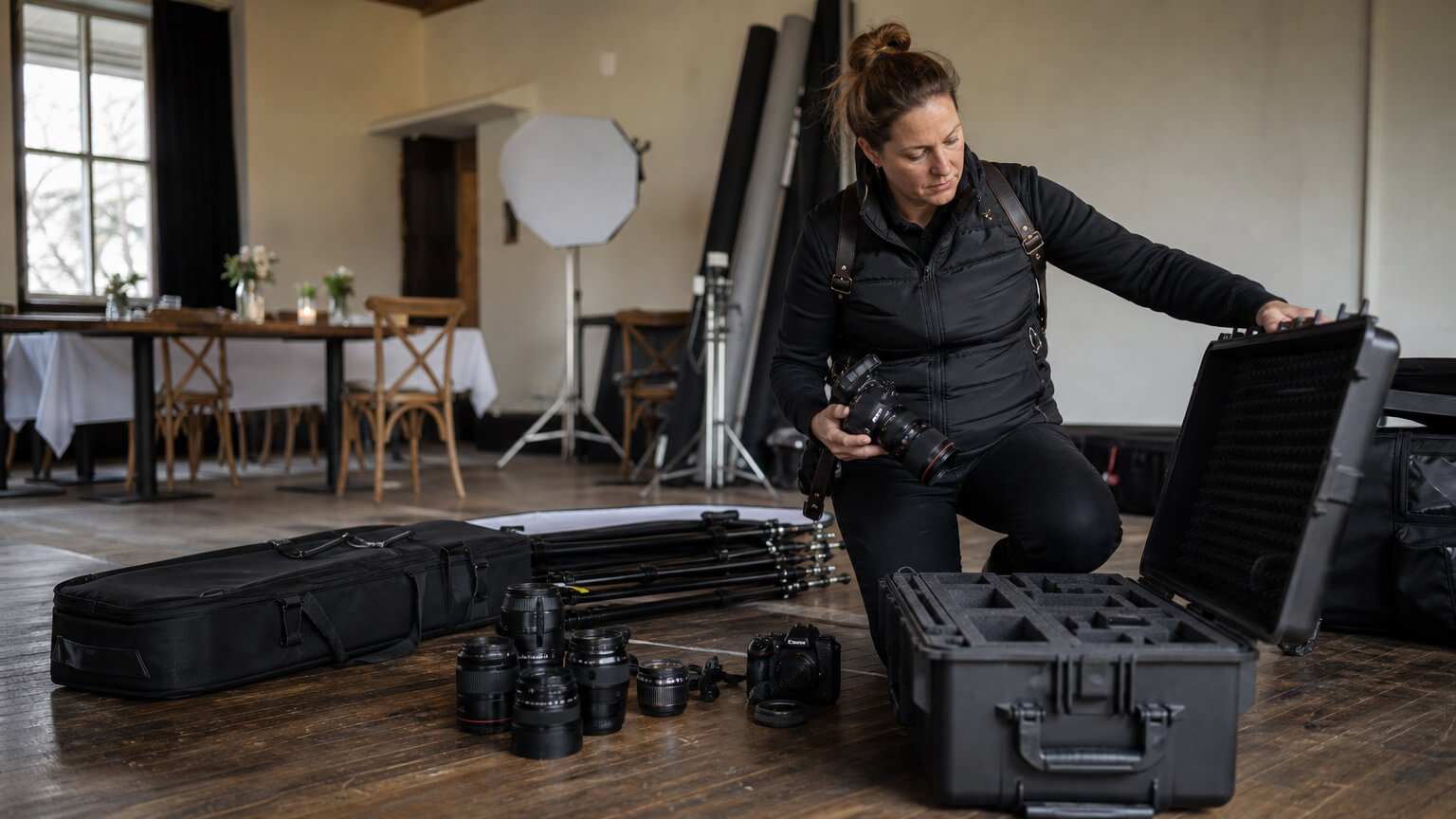
Before anything goes into the unit, five minutes of preparation makes a material difference. Remove. Clean. Pack. Label.
Remove batteries and memory cards
Battery leaks are rare, but they do happen. A leaking battery inside a body body-cap is a preventable loss. Take batteries out of all bodies, flashes and triggers before storing. Pop them in a labelled zip bag and take them home, or store them separately in a cool dry draw at home. SD cards, CF cards and CFexpress cards come out too. There is no reason to leave active media in a stored body, and removing them protects against data corruption from temperature variation over an extended period.
Clean bodies and lenses before they go in
Organic material is what mould needs to grow. A smear of dust and moisture on a lens barrel or a body grip is all it takes. Wipe everything down before it goes in. Use a proper lens cloth on glass and coatings. Give body grips a pass with a lightly damp cloth and let them dry fully before packing. A fungal bloom on a lens seal six months later is almost always the result of something organic going in on the glass.
Clean kit stores well. Kit that goes in dirty carries its problems with it.
Pack in flight cases and label discreetly
Hard flight cases are the right container for valuable glass and bodies. Do not store valuable kit in soft bags inside the unit. Even if your storage environment is dry, a hard case gives you an additional layer of physical protection against anything that might shift, fall or be knocked.
When it comes to labelling: do not advertise what is inside. Write something functional and plain on the outside of a case. “Photography equipment” tells any passing stranger exactly what to target. A case number or a project reference is enough for you to know what is where. Keep the branding off the outside.
Security: what an unmanned, alarmed site means for you
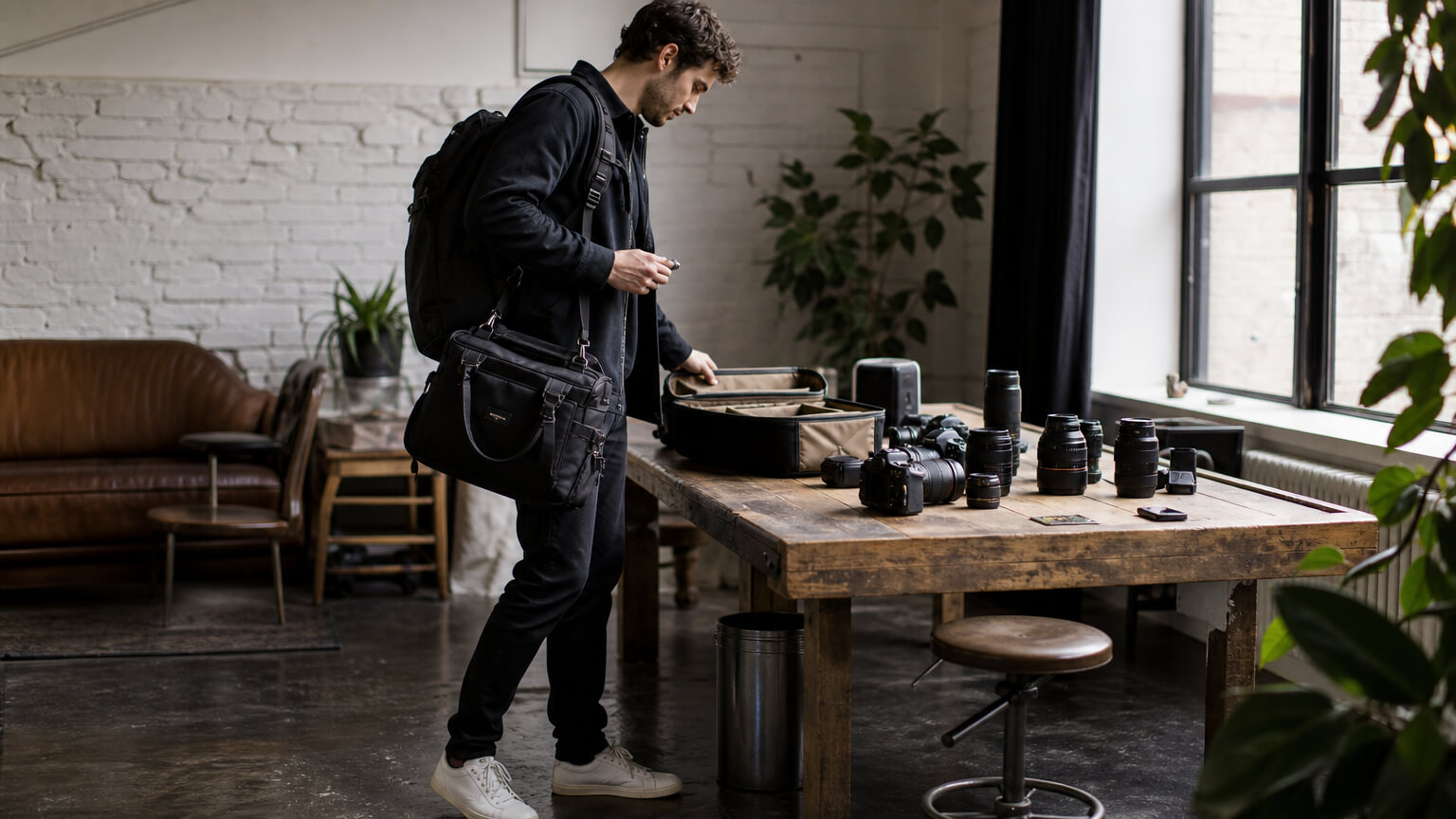
Here is the security fact that matters most for a photographer: you are the only person who handles your kit. Not a member of staff, not another customer, not a delivery driver. You.
Individually alarmed units and smart entry
Each unit at Wigwam is individually alarmed. This is a specific and meaningful differentiator. If someone opens your unit without your authority, an alarm sounds on that unit specifically, not a general site alarm that covers the whole building. Combined with smart entry to the site itself, you have layered access control from the front gate to your own padlock.
Access is by smart entry, available from 6am to 10pm, seven days a week. Those hours cover every plausible shooting schedule, including an early-morning ceremony run on Friday or a late Sunday return. We do not offer 24-hour access, and we will not claim otherwise.
Why an unmanned site can be the safer choice
A staffed facility has more people moving through it. Staff members access storage corridors for legitimate reasons, contractors visit, other customers are around. An unmanned site changes the equation. The only people accessing the site are customers using their own units. Wigwam does not have a staff team on-site managing goods, taking deliveries, or moving items around. Your unit is yours, and the only person with a key is you.
For a photographer whose kit is their livelihood, this matters. The fewer hands near the gear, the better.
Discreet, unbranded packing
The point was made in the section above, but it is worth repeating here in the security context. Discreet labelling reduces risk. A flight case with a major camera brand logo on the outside is advertising. A plain case with a number or code on the handle is not. Take the brand stickers off if they are removable. Travel photographers have known this for years; it applies equally inside a storage unit.
Insurance: declaring the real value of your kit
Contents cover at Wigwam is not optional. You either take the RSA Self Storage Customers’ Goods policy offered as part of your storage arrangement, or you provide evidence of your own contents insurance that covers your kit in a self storage environment. There is no uncovered middle ground.
The RSA Self Storage Customers’ Goods option, or proving your own cover
The RSA Self Storage Customers’ Goods policy is available to all Wigwam customers. It is a named policy, not a generic add-on, and it covers the goods you declare when you move in. Full details are on the contents protection page. We are signposting only here: if you have your own professional equipment policy that extends to off-site storage (many photographers do, through specialist photography insurers), you can provide evidence of that instead. Talk to your insurer to confirm the wording covers kit in a self storage unit specifically.
New for Old, the excess and what theft cover requires
The RSA policy is New for Old. If a body or lens is stolen and a claim is settled, you are looking at replacement cost rather than depreciated value. The excess is £50.
Theft cover requires forcible entry. If your unit padlock is defeated by cutting or your unit door is forced, that is covered. If you leave a unit unlocked and something goes missing, that is a different situation. Lock your unit properly every time you leave. Use a quality closed-shackle padlock on the hasp.
As noted above, atmospheric or climatic damage is excluded from the policy. This is standard and it is honest. It is also another reason the preparation steps in this article matter: you are the person managing the environment inside the case, and the policy is designed around physical loss and damage from identifiable causes.
Declaring full replacement value and why underinsurance is proportional
This is the one that catches people out. The value you declare when you start your storage arrangement is the value the policy is based on. If you declare half the true replacement value of your kit and you lose everything, you recover proportionally. Half the declared value, half the payout.
Declare the genuine current replacement cost of everything in the unit. That means bodies, lenses, flashes, triggers, lighting stands, softboxes, flight cases, backdrops, and anything else going in. Do not underestimate to reduce the premium. The maths on underinsurance is unforgiving and entirely avoidable.
For advice on your specific situation, speak to your broker or insurer directly. The contents protection page gives you the policy overview. A jurisdiction note: these policy terms are governed by English law, and readers in Scotland and Northern Ireland should verify that the RSA Self Storage Customers’ Goods policy applies in their jurisdiction and confirm the position with their own broker or solicitor.
Ready to get a quote? Tell us what you need and we will find the right size unit near you. Start at quote.wigwamstorage.co.uk.
What size unit do you need?
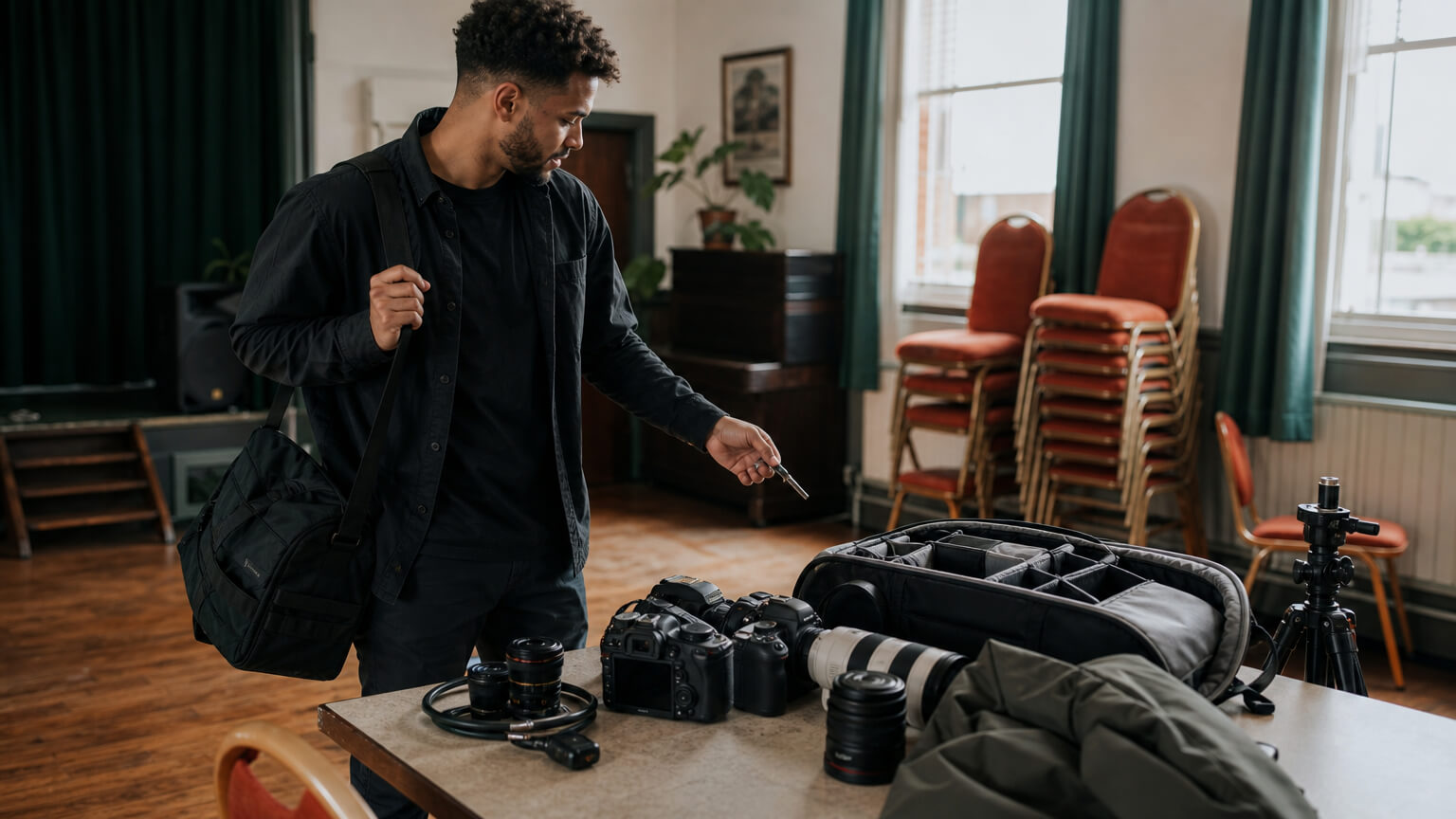
The range runs from a large locker for a compact kit to a small room for a full commercial setup with stands, backdrops and multiple flight cases. A mid-season working kit typically lands in the 25 to 35 square foot range.
From a locker for bodies and lenses to a small room for stands and backdrops
A semi-professional shooter with two bodies, three or four lenses, a couple of bags, and basic accessories can often work with a large locker or a 25 square foot unit. Everything sits on a shelf, everything is accessible, and you are not paying for floor space you do not need.
A working wedding photographer with a full kit will likely need more room. Two or three flight cases for bodies and glass already take up floor space. Add a pair of lighting stands, one or two softboxes, a backdrop stand and rolls, a step ladder, and a second set of bags, and you are looking at 50 to 75 square feet for comfortable access without stacking everything to the ceiling and moving it all every time you need the stands.
The pricing reference page at wigwamstorage.co.uk/how-much-is-self-storage-in-the-uk gives you a cost guide without us quoting specific rates here.
How to estimate before you book
The simplest approach is to list every item by its footprint. A flight case for two bodies and four lenses takes up roughly the same floor space as a small suitcase. A lighting stand in a bag is about the length of a rolled yoga mat. Work through your kit and roughly sketch out the floor area it would need if you laid it all flat. Then add 30 percent for comfortable access.
If you are uncertain, contact the team before committing. Getting the size right at the start is easier than upsizing mid-season. You can also start the quote process at quote.wigwamstorage.co.uk and talk through what you have.
Getting your gear out for a shoot: access and acclimatisation
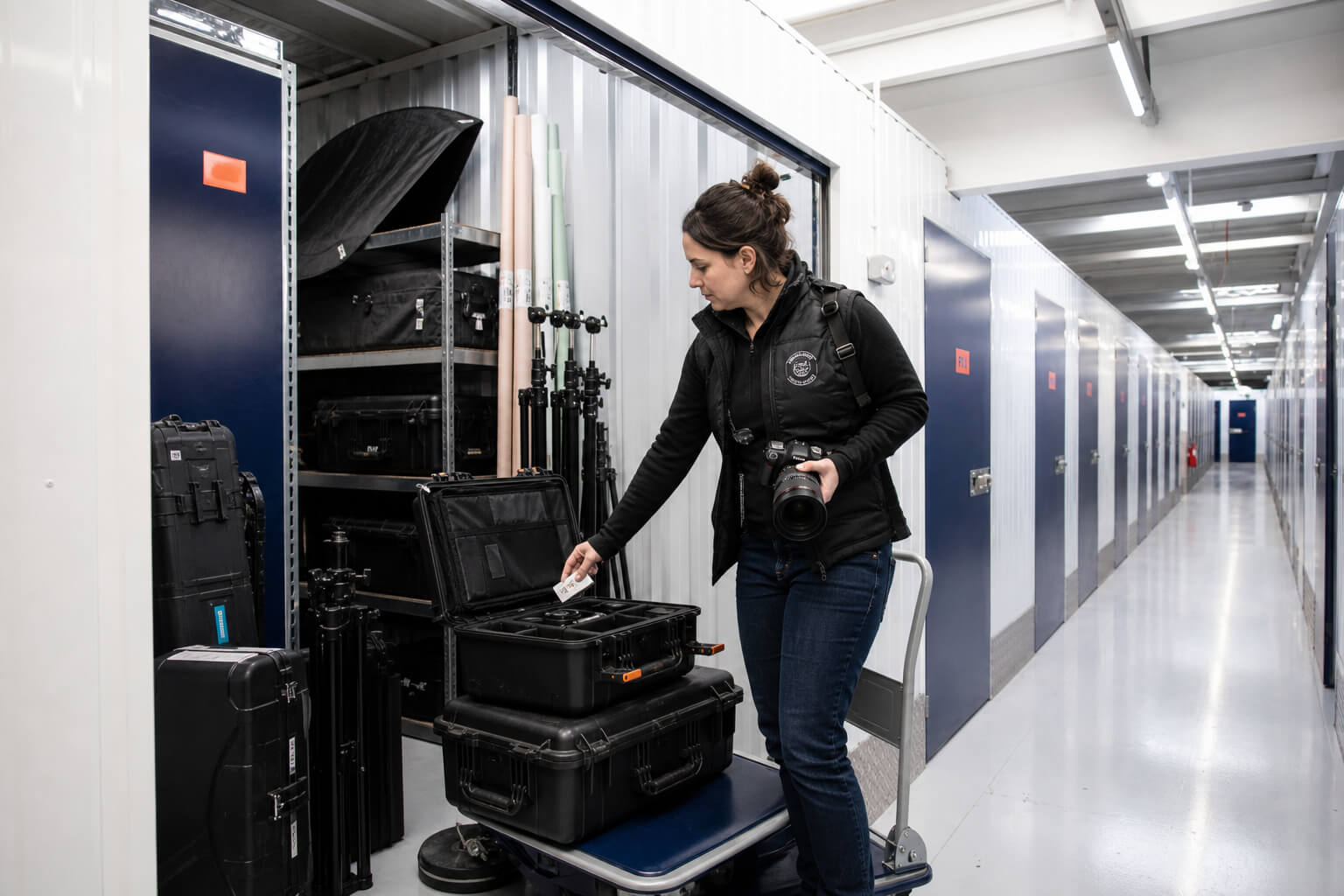
Access hours are a serious consideration for a wedding photographer. The answer at Wigwam is straightforward: smart entry from 6am to 10pm, seven days a week.
Smart entry from 6am to 10pm, seven days a week
If you have a ceremony starting at eleven in the morning and you want to collect kit at seven, you can. If you have a Saturday evening reception that runs late and you want to drop everything back at the unit on Sunday morning, you can do that too. Access is seven days, 6am to 10pm, by smart entry. We do not offer 24-hour access, and we will not tell you otherwise.
That six o’clock opening is a specific and practical thing for this audience. It covers early ceremonies and early travel. No negotiating with a keypad that does not open until nine.
Letting gear acclimatise before a shoot
A unit that has been sealed for a week may be a few degrees cooler than the ambient air outside, particularly in summer. If you open a camera body directly into warm humid air, condensation can form on cold glass surfaces. It is the same effect as taking your phone out of the fridge.
The solution is simple. Open your cases in a transitional space, the boot of the car, a hallway, a shaded outdoor spot, for 20 to 30 minutes before you bring the gear into a warm room or humid outdoor setting. Let the temperature equalise before you open a lens cap. It takes almost no effort and it removes the risk entirely.
Couriers and deliveries: who needs to be present
Wigwam sites are unmanned. There is no reception team to take in deliveries, sign for parcels, or hold gear on your behalf. If a courier is delivering something to your unit, you or someone from your own business needs to be there to receive it in person. This applies whether it is a newly purchased lens, a hire item coming back, or a package from a client.
Plan deliveries around times when you can be present. Wigwam cannot accept or sign for goods on a customer’s behalf.
Your nearest Wigwam locations
Our UK market-town locations sit within reach of some of the busiest wedding circuits in England. That is not a coincidence. Market towns are where a lot of the work happens, and having a unit close to where you shoot means shorter transit between pickup and venue.
Sites near the UK’s wedding-circuit towns
Wigwam Self Storage Bath in Somerset is convenient for one of the UK’s most active wedding markets, with a dense cluster of country houses, hotels and gardens within a short radius. Bath is the kind of location where a Friday morning pickup before a ceremony outside the city makes practical sense.
Wigwam Self Storage Lincoln in Lincolnshire covers the east Midlands circuit, with a good spread of estate and manor venues across the county.
We also have locations serving the Reading Berkshire area, Cheltenham Gloucestershire and Marlow Buckinghamshire, all of which are well placed for the venues and circuits those towns connect to. For the full list and to find the site nearest to you, the locations hub is the right place to start.
Terms worth knowing before you start
The minimum stay is two weeks. That is the starting point for any storage arrangement with Wigwam.
There is no deposit. If you leave early and have paid ahead, unused days are refunded after you give 14 days’ notice, once you have vacated the unit and your account is settled.
These are plain, professional terms. Full details are in the terms and conditions.
Get a quote
If you have kit that deserves a proper home between shoots, a clean, dry and individually alarmed unit with smart entry from 6am is a straightforward solution. No climate-control upsell, no long tie-in, no staff handling your gear.
Get a quote for the right-sized unit near you at quote.wigwamstorage.co.uk.
Frequently Asked Questions
Yes, you can authorise another person on your account so they can collect or drop kit using smart entry. This is a common request from photographers who work as a pair or who send an assistant ahead to a venue. The way it works is that the authorised person gets their own access to the site within the 6am to 10pm window, seven days a week, and they handle your unit the same way you do: padlock off, load the van, padlock back on.
A few honest things to weigh first. The person you authorise has the same access you do, so only add someone you genuinely trust with tens of thousands of pounds of glass. You remain the account holder and the responsible party, which matters for the contents cover too: the value you declared is what is protected, regardless of who is physically in the unit on a given morning. If your assistant is collecting kit you have hired in, or kit that belongs to them, be clear between yourselves about who carries the insurance for what.
Set this up when you book or by contacting the team, rather than handing over your own access credentials. That keeps the access log clean and means you can remove someone later without disrupting your own entry. The support team can talk you through how authorisation works on your account. They handle the storage side, not your business arrangements with a second shooter, so the working relationship between you two is yours to sort out.
Drop it back the next morning instead. Access runs 6am to 10pm, seven days a week, so there is no 24-hour return slot, and a wedding that runs late is a normal part of this work. The practical answer is to keep the kit secure overnight wherever you are, at home or at the venue, and return it to the unit when the site opens at six the next day. Nothing about a late finish creates a problem with your storage arrangement.
It is worth planning your gear handling around those hours rather than against them. If you know Saturday will run late, you have two clean options: collect everything before the unit closes on Saturday evening and keep it with you overnight, or leave the bulk of the kit in the unit and only take what the job needs. The 6am opening is the genuinely useful end of the window here, because it covers the early Sunday return after a late Saturday.
One point on overnight kit at home: your storage contents cover applies to goods in the unit, not goods sitting in your car or spare room. If your gear is regularly away from the unit overnight, check that your own professional equipment policy covers it in transit and at home. That is a question for your insurer, not for us. We signpost the cover that applies inside the unit and leave the wider policy questions to the people qualified to answer them.
You can access and organise your kit inside the unit during the 6am to 10pm window, but a storage unit is not a studio or an editing room. There is no power socket, no lighting beyond the site’s own, no water, and no heating. You can open cases, repack a van, swap lenses between flight cases and generally manage your inventory, which is exactly what most photographers do on a restock visit. What you cannot do is set up to work in there for the day as if it were an office.
If your routine is collect, pack, and go, the unit suits that perfectly. Pull the cases you need for the weekend, check them over, load the van and head off. The clean, dry, secure environment is fine for handling gear in for short stretches. For anything that needs power or a proper bench, do that at home or at a studio and use the unit purely as the secure home your kit lives in between jobs.
This is also worth bearing in mind for charging batteries or running any electrical kit: there is nowhere to plug in. Take batteries home to charge, as the preparation section recommends, and keep the unit for storage and quick handling rather than as a working base. If you are weighing up whether a unit fits how you actually operate, the team can talk through access and what the space does and does not offer before you commit.
It may well be, but that is a question for your accountant, not for us. For a self-employed photographer or a limited company, the cost of storing equipment used wholly for the business is the kind of expense that is often deductible against your trading profit, in the same way van costs, insurance and kit purchases frequently are. We see plenty of working photographers treat their unit as a straightforward business overhead. What we cannot do is tell you how it applies to your specific situation, because we are a storage company and not a regulated financial adviser.
What we can give you is the paperwork to make your accountant’s job easy. We provide proper invoices for your storage, which gives you a clean record of the expense for your books. Keep those alongside your other business records and your accountant can advise on how the cost is treated.
A couple of practical notes. If you use the unit for a mix of personal and business items, the deductible portion may be apportioned, and that is again a matter for your accountant to judge. And the contents cover you take is a separate line: declare the full replacement value of the business kit you store, because under-insurance is settled in proportion. For anything beyond the storage invoice itself, speak to your accountant or a qualified tax adviser. Our support team handles sizing, access and booking, not tax planning.
You give 14 days’ notice on your current unit, close that account cleanly, and book a fresh unit at the location nearest your new patch. There is no penalty for moving on and no long tie-in holding you in place: the two-week minimum is the only commitment at the start, and after that the arrangement runs on a short notice period. When you vacate, any days you have paid beyond the notice period are refunded, and there is no deposit to reclaim once the unit is empty.
For a photographer whose work shifts geographically, this matters. Wedding circuits move, you might relocate, or you might simply find a site closer to where the bookings cluster. Because Wigwam operates across UK market-town locations, there is often a site within reach of a new patch. The locations hub lists what is available, and the team can check unit sizes at your new town before you commit.
There is no transfer of a single unit between sites, so treat it as closing one arrangement and opening another. Practically, that means giving notice on the old unit, moving your kit on a day that suits you within access hours, and starting fresh at the new location. Plan the overlap so you are not paying two units longer than the move itself takes. Get a quote for the new town at quote.wigwamstorage.co.uk and the team can line up the sizing so the changeover is smooth.