Your wardrobe and your kit bag have the same argument every six months. Whatever gets pushed to the back, into a dark, undisturbed corner, is exactly what gets ruined by the time you need it again.
If it’s woollens, cashmere or anything with fur trim, the moth risk is real, read the prep step before you pack it away. If it’s a wetsuit, boots, kit bags or anything synthetic, damp is your risk, not moths, and needs different prep. If you just need somewhere for it to actually go, skip to the real terms below.
Your Wardrobe and Your Kit Bag Have the Same Argument Every Six Months
Both swaps fail for the same reason: dark, undisturbed, sometimes-damp home spots, wardrobes, under-stairs cupboards, lofts, garages, are exactly the conditions that let damage take hold.
Why It’s Not Really a Damp Problem, It’s a Moth Problem (For Some of It)
What actually attracts moths
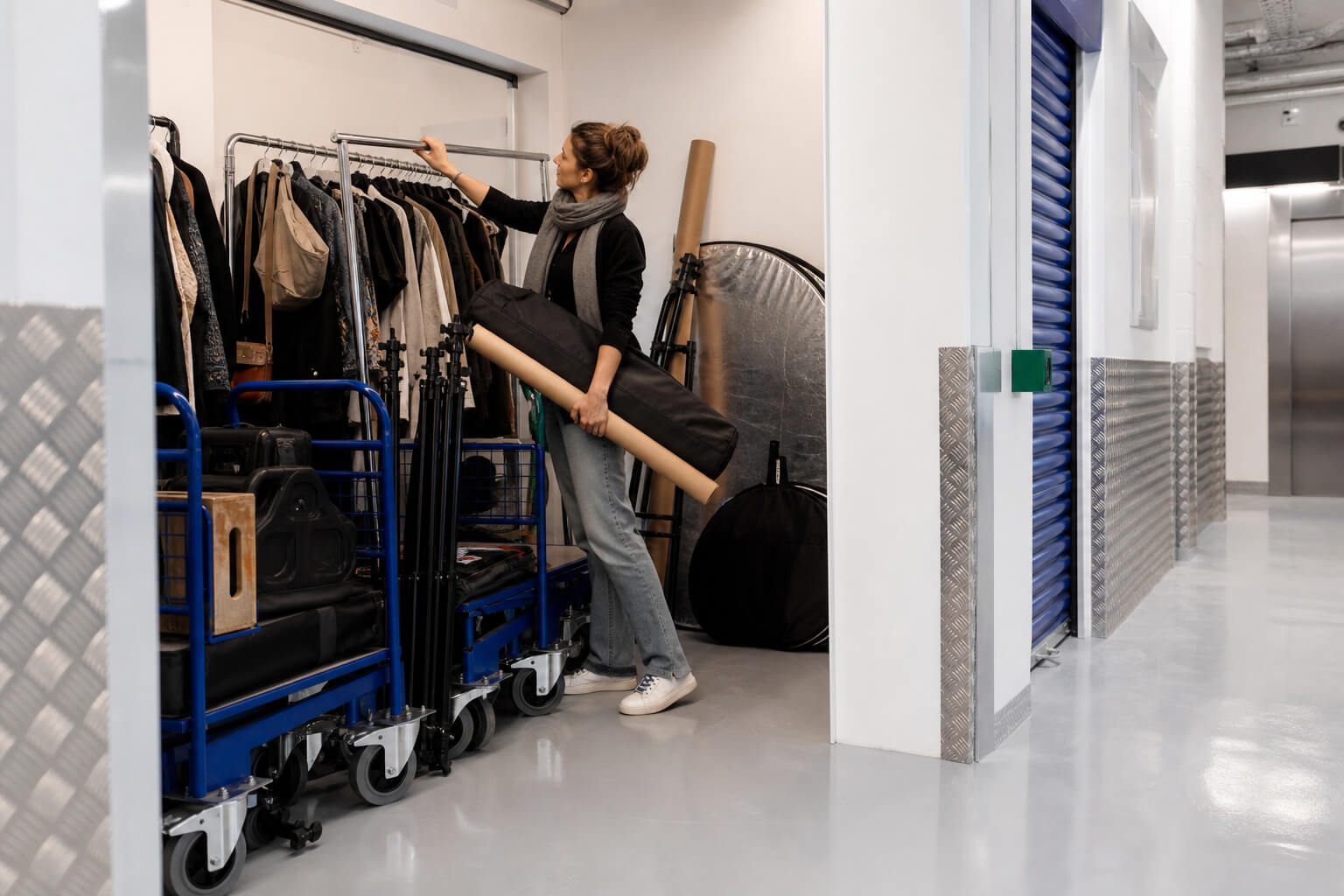
Clothes moths attack natural fibres, wool, cashmere, silk, fur and down, regardless of how dry the room feels. The Museums Association, the UK’s professional body for museums, warns that clothes moths “can cause enormous amounts of damage” to animal-derived fabrics, and recommends brushing wool or fur items before storing and keeping storage areas well ventilated. Signs of infestation include holes, particularly in folds and under collars, and visible larvae or trails on clothing.
What cotton, linen and synthetics actually need instead
These fabrics aren’t moth food. They just need to be clean and fully dry before storing, sealed but without the pest-specific prep natural fibres need.
What size unit a seasonal swap actually needs
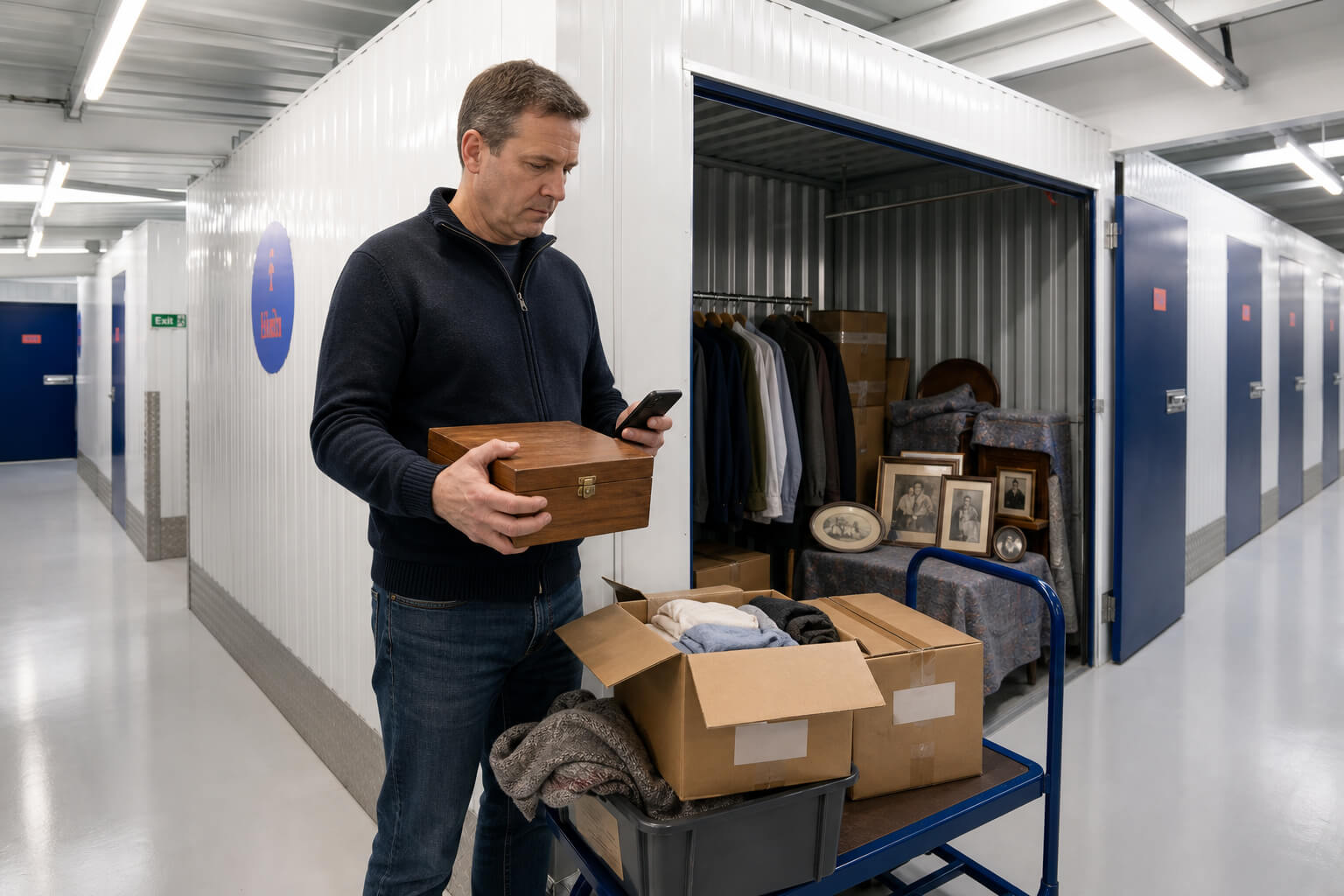
Most seasonal swaps don’t need anything like a full moving-house unit. A small unit, around 25 sq ft, comfortably holds several storage boxes of clothing plus a kit bag or two, enough for a full wardrobe rotation and a set of sports gear. If you’re storing bulkier winter items too, a duvet, a coat rack’s worth of outerwear, ski or camping equipment on top, a slightly larger unit around 50 sq ft gives you room to keep things off the floor rather than stacked tight.
The Sixth-Month Swap Check: What Ruins It at Home, What It Actually Needs
| Category | What ruins it at home | What it needs |
|---|---|---|
| Wool, cashmere, silk, down | Dark, undisturbed wardrobe corners are exactly what moth larvae prefer | Brush or clean before storing, seal in an airtight container or garment bag |
| Cotton, linen, synthetic clothing | Damp, unventilated spaces cause mustiness and mildew, not moths | Clean and fully dry before storing, sealed |
| General sports and hobby kit | Damp garages cause mildew and rust on metal fittings | Clean and dry before storage, off the floor, some airflow |
If you find signs of an infestation, the Museums Association notes a suspected minor infestation can be treated by placing the item in a plastic bag in a freezer at -18°C for at least two weeks. For anything confirmed or spreading, a professional pest control service is worth calling rather than relying on this alone.
A Word on Sports and Hobby Kit

Racquets, boots, wetsuits and kit bags rotate the same way as clothing and need the same clean, dry, off-the-floor treatment. Leather boots and racquet grips both suffer the same way wool does in a damp corner, drying out, cracking or growing mould, so the same clean-and-dry-before-storing rule applies even though moths aren’t the risk. This isn’t the place for ski-binding care, bike security or tent-drying technique, our dedicated guide on off-season storage for skis, bikes and camping gear covers those properly.
The Contrast: A Full Year in the Cupboard vs a Dry Unit for Five Months

A wool coat and a kit bag left in the same “safe” spare-room cupboard for a full year, untouched between October and October, versus the same two items sealed and swapped twice a year on a fixed date. The difference isn’t more space, it’s that the second version never sits undisturbed in the dark long enough for moths or damp to take hold.
Why the Swap Fits Our Terms, Not a 12-Month Contract

How much notice you actually need
Our minimum term is two weeks, and 14 days’ notice ends it. No long lock-in for a seasonal swap.
What you get back if you leave early
Any unused paid days are refunded once your notice period ends. Swap day itself runs on your schedule too, access is 6am to 10pm, seven days a week, via smart entry, no waiting on staff since sites are unmanned. Every unit is individually alarmed as well, so the box of cashmere jumpers sitting there for five months isn’t just sealed against moths, it’s genuinely secure while you’re not thinking about it.
Our real claim is clean, dry and secure, not climate-controlled, which is exactly what this problem actually needs.
Somewhere Real to Put It: Wigwam Self Storage Bath and 14 Other Towns

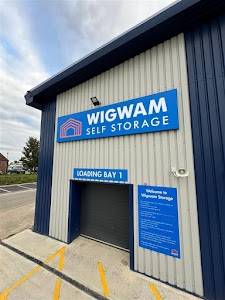
Wigwam Self Storage Bath is one concrete example. This is UK-wide advice, but Wigwam itself is England-based, across 15 market towns, so check the list for your nearest.
The Sixth-Month Swap, Twice a Year
Put a date in the diary for spring and autumn, and treat it as a fixed ritual, not a slow annual pile-up. Nothing sits undisturbed in the dark long enough to fail either way.
Get a price or call 0800 2545585. Ask about the current first-8-weeks offer when you enquire.
Frequently Asked Questions
Natural fibres specifically, wool, cashmere, silk, fur and down. Cotton, linen and synthetics aren’t moth food, though they still need to be clean and dry before storing.
14 days. Our minimum term is two weeks, so a seasonal swap doesn’t lock you into a long contract.
No. Our units are clean, dry and secure, which is what clothing and kit actually need.
Check current pricing for your nearest location, since rates vary by town and unit size.