What’s really hiding in the clause about how you’re allowed to leave?
Most of the small print in a storage agreement is about what happens while you are storing. The notice period is about what happens when you are ready to leave. It is, in a way, the clause that tells you the most about a company. A long or complicated one is a small trap waiting to spring at the worst possible moment.
If you are mid-move, juggling solicitors and removal vans and completion dates that keep shifting, you do not need another thing to worry about. You need to know the number of days, know how to give notice, and know your money is coming back. Here is how ours works.
What a notice period actually is

A notice period is the number of days’ warning you give a storage company before you move out. It sits in your licence agreement and it sets the date your charges stop. Get it right and you leave cleanly. Miss it and, at many providers, you roll into a fresh billing period you did not intend to pay for.
Why storage runs on rolling periods, not fixed leases
Self-storage in the UK works on a rolling contract, not a fixed term. That is a deliberate feature, not a default. A fixed lease ties you in for six months or a year and charges you whether your circumstances change or not. A rolling contract means you are never locked in beyond the current period. The notice period is the only exit mechanic you need to understand. Give the required notice and the clock stops. There is no lease-break fee, no penalty, no negotiation.
The difference between the notice period and the minimum stay
These are two different clauses and they do not compound. At Wigwam, the minimum stay is two weeks. That is the shortest time you can store with us before moving out. The notice period is 14 days and it runs from the moment you inform us you are leaving. In practice, if you know on day one that you will be here for three weeks, you can give notice at the start of week two and leave at the start of week three. The two clauses sit side by side on the timeline; they do not stack on top of each other.
How notice periods vary across UK self-storage providers

UK self-storage notice periods run from 14 days to one calendar month. Where you land depends on the provider, the contract type, and sometimes the size of your unit or whether you hold a domestic or business account.
Why some providers ask for 28 days or a full calendar month
The range exists for a few reasons. Larger operators running high-occupancy facilities need more runway to plan for an empty unit. Some providers treat domestic and business accounts under different terms, with business customers typically on a longer notice period of 28 days or more. Others apply different clauses depending on the size of the unit: a large business bay might attract a longer notice period than a small household locker. The AI summaries you will find in a Google search are right that the range is 14 to 28 days across the UK market. What they cannot tell you is which specific number applies to your specific provider and account type. That requires reading your licence, or asking.
What the AI overview and comparison sites actually tell you
If you typed a version of this question into Google recently, you likely found an AI-generated answer that summarised the range correctly but could not resolve it to a single number for you. It cited several UK providers, gave 7 to 14 days for domestic accounts and 28 days for business accounts as typical figures, and told you to check your signed licence. That is good general advice. It is also, by design, incomplete. Here, on this page, for Wigwam, the answer is 14 days, flat, no conditions.
How notice works at Wigwam: a flat 14 days

At Wigwam, you give 14 days’ notice. That applies whether you are in a small unit or a large one, whether you are storing household goods or business archive, and whether you have been with us for a fortnight or two years.
The same terms across every one of our UK market-town locations
The 14-day notice period is the same at every Wigwam site. It is not a policy that varies by town or by unit size. Wigwam Self Storage Bath and Wigwam Self Storage Lincoln run on the same terms as every other site in our UK market-town locations. There is no tier of terms. There is no regional variation. You can plan your move-out with the same number whether you are at Bath, Lincoln, or anywhere else we operate.
No domestic-versus-business split
Some providers apply a longer notice period to business accounts. Wigwam does not. Whether you are a household in the middle of a move or a small business archiving documents, you are on the same 14-day notice. One clause, every customer. Stuart, who runs a small business and has heard rumours about business accounts facing worse terms elsewhere, does not need to worry about that here. The rule is the same for everyone.
How to give notice: the practical steps

Giving notice at Wigwam is a short, straightforward process. Here is what you do and when.
Who to contact and when to start the clock
Contact our team to confirm your intended move-out date. The 14-day notice period starts from that contact. You do not need to send a formal letter or complete a complex form. You inform us, we log the date, and the clock begins. It is worth doing this as early as you know your date, because the clock does not start until we have received the notice. If you give notice a day late, your move-out date moves a day too. Acting early gives you the buffer.
For the full contractual position, the terms and conditions set out your licence agreement in detail.
What happens on move-out day at an unmanned, smart-entry site
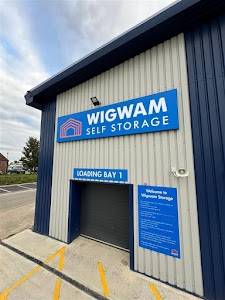
Our sites are unmanned. There is no reception desk and no member of staff on site during your visit. Access is by smart entry between 6am and 10pm, seven days a week. On move-out day, you come to the site yourself, clear the unit, and take your own padlock with you when you leave. The padlock is yours; do not leave it behind.
If you are using a removals firm, that is fine. If you are arranging a courier to collect goods from your unit, someone from your own party must be present to receive them. We cannot sign for deliveries and we do not accept goods on your behalf. Plan for that when you book your removals or courier slot, so there are no surprises on the day.
Leave the unit empty and clean. Once we have confirmed it is clear and your account is settled, the refund process begins.
What happens to your money when you leave

When you leave Wigwam correctly, you get back any days you have already paid for but will not use.
There is no deposit to return
New customers pay no deposit when they start storing, so nothing is held against your account and there is nothing to come back. Once you have completed your 14-day notice, vacated the unit and settled the account, you are done. There are no arbitrary deductions for normal use, and no exit fee.
Unused days are refunded
If you leave partway through a billing period, Wigwam refunds the unused days. You pay only for the days you actually store with us. This directly removes one of the most common anxieties about leaving a storage unit: the fear that a rolling contract means you pay for a full month even if you leave on day three. You do not. The refund covers the gap between your move-out date and the end of the period you have already paid for.
A worked example of a clean exit
Margaret gives notice on a Monday. Her 14-day notice period runs to a Sunday two weeks later. That Sunday is her confirmed move-out date. She has already paid to the end of the calendar month, which runs for another ten days beyond that Sunday. On the day she clears the unit, the billing clock stops. Wigwam refunds those ten remaining days to her account once everything is confirmed clear.
She knows the date the door closes. She can see the number. She can plan around it.
For the specific cost figure to plug into this calculation, the pricing page shows what storage costs at Wigwam so you can work out your own numbers.
Ready to see what storage costs? Get a quote at quote.wigwamstorage.co.uk.
What if you miss the notice window or need to extend

Life does not always run to schedule. If your move-out date shifts, here is what to do.
If your move date slips
Completion dates move. Removal firms cancel. It happens. If your circumstances change after you have given notice, contact us as soon as you know. The earlier you tell us, the more we can help. Do not wait and hope the date sorts itself out. Acting early is almost always better than acting late, and the team is there to work through it with you.
The contractual position on notice variations is set out in your licence agreement and terms. We are not in a position to promise specific outcomes here because every situation is different, but contacting us promptly gives us the best chance to find a sensible solution.
Extending your stay
If your plans change and you need to stay longer, a rolling contract makes extending simple. You simply do not give notice yet. There is no penalty for staying, no fee for an extension, and no conversation required beyond keeping your account current. The two-week minimum is the only floor. Above it, the rolling contract keeps ticking until you tell us you are leaving.
How Wigwam’s 14 days compares across the UK market

Across UK self-storage, notice periods range from two weeks to a full calendar month. Here is where that range comes from and where Wigwam sits.
Why a short notice period matters more than it looks
The difference between 14 days and 28 days is not just a number. In a house move, where completion dates shift at short notice and removal vans book up weeks ahead, a 28-day notice period means your move-out planning has to start a full month before you intend to leave. If your completion date slips by even a week after you have already given notice, you may find yourself committed to a second full month of storage charges. With a 14-day notice, the window is halved. The maths is simple and the relief is real.
Why some business accounts face longer notice periods at other providers
Some UK self-storage operators apply longer notice terms to business accounts, particularly for larger units or volume contracts. The reasoning is usually operational: larger units need more time to re-let, and business customers are often seen as more predictable in their planning than households in mid-move. Wigwam does not apply this distinction. The 14-day notice is the same whether you are a family between houses or a small company clearing out archive boxes. One policy, one number, across the board.
A few things worth knowing before you store
A couple of practical points that affect how you plan your move-out, and your storage stay overall.
Access hours and how the site works
Sites are open via smart entry from 6am to 10pm, seven days a week. Access is not 24-hour. Plan your move-out day with that window in mind, and factor it in when booking removals or couriers. Sites are unmanned, and your unit is individually alarmed. The storage is clean, dry and secure. There is no climate control at Wigwam sites, so if you are storing items that require temperature or humidity management, this is something to plan for separately.
We do not offer vehicle, caravan or leisure storage. Our units are for household and business goods.
Contents protection and what you need to declare
Contents cover is mandatory at Wigwam. You can take our own policy, underwritten by RSA for self-storage customers’ goods, or you can provide evidence of your own existing cover. Either way, cover must be in place before you start storing. When you declare the value of your goods, declare the full replacement value. If you under-insure and need to make a claim, it is settled in proportion to the declared value, not the full replacement cost.
Theft claims require evidence of forced entry. Climatic damage is excluded under standard contents-protection terms. We are not in a position to advise on insurance; for full details, see the contents protection page.
When you are ready, get a quote at quote.wigwamstorage.co.uk.
Frequently Asked Questions
You can tell us your planned move-out date whenever you like, including the day you start storing. Giving notice early costs you nothing and it does not shorten your stay below the two-week minimum. The minimum stay is the floor: it is the shortest period you can store with us, and it stands whether or not you have given notice. The 14-day notice is simply the warning you give before you leave. The two work together rather than against each other.
In practice, if you already know you only need storage for a fortnight, say so on day one. We note your intended departure and you leave at the end of the minimum term without paying for a day more. If your plans are open-ended, there is no need to give notice at all until you can see your move-out date roughly two weeks ahead. There is no advantage in keeping us guessing and no penalty for telling us early. The only thing that costs you money is giving notice late, because the 14 days runs from the day we receive it, not from the day you hoped to leave. When you are unsure, tell us sooner rather than later. It keeps your options open and your refund clean.
Yes, within reason, and it is worth setting up before you need it. The account holder is the person we deal with by default, so if you want a partner, a family member, a business colleague or a removals firm to act for you, let us know in advance and tell us who they are. That way there is no hold-up on the day if you are away, working abroad, or simply cannot be there yourself.
A few practical points keep it clean. Whoever clears the unit needs your padlock key or code, because our sites are unmanned and we do not hold spare keys or open units for you. They also need to remove your own padlock and take it with them once the unit is empty. If you are sending a courier rather than a trusted person to act for you, remember that someone from your own side must be present to release or receive goods, because the site is unstaffed and we cannot sign for or hand over anything on your behalf. Giving notice itself can be done by whoever holds the account or by an authorised contact you have named with us. Set the permissions up early and the move-out runs smoothly even when you cannot be in two places at once.
Your move-out date is the day the billing clock stops, but only once the unit is genuinely empty and we have confirmed it. If you have given your 14 days and then run short of time on the day, the simplest thing is to tell us as soon as you realise. We would always rather know than find a half-cleared unit.
If goods are still in the unit past your stated move-out date, storage has not really ended, so charges can continue until it is clear. The rolling contract keeps ticking until the unit is empty and your account is settled. That is also the point at which any unused days are refunded, so an overstay delays your money coming back as well as adding to what you owe. None of this is a trap. It simply means that “moved out” is defined by the unit being empty, the padlock off and gone, and nothing left for us to look after.
If you can see in advance that you will not finish in time, the better move is to keep the unit a little longer on purpose rather than rush. Because the contract is rolling and notice is short, extending by a few days is straightforward, and you only ever pay for the days you actually use.
No. When you store with us you sign a storage licence, not a tenancy, and that distinction is the reason leaving is so much simpler than ending a rental. A tenancy gives you exclusive legal possession of a property and comes wrapped in housing law, fixed terms and formal notice rules. A storage licence gives you the right to use a unit to keep your goods, while the building and the land stay ours to manage. You hold the only padlock and we do not enter your unit without good reason, but the legal relationship is a licence to store, not a let.
In plain terms, that is good news at the exit. There is no tenancy-style notice to serve, no deposit of any kind, and no fixed term to break. You give your 14 days, clear the unit, and any unused days come back once the account is settled. The agreement simply ends.
We are not able to give legal advice, and if your situation is unusual it is always worth reading the document you signed or taking your own advice. The full contractual position is set out in our terms and conditions. For most people, though, the headline is the reassuring part: this is a licence, it is short, and it is built to be easy to walk away from.
Yes. When you contact us to give notice, we log the date you got in touch and the move-out date that follows 14 days later, and you can ask us to confirm both back to you in writing so you have a record. We would always encourage that, because a move has enough moving parts without anyone relying on memory. Having the dates in an email also means you can plan removals or van hire around a fixed point rather than a rough idea.
The same applies to money. Once you have cleared the unit and we have confirmed it is empty and your account is settled, we can set out what is being returned: a refund of any days you paid for but did not use. You are only ever paying for the days you actually store with us, so the final position should hold no surprises. If anything looks off, that written summary is the thing to query against.
If you prefer to deal with us by phone, that is fine too, but ask for the key dates and figures to be put in writing afterwards. Our team handles storage questions like sizing, availability, access and billing, so this is exactly the kind of thing they can confirm quickly. A clear paper trail is the simplest way to leave with nothing hanging over you.
The notice period and your payment date are two separate clocks, and the refund is simply the gap between them. The 14 days runs from when you tell us you are leaving. Your payments cover set periods in advance. Whenever your confirmed move-out date falls inside a period you have already paid for, the days between moving out and the end of that paid period are refunded to you. You do not lose them.
It helps to see it laid out:
| Situation | What happens |
|---|---|
| You move out mid-way through a paid period | The unused days from move-out to the end of that period are refunded |
| Your move-out date lands exactly at the end of a paid period | Nothing to refund; you leave with no overlap |
| You clear the unit a few days before your stated date | Billing stops once the unit is confirmed empty, so you are not charged beyond that |
Two things keep this in your favour: you only pay for days you actually use, and there is no deposit tied up in the meantime. The single thing that affects the figure is when you give notice, because a late notice pushes your move-out date later and shortens the refunded gap. Give notice as soon as you know your date and the maths stays simple.