Do your antiques really need climate control while the builders are in?
The builders are in. The hall smells of plaster, someone left a ladder against your grandmother’s chest of drawers, and you have got roughly three weeks before they move into the room where the Victorian wardrobe lives. You have been doing your homework, as you always do, and every page you have found tells you the same thing: climate control. Find a humidity-controlled facility. Without it, antique wood is at risk.
Here is the honest answer from someone who runs storage units and does not offer climate control: that advice is aimed at the wrong problem. The threat to your antiques right now is not an ordinary warehouse. It is your house. The active building site is where the damage happens. Getting the furniture out of it is the most important decision you will make.
The rest of this is about how to do that well.
Why a renovation is harder on antiques than a storage unit
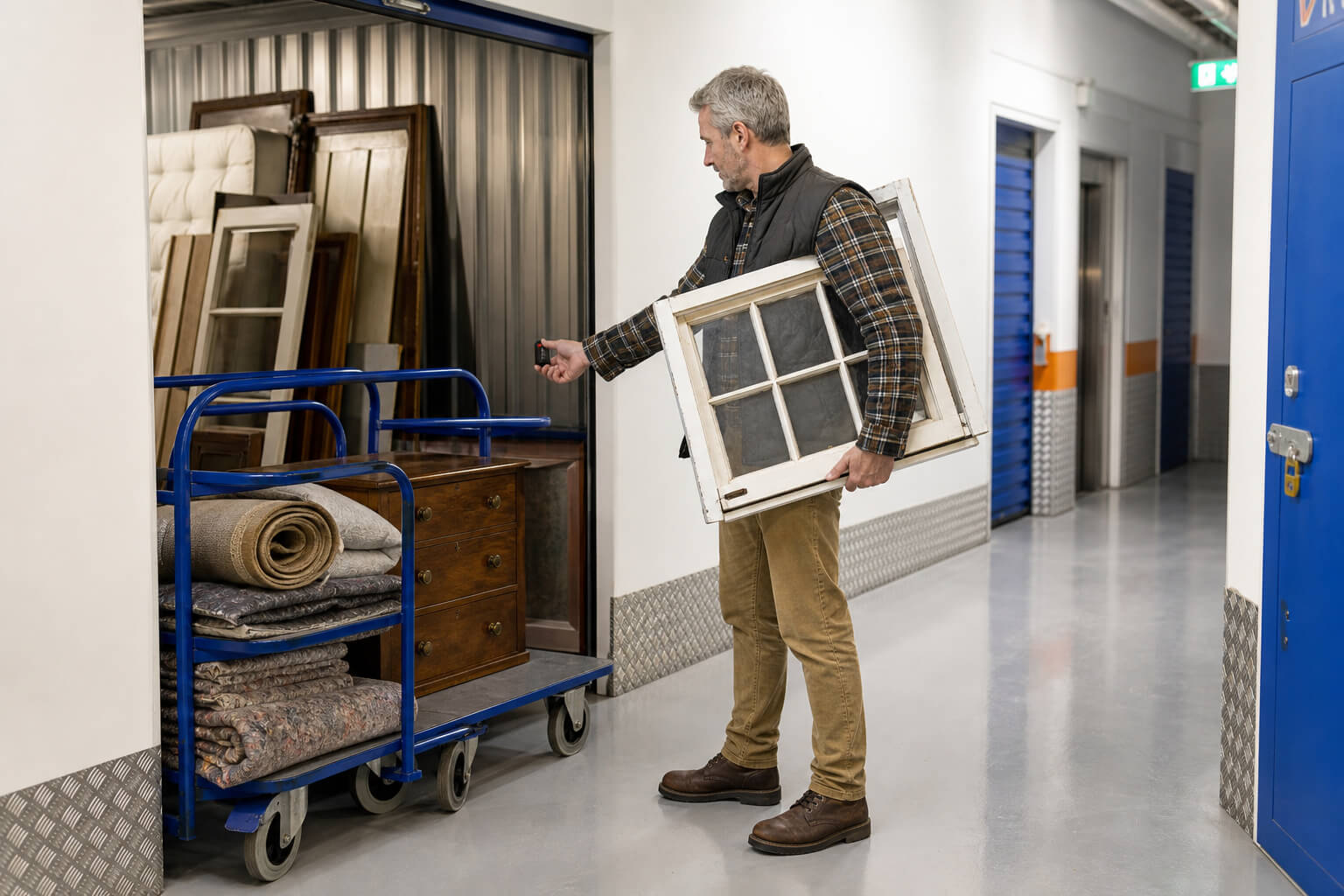
The standard advice about climate control comes from a genuine concern, but it is often applied to the wrong scenario. During a renovation, the danger is not long-term ambient humidity. It is what is happening inside the house right now, every day, while the work runs.
The building-site conditions that actually damage wood and upholstery
Wet plaster is the quiet culprit most people miss. As new plaster cures, it releases moisture into the air for days or weeks, depending on thickness and ventilation. A period room being replastered will have elevated humidity long after the plasterers have gone. That moisture works into wood grain, raises the fibres, swells joints, and lifts veneer edges. The piece does not need to be touched to be damaged.
Plaster dust is the second problem and it is everywhere. Fine dust is abrasive, and it settles into carved details, gilded surfaces, and the joinery gaps in old carcasses. On upholstery it embeds into the weave. You can brush it off the surface but you cannot easily get it out of the grain or the fabric.
Then there is the temperature cycle. During building work the heating often goes off while walls are open, then blasts back on when the crew need it. That daily swing, cold then warm, is harder on old wood and old adhesives than a static cool room. Furniture is more vulnerable to rapid change than to steady conditions.
Finally, there is footfall. Tradespeople are careful people. But they are also moving materials through your rooms ten times a day, and a ladder carried around a corner in a narrow hall will find the thing that cannot be moved.
The dust-sheet problem
Dust sheets feel like protection and they are better than nothing, but they are not what most people think. A sheet draped over a piece of furniture on an active building site will shift. It will be lifted to check something underneath, then dropped again. In a room with wet plaster, a sheet can actually trap moisture against the surface it is meant to protect. It offers nothing against physical knocks. As a temporary solution for a single afternoon, fine. As protection through a six-week renovation, not enough.
The custodian’s arithmetic
Put simply: no amount of covering, wrapping, and careful positioning inside a building site equals the safety of a clean, dry room somewhere else. The furniture’s survival during this renovation is mostly determined by one decision, taken early. Once you have made it, the rest is preparation and common sense.
Do antiques really need climate control? The honest answer
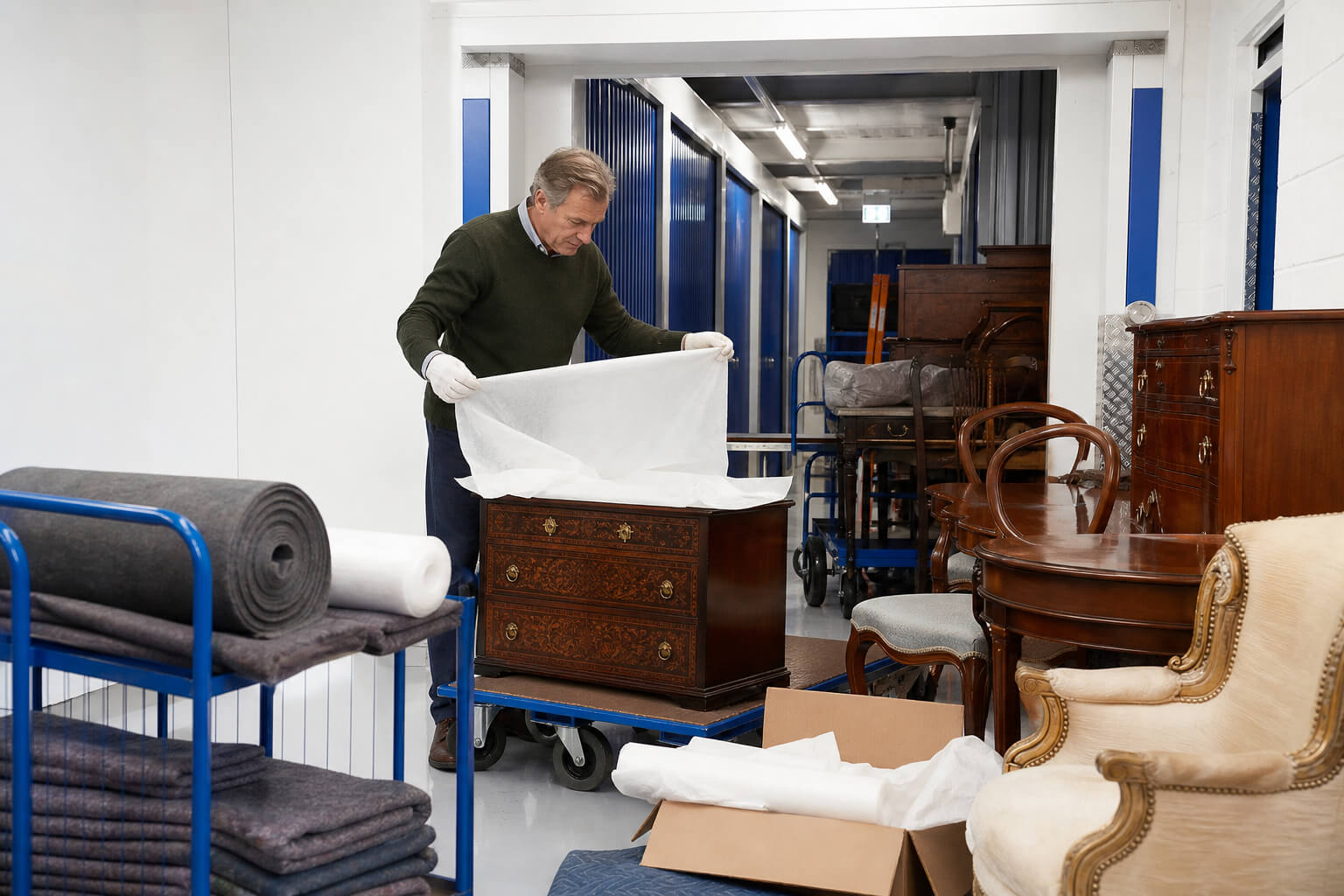
Not for most renovations, and here is the straight version of why.
What climate control actually does, and who actually needs it
Climate-controlled storage regulates both temperature and humidity within tight tolerances. That matters for museum-grade pieces, for oil paintings on canvas, for lacquered or gilded surfaces with multiple bonded materials that respond differently to humidity swings, and for marquetry where thin veneers of different species are glued over one another. These are pieces where a ten-percent swing in relative humidity can crack a surface or lift an edge.
If the piece in question is a signed oil painting, a piece of Chinese lacquerwork, a gilded console table in fragile condition, or anything your insurer has specifically named as requiring a controlled environment, then a specialist storage facility is the right answer and you should find one. There is no shame in that. Not every job is our job.
What clean, dry and secure actually means for solid wood
For the overwhelming majority of antique furniture that comes out of a UK renovation, the standard is clean, dry and secure. What that means in practice: a purpose-built unit that holds a consistent indoor temperature, is protected from rain and damp, is individually alarmed, and has no active sources of moisture, dust or physical disruption.
That is not climate control. It is the removal of everything a building site introduces. No wet plaster off-gassing in the next room. No dust settling into the grain. No heating cycling between cold and hot. No one carrying ladders past the piece. A Georgian dresser that has survived a hundred and fifty years of English winters in unheated rooms does not need a humidity chamber. It needs a calm room away from the chaos.
The honest exception: when to pay for a specialist
Lacquer, marquetry, gilded surfaces and mixed-material inlay work are the genuine exceptions. If the piece has these features, has already been in fragile condition, or if a conservator has advised it, that matters. A piece coming out of a damp period house in winter, heading into storage through the coldest months, is worth a specific conversation with your insurer and possibly a specialist restorer. For everything else, a well-prepared unit is the right call.
Ready to book a unit for your renovation? Get a quote at quote.wigwamstorage.co.uk
Preparing each piece before it leaves the house
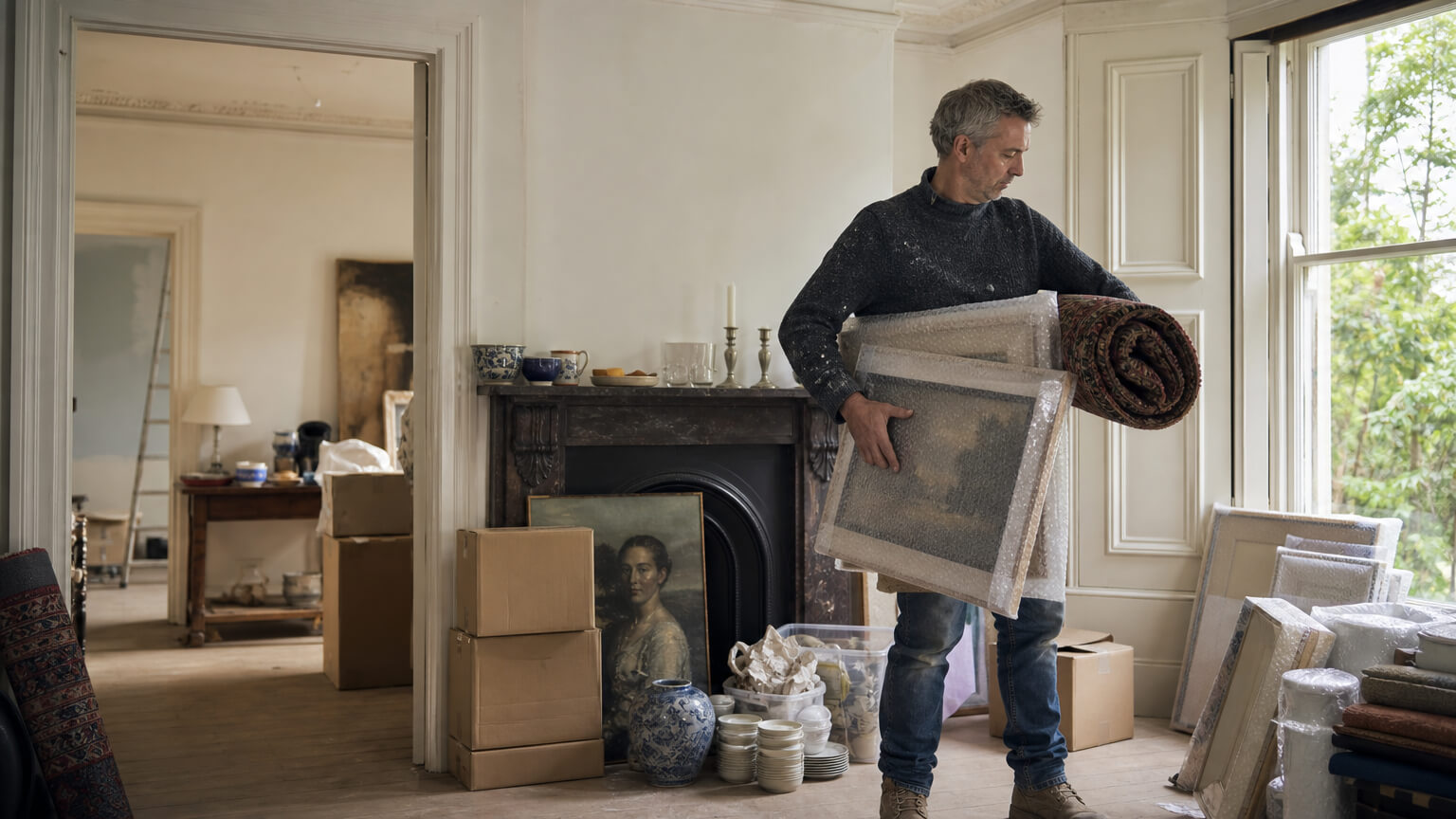
The single most important preparation rule is this: clean the piece before you cover it, not after. Wrapping a dusty or even slightly damp surface traps that condition against the wood for the duration of storage.
Clean and let it dry fully
Dust the piece carefully, working with the grain on bare wood. Use whatever cleaner is appropriate for the finish: a slightly damp cloth for painted surfaces, a dry microfibre for waxed or oiled wood, a proper antique cleaner for delicate lacquers. If you have used any water or water-based product at any point, give the piece a full day to dry before covering it. Trapping even minor surface moisture under a blanket for weeks is the most common preparation mistake, and it is avoidable.
A light application of appropriate wax or polish before wrapping is not harmful if it has been fully absorbed. Do not apply it and wrap immediately.
Empty drawers, remove and wrap loose components
Empty every drawer and cabinet before the piece is moved. Weight inside a carcass stresses joints and runners on a piece that is going to be lifted, tilted, and slid into a unit. Drawers that were loose before the move become looser still.
Remove each drawer and wrap it separately, padding the corners. Label each one clearly, front face outward, so reassembly is straightforward. Remove mirrors and store them flat or padded-vertical, separate from the carcass. If there are shelf brackets, hinges, or any small hardware that might snag a blanket or fall in transit, bag them and tape the bag to the relevant piece.
Disassemble what comes apart
Bed frames should come apart completely: headboard, footboard, side rails, and slats stored flat. If the piece has bolted joints, now is the moment to bag all fixings in a clearly labelled bag taped to the headboard. Dining tables with removable legs should have each leg wrapped separately; if the thread is intact and the leg comes off cleanly, there is no reason to move a six-foot table as a single piece. Photograph the joinery before disassembly if reassembly is not obvious at a glance.
Different materials, different care
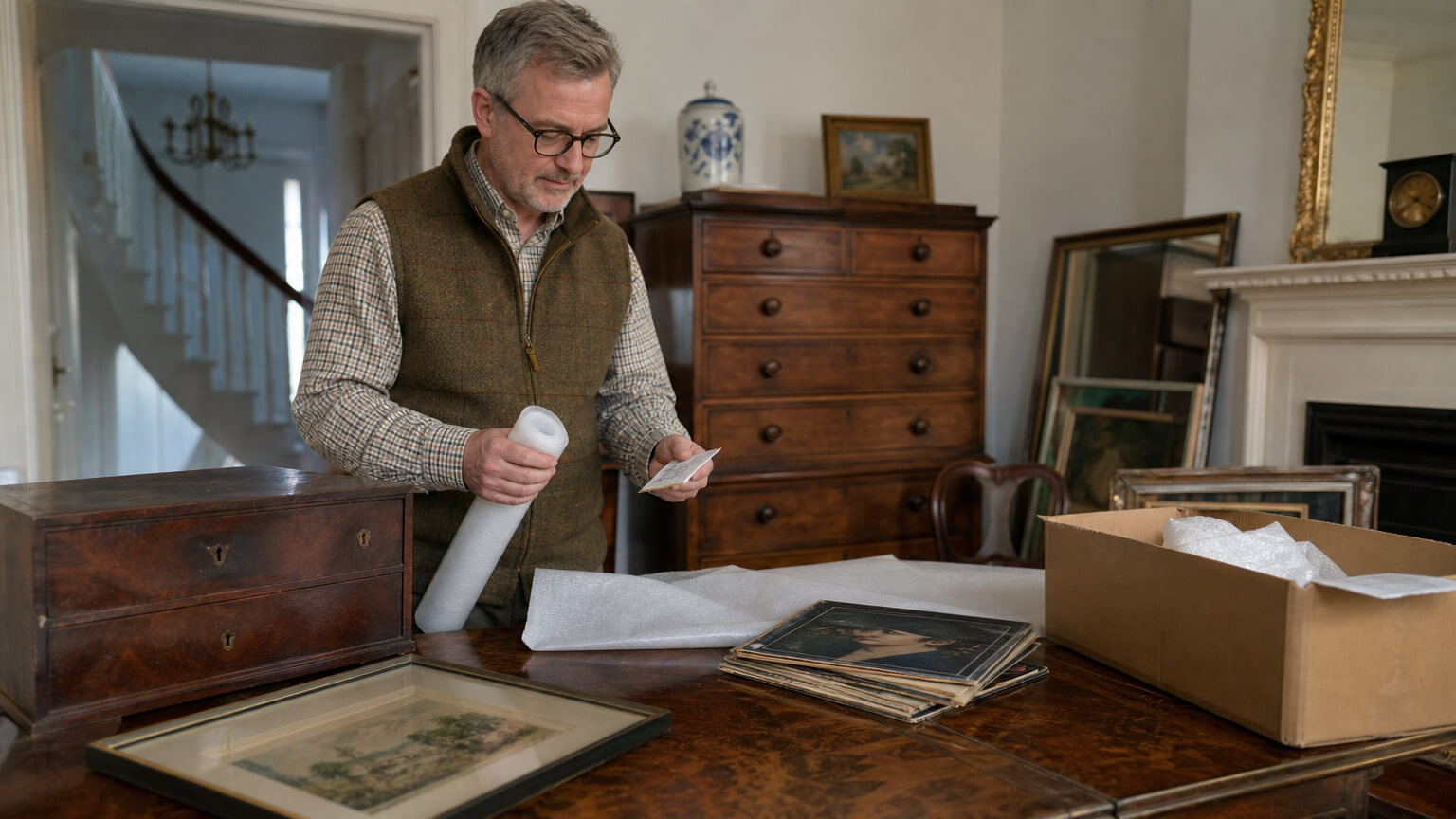
The AI tools and the advice pages that prompted your search are right about one thing: material matters. The answer for solid oak is not the same as the answer for a Victorian sofa.
Solid wood and hardwood veneers
Solid wood breathes. That is the phrase you need to hold onto when thinking about covers. Breathable wrapping means moving blankets, breathable felt, or old cotton sheets. It does not mean sealed polythene or cling film. A sealed plastic cover traps whatever is against the surface, including any residual surface moisture, and holds it there. Breathable covers allow slow air exchange.
Keep pieces off the floor. A simple pallet, a board, or even a layer of folded cardboard between the base of the piece and the unit floor is enough. Off the floor reduces contact with any ground-level moisture and protects finishes from the friction of a concrete surface.
For tall pieces with weight concentrated on legs, a slightly padded base that distributes load is better than leaving the legs sitting directly on concrete for weeks.
Upholstered pieces
Upholstery holds moisture more readily than solid wood and it shows damage more visibly when it does. The rule is the same: breathable covers only, no plastic. Sealed covers on fabric allow mildew to develop even in otherwise clean conditions if there is any ambient moisture at all.
Do not stack anything on top of an upholstered piece. The springs and the frame will hold a cushioned seat for years of normal use, but sustained downward weight in storage is a different stress. Leave space above upholstered items if at all possible.
A clean, dry unit reduces the ambient moisture that makes mildew likely. But the cover still matters.
Gilt, lacquer, marquetry and inlay
These deserve their own brief note because the standard advice applies to them differently. Lacquer can crack with rapid temperature change rather than sustained humidity. Gilt can lift at the edges with humidity cycling. Marquetry with multiple species veneers will respond to humidity swings differently across the different materials glued together.
If the piece has these features and the renovation will run through winter with the house heating off, this is the one situation where a conversation with a specialist conservator is genuinely worth having before you move the piece. Brief, specific advice from someone who has examined the piece is worth more than general guidance from any webpage.
Wrapping and loading the unit the right way
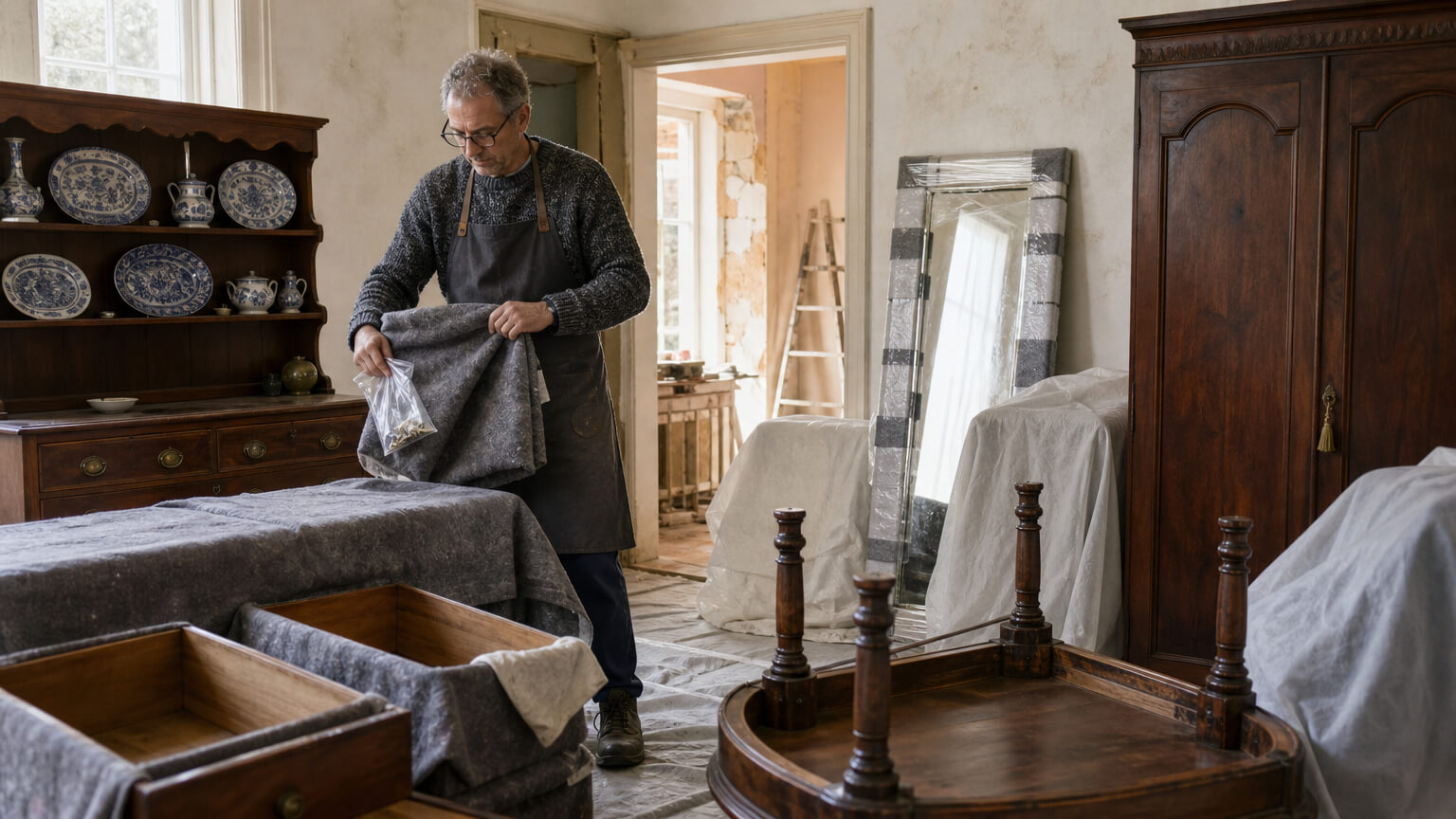
Good loading makes the difference between a unit you can manage through a long renovation and one that becomes a puzzle every time you need to retrieve something.
Breathable covers, not sealed plastic
Moving blankets are the workhorses of furniture storage and they earn their place. Breathable felt and old cotton sheets both work. If you want to use bubble wrap, put a layer of cotton or felt between the bubble wrap and the wood surface: the textured side of bubble wrap directly against a polished surface can mark it, and the seal is not ideal for long periods. Seal the outside of the package with tape, but tape to the blanket or felt, not to the wood or the finish.
Do not use heavy cling film, sealed polythene dustsheets, or anything designed to create a vapour barrier.
Off the floor, weight distributed, nothing stacked on polished tops
A pallet across the back of the unit gives you a raised floor for the heaviest pieces. Chairs can be stacked seat-to-seat with a blanket between, but put nothing heavy on top. Polished and veneered tops should have nothing resting on them; if pieces must be stacked, lay them face-to-face with a blanket between and take the weight on the frame or the legs, not the surface.
Heaviest and most robust pieces go in first, against the walls. Lightest and most fragile come last, toward the front.
Building a working floor plan for the unit
Think, before you load, about which pieces you are most likely to need to retrieve during the renovation. A phased build, where you are clearing one room at a time and moving items in over several weeks, means you will almost certainly be opening the unit between visits. Smart entry is available from 6am to 10pm, seven days a week, so checking in before the builders arrive or after they leave for the day is straightforward.
Leave a clear aisle to the back of the unit. Stacking tightly against the door is efficient loading but it becomes an obstacle course when you need the chest from the far wall.
Choosing where to store
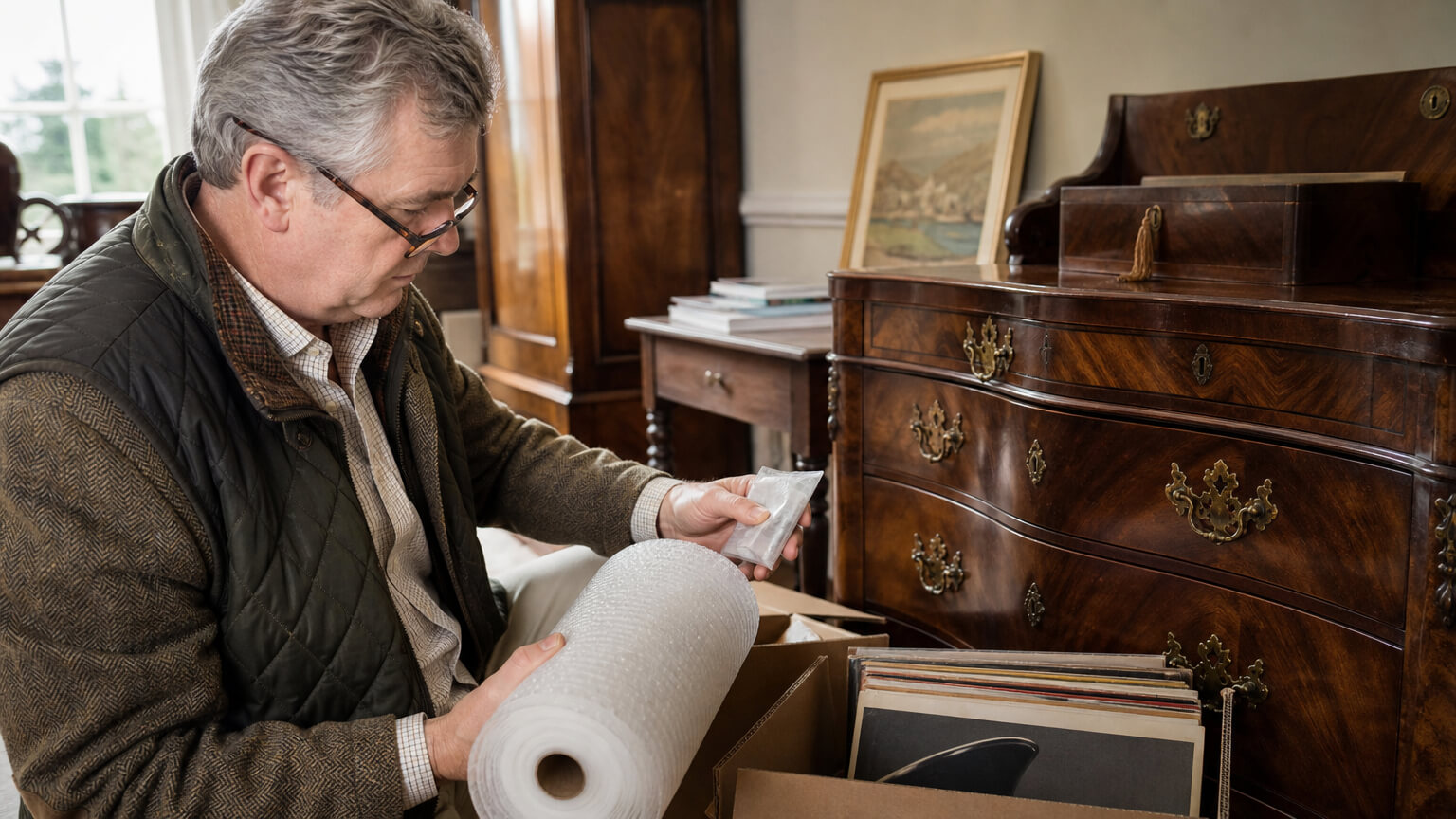
You have probably already considered the alternatives, so here is the honest comparison.
Spare rooms and garages on site
A spare room not being renovated is the free option, and it is genuinely worth using if the room is completely separate from the work. The caveat: renovation dust and moisture are not contained to the room being worked on. Dust travels through air handling, through gaps under doors, and on clothing. If the build is extensive, a room two doors away is not as safe as it feels.
Garages are often damp, frequently temperature-unstable, and rarely properly secure. Period furniture in a garage through an English winter is a different kind of risk to a building site, but it is still a risk.
Pods and mobile containers
A delivered container on the drive is a legitimate option if the site can accommodate one. It is worth being clear about the model, though: Wigwam is drive-up unit storage at unmanned facilities. We are not a pod service that drops a container at your property. Different model, different use case. If a pod on the drive works for your site and your renovation, that is a reasonable call.
A Wigwam unit near your renovation
For period-property renovations in the market towns we serve, a drive-up unit at one of our UK market-town locations is the practical fit. Wigwam Self Storage Bath and Wigwam Self Storage Lincoln are examples of locations in the kind of towns where antique-filled Georgian and Victorian renovations happen. For other locations, the locations hub will show you the nearest site.
Units are clean, dry and secure, individually alarmed, with smart entry from 6am to 10pm. You drive up, you access your own unit, and you are in control of who goes in and when.
One thing to know before you book a removals firm or courier: our sites are unmanned. Wigwam staff are not on site to sign for goods or receive deliveries. If a removals firm or courier is bringing your furniture to the site, someone from your side must be present to receive it. That means you, or a member of your team, at the unit when the vehicle arrives.
How long, and what that means for your costs
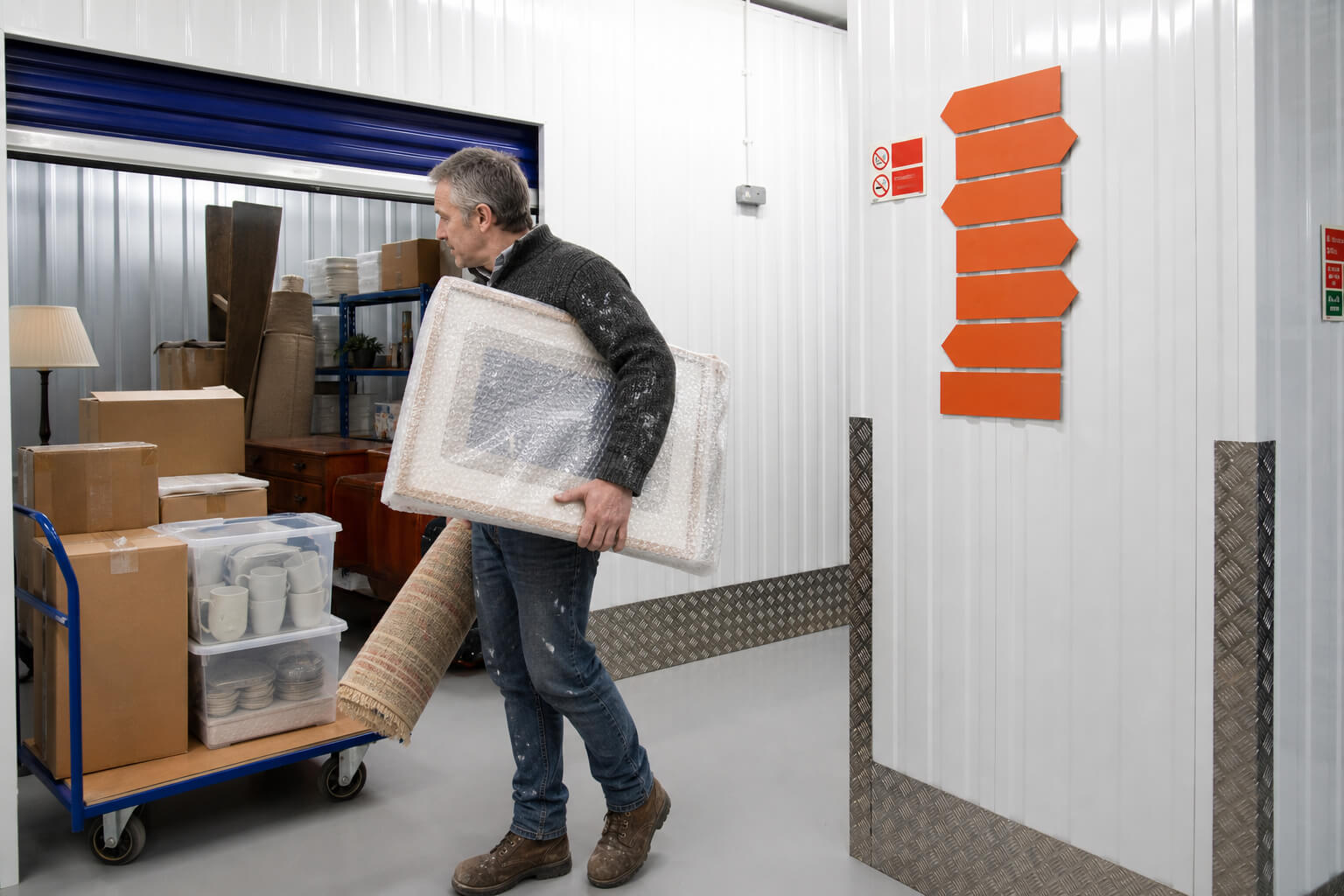
Renovation timelines have a way of shifting. Here is how the terms work when they do.
The two-week minimum and the unused-days refund
There is a two-week minimum stay. If the renovation finishes ahead of schedule and you want to vacate before your expected end date, unused days are refunded. That flexibility matters in a building project where the schedule can move in either direction. No deposit is held while you are a customer, so there is nothing to reclaim at the end. For the full notice terms, see the terms and conditions.
What size unit do most renovation moves need?
The honest answer is: it depends on the scope of the phase. Most living-room and bedroom contents from a single-floor renovation clear comfortably into a medium unit. The best way to confirm is to use the quote tool or the pricing page, which gives a good sense of sizes and what each holds. There are no price figures in this article; the pricing page is the right place for that conversation.
Phased renovations
Many period-property renovations clear one floor or one wing at a time, which means adding to the unit over several visits as rooms come out of use. Smart entry from 6am to 10pm makes that practical: you can bring a load in after work, collect a piece when a room is ready to receive it again, and generally manage the unit around the build schedule rather than around anyone else’s hours.
Insuring what you store
Before the keys go in, sort the insurance.
Contents-protection cover
Contents cover is mandatory with Wigwam. You can take Wigwam’s own policy or provide evidence that your existing home insurance or a separate policy covers goods in a storage unit. The Wigwam policy is provided by RSA under their Self Storage Customers’ Goods product and is New-for-Old. Full details and the option to take cover are on the contents-protection page. This is a signpost, not advice: read the policy and talk to your insurer if you have questions about what is right for your situation.
Declaring the right value
Declare the full replacement value of what you are storing, particularly for antiques and period pieces. Under-insurance is settled in proportion: if you declare half the value, a claim is settled at half. For inherited or period furniture the replacement cost may be higher than a quick estimate suggests, and it is worth confirming with an antique dealer or your insurer before you fix the declared value. Again, this is a signpost: the insurer and the policy terms are the authority here, not this page.
What is and is not covered
Theft is covered, but only where there is evidence of forcible entry. Atmospheric and climatic damage is excluded. For full terms, the contents-protection page is the place to go, and your own insurer can advise on anything your existing policy covers in parallel.
Note for readers in Scotland or Northern Ireland: The Wigwam contents-protection policy is governed under England-and-Wales terms. If you are based in Scotland or Northern Ireland, confirm policy applicability directly with Wigwam or your own insurer before relying on it.
FAQ
Do antiques really need climate-controlled storage?
For most antique furniture coming out of a UK home renovation, the answer is no. Climate control is the right solution for museum-grade pieces, fine art on canvas, lacquered surfaces, and mixed-material marquetry where humidity tolerances are tight. For solid wood, upholstered pieces, and standard period furniture, a clean, dry, secure unit with proper preparation is sufficient. The renovation is the risk; the storage unit is the relief.
How do I store furniture during a renovation if I do not have a spare room?
A self-storage unit near the renovation site is the practical solution. Drive-up units at our UK market-town locations are designed for exactly this: accessible on your schedule, clean and dry, and individually alarmed. Two weeks is the minimum stay, with unused days refunded if you finish early.
Where should I put my furniture during a home renovation?
Out of the house is the right answer for anything valuable or irreplaceable. On-site storage in a room not being renovated is the free option, but dust and moisture travel further than people expect. A local storage unit gives you a clean, controlled environment away from the building work. Our locations hub will show you the nearest site.
How long can I store antique furniture for?
As long as the renovation needs. The minimum is two weeks. Many period-property renovations run for months, and the unit can be maintained throughout. Unused days are refunded if you leave early, and a 14-day notice period applies when you are ready to vacate.
Should I wrap antique wood in plastic?
No. Sealed plastic traps moisture against the surface. Use breathable covers: moving blankets, breathable felt, or old cotton sheets. If you use bubble wrap, put a breathable layer between it and the wood first. Wood needs to breathe, even in storage.
Can a removals firm or courier drop my furniture at a Wigwam site?
Yes, but you or someone from your side needs to be present when they arrive. Our sites are unmanned: there is no Wigwam staff member on site to sign for goods, receive deliveries, or let in a removals vehicle. Plan accordingly.
How much does it cost to store furniture during a renovation?
We do not list prices in this article. The pricing page gives a clear overview of unit sizes and costs, and the quote tool at quote.wigwamstorage.co.uk gives you a specific figure for your location and duration in about two minutes.
When you are ready, getting a quote takes two minutes: quote.wigwamstorage.co.uk
Frequently Asked Questions
For most solid-wood antiques in a dry, secure unit, no, provided you prepare them properly and keep them off the floor. Condensation forms where warm, moist air meets a cold surface. The defences against it are the things this article already asks you to do: store pieces dry, use breathable covers rather than sealed plastic, and raise the furniture off the concrete on a pallet or boards so air can move underneath and the base is not sitting on the coldest surface in the room.
It helps to be clear about what a clean, dry and secure unit is. It is a purpose-built space, protected from rain and damp, individually alarmed, and free of the active moisture sources a building site throws off. It is not a humidity chamber, and we do not pretend otherwise. A Georgian piece that spent a century in unheated English rooms is built for ambient seasonal change; what it cannot tolerate is being wrapped damp or sealed in plastic that traps moisture against the surface.
If a piece is genuinely fragile, has gilt, lacquer or marquetry, or has been flagged by a conservator, winter storage is one of the situations where a specialist controlled environment is the safer call, and that is an honest exception rather than a sales pitch. For ordinary solid oak, walnut and mahogany furniture, the right preparation matters more than the season. Pack dry, cover breathably, lift off the floor, and condensation is a manageable risk rather than a real threat.
A visit every few weeks is sensible for valued antiques on a long stay, and the access arrangements make it easy. Smart entry runs 6am to 10pm, seven days a week, so you can call in before the builders arrive at the house or after they leave for the day. There is no slot to book and no member of staff to wait for, because the site is unmanned and runs on smart entry. You let yourself in, look over the pieces, and leave.
What you are checking for is straightforward. Run a hand over surfaces for any sign of dampness or a musty smell, lift a cover corner to confirm nothing has shifted or is bearing weight it should not, and make sure nothing has been stacked onto a polished top by mistake during an earlier load. On a phased renovation, where you are adding to the unit as rooms come out of use, you will be in and out anyway, so build the check into those visits.
The point of leaving a clear aisle when you load the unit is precisely this: a unit you can walk into is a unit you will actually inspect, while one packed solid to the door gets ignored. If something does look wrong, a damp cover, a lifted veneer edge, do not paper over it. Re-dry and re-cover, and if it concerns a fragile or high-value piece, that is the moment to call a conservator rather than wait.
Yes, and it is often the sensible thing to do. There is no requirement to keep an entire collection in one place. If a conservator has named a specific piece, a fragile gilded console, a marquetry cabinet, a lacquered chest, as needing controlled temperature and humidity, then that piece belongs in a specialist fine-art or controlled facility, while the solid-wood and upholstered furniture that makes up the bulk of most collections sits perfectly well in a clean, dry and secure unit.
This split is usually the most economical route too, though I would point you to the figures rather than make the claim for you. Specialist controlled storage is priced for museum-grade requirements, so putting a whole houseful of ordinary period furniture into it on account of one delicate piece is rarely necessary. Reserving the specialist option for the items that genuinely need it, and using a standard unit for the rest, tends to be both safer and cheaper than treating everything as the most fragile item.
Take the conservator’s written advice seriously and follow it for the named pieces; brief, specific guidance from someone who has examined the object is worth more than any general rule. For the remainder, a well-prepared Wigwam unit does the job. We do not offer climate control and will not pretend a standard unit suits a piece a conservator has flagged. Honesty about that is the whole basis of this article.
The defence is preparation before the piece goes in, because storage does not create these problems, it can only carry in ones that were already present. For moths, the risk is eggs or larvae already in wool, horsehair or natural fibres. Clean upholstered pieces thoroughly before storing, and if a piece has any history of moth, treat it before it goes into the unit rather than after. Cedar blocks near, not pressed against, upholstered items help deter moths without introducing moisture.
For woodworm, the same principle applies: an active infestation travels with the furniture. Inspect old wood for fresh, clean exit holes and fine powder, which suggest active beetle, as opposed to old, dark holes that are long dormant. If you see signs of active woodworm, have the piece treated by a specialist before it shares a unit with other furniture, so it cannot spread. This is conservator and pest-treatment territory, and worth a professional opinion on a valued piece.
In storage itself, keep everything dry and well covered with breathable materials, never sealed plastic, and do not store food or anything that attracts pests nearby. A clean, dry and secure unit gives these problems no encouragement, but it cannot cure an infestation you bring in with you. Deal with moth and woodworm at the house, before the move, and the unit simply holds the furniture safely while the renovation runs.
Most standard antique furniture, wardrobes, dressers, dining tables, sideboards, goes into a drive-up unit of the right size without difficulty, but the honest answer for genuinely large or unusual pieces is to ask before you book. A standard upright piano will fit a larger unit; a grand piano is unlikely to fit the units available in most of our market-town locations. The same caution applies to oversized armoires or anything that cannot be disassembled. A quick conversation with the support team about dimensions saves a wasted move.
Getting a large piece in is easier if you have done the preparation this article describes. Empty the drawers, remove and wrap them separately, take off any removable legs or mirrors, and bag the fixings taped to the piece. A dining table with its legs off, or a bed broken down to headboard, footboard and rails, takes a fraction of the space and is far simpler to manoeuvre through a doorway. Move it on a sack truck with proper padding rather than risking the joinery.
One point to plan around: the sites are unmanned, so there is no team member to help carry or to receive a removals crew on your behalf. If you are using a removals firm or courier to bring the piece, someone from your side must be present at the unit to let them in via smart entry and oversee the load. Wigwam does not sign for or receive deliveries. Arrange the timing so you, or someone from your household, are there when the vehicle arrives.