They’ve moved out — but who’s actually ready to clear the room?
There comes a point in most family homes when the spare bedroom reaches a kind of stalemate. The child has moved on, the room is half-reclaimed, and yet the wardrobe is still theirs, the boxes along the back wall are still theirs, and nobody has quite said out loud what happens next. Months pass. Sometimes years.
If that sounds familiar, you are not being sentimental for the sake of it. You are keeping a chapter of your family’s life open until the family is ready to read it again. That is a reasonable thing to do, and there is a calm, sensible way to do it.
This guide is not going to tell you to throw everything away. What it will do is walk you through a practical sort, a simple family conversation, and an honest look at what long-term storage actually costs so you can decide what is genuinely worth keeping.
When the bedroom is theirs but the boxes are still yours

Most parents reach a point in an empty-nest transition not because the child has been inconsiderate, but because life moves faster than anyone planned. The child went to university, got a flat, went travelling, moved in with a partner, and somewhere in the middle of all of that, nobody had the conversation about the boxes under the bed.
Why parents keep a grown child’s things, and why that is fine
Keeping a grown child’s belongings is normal, and it is not a sign that you have failed to let go. The quiet guilt about wanting the room back, and the guilt about not having cleared it yet, are both common. The truth is that most parents are not avoiding a decision; they are waiting for the right moment, and that moment has a habit of not arriving on its own.
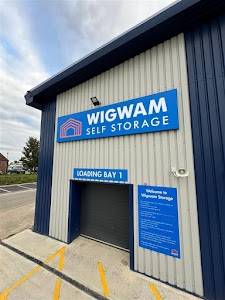
A clean, dry unit in your home town is not a goodbye to those things. It is a holding place while the family works out what comes next, without the pressure of a bedroom that still looks like 2015. The boxes are waiting, not lost.
What this guide will and will not tell you to throw away
We will not hand you a list of things to discard. Every family is different, and the things that matter in one household mean nothing in another. What this guide does is give you a method for making calm choices, and an honest frame for working out whether a storage unit makes sense financially over the long run. The decision about what is worth keeping is yours.
The honest boundary: when storage is worth it and when it is not
Storage is worth it when what is inside means more than the cost of keeping it safe. It stops being worth it when the annual cost quietly exceeds the value, financial or emotional, of what is in the unit. We will come back to the cost sum later in the article. For now, the main point is that this guide will give you the frame to do that calculation honestly, so you are not keeping a unit out of habit.
The keep, pass-on, or let-go sort

Before anything goes into a unit, three piles makes the process manageable: keep, pass on, let go. That is the whole method.
A simple three-pile method before anything moves
Start with three piles: things to store, things to pass to your child or donate, and things that have simply run their course. The keep pile is for items the family genuinely wants to preserve. The pass-on pile is for things your child might want now if they had the space, or that could go to a charity shop or a younger family member. The let-go pile is for everything else.
Work through one shelf or one box at a time. There is no need to do it all in a day. The main benefit of sorting before moving anything to a unit is practical: a smaller pile means a smaller unit, and a smaller unit means a lower monthly cost over however many years the things are stored.
The few things that are genuinely irreplaceable
Some things belong in a unit almost without question. School reports, letters, hand-made birthday cards, a few soft toys with a specific history, art projects that a child was proud of. These are the things a unit is genuinely built for. Naming them out loud also makes it easier to let go of the things that are not in that category, the sports gear that was used once, the textbooks, the duplicate bedding.
If you can fill one or two good boxes with the things that are genuinely irreplaceable, the rest of the sort becomes considerably easier.
What to pass on now rather than store
Furniture, books, kitchenware and clothing are almost always better passed on than stored. They are heavy to move, they take up unit space, and most of it can be replaced later when your child has a home of their own. Offering it to your child first is the right call; if they do not have the space, a local charity shop or a community group is usually glad of good condition items.
The less that goes into the unit, the smaller the unit you need, and the lower the cost every month. This connects directly to the cost question we return to later.
The conversation with your grown-up child
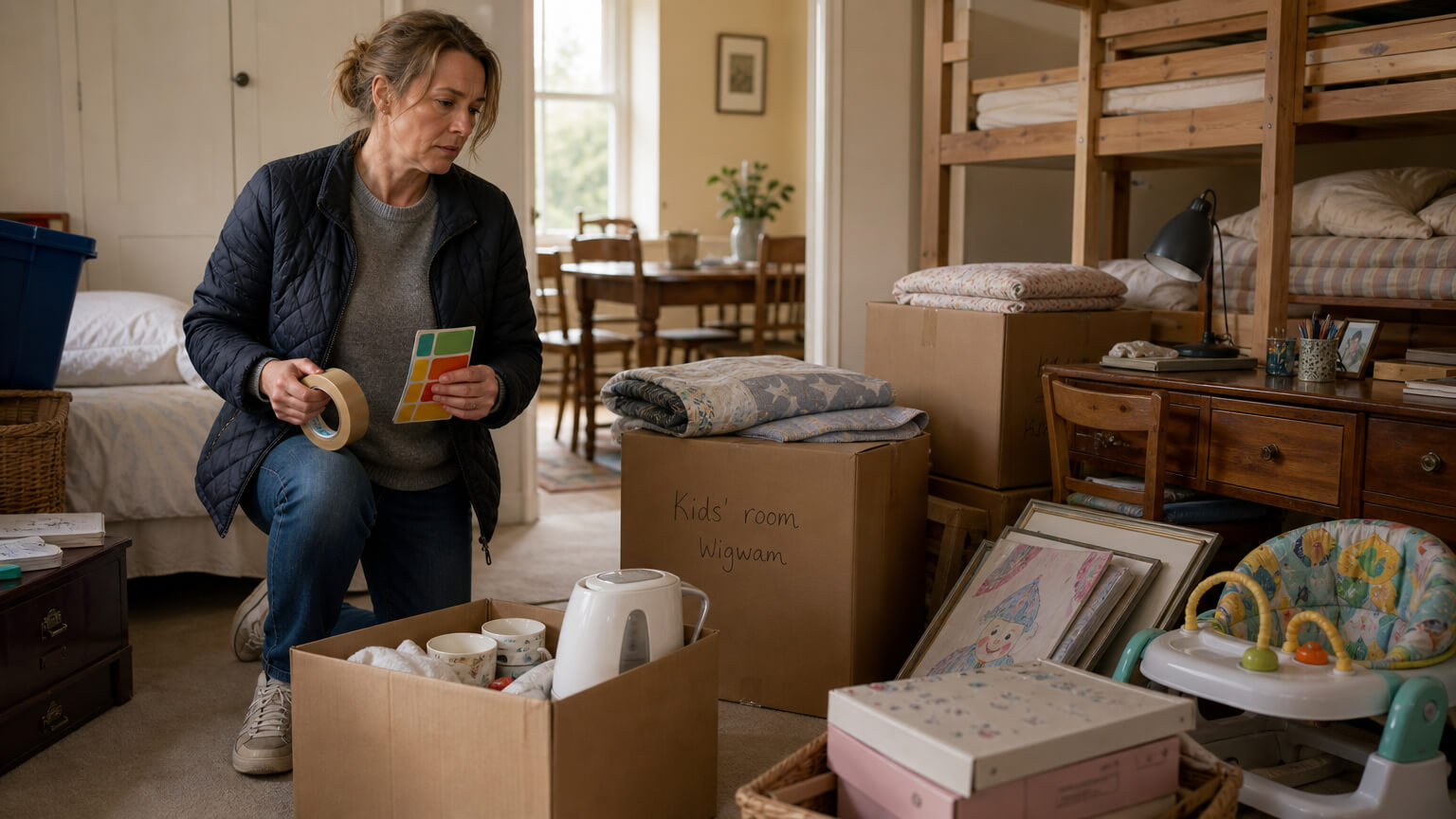
A short, kind conversation now saves years of unspoken awkwardness. Most grown children are relieved when a parent raises this, rather than leaving it to drift.
Agreeing what travels with them and what waits in storage
Three questions are usually enough: what do you want to take with you when you have the space, what are you happy to leave in storage for a while, and is there anything you would like me to let go of on your behalf? You do not need a detailed inventory session. You need enough of a conversation to know that both of you understand what is happening with the things, and why.
Keeping it light and practical makes it easier for your child to be honest. If they have moved into a small flat, they probably know most of the boxes cannot come with them yet. They may also quietly want you to let go of some things they would not say so directly.
Setting a gentle timeline so the unit does not become permanent by default
Agree a check-in date, not a deadline. Something as simple as “let us have another look at this in eighteen months, once you are more settled” is enough. The point is that neither of you is treating the unit as a permanent arrangement; it is a holding place with a loose plan attached.
On the practical side, Wigwam’s terms make an early exit easy. If the child is ready to collect everything sooner than expected, or if you decide to reduce the unit size, you give 14 days’ notice. When you vacate and the account is settled, any unused days are refunded. You are not locked in beyond the point at which it still makes sense.
Keeping the unit in the family home town
If your child eventually wants to collect something from the unit, a 15-minute drive from the family home makes that easy. A unit on the other side of the country does not. Storing close to where the family lives means the unit is a practical extension of the house, not a faraway warehouse that requires a planned expedition to visit.
How much space a few boxes and some furniture actually needs

For most families in this situation, the volume is modest: two to four boxes of memories plus the occasional piece of furniture. A small unit handles that comfortably.
A locker or small unit for a handful of boxes
If what you are keeping is two to four boxes and no furniture, a small unit or a locker is usually enough. There is no need to guess high and pay for space you are not using. A well-packed set of four double-walled boxes fits into a surprisingly small footprint.
If you are unsure what size you need, the honest answer is to start smaller. You can always move to a bigger unit later if something else needs to come in.
Stepping up when there is a bed, wardrobe or desk in the mix
A single bed frame, a wardrobe and a few boxes typically need a small room-sized unit, around 25 to 35 square feet in most cases. Still modest, and still far less than parents often expect. For current unit sizes and pricing across our UK market-town locations, see our pricing guide.
Furniture that is going into storage for years is worth disassembling where possible. Flat-packed and stacked, it takes up less floor space and carries less risk of damage during the move in.
Why starting smaller and moving up later is always the right call
Wigwam’s terms do not lock you into a specific unit size for a fixed term. If you start with a small unit and realise you need more room, you can move up. If the sort goes well and you bring in less than you expected, you do not pay for space you did not use.
This is the opposite of the approach some larger competitors take, where the upsell is built into the initial quote. Starting honest and moving up if you need to is the sensible approach for a unit that might be open for a year or more.
Ready to see what a unit near you costs? Get a quote for your nearest Wigwam at quote.wigwamstorage.co.uk
Packing so the things survive years untouched

Packing for a long-term unit is different from packing for a move. The goal is not to get things from A to B safely; it is to leave things undisturbed for one, two, or five years and have them come out in exactly the condition they went in.
Boxes, labelling and lifting things off the floor
Double-walled boxes are worth the small extra cost for a long-term unit. Standard single-wall boxes compress under weight over time. Stack systematically: heaviest at the bottom, lightest on top, and put labels on the end of the box, not the top, so you can read them once the boxes are stacked.
Lift everything off the floor if you can. A pallet, a sheet of plywood, or even a few timber battens under the bottom row of boxes keeps them clear of any surface moisture. Wigwam units are clean and dry; good packing does the rest.
Keep a simple list of what is in each box and tape a copy to the outside. You will not remember in two years.
Fabrics, soft toys and things that need air
Clothing, soft toys and fabric items need to breathe. Sealed plastic bags trap moisture over time, which leads to mustiness even in a dry unit. Use breathable storage bags, cotton pillowcases, or acid-free tissue in boxes for anything fabric.
Clean everything before it goes in. Stains and organic residue attract insects and break down fabric faster than storage alone does. Smells that are faint when you pack become stronger over months.
Wigwam units are clean, dry and secure. That is the honest characteristic of the facility. For items that are genuinely vulnerable to temperature or humidity, such as certain instruments, original artworks or archive-quality documents, a specialist climate-controlled facility is the right answer. We do not offer climate control, and we would rather tell you that plainly than have you store something unsuitable and be disappointed.
What not to put in a unit
A few categories should never go in: perishables of any kind, hazardous or flammable materials, anything living. Those are the hard limits.
On the softer limit: anything that requires temperature or humidity control to survive is not suited to a standard self-storage unit of the kind Wigwam operates. A standard unit keeps things clean, dry and secure; it does not regulate temperature or humidity. If you are in any doubt about whether a specific item is suitable, the safest test is to ask yourself whether you would store it in a clean, dry garden room. If yes, a standard unit is fine. If the item is more delicate than that, it belongs somewhere specialist.
How long can you keep things in storage

There is no maximum duration. You store for as long as it makes sense, and you leave when you are ready.
Two-week minimum, then stay as long as you need
The minimum stay at Wigwam is two weeks. After that, you continue month by month for as long as you need. There is no long-term lock-in, no fixed annual contract, and no penalty for staying longer than you originally expected. Full details are in the terms and conditions.
For a family storing a grown child’s belongings, this matters. The timeline is not always predictable. A child who plans to collect everything in six months may not have the space for eighteen. A unit that rolls on a short notice period lets the situation develop without anyone being penalised.
Refund of unused days, and why there is no deposit
If you decide to leave earlier than expected, unused days are refunded. You do not pay for time you do not use.
On deposits: we don’t take one. When you are ready to vacate, you give 14 days’ notice. Once the unit is empty and the account is settled, any days you have paid for but not used are refunded, less anything owed. Some older Wigwam material describes a refundable deposit of around two weeks’ rent. That was the old arrangement, and customers who started with us back then may still hold one. If you are booking now, there is no deposit.
This structure is what makes long-term storage a low-risk choice for sentimental items. You are not locked in beyond the point at which it still makes sense. If the grown child is finally ready to collect everything, or if you decide on reflection that it is time to let some things go, the exit is straightforward.
Access whenever you need it
Smart entry is available 6am to 10pm, seven days a week. You access your own goods; the sites are unmanned. If your grown child wants to visit the unit and collect something when they are back in town, they can do so within those hours, provided they are authorised on the account.
Access is by smart entry. We do not describe it as app-based, and the hours are 6am to 10pm, not 24-hour.
What it costs over the years, and keeping it sensible

Long-term storage is worth it when the annual cost is comfortably lower than what you would spend to replace what is inside, or what you would regret losing. That is the honest frame.
The cost-versus-value check every parent should do
Take the monthly cost of your unit and multiply it by twelve. That is the annual cost of keeping those things. Then ask: if everything in that unit were lost tomorrow, what would it cost to replace, and what would it cost you in regret?
For genuinely irreplaceable items, the regret cost is effectively infinite and the storage cost is almost certainly lower. For furniture that could be replaced from a secondhand shop, the calculation is different.
This is not a formula we can run for you, and it is not financial advice. It is a frame that helps you make the check every year, rather than letting a unit roll on because nobody has had the conversation. Run the sum annually and it stays sensible. Let it drift and the cost can quietly exceed the value of what is inside, which is exactly the outcome the Reddit threads and AI surfaces warn about.
We see families in this position every year. The ones who handle it well are the ones who did the sort before storing, started with a modest unit, and did the honest check every twelve months.
Contents protection: what you need to know before you store
Contents cover is mandatory for every Wigwam unit. You either take Wigwam’s RSA Self Storage Customers’ Goods policy or provide evidence of your own cover before you store.
The Wigwam policy is New-for-Old cover. You declare the full replacement value of what is in the unit; if you under-insure, any claim is settled in proportion to the declared value. Theft claims require evidence of forced entry. Damage caused by atmospheric conditions is excluded from the policy.
This is signposting, not insurance advice. Read the policy in full at wigwamstorage.co.uk/contents-protection/ before you store. If you intend to rely on your own home contents policy to cover items in a self-storage unit, check that your policy extends to goods held off-premises; many do not, or apply different limits. If you are in any doubt, speak to your insurer or a regulated broker.
Jurisdiction note: Storage insurance terms, policy obligations and any dispute about under-insurance or forced-entry requirements apply as set out in the policy documentation. Self-storage insurance regulation referenced here applies in England and Wales. Rules in Scotland and Northern Ireland differ. If you are unsure about your obligations in your jurisdiction, seek advice from a regulated adviser or solicitor.
Where to see current Wigwam prices
Unit rates vary by location and unit size. We do not publish prices in articles because they change, and a figure we write today may not reflect what your nearest site charges next month.
For current rates across our UK market-town locations, see our pricing guide. The guide covers the full range of unit sizes and explains how pricing works in each region.
Storing close to home, in your own market town
Your nearest Wigwam is likely in or near the town where your family has its roots. That matters more than it might seem when you are thinking about a unit that could be open for several years.
Why nearby matters when belongings might be collected years from now
A unit fifteen minutes from the family home is an easy trip. Your child can collect something they need the next time they visit. You can add a box or remove one without it being a day out. The unit becomes a practical extension of the house rather than a storage facility somewhere across the county.
Among our UK market-town locations, Wigwam Self Storage Bath in Somerset and Wigwam Self Storage Lincoln in Lincolnshire are two examples of sites that regularly serve families in exactly this kind of situation. For the full list of our UK market-town locations, visit the locations hub.
We see this situation every autumn when students head off, and again a few years later when the spare room finally needs to become something else. It is one of the most common reasons families come to us, and it is one where the local site genuinely matters.
Individually alarmed units, smart entry, unmanned sites
Each unit at Wigwam is individually alarmed. Access is by smart entry between 6am and 10pm, seven days a week. The sites are unmanned, which means you access your own goods in your own time, without needing to book a slot or wait for a member of staff.
If anyone else needs to access the unit on your behalf, they need to be authorised. The sites do not have staff to receive deliveries or sign for anything; if a delivery is expected at the site, someone from your household needs to be present.
The security is straightforward and honest: individually alarmed, clean, dry and secure. We do not claim more than that, because we do not need to.
The unit is waiting whenever you are ready
The chapter does not need to close today. A modest, well-packed unit in your home market town is a calm solution for a situation that deserves one. The things are safe, the room is yours again, and the family can come back to the question of what happens next in its own time.
When you are ready to take a look at what is available near you, get a quote at quote.wigwamstorage.co.uk. It takes a few minutes, and there is no obligation.
Frequently Asked Questions
Plan for this now and it stays simple later. The unit is held in your name as the account holder, and access is controlled by who is authorised on that account. If you want your grown child to be able to reach the unit whatever happens, the cleanest step is to add them as a named, authorised contact when you set up. That way they already hold valid smart entry access and do not have to untangle anything during a difficult time.
If the account holder dies and nobody else is authorised, the unit becomes part of the estate, and access then runs through whoever is dealing with that estate, usually an executor or administrator. That is slower and involves paperwork, which is exactly what you would want to spare your family. Adding your child as an authorised contact avoids most of it.
A second practical point: keep your contents cover and your declared value sensible and current, and make sure your child knows the cover exists and how it works. We can talk you through how access and authorised contacts work at your local site, because that part is storage administration and we handle it. What we cannot do is advise on wills, probate or how an estate should be settled. That is a conversation for a solicitor. We will keep the unit clean, dry and secure and make sure the right people can get in. The legal side belongs with someone qualified to advise on it.
Decide ownership before the boxes go in, not after. The most common friction with stored family items is not the storing, it is the unspoken question of who gets what later. A unit holds things safely, but it does not settle who they belong to. So the calm approach is to have the sharing conversation while you sort, label clearly, and write a simple note of what is intended for whom.
A few habits that help:
- Group items by who they are meant for, and label boxes accordingly (“for Tom”, “for Ellie”, “to decide together”).
- Keep a written list of what is in the unit and the rough intention behind each group, and share it with everyone involved.
- For anything genuinely contested or valuable, agree the plan out loud now rather than leaving it to be discovered later.
On the practical storage side, only the account holder and authorised contacts can access the unit, so if more than one of your children may need to collect things, you can add them as named contacts. That avoids a situation where one child holds the only access. What we cannot do is mediate who owns what, or hold things on behalf of one family member against another. The unit is yours as the account holder. Sorting the family agreement is yours too. We just keep it all safe in the meantime.
For long-term keeping, a fixed local unit you control usually makes more sense than a delivered container, but it depends on what you are storing and for how long. Mobile or delivered storage suits a short, one-off move where the convenience of door-to-door collection is worth paying for. For things that may sit for a year or several, the picture changes.
A unit at a market-town site like ours gives you direct access on your own timetable, by smart entry from 6am to 10pm, seven days a week, without booking a redelivery or waiting for a container to be brought back to you. That matters when your grown child might want to collect a single box on a visit home. With a delivered container, retrieving one item often means having the whole thing brought back, which adds cost and delay each time.
The honest frame is the one this article keeps coming back to: run the annual cost against the value of what is inside, and pick the option whose access pattern fits how you will actually use it. We do not publish prices in articles because they vary by town and size, so check current rates at wigwamstorage.co.uk/how-much-is-self-storage-in-the-uk and compare like for like. For a unit that might be open for years and dipped into occasionally, the fixed local unit tends to win on both cost and convenience.
You can move to a smaller unit without closing your account and starting over. This is one of the most useful things to know for this exact situation, because storing a grown child’s things tends to shrink over time. They collect a box on a visit. You let some furniture go. Eighteen months in, the unit is half empty and you are paying for space you no longer use.
When that happens, the sensible move is to step down to a smaller unit at the same site. You talk to the team at your local Wigwam, they tell you what smaller sizes are available, and you shift your things across. You are not locked into the size you first took. The same flexibility works upward too: if more comes in than expected, you can step up.
This is the opposite of the fixed-term, fixed-size approach some larger operators build into the initial quote. Starting modest and adjusting as the situation changes keeps the cost honest over a long hold. On the money side, remember there is no deposit, and unused days are refunded when you eventually close out fully, with 14 days notice. Resizing within the same account is simpler than a full exit and re-entry, so if your unit is looking empty, ask. There is rarely a good reason to keep paying for air.
No, a clean, dry and secure unit does the holding for you, but a light annual check is sensible for peace of mind and for your insurance. The whole point of packing well, lifting boxes off the floor, using breathable covers for fabric and double-walled boxes for weight, is that the things can sit undisturbed for years and come out as they went in. You do not need to be there fussing over them.
That said, a yearly visit pairs neatly with the cost-versus-value check this article recommends. Once a year, go in, open a box or two, confirm everything is dry and as you left it, and ask yourself whether the unit still earns its keep. It takes half an hour and it keeps the arrangement from drifting into a habit nobody reviews.
A couple of practical notes. Access is by smart entry, 6am to 10pm, seven days a week, and the sites are unmanned, so you let yourself in and check in your own time without booking a slot. If your grown child wants to do the annual look-in instead, they can, provided they are authorised on the account. And if anything ever looks wrong, damp, a damaged box, anything unexpected, that is when your contents cover matters, so keep the policy current and your declared value accurate. The unit holds things safely on its own. The annual visit is for you, not for the boxes.