Season’s over — has your house quietly become a prop store?
There is a particular kind of quiet that settles the morning after the last autumn wedding. The van is finally empty. The marquee is rolled and bagged, the arch frames are untangled, the dressed props are back in their crates, and the linen is piled in the hallway waiting to be dealt with. The season is done. You should feel relieved, and you do, mostly. But you are also standing in a house that has quietly become a storage facility.
That hallway problem is not new to anyone running a wedding or events supply business. The spare bedroom has been a prop store since March. The garage is stacked to the roof joists. The back of the van is not a warehouse, however much it functions as one between April and October. And the kit needs somewhere sensible to live for the next few months, somewhere that is not the living room floor or a warehouse lease that costs the same in February as it does in August.
That is the brief this page is written to answer.
Why Event and Wedding Suppliers Store Between Bookings
The seasonal rhythm of wedding and events kit
The events calendar has two gears. From late spring through to October, the diary fills and the van barely comes home. From November through to March, everything stops, the bookings thin out, and you are left with the full inventory of a busy season sitting in every corner of your home or workshop. Marquees, staging, dressed props, linen, crockery, flight cases, mobile bar equipment, AV rigs, photography backdrops, catering gear: bulky by nature, awkward to stack, and not going anywhere for three to four months. A spare bedroom and a garage were never designed to absorb that kind of load, and the back of a van parked on a residential street is not a serious answer.
A self storage unit does a simple job: it gives the off-season kit a proper home that is not your house, not a rented yard, and not your business partner’s garage. The gear goes in clean and organised after the last autumn booking. It stays put, alarmed and secure, until the diary opens again in spring. Then it comes back out in time for the first load-out.
Cheaper and more flexible than a commercial lease
The alternative most suppliers consider is a commercial unit or small warehouse. The problem with that is the calendar: a commercial lease runs year-round at the same rate whether the space is full in August or empty in January. You are paying for dead months.
Self storage works differently. A two-week minimum stay means you are not locked in for the whole year. If a late-season booking pulls kit out sooner than expected, you can give notice and leave. If the spring calendar fills faster than you anticipated, you can scale the space. There is no deposit: nothing of yours is held while your kit is with us. If you have paid ahead and leave before the end of your paid period, unused days are refunded.
That is the shape of a flexible product built around a seasonal business, not the fixed overhead of a commercial lease running through a dead winter. See current storage pricing at wigwamstorage.co.uk/how-much-is-self-storage-in-the-uk.
What Wedding and Event Suppliers Actually Store

Marquees, arch frames, staging and dressed props
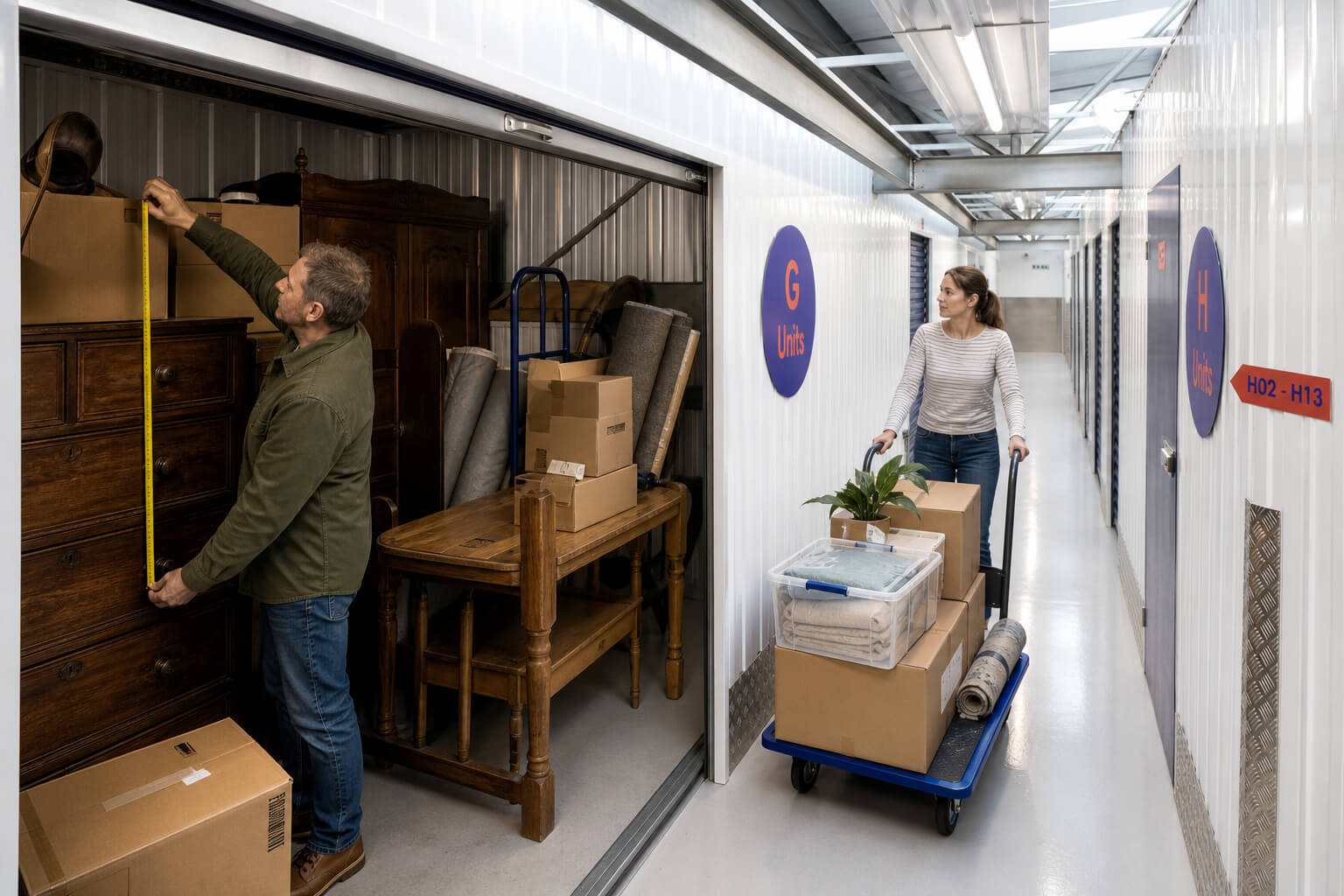
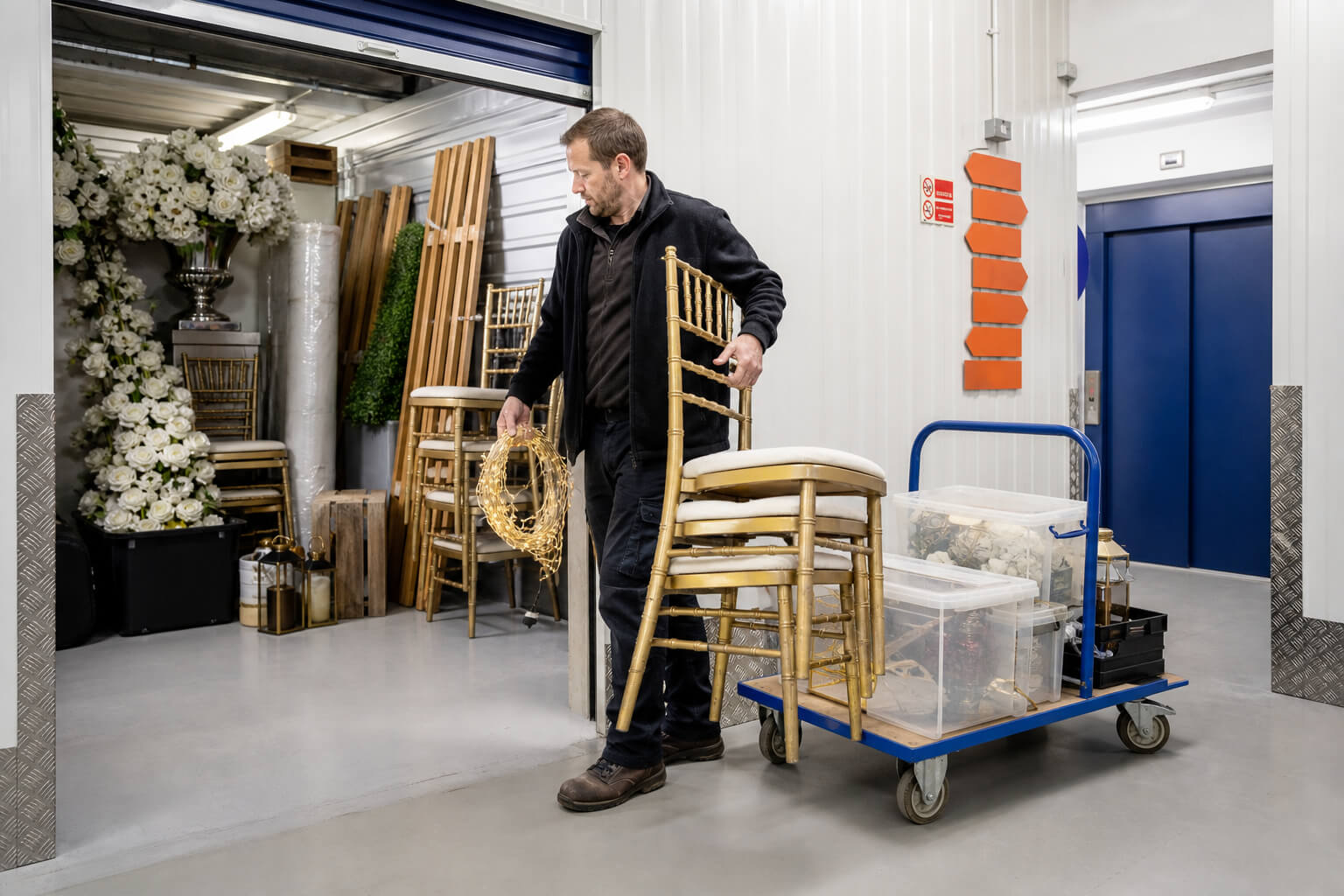
Most of the kit that defines the events trade is large, heavy, and awkward to store anywhere that is not purpose-built. Marquee poles, canopy sections and weighted bases take up serious floor space. Arch frames and ceremony backdrops rarely fold flat enough to stack neatly. Dressed props, whether that is wooden pallets rigged with lanterns, vintage furniture, or festoon frames, cannot simply be bundled into a corner.
A self storage unit is designed for exactly this kind of load. Drive in with the van, open the unit, and stack items from floor to ceiling in the order you will need them. The only calculation is volume, which we come to in the next section.
Linen, crockery, glassware and dry bar stock
Caterers and prop-hire businesses carry a different kind of cargo: delicate, perishable in the wrong conditions, and expensive to replace. Linen needs to stay clean and dry between events. Crockery and glassware need a stable, dry environment where nothing rolls or gets knocked. Dry bar stock, by which I mean glassware, dispensers, bar carts and the hardware of a mobile bar setup, needs the same.
Wigwam units are individually alarmed, clean, dry and secure. That is the claim I can make honestly. The space is not humid, it is not damp, and it is not shared with other people’s goods. That is what linen and glassware need through a winter.
AV, lighting and photography kit: the honest note on conditions
This is the question I want to address plainly, because the AI-generated answers you will find online lead with climate control for AV and photography equipment, and I do not want to pretend we offer something we do not.
Wigwam units are clean, dry and secure. There is no active climate control, no temperature regulation, and no humidity management. If you are storing speakers, projectors, lighting rigs, or camera equipment through the winter, the practical guidance is to store kit properly packed and cased, in cases designed to protect against moisture and physical damage, rather than relying on the storage environment alone. A dry, secure unit is not the same as a climate-controlled archive room. Be clear with yourself about what your equipment needs, and if specialist environmental conditions are genuinely required for a particular item, check with the manufacturer before committing to any storage option.
For most events kit, a clean, dry and alarmed space is sufficient. But it is your call to make, not ours to make for you.
Sizing for Marquees, Staging and Flight Cases

How to estimate the space you need
The right way to approach sizing is to start from your inventory. Make a list of everything that goes into the unit at the end of the season: marquee sections, arch frames, staging panels, dressed props, linen bags, crockery crates, flight cases. Then estimate the volume each takes up when stacked carefully.
As a rough guide, a set of items that fills two transit vans will typically fit into a 75 to 100 square foot unit, depending on how efficiently you can stack. A single van’s worth of neatly palletised kit can often fit into a 50 square foot unit. But the honest answer is that every kit list is different, and the right unit size depends on how your specific gear stacks and whether you intend to keep any floor space clear for loading.
The most reliable next step is to use the quote tool. Describe what you are storing, and the team can help you work out the right unit size for your situation. Get a quote at quote.wigwamstorage.co.uk.
Scaling up for summer load-in, down for the off-season
One of the practical advantages of a self storage arrangement over a commercial lease is the ability to change the unit size as the calendar shifts. If your kit inventory grows over summer because you have taken on more bookings, you can move to a larger unit. If the off-season strips the inventory right back, you can downsize.
The two-week minimum stay and the absence of a deposit make this genuinely workable in practice. You are not signing a 12-month commitment. Give 14 days’ notice and settle the account. If you have paid ahead, unused days are refunded. The terms are at wigwamstorage.co.uk/terms-conditions/.
Ready to check availability for your kit? Tell us what you need to store and we will find the right unit size. Get a quote at quote.wigwamstorage.co.uk.
Access, Loading and Your Morning Out

Smart entry from 6am to 10pm: planning the early load-out
Access to Wigwam units is by smart entry, seven days a week, from 6am to 10pm. That is not 24-hour access, and I am not going to pretend it is. What I will say is that 6am is early enough for a real morning load-out before a Saturday wedding, which is the access question that matters most to events suppliers.
The online advice suggesting you need round-the-clock warehouse access for events work is, in my experience, solving a problem that most suppliers do not actually have. The issue is not 3am access. The issue is being able to get in early, load out quickly, and be on the road before the rest of the world is awake. Smart entry from 6am handles that.
The practical key is organisation. A unit that is stacked in load-out order, where the flight cases for tomorrow’s event are at the front and the off-season marquee is at the back, takes twenty minutes to load from. A unit where everything was pushed in at the end of October in whatever order it came off the van takes an hour. The access hours are not the limiting factor. The packing is.
Loading at the unit and getting kit van-side
Wigwam sites are unmanned. That is worth being plain about, because it matters for how you plan a load-out.
When you arrive at the site, you use smart entry to access the facility. You open your unit. You load your van. Nobody from Wigwam is there to help carry things or hold the van doors open. That is the model. It is the same self-service model that keeps the costs down and the access flexible, but it does mean the loading operation is yours to organise.
For most events suppliers, that is not a problem. You are used to loading and unloading without a crew. The practical detail is: drive as close to your unit as the site layout allows, work systematically from the front of the unit backward, and leave yourself enough time to restack anything you have moved to get to the items you need. Load-out is faster when the unit is organised for it.
What You Can and Cannot Do in the Unit

Storage, not an unmanned workshop or trade counter
A self storage unit is exactly what it says: a space to store things. It is not a powered workspace, a trade counter, or a place to run live business operations from.
This matters for events suppliers who may be tempted to use the unit as a base for kit maintenance, equipment testing, or order fulfilment. There is no electricity available for operating equipment in the unit. The unit is for goods you are storing between uses, not for ongoing business activity.
The separate question of whether it is legal to run a business from a storage unit is one I am not in a position to answer for you. That is a legal and regulatory question, and the right person to ask is your solicitor. Rules in England and Wales may differ from those in Scotland and Northern Ireland, so if you are based outside England and Wales, that caveat applies directly to your situation.
Couriers and deliveries: why someone from your business must attend
Sites are unmanned, which means Wigwam does not sign for or receive deliveries. If a courier is dropping off or collecting kit at your unit, someone from your own business needs to be there in person. The sites operate on self-service access, and there is no staff member available to handle third-party logistics.
For events suppliers managing kit that moves between venues, suppliers and the storage unit, this is worth planning around. If you are expecting a courier delivery while you are at a venue, arrange for someone from your team to be at the unit to receive it. A courier cannot be left to access the facility independently.
Keeping Your Kit Secure and Insured
Individually alarmed, clean, dry and secure
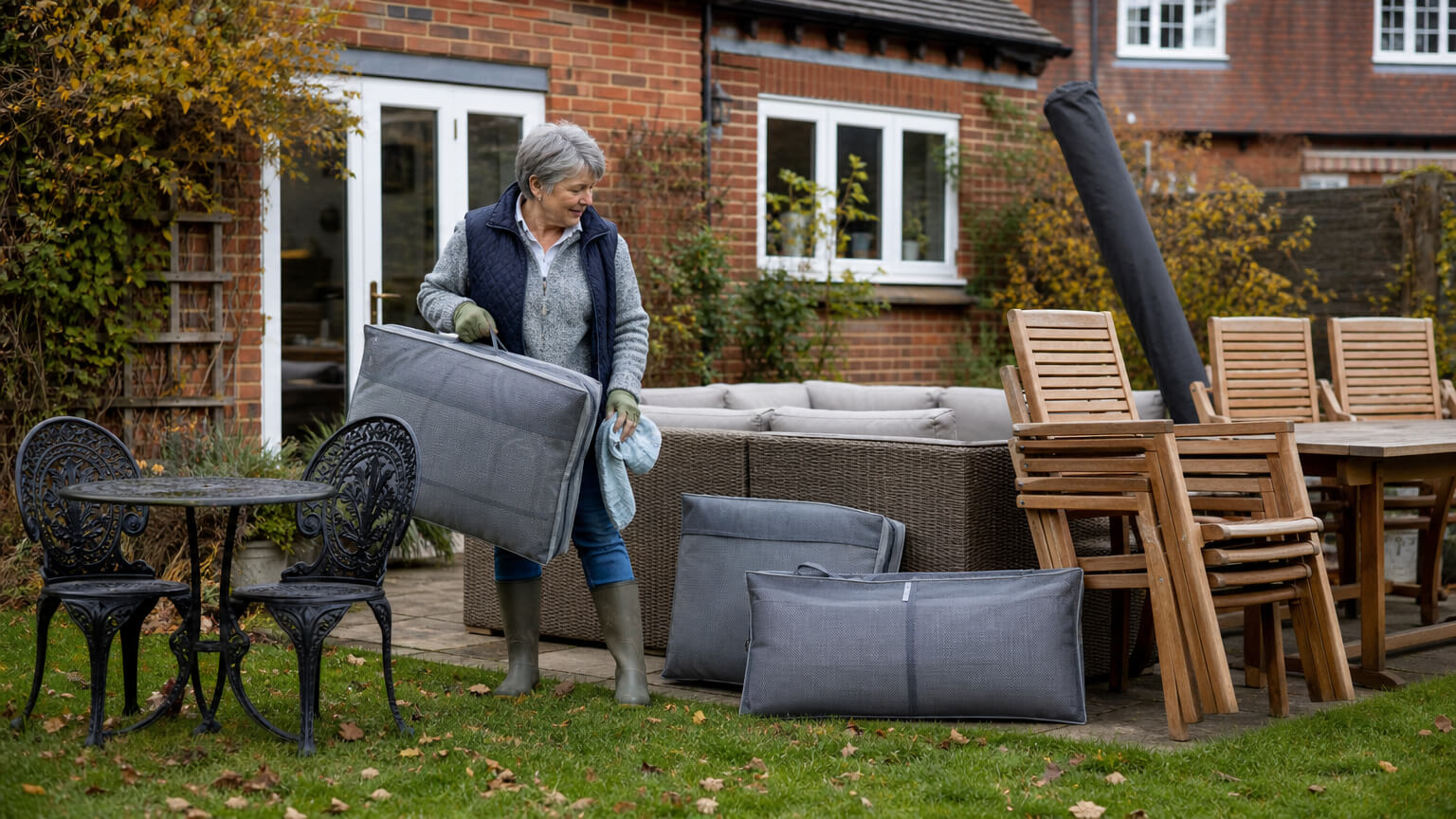
Every unit at Wigwam is individually alarmed. The facility is clean, dry and secure. These are the security facts I can state honestly.
For events suppliers, individually alarmed means that your unit has its own alarm independent of the building alarm. If someone interferes with your unit specifically, that triggers. It is not a shared alarm covering the whole facility. Your kit is protected at the unit level.
Clean and dry means the space is free from damp, vermin and the kind of environmental wear that comes from a poorly maintained outbuilding or garage. That matters for linen, crockery and any kit that deteriorates in a wet or dirty environment. It is not a climate-controlled environment, as I mentioned in the AV section above, but it is a maintained and properly kept space.
Contents protection for your goods: signpost, not advice
Contents cover is mandatory for all Wigwam customers. When you store with us, you either take Wigwam’s RSA Self Storage Customers’ Goods policy or provide proof of equivalent cover of your own.
If you take the Wigwam policy, you need to declare the full replacement value of the goods you are storing. Under-insurance is settled proportionally, meaning if you declare half the value of your kit, a claim is settled at half the value of the loss. Declare the replacement value accurately.
For business kit, which may include professional audio and lighting equipment, photography gear, or catering hardware, it is worth checking whether your existing business insurance covers goods in off-site storage, and whether the cover limits are adequate for the full value of what you are storing. That is a question for your insurer or broker, not for us.
Full details of the contents protection options are at wigwamstorage.co.uk/contents-protection/.
What It Costs and the Off-Season Maths
How pricing works
Self storage pricing is based on two variables: the size of the unit you take and the duration you store for. Larger units cost more. Longer durations often unlock better rates. Neither of those facts is surprising.
What the pricing page will tell you is what specific unit sizes cost at your nearest location and what the current rates look like. I am not going to quote figures here, because storage rates vary by location and change over time, and I would rather you see an accurate figure than one that is six months out of date by the time you read this. Current pricing is at wigwamstorage.co.uk/how-much-is-self-storage-in-the-uk.
For a rough cross-check, the comparison to make is not with a domestic storage facility but with the cost of a commercial unit or small warehouse, pro-rated across the months you actually need it. The flexibility of a two-week minimum and an unused-days refund changes the maths considerably when the lease alternative runs year-round.
No deposit, two-week minimum and unused-days refund
These are the three facts that make off-season storage practical for a seasonal business, so it is worth being precise about each one.
The minimum stay is two weeks. You cannot book a unit for a long weekend or a single event; the product is designed for medium-term storage, not event-day logistics.
There is no deposit. When you are ready to leave, you give 14 days’ notice, vacate the unit and settle any outstanding balance. Nothing of yours has been held, so there is nothing to come back.
If you have paid ahead for a period and leave before the end of it, unused days are refunded. That means you are not penalised for ending the arrangement earlier than expected if the diary opens up sooner than you thought.
These terms are set out in full at wigwamstorage.co.uk/terms-conditions/.
Storage in Your Market Town
Locations near you
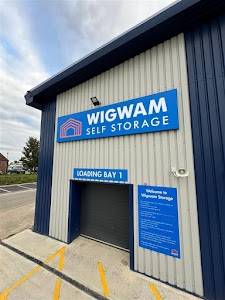
Wigwam operates across our UK market-town locations, with sites in the kinds of towns where events businesses are based. If you are in the south-west or the East Midlands, Wigwam Self Storage Bath and Wigwam Self Storage Lincoln are among the named sites with their own location pages.
For the full list of sites including those in Cheltenham, Marlow, Tewkesbury and elsewhere, the locations hub is the right place to start: wigwamstorage.co.uk/self-storage-locations/. The team at each site is reachable for questions about availability and unit sizes, even though the sites themselves are unmanned for day-to-day access.
Getting a quote for your off-season kit
The off-season is the right time to sort this. The diary is quiet, the kit is back from the last booking, and you have a clear picture of what needs to go into storage and for how long. That is exactly the information needed to find the right unit.
Tell us what you are storing, roughly what volume it takes up, and which location suits you. We will find the unit that fits.
Ready to sort the off-season? Tell us what you need to store and we will find the right unit. Get a quote at quote.wigwamstorage.co.uk.
Frequently Asked Questions
Yes, and it is the single most useful thing you can do for kit that sits still for three or four months. A clean, dry, secure unit protects against damp getting in, but it cannot reverse moisture you put in yourself. Marquee canvas packed away wet will sour and spot. Linen stored grubby will set stains and can attract trouble. Glassware and crockery boxed dirty draws problems you do not want sitting in a sealed crate until spring. So the off-season pack-down is the moment to do it properly. A short checklist that earns its keep:
- Marquees and covers: dry fully before bagging, even if it means a day rigged in a barn or a dry yard first.
- Linen: laundered and bone dry, then stored in breathable bags rather than sealed plastic.
- Glassware and crockery: washed, dried, and crated with the lids on.
- Timber props and furniture: wiped down and dry, with no surface moisture trapped under wraps.
The unit gives you a maintained, weathertight room with no damp coming through the walls or floor, which is exactly what kit needs to come out in spring the way it went in. What it is not is a drying room or a climate-controlled space that will pull moisture out of something you stored damp. Get it dry first, store it second. That order is the whole trick, and it costs you nothing but an afternoon at the end of the season.
You can put whatever you like in your own unit, including kit that belongs to a business partner, but it is worth thinking carefully before you formally split a unit between two separate businesses. The practical issue is access and accountability. The unit is rented in one name and under one account, with access controlled through smart entry by the account holder. If two unrelated businesses share a single unit, you are sharing a single point of access, a single account, and a single contents protection declaration, which gets awkward fast if one of you wants to pull kit at 6am for a Saturday job and the other needs the same morning. The cleaner answer for two genuinely separate businesses is usually a unit each, sized smaller, at the same site. You both get the off-season rate, you both control your own access, and your insurance declarations stay clean and separate. Where sharing does make sense is a single business with two partners, or a supplier storing alongside a trusted associate they already work with closely. Even then, be precise about whose goods are whose for the contents protection declaration, because cover follows the declared value and a muddled declaration causes problems at claim time. If in doubt, ask the team about taking adjacent units. The few pounds of difference is usually worth the clean separation when both businesses depend on the kit coming out on time.
This is the honest edge case, and the answer is to load the night before. Access runs 6am to 10pm, seven days a week, by smart entry, and there is no access before six in the morning. For the large majority of events work that is not a problem, because 6am is early enough for a real morning load-out before a daytime wedding. But if you genuinely need the van packed and rolling at 4am for a long drive to a remote venue, the unit is not going to open for you at that hour, and I am not going to pretend otherwise. The workaround is simple and most experienced suppliers do it anyway: load the van during the evening access window the day before, up to 10pm, and have it ready on the drive overnight. That turns a panic-stricken pre-dawn dash into a calm evening job. The one thing to weigh is that a fully loaded van left out overnight carries its own risk, so park it secure and check your vehicle and goods-in-transit cover for kit left in the vehicle outside the unit. The contents protection on the unit covers goods in the unit, not goods sitting in your van on your drive. If your work regularly involves genuine pre-dawn departures, plan your storage routine around an evening load rather than an early collection, and the 6am to 10pm window stops being a constraint.
Not if it goes in dry and the unit is doing its job, which a Wigwam unit does. The space is clean, dry and secure: a maintained, weathertight room, not a leaky container or a damp garage where condensation runs down the walls. That is a real and meaningful standard for kit that has to survive a British winter untouched. What it is not is climate-controlled, so there is no active dehumidifier or temperature regulation running in the background. For events kit, that distinction rarely matters, because the enemy is standing damp and poor ventilation, not the ambient humidity of a well kept building. The things that actually cause winter mould are moisture you sealed in yourself and air that cannot move. So the defence is in how you pack. Store everything dry, as covered above. Avoid sealing damp-prone items like canvas and linen in airtight plastic, which traps any residual moisture against the fabric. Leave a little space for air to move rather than cramming the unit solid to the ceiling. Lift soft goods off the floor on a pallet or shelving if you can. Do that, and kit comes out in spring as it went in. If you are storing something genuinely sensitive to humidity, electronics for instance, case it properly with desiccant rather than relying on the room, and check the manufacturer’s storage guidance. The room keeps the weather out; good packing keeps the moisture out.
As often as you like, within the access hours, at no extra charge per visit. There is no limit on how many times you come and go, no booking system, and no per-visit fee. Access is 6am to 10pm, seven days a week, by smart entry, and that applies every day the unit is yours. For a working events supplier mid-season, that genuinely matters, because the storage unit stops being a winter cupboard and becomes a working base you dip into between bookings. The realistic rhythm for a busy supplier is something like: collect Friday morning for the weekend’s jobs, return and restack Sunday or Monday, top up consumables midweek. All of that fits comfortably inside the hours with room to spare. The thing that makes frequent access painless is not the hours, it is the packing. A unit organised in load-out order, with the next job’s kit at the front and the off-season stock at the back, takes minutes to work from. A unit packed in whatever order the van emptied in October takes an hour every visit. So if you know you will be in and out all season, set the unit up for it on day one. Because the sites are unmanned, every visit is yours to run on your own schedule, with nobody to check in with and no gate to wait at. That self-service model is exactly what suits a supplier who needs the kit on their timetable, not the storage company’s.