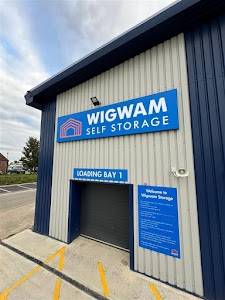
Peak stock has landed and there’s nowhere left to put it?
You already know the feeling. The Q4 order lands and there is nowhere left to put it. The spare bedroom is stacked to the ceiling. The shop back office looks like a game of Jenga. The garage is not really an option any more. You have a busy season coming and a stock problem that needs fixing, fast.
The instinct is to find more space. The worry is what that commitment costs. A commercial warehouse lease sounds like a solution until you read the small print and realise you are signing twelve months, business rates and a dilapidations clause for a problem that, if the season goes well, will be done in ten weeks.
There is a different shape to this. A self storage unit in your own market town, flexible by the month, with a two-week minimum stay and no deposit. You take the space when the stock arrives. You hand it back when the peak is done. This page covers how that works in practice, what it actually costs to compare, what fits in a unit, and what you need to plan for with deliveries and access.
The seasonal stock problem a warehouse lease cannot solve

A warehouse lease and a seasonal stock overflow are two things that do not match. One is a permanent fixture; the other is a temporary problem. Getting those two shapes confused is an expensive mistake that sensible business owners make more often than they should, because the commercial-property market does not really offer a “just for the busy weeks” product. Self storage does.
Why a warehouse lease is the wrong shape for a peak
The problem with a warehouse lease is not the rent. It is the shape of the commitment. A typical commercial lease in England and Wales runs for three, five or ten years. Even a short-form “easy-in” lease is usually twelve months. You pay for the space whether you need it or not, and when the lease ends you face a dilapidations assessment: the cost of returning the property to the condition it was in when you arrived. Business rates sit on top. And if the lease has a break clause, exercising it usually means giving six to twelve months’ notice and sometimes paying a penalty.
None of that fits an overflow problem that lasts from October to January, or from March through May. The lease is designed for a business that needs the space every day of every month. If you need it for ten weeks, you are funding twelve months of it.
Note: business rates liability, lease structures and dilapidations obligations are governed by law in England and Wales. Rules in Scotland and Northern Ireland differ. If you are reviewing a lease, consult your solicitor before signing.
What “scaling without a lease” actually looks like in practice
The practical alternative is simpler than most people expect. You book a self storage unit before your peak period begins. You move the stock in. You run your pick-and-pack runs as needed through the season, using the unit exactly as you would an overflow stockroom. When the peak passes and the shelves are clear, you give 14 days’ notice, clear the unit, and the account is settled. Unused days are refunded once you have vacated and the account is cleared.
That is a two-week minimum stay at one end and a month-to-month rolling arrangement at the other. You are not guessing whether next year’s peak will be big enough to justify the space. You take the space this season, on this season’s terms.
Self storage vs a warehouse lease, the honest cost comparison
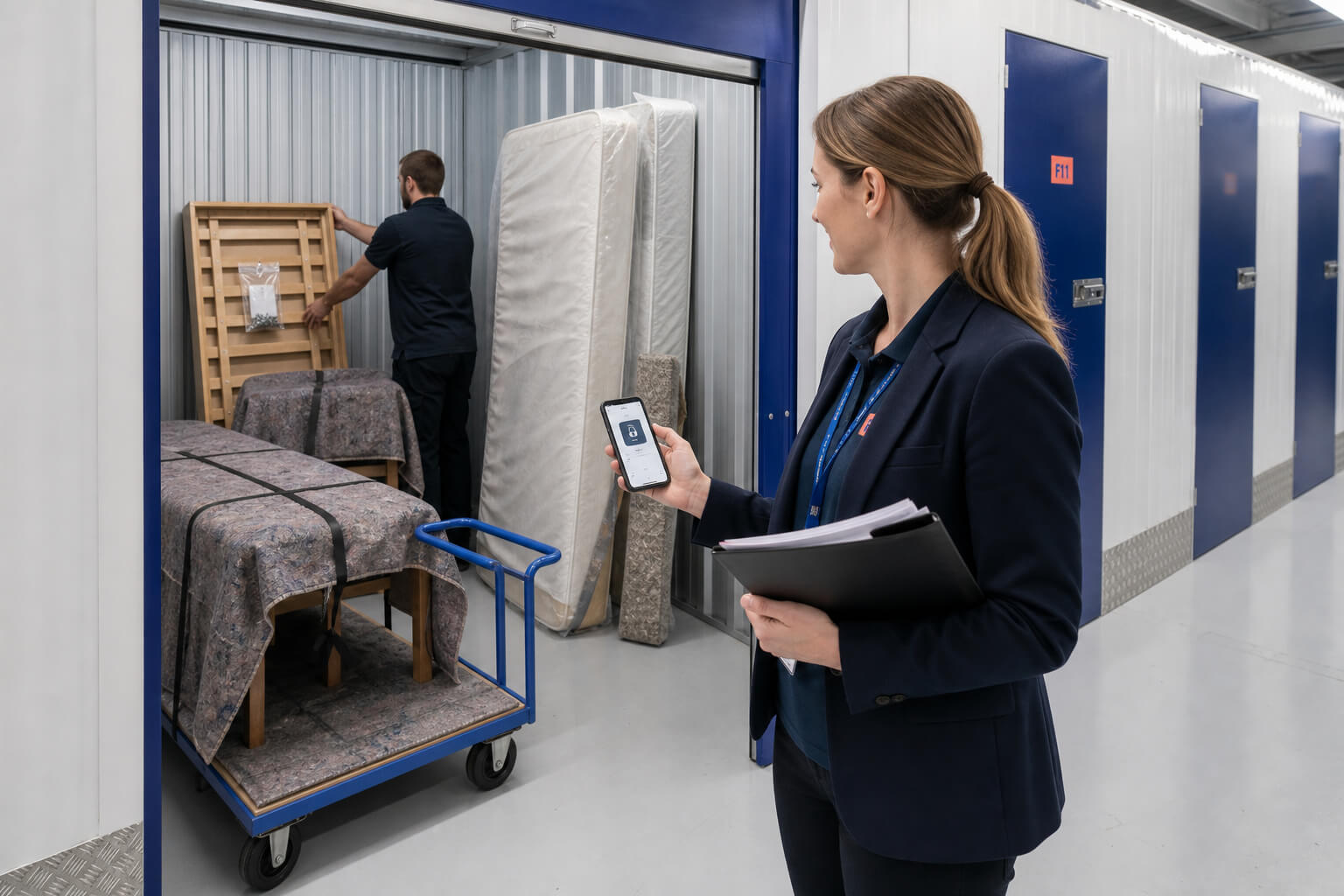
Put the two options side by side and the financial difference is not subtle. A warehouse lease asks you to commit capital, take on a rates liability and accept a minimum term before you know what next year looks like. Self storage asks you to pay for the months you use it.
No business rates on the unit, no twelve-month tie-in
When you rent a self storage unit, you are not the ratepayer for the premises. Wigwam carries the business-rates liability for the facility; you pay for the unit you use. That removes one of the biggest hidden costs of a commercial warehouse: the annual business-rates bill that arrives regardless of whether you are busy or quiet.
There is no minimum term tied to a lease. The unit rolls month to month after the two-week minimum. You are not locked into a quarterly rent commitment or a lease anniversary that forces you to renew or negotiate in advance.
Whether the cost of a self storage unit is deductible as a business expense is a question for your accountant. It is not something we are able to advise on here. For current unit costs, see our pricing and size guide.
Two-week minimum stay, no deposit, refund of unused days
The financial terms are designed to be the opposite of a lease commitment. The minimum stay is two weeks, not twelve months. If your peak clears faster than expected and you want to leave early, unused days are refunded. There is no deposit: once you have given 14 days’ notice, cleared the unit, and the account is settled with nothing outstanding, that is the end of it.
That is what “flexible” actually means in practice. Not a rolling break clause with notice obligations; not a penalty for leaving early. A unit you pay for while you use it, and stop paying for when you do not.
Full terms are at wigwamstorage.co.uk/terms-conditions.
Ready to see what a unit would cost for your peak?
Get a quote at quote.wigwamstorage.co.uk
Sizing your unit for the peak

Matching the right unit to your stock is the practical question underneath all the planning. Too small and you are cramped from day one. Too large and you are paying for air. The good news is that self storage unit sizes are straightforward, and most SME owners find the sizing conversation easier than they expected.
Matching unit size to boxes, pallets and seasonal bulk
A standard self storage unit is floor-level access, either drive-up outdoor or indoor corridor. There is no loading dock and no forklift bay. Units typically range from around 25 square feet (think a large wardrobe) up to 200 square feet and beyond for larger commercial stock. A 50-square-foot unit holds the equivalent of a Transit van’s load. A 100-square-foot unit starts to feel like a small stockroom.
Pallets can be stored, but there is no dock-height loading. If your supplier delivers on a flat-bed or with a tail-lift, your team manages the unloading and gets stock into the unit. That is worth planning for before the delivery lands, especially if the stock is heavy or needs hand-trucking.
For help matching size to your volume, the pricing and size guide walks through unit dimensions.
Scaling up and down as the season moves
One of the practical advantages of a self storage unit is that you can take a second unit for the peak and hand one back once stock begins to clear. You are not committed to a fixed footprint for a fixed term. If October is bigger than expected and you need more room by November, that conversation is straightforward. If February is quiet and the stock has sold through, you give notice on the second unit and it is gone.
The space tracks the season. That is the shape that a lease cannot give you.
What stock suits a self storage unit (and what does not)

Self storage is not the right answer for every type of stock. Part of what we try to do is tell you plainly what fits and what does not, so you can make the right call for your business rather than find out at the wrong moment.
Clean, dry and secure: what that actually covers
Each Wigwam unit is individually alarmed, and the site uses smart entry to control access. The environment is clean, dry and secure. For boxed goods, clothing, homewares, trade samples, display stock, equipment, stationery, seasonal retail stock and similar goods, a unit is well suited.
What a Wigwam unit is not is climate-controlled. We do not market the units as temperature or humidity managed, because they are not. We say “clean, dry and secure” because that is what they are. If you have seen references on other sites or in search results to “climate-controlled” self storage as a general category claim, that does not apply here.
What we do not store (temperature-sensitive goods, vehicles, leisure)
Temperature-sensitive goods, perishables or anything that requires a controlled environment are not suitable for our units. That is a plain answer and an important one if your peak-season stock includes food or pharmaceutical products.
Vehicles are outside our remit. We do not store cars, vans, motorbikes, caravans, boats or any leisure vehicles. Our units are for household goods and business goods.
If you are unsure whether a specific type of stock is suitable, contact the team at your nearest location before booking.
How deliveries work on an unmanned site

This is the question we want to answer before you have to ask it, because it matters a great deal if your business model relies on supplier deliveries going into your overflow space. The honest answer is different from what some competitor brochures and general category descriptions say.
Someone from your business must be present for couriers
Wigwam sites are unmanned. There is no staffed reception, no warehouse team and no one at the facility to sign for or receive deliveries on your behalf. If a courier or supplier is delivering to your unit, someone from your own business must be on site to accept the delivery.
That is not a hidden condition. It is how the sites work, and planning around it is straightforward. You book the delivery slot to coincide with when your driver or a team member is going to be at the unit. Most SME owners running pick-and-pack runs manage this without difficulty. The important thing is to build it into your delivery schedule, not to assume someone will be there.
Access hours: 6am to 10pm, seven days, smart entry
Access runs from 6am to 10pm, seven days a week, via smart entry. That is not 24-hour access, and we do not describe it as such. What the window does cover is a full commercial working day: early runs before trading opens, restocking during the day, and an evening drop-off after the shop has closed. For most picking and delivery schedules, 6am to 10pm is more than enough.
“Smart entry” is the term we use. The access system is not described by us as app-based.
What you can and cannot do from the unit

A Wigwam self storage unit is storage you control. It is worth being clear about what that means in practice, because the honest answer to “can I run a business from a storage unit?” is “it depends which part of your business you mean.”
Stock, pick-and-pack runs and restocking: yes
Using the unit as overflow stock, coming in to collect goods for dispatch, loading your van for a market or trade event, restocking from the unit after a delivery: all of that is exactly what this space is for. You access your goods when you need them, within access hours, using your smart-entry credentials.
A shopfront, staff base or customer-facing operation: no
A self storage unit is not a place of work for employees, not a shop customers can visit and not a customer-facing premises. Wigwam does not provide inventory management, pick-and-pack staffing or any fulfilment service. The unit is space. What you do with it, within the terms of use, is up to you.
Questions about the regulatory and planning-use implications of business activity from a self storage unit are not something we can answer here. For those questions, speak to your solicitor and your accountant.
Note: business use, planning classification and any associated regulatory questions are governed by law in England and Wales. The position in Scotland and Northern Ireland may differ. Consult a solicitor for advice relevant to your situation.
Security and protecting your stock

Peak-season stock has real value, and the security of what you have stored matters. Here is what Wigwam provides, and what you need to arrange separately.
Individually alarmed units and smart entry
Each unit is individually alarmed. The site access is controlled via smart entry, which means only people with valid credentials can get in. The environment is clean, dry and secure by design. There is no staffed reception, but the security at unit level is specific: your alarm, your unit, your access.
Insuring your business stock: the contents-protection options
Contents cover is mandatory for all goods stored with Wigwam. You have two options: take Wigwam’s contents-protection policy, underwritten by RSA under their Self Storage Customers’ Goods scheme, or provide evidence of your own cover.
The RSA policy is New-for-Old cover with a £50 excess. You declare the full replacement value of what you are storing. If you under-declare, any claim is settled in proportion to the value declared, not the full value of the goods. Theft claims require evidence of forced entry. Climatic damage is excluded.
We do not quote insurance premiums on this page; costs depend on the value you declare. For full details of the cover options, see wigwamstorage.co.uk/contents-protection.
If you intend to use your own business insurance, check with your broker or insurer that the policy extends to goods held in a third-party self storage facility. Not all commercial stock policies do.
Note: insurance products are regulated by the FCA in England, Wales and Scotland. The position in Northern Ireland may differ. Speak to your broker or insurer for advice on the right cover for your goods.
Wigwam locations for business overflow, close to where you trade
One of the practical limitations of a distant industrial estate is that it adds time to every picking run and every delivery visit. If your overflow space is thirty minutes from your shop or your home-office despatch point, that is an hour of your day gone on every trip in peak season.
Wigwam operates across our UK market-town locations, chosen to sit close to where businesses actually trade rather than on the edge of a motorway junction. Named examples include Wigwam Self Storage Lincoln in Lincolnshire, Wigwam Self Storage Bath in Somerset, Cheltenham in Gloucestershire, Reading in Berkshire, Burton upon Trent in Staffordshire, Dorking and Leatherhead in Surrey, Bromsgrove in Worcestershire, Tewkesbury in Gloucestershire, Warminster in Wiltshire, Marlow in Buckinghamshire, and others.
To find the location nearest to your business, see the full locations hub.
Find the unit nearest to you and get a quote at quote.wigwamstorage.co.uk
Frequently Asked Questions
Your authorised people can access the unit, which is what makes a pick-and-pack operation practical. A peak season run by one person who has to be present for every collection does not scale, so the access is set up around the account holder’s authorised contacts rather than you alone. That means a member of your team can come in, load the van for a delivery run, and head out without you being there, using the smart entry credentials within the access window.
Two things are worth being clear about. First, access is for your authorised people, not for couriers, suppliers or unaccompanied third parties; the body of this article covers why someone from your own business must be present for any delivery, and the same principle applies to who can be in the unit. Second, the access window is 6am to 10pm, seven days a week, by smart entry, not around the clock, so a very early picking run works and a late evening drop after the shop closes works, but a 2am dispatch does not. Set up your authorised contacts when you open the account, brief them on the access rules, and your peak team can keep the stock moving without funnelling every trip through you. Sites are unmanned, so there is no reception to coordinate with: your people, your credentials, your unit.
Treat this as a question for your accountant and your own due diligence rather than something to assume, because a storage unit is space you rent, not a trading premises or a registered office service. The unit gives you somewhere to hold and move stock; it is not a customer-facing address, not a place of work for employees, and Wigwam does not provide a registered-office or mail-handling service. Using it as a delivery address for supplier stock is fine in the practical sense, provided you remember the delivery rule: the site is unmanned, so someone from your business must be present to receive anything, because no one here signs for or accepts goods on your behalf.
Whether you can or should register the unit as your company’s official address with Companies House or HMRC is a different matter, and it touches on planning use, business regulation and your trading structure. Those are questions for your accountant and, where relevant, your solicitor. We cannot advise on the regulatory or tax position, and it genuinely varies with your circumstances and where you trade, with rules differing across England and Wales, Scotland and Northern Ireland. The honest summary is that the unit is excellent as a physical overflow stockroom you control, and you should take professional advice before treating it as a formal business address. Keep the two questions separate: physical stock handling is what the unit is for; formal address registration is a professional-advice question.
Speak to the team straight away if cash flow is tight, because the worst outcome comes from going quiet, not from being upfront. A missed payment is a contractual matter governed by the terms you sign, and the specifics of arrears, any charges, and what happens to access are set out there, so read the terms and conditions before you book rather than after a problem arises. For a seasonal business, the more useful point is how to avoid the situation in the first place.
The structure is built to flex with your season precisely so you are not carrying space you do not need through the quiet months. If February is dead and the stock has sold through, you do not hold the unit and hope to make the payment; you give 14 days notice, clear it, and the unit goes, with any unused days refunded once the account is settled. Then you take a unit again next peak. That is the discipline the monthly rolling term is designed for: you pay for space while you are using it and stop when you are not. If a genuine cash-flow gap hits while you still need the space, the team would always rather have an early conversation than discover a problem at the end. The terms are the contract; the practical advice is to size the commitment to the season and not let a quiet month catch you holding space you have stopped earning from.
The site is built and maintained as a clean, dry, secure facility, and any fire-detection or suppression arrangements are part of the building’s specification rather than something to claim casually, so if the precise fire provision matters to your stock or your own insurer, ask the local team about that specific site before you book. What this article can tell you plainly is how the cover works, because that is the part most stock owners actually need to get right.
Contents cover is mandatory for all goods stored with Wigwam. You either take the RSA Self Storage Customers’ Goods policy or provide evidence of your own cover, and you declare the full replacement value of the stock; under-declare and any claim is settled in proportion to what you declared, not the full value. The policy is New-for-Old with a 50 pound excess. There are exclusions that matter for stock: theft claims require evidence of forced entry, and climatic damage is excluded, which is one more reason temperature-sensitive goods are not suitable here. We do not quote premiums, because the cost depends on the value you declare, and we do not give insurance advice; for the cover detail see the contents-protection page, and if you intend to rely on your own commercial stock policy, confirm with your broker that it extends to goods held in a third-party self storage facility, because not all do.
Yes, and for a business trading from more than one location it can make real sense. The whole logic of using market-town storage rather than a distant industrial estate is to cut the time on every picking run and delivery visit, and if you trade from two towns, two units close to each one beats a single unit that is far from both. You take a unit at each location, near where you actually trade, and run each as overflow for that side of the business.
Each unit is a separate arrangement: its own account, its own access credentials, its own two-week minimum and 14-day notice to close. That is an advantage, not a complication, because it means you can hold one through a long peak and give notice on the other the moment its stock clears, without the two being tied together. The same delivery rule applies at every site: someone from your business must be present to receive goods, because all the sites are unmanned. To set this up, look at the locations hub for the towns nearest each of your trading points, and get a quote for each at quote.wigwamstorage.co.uk. One practical note for a multi-site arrangement: keep your stock records clear about which unit holds what, so a picking run does not send someone to the wrong town. The network is built around market towns precisely so that being close to where you trade is the normal case, not the exception.