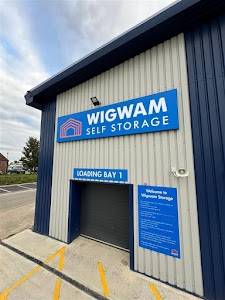
Has the garage finally stopped being enough for all the kit?
There is a specific moment every florist, stylist and hire firm recognises. The arch came back from Saturday’s wedding and there is nowhere to put it. The rails are in the hallway again. The box of plinths is behind the car and someone is going to trip over it before the week is out. The garage was always a temporary answer, and it stopped being enough around the same time the bookings started coming in properly.
You have built a real business. The kit reflects that: arches, rails, lighting stands, backdrops, vintage chairs, ribbon stock, props that took years to collect. None of it is cheap to replace, and all of it needs to be clean, findable and ready to load by six on a Friday morning. What it needs is a proper home between jobs.
This is a plain account of what self storage does for kit-based trade businesses, what it does not do, and how Wigwam works in practice. No brochure language. Just the honest version.
When the garage stops being enough
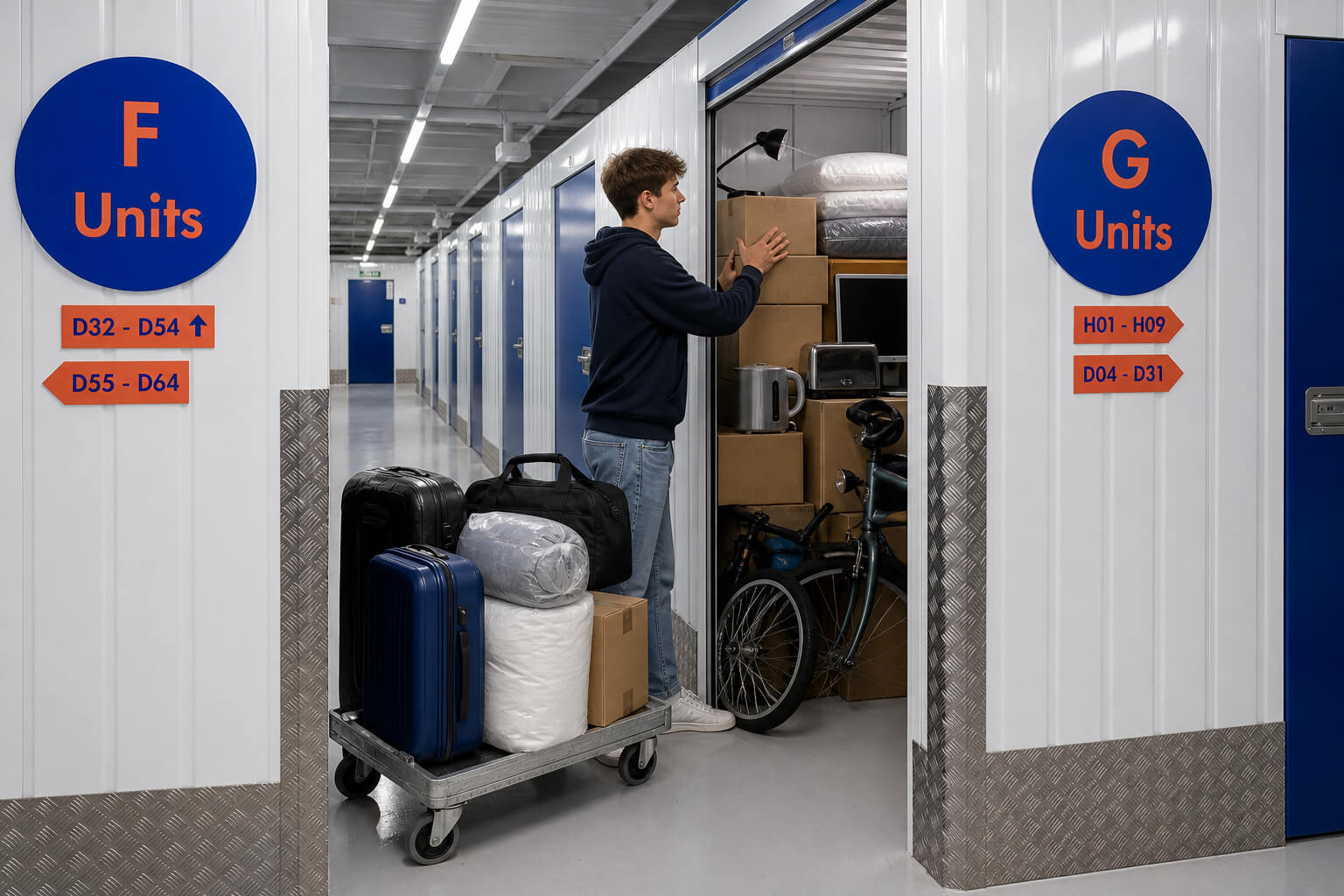
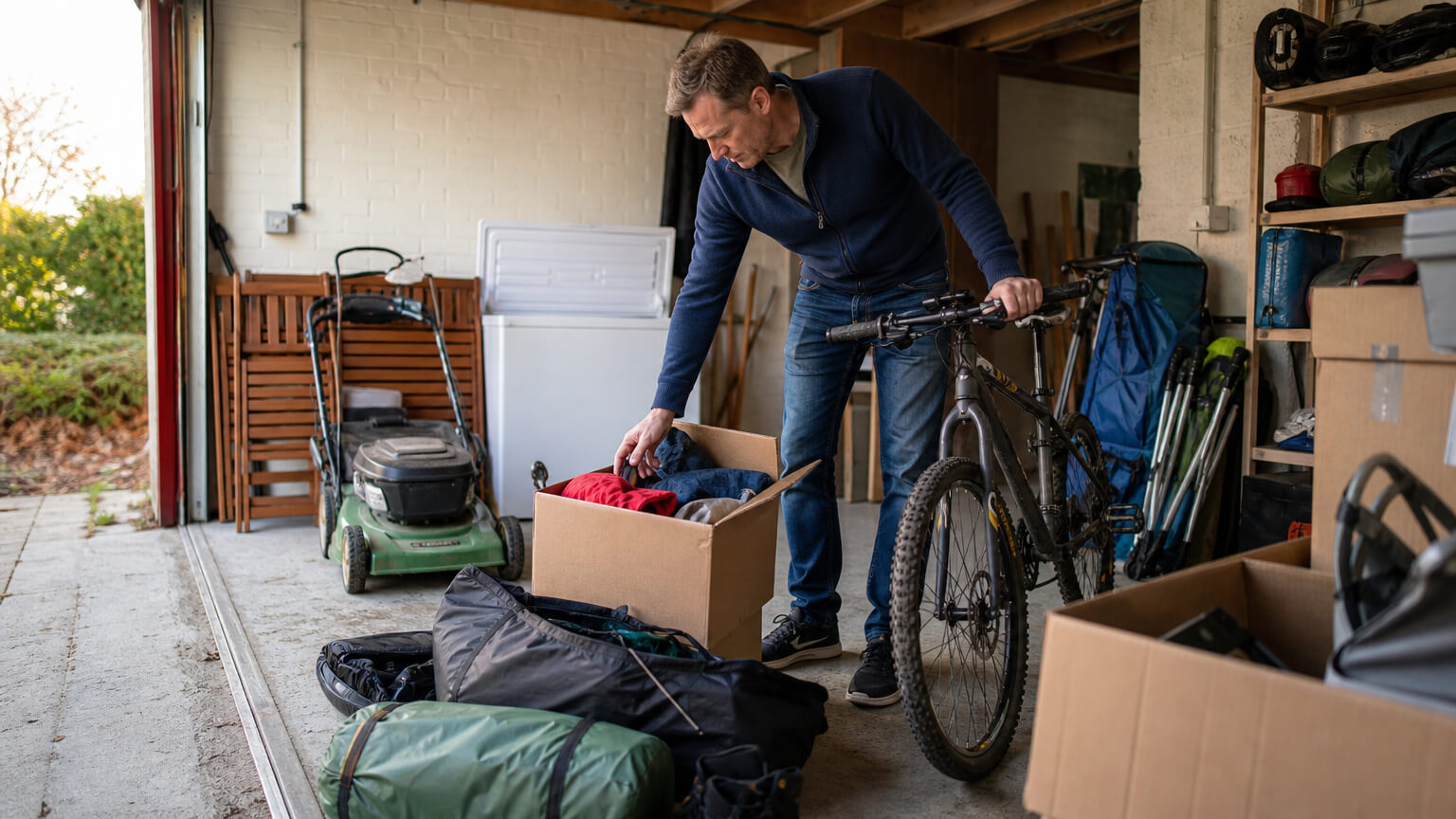
The moment this becomes a storage problem rather than a clutter problem is when the kit starts costing you time. You spend twenty minutes the night before a job finding the velvet arch you know is in the garage somewhere. The rails are tangled. The lighting stand has been leaned against the wall at an angle that means the bag no longer zips properly. The kit is fine; the system is not.
A unit gives you back the system. Everything has a place it goes back to after the job. You load the van on the day from an organised space, not from three different rooms.
Florists: vases, arches, plinths, dry stock and ribbon
For a florist, the dry side of the business has nowhere good to live. Arches and plinths are bulky and awkward indoors. Vases stack but take up floor space. Ribbon, wire and oasis stock needs somewhere clean and dry, away from damp, away from the kitchen and away from the dog.
A self-storage unit handles all of that well. The units at Wigwam are clean, dry and secure. They suit dry floristry stock, props and decorative kit exactly. What they do not do is cold storage. If you need a cool room for fresh blooms, that is a different facility entirely. For everything that lives around the flowers rather than in the bucket, a storage unit is the right answer.
The unit is also where the business stops looking like a hobby. When the arches have a home and the stock is organised, you arrive at the venue looking like the professional operation you already are.
Stylists and photographers: rails, props, lighting and backdrops
A rail of sample clothing takes up a surprising amount of floor space. Two rails take up the spare room. Add lighting stands, a backdrop roll, prop boxes and a reflector bag and you have the contents of a small studio living in a domestic space that was never designed for it.
The unit becomes the studio the lease never justified. Rails can be hung properly. Equipment bags stand upright. Props are grouped by shoot type rather than wherever they fitted when you came home at midnight after a job. The next morning, the kit is ready.
A stylist told us once that the unit changed the morning. Not the job itself, just the morning before it. Everything was where it should be. That is the whole point.
Event and party hire: chairs, decor, seasonal stock
Event and party hire businesses live by the season. June and July are relentless. January is quiet. A long commercial lease does not bend with that rhythm. A storage unit does.
Chairs, trestle tables, backdrops, centrepieces, fairy-light canopies, seasonal props that earn their price in one quarter and sit idle the rest of the year: a unit lets you hold the inventory you need for the busy season without paying commercial premises rates all year round. You can upsize when you need the room and give notice when you do not. That flexibility is the thing the national brands rarely explain clearly. We will come back to the terms later in this article.
What the unit is for, and what it is not
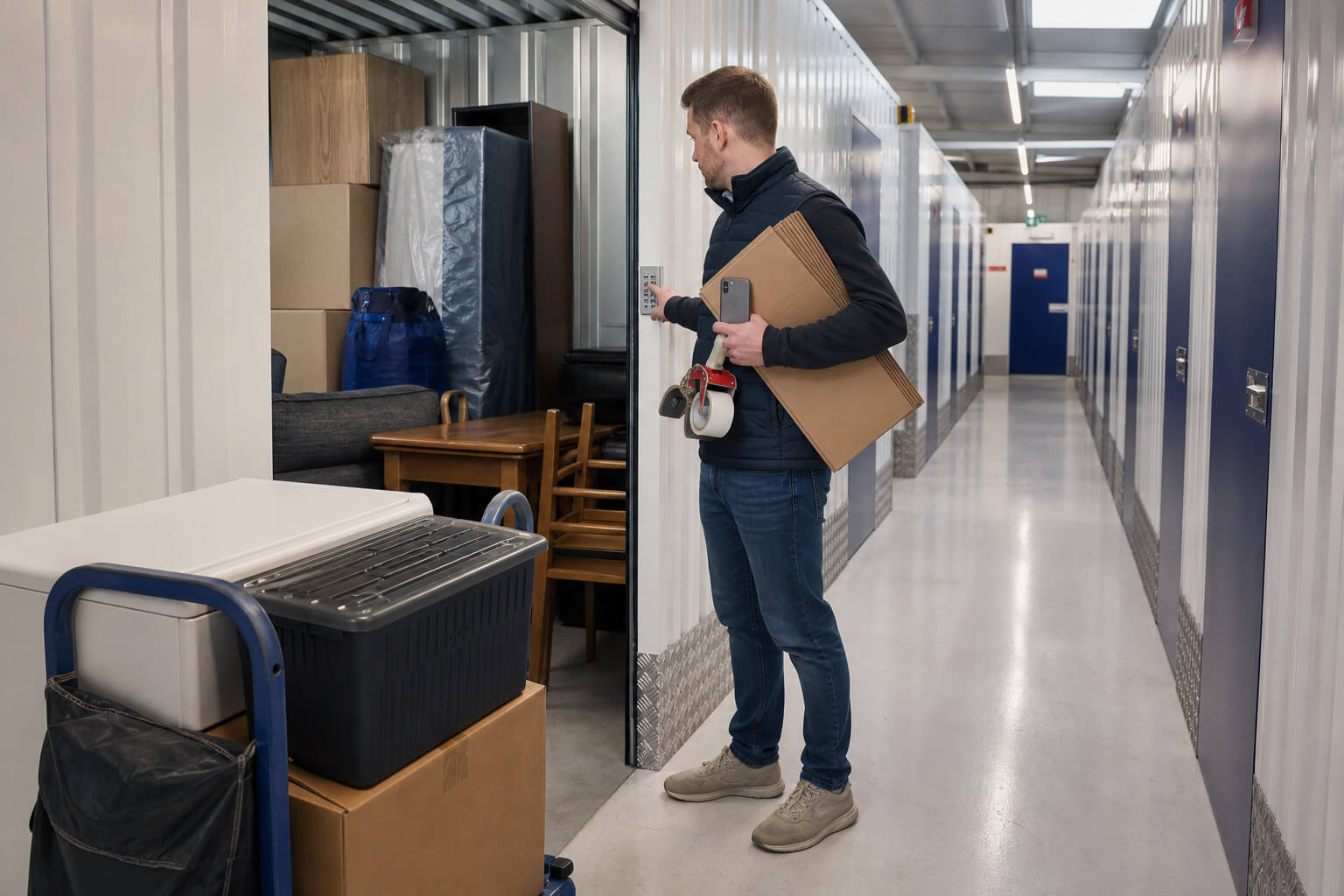
Self storage suits a kit-based trade business well. But it is not a workshop, not a shopfront, and not a cold room. Knowing the honest shape of it before you commit saves everyone time.
Store and access, your own goods, on your schedule
You hold the padlock on your unit. Nobody else opens it. You access your goods between 6am and 10pm, seven days a week, via smart entry. You organise the space the way your working rhythm demands. That might mean rails on the left, boxes on the right, the arch nearest the door so it loads first. You decide.
What the unit is not is a place to trade from. You cannot open the unit as a shopfront, run a workshop from it, or have clients visit. The site is unmanned. It is a secure base for your equipment, not a commercial premises.
For most florists, stylists and hire firms, that distinction does not matter at all. You collect your kit, load the van, do the job, come back and put everything away. The unit never needs to be anything other than a well-organised home for the gear.
What does not suit a storage unit
The units are clean, dry and secure. They do not offer cold storage or any form of temperature or humidity control. If any part of your stock requires a specific temperature range, the unit is not the right solution for that stock. Fresh blooms, anything perishable, or anything that needs refrigeration belongs in a different facility.
Everything else from the dry side of a floristry business, a stylist’s kit, a hire inventory of props and furniture, fits well.
The sites are also unmanned. That means you cannot have a courier deliver to the unit in your absence. If you need to receive or dispatch stock through the unit, someone from your own business must be there. Wigwam does not sign for deliveries or hold goods on your behalf. Plan your collections and dispatches accordingly. For a trade business running kit in and out on a schedule you control, this is straightforward to work around.
Access and how it works day to day
The access window is 6am to 10pm, seven days a week. Smart entry handles the gate. You do not need to book a slot, call ahead or work around staffed hours.
Smart entry, 6am to 10pm, seven days
If you need to load the van before a venue call, the unit is available from six in the morning. If you are coming back late after a wedding or event, you have until ten at night to unload. That window fits the working rhythm of most event and trade businesses without any adjustment.
The access is not 24-hour. We say so plainly, because some providers imply more than they deliver. For the businesses this article is written for, the 6am to 10pm window handles the job. The arch goes in, the arch comes out, the arch goes back in, on the schedule you actually keep.
Deliveries and collections: someone from your business must be present
The sites are unmanned. That is how the costs stay sensible and the access stays clean. It also means that for any courier collection or drop-off at the unit, you or someone from your business needs to be there to handle the handover. Wigwam does not receive deliveries, sign for parcels or manage goods on your behalf.
For most kit-based businesses this is not a complication. You are already there when the kit moves, because you are the one loading the van. But if you are planning to build in unmanned collections, factor in the need for a member of your team to be present for any handover.
Choosing your unit size

A rough guide gets you to the right ballpark before you talk to us. The exact recommendation depends on how your kit is shaped, how densely you can pack and whether you need floor space to move around.
A florist holding arches, plinths, a few rails of soft goods and a run of vase stock typically starts around 25 to 50 square feet. If the props collection is substantial, a 50 square foot unit or larger gives you room to work without unpacking everything to get to the bottom.
A stylist or photographer with multiple rails, background rolls, several bags of lighting and a box run of props is usually comfortable from 50 square feet upward. A lighting stand needs height as well as floor space; the units at Wigwam accommodate that.
An event and party hire business holding chairs, trestle tables, backdrops and a seasonal prop inventory is usually looking at 75 square feet or more, depending on how much runs out on the same weekend. If the inventory grows with the season, flexible terms mean you can change the size without being locked in.
These are starting points, not decisions. The quote tool at quote.wigwamstorage.co.uk will give you a tailored recommendation based on what you actually have.
Security and condition
The units are clean, dry and individually alarmed. That is the complete account of what you get in terms of condition and security, and it is the right account.
Clean and dry matters more than it sounds when the kit is valuable. A rack of sample jewellery, a set of vintage chairs, a backdrop that cost several hundred pounds to commission: these do not respond well to damp, dust or disorder. The units are maintained. What goes in in good condition comes out in good condition.
Individually alarmed means each unit has its own alarm, not a site-wide system that treats the whole building as one zone. Your unit is your unit.
There is no climate control, no dehumidifier and no temperature regulation. The “clean, dry and secure” description is precise. For dry floristry stock, fabric and textile props, lighting equipment, resin and paper goods, wooden furniture and general trade inventory, these conditions are exactly what is needed. For anything that requires a controlled environment, a Wigwam unit is not the right fit.
Terms that suit a seasonal business
The reason self storage works for a seasonal trade business is that the terms are designed to flex, not lock.
Two-week minimum and no deposit
The minimum stay is two weeks. There is no deposit when you start, so no money of yours is held while you are a customer. When you are ready to leave, you give 14 days’ notice, vacate the unit and settle the account, and any unused days come back to you, less anything owed.
That structure is worth understanding clearly before you start, because it is different from a commercial lease where a longer notice period and a non-refundable element are common. Here there is neither: no deposit, and no non-refundable element.
14-day notice and refund of unused days
When you are ready to leave, you give 14 days’ notice. If your business is seasonal, that matters: you are not paying through January for space you filled in June. If you leave before the end of a paid period, the unused days come back to you.
A florist who takes a unit in March for the spring wedding season and gives notice in late July is not locked in through December. That kind of flexibility is the whole point for a business where the income does not arrive at a uniform monthly rate.
Full terms are at wigwamstorage.co.uk/terms-conditions.
Ready to find the right unit? Get a quote tailored to your kit at quote.wigwamstorage.co.uk. For a guide to what self storage costs across our UK market-town locations, see our pricing reference page.
Insuring your equipment

Contents cover is required. That is not a soft recommendation; it is a condition of storing with Wigwam. You can take out the RSA “Self Storage Customers’ Goods” policy through Wigwam, or you can provide evidence of your own contents insurance that covers goods in storage.
Either way, declare the full replacement value. If you insure for less than the kit is worth and something happens, the settlement is proportional to what you declared. A hire company with ten thousand pounds of prop inventory insured for four thousand pounds recovers four thousand pounds in proportion, not the full amount. Declare accurately.
For the details of the RSA policy and to understand what coverage applies, see the contents protection page. This article is a signpost, not advice. For questions about how your specific equipment or business is covered, speak to your insurer or a qualified broker.
A note on jurisdiction: the self-storage insurance framework described here applies under the law of England and Wales. If you are based in Scotland or Northern Ireland, the rules around insurance claims, business records retention and tenant rights in storage may differ. Take guidance from your own solicitor or insurer for jurisdiction-specific questions.
Our market-town locations
Wigwam serves UK market towns rather than city-centre commercial zones. The locations are close to where trade businesses actually operate: not a long drive on a wedding morning, not a diversion that adds an hour to the day.
Wigwam Self Storage Bath in Somerset and Wigwam Self Storage Lincoln in Lincolnshire are two of our locations. For the full list of our UK market-town locations, the locations page has everything.
If you are unsure which location suits your working route best, the quote tool will ask. The unit that saves you the most time is the one that sits between your home, your suppliers and your venues without adding a detour. For most customers, one of our locations lands in that zone.
Find your nearest location and get a quote at quote.wigwamstorage.co.uk.
Frequently Asked Questions
Dry it before it goes back in the unit, because the unit keeps things clean and dry but it is not a drying room. After a rainy marquee wedding or a muddy festival, the worst thing you can do is stack a damp backdrop, wet linen or a soaked arch base straight into storage and close the door. Trapped moisture against fabric and timber is how you get mould, musty smells and ruined props, and a clean, dry, secure unit cannot undo damp that you sealed in yourself.
The practical routine is the same one good trade businesses already use. Lay wet kit out to dry properly first, at home, in a workshop, or wherever you have airflow and a bit of warmth, and only return it to the unit once it is genuinely dry to the touch. Wipe down metal stands and frames so they do not sit wet and start to spot with rust. Let linen and soft props air rather than bagging them damp. If you are turning kit around fast between back-to-back weekends, build that drying time into your schedule rather than treating the unit as the place things dry out, because it is not ventilated for that. There is no climate control, no dehumidifier and no temperature regulation; the description is clean, dry and secure, and that is exactly what protects kit that goes in dry. Get the drying done first and the unit does its job perfectly.
The clean, dry, secure conditions do most of the work, and a few simple habits handle the rest, particularly over a long quiet stretch when kit sits untouched for months. Moths and dust are the two things that quietly spoil fabric backdrops, drapes, cushions, table linen and soft props between busy seasons, and both are manageable without any special equipment.
A simple routine for dormant fabric kit
- Store everything clean. Moths are drawn to fabric carrying food, drink or body residue from an event, so launder or air soft furnishings before they go into a quiet-season layup.
- Box or cover textiles rather than leaving them open. Lidded plastic totes or breathable garment covers keep dust off and make casual pest access harder.
- Keep fabric off the concrete floor on a pallet or shelf, so nothing sits against a cold surface where condensation could form.
- Check on it. The body of this article notes you can access by smart entry from 6am to 10pm, seven days a week, so dropping in once during a long quiet spell to air things and look for any problem costs nothing but the trip.
It is worth remembering what the cover does and does not stretch to: the RSA contents policy excludes climatic damage, and pest damage is the kind of thing good housekeeping prevents rather than something to lean on insurance for. Store it clean, keep it covered and off the floor, look in occasionally, and a quiet season does no harm to the kit.
You can, but the account, the access and the responsibility sit with one named account holder, so go in with that clear between you. Two florists, a stylist and a photographer who often work together, or a couple of small hire businesses splitting a unit to keep costs down is a sensible idea when neither of you fills a unit alone. The practical reality is that one person takes the unit in their name, becomes the account holder, and is the one responsible for the contract and the contents-cover declaration.
A few things follow from that. Access is for the account holder’s authorised people, so the sharing partner needs to be set up as an authorised contact to come and go with smart entry; it is not a free-for-all where anyone can wander in. Contents cover is mandatory and declared by the account holder, so you both need to be honest about the full replacement value of everything stored, because the unit is insured as one lot and a claim is settled against the declared figure, in proportion if it is under-declared. And you will want a clear, informal agreement between yourselves about whose kit is whose and who pays what, because as far as the contract is concerned there is one customer, not two. None of that is difficult, and sharing is a genuinely good way for small kit-based businesses to get a properly secure base without each carrying a full unit. Just decide the account-holder question and the insurance declaration up front, not after something goes missing.
Dry consumables are fine; flammable liquids and pressurised cans are not, so separate the two before you load. A florist’s dry side and an event firm’s kit involve plenty that stores perfectly well: floral foam and oasis, wire, ribbon, tape, paper, dry decorative materials, and the general run of props and fittings. Those belong in a clean, dry unit without any issue and are exactly what the space suits.
What does not belong in any storage unit is the hazardous end: aerosol spray paints and adhesives, solvent-based glues, fuel for fire effects, gas canisters for portable heaters, and anything flammable, corrosive or under pressure. These are easy to overlook because they travel around with event kit, but they are not appropriate for a storage unit and should be kept out. If you use spray adhesives, paint cans or fuel as part of your work, store those separately and bring only the dry materials into the unit. The same goes for anything that needs to stay cool: there is no climate control here, so nothing temperature-sensitive should go in. The simple test is whether an item is a stable, dry, solid material or a volatile liquid, gas or pressurised product. The first is welcome; the second is not. Keeping the hazardous items out is both a safety matter and good practice for everything else stored alongside.
Yes, and for a growing or seasonal kit business that flexibility is one of the main reasons self storage works better than a fixed lease. As the body of this article notes, an event and hire inventory that grows with the season is not locked to a fixed footprint. If your prop collection expands, you book a peak run that needs more space, or you simply outgrow the unit you started in, you can move to a larger one, and the team can talk you through what is available at your location.
There are two ways this usually goes. Either you move into a single larger unit, or you take a second unit alongside the first for the busy stretch and hand one back when things quieten down. The terms make both straightforward: above the two-week minimum the arrangement rolls on with no long tie-in, and when you give up a unit you give 14 days notice, vacate, and any unused days are refunded once the account is settled. So scaling up for a busy summer and scaling back for a quiet winter does not penalise you, which is the whole point for a business whose income does not arrive at a flat monthly rate. Two practical notes: if you upsize, remember to update your contents-cover declaration so the full value of the larger inventory is still accurately declared, and use the quote tool to size the next step rather than guessing. The space is meant to track your season, not fight it.