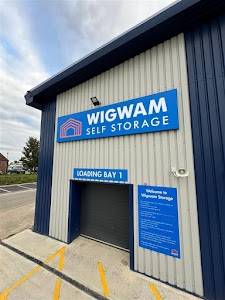
First thing you do each morning is check the van’s still full?
It is quarter to six in the morning and you are already thinking about it. Not the job. Not the drive. Whether the van is still in one piece.
Most tradespeople know the feeling. You have parked on a street you do not know, in a town you are only in for the week, with a full kit in the back. A good drill, a decent set of chisels, cable runs you have had for years. You wake up and the first thing you do is look out of the window. Most mornings it is fine. And then, one morning, it is not.
This piece will not oversell anything. What it will do is give you a straight answer on whether a self-storage unit is a sensible place for your kit, what security you can actually expect, what access looks like at 6am, and what the terms cost you. If it is not the right answer for your situation, we will say so.
Why the van is the weak point
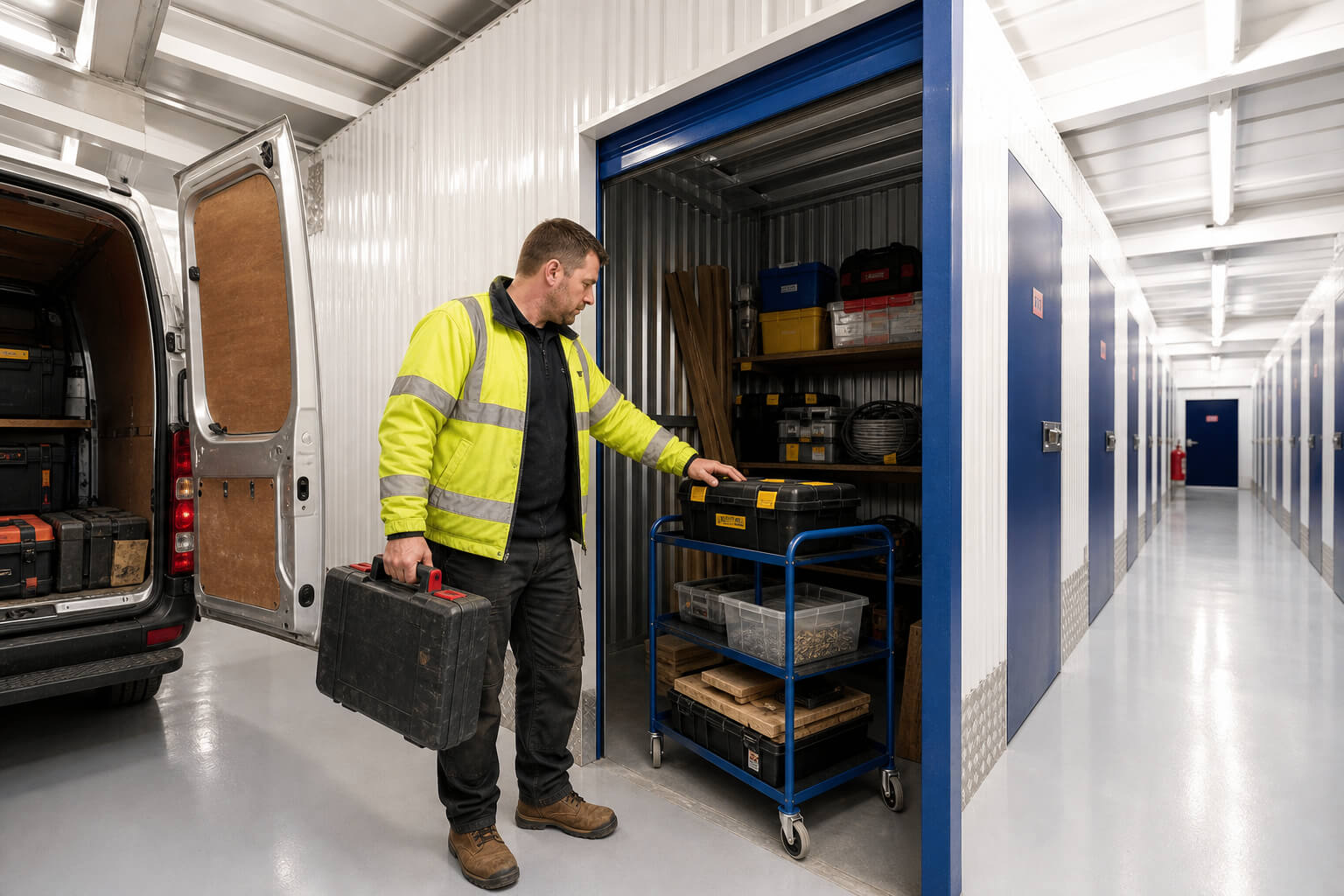
The van is the default tool store for most sole traders. It is convenient, it is mobile, and it is already there. The problem is that convenience cuts both ways. Every thief in the country knows where the tools are, because the van is on the road every day and parked on a street every night.
What van tools cover usually will not pay out
Van insurance does not always cover the tools inside it, and when it does, the conditions can be more restrictive than most tradespeople realise until they need to make a claim.
Common exclusions include tools left in an unattended vehicle, tools that were visible through the windows, and situations where there is no evidence of forced entry. The gap between what a tradesperson assumes is covered and what an insurer will actually pay is often where the real cost of van theft lands.
This is not insurance advice, and policy terms vary. If you are in England or Wales, your policy wording is the definitive guide. Readers in Scotland and Northern Ireland should be aware that insurance law and policy interpretation can differ in those jurisdictions, and consulting your own broker or insurer is always the right step.
What matters for this piece is this: tools stored in a dedicated self-storage unit are covered under a separate goods-in-storage policy rather than your van insurance. If you want to know more about how that works for Wigwam customers, the contents protection page explains the detail.
The overnight problem most trades know too well
Van break-ins happen across the country every week. You do not need a statistic to know it. Most tradespeople either know it from their own experience or from a colleague who has stood in an empty car park at half seven in the morning wondering how they are going to replace three grand of kit before the next job.
The cash-flow hit is the immediate problem. But there is a quieter cost underneath it: the cancelled day, the customer you have to call, the job you cannot deliver on. The tools are not just equipment. They are the reason you can show up and keep your word. When they are gone, you are not just out of pocket. You are out of work until you fix it.
We are not naming the dread to alarm you. We are naming it because it is real, and because there is a practical answer.
Storage unit versus lock-up garage versus site container
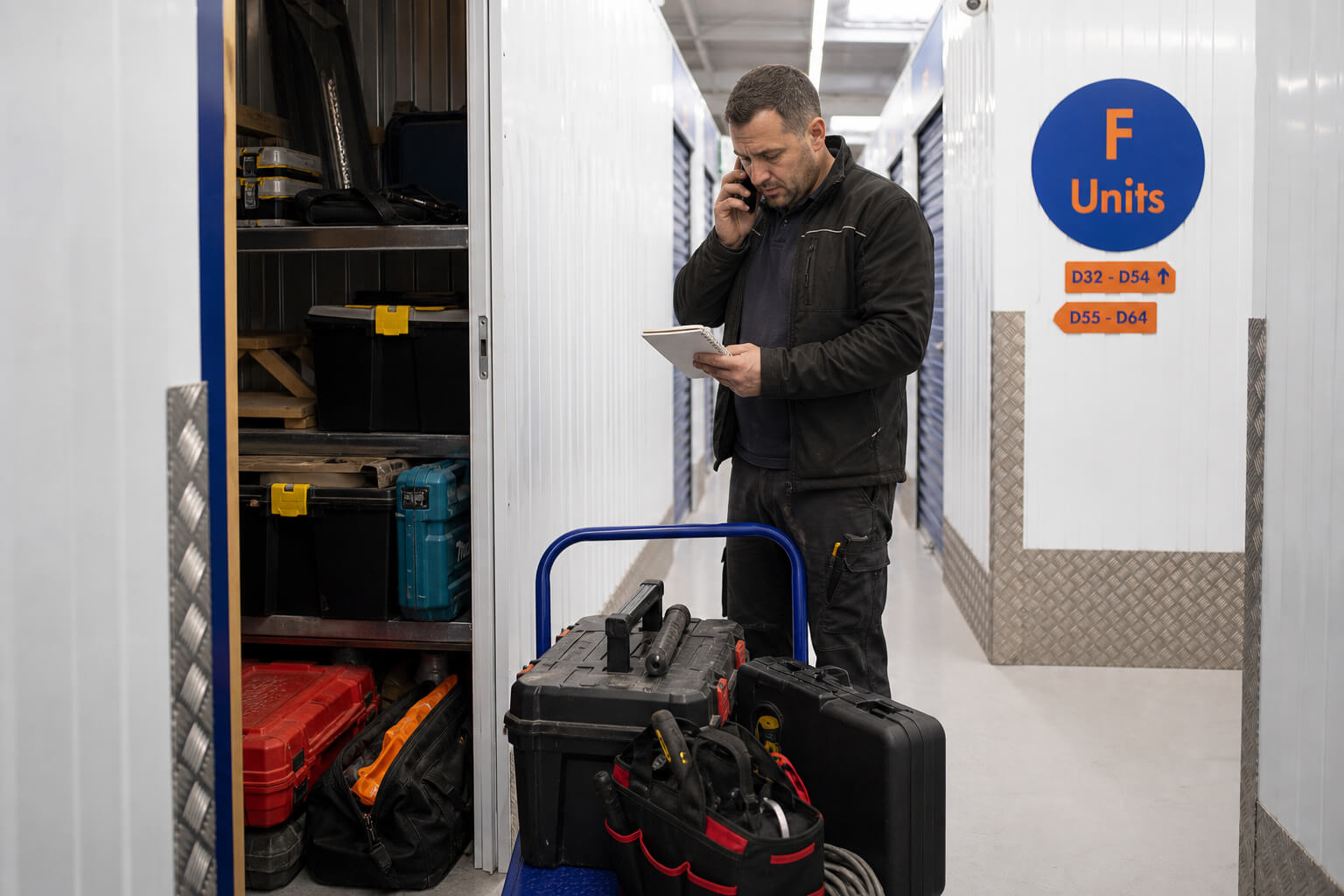
There are three realistic alternatives to leaving tools in a van overnight, and each one suits a different situation. A self-storage unit is not automatically the right answer for every tradesperson, and this section will give you an honest comparison.
Security, cost and access compared honestly
A self-storage unit offers individually alarmed units, smart entry on set hours, and a clean, dry and secure environment that is off the road and not visible from a street. A lock-up garage offers a locked door and not much else: no individual alarms, variable condition, and in most areas they are scarce and keenly priced when they do come up. A site container is secure enough on an active site but is tied to one location and goes back when the contract ends.
The costs differ too. Pricing for Wigwam units varies by unit size and location and we do not list rates on this page, but our experience is that tradespeople are often surprised that a self-storage unit costs less than they expected, and more than a lock-up if you can find one. For an honest comparison, look at what the lock-up actually gives you in security before you assume it is the cheaper option.
Where a fixed unit fits, and where it does not
A fixed storage unit works well when your base of operations is within fifteen to twenty minutes of a Wigwam site, when you are running the same territory regularly, or when your kit splits naturally between everyday carry in the van and a project cache you top up or rotate between jobs. It also works well for a second set of tools: the ones you do not need every day but cannot afford to lose.
Where it suits less well is if you are moving between sites in different towns every day and need the complete kit with you at every stop. In that situation, adding a storage leg to an already long day may not make sense. Be honest with yourself about how you actually work. If the unit would be a daily round trip that adds an hour you do not have, it may not be the right fit. If it would be a two-minute detour on your way to the job, it probably is.
How secure is a Wigwam unit
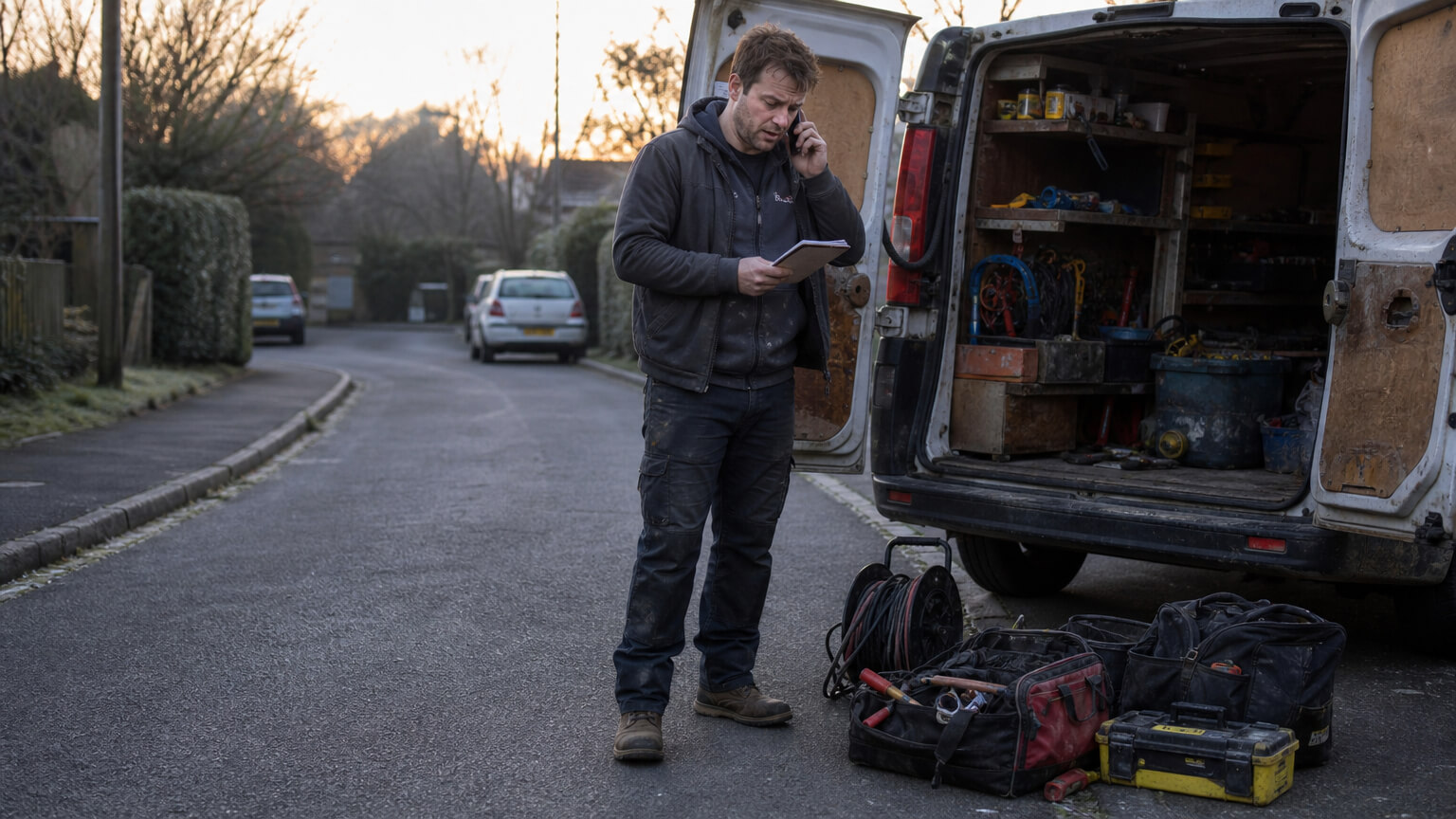
Each Wigwam unit has its own individual alarm, not just a site-wide perimeter system. You access your own unit directly. Nobody else can open it, and nobody shares a corridor with uncontrolled access to your door.
Individually alarmed units and smart entry
The security case for a Wigwam unit rests on a simple point: the alarm is on your unit, not on the front gate. If someone attempts to get into your space, the alarm on that unit triggers. The site is not a shared open shed with a padlock on the entrance. It is a structure of individually secured units where your door is your door.
Smart entry means you access your unit independently. No member of staff needs to let you in or out. You arrive, you go to your unit, and you leave. For a tradesperson, that matters because the rhythm of trade life does not always fit nine-to-five staffed hours. Smart entry runs from 6am to 10pm, seven days a week. That is early enough for the first job of the day and late enough for a site that has run over.
The condition of every unit is clean, dry and secure. That is the verified claim, and it is the one we stand behind.
Ready to see what a unit near you costs? Get a quote at quote.wigwamstorage.co.uk
An honest note on what Wigwam does not offer
Wigwam units are not climate controlled. There is no temperature regulation and no humidity management. The condition is clean, dry and secure, and that is the accurate description.
For most hand tools and power tools, a clean, dry unit is sufficient. The practical steps to manage rust and moisture without a climate-controlled environment are covered in the packing section below.
Atmospheric and climatic damage is excluded from the goods insurance policy, so you should factor that into how you store sensitive equipment. The contents protection page and the terms and conditions set out the exclusions clearly.
This is not an apology. It is information you need before you decide.
Getting to your kit before the job
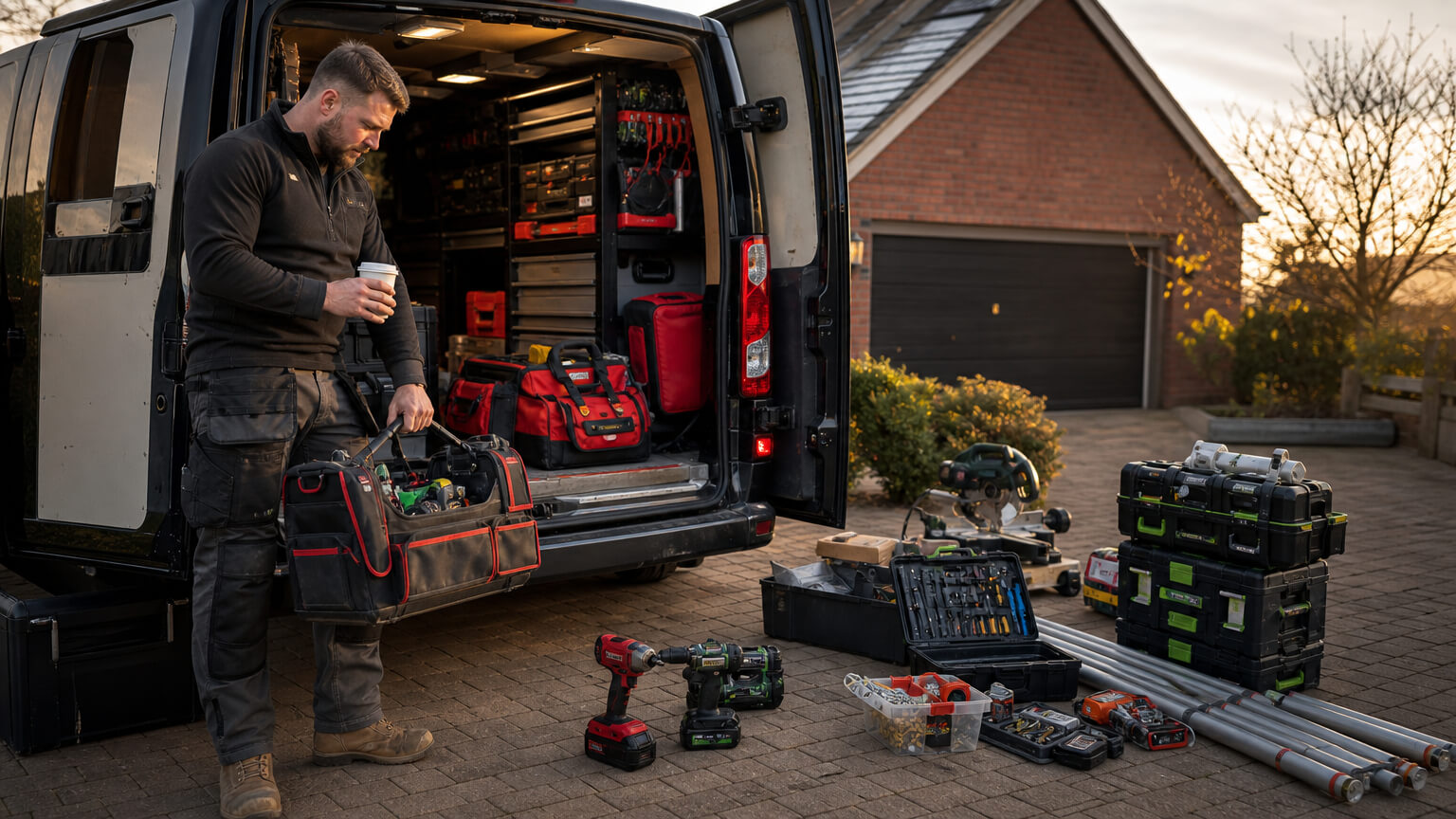
Early starts are not an edge case in the trades. They are Tuesday. The access question is one of the first things tradespeople ask, and the answer is straightforward.
Smart entry from 6am to 10pm, every day
Access runs from 6am to 10pm, seven days. That covers a very early site start and it covers an end-of-day materials run that overruns. We never claim 24-hour access because that is not what we offer. Some competitors do. We are not one of them.
At 6am, you arrive at the site, access your unit using smart entry, load what you need, and you are on the road. No waiting for staff to arrive. No phoning ahead. The unit is yours for those hours, every day of the week.
Smart entry is the term we use. We do not describe it as app-based.
Why the sites are unmanned, and what that means for deliveries
Wigwam sites operate without on-site staff. That is a deliberate part of the model, and it keeps costs lower than managed facilities. It also means something you should know clearly before you commit: Wigwam does not sign for couriers, does not take in deliveries on your behalf, and cannot hold goods for you.
If you need materials delivered to your unit, someone from your own business must be present to receive them. That might be you, a colleague, or a labourer on your payroll. What it cannot be is the Wigwam site team, because there is none on site.
For some tradespeople, that settles the unit into a tool store rather than a materials hub. For others, it is workable because they can plan a delivery around their own schedule. Know which one you are before you sign up.
What size unit do tradespeople usually need
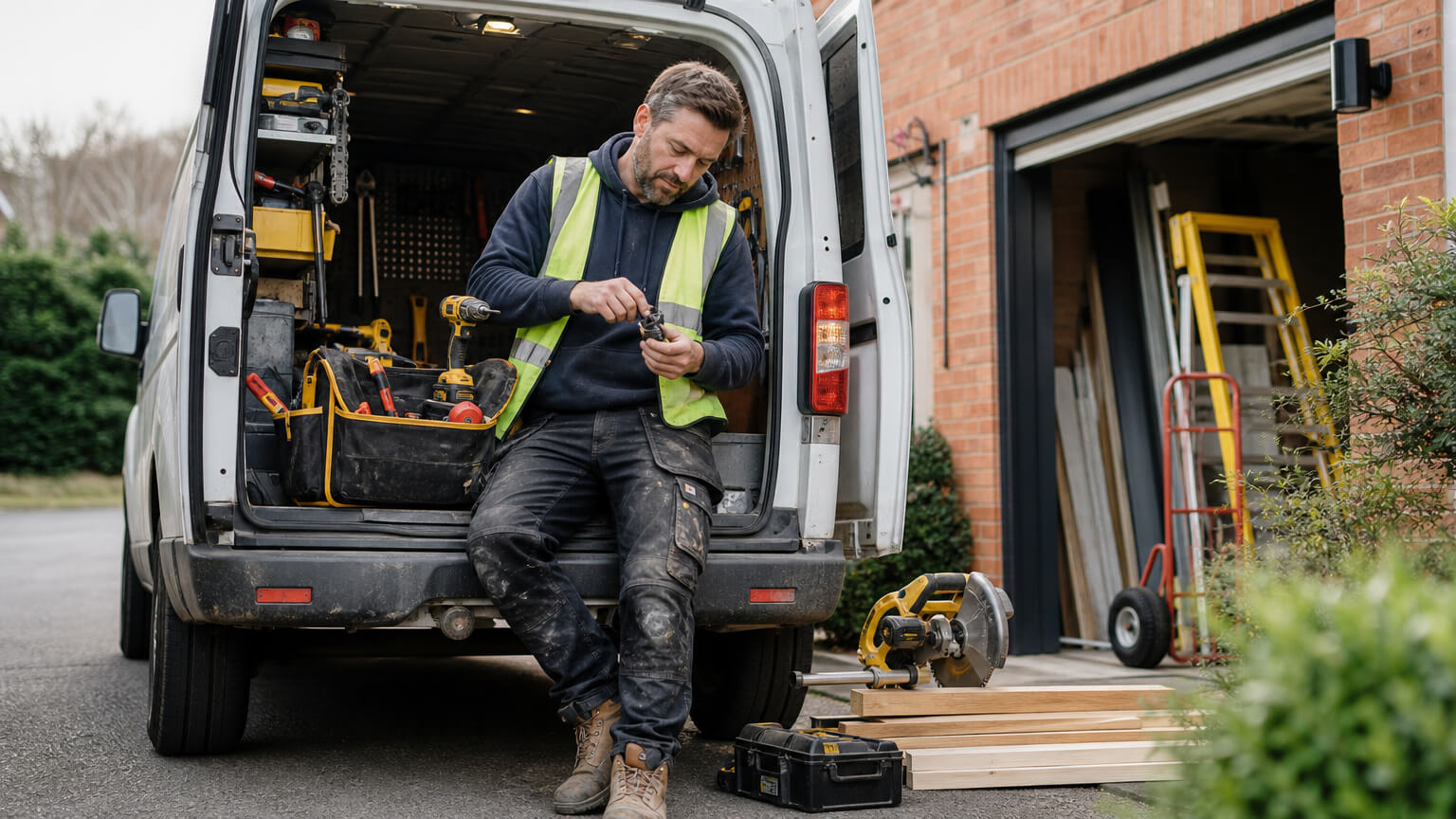
The right size depends on the kit and how you use the unit. A sole-trader electrician with a van pack of hand tools, a couple of power tools and cable runs needs considerably less space than a carpenter carrying bench equipment and sheet materials.
From a small locker for hand tools to a larger unit for plant and materials
A compact unit suits a tradesperson whose everyday kit is mostly hand tools and a power tool set. They might use it to keep a second kit, seasonal equipment, or the tools they do not need on every job but cannot afford to lose if the van is broken into.
A mid-sized unit suits the tradesperson who wants to split the kit: daily carry stays in the van, project cache lives in the unit and is rotated between jobs. A larger unit works for a small trade team needing shared access to plant, materials or bulkier equipment.
Rather than quoting specific dimensions here, we would point you to Wigwam’s unit size guide for a practical breakdown, because the right size depends on what you are storing and how you will access it. Ask at your nearest location and the team can talk you through the options. The size guide is the right place to start.
What it costs and how the terms work
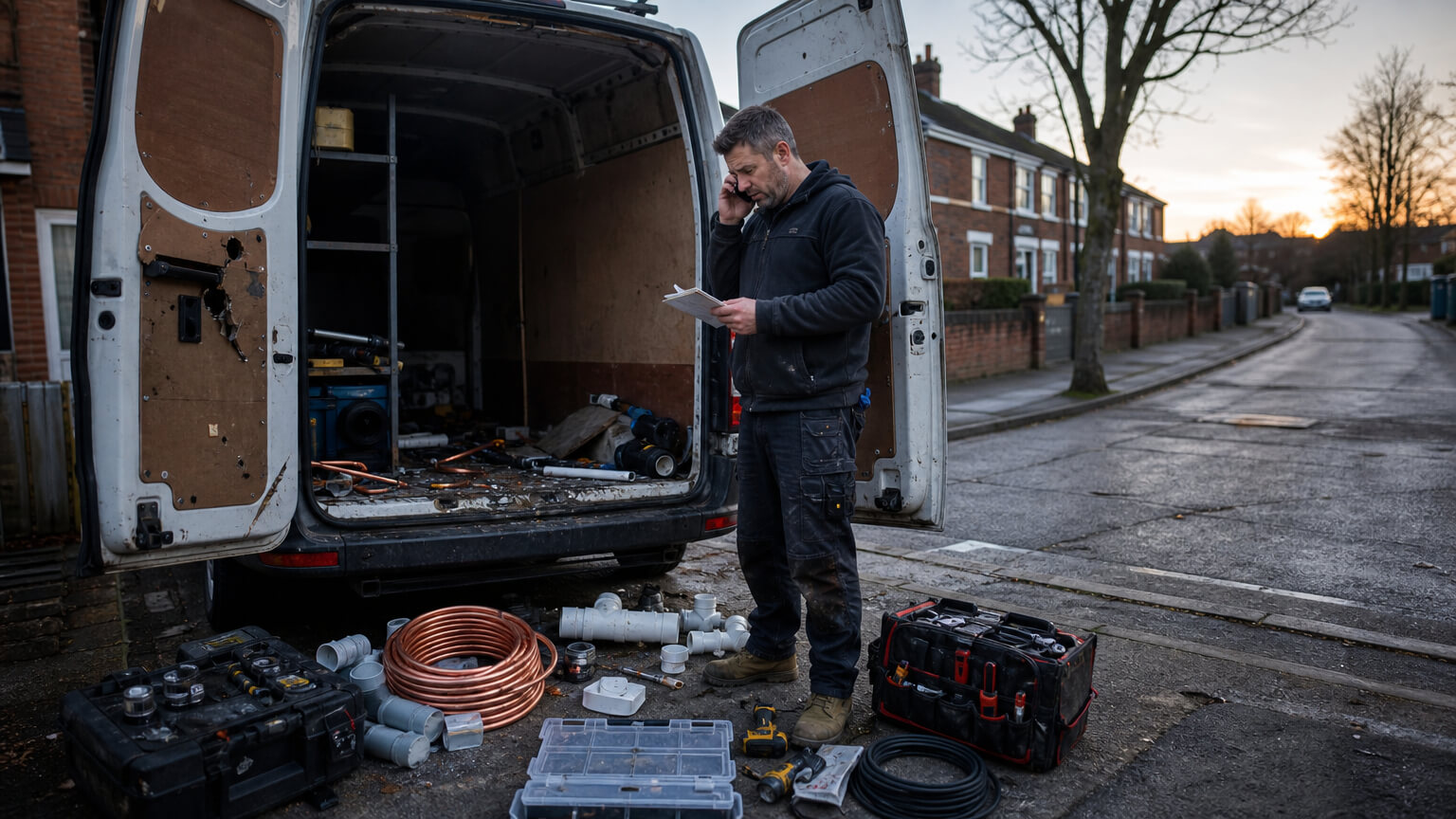
The costs vary by unit size and location, and we do not quote prices on this page. What we can do is tell you exactly how the terms work so there are no surprises.
No deposit, two-week minimum, 14-day notice and refund of unused days
The terms are these. No deposit is required when you start. There is a two-week minimum stay. When you are ready to leave, you give 14 days’ notice. Once you have vacated and your account is settled, any unused days after you vacate are refunded, less anything owed.
Those four points are the commercial structure. There is no catch in them, but they are the honest terms and you should know them before you sign.
For current pricing, the pricing reference page is the right place to look. For the full terms, terms and conditions has the detail.
Packing and protecting your tools in storage
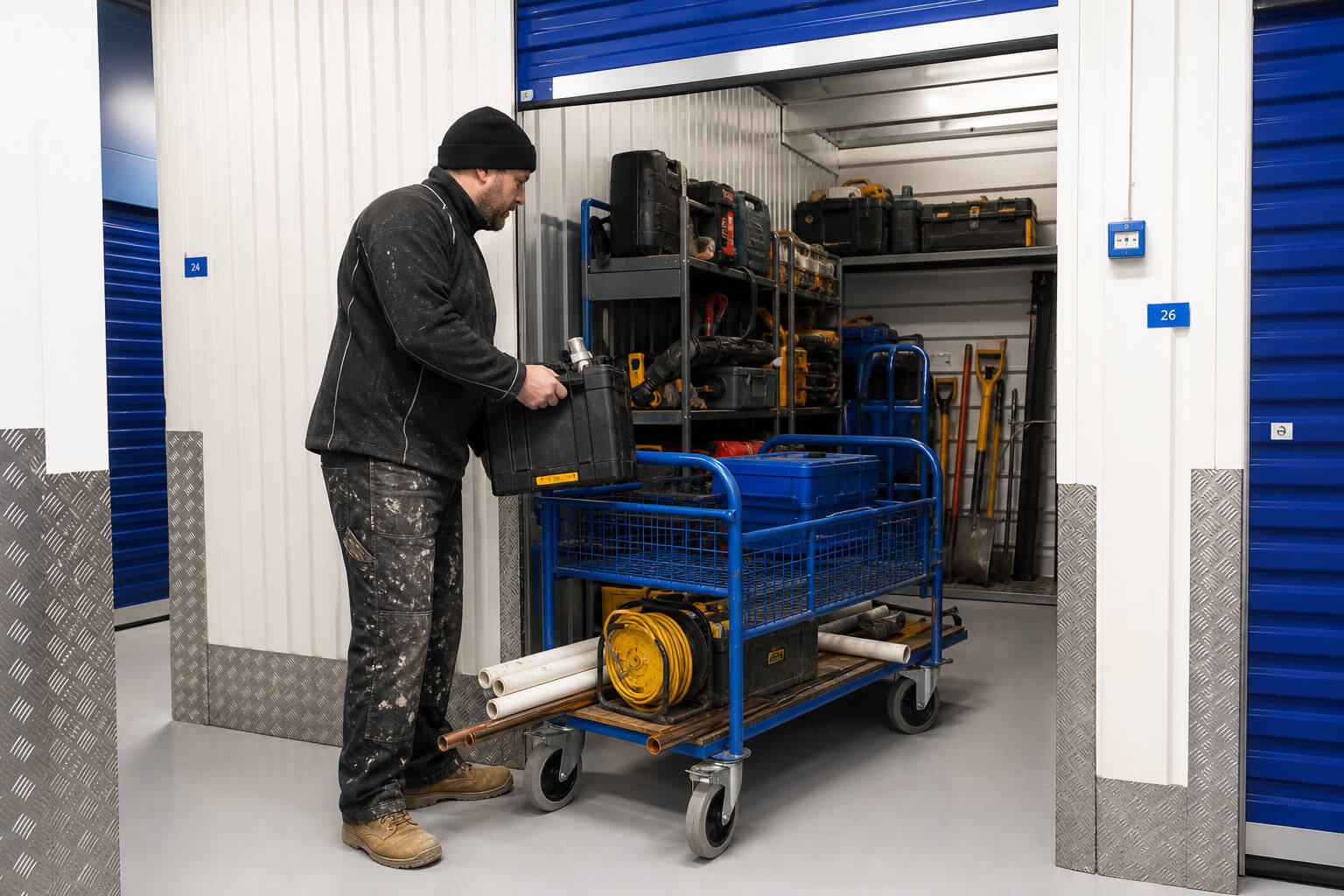
A clean, dry unit is the right environment for most tools. A few simple steps will keep the kit in good order between visits, without relying on temperature or humidity control.
Beating rust and damp
Metal tools benefit from a light wipe-down before they go into storage. A thin film of machine oil on drill bits, blades, and chucks costs almost nothing and significantly slows any surface oxidation. Silica gel packets in your toolboxes absorb any residual moisture in the air around the tools and are cheap to replace when they are saturated.
Keep tools off the concrete floor. A pallet, a shelf, or even a sheet of plywood gives clearance from any condensation that might form on a cold surface. If you have abrasives, sandpaper, or other moisture-sensitive consumables, a sealed plastic tote is the easiest way to protect them.
Organising for a fast grab-and-go
A 6am start is not the time to hunt for a specific bit. Organise the unit once, consistently, and you will not have to think about it again. Shelving with labelled boxes or cases means you can load what you need without turning the unit over. Keep the most-used kit at the front, seasonal or specialist tools at the back.
A consistent layout also means a colleague or labourer can access the unit and find what they need without a guided tour. If you share the unit across a small team, a simple sketch of where things live, kept in the unit itself, saves more time than it costs.
Insuring your tools in storage
This section signposts rather than advises. Insurance decisions depend on your own policy, your kit, and your circumstances, and a broker is the right person to help you weigh them.
The contents-protection option and declaring full replacement value
When you store with Wigwam, contents cover is mandatory. You can take Wigwam’s own RSA Self Storage Customers’ Goods policy, or you can provide proof that your own existing contents cover is equivalent. What you cannot do is store without cover in place.
The RSA policy operates on a New-for-Old basis with a GBP 50 excess. Theft is covered after evidence of forced entry. Atmospheric and climatic damage is excluded. The single most important step you can take is declaring the full replacement value of your kit. Under-insurance is settled proportionally: if you declare half the value, a claim is settled at half the cost of replacement.
For tradespeople with expensive kit, that maths matters. A GBP 5,000 SDS drill, impact driver, levels and cable set is not unusual. Declare what it would actually cost to replace, not what you paid for it four years ago.
We are not advising you on which policy is right for your situation. That is a conversation for your own broker or insurer. Readers in Scotland and Northern Ireland should also be aware that insurance law and policy interpretation may differ from England and Wales, and local advice applies.
Full detail is on the contents protection page.
Find tool storage near you
Wigwam sites are in UK market towns, positioned for trades and businesses that operate across a local patch rather than from a city centre industrial estate.
Our UK market-town locations
Wigwam Self Storage Lincoln in Lincolnshire and Wigwam Self Storage Bath in Somerset are two of our named locations. Bath and Lincoln are good examples of the kind of market town we are built around: enough local trades activity to make a unit genuinely useful, close enough to the residential and commercial patches where tradespeople work to make a morning detour worth it.
For the full list of our UK market-town locations, the locations hub is the right place. Select the town nearest to your base of operations and you will find opening information and the option to get a quote.
If you are not sure which location makes most sense for how you work, or whether a unit would suit the split between van carry and project cache, get in touch through the quote form and one of the team can talk it through with you.
Ready to find a unit near you? Get a quote at quote.wigwamstorage.co.uk
Frequently Asked Questions
No. Fuel, gas canisters and anything flammable or under pressure do not belong in a storage unit, and that is a firm line, not a guideline. Plenty of a tradesperson’s kit stores perfectly well: hand tools, power tools, cable, fixings, dry materials and the like. But the volatile end of the van load is different. Petrol and diesel, jerry cans, propane and butane bottles for heaters or blowtorches, gas-powered nail guns’ fuel cells, aerosols and solvent-based products are all things to keep out.
The reason is straightforward safety, for your kit and for everyone else’s in the building. A petrol generator can be stored only once it is completely drained of fuel and the carburettor is run dry, and even then the fuel itself has to be kept elsewhere. The simplest approach is to treat the unit as the home for the tools and the dry materials, and to keep fuel, gas and chemicals in whatever arrangement you already use for those on a working site. If you are not sure whether a specific item counts, the test is whether it is a stable solid tool or material, or a volatile liquid, gas or pressurised product. The first is fine; the second is not. It is also worth knowing that climatic and atmospheric damage is excluded from the goods policy, so the unit is the place for the durable kit, not for anything that needs special handling. Keep the hazardous items out and the clean, dry, secure unit does its job for everything else.
Yes, if they are set up as an authorised person on the account, which is exactly how a small trade team is meant to use a unit. The body of this article touches on sharing a unit across a small team; the mechanism behind that is that access runs on the account holder’s authorised contacts, using smart entry from 6am to 10pm, seven days a week. So an apprentice can swing by at 6am, grab the SDS drill and the consumables for the day, and get to site without you having to be there to open up.
A few sensible cautions come with that. The people who can access the unit are the ones you have authorised, not anyone they happen to bring along, and certainly not couriers or unaccompanied deliveries; if materials are being dropped at the unit, someone from your side has to be present to receive them, because the site is unmanned and no one here signs for goods. It is also worth being clear among the team about who is responsible for locking up and for the kit, because as far as the account goes there is one account holder carrying that responsibility. The practical tip from the body of this piece stands: keep a consistent layout and a simple sketch of where things live in the unit itself, so a labourer can find what they need without ringing you. Set up your authorised people when you open the account, brief them on the access rules, and the unit works as a shared tool base for the whole crew.
Each unit has its own individual alarm rather than a single system covering the whole building, so an attempt on your door triggers the alarm on that specific unit. That is the core of the security case made earlier in this article: the alarm is on your unit, not just on the front gate, so your space is monitored as its own zone. Combined with smart-entry access control, that means the site is not a shared open shed where anyone past the entrance has a clear run at every door.
What you should not do is treat the alarm as a guarantee that nothing can ever happen, because no security setup is absolute, and that is precisely why contents cover is mandatory. The two work together: the individual alarm and access control are the first line that deters and detects, and the insurance covers the residual risk that security does not eliminate. On that point, the goods policy covers theft where there is evidence of forced entry, which is the usual standard for storage cover, so a clean break-in to your unit is the kind of loss the policy is designed for, unlike tools quietly lifted from an unlocked van with no sign of force. If you ever did need to claim, you would follow the process set out by the insurer, and the alarm and access records form part of the picture. For the exact terms of what triggers a payout and what is excluded, the contents protection page and the terms and conditions are the documents that govern it, and your own broker is the right person for advice on a claim.
Treat a storage unit as a place to keep tools, not as a workshop or a charging station, and do not leave batteries on charge unattended in there. The unit is space you rent to store your kit securely; it is not set up as a place of work, and running equipment or leaving chargers going inside it is not what it is for. Lithium tool batteries on charge are a recognised fire risk anywhere, and an unattended charge in a storage unit is exactly the kind of thing to avoid for the safety of your kit and everyone else’s.
The sensible routine is to charge your batteries overnight at home or at your base, where you can keep an eye on them, and to use the unit purely as the secure home for the tools between jobs. Pull the kit you need within the 6am to 10pm access window, take it to site, and bring it back. If you are storing spare batteries, store them charged sensibly and stable, not on a charger left running. This also keeps you on the right side of how the unit is meant to be used: the body of this article makes the point that the unit is a tool store rather than a materials hub or a place to operate from, and the same logic applies to charging and powering equipment. Keep the working activity at your base and let the unit be what it does best, which is a clean, dry, secure place to keep the kit safe off the road and out of the van overnight.
The cover applies to the goods while they are in the unit, so the moment tools are out with you on a job, they are not covered by the storage policy, and that gap is the thing to plan around. A goods-in-storage policy does what its name says: it protects the kit that is stored, not the kit that is in the van or on site that day. So a tradesperson who keeps a project cache in the unit and rotates tools in and out has cover on whatever is sitting in the unit at any moment, but the tools travelling and working that day need to be covered some other way, typically your own tools-in-transit or van cover.
This is worth thinking through honestly when you decide how to use the unit. If the value of the kit is mostly in a second set or a project cache that lives in the unit, the storage cover is doing real work for you. If most of the value is in the everyday tools that are out with you all day, the storage policy only protects them at night when they are back in the unit. The body of this article explains why van cover often disappoints, with exclusions around unattended vehicles, no forced entry and tools visible through windows, so the two policies together, storage cover for what is in the unit and appropriate transit or van cover for what is out, are how you close the gap. We signpost the storage policy and explain how it works; we do not advise on the right mix for your situation. That is a conversation for your own broker, who can look at how your kit actually moves and tell you where the cover needs to sit.