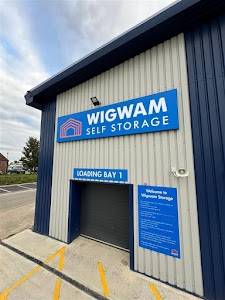
Builders in three weeks — where does everything but the kitchen go?
Every tradesperson will tell you the same thing. The jobs that go smoothly are the ones where the rooms are empty before anyone picks up a tool. Not roughly empty. Properly empty.
That is easier said than done when the house is full of furniture, books, crockery, a sideboard that belonged to someone’s grandmother, and forty years of accumulated life. The builders arrive in three weeks and suddenly the question is not where the kitchen is going. It is where everything else is going.
This guide is for that moment. It is a practical plan, room by room and stage by stage, for getting the house clear before the trades start and keeping it orderly while the work runs. No drama. Just a sensible way through.
Why an empty room is the job half done

Trades work faster, make fewer mistakes and charge less when there is nothing to work around. That is not a sales point; it is the practical reality of how renovation work goes. A cleared room is the condition under which a good job gets done on time and on budget.
What the trades actually need from you before they start
Most tradespeople will not say this directly, but they are hoping you have cleared the room before they arrive. Plasterers need to move freely across a whole wall. Electricians need access to the floor, the ceiling and every corner. Plumbers cannot work under a kitchen unit that is still full of crockery.
The furniture and belongings you leave in a room are not just an inconvenience. They are a risk. Something gets knocked. Something gets dusty in a way that cannot be undone. A sheet of plasterboard goes through a mirror. These things happen, and they happen because the room was not empty.
The single most effective thing you can do before your renovation starts is to clear each work zone completely, not partially.
The real cost of storing things on-site in other rooms
The instinct is to pile everything into a spare room or a garage. It works for a weekend. It does not work for a six-week kitchen renovation or a three-month extension.
Rooms pressed into storage duty become unusable. If the renovation runs long, which most do, the overflow problem compounds. The spare bedroom becomes inaccessible. The garden furniture takes up the dining room. Trades who need a staging area find nowhere to put materials. The project slows down because the house is not set up to support it.
There is also the damage risk. Furniture stacked in a hurry against other furniture, in a room with no climate management, over a wet British autumn, is furniture that comes back scratched, damp-marked and sometimes worse.
Why a skip or a yard container is the wrong tool for furniture
Skips are for rubble and waste, not for a Victorian sideboard or a set of upholstered dining chairs. A yard container in the driveway is exposed to whatever the weather brings and is not secure in any meaningful sense.
The other problem is that a skip or a container in the driveway gets in the way. Delivery lorries cannot get close. The plasterer cannot manoeuvre the van. The whole site becomes compressed and harder to work.
A self storage unit is a different tool for a different job. It is dry, alarmed, clean and accessible on your schedule, not just during delivery hours. The furniture is off-site, out of the way, and safe while the work happens.
A room-by-room pack-out plan before the builders arrive

The mistake is trying to move everything at once. A phased pack-out, timed to the build sequence, keeps the house liveable for longer and reduces chaos on the day the trades arrive. Clear the rooms the builders need first and work outward from there.
Which rooms to clear first (and which can wait)
Start with whatever the trades are hitting first. If it is a kitchen renovation, the kitchen has to be empty before day one. If it is a loft conversion, the loft needs to be clear, but the bedrooms below can often wait until the structural work has started.
Think of it in waves. Wave one: the primary work zone, completely cleared, at least a few days before the trades arrive. Wave two: the rooms that will be used as through-routes, staging areas or material storage for the trades. These need to be clear enough to be useful. Wave three: rooms not in the build sequence at all, which can remain lived-in until much later.
A whole-house strip-out is a different situation. If you are vacating the property entirely during the work, the pack-out can happen in a single organised move. But for phased projects, the phased approach is almost always better.
What to pack, store and what to leave accessible
Not everything goes. The working rule is simple: if you will not need it for the duration of the build, it goes into storage. If you will need it regularly, it stays accessible, either in a room not in the build sequence, or in a clearly labelled box you can get to easily.
For the storage unit: furniture, artwork, books, crockery, soft furnishings, electrical goods not in daily use, and anything fragile or irreplaceable. These are the things that suffer most from construction dust, vibration and an occupied building site.
Keep accessible: the things you use every day, your tools if you are doing any of the work yourself, documents and valuables, and anything you might need to get to at short notice during the build.
Label the boxes that go into storage by room, not by content. When the renovation finishes, you will be restoring rooms in sequence, and boxes labelled “kitchen” or “spare bedroom” are infinitely easier to manage than boxes labelled “miscellaneous.”
Working with the trades on sequencing (a simple checklist)
Before the first trade arrives, a short conversation about sequencing saves a lot of confusion. Ask your contractor:
- Which rooms do you need cleared and by when?
- Which rooms will be used for materials staging?
- Are there any dates when access will be particularly constrained?
- When will each room be ready to receive furniture back?
That last question is the one people forget. The end of a renovation is as chaotic as the start. Rooms are ready one at a time, over days or weeks. Knowing the sequence lets you plan the return in waves, which is almost always better than trying to move everything back at once.
What size unit do you actually need?

Unit size follows the scope of the project. A kitchen renovation is not the same storage problem as a whole-house strip-out. The honest answer is that most people underestimate how much space their furniture takes up when it is stacked properly and packed efficiently.
Single-room and kitchen renovations
A single-room renovation typically needs a small unit, often in the 25 to 50 square foot range, though this depends heavily on what is in the room. A bedroom full of flat-pack furniture packs down differently to a room with heavy Victorian pieces.
For a kitchen renovation, the consideration is not just the kitchen itself. Kitchen contents, the appliances, the crockery, the table and chairs, can fill a unit surprisingly quickly. Account for the dining area if it connects to the kitchen and will be out of use during the work.
A sizing guide is worth consulting before you book. Wigwam’s unit sizing guide (see the website) gives a practical room-by-room reference, and the pricing page at how much is self storage in the UK sets out the size options without committing you to anything.
Cross-reference with the Wigwam kitchen renovation storage guide for a more detailed breakdown of that specific project type.
Multi-room and extension projects
A two or three room renovation, or a project that involves an extension and the rooms adjacent to it, usually needs a medium unit. The complicating factor is timing. You may need to clear rooms in waves, which means the unit contents change as the project progresses.
The best approach is to size for the peak. Think about the moment in the project when the most rooms are simultaneously in use, and size the unit for that moment. Then work backwards to a smaller unit once rooms start coming back online, if the terms allow it.
The whole-house renovation guide (referenced separately on the Wigwam site) covers the logistics of a larger-scope project in more detail.
Whole-house strip-outs and longer projects
A full strip-out is a different scale of problem. If the entire house is being vacated, every piece of furniture and every belonging needs a home for the duration. For a four or five bedroom property, that is often a large unit, 100 square feet or more, and possibly multiple units if the contents are bulky or if you need segregated access to different categories of goods.
Longer projects raise a different question: not just how much space, but how long. A whole-house renovation that runs for four or five months is a long stay, and the right provider is one whose terms work for an uncertain timeline. That is the next section.
Terms that flex with the build

No renovation finishes on time. It is not pessimism; it is the nature of the work. Tradespeople encounter things inside walls that were not on the plan. Materials are delayed. A second coat needs more time than the estimate allowed. The storage arrangement should not punish you for any of that.
How the 14-day notice and refund policy works
At Wigwam, the notice period is 14 days. When you are ready to leave, you give 14 days’ notice, clear the unit, settle the account, and any unused days beyond the notice period are refunded. No deposit is taken at the start.
This is important because it means the arrangement works in your favour when the build finishes early. You do not pay for a fixed term that extends beyond when you need it.
If the build runs long, the arrangement continues on the same rolling basis. You are not scrambling to renegotiate or worried about a contract that does not cover the extra weeks.
Full terms are at wigwamstorage.co.uk/terms-conditions.
What happens when the build overruns (how to extend)
The simple answer is: nothing dramatic has to happen. Because there is no fixed end date locked into the contract, a build that runs three weeks longer than planned just means three more weeks of storage at the same rolling rate.
The one thing worth doing is communicating early if you know the timeline is shifting significantly. If you anticipated a six-week stay and it is looking like four months, it is worth speaking to the team so everyone is planning from the same picture.
The two-week minimum stay applies at the start, so there is a floor on very short stays, but for renovation projects of any real scope, that is rarely a constraint.
Moving in stages as rooms are finished
A phased renovation often calls for a phased return. When the first rooms are finished and ready, it makes sense to move furniture back room by room rather than waiting for the entire project to complete before moving anything.
This is entirely possible with a rolling arrangement. As rooms come back online, you retrieve the relevant furniture and the unit gradually empties. When the last room is done, whatever remains comes back, and you give your 14-day notice.
It is a cleaner process than either extreme, trying to store nothing (and dealing with on-site chaos) or storing everything in one go and moving it all back in one go at the end.
Ready to get a quote? See unit sizes and indicative prices at how much is self storage in the UK, then get your quote at quote.wigwamstorage.co.uk. No commitment required.
Protecting furniture and period pieces: the honest answer

Most period furniture does not need climate-controlled storage. That is the plain truth, and because Wigwam does not offer climate control, there is no incentive to say anything other than what the evidence shows.
What clean, dry and secure actually means for your furniture
A clean, dry, individually alarmed unit is the right environment for the vast majority of domestic furniture, including antiques. Solid oak, pine, mahogany, upholstered chairs and sofas, painted pieces, ceramics, glass, books and the contents of a typical period home are all well served by a unit that keeps the damp out, the dust out and the uninvited out.
The standard that matters is stable and dry, not temperature-controlled. Most UK domestic antiques have spent their lives in houses without climate management and are none the worse for it. What damages furniture is not ambient temperature; it is moisture, dramatic humidity swings, and physical damage. A clean, dry unit addresses the first two directly and, because access is controlled, the third as well.
This is also the honest position. If a clean, dry, alarmed unit does the job, it does the job. There is no reason to suggest otherwise.
The specific cases that genuinely need a specialist facility
There is a short list of things that do genuinely need specialist conditions, and it is worth knowing what is on it.
Museum-grade oils and watercolours, particularly those with old or unstable paint layers, can be sensitive to significant humidity shifts. Musical instruments with soundboards, violins, cellos, acoustic guitars, pianos, can develop cracks if humidity drops or rises sharply over an extended period. Marquetry and fine inlay work, particularly on pieces where the veneers are already lifting or fragile, can be vulnerable to the kind of humidity fluctuation you might see in a unit over a very wet or very dry season.
This is a specific list. It is not “antiques generally.” A Victorian mahogany sideboard is not on it. A Georgian pine dresser is not on it. A set of upholstered dining chairs is not on it.
If you are genuinely uncertain whether a particular piece needs specialist handling, the right call is to speak to a conservator, not a storage provider. Wigwam will tell you plainly what our units provide and leave the specialist question to the specialists. The article “Self Storage for Antique Furniture During a Renovation” and the companion piece “Do You Really Need Climate-Controlled Storage” on the Wigwam site go into this in more detail if the question is live for you.
How to prepare period pieces before they go into the unit
A little preparation before the furniture goes in saves a lot of worry while the build runs.
Clean pieces before they go in. Dust and surface damp do more damage in storage than in a used room, because there is no airflow to carry them away. Wipe down wooden surfaces, vacuum upholstery, and make sure nothing goes in damp.
Wrap fragile surfaces but do not wrap furniture in non-breathable plastic. Bubble wrap over polished surfaces for extended periods can trap moisture and mark the finish. Furniture blankets or cotton dust sheets are better for anything that needs padding. Cardboard corners protect legs in transit.
Disassemble where you sensibly can. Beds and flat-pack pieces pack down smaller and are less likely to sustain damage in transit if they are broken down first. Keep the fixings in a clearly labelled bag taped to the relevant piece.
Stand furniture properly. Do not stack chairs upside-down on a table unless the table is sturdy enough to take the weight. Lean nothing against mirrors. Give fragile items their own space rather than packing things tightly around them.
Contents protection: what is covered and what to declare

Contents protection is mandatory at Wigwam. You can take the Wigwam policy or provide proof of your own. Either way, declaring the right value is the part that matters most.
How the contents-protection requirement works
Wigwam’s contents protection is provided through RSA’s Self Storage Customers’ Goods policy. You opt in to the Wigwam policy when you book, or you provide evidence of your own contents cover. You cannot leave the unit uninsured.
Full details of the policy, including what is covered and how to declare your value, are at wigwamstorage.co.uk/contents-protection. Read the policy document before you put anything in the unit. The policy sets out which items and events are covered, what the excess is, and what the claims process looks like.
Jurisdiction note: insurance policy terms and claims handling differ across UK jurisdictions. If you are storing goods in Scotland or Northern Ireland, verify the terms of your policy with your insurer or broker, as the applicable rules may differ from those in England and Wales.
What to declare and why under-insurance matters
Declare the full replacement value of everything going into the unit. Not the price you paid for it. Not a rough estimate. The amount it would cost to replace each item at today’s prices if it were lost or destroyed.
This matters because under-insurance is settled proportionally. If you declare half the true value of your goods and make a claim for the full loss, the settlement is reduced in proportion to the gap between what you declared and what the goods were actually worth. It is a common and painful mistake.
Period and antique pieces are the ones most likely to be undervalued. If you are storing items of significant value, it is worth having them assessed before you put them in storage, rather than estimating.
What is not covered (and how to handle the exceptions)
The policy covers the main risks, but there are exclusions that matter for renovation contexts specifically.
Theft is covered if there is evidence of forced entry. Opportunistic loss, or a situation where access was gained without force, is not covered in the same way.
Climatic damage is excluded. This means damage caused by changes in temperature or humidity. For the great majority of domestic furniture and belongings, a clean, dry unit does not produce the conditions that trigger this exclusion. But it is worth understanding that the exclusion exists.
Items that are fragile by nature, and items not properly packed, may also face restrictions. The policy document sets out the detail.
If anything in your storage inventory is particularly high-value or unusual, speak to your insurer or broker before the goods go in, rather than after something goes wrong.
Access during the project (and how deliveries work)
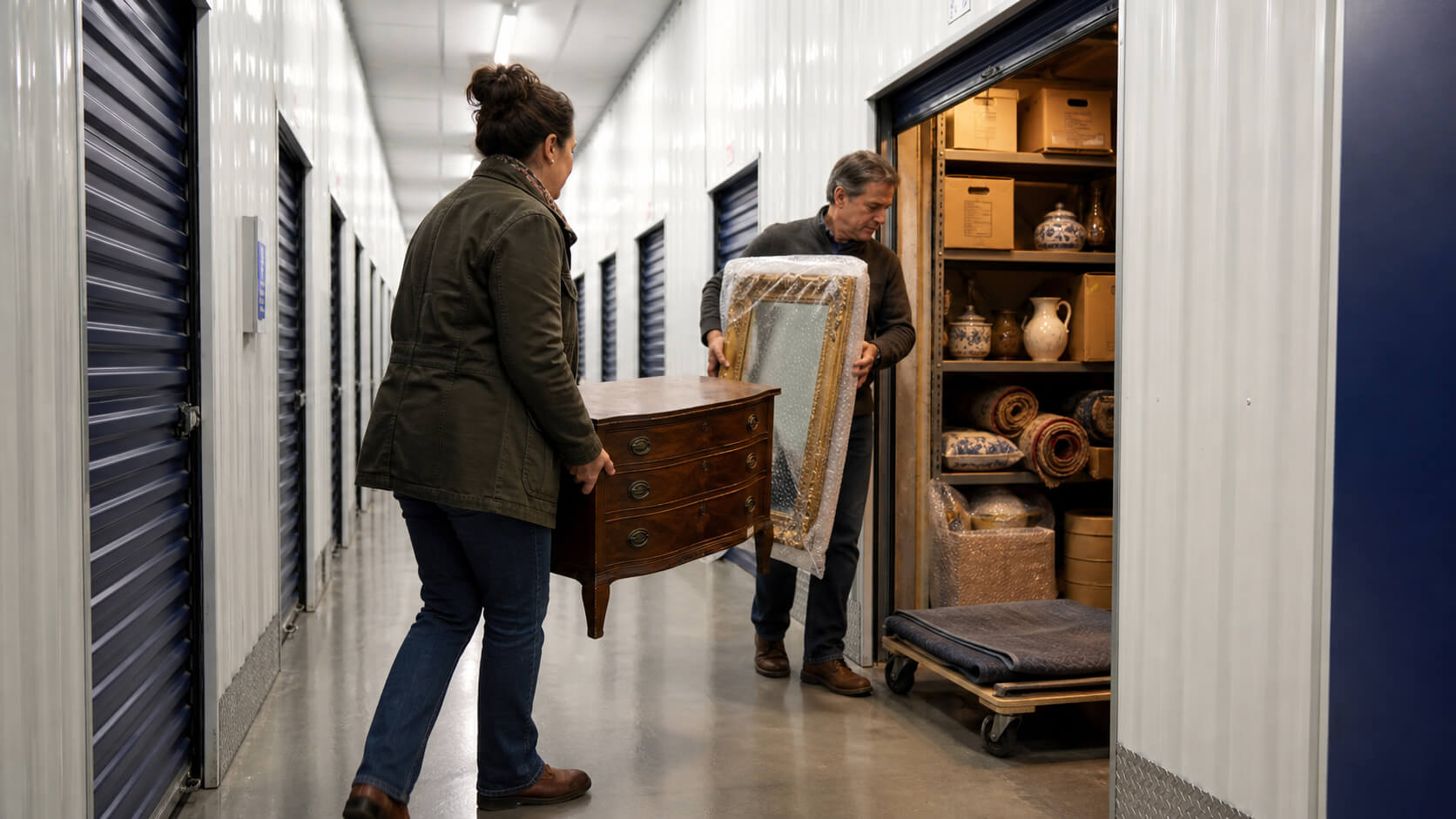
Access is 6am to 10pm, seven days a week, via smart entry. If you are an early starter or working to trade hours, the unit is there when you need it. No booking in advance, no queuing at a staffed desk.
Smart entry and when you can get in
Smart entry means you access the site and your unit through a keypad or fob system, without needing a member of staff present. Six in the morning is a practical time for a lot of renovation work. You can pick up a piece of equipment, retrieve a piece of furniture to take back to a finished room, or drop off a delivery before the trades arrive, all without waiting for someone to unlock anything.
Access closes at 10pm. The sites are not 24-hour. For the vast majority of renovation projects, the 6am to 10pm window covers everything you will need.
How deliveries and material drop-offs work on an unmanned site
Wigwam sites are unmanned. This is worth understanding before you plan any deliveries or material drop-offs.
If a supplier or courier is delivering something to your unit, someone from your side needs to be there to receive it. Wigwam does not sign for deliveries, does not receive goods on your behalf, and cannot accept materials or packages if no one from the customer’s business or household is present.
For renovation projects where materials are being delivered, the site access hours work in your favour for co-ordinating deliveries at a time when you or someone else can be present. What does not work is arranging a courier drop that assumes the site will receive it for you.
Tips for moving things in and out during an active renovation
Moving things in and out of storage while a renovation is live is a different kind of logistics from a single move-in and move-out. A few things make it easier.
Keep a rough inventory of what is in the unit and where. It does not need to be elaborate. A list on your phone of what is in which area of the unit, updated as things go in and come out, saves significant time when you are looking for a specific item mid-project.
Use the access hours to your advantage. Early morning runs, before the trades are on-site, let you retrieve or drop things without disrupting the working day. Late evening is useful for dropping off items that come out of a finished room before the next phase starts.
If you are retrieving furniture to restore a finished room, do it in full. Half-restoring a room and leaving the rest in storage extends the period of limbo. Aim to complete one room at a time, on the same rhythm as the build.
Finding a Wigwam unit near your renovation
If your renovation is in a UK market town, there is a good chance a Wigwam location is nearby. Wigwam operates across our UK market-town locations, with units suited to household goods and the kind of project described in this guide.
Locations across UK market towns
The full list of locations is at wigwamstorage.co.uk/self-storage-locations.
If you are in the south-west, Wigwam Self Storage Bath is well placed for renovations in and around the city, where period properties are plentiful and the need for careful, clean storage is high. For projects further north or in the east Midlands, Wigwam Self Storage Lincoln is the nearest verified location.
For any other town, use the locations hub to find the closest site. Do not assume a location exists in a town without checking; the hub is the reliable reference.
First mention tip for location naming: name locations in full on first mention, as above, and casually thereafter. “The Bath site” or “Lincoln” are fine once the full name has been used.
What to check before you book
Before you commit to a unit, a few things are worth confirming.
What size do you actually need? The sizing guide on the website gives a practical reference, and the team can advise. It is better to size slightly large than to discover mid-project that things do not fit.
How long do you expect to need it? Be honest with yourself about this. A kitchen renovation that the builder says will take four weeks often takes six. Build the buffer in at the planning stage rather than chasing the extension later.
What is in the unit that matters most? If you are storing anything of significant value, check the contents-protection requirements before you book. The notice period and the refund terms are both in the terms and conditions.
Pricing, without commitment, is at how much is self storage in the UK. No prices are quoted on this page; the pricing page is the right reference.
How to get a quote
When you are ready, getting a quote takes a few minutes and commits you to nothing. You will need a rough sense of unit size and the likely start date.
Get your quote at quote.wigwamstorage.co.uk.
The renovation is the hard part. The storage is the easy part. We have watched hundreds of projects come and go from our market-town locations, and the ones that go well are the ones where the house was properly cleared before the trades started. When you are ready, get a quote at quote.wigwamstorage.co.uk and we will take it from there.
Frequently Asked Questions
Yes, but prepare it first, because a white good put into storage wet is a white good that comes out smelling. Empty it completely, switch it off, and defrost it fully. Then wash the interior, wipe it dry, and leave the door propped slightly open while it airs for a day before it goes in. The reason is simple. A sealed fridge or freezer with any residual moisture inside becomes a closed, dark box where damp has nowhere to go, and mould and odour build quickly over a six-week renovation. Once it is genuinely dry, it stores well. Our units are clean, dry and secure, so the appliance is in a sound environment, but the inside of a sealed appliance is its own little world and only you can prepare that. Keep the door wedged open by a few centimetres for the duration if you can, using a folded towel or a purpose-made wedge, so air keeps moving through it. Disconnect and coil the cable, and tape the shelves or remove them and pack them separately so they do not rattle loose in transit. The same logic applies to washing machines and dishwashers: drain them down, run the hoses dry, and leave the door ajar. Treat the appliance like any other item for contents protection and declare its replacement value with the rest of your goods.
You can store tools and materials in your unit, and the access hours make it practical to collect what you need, but the unit is for storage, not for working in. Think of it as your off-site store cupboard rather than a workshop. Access runs 6am to 10pm, seven days a week, by smart entry, so an early start before the trades arrive is easy. You can drop tools off the night before and collect them at six the next morning without waiting for anyone. A few sensible rules apply to what you store. Paints, solvents, gas canisters, fuel and other flammable or hazardous materials are not suitable for a storage unit, so those stay with you on site. Heavy power tools and timber are fine, but pack them so nothing can topple onto softer goods if you have furniture in the same unit. If you are running a tool-heavy DIY project, it can be worth keeping the tools near the door and the household goods deeper in, so your daily ins and outs do not mean unstacking the whole unit. One thing to plan for: if a supplier is delivering materials to the site, someone from your side has to be there to receive them, because our sites are unmanned and we cannot accept or sign for deliveries on your behalf.
Book as soon as the start date is firm, which in practice means a week or two before the trades arrive, not the morning of. The reason is partly availability and partly logistics. Unit availability varies by location and by size, and the unit you want may not be free on the exact day you decide you need it, so reserving early protects your choice. Just as importantly, a good pack-out is not a one-day job. Clearing the primary work zone properly, packing by room and labelling as you go, usually takes several evenings or a weekend, and it is far less stressful spread across a few days than crammed into the night before. Our two-week minimum stay applies from the day you move in, so there is no penalty in starting the stay a little ahead of the build to give yourself a calm pack-out window. If anything, starting early is the sensible choice, because it means the work zone is genuinely clear when the trades turn up rather than half-cleared with the last few boxes still going out as they unload their tools. Get the quote in early at quote.wigwamstorage.co.uk, confirm the size with the team, and you can set your move-in date to suit your pack-out plan rather than the builder’s clock.
Yes, and for many people that is the real reassurance, because a house mid-renovation is the least secure it will ever be. During a build, doors are off, windows are out, scaffolding offers a way up, and strangers are coming and going. Belongings left in the property through all that are exposed in a way they never normally are. Moving them to a unit takes them out of that environment entirely. Our units are individually alarmed, clean, dry and secure, and access to the site is controlled by smart entry, so only people with their own access can get in, between 6am and 10pm. That is a far more controlled setting than an open building site. Contents protection is mandatory either way, so your goods are also covered against loss or damage in the unit, whether you take our RSA Self Storage Customers’ Goods policy or provide proof of your own cover. The combination of a controlled, alarmed site and mandatory contents cover is what makes storage the safer home for anything valuable, fragile or sentimental during the works. Practical things, the items you genuinely use day to day, can stay with you. The good furniture, the artwork and the irreplaceable pieces are better off out of the dust and away from the comings and goings of an active site.
It is possible, but treat it with care, because a shared unit means shared responsibility and that can get awkward when something goes wrong. The unit is rented in one account holder’s name, and that person holds the agreement and the access. If you are splitting a unit with a relative or a neighbour whose project overlaps yours, everyone needs to be clear from the outset on who that account holder is, how access is shared, and who is liable for the account. The bigger consideration is contents protection. Cover is declared and held by the account holder, based on the full replacement value of the goods in the unit. If two households pool their belongings, the declared value needs to reflect everything in there, and a claim would be settled through the account holder, not split neatly between two families. That is rarely worth the tangle for goods of any real value. For most people the cleaner answer is a unit each, sized to each household’s needs, which keeps access, liability and cover simple and avoids any disagreement later. If you do want to share to save space, talk it through with the team first so the sizing and the cover are set up correctly, and put your own agreement in writing between yourselves about who is responsible for what.