Is the community hall cupboard finally impossible to close?
There is a cupboard in almost every community hall in Britain. It holds three folding tables, a bundle of bunting from 2019, two gazebo bags, a box of raffle prizes that never got used, and a stack of plastic chairs that belong to somebody else. Nobody is quite sure whose job it is to sort it. And slowly, season by season, it gets a little more impossible to close.
If your group has reached that point, you are not alone. The scout hut in Lincoln Lincolnshire, the food bank in Cheltenham Gloucestershire, the am-dram committee in Warminster Wiltshire: they all hit the same wall. The hall is full. The volunteer whose garage you borrowed has been patient, but you can see it wearing thin. The donated goods you promised to store safely are sitting on a plastic sheet in someone’s utility room.
This guide is a plain account of how self storage actually works for a charity or community group. What you can store. What it costs and how to budget for it. How your volunteers get in. What to check before you sign anything. No promises of free space. No charity-discount marketing. Just the honest committee briefing.
Is self storage right for your charity or community group?

The right question before anything else is whether a storage unit actually solves your problem. For most groups that have outgrown their current arrangement, the answer is yes. But it helps to be clear about what you are buying and whether it fits your situation.
What community groups actually store
The range of what volunteer groups need to store is wider than people assume. Most enquiries we see fall into one or more of these categories:
Donated goods and appeal stock. Clothing, tinned food, household items waiting for redistribution. Often the volume is uneven, building fast before a drive and thinning out after.
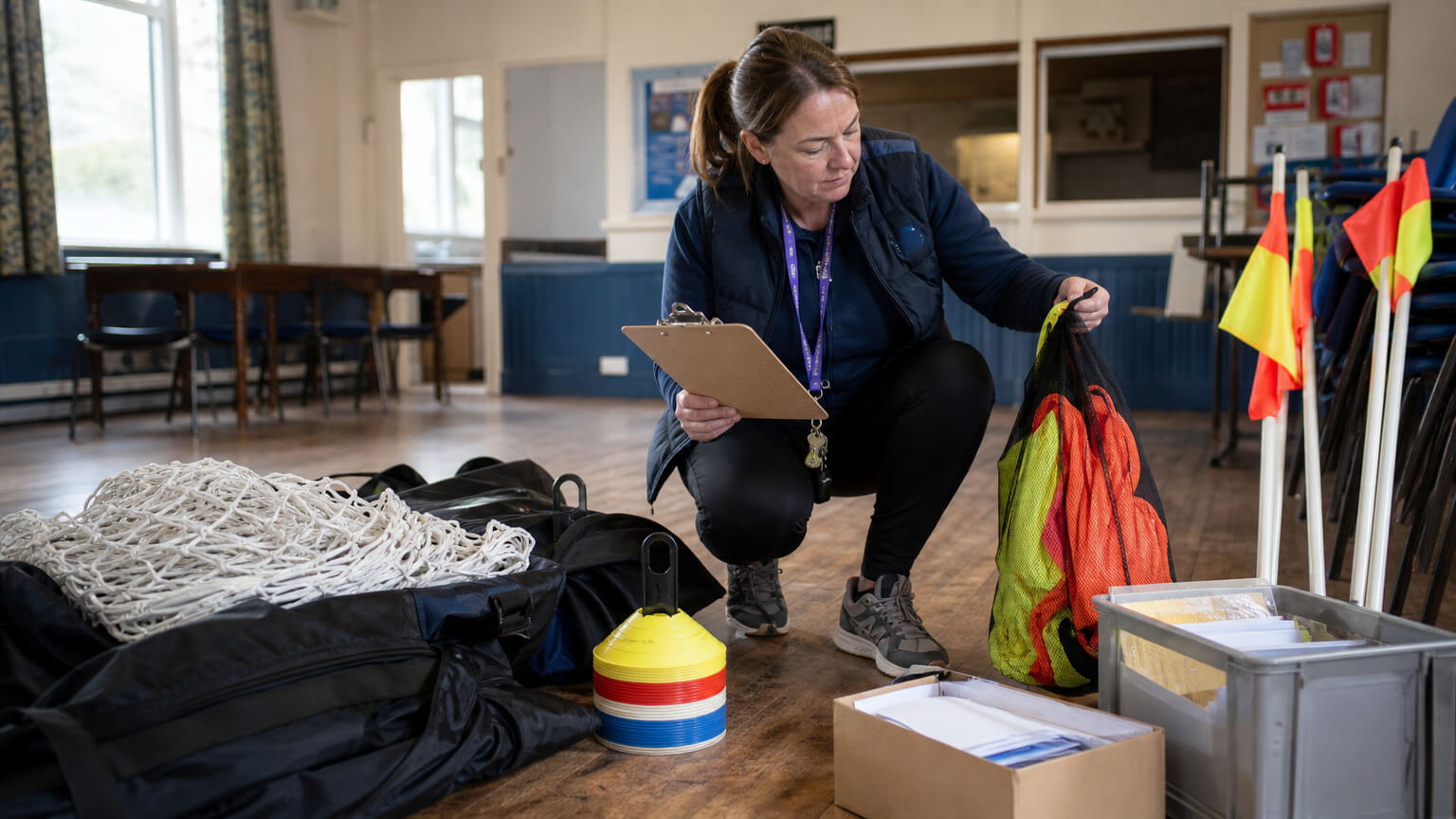
Event and fete equipment. Gazebos, folding tables, bunting, stalls, signage, ticket machines, float boxes. This kit is bulky, awkward to store at home, and needed a few times a year in good condition.
Food bank and seasonal appeal parcels. Cardboard boxes that stack well but need dry, clean space and controlled access.
Club and group equipment. Sports kit and bags, theatrical props and costumes, music stands and instrument cases, choir robes. Often shared among members and needed on a rolling basis.
Seasonal decorations. Christmas trees, grotto items, decorations for fetes or summer shows. High volume for a short window, then needing somewhere clean and dry for the rest of the year.
Administrative records and archives. Minutes, accounts, membership records, grant files. A storage unit is secure space your group controls, not a regulated document-management service. If your group has legal obligations around records retention, those obligations are your own. Charity document-retention rules differ by jurisdiction: in England and Wales, guidance comes from the Charity Commission; Scotland and Northern Ireland are subject to different rules and different regulators. Speak to your solicitor or adviser before treating a self-storage unit as your records solution.
When a hall cupboard or a volunteer’s garage stops working
Most groups do not go looking for a storage unit until the current arrangement has started to cause problems. The tipping points tend to be recognisable.
The arrangement depends on one person’s goodwill. When that person moves house, has a health problem, or simply has had enough, the whole thing collapses. The goods are suddenly someone else’s problem.
The space is not suitable for the goods. A garage with no drainage and a leaky roof is not a good place for donated clothing or borrowed theatrical costumes. A cupboard shared with three other users means nothing is where you left it.
Access is restricted to one keyholder. If the person with the key is unavailable on the day of the event, you have a serious problem.
The group is growing and the improvised solution has not grown with it. More members means more kit. More events means more stock. The borrowed corner of the community centre stopped being enough two seasons ago.
None of this means self storage is automatically the answer. A smaller group with a simple need might solve the problem differently. But if the borrowed solution is putting pressure on a volunteer, damaging the goods, or limiting what the group can do, it is worth looking at the alternative properly.
What a unit gives you that borrowed space does not
A dedicated unit puts your group in control. Only your committee members have access. The goods are held in individually alarmed, clean, dry and secure space. You can tell donors that what they gave you is properly protected. You can tell the committee that the arrangement does not depend on any one individual.
The terms also matter for a cautious group. Wigwam’s minimum stay is two weeks, which means you can trial the arrangement before committing to a longer run. If your circumstances change, there is a 14-day notice period, and unused days within a billing period are refunded. There is no deposit to reclaim, because we don’t take one. That is the kind of commitment level a committee can actually vote for.
Free, discounted or fair rate? Setting honest expectations

The most important thing this guide can tell you about free charity storage is that it is real but rare, and that chasing it may not be the best use of your time.
Why “free charity storage” is rarer than it sounds
Several large operators run charity schemes. They are genuine. Big Yellow Foundation, Safestore community partnerships, Access seasonal drives, Blue Self Storage in Wales: these programmes do exist. But they typically work by nominating a single charity per site per year. That means one group gets the free space; everyone else who applied does not. The waiting lists are real. The conditions attached are real. Most groups in most towns will not receive one of these placements.
That is not a reason to give up on self storage. It is a reason to look at the commercial terms of a provider rather than spending months waiting for a charity scheme that may never materialise.
One thing to note: some providers will respond warmly if you explain your situation and ask whether there is flexibility. Wigwam does not operate a published charity-discount programme, and we will not pretend otherwise. But flat fair terms, no deposit, a refund of unused days, and a two-week minimum stay are, in practice, more useful to a cautious committee than a headline discount that applies to one group and not yours.
How Wigwam keeps it fair: no deposit, refund of unused days, two-week minimum stay
For any group on a tight budget, the terms are where the honesty is. Here is what ours look like in plain language.
No deposit. We don’t ask for one. There is nothing to find up front beyond your first four weeks’ rent and contents cover, and nothing sitting with us that the group has to reclaim at the end.
Refund of unused days. If you leave before the end of a billing period, the days you have not used are refunded. You pay for what the group actually uses.
Two-week minimum stay. The shortest commitment is two weeks, which is enough time for a short event season or a trial run before the committee votes on a longer arrangement.
These terms do not replace a proper read of the contract before signing. They are a starting point for the conversation. The full terms are at wigwamstorage.co.uk/terms-conditions.
What size unit does a community group need?
Sizing is often the thing that stops people from making the call. The honest answer is that it depends on what you are storing, but there are useful anchors.
Rough sizing by use case
The right way to think about unit size is volume, not category. A few donation boxes and a pair of folding tables fit comfortably in a small unit. A full summer fete’s kit, three gazebos, a set of folding tables and chairs, and two seasons of signage will need something bigger. A food bank storing pallets of tins alongside the Christmas appeal stock alongside donated clothing will need considerably more space.
Before you make contact for a quote, spend half an hour measuring or estimating what you actually have. Stack the boxes in your imagination. Think about what is stored all year versus what comes in seasonally. That picture will help you ask a better question and get a more accurate quote.
The pricing and size guide on the Wigwam site gives size options alongside indicative costs, which will help you form a number to take to the committee.
Right-sizing to keep the monthly cost down
The good news for groups on a budget is that you do not have to get this exactly right on day one. The two-week minimum means you can start small, see how the space works in practice, and move up if you need to. Starting smaller also keeps the monthly cost down while the committee is still assessing whether the arrangement is working.
What we would say: do not rent less space than you genuinely need. A unit that is constantly overloaded is harder to use and more likely to result in damage to stored goods. Measure before booking, and if you are between sizes, err toward the larger option.
The pricing page will show you what each size costs in your nearest market town, which is the number you need before you can put a figure in the committee budget.
What does it cost, and how to budget for the committee

Self storage costs vary by size, by location, and by how long you stay. We do not quote prices on this page because they differ by town and unit, but the pricing page gives you the detail you need.
What drives the price
The main variable is unit size: a small unit costs substantially less than a large one. Location also matters, because Wigwam operates across UK market towns and local costs differ. The good news is that the refund-of-unused-days model means a shorter stay does not cost you proportionally more per day than a longer one: you pay for what you use.
For a committee budget, the practical approach is: get a quote and record the cost as a line item. There is no deposit to account for separately, which keeps the treasurer’s job simple.
Keeping the bill predictable for a volunteer-run budget
Unpredictable costs are the enemy of a volunteer committee. These are the things that keep a storage bill predictable with Wigwam:
No price buried in a contract that differs from the quote. The terms are at wigwamstorage.co.uk/terms-conditions and you should read them before signing.
No penalty for leaving earlier than planned. The 14-day notice and refund of unused days means a change in the group’s circumstances does not result in a bill you cannot justify.
No ongoing cost you did not know about. The main mandatory addition to the rental cost is contents cover (see the insurance section below), which you will need to factor into the budget.
If the group qualifies for any special rate, ask at quote stage. We will give you a straight answer.
Get a quick quote for your group at quote.wigwamstorage.co.uk. It takes a few minutes and gives you the number you need before the committee meets.
Access for volunteers: how smart entry works

One of the real practical advantages of a storage unit over a borrowed space is that access is not restricted to a single keyholder or a set of office hours. That matters a great deal for a volunteer-run group.
Smart entry, 6am to 10pm, and who in your group can hold access
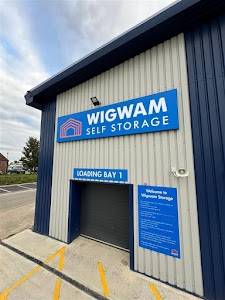
Wigwam sites use smart entry. That means your authorised volunteers can access the unit using their own credentials, without needing to coordinate with a manager or book a time slot. Access is available from 6am to 10pm, seven days a week.
That window covers most volunteer patterns: a Saturday morning fete pack-up, a Sunday afternoon rehearsal load-in, a Wednesday evening packing session for a food bank run. It does not cover the middle of the night, and we will not pretend otherwise. If your group genuinely needs access outside 6am to 10pm on a regular basis, self storage may not be the right fit.
On the question of who holds access and what happens when a key volunteer moves on: the account is held by the named renter. Access arrangements for additional volunteers should be discussed when you take the unit. It is worth raising at quote stage so there are no surprises later. The formal position is in the terms and conditions.
Unmanned sites: what that means for deliveries and collections
This is the detail that catches groups out, and we want to be clear about it.
Wigwam sites are unmanned. There is no member of staff on site during access hours. That is what keeps the cost down and the access hours long. But it has a direct practical consequence: Wigwam cannot sign for deliveries, hold donated goods on your behalf, or receive a courier drop when nobody from your group is present.
If your group receives donated goods by courier or delivery, someone from your group must be present at the unit to receive them. The driver will need to hand over to a person; they cannot leave goods with site staff, because there are none.
For food banks and donation-driven groups who receive regular deliveries, this is important to plan for. It is not a barrier, but it requires a volunteer to be available when the delivery arrives. Organise your delivery windows around access times (6am to 10pm) and make sure there is always a named person confirmed for each drop.
Keeping donated and borrowed goods safe and insured

The goods your group stores are often not strictly yours. Donated clothing, borrowed theatrical costumes, equipment on loan from a sponsor: the responsibility for keeping those things safe rests with the group. A unit helps. But knowing what protection you have, and what you need to arrange yourself, matters.
Clean, dry and secure units, individually alarmed
The honest description of a Wigwam unit is clean, dry and secure. Each unit is individually alarmed. The sites are secure. The environment is dry and clean, which is what most donated goods and event kit need.
What a Wigwam unit does not claim to offer is climate control. There is no temperature or humidity management. For the vast majority of community group storage needs, clean, dry and secure is exactly what is required. The exception is anything genuinely sensitive to temperature or humidity: certain food items, some medical supplies, artworks. If you have goods in those categories, a standard storage unit may not be the right solution, and you should seek advice on appropriate storage conditions before committing.
For everything else, an individually alarmed, clean and dry unit is a significant upgrade on a leaking garage or an unsecured community hall cupboard.
Insurance for your group’s goods
Contents cover is mandatory at Wigwam. You cannot store goods without it. That is a condition of the contract, not a recommendation.
You have two options. You can take Wigwam’s own contents-protection policy, which is arranged through RSA under the “Self Storage Customers’ Goods” scheme. Or you can prove that you already have adequate cover in place through your own insurer. Both routes are accepted; you need to confirm which you are using when you start.
Whichever route you take, the key obligation is declaring the full replacement value of everything you are storing. If you declare less than the true value and need to make a claim, the settlement will be reduced in proportion to your underinsurance. This is standard in self-storage insurance, but it catches groups out. Think about the full cost to replace everything in the unit, not the value of what it cost when it was new or when it was donated.
For specifics on Wigwam’s contents-protection policy, see wigwamstorage.co.uk/contents-protection.
Before you start, it is also worth reviewing whatever insurance your group already holds, such as a public liability policy or a charity insurance package, with your broker. There may be gaps or overlaps when goods are stored off-site rather than at your usual premises. That review is a conversation for your broker, not for us.
A jurisdiction note: insurance requirements and charity governance obligations may differ in Scotland and Northern Ireland. If your group operates across those borders or is constituted under Scottish or Northern Irish law, take advice from your solicitor or adviser rather than relying on England-and-Wales guidance.
Choosing a local unit in your market town

The practical value of a local unit is straightforward: volunteers will actually use it.
Why local matters for a community group
A unit on an out-of-town industrial estate, accessible only by car and a significant drive from where your volunteers live, will be used reluctantly and less often than it should be. Goods will pile up at someone’s house because the trip felt too far for a single box. The whole point of having a proper unit is that it is within reach of the people who need it.
Wigwam sits in the same market towns where local charities, clubs, food banks and community groups operate. Lincoln Lincolnshire, Cheltenham Gloucestershire, Warminster Wiltshire, and our other UK market-town locations are the kinds of towns where the scout hut, the food bank, the am-dram society and the parish fete committee are doing exactly the work we are describing here. A unit in town, reachable on the way to or from the community hall, gets used properly.
That said, there is no substitute for actually checking which location is nearest and most practical for your group’s volunteers. A unit that is five minutes from where two committee members live but twenty minutes from where the goods are collected is less useful than one that sits between the two.
Finding your nearest Wigwam location
The full list of locations is at wigwamstorage.co.uk/self-storage-locations.
Two locations worth knowing if you are in those areas: Wigwam Self Storage Bath and Wigwam Self Storage Lincoln. For all other towns, the locations hub will show you what is available and where.
How to get started with Wigwam
The quote process is designed to be quick and to help you work out the detail, not to catch you out. Carol does not need to have everything figured out before she makes contact.
What to prepare before you get a quote
A little preparation makes the quote more useful. You do not need precise answers to all of these, but thinking them through first will save time.
Approximate volume or use case. What are you storing, roughly how much of it is there, and how might that change season to season? This helps us suggest a starting unit size.
Intended start date. Even an approximate date helps with availability.
How many volunteers will need access. Think about who realistically needs to get in and how often.
Whether you will receive deliveries. If donated goods or supplies will arrive by courier, plan for a volunteer to be present at the unit. Raise this at quote stage so you are clear on how it works.
Whether you have or will arrange contents cover. If you already have an existing insurance policy that may cover goods stored off-site, ask your broker whether it extends to self-storage. If not, Wigwam’s own contents-protection policy is available.
Terms to read before you sign
Before the committee votes to proceed, read the full terms at wigwamstorage.co.uk/terms-conditions.
The points worth confirming specifically:
The notice period, and what comes back if you leave part-way through a period you have paid for (14-day notice, vacated unit, settled account).
The notice period (14 days).
The access hours (6am to 10pm, seven days a week).
The insurance requirement (contents cover is mandatory; take Wigwam’s policy or prove your own).
The fact that sites are unmanned and that deliveries require someone from your group to be present.
These are not catches. They are the terms that a careful committee should want to verify before committing. A guide that sends you to sign something without reading it first is not a guide worth following.
Ready to put a number to the committee? Get a quick quote for your group at quote.wigwamstorage.co.uk. It takes a few minutes and gives you everything you need for the next meeting.
Frequently Asked Questions
This is worth raising at quote stage, because the answer shapes who is responsible and what happens when people move on. The account is held by a named renter, and for a charity or community group the sensible practice is to make that the group itself, or an officer acting clearly on the group’s behalf, rather than treating it as one individual’s personal arrangement. Get this right at the start and you avoid the single biggest weakness of borrowed storage: the whole thing resting on one person’s goodwill.
The practical points to settle when you take the unit are who the named account holder is, who is authorised to access the unit, and how those access arrangements change when a volunteer steps down. Raise all three with the support team when you get the quote, so there are no surprises later. The team can explain how access for additional volunteers works and what the account requires; the formal position is in the terms and conditions at wigwamstorage.co.uk/terms-conditions. What they cannot do is advise on your group’s internal governance, who should hold which role, or how your constitution allocates responsibility. That is a matter for your committee and, if needed, your adviser. A clean way to handle it is a short minute at a committee meeting recording who holds the account and who has access, reviewed whenever the committee changes. That gives you a record the group controls, and it means the unit belongs to the group rather than to whoever happened to sign up first.
The bookkeeping is simpler than it used to be, because there is only one kind of payment to record. The rental is an ongoing cost: record each charge as expenditure, the same as you would a hall hire or a utility bill. There is no deposit to treat as a balance-sheet asset, because we don’t hold one. The only money that comes back is a refund of days the group paid for but did not use.
A couple of practical notes for whoever keeps the books. Keep the invoices, because they give you a clean monthly figure for the line item and a clear record for the treasurer’s report and any independent examination. Remember to budget for contents cover as well, since that is mandatory and sits alongside the rental as a recurring cost. When the unit is given up, any days paid for but not used come back into the group’s funds. None of this is accounting advice, and Wigwam cannot advise on how your particular group must report. Charity reporting requirements differ by size and by jurisdiction, and your treasurer or independent examiner is the right person to confirm exactly how to present it. What we can give you plainly is the structure: rental is a cost and contents cover is a cost. There is no deposit to treat as an asset. Take that to the person who prepares your accounts and they can slot it in correctly.
The goods stay yours, or your successor’s, and the unit is closed in the ordinary way: give 14 days notice, clear the unit and settle the account. Nothing about winding up or merging changes the storage mechanics. What it does change is who decides what happens to the contents, and that is a governance question for your committee and your adviser, not something Wigwam can rule on.
A few practical things help if this is on the horizon. Make sure the account is held clearly in the group’s name and that more than one officer has access, so closing the unit does not depend on a single person who may have already stepped away. If you are merging, the receiving group can take over a fresh arrangement on the same flexible terms, and you simply move the goods across or close one unit and open another in the new group’s name. If you are folding, your constitution and the rules of your regulator will usually set out where remaining assets go, which includes the contents of the unit and any donated or borrowed goods. Donated and borrowed items in particular need care, because they may have to return to their owners or pass to a similar cause rather than being disposed of freely. That is a conversation for your solicitor or adviser, and the rules differ between jurisdictions. Wigwam’s part is simple and predictable: when the decision is made, give notice, clear the unit and settle up. The harder decisions about where the goods go belong to the group.
The account and the responsibility for it sit with adult officers of the group, and decisions about who you send to the unit are the group’s to make under its own safeguarding rules, not Wigwam’s. The honest position is that this is a safeguarding and governance question first and a storage question second. Access to the unit is by smart entry using authorised credentials, available 6am to 10pm, seven days a week, and our sites are unmanned, with no staff on site to supervise anyone.
That unmanned, self-access nature is the thing to think hard about. A young volunteer at a quiet site, lifting and moving event kit, is exactly the situation your safeguarding policy exists to cover. Most groups handle this sensibly by keeping unit access with adult volunteers and treating any involvement by under-18s as supervised, with an adult present, in line with their own policy and the practice their insurer and regulator expect. Manual handling, lone working at a quiet site and supervision ratios are all part of that picture. Wigwam cannot advise on your safeguarding obligations or set rules for your volunteers, and we would not try to. What we can tell you plainly is how access works: it is credential-based, self-service, within the access window, at an unmanned site. Take that description to whoever owns your safeguarding policy and let them decide who you authorise. Raise the question of who holds access at quote stage so the arrangement is set up to match the decision your group has made.
These are two completely separate things, and it is important not to confuse them. The contents cover that is mandatory at Wigwam, whether you take the RSA Self Storage Customers’ Goods policy or prove your own equivalent, protects the goods in the unit. It does not cover your volunteers, your activities, or anyone who might be injured while loading or unloading. Public liability is your group’s responsibility and is nothing to do with the storage cover.
Most established community groups and charities already hold public liability cover as part of a charity insurance package, and that policy, rather than anything Wigwam provides, is what would respond if a volunteer or member of the public were injured in connection with your activities. What you should check with your broker is whether your existing cover extends to volunteers handling goods at an off-site location like a storage unit, because there can be gaps when activity moves away from your usual premises. That is a conversation for your broker, who can look at your specific policy, not for us. Wigwam can tell you what the contents policy covers, which is the goods, and signpost you to the contents-protection page at wigwamstorage.co.uk/contents-protection for the detail. We cannot advise on your liability position or your wider charity insurance, because that is genuinely outside what we do and depends on your group’s circumstances and jurisdiction. The clean summary: contents cover protects the stuff, public liability protects the people, the first is arranged with the unit, the second is yours to hold and to confirm extends to off-site work.