Is your house too full to show, rather than too small to sell?
The living room has good bones. The fireplace is lovely. But there are two sofas, a shelving unit full of board games, a basket of dog toys and three coats over the banister, and the agent is coming tomorrow to take the photographs. Not a bad room. Just too full.
Most houses are not too small to sell. They are too full to show. That distinction matters, because it tells you what the actual job is. You are not renovating. You are not decorating. You are shifting enough of your life out of the way so that a stranger can walk through and picture theirs.
One storage unit, a clear weekend, and the room-by-room plan below. That is what this article is for.
Why a storage unit is a staging tool, not just a box room
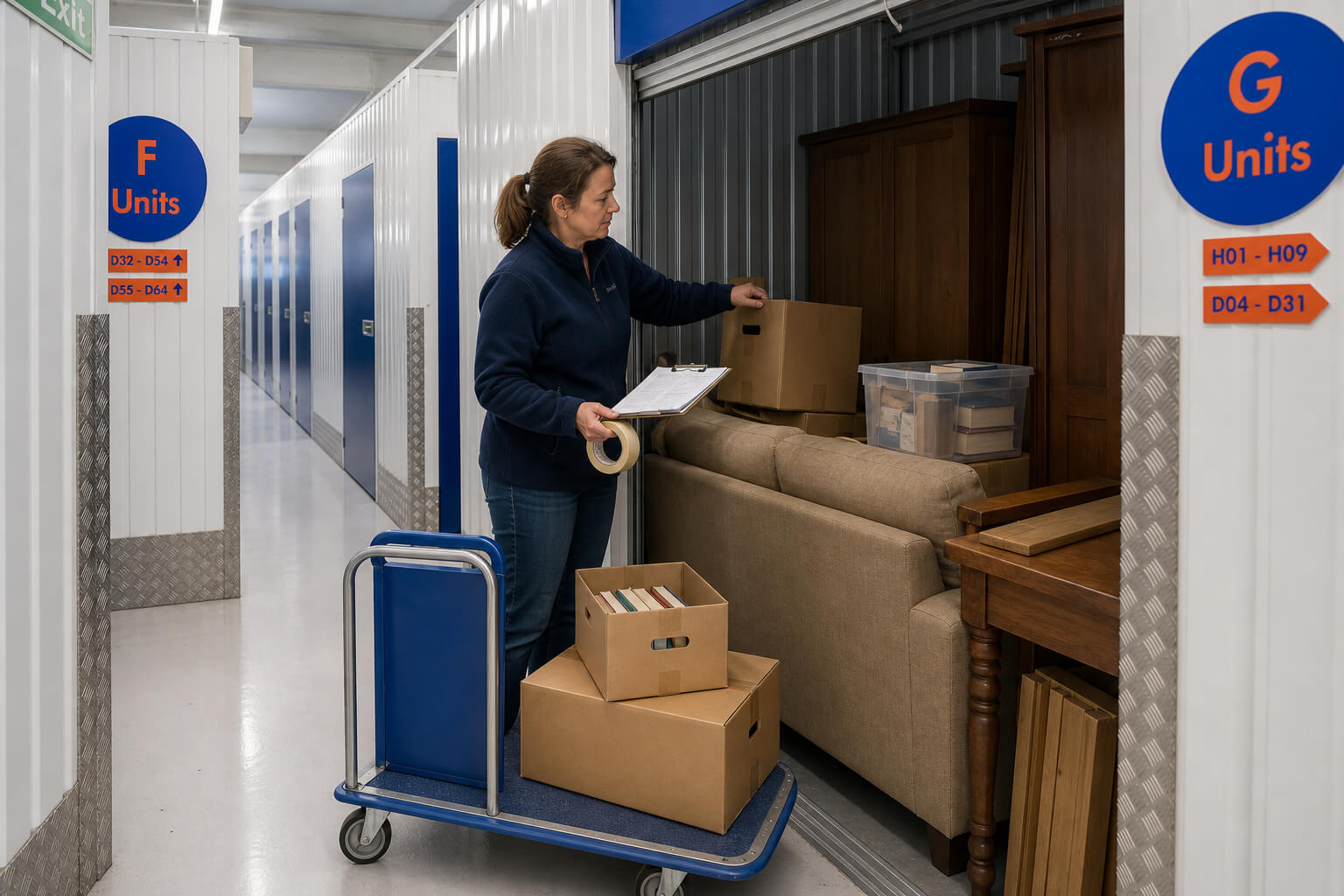
A self-storage unit does one thing a box room cannot: it takes the surplus entirely out of the house. You cannot stage around a pile. You can arrange a cleared room. The difference in how a property photographs is immediate and, for buyers scrolling through listings on a phone, it is often the difference between a second look and a scroll past.
The agent’s eye and the three-to-five-foot rule
Estate agents and property photographers talk about breathing space. The idea is simple: every piece of furniture needs clear floor around it so the eye can travel across the room rather than snagging on edges. Roughly three to five feet of clear floor between the main pieces is the rough working principle, not a rigid formula, but a useful test. If you cannot walk a relaxed line between your sofa and the bookcase, a buyer’s eye will not be able to either. Move the bookcase out. The sofa stays.
Photographs taken in a cleared room come back looking bigger. That is not a trick of the lens. It is what happens when the camera can see the wall behind the chair.
Depersonalise so a buyer can picture themselves in the space
This is the part that feels odd. You are removing the evidence that you live there: the family photographs lining the hallway, the children’s drawings on the fridge, the sports trophies in the study. None of these things are wrong. They just make it harder for a buyer to imagine the house as their own.
The storage unit gives you somewhere safe and dignified to put these things. They are not in a bin bag. They are not crammed into a wardrobe. They are in an individually alarmed, clean, dry and secure unit that you can get into from 6am to 10pm, seven days, if you need something back. That matters when the photograph on the mantelpiece is irreplaceable.
One note: this page is about clearing your own belongings so rooms show better. If your agent suggests bringing in rented staging furniture or props, that is a separate question and a different cost. We are talking here about what you own.
What to clear first (the room-by-room list)
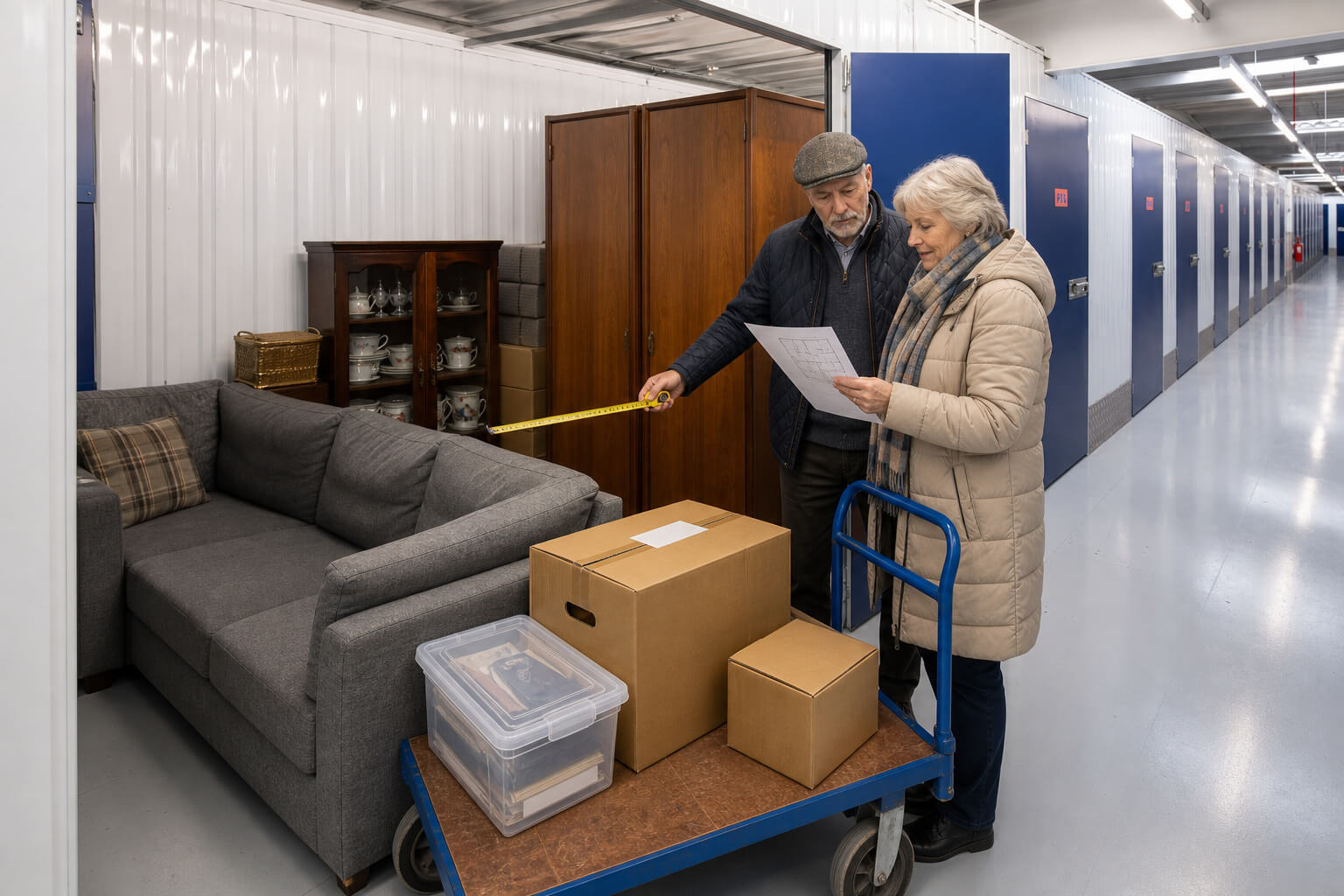
Start with the rooms that photograph worst and clear them in this order: living room, master bedroom, hallway. These three spaces form the buyer’s first impression and they are almost always the most burdened.
Bulky and surplus furniture that eats floor space
The second sofa. The spare dining chairs stacked in the corner. The exercise bike that has been in the bedroom since January. The large bookcase blocking the bay window. These are the pieces that shrink a room in a photograph and crowd it on viewing day.
Large furniture needs more unit space than boxes of belongings, and that affects cost. Signpost your own calculation early: what size unit do you need for furniture versus boxes and bags? The Wigwam pricing page gives you a starting reference, and the team at your nearest location can help you size the job.
Personal photos, collections and everyday clutter
We know this step feels uncomfortable. Removing the family photographs can feel like you are pretending you do not live there. You do live there. But the buyer needs to live there in their imagination first, and a wall of unfamiliar faces makes that harder than a neutral wall does.
Pack these items carefully and box them properly. The unit is alarmed, clean, dry and secure. You can get in from 6am if you want something back before a school run. The photographs are not gone. They are waiting somewhere safe, and you control when you go.
Fragile or treasured items you want out of harm’s way during viewings
Viewings are busy and slightly chaotic. People open wardrobes, peer into cupboards, let children into rooms. Fine china, artwork, musical instruments and anything genuinely fragile is safer out of the house during the sales period.
Wigwam units are individually alarmed and kept clean, dry and secure. We do not offer climate control, and we will not tell you otherwise. For items that are sensitive to temperature or humidity, good packing is the honest answer: double-wrap, use appropriate boxes, and protect surfaces with furniture blankets or wrapping. More on packing technique in the section below.
How much space you actually need
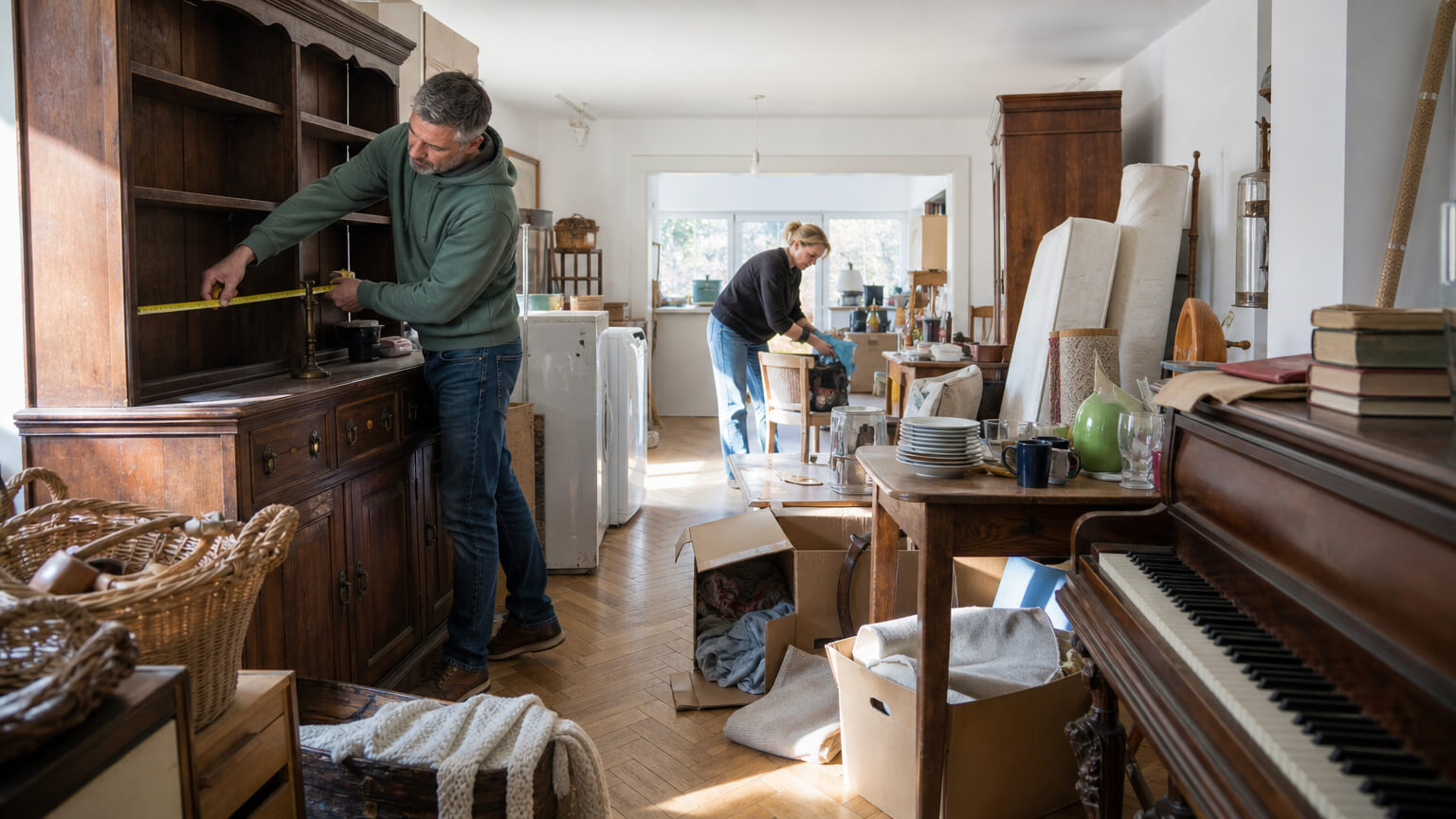
Most sellers staging a four-bedroom family home need a medium-sized unit, roughly the floor space of a small single garage. The honest answer is: it depends on what you are moving out.
Boxes and decor only, versus large furniture
There are two common scenarios.
The first is a seller who is clearing soft furnishings, boxes of belongings, personal items and small pieces. A smaller unit handles this comfortably. Think of it as a bootload or two: the kind of thing you could shift in a couple of estate car runs.
The second is a seller moving large pieces out: a second sofa, a large dining table with extra leaves, a wardrobe or a chest of drawers. A larger unit is needed, and the cost reflects that.
What you do not need is a precise square-footage calculation before you call. The pricing page gives you a sense of scale and cost, and the team at your nearest location can talk you through it based on a short description of what you want to store. Bring a rough list of the large pieces and they can steer you to the right size from the start.
A sizing guide (“what unit do I need”) is something we cover separately if you want to read it alongside this one.
When to move things out (the listing timeline)
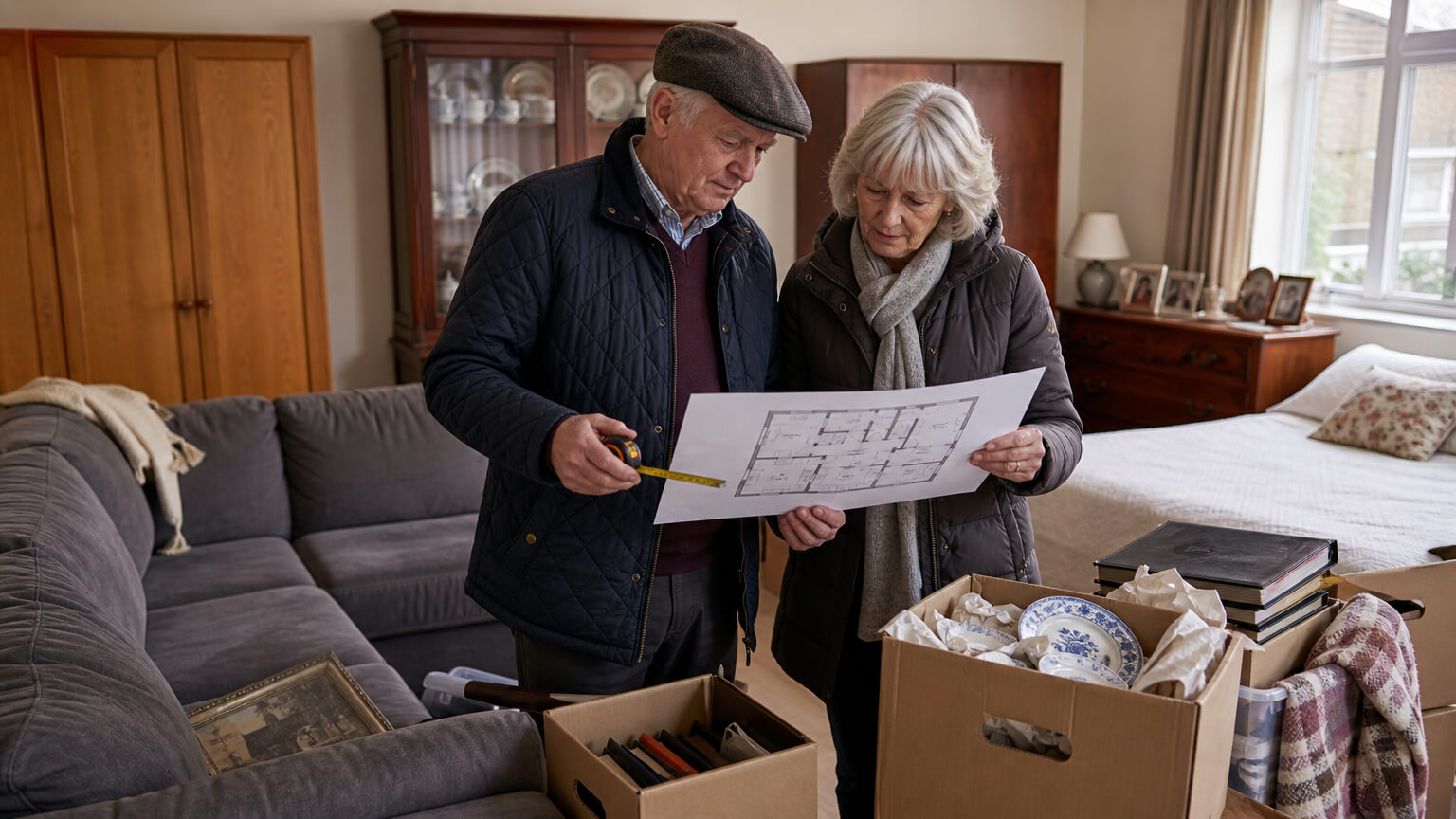
The agent’s photographs are the hard deadline. Everything else follows from that. Miss the photo shoot with a cluttered room and you are fighting that first impression for the rest of the listing.
Before the agent’s photographs, then before the first viewings
Think in three phases.
Phase one: the heavy clear. Do this one to two weeks before the photographer arrives. The big furniture, the boxes, the personal items. This is the bulk of the work. A unit close to home means you can do this in several car runs over a week, rather than one pressured day.
Phase two: the final tidy. The day before the photographer and before the first viewing, walk every room and check the sight lines. Is every surface clear? Is the hallway free of shoes and coats? This phase is about polish, not clearing, because the bulk is already in the unit.
Phase three: the ongoing access window. The sales period lasts weeks, sometimes months. You will want things back. Smart entry from 6am to 10pm means you can retrieve something before work, or drop a new load in after an evening viewing, on your own schedule without asking anyone’s permission.
If you are also thinking about the move itself, what happens at completion and after exchange, that is a separate planning question and worth reading through separately when the time comes. This page is focused on the listing and staging phase while you are still living in the property.
Living in a show-ready home (and survey day)
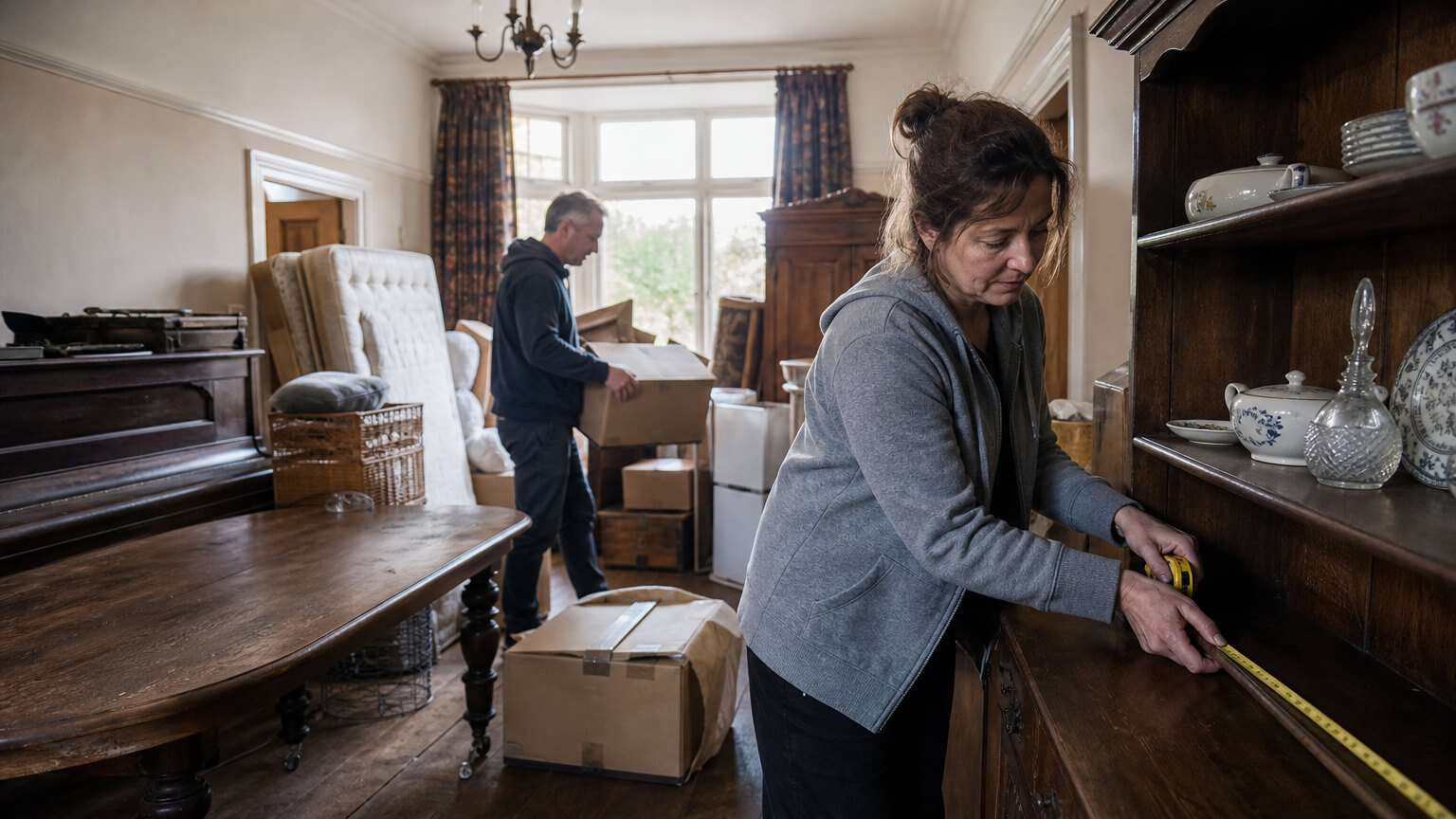
The hardest part of staging is not the clear-out. It is the six weeks of keeping it that way while you still live there. This is where most staging plans quietly fall apart.
Keeping a small daily-use caddy
The practical solution is a caddy, or a dedicated bag or box, of the things you use every single day. Phone charger, keys, the children’s school bags, the dog lead, the morning coffee things. Everything else goes into the unit or into a designated out-of-sight place in the property. When a viewing is called, the caddy comes with you. The house stays show-ready with almost no effort.
This sounds minor. It is not. A show-ready home that takes twenty minutes of frantic tidying before every viewing will exhaust you within a fortnight. A show-ready home that takes five minutes because the daily clutter has a home does not.
The unit is central to this. Your 6am to 10pm smart-entry window means you can make small adjustments throughout the sales period, moving things in and out as the sale progresses.
Keeping access clear for viewings, valuations and surveys
A surveyor needs to see the loft hatch, the meter cupboard, the boiler, the garage, the utility area. These need to be accessible and clearly reachable. Do not store boxes in front of the loft hatch or stack furniture against the meter cupboard. Keep these points clear throughout the sales period.
The storage unit handles your belongings; your property is your own business. For any specific questions about what a surveyor needs to access or what you are obliged to disclose, your estate agent or solicitor is the right person to ask. If you are selling in Scotland or Northern Ireland, conveyancing processes differ from England and Wales, and your solicitor will guide you on the specifics.
Ready to move the first load out? Get a quote at quote.wigwamstorage.co.uk and find your nearest market-town Wigwam location. Two-week minimum, unused days refunded, smart entry 6am to 10pm.
Packing so nothing arrives damaged
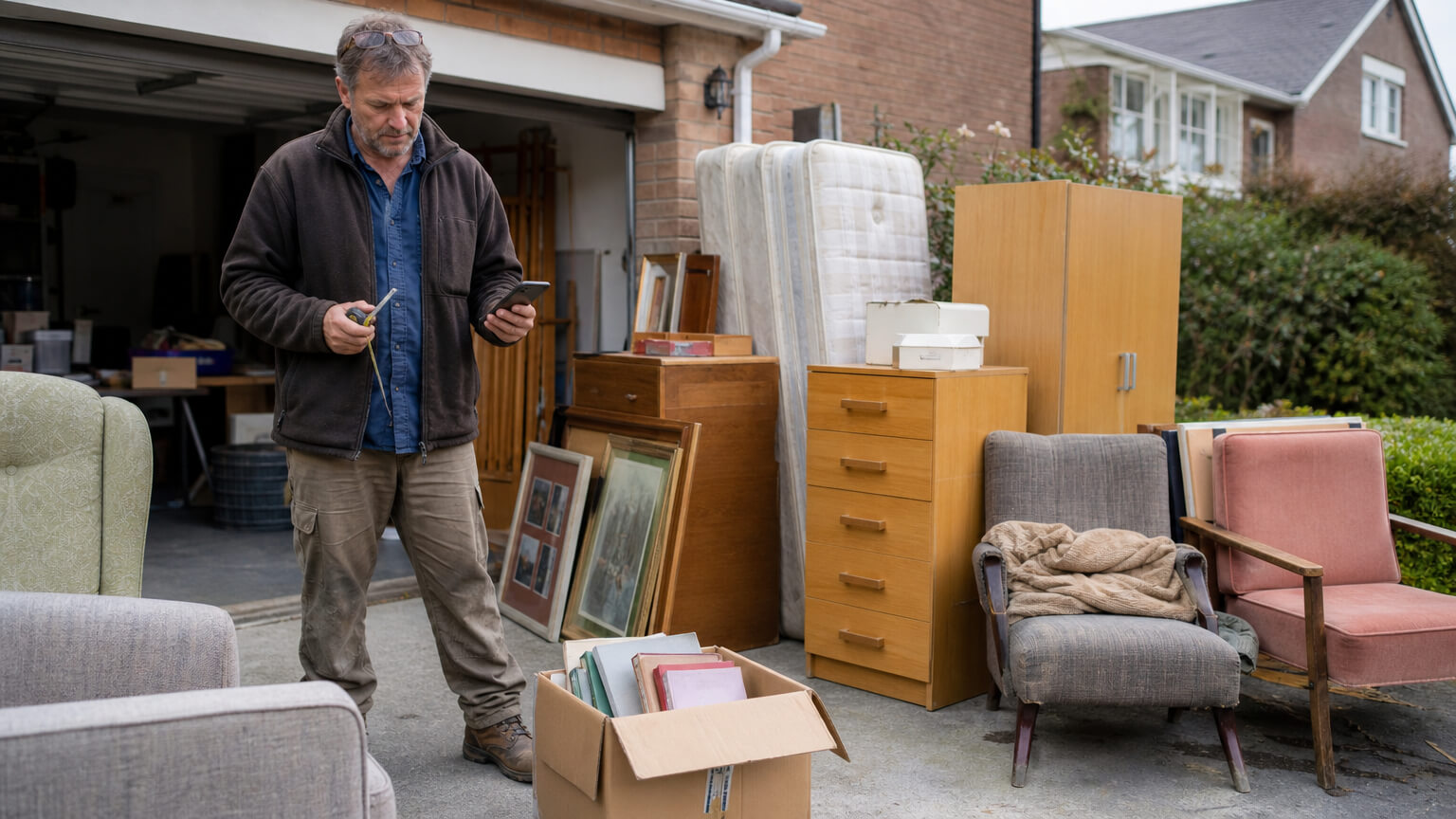
The most common regret we hear from sellers is packing too fast the night before and finding a broken lamp three weeks later. Slow packing once beats fast packing twice. Block a proper afternoon, get the right materials, and pack in order of what you are least likely to need back first.
What to double-wrap and how to stack it
Mirror boxes and picture boxes are worth buying, not borrowing. A flat-pack mirror box keeps glass supported on all four edges rather than leaning against a wall in a unit. For hanging clothes, wardrobe boxes let you transfer items from rail to box without folding them, which matters for anything you will want to wear during the sales period.
Large furniture pieces should be covered with furniture blankets before moving. Surfaces scratch in transit more easily than you expect. Legs and corners are the most vulnerable points; wrap them first.
When you stack the unit, heavy items at the bottom and lighter boxes on top. Leave a clear path to the things you are most likely to want back during the sales period. If the box with the children’s school certificates is buried behind the second sofa, getting it out requires moving the sofa. Plan that before you load.
What the unit gives you (and what it does not)
The unit is individually alarmed, clean, dry and secure. That is an honest description, and it is the right description for a family’s furniture, boxes and personal items during a sale.
We do not offer climate control. For most household furniture and belongings packed well, that is not a gap. For items that are genuinely sensitive to temperature or humidity, such as antique veneers, certain artworks, or instruments, the right answer is proper packing, not a false promise from a storage operator who is telling you what you want to hear.
Contents protection is mandatory at Wigwam. You can take our policy or prove your own cover. Either way, you need to declare the full replacement value of what you are storing. Under-insurance is settled proportionally, which means if you declare half the value and something happens, you recover half of what you are owed. Read the full details at wigwamstorage.co.uk/contents-protection/ before you book, and speak to your insurer if you have questions about your own policy. Note that insurance terms and obligations may differ if you are based in Scotland or Northern Ireland; your insurer is the right person to ask.
What it costs and whether it is worth it
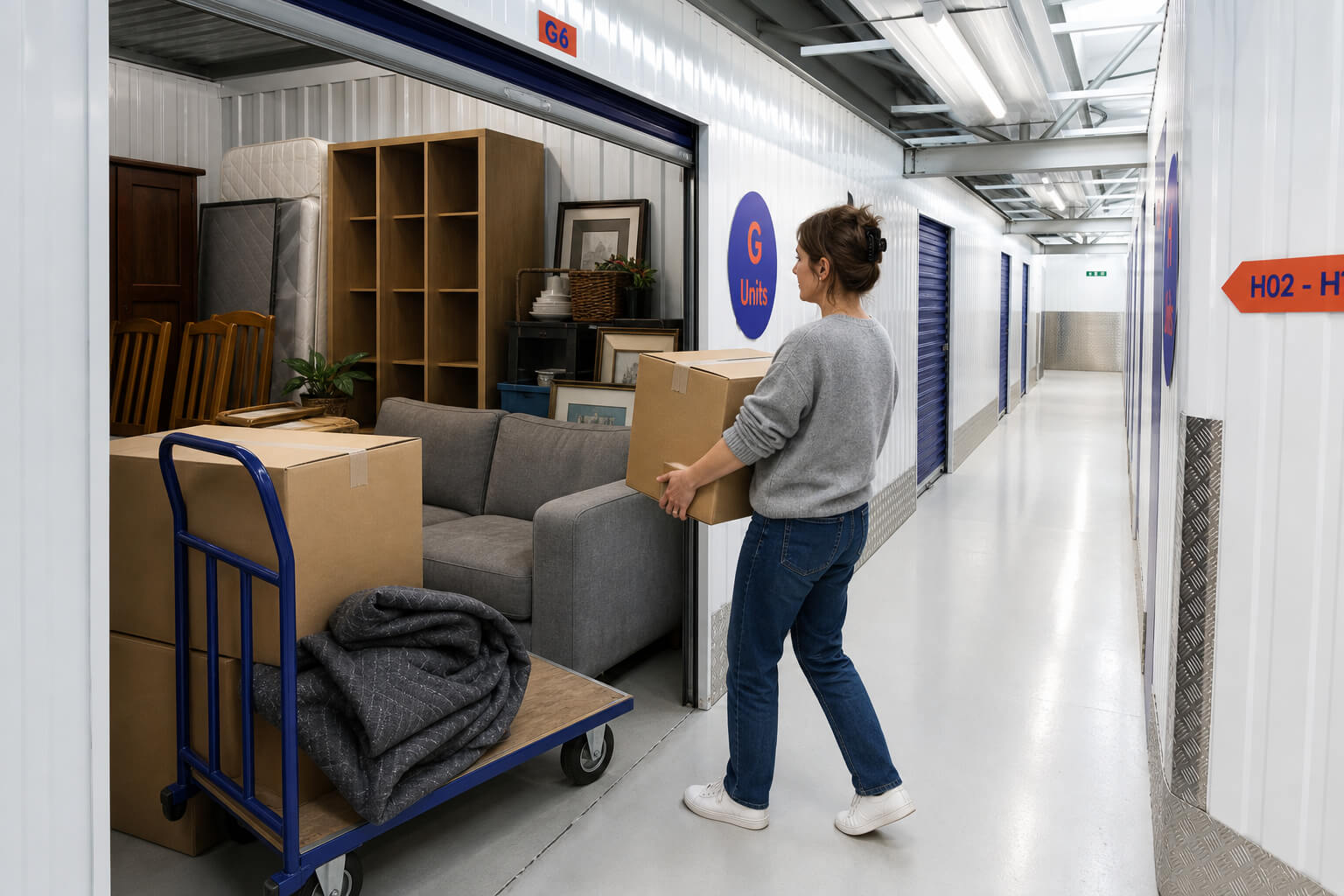
The honest answer to “is it worth it?” is almost always yes, if the house sells even a few days faster than it otherwise would have. Time on market costs money in mortgage payments, holding costs and the energy of keeping a home permanently show-ready. A unit that shortens that window pays for itself quickly in most cases.
What drives the cost and where to look it up
Two things drive the cost: the size of the unit and how long you keep it. Duration is harder to predict in a sale, which is exactly why a two-week minimum with unused days refunded on early departure makes sense for a seller. You are not locked into a three-month contract while you wait for completion.
There is also no deposit. When you give 14 days’ notice, vacate the unit and settle the account, any unused days are refunded to you. The terms are set out in full at wigwamstorage.co.uk/terms-conditions/. Read them before you book. We do not quote prices on this page because unit size, location and current availability all affect the number; the pricing page gives you a reliable starting point.
Cheaper alternatives, honestly considered
Friends’ garages and parents’ lofts are free, and for a small amount of stuff they work fine. The practical limit is volume. A staged family home typically needs to clear a van-load of furniture and several dozen boxes. A friend’s garage rarely has that space, rarely has good conditions for furniture storage, and involves owing someone a favour for several weeks.
A garden storage unit or shed handles garden furniture and tools but not indoor furniture at any useful scale.
The honest comparison is this: a Wigwam unit near your home is clean, dry, individually alarmed and accessible on your own schedule from 6am to 10pm. A friend’s garage is none of those things. If the volume is small and the friend is willing, use the garage. If you are clearing a family home for sale, the unit is the practical answer.
Find your nearest Wigwam
Wigwam has storage in UK market towns, chosen specifically so that a repeat journey to the unit during the staging weeks is a short drive, not a mission. You should not be spending forty minutes each way to move a carload.
Find the location nearest to you at wigwamstorage.co.uk/self-storage-locations/. If you are in Somerset, Wigwam Self Storage Bath is on that page. If you are in Lincolnshire, Wigwam Self Storage Lincoln is there too. For other towns, the locations hub has the full list.
One practical note: our sites are unmanned. You access your own unit with your own smart entry. There is no manager to let you in or out. This is by design: it keeps costs down and means access is entirely on your own schedule. If you are using a removals firm or courier to deliver items to the site, someone from your side needs to be present to receive them. Wigwam does not sign for deliveries or receive goods on your behalf.
Ready to clear the decks?
You have the list, the timeline and the packing guidance. The next step is a quote.
Visit quote.wigwamstorage.co.uk to get a quote for your nearest location. Two-week minimum stay. Unused days refunded if you leave early. Smart entry 6am to 10pm, seven days. Individually alarmed unit, clean, dry and secure. No deposit at any point, and 14 days’ notice to leave.
The house will not stage itself. But one clear weekend, a unit close to home, and the room-by-room plan above gets you most of the way there.
Frequently Asked Questions
You keep it, and nothing changes. A fall-through is one of the most common reasons a staging unit ends up running longer than first planned, so the arrangement is built to absorb it without penalty. There is no fixed end date you committed to and no fresh contract to sign when the sale collapses. You simply carry on month to month, with the same two-week minimum already long behind you.
That matters because a fall-through usually means a fast relist. The house needs to go back on the market show-ready, and the last thing you want is to have moved everything back in only to clear it out again. If your belongings are still in the unit, you are ready for new photographs and viewings in a day, not a fortnight. Many sellers in a chain choose to hold the unit right through to completion for exactly this reason: the cost of keeping it a few extra weeks is small set against the cost of staging the whole house twice.
When the sale finally does complete, you give 14 days’ notice, clear the unit and settle the account, less anything owed. Unused days from your paid period are refunded if you leave partway through. So holding the unit as insurance against a wobble in the chain does not commit you to paying for time you do not end up using.
Before the photographs is the firm deadline; before the valuation is optional but often worth it. The two appointments serve different purposes. A valuation is the agent forming a view of the house and the asking price. The photographs are what buyers actually see, so a cluttered photo shoot is the one that costs you viewings.
If you have the time and energy, doing the heavy clear before the valuation has a quiet benefit: an agent walking through rooms that already breathe tends to price with more confidence, because they can see the space rather than guessing at it through your furniture. But this is a softer gain, and not every seller can clear a house twice over. If you can only manage one big push, time it for the week before the photographer arrives.
A practical middle path is to clear the obvious bulk, the second sofa, the surplus chairs, the boxes in the hallway, ahead of the valuation, then do the final detailed tidy before the photos. Your smart-entry access from 6am to 10pm, seven days, means you can move loads in stages across a week rather than in one exhausting day. The point is not to do everything at once. It is to have the right rooms cleared by the moment that matters most, which is the camera.
No. Someone from your own side has to be at the unit to receive anything, because Wigwam sites are unmanned. There is no member of staff on site to let a removals crew in, sign for the load, or accept goods on your behalf. We do not hold spare keys or open units for third parties.
In practice this is straightforward to plan around. You access the unit with your own smart entry, so you, a partner, a family member or a friend simply meets the removals firm there during the access window of 6am to 10pm. Many sellers find an early slot works best: the crew loads at the house first thing, you drive over, let them in, and they unload while you direct where things go. It rarely adds more than the time it takes to point at a corner.
If you cannot be there yourself, arrange for the person who can to hold your access and be present for the drop. What you cannot do is book a delivery to an empty site and expect the unit to be opened or the goods received. Make this clear to your removals firm when you book them, so they schedule the drop for a time someone from your side will be there. It saves a wasted journey and an awkward phone call on the day.
Usually yes, because large soft furniture packs far less efficiently than boxes, and it is the awkward shape rather than the weight that drives the space you need. A stack of well-packed boxes uses the full height and footprint of a unit neatly. A three-seater sofa, a mattress on its side and a wardrobe leave dead air around them that you cannot easily fill.
A rough way to think about it:
- Boxes, soft furnishings and small decor only: a smaller unit, the kind of load you could shift in a couple of estate-car runs.
- Add a sofa, a mattress, a wardrobe or a large dining table: step up to a medium unit, roughly the floor space of a small single garage.
- A full house of surplus furniture: larger again, and worth describing to the team before you book.
If you are hovering between two sizes, take the larger one. A unit you can walk into and reach the back of is far easier to live with over a sale that lasts weeks than one packed solid to the door. Bring a rough list of the big pieces when you get a quote, and the team at your nearest location can steer you to the right size from the start. The pricing page gives you a sense of scale before you call.
Important documents are physically secure in a unit that is individually alarmed, clean, dry and secure, but the better question is whether storage is the right place for them during an active sale. The honest answer is usually no, for a practical reason rather than a security one: you will need those papers at short notice, and a buried box behind the second sofa is the wrong place for something your solicitor might ask for at a day’s notice.
If you do store paperwork, pack it properly. Use a sealed, rigid box rather than a flimsy one, keep it well away from the floor, and put it at the very front of the unit where you can reach it without moving furniture. Label it clearly. A dry unit protects paper well, but documents are vulnerable to handling and to being mislaid more than to the unit itself.
For the conveyancing file specifically, most sellers are better keeping the live paperwork at home or with their solicitor, and using the unit only for archive material they will not touch during the sale. On anything to do with what you must disclose, retain or hand over as part of the transaction, your solicitor or estate agent is the right person to ask. This page is about storing your belongings while the house shows well; it does not give legal advice on the sale itself.