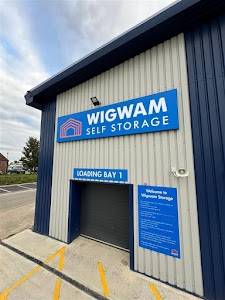
Will the unit be open when your market pitch starts at dawn?
The load is done by seven on a Friday evening. The van is packed: the gazebo, the trestle tables, the crates of stock, the signage and the bags of tissue wrap. Everything is in order. The one question left is whether the storage unit will be open when the market starts.
That is not a small question. A market pitch starts early. Set-up time is before most people have had breakfast. If the unit is not open, or if getting in requires a phone call or a key-holder, the whole morning falls apart.
This page gives you a straight answer to that question, and explains exactly what a Wigwam unit can do for a market trader or pop-up retailer, and what it cannot.
Storage built around your trading week
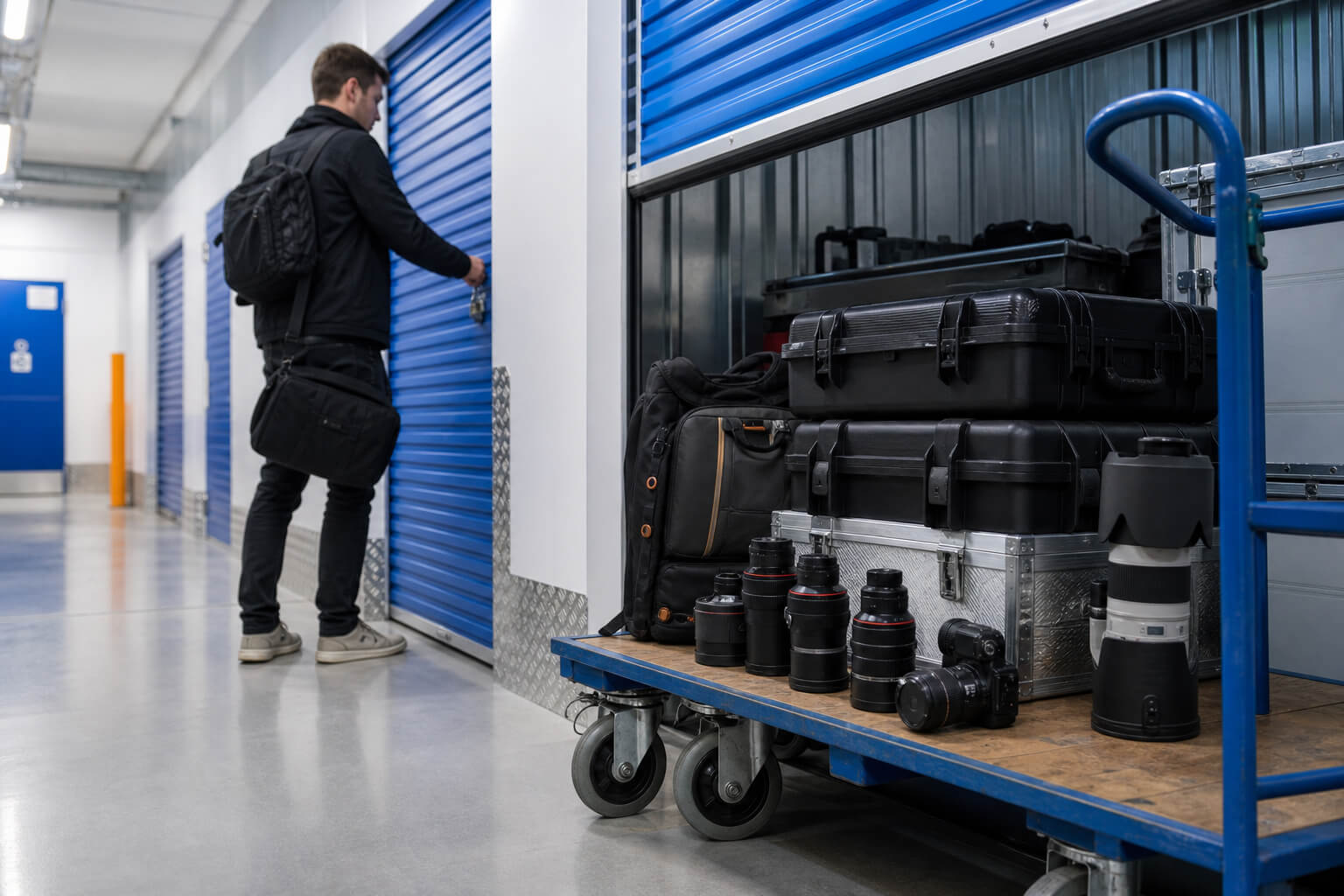
Wigwam units work with the rhythm of a market week, not against it. The Friday-night load, the Saturday-morning pull-out, the quiet spell in January: the way a unit is set up here is designed to fit around a trader’s schedule, not the other way round.
The Friday-night load and the Saturday-morning pull-out
You can access your unit from 6am to 10pm, seven days a week, by smart entry. No key-holder to call. No waiting for a member of staff. You are in the system; the unit is yours to open when you need it.
In practice, that means you can load the van on Thursday or Friday evening, drive straight home, and pull back in before 6:15am on a Saturday to pick up the last few boxes before you head to the pitch. It fits around a market schedule the way a lock-up does when it works, without the scarcity and the uncertainty that come with finding a good one.
The access window runs right through the trading week. If you run a Sunday car-boot alongside a Saturday market, you are not restricted to one early morning. Seven days means seven days.
Why a unit beats a lock-up or a long commercial lease
A commercial lease is written for a business that knows it will be in the same place for twelve months or more. A market trader testing a new pitch, or running a seasonal Christmas-market circuit, does not know that. The commitment is the wrong size, the cost is the wrong scale, and the exit is rarely clean.
A Wigwam unit starts from a two-week minimum. There is no twelve-month lease to sign, no long-form commercial agreement, no landlord who needs thirty days’ notice in a specific form. There is no deposit. When you give 14 days’ notice, vacate the unit and settle the account, that is the end of it. That is a different financial proposition to a non-returnable premium on a long-lease lock-up.
Lock-ups, where they exist, are also scarce in most market towns. They tend to be in industrial estates a drive away from the pitch, and the availability is rarely predictable. A Wigwam unit is booked online and ready when you need it.
Testing a new pitch without overcommitting
A new pitch is always a risk. The footfall might be wrong. The mix of traders might not suit your product. December might be brilliant and January empty. The two-week minimum means you can take a seasonal run or try a new location without locking yourself into a contract that runs past the point where you know whether it is working.
If you clear the unit before the paid period ends, unused days are refunded. That matters in practice: if the Christmas-market run ends early, or the pitch does not work out, you are not paying for space you are not using. Full conditions are on the terms and conditions page.
Access hours: the honest answer

The market starts early. Here is exactly what the access hours are, stated plainly without dressing them up.
6am to 10pm by smart entry, seven days
Several storage providers in the UK market themselves on 24-hour access. Wigwam does not. The access window is 6am to 10pm by smart entry, seven days a week. If you need a unit you can open before 6am, that is worth knowing before you sign up.
For most market traders, 6am is not a limitation. It is an honest answer that actually lines up with how early a Saturday market allows set-up. If the market opens at 9am and you need to arrive at 7:30am to secure your pitch, unload and get the gazebo up, being in the unit at 6am gives you all the time you need.
The reason we say this plainly is not because 24-hour access is not possible anywhere. It is because a claim that does not hold up on the morning it matters is worse than a clear boundary that you can plan around. You know the window. Plan your week around it. It works.
How early access fits a market or car-boot start
Put it in practical terms. You are in the unit at 6am. The van is loaded by 6:20am. The unit is locked. You drive 40 minutes to the market. You are at your pitch before 7am with time to spare. The scenario works at the standard Wigwam window without needing a 24-hour service.
For a Sunday car-boot, the same calculation holds. Most car-boot sites open to sellers at 6am or later. Smart entry at 6am covers that. The 10pm close means you can return stock to the unit after a long Saturday session and be back out for Sunday with no additional steps.
Smart entry means you come and go with your own credentials. No queue. No waiting. No one to let you in or out.
What traders and pop-ups actually store with us

Stock, kit and seasonal lines. Here is what goes in a unit, and what does not.
Stock, packaging and seasonal lines
Boxed stock is the obvious one: whatever you sell, the unit becomes the place you hold the lines you are not carrying to the next market and the overflow from a busy order week. Alongside the stock itself, there is all the packaging: retail bags, tissue wrap, ribbon, bubble wrap, gift boxes and labels. These take up more space than most traders expect until they are not in the spare bedroom or the back seat of the car.
Seasonal lines work well in a unit. You can hold your Christmas stock from October and pull it down in batches as the season progresses, without filling your home with things that are not yet selling. After the season, the unit holds the leftovers until the next year.
Units at Wigwam are clean, dry and secure. That matters for stock: damp damages packaging before it damages the goods inside, and damp-damaged packaging is a sale lost. What Wigwam units do not have is climate control. There is no temperature or humidity management system. If you are storing goods that are sensitive to atmospheric or climatic change, a Wigwam unit is not the right solution and climatic damage is not covered under the contents-protection policy.
Gazebos, trestle tables, rails and signage
The physical kit of a market stall is bulky and awkward. A gazebo in its bag takes up the boot of a car or the back corner of a van and leaves it unusable for the rest of the week. Trestle tables stack, but you still need somewhere to stack them. Display rails take up floor space. Signage is usually too large to store flat in a domestic property without risking damage.
A single unit handles all of it. The gazebo goes along one wall. The tables stack against the back. The rails stand in a corner. The signage lies flat on top of the tables or leans against the wall. When Friday evening comes and the van is ready, everything is in one place and already organised for the next morning’s pull-out.
What cannot go in
Vehicles of any kind cannot be stored in a Wigwam unit. That includes vans, trailers, cars and any leisure vehicles. If you use a transit or a horse-box trailer for your pitch, the vehicle parks elsewhere; what goes in the unit is the goods it carries.
Goods that require climate or temperature control are not suited to a Wigwam unit, and climatic damage is excluded from the contents-protection policy. Hazardous materials and other prohibited items are listed on the terms and conditions page.
The right size for your stall and stock

A rough guide to unit size, from a few boxes to a full-van load. No prices on this page: for current pricing, the Wigwam pricing page gives you the numbers.
A guide from a few boxes to a full van load
If you are storing a small number of product lines, a few boxes, a fold-up table and some display materials, a small unit is usually enough. It gives you a place to keep the overflow and the packaging without the square footage of a larger space you are paying for but not filling.
If you are adding a gazebo, a full set of trestle tables, display rails and a couple of trolley-loads of boxed stock, you are looking at a medium unit. That is roughly the contents of a standard transit van: the van holds it to drive to the pitch, and the unit holds the same volume when the van is back home.
A larger operation, running several product categories, holding seasonal stock year-round, or serving both a physical market circuit and an online business from the same unit, will need a larger unit. If you are planning a Christmas-market season with a significant stock build, it is worth thinking ahead: a unit that fits a September stock level may be too small by the first week of December.
A Wigwam team member can talk through what size suits your setup. A unit size guide is also available if you want to work it out before you call.
Stacking and shelving your own unit
You control the layout. No one from Wigwam moves, sorts or reorganises what is in your unit. That is a feature, not a gap: you know your stock, you know which lines move fastest, and you can set up the unit to match the pull-out sequence for a Saturday morning.
Bring your own shelving if it helps. Most traders with a regular unit put heavy items on the floor, lighter packaging on shelves at mid-height, and fast-moving lines closest to the door. A clear pull-out path from the unit door to the van makes a 6am start considerably less stressful. The unit is yours to organise exactly as you need it.
Running stock through a unit, and where the line is

You access your own goods, on your schedule. Here is what that means in practice, and where the boundary is.
You are in control of your unit
You open the unit when you need it. You load what you need. You lock it again when you are done. Wigwam staff are not on site to manage goods, sort orders, or hand anything over. That is not a limitation: most traders prefer it that way. The stock is yours, the unit is yours, and the schedule is yours to set.
If you sell online alongside your market trading, you can use the unit as a stock-holding point you access yourself. You can pick lines from the unit at a time that suits your dispatch schedule. What Wigwam is not is a managed fulfilment or pick-and-pack service. There is no one on site to select items, pack them, print labels or hand parcels to a courier. It is a secure, individually alarmed unit you access on your own terms.
Deliveries and couriers: the unmanned-site rule
Wigwam sites are unmanned. That means there is no member of staff present during access hours to take deliveries, sign for parcels or receive goods on your behalf.
If you want a supplier or courier to deliver stock to your unit, someone from your own business must be there to receive it. You cannot arrange for a courier to deliver to the site when you are not present and expect the goods to be received. They will not be. The site is secure, the unit is locked, and no one from Wigwam is there to accept anything.
This is worth knowing in advance. If your restocking depends on regular courier deliveries, plan those deliveries for times when you or a colleague can be at the unit to meet the driver.
What it costs and the minimum stay

No prices on this page. The minimum commitment is short, there is no deposit, and the full pricing is one click away.
Two-week minimum and no deposit
The minimum stay is two weeks. You are not signing a six-month agreement or a twelve-month lease. Two weeks is the floor, and from there the arrangement runs flexibly.
No deposit is taken when you start. There is no premium that disappears on signing, and no sum of yours held while you are a customer. When you give 14 days’ notice, vacate the unit and settle the account, you are done, and any unused days come back to you.
For a trader who is testing a new pitch, running a seasonal circuit or operating in quiet months, this is a different kind of financial exposure to a long-lease lock-up. The cash comes back. The two-week minimum means the commitment is short enough to take without certainty about how long you will need the unit.
Refund of unused days if you clear early
If you clear the unit before the end of a paid period, unused days are refunded. A quiet January that ends sooner than you expected, a season that closes early, a pitch that did not work out: you are not paying for days you are not using the space for.
The pricing page has the current figures and the calculator to work out what a unit costs for your setup. It is worth doing that before you call, so you have the size and the time period clear in your mind.
Ready to check what is available near you? Get a quote at quote.wigwamstorage.co.uk
Keeping stock clean, dry and secure

The unit is individually alarmed and the site is secure. Here is what that covers, and what to have in place for your contents.
Individually alarmed units and smart entry
Each unit has its own alarm. The site is secure. Smart entry means the access system tracks who comes and goes, which adds a further layer of security beyond a padlocked door.
Units are clean, dry and secure. That is the Wigwam commitment on the condition of the space. There is no climate control. Temperature and humidity are not managed. If your stock requires a controlled environment, a Wigwam unit is not the right fit, and goods that suffer climatic damage are not covered under the contents-protection policy.
For most market-trader stock, including clothing, homeware, gifts, craft goods, seasonal lines and packaged food items that do not require refrigeration, a clean, dry and secure unit is the right environment.
Insuring your stock
Contents protection is mandatory. You have two options: take Wigwam’s RSA “Self Storage Customers’ Goods” policy, or prove your own cover is in place.
Wigwam’s policy is New-for-Old cover arranged through RSA. If you take it, declare the full replacement value of everything in the unit. If you declare less than the full value and need to make a claim, the payout is reduced in proportion. Under-insurance is not covered in full.
Theft claims require evidence of forced entry. Climatic damage is excluded. Do not take these as the full terms: the contents-protection page sets out what is and is not covered.
If you have your own business-insurance policy that covers goods in storage, check the policy wording carefully and be ready to provide proof to Wigwam. Not all commercial insurance policies extend to off-site storage.
Insurance law and consumer-protection rights differ in Scotland and Northern Ireland. If you are based in either jurisdiction, confirm your position with your insurer or a solicitor.
Storage in your market town
Wigwam is based in the UK market towns where traders trade. The locations are not on retail parks or out-of-town industrial estates chosen for volume. They are in the towns themselves.
Find your nearest Wigwam location
Wigwam Self Storage Bath in Somerset and Wigwam Self Storage Lincoln in Lincolnshire are two of our UK market-town locations. We also have units in Reading, Cheltenham, Burton upon Trent, Dorking, Bromsgrove, Tewkesbury, Warminster, Leatherhead and Marlow, among others. The full list is on the locations page.
If you run a circuit of markets across several towns, it is worth knowing which Wigwam locations sit closest to each pitch. A unit in the same town as the Saturday market means a shorter drive on Friday night and on Saturday morning.
What to bring and what to expect on your first visit
When you start with Wigwam, bring your payment details and your contents-protection documents. If you are using Wigwam’s RSA policy, that will be arranged as part of the sign-up. If you are proving your own cover, have the policy details or insurer confirmation ready.
Smart entry means you use your own access credentials at the site. There is no key to collect from a member of staff and no code to request. The system is set up when you start and from that point you come and go on your own schedule.
The site is unmanned. That is exactly what most traders want: a secure unit they can access without coordinating with anyone. It is also what it means in practice for deliveries, as described above. Come when you need to, load or unload, lock up and leave. That is the experience, straightforwardly.
Get a quote
If your stock needs a home near the market, we will show you what is available in your town. The quote covers the unit size, the location and the current pricing, with no obligation.
Get a quote at quote.wigwamstorage.co.uk
Frequently Asked Questions
No on the business address, and business rates are not something you arrange or pay through us. The unit is for storing your stock and kit and for your own access to it. It is not a registered office, a trading address, or a place you can list as your business location for Companies House, HMRC or your customers. If you need a registered or correspondence address, that is a separate service from a different kind of provider.
On rates: a self-storage unit is part of a storage facility, and the way it is rated sits with the operator and the wider site, not with you as a customer renting space inside it. You are paying a storage charge for the unit, not taking on a commercial tenancy with its own rateable value. If you are trying to work out the rates position for your business as a whole, that is a question for your accountant or your local authority, not for the Wigwam support team, who handle storage matters only: sizing, availability, access, pricing, invoicing and booking.
What you can do with the unit is straightforward and useful: hold your stock and packaging there, run your dispatch around your own access from 6am to 10pm, and keep your home clear of the trade. What you cannot do is treat it as the legal or trading address of the business. Keep those two things separate and the arrangement is clean. For the booking and cost side, the pricing page and a quote will give you the figures.
It stays exactly where you left it, in an individually alarmed unit on a secure site, untouched by anyone. That is the quiet value of a unit for a trader: on the days between pitches, your stock is off your floor, out of your van, and in a space you do not have to think about. Each unit has its own alarm, separate from every other unit, and smart entry means the access system tracks who comes and goes, so there is a record of entry rather than an open door.
Nobody from Wigwam goes into your unit. Staff do not handle, move, count or reorganise your goods. The site is unmanned, which means there is no one wandering the corridors and no one with a master key to your space. Your stock is yours alone to access, and only you and anyone you have given your access to can get in.
Two honest points worth holding in mind. First, the unit is clean, dry and secure, but it has no climate control, so anything genuinely sensitive to temperature or humidity is not suited to it and climatic damage is excluded from the contents-protection policy. For ordinary market stock, clothing, homeware, gifts, crafts, packaged non-perishable goods, dry and secure is the right environment. Second, security cover is why contents protection is mandatory: you either take Wigwam’s RSA policy or prove your own, and theft claims require evidence of forced entry. Declare the full replacement value of the stock you hold, because under-insurance is settled in proportion.
You can, in the sense that the unit is your space to use as you see fit, but it brings practical and insurance complications that most traders are better off avoiding. The account, the access and the contents protection all sit with the named customer. If you let another trader keep their stock in your unit, their goods are in a space booked in your name, accessed on your credentials, and that tangles up two things that are cleaner kept separate.
The insurance point is the one to take seriously. Contents protection is mandatory and is arranged against the declared replacement value of the goods in the unit. If a second trader’s stock is in there and something happens, whose declaration covers it, and who claims? Mixing two businesses’ stock under one declaration is the kind of arrangement that causes disputes at exactly the wrong moment. The honest answer is that a shared unit is rarely worth the saving once you think it through.
If two of you genuinely want to split storage to save money, the cleaner route is usually two smaller units, each in its own name, each with its own access and its own cover. You still get sites in the same market town, the same short two-week minimum, and no deposit on either. Get a quote for the sizes you each need at quote.wigwamstorage.co.uk and compare that against one shared space before you decide. For most traders, keeping the businesses separate is worth a little more on the monthly cost.
Yes, and this is one of the things the terms are built for. A seasonal trader’s footprint is not constant: you build stock through the autumn for a December peak, then shed it in the quiet new year. Rather than paying year-round for the space you only need in December, you can size up when the season demands it and size back down when it passes, subject to what is available at your nearest location at the time.
The mechanics are simple. Moving to a different unit is a matter of taking the new size and clearing the old one. The two-week minimum and the 14-day notice work per unit, and neither carries a deposit, so when you leave the larger unit you give notice, vacate and settle the account, with unused days refunded if you leave a paid period early. There is no long lease tying you to a peak-season footprint through a dead January.
The practical tip is to plan the build ahead. A unit that comfortably holds your September stock level can be tight by the first week of December once the seasonal lines land, so it is worth thinking about your peak when you choose the size, or booking the step-up before the stock arrives rather than after it is sitting in your hallway. Availability does vary by site and by season, so check early. A quick quote at quote.wigwamstorage.co.uk shows what sizes are free at your location, and the local team can talk through the timing if you tell them roughly when your peak falls.
It depends entirely on the cause, and this is worth understanding before you store anything that matters. Wigwam units are clean, dry and secure, which for ordinary market stock is the right environment and means damp should not be an issue in normal use. But the contents-protection policy excludes atmospheric and climatic damage, so damage caused by humidity or condensation rather than by an insured event is not something you can claim for.
That makes the practical prevention more important than the cover. A few things keep stock and packaging in good condition:
- Bring stock in dry, and do not pack damp boxes or fabric into the unit.
- Keep boxes off the floor on a pallet or shelving rather than directly on the slab.
- Do not overpack so tightly that air cannot move around the stacks.
- Store anything genuinely sensitive to temperature or humidity elsewhere, because the unit has no climate control and is not the right home for it.
For the things a trader most worries about, water ingress, theft, the policy works on the usual terms: theft claims require evidence of forced entry, and you must have declared the full replacement value, because under-insurance is settled in proportion. If you are holding high-value stock, read the cover properly at the contents-protection page, and if your own business policy already extends to goods in storage, check the wording and be ready to prove it rather than assuming it carries over. This is a signpost to the policy, not insurance advice; for anything specific to your stock, speak to your insurer.