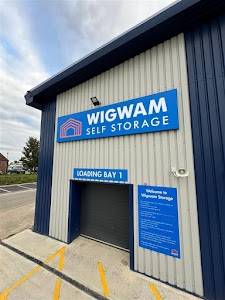
Where does the stall live between pitches, if not your hallway?
There is a particular kind of tiredness that comes after a long market day. You have been on your feet since before the pitch opened, sold well, packed down in fading light, and now you are home with a gazebo propped against the hall wall and three boxes of unsold stock on the landing because the spare room is already full. The van is still half-loaded. You will deal with it in the morning.
Most market traders know that feeling. It is not the trading that wears you out. It is the logistics between the pitches: the stock that has nowhere to live that is not your home, your vehicle, or a damp garage you share with everything else.
A clean unit in your own market town, open from 6am, changes that. You load before the pitch opens, you drop off after pack-down, and between markets the stock waits somewhere dry, locked, and out of the way. Your hallway is a hallway again.
Out of the Spare Room and Out of the Van

Most traders do not set out to turn the house into a warehouse. It creeps. A few boxes in the spare room become a room you cannot use. The gazebo moves from the garage to the hall to the car because the garage is full. The van stays half-loaded because unpacking means finding somewhere to put things, and there is nowhere to put things.
Why Traders Outgrow Home Storage
Home storage works for a while. Then it stops working, and the moment it stops working is usually the moment the trade is going well. The spare room that held one season’s stock will not hold two. The garage that coped in spring leaks by October. Cardboard in a damp space goes soft and then it goes wrong, and fabric banners and display stands take longer to dry out than they took to ruin.
There is also the business side of it. Running a trade out of a house means the business and the home are always entangled. The early starts disturb the household. The stock takes over corners that were meant for other things. At some point the arrangement stops feeling manageable and starts feeling like the trade is outgrowing itself.
That is not failure. It is a sign the round is growing. The answer is somewhere for the business side of the operation to live that is not the home.
What Belongs in a Unit and What the Hallway Is Not For
The inventory that moves to a unit is the part of the trade that does not need to come inside. Stock in boxes. A folded gazebo and its weights. Folding tables and trestle legs. Banner stands, display rails, price-card holders. Seasonal ranges that are not in rotation right now. Packaging and bags. The things that make up a stall but have no business in a living space.
What stays home is what you actually need at home. Samples, records, the things you use daily. The unit holds the operation. The home holds the family. That line, once drawn, is a relief.
A Unit That Fits the Rhythm of Your Week
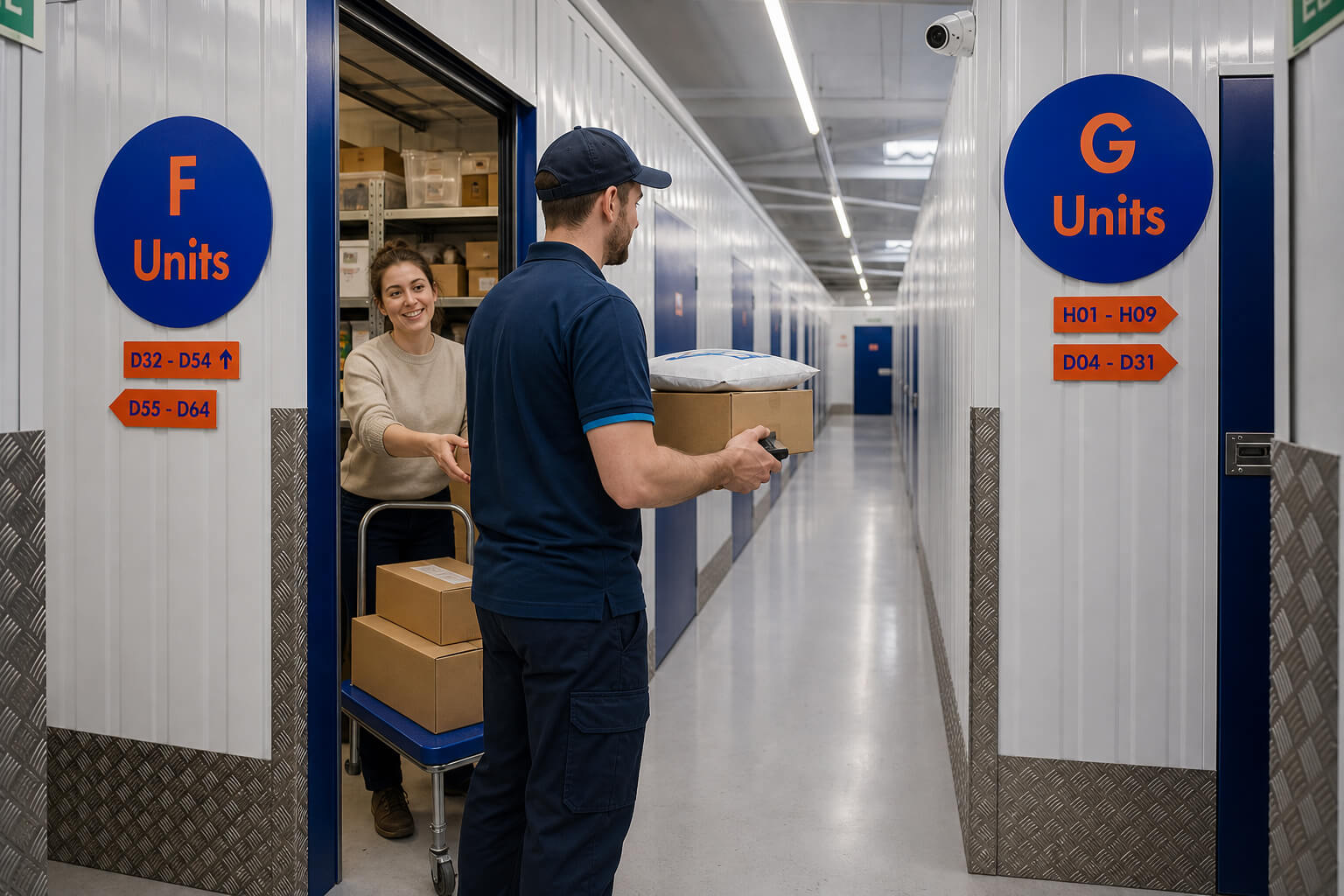
The access window at Wigwam is 6am to 10pm, seven days a week, by smart entry. That covers the trader’s real day: the early load before the pitch, the drop-off after pack-down.
Loading by 6am, Packed Down by 10pm: How the Smart Entry Window Works
This is not 24-hour access. Wigwam is open from 6am to 10pm, and that is the honest number. Some competitors advertise round-the-clock entry. Most market pitches open between 7am and 9am, and pack-down on a regular market day is usually done by early evening. The access window is built around what traders actually need, and for the vast majority of the working week it covers the round without a gap.
The 6am opening means you can be at the unit, loaded, and on your way to the pitch before most people are awake. The 10pm close means an evening pack-down from a late summer fair is not a problem. You do not need a 3am access that you will never use. You need a unit that is ready when market day starts and still open when it ends.
The Quiet Days: What the Unit Does Between Markets
Between pitches, the unit holds everything. On a Wednesday when the next pitch is Saturday, the stock is in the unit, the gazebo is in the unit, the tables are in the unit. You do not think about them. They are dry, they are locked, and they will be there on Saturday morning when you arrive at 6am to load.
This is the part that does not get talked about enough. The value of a storage unit is not just the access on market days. It is the absence of the problem on the days in between. The stock is not on your mind because it is off the floor, off the van, and in a place that does not require you to manage it.
Sites Are Unmanned: Deliveries and the Honest Boundary
Wigwam sites are unstaffed. If you are expecting a stock delivery directly to your unit, someone from your own business needs to be there to receive it. Wigwam does not sign for deliveries, accept goods on your behalf, or hold anything that arrives when the site is empty. That boundary is worth knowing before you arrange a supplier drop.
This is not a complication; it is clarity. Your stock is your responsibility, your unit is your space, and everything that goes in or comes out is under your control. Many traders find that straightforward. You manage your stock; the unit gives you somewhere to keep it.
What Size Unit for Stock, a Gazebo and Tables

The right size depends on what you carry and how the business changes through the year. A general sizing frame will get you to the right area, and the pricing page carries current unit options with dimensions.
A Single Stall’s Worth: Smaller Units for Focused Stock
For a trader running one regular pitch, a small unit tends to cover one stall’s full inventory. Think about the space of a large garden shed. A folded pop-up gazebo lays flat or stands upright in a corner. Folding tables stack. Banner stands and display rails lean or hang. Boxes of stock sit on shelving or on pallets.
That configuration is what a smaller unit holds. If you are running a tight product range from one regular pitch, it is usually enough. The pricing page shows current unit sizes and rates. No prices are quoted here; what you pay depends on your location and the size you need.
Multiple Pitches, Pop-up Runs and Seasonal Volume
Traders who cover several markets a week, buy in bulk ahead of the season, or carry separate ranges for different events need more room. Seasonal stock that sits through the quiet months but needs to be ready for Christmas or summer takes up a unit for longer than it takes up the road.
The two-week minimum and the ability to size up or down as the trade changes mean you can match the unit to the season rather than to your worst-case footprint. Peak months, you hold more; quiet months, you hold less. The unit scales with the round. The pricing page covers what is available at your nearest site.
Flexible Terms for Seasonal and Event Trading

Two weeks is the minimum stay. For a seasonal or event trader, that changes the shape of the decision.
Two-Week Minimum and Unused Days Refunded
You do not sign a six-month lease. The minimum is two weeks. If the season ends early, a festival is cancelled, or the round changes direction, you give notice and leave. Any days you have already paid for but will not use are refunded. You pay for what you use and nothing beyond it.
That is the term that fits how event trading actually works. A trader who needs a unit for a summer fair season from June to September does not need to hold it through October and February to get the rate. Leave when the season ends, and you are only charged for the days you used.
No Deposit, and 14 Days’ Notice When You Scale or Leave
There is no deposit when you move in. When you are ready to leave, give 14 days’ notice, vacate the unit, and settle the account. Once that is done, any unused days come back to you, less anything owed. There are no surprises and no small print designed to hold money of yours.
The full terms are at wigwamstorage.co.uk/terms-conditions/ and are worth a read before you commit, particularly if you are managing the unit as a business expense.
Ready to check rates for your market town? Get a quote at quote.wigwamstorage.co.uk
Clean, Dry and Secure: With Cover for Your Stock

Each unit is individually alarmed, clean and dry. Those are the three things that matter to a trader with perishable display kit, cardboard packaging and fabric banners. The honest claim is that the unit is clean, dry and secure. No more, no less.
Individually Alarmed Units and What Clean, Dry and Secure Means
Clean means the unit is not shared with garden equipment, motor oil, or the detritus of a building site. Dry means the unit is not the damp end of a rented garage where cardboard softens and fabric takes on the smell. Individually alarmed means your unit has its own alarm and your access is your own, not shared with a corridor of strangers.
Wigwam does not offer climate control or temperature management. The honest claim is clean, dry and secure, and that is what the unit delivers. For the majority of market trader stock, the items that travel to pitches week after week, that is what you need.
Insuring Your Stock: What Wigwam Requires and Where to Find Out More
Contents cover is a requirement, not an option. You either take Wigwam’s own contents-protection policy or you demonstrate that you hold your own equivalent cover. Wigwam’s policy is the RSA “Self Storage Customers’ Goods” policy. If you opt in, or prove your own, you declare the full replacement value of everything in the unit. If you declare less than the full value and you make a claim, any settlement is reduced in proportion to the shortfall.
That is a signpost, not advice. For the detail, start at wigwamstorage.co.uk/contents-protection/. If you are holding substantial stock with a high replacement value, discuss the cover with your insurer before you move in.
Insurance contracts and business-use obligations sit within UK law, but rules and interpretation can differ in Scotland and Northern Ireland on specific points. If you are operating outside England and Wales, check with your own insurer and, where relevant, your solicitor.
What It Costs to Store Between Pitches

The cost depends on where you are and what size unit you need. There is no single rate for every market town, and unit sizes vary by location.
How Pricing Works for a Trader’s Unit
Current unit sizes and rates are on the pricing reference page. No prices are quoted here because they change and they vary. What you can expect is a cost that reflects the unit size, the location, and how long you hold it.
The two-week minimum and the unused-days refund mean you are not paying for space you are not using. That matters for seasonal traders. A trader who holds a unit from April to September and then vacates pays for twenty-odd weeks, not a full year. The pricing page will give you the numbers. The terms page and the quote tool will give you the rest.
Find a Unit in Your Market Town

Proximity matters for a market trader. A unit ten miles from the pitch adds twenty miles to every market day. Wigwam is built around market towns, which means the sites tend to sit where traders actually work.
Wigwam’s UK Market-Town Locations
Our sites are in UK market towns across England. Wigwam Self Storage Bath covers one of the South West’s busiest trading towns. Wigwam Self Storage Lincoln serves a historic market city with an active trading calendar. For the full list of all our UK market-town locations, the locations hub is the place to start.
If you do not see your town listed immediately, it is worth checking the hub. The network covers more towns than the ones that appear by name in search results. Bath and Lincoln are two verified examples; the hub will show you what is nearest to where you pitch.
The Local Team: Who to Ask If You Are Unsure
Each location has a local support team and real people who know the site. Selina and her colleagues handle the questions that a quote tool cannot fully answer: what the unit looks like, how access works in practice, how other traders in the town have set up their kit.
The quote tool at quote.wigwamstorage.co.uk gives you sizes and rates for your chosen location. From there, the team picks it up. They are not a call centre. They know the sites and the towns, and they will give you a straight answer.
Running Your Market Trade From a Unit: What Works and What Does Not
The unit is for storage and for your personal access to your own goods. That is the extent of the service, and it is worth being clear about it.
What the Unit Is For: And Where to Draw the Line
Your unit is not a business address, a trade counter, or a managed fulfilment operation. Wigwam does not process orders, handle stock on your behalf, or manage deliveries while you are away. The unit holds your goods. You access them. You control everything that goes in and comes out.
Using the unit as a registered business address is not part of the service. If you need a business address, that is a separate arrangement elsewhere. The unit is yours to use for storage and access. That boundary, stated plainly, is actually a reassurance: what is in the unit is your operation, not a shared facility.
What Traders Tell Us Works
The practical habits that make a unit work for a market trader are simple, and Will Stowe has watched enough 6am loads to know the ones that matter.
Label stock by product line or by pitch, not just by date. When you are loading at 6am before a Wednesday market, you do not want to be opening every box to find the right range. A clear label means you grab what you need and go.
Roll the gazebo and store it upright or flat in a corner that you do not need to move past. A gazebo leaning across the middle of the unit adds five minutes to every load.
Keep a short grab list pinned inside the unit door: the specific items you need for each type of pitch. A regular Wednesday market may need a different set of display kit from a Saturday artisan fair. The list takes ten seconds to check and saves the trip home for the thing you forgot.
The unit works best as a base that is ready before you need it. That means putting things back in the same place every time, not just stacking them where they fit after a long pack-down. Ten minutes of order after the last market of the week is worth an hour on the next market morning.
If you want to see what a unit looks like for your town and your trade, a quote takes two minutes. Check sizes and availability at quote.wigwamstorage.co.uk.
Frequently Asked Questions
Packaged, shelf-stable goods that do not need refrigeration are generally fine; anything perishable is not. The unit is clean, dry and secure, which suits sealed dry goods like packaged confectionery, preserves, bottled drinks, dry baking lines and similar non-perishable retail stock. What the unit does not have is climate control or any temperature or humidity management, so it is not a place for anything that needs chilling, freezing or a controlled environment.
That rules out perishables entirely. Fresh produce, anything requiring refrigeration, and anything that would spoil at room temperature do not belong in a storage unit and are not what the space is for. If your trade is food-led and depends on chilled stock, a storage unit holds your dry lines, your packaging and your stall kit, but the cold stock needs a proper refrigerated arrangement elsewhere.
There is a sense-check beyond spoilage too. Climatic and atmospheric damage is excluded from the contents-protection policy, so even for dry goods, anything genuinely sensitive to humidity is at your own risk. For the bread-and-butter of most market food traders, the sealed packaging, the labels, the bags, the boxed shelf-stable lines, a dry, secure unit is the right home. The honest line is the one the unit promises: clean, dry and secure, not climate-controlled. If you are unsure whether a particular line is suited to it, keep perishables out and store only what is stable at ambient temperature.
You plan around the window, because there is no access before 6am or after 10pm, and that is the honest boundary rather than a 24-hour service dressed up. For the overwhelming majority of market mornings this is not a constraint: most pitches open between 7am and 9am, so a 6am load gives you time to get there. The cases that catch traders out are the unusually early starts, a wholesale market, a long drive to a distant fair, or a festival with a pre-dawn set-up.
The fix is to load the night before. The 10pm close means you can do an evening pack and prep the night ahead: pull everything you need for the morning, load the van or stage it by the unit door, and lock up. Then the early departure does not depend on the unit being open at 4am, because the kit is already with you. Traders who run very early pitches build this into their week as a matter of course, and it removes the only real friction the access window creates.
It is worth being honest with yourself about this before you book, not after. If your trade genuinely depends on regular access before 6am that cannot be solved by loading the night before, the window is a real limitation and you should know it going in. For nearly everyone else, the combination of a 6am open, a 10pm close and the ability to prep the evening before covers the round comfortably. The seven-day access means there is no day of the week the unit is shut to you, only the overnight hours.
Yes, provided they have your access, because the site is unmanned and entry runs on smart credentials rather than a key collected from a desk. If you are ill on a market morning or away for a stretch, someone you trust can let themselves in to load or unload on your behalf within the 6am to 10pm window. For a sole trader, that bit of cover can be the difference between missing a pitch and keeping the round going.
Two things to keep clear. First, anyone you give access to is acting for you, and the stock in the unit remains your responsibility and yours to manage; the unit is your space and your account. Second, the unmanned-site rule means there is nobody from Wigwam on site to help, supervise or hand anything over. Your helper is doing exactly what you would do: opening your unit, taking what is needed, locking up again.
The same rule applies to deliveries, which is worth flagging if your stand-in is also meeting a supplier. Wigwam does not sign for or receive deliveries, so if a courier is dropping stock to the unit, your friend or family member has to be physically there to take it. Brief them on where things live in the unit before the day, ideally with the grab list pinned inside the door that this trade runs on, so they are not opening every box at 6am trying to work out what you need. A few minutes of handover saves a stressful market morning.
Declare to your peak, review it as the season turns, and never let the declared value fall below what is actually in the unit, because under-insurance is settled in proportion to the shortfall. Contents cover is mandatory: you either take Wigwam’s RSA “Self Storage Customers’ Goods” policy or prove your own equivalent cover. Either way, the declared replacement value is the number that matters when you claim, and a seasonal trader’s number moves.
The trap is declaring for a quiet month and then building stock for Christmas without updating it. If you have declared, say, the value of a thin January unit and then pack it to the ceiling with seasonal lines in November, a claim is settled against the lower figure you declared, not the higher value actually sitting there. So the practical discipline is to set the declaration against your peak holding, the most stock the unit will ever contain, rather than its average. If your trade has a genuine high season, insure for the high season.
A few honest notes on the cover itself: theft claims require evidence of forced entry, climatic and atmospheric damage is excluded, and the policy carries the usual terms set out in full at the contents-protection page. If you carry high-value stock, read that properly before you rely on it. If you already hold a business policy, check whether it extends to goods in off-site storage; not all do, and you will need to prove it to Wigwam rather than assume it. This is a signpost, not advice. For a stock holding of any real value, talk it through with your own insurer before you move in.
Yes. If you clear the unit before the end of a period you have already paid for, the unused days are refunded, so you are not left paying for empty space because a season ended early or a pitch did not work out. That is the point of the structure for an event and seasonal trader: the commitment is short and the money follows actual use rather than a fixed term.
The sequence when you stop is straightforward. You give 14 days’ notice, vacate the unit, and settle the account. Once that is done, any prepaid days you did not use are refunded, less anything outstanding. There is no long lease to break and no exit penalty for leaving when your trading stops. A trader who took a unit for a summer fair season can leave at the end of it without having committed to the autumn and winter.
One point of reassurance on the terms, because traders sometimes assume the minimum stay and the notice period stack up. They do not. The two-week minimum is simply the shortest you can take a unit for. The 14-day notice is what you give when you decide to go. They are separate, not added together, so stopping mid-season does not trap you in an extra fortnight beyond the notice. If you think you might pause and come back next year, that is fine too: you leave cleanly now and take a fresh unit when the next season starts. The full terms, including the unused-days refund, are at wigwamstorage.co.uk/terms-conditions/.