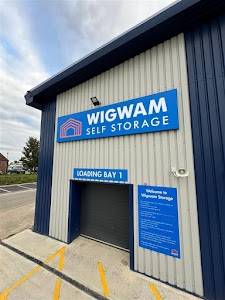
Running a club whose kit is scattered across everyone’s spare rooms?
There is a corner flag leaning against someone’s hallway wall right now. A bag of cones in the back of a car. The club’s good kit folded into a holdall in someone’s spare room, with a quiet understanding that nobody else will quite know where to find it when they need it. If you recognise that picture, this is for you.
Running a club without a clubhouse means the kit problem never fully goes away. You solve it match by match, season by season, mostly by being grateful to whoever has a big enough garage and enough goodwill to keep the lid on it. But goodwill has a limit, and logistics get harder when the person holding everything decides to step back.
A self storage unit in your own market town is a simpler answer than most people expect. The rest of this page explains how it works, what size you need, what it costs to put in front of a committee, and where to find one close to your ground.
When the club has nowhere to keep its kit
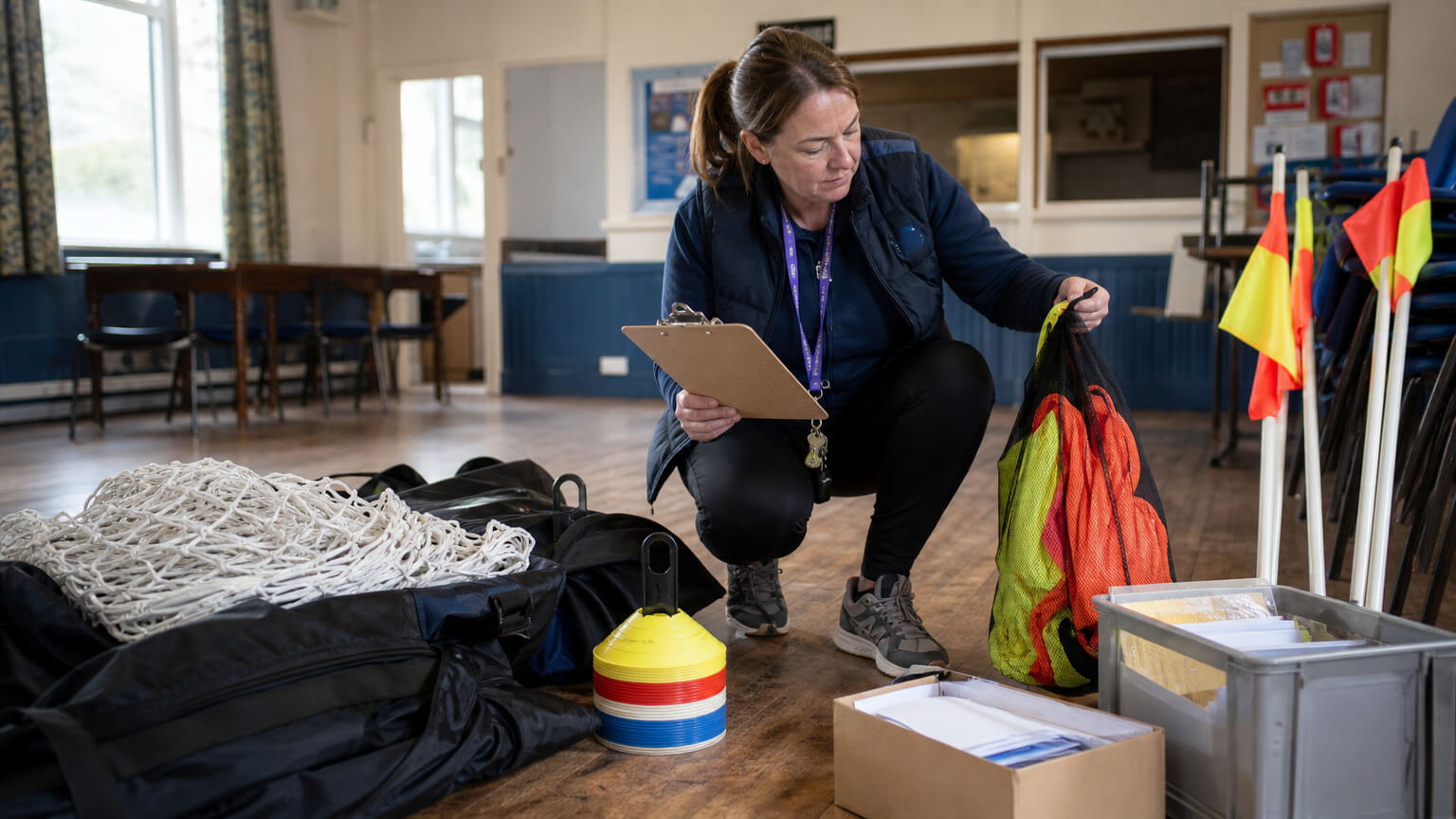
Most clubs in this situation have already worked out a system. It just is not a good one.
The garage-and-car-boot problem
The corner flags live with the membership secretary because she has a big hallway. The cones are in someone’s car boot, which means you need that person to turn up before you can run a warm-up. The nets are at the vice-chair’s place, but he is on holiday in August so the mid-season tournament is going to be interesting. None of this is anyone’s fault. It is what happens when a club grows faster than its storage.
The practical cost is small but steady: kit gets mislaid, borrowed without being returned, damaged in damp garages, or quietly outgrown by a club that no longer feels like a ragtag operation. The administrative cost is higher. Someone is always coordinating who has what, and that person is usually the one who least wanted to be doing it.
Why one volunteer should not carry it alone
The structural problem is not really about space. It is about dependency. When the kit lives at one person’s house, the club’s practical operations depend on that person being available, willing, and staying put. When they move, step down, fall out with the committee, or simply get tired of the arrangement, the kit is stranded along with them.
That is not a slight on anyone. It is just what happens when an informal arrangement is held together by goodwill rather than structure. A storage unit changes the equation. The kit belongs to the club in a place the committee can reach, not in a member’s personal space that can become unavailable overnight.
What a proper home for club kit looks like
The answer most clubs are looking for is a clean, dry, secure unit in a fixed location near the ground, which multiple people in the committee can access without needing to call ahead or negotiate a handover. Not a container in a field somewhere. Not a box service where you have to wait two days for retrieval. A unit you can get to on a Saturday morning at 7am when you realise you forgot the bibs.
What a Wigwam unit gives a club
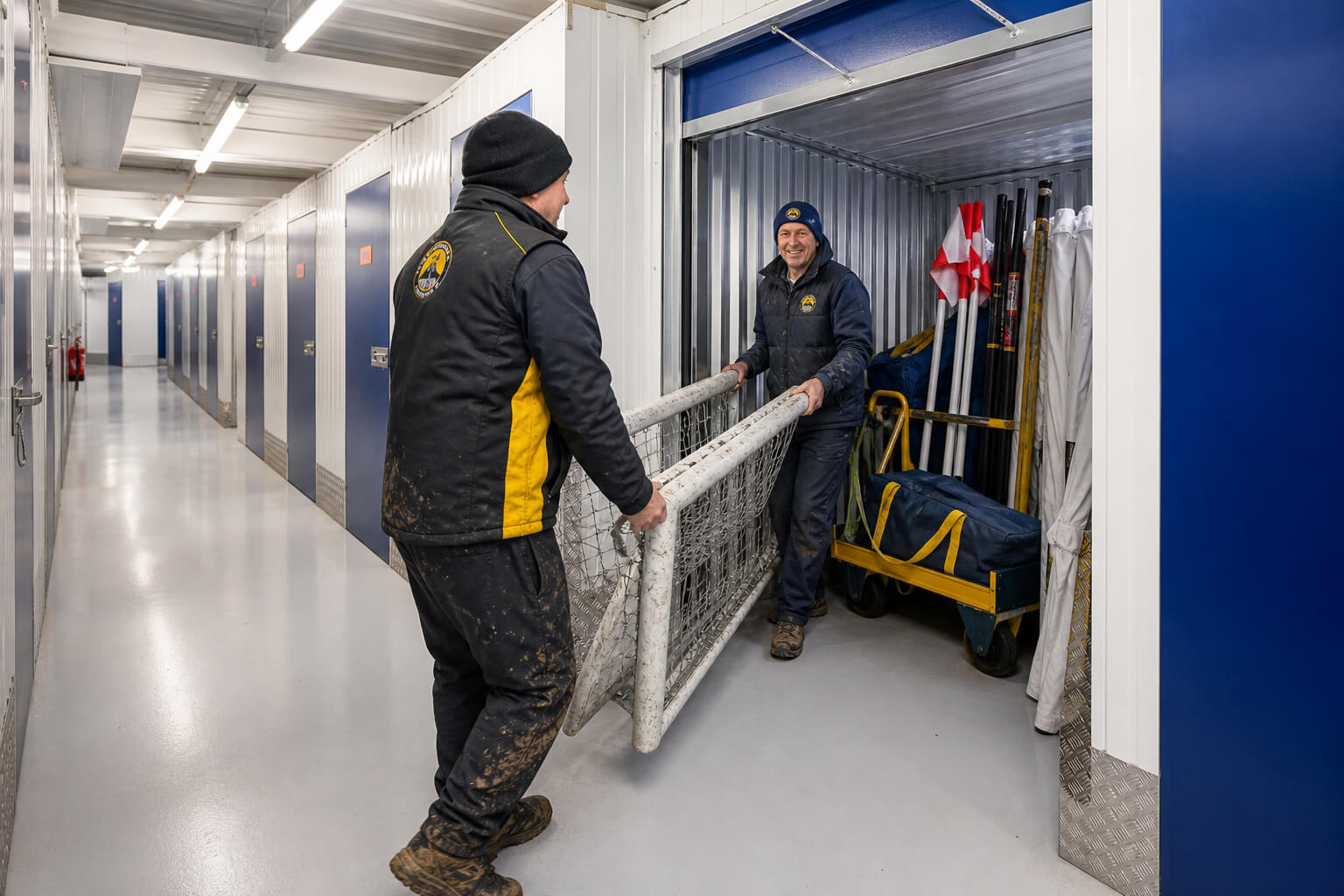
Clean, dry and secure, with individually alarmed units. Smart entry from 6am to 10pm, seven days a week. Those are the three core facts, and they matter more than anything else in the decision.
Clean, dry and secure, with individually alarmed units
Each unit is individually alarmed, clean and dry. That is what the club’s equipment needs. Nets, kit bags, training cones, boxes of paperwork and records, corner flags, goalposts and marquee poles all store well in a dry, secure unit. They do not need temperature or humidity control, and Wigwam does not offer that. What clubs consistently find is that “clean, dry and secure” covers everything they actually need to protect. If a committee has been told by a competitor that climate control is essential for sporting equipment, it is worth asking honestly what they are storing and whether that is true.
Smart entry from 6am to 10pm, seven days
Access runs on smart entry from 6am through to 10pm, seven days a week. That is not 24-hour access, and it is not meant to be. For almost every club’s purposes, six in the morning to ten at night covers Saturday set-up, Sunday match days, midweek training sessions, and the end-of-season clear-out. The hours are deliberate. Sensible, consistent hours make a site easier to run and the security more reliable.
When the committee needs the equipment, they can get to it. That is the practical reality for the overwhelming majority of clubs.
How the committee shares access without a single keyholder
This is the detail that changes the most minds. The sites are unmanned, which means the committee manages its own access. There is no staff member to call, no keyholder to chase, and no arrangement dependent on any one person showing up. The committee holds the access.
That is exactly the right structure for a volunteer club. When the treasurer steps down or the match secretary moves town, access does not move with them. The committee retains control, and handovers are a matter of updating who in the committee has the smart entry details rather than a negotiation about someone’s house keys.
One honest note for clubs that order new kit or equipment directly to the unit: the sites are unmanned, so there will be nobody there to receive or sign for a courier delivery. If a delivery is coming, someone from the club needs to be present to accept it. Plan for that, and it is no problem.
What size unit does a club need?
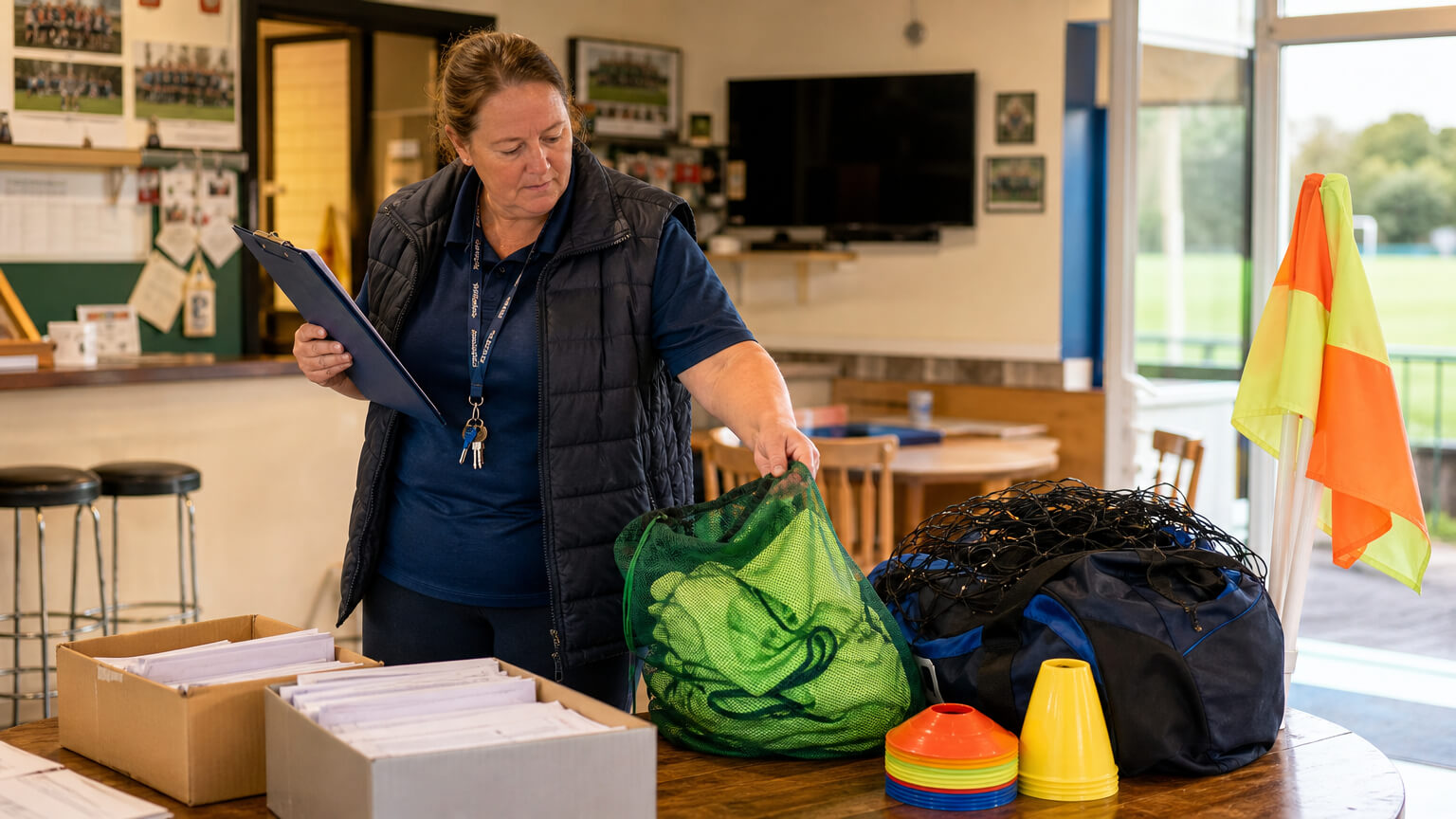
Size depends on what you are storing and how much of it. A rough rule of thumb: if it fits in one member’s car, you probably need a small unit. If it takes a van, you are in medium territory. If it takes two trips with a van, you want a larger unit and probably a conversation about what you actually need to keep.
Ready to see what fits your club and what it costs? Get a quote at quote.wigwamstorage.co.uk and we will help you find the right size.
Small kit: balls, bibs, cones, a few boxes of records
Running clubs, yoga societies, cycling groups, and similar organisations typically run with modest kit. A small unit holds a few bags of equipment, a stack of bibs, some training cones, and a box or two of committee paperwork or membership records without difficulty. If the kit currently lives in one car boot, a small unit is probably the right starting point. The Wigwam pricing page gives a clear guide to what size costs what.
Medium kit: nets, training gear, a kit-bag mountain
Netball clubs, cricket clubs, hockey teams, and drama societies with set pieces or staging equipment tend to sit in the middle band. A kit-bag mountain for a rugby or football squad, a full set of cricket protective gear, a set of netball posts, or a drama group’s costumes and props will fill a mid-range unit comfortably. For clubs in this category, it is worth doing a rough inventory before getting a quote. The unit size guide on the pricing page will help you match that inventory to a unit size.
Large or seasonal gear: goals, corner flags, marquees
The largest and most awkward items, full-size metal goalposts, corner flag sets, a marquee with poles and pegs, or a season’s worth of event infrastructure, call for a larger unit. The honest note here is that genuinely bulky or heavy items may require two people and some planning to move in and out safely. That is true regardless of storage format, but it is worth accounting for when you plan your setup day.
For clubs that only need the unit for a single season, the two-week minimum is designed for exactly that. Take the unit for the season, give 14 days’ notice when you are done, and settle the account.
Self storage vs containers vs box-by-box services

There are three main alternatives to keeping the kit in Dave’s garage. A self storage unit, a container on the pitch, or a box-by-box collection service. Each has a different set of trade-offs, and the honest answer depends on what the club actually has.
A container on a pitch: only if you have grounds
A metal container parked on the club’s own grounds can be cheaper per cubic metre than a self storage unit, and it does not have access hours. If the club owns or rents grounds with planning permission (or permitted development rights) for a container, and the grounds are accessible to the whole committee, that may be a better answer. Wigwam is not the right choice for a club in that position, and there is no point pretending otherwise.
The constraint is the grounds question. Most clubs without a clubhouse also do not have grounds they can site a container on. If you are renting a pitch from the local authority or a school, a container is usually not an option.
Box-by-box collection services
Services that collect, store, and redeliver individual boxes are useful for low-volume clubs or groups that are genuinely dispersed and rarely need everything at once. The limitation is access speed. Retrieval is booked in advance, and if you need something for Saturday’s match that you did not book by Wednesday, you have a problem. For a club that needs to get into its storage on a match day with a few hours’ notice, that model is inflexible. It works better for clubs that are storing archive records or rarely-used ceremonial items than for a team pulling kit every week.
Where a Wigwam unit fits
Wigwam works best for a club that needs regular access in its own market town, a short minimum term that can match a single season, and no deposit for the club to find or chase. It is not the cheapest option per cubic metre when a container on owned grounds is viable. It is the right option when the club needs flexibility, town-centre proximity, and committee-level access without needing its own land.
What it costs, and keeping it within a club budget

The honest answer to cost is: it depends on the unit size and how long you rent. There are no prices on this page, because the right size varies too much from club to club to quote a single number. The pricing page gives the full picture. The two things that control the bill are size and duration, and both of those are in the committee’s hands.
The two-week minimum and how it suits a season
The minimum rental period is two weeks. For a club that only needs storage for a cricket season, a netball campaign, or a summer-festival event calendar, that means you are not paying for 12 months of space you need for five. Take the unit when the season starts, give 14 days’ notice before you want to leave, and clear the unit when you are ready. The term scales to what you actually need rather than locking the club into an annual contract that runs through the winter months when nothing is happening.
No deposit, and 14 days’ notice
There is no deposit at the start, so the club has no lump sum to find and nothing to chase later. Once the club gives 14 days’ notice, vacates the unit, and settles the account with nothing outstanding, that is the end of it. If the club leaves before the contracted end of a period, unused days are refunded.
That makes the financial proposition straightforward for a committee: you pay for the weeks you use and nothing else. It answers the “is there free storage for clubs?” question honestly: no, there is not. But the cost structure is transparent and there is no deposit to budget for, which is the honest alternative to a discount that does not exist.
Wigwam’s public pricing does not include a standing charity or club discount. Competitors advertise those; Wigwam does not, and there is no point promising one that cannot be delivered. What the pricing page shows is a clear, consistent rate that does not have hidden tiers or conditions. For a treasurer presenting options to a committee, that transparency tends to matter more than the hope of a discount that may not materialise.
Protecting your club’s equipment

Contents cover is a condition of storing with Wigwam, and that is the first thing to know. You either take Wigwam’s RSA “Self Storage Customers’ Goods” policy or you demonstrate that your club has its own cover in place. There is no option to store uninsured.
Wigwam’s RSA policy is opt-in, runs on a New-for-Old basis, and carries a GBP 50 excess. Full details are on the contents-protection page.
The one point worth making to a club committee is the declaration value. You declare the full replacement value of what you are storing, not the original purchase price of ageing kit. Under-insurance, where the declared value is less than the actual replacement cost, is settled in proportion, which means a partial recovery rather than a full one. Clubs with kit that has been replaced and upgraded over the years should base the declaration on what it would cost to replace everything at current prices, not what was paid for it years ago.
If the club has its own general insurance that might extend to equipment held off-site, it is worth checking with your insurer or broker before making the storage decision. This page is not able to interpret your policy for you, and neither is Wigwam’s support team. The contents-protection page explains how Wigwam’s cover works, and your own insurer can advise on the rest.
Find a unit near your club

The straightforward answer to “is there one near us?” is: check the locations hub and your nearest market town. Wigwam operates across our UK market-town locations, which means a unit is close to where the club actually plays and trains rather than at an out-of-town industrial estate.
UK market-town locations
Two named examples to give a sense of what the network covers: Wigwam Self Storage Bath in Somerset, and Wigwam Self Storage Lincoln in Lincolnshire. Both are in working market towns, accessible from the main residential areas where most club members live. The full list of locations is the right place to find your nearest one.
What to look for when visiting a site
The sites are unmanned, so a visit is a good chance to run through the practical details before committing. Walk the unit size you are considering: bring a rough mental picture of the kit, or a photo of what a match day’s gear looks like when it is all laid out. Ask to see the smart entry system in action so the committee understands how access will work in practice. Confirm the access hours are going to cover the club’s regular schedule. And make sure you understand how access will be shared across the committee before the first members start using the unit, rather than working it out under pressure on a Saturday morning.
Getting started: what the club needs to do
The first step is simpler than most committees expect. Inventory the kit, estimate the size, and get a quote.
Before you get a quote
Three things make the conversation with Wigwam more useful: a rough inventory of what needs to go in the unit, a size estimate based on the kit volume (the size guide on the pricing page is a practical starting point), and a decision on which committee members will need access. That last point matters because it shapes how the committee manages the handover of access details when members change roles.
Your first conversation with Wigwam
The support team can walk a club secretary through the access model and the terms in plain language. They will explain how smart entry works, what the notice arrangements look like in practice, and how the contents-protection options work. What they will not do is discuss the club’s internal business arrangements, committee disputes, or anything that sits outside the storage question itself. That boundary is there to protect everyone, and it means the conversation stays focused on what they can actually help with.
The full terms are published at wigwamstorage.co.uk/terms-conditions/. Reading them before getting a quote is worth the time, particularly the sections on notice periods and contents cover conditions.
Getting a quote
If the committee is ready to price up a unit, the quote tool is at quote.wigwamstorage.co.uk. Pick a location, give an idea of the volume, and you will have a number to put in front of the committee. No commitment at that stage, and no pressure on the call.
Frequently Asked Questions
This is worth deciding properly at the start, because the account holder is the party Wigwam deals with on billing, access and the contents-protection arrangement, and a club is not always a straightforward single person. How the account is best held depends on how your club is constituted, an unincorporated association, a registered charity, a CASC or a company, and that constitutional question is one for the committee and, if needed, your own adviser, not something the support team can rule on.
In practice, the workable approach for most volunteer clubs is to have the unit held in a way that survives a change of officers. The risk to avoid is the very thing this page is about: tying the club’s storage to one individual, so that when they step down or move town, the account, the access and the contents cover all become tangled. Clubs often manage this by treating the unit as a club asset administered by a named officer who can be changed, with the access shared across the committee, rather than as one person’s personal booking.
What stays constant whoever holds it is the access model and the terms. Smart entry can be shared across the committee, so the unit is reachable without depending on a single keyholder. The two-week minimum and the 14-day notice apply the same way regardless of how the club is set up, and there is no deposit either way. When you enquire, tell the team how the club is constituted and they can explain how the account and access work in practice; for whether your particular structure has any implications for the club, your own adviser is the right source. The terms are at wigwamstorage.co.uk/terms-conditions/.
You can, because the unit is the club’s space to organise as it sees fit, but think through the contents cover and the access before you do, because a shared unit can complicate both. If two sections of one club, say the juniors and the seniors, store their kit together, that is usually clean enough: it is one club, one account, one declaration of value, and the committee manages access for both. The kit is all the club’s.
Two genuinely separate organisations sharing a single unit is where it gets awkward. The account, the access and the contents protection all sit with one named holder, so the second organisation’s equipment is in a space booked in the first one’s name, covered under the first one’s declaration. If something happens, whose cover responds, and who claims? Mixing two bodies’ goods under one declaration is the kind of arrangement that causes a dispute at the worst possible moment. The honest answer is that two organisations are usually better with two units.
If saving money is the driver, the cleaner route for two separate clubs is two smaller units in the same market town, each in its own name, each with its own access and cover, rather than one shared space with tangled responsibility. You still get the short two-week minimum on each, and no deposit on either. For sections within a single club, share freely; for two distinct organisations, keep them separate. A quick quote at quote.wigwamstorage.co.uk lets you compare one larger unit against two smaller ones before the committee decides.
You update who holds the smart-entry access rather than passing round a physical key, which is exactly why the unmanned, smart-entry model suits a volunteer club. When the treasurer steps down or the match secretary moves on, access does not walk out of the door with them. The committee retains control of the unit, and the handover is a matter of changing who in the committee holds the entry details, not negotiating the return of someone’s house keys or recovering kit from a garage.
The good practice is to treat access like any other committee responsibility that transfers at the AGM or handover. Decide which roles need access, keep the list short and deliberate rather than giving it to everyone, and record who currently holds it. When someone leaves a role, their access is updated as part of the handover. That way the club always knows who can get into the unit, and the answer never depends on tracking down a former member who has lost interest.
This is the structural fix for the dependency problem that this whole page is about. The kit belongs to the club, in a place the committee can reach, on terms that outlast any individual. When you enquire, the support team can walk a club secretary through how the access is set up and changed in plain language. What they will not do is get involved in the club’s internal arrangements, who should hold access, committee disputes, or anything beyond the storage question itself, which keeps the relationship clean and focused on what they can actually help with.
Yes, and for a club whose kit only needs storing for part of the year, that is often the sensible way to run it. You take the unit when the season starts, give 14 days’ notice when the season ends, vacate and settle the account. Unused days from a paid period are refunded if you leave partway through one. There is no annual contract running through the winter months when nothing is happening and the kit could just as easily sit in a committee member’s garage.
The trade-off to weigh is between vacating each off-season and simply keeping a smaller unit year-round. Vacating saves the cost of the dead months, but it means moving all the kit out and back in each year, finding somewhere for it in between, and rebooking, subject to a unit being available at your location when you return. Keeping a modest unit on a rolling basis costs more across the year but removes the annual upheaval and guarantees the space is there. For a cricket club with a clear summer season, vacating may suit; for a club with year-round training, holding the unit makes more sense.
If you do run it seasonally, plan the rebooking ahead rather than assuming a unit will be free the week you need it, because availability varies by site and time of year. A quick check at quote.wigwamstorage.co.uk before the season starts confirms what is available at your nearest market town. The two-week minimum is built for exactly this kind of seasonal use, so the terms are on your side; it is only the logistics of the annual move that are worth thinking through with the committee.
Yes, if your club’s own policy genuinely extends to equipment held off-site in self storage, you can use that and provide proof of it instead of taking Wigwam’s policy, because contents cover is the requirement, not which provider supplies it. What you cannot do is store uninsured: it is either Wigwam’s RSA “Self Storage Customers’ Goods” cover or demonstrable proof of your own. The decision between them is one for the committee, and whether your existing policy actually covers off-site storage is a question for your insurer or broker, not for Wigwam’s support team.
The point to check carefully is the off-site extension. Many clubs hold general insurance that covers equipment at the ground or in use, but does not automatically extend to goods sitting in a rented storage unit. Read the wording, or better, ask your broker directly, before you assume it carries over. If it does, have the documentation ready to show when you book. If it does not, Wigwam’s RSA cover is opt-in at booking, runs New-for-Old and carries a £50 excess.
Whichever route you take, the declaration value is the thing to get right. Declare the full replacement value of the kit at current prices, not the original purchase price of ageing equipment, because under-insurance is settled in proportion: declare too little and a claim pays out proportionally less. Clubs whose kit has been upgraded over the years should base the figure on what it would cost to replace everything now. The detail of Wigwam’s cover is on the contents-protection page; this page explains how the requirement works but cannot interpret your own policy for you, which is your insurer’s job.