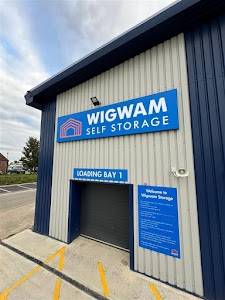
Loss adjuster’s been, and the house has to be empty before the works?
Nobody plans for the call from the loss adjuster. One day you are living normally, and the next you have a contractor’s start date, a temporary accommodation booking, and a house full of furniture that needs to be somewhere else before the works begin. It is a lot to organise when you did not choose any of it.
You do not need a complicated solution. You need somewhere clean, dry and secure, near enough that you can get to things when you need them, with terms that flex when the contractor’s timeline shifts. That is exactly what a Wigwam unit is for.
We have helped households through escape-of-water claims, fire damage decants and flood clearances. The pattern is always the same: the adjuster visits, the contractor names a start date, and suddenly you have two weeks to move a household somewhere safe. Here is how it works.
If you need a unit quickly, here is where to start:
- Get a quote: quote.wigwamstorage.co.uk
- Find your nearest location: wigwamstorage.co.uk/self-storage-locations/
- Contents cover questions: wigwamstorage.co.uk/contents-protection/
When the adjuster says your contents have to move
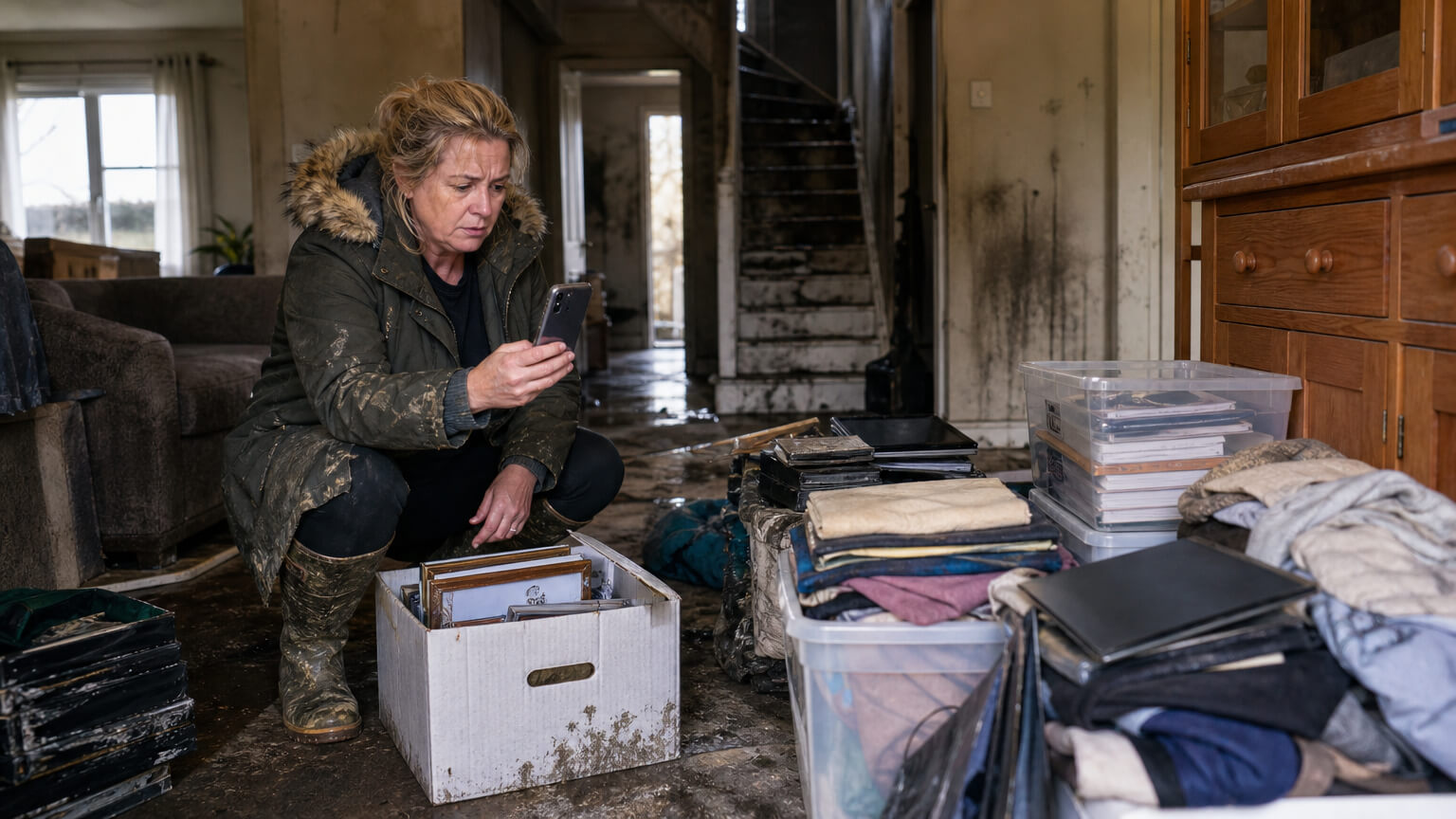
Most people searching for storage during a home repair are not doing it by choice. The claim has already been accepted, the contractor has a schedule, and the contents need to go somewhere before any of the real work can start. If that is where you are, you are in the right place.
The four most common decant triggers
Escape of water is the most common reason UK households end up needing temporary storage mid-repair. A burst pipe in the loft, a leaking appliance, a slow drip behind the kitchen units that has been sitting unnoticed for months. The damage spreads faster than people expect, and drying out a property can take six weeks or more before plastering can begin.
Fire damage, flood ingress and subsidence remediation each follow the same basic pattern: the structural work cannot begin until the space is clear, and that means the contents have to go. These are not planned moves. They are emergency decants, and the storage solution needs to be available quickly and on terms that suit an open-ended timeline.
This page is written for that situation specifically, not for planned home renovations. If you are planning a kitchen refit or extension and want storage guidance for that, a separate guide covers it.
Staying in part of the house or insurer-arranged accommodation
It makes no practical difference to how a Wigwam unit works. Some households stay in one habitable room while works happen in another section of the property. Others are placed in a hotel or short-let by their insurer while the full property is unavailable. In both cases, you still need somewhere off-site to put the contents.
Smart entry runs from 6am to 10pm, seven days a week. That means you can get in before the contractors arrive, retrieve something mid-afternoon, or collect what you need for the weekend without any of it depending on office hours or staff being present. Your things stay accessible without getting in the way of the repair schedule.
How a Wigwam unit works for a home repair decant

A Wigwam unit is straightforward. You take the space you need, you pay for the time you use, and you access it on your own terms within the access window. There are no surprises in the terms.
Clean, dry and secure, individually alarmed
The verified claim is clean, dry and secure. Every unit is individually alarmed. That matters for a claim situation, because damaged contents are often already stressed before they go into storage, and the last thing you want is secondary damage from a damp or poorly maintained unit.
Wigwam does not offer climate-controlled or temperature-regulated units. If you have damp-affected contents, the priority is to get them properly dry before they go into any sealed storage space. Trapped moisture causes secondary damage regardless of the unit quality. The packing section below covers this.
Smart entry, 6am to 10pm, seven days
Smart entry means you access your unit using your own access code or key fob. There is no dependency on staff being on site, because our sites are unmanned. You are not waiting for someone to unlock a gate or sign you in.
The access window is 6am to 10pm, seven days a week. That is not 24-hour, and the terms page makes that clear. For most claim situations it is more than enough: you can be in before the contractors arrive in the morning, or collect what you need in the evening after the working day is done. Your goods are yours, in a space you control.
Choosing a unit size
Unit sizes run from small lockers up to room-sized spaces that can hold the full contents of a large property. The right size depends on how much you are moving and for how long.
As a rough orientation: a typical two-bedroom house fills something in the region of a 50 to 75 square foot unit; a three-bedroom house often needs 75 to 100 square feet or more, depending on how much furniture and how many boxes you are working with. These figures vary, and the quote tool will give you a firmer steer based on what you tell it.
We do not quote prices on this page. For current pricing by unit size, visit our pricing page. A sizing guide is also available there to help you work out what you need before you commit.
How long will you need it, and what the two-week minimum means

The two-week minimum is not a lock-in; it is the floor. You can stay as long as the repair takes, rolling week by week, without committing to a fixed end date at the outset. For a claim situation where the contractor’s schedule is not fully in your hands, that is exactly what you need.
Repair timelines run long
Escape-of-water claims are the most instructive example. A burst pipe creates visible damage quickly, but the drying process takes far longer than most people expect. Structural drying, replastering, and redecoration each add weeks to the timeline, and insurers typically will not authorise sign-off until the moisture readings are right. Six to twelve weeks is common. Months are not unusual for significant damage.
The two-week minimum is honest about the floor, and there is no upper ceiling beyond your rolling notice period. If the contractor’s schedule moves, your storage terms move with it. You do not have to renegotiate, re-sign, or pay penalties because the repair took longer than the original estimate.
If the repairs finish early
Unused days are refunded if you leave before your paid period ends. Give your 14-day notice, vacate the unit, and settle the account. There is no deposit to reclaim and no hidden exit cost.
The full conditions are on the terms and conditions page. Read them before you book if you want the detail, but the short version is: you pay for what you actually use, and there is no deposit to get back.
Will your contents be insured once they leave the house

This is the question that matters most and gets the least honest answer on most storage and insurance pages. The direct answer is: your home contents policy may not cover your goods once they leave the insured address. You need to check before anything moves.
Why your home contents policy may not cover goods in storage
Most UK home contents policies cover your belongings at the insured address. Some extend cover to goods in transit in a removal van, but very few extend automatically to a self-storage unit. This is standard across the industry, not something unique to Wigwam or any single insurer.
The right step is to contact your home contents insurer directly and confirm whether your policy covers goods placed in third-party storage, and if so under what conditions. Do not assume. Standard contents insurance rarely covers items in storage, and that matches what we see from the households who come to us mid-claim.
One more note on jurisdiction: this general position applies to England and Wales. Policy wordings in Scotland and Northern Ireland may differ. If you are in Scotland or Northern Ireland, confirm cover directly with your insurer and, if you have any doubt about your legal position, speak to a solicitor qualified in your jurisdiction.
Wigwam’s RSA goods-in-storage policy
Contents cover is mandatory at Wigwam. You either take Wigwam’s policy or prove that your own cover is adequate.
The Wigwam policy is underwritten by RSA under the “Self Storage Customers’ Goods” scheme. It operates on a New-for-Old basis, with a GBP 50 excess per claim. For full details of what is and is not covered, visit the contents protection page.
If you believe your existing home contents policy or a separate policy covers your goods in storage, you can opt out of the Wigwam policy by providing evidence of your own cover. Your insurer or broker can confirm what documentation they can provide.
Declaring the full replacement value
This is the single most important practical point on this page. When you take out the RSA policy, you must declare the full replacement value of everything you are putting into storage. Not the original purchase price, not a rough estimate. The full cost of replacing each item new today.
If you under-declare and need to make a claim, the settlement is proportional to the declared value, not the actual value. In plain terms: if you declare half the true value and suffer a total loss, you will recover roughly half of what the goods were worth. Declare accurately.
The contents protection page has more detail, and your own broker or insurer can advise you on valuation if you are unsure. Wigwam can signpost you to the right information; we cannot give insurance advice.
What the policy does not cover
Two exclusions to be clear about:
Atmospheric or climatic damage is excluded. If moisture, condensation or temperature variation damages your goods, that is not covered under the RSA goods-in-storage policy. This is why damp-affected items must be fully dry before going into storage.
Theft is covered only after forcible entry. If goods are taken without signs of forced entry to the unit, the policy does not respond.
These are standard exclusions and the policy wording will state them clearly. If you have questions about whether a specific scenario is covered, read the full policy wording available on the contents protection page or speak to your broker.
Ready to confirm your unit? A quote takes a few minutes and there is no commitment at that stage.
What storage costs, and whether your insurer may pay

Storage costs during a home repair are a real expense, and some insurers will cover them as part of the claim. The right question is: will yours?
How Wigwam storage is priced
Prices depend on the unit size and how long you need it. We do not quote figures on this page because the right number for your situation depends on what you are storing and where you are. The pricing page has current rates by unit size, and the quote tool gives you a firm figure based on your specific requirements.
The RSA contents protection premium is separate and linked to the declared value of your goods. The contents protection page covers that.
Asking your insurer to cover the storage cost
Some insurers treat reasonable storage costs as part of a contents or buildings claim, particularly where the storage is directly caused by the insured event. It is not automatic, and it is not guaranteed, but it is worth asking.
The critical step is to get authorisation before you incur the cost, where that is possible. Speak to your loss adjuster or insurer directly and ask whether storage costs are covered under your policy. Keep every receipt and every invoice. Wigwam can provide a clear invoice for your claim file.
Do not assume that storage is covered because the insurer has authorised the repair. Those are separate questions.
If your insurer disputes the storage cost and you believe it is a reasonable consequence of the claim, the Financial Conduct Authority provides guidance on the complaints process. Your insurer’s own complaints procedure is the first step.
Getting your things to a Wigwam unit

Wigwam sites are unmanned. That is worth saying plainly before moving day, so there are no surprises.
You arrange the move
The move in and out of your unit is yours to organise. We do not offer a collection or delivery service from your home. Most households use a removal firm, hire a van, or get help from family. The advantage of arranging it yourself is that nobody else handles your belongings. You control the packing, the loading and the timing.
If you are using a removal firm, let them know the site is unmanned so they can plan accordingly. Access runs from 6am to 10pm; make sure your booking fits within that window.
Deliveries and couriers to the site
If a courier or third party needs to deliver something to your unit, someone from your side must be present to receive it. Wigwam staff are not on site to sign for deliveries, accept parcels, or hold items on your behalf. If the contractor needs to deliver materials or return items to your unit while you are not there, that needs to be planned in advance with someone from your household or business available to receive.
Packing your contents before they go in
For a post-damage decant, packing carefully pays off twice: it protects your goods during the move, and it makes retrieval mid-repair much simpler when you need to find something specific.
A few practical points:
Damp-affected items must be fully dry before they go into a sealed unit. Moisture trapped with furniture, carpets or soft furnishings causes secondary mould damage that compounds the original loss. If in doubt, allow more drying time.
Label boxes clearly by room and contents, not just “kitchen” or “bedroom 2”. You will be retrieving specific things over a period of weeks, and accurate labelling saves significant time.
Keep important documents, prescription medicines and anything you will definitely need in the first days of temporary accommodation separate and accessible, not at the bottom of a stack of boxes.
Wrap fragile items individually. A repair decant is not a planned house move, and the pace tends to be faster than ideal. Take the extra few minutes on anything breakable.
For fuller guidance on packing household contents for storage, our general packing guides cover this in more detail.
Find a Wigwam location near you

We have locations across UK market towns, and the chances are there is one within a reasonable distance of your home. Market-town locations mean practical access on both moving day and the many times you need to collect or return something during the repair.
Wigwam Self Storage Bath and Wigwam Self Storage Lincoln are two examples with their own location pages. We have locations across the country including market towns in the Home Counties, the Midlands and the south-west.
To find your nearest location, visit the locations hub and select your area.
Get a quote for your insurance repair storage
The unit is available. The terms are what they say they are. A quote takes a few minutes and does not commit you to anything.
Two things worth repeating before you click: there is no deposit to pay. And if the repairs finish earlier than expected, unused days are refunded. You pay for what you actually need.
Get a quote at quote.wigwamstorage.co.uk
Frequently Asked Questions
No, not on their own. Our sites are unmanned, and that shapes the answer. There is no one at the site to let a contractor in, to verify who they are, or to hand over your goods. If a restoration firm or builder needs to take something out of your unit, someone from your own side has to be present to grant access through smart entry and oversee what leaves. That someone can be you, a partner, an adult family member, or anyone you trust to act for you, but it has to be a person from your side, not a member of Wigwam staff.
This catches people out during a repair more than at any other time, because the rhythm of a claim often involves contractors wanting to “pop back for the rest of the units” or collect salvaged items mid-job. The practical fix is to treat every access by a third party as an appointment you attend. Agree a time, meet them at the unit, let them in, and lock up afterwards. If you genuinely cannot be there, hand your access to a named person you trust and tell them which boxes are going. Do not give your smart entry credentials to a contractor you have known for a week and assume it will be fine. Your goods, your access, your call on who is in the unit. That control is part of what keeps the unit secure while it holds the contents of your home.
It can, which is exactly why the packing matters so much during a claim. A self storage unit is an enclosed space. If you put genuinely damp items in alongside dry ones, the moisture does not stay politely with the wet box. It moves into the air, settles on cold surfaces, and over weeks can raise the humidity around everything you have stored. Cardboard goes soft, soft furnishings start to smell, and wood can bloom with mould. In a claim situation where some goods are already compromised, mixing them with your salvageable belongings risks turning a partial loss into a bigger one.
The rule is simple: nothing goes into the unit until it is properly dry. That means furniture dried out fully, not just surface-dried, and soft items aired until there is no residual damp. If your loss adjuster or a restoration firm is drying contents as part of the claim, let them finish before those items come to storage. For anything you are unsure about, keep it separate and dry it before it joins the rest. It is also worth remembering that climatic and atmospheric damage is excluded from the RSA goods-in-storage policy, so moisture damage that happens in the unit because something went in wet is not something cover will respond to. Dry first, store second. That single discipline protects both the damaged goods and everything they sit beside.
This comes up when an insurer or loss adjuster sets up storage as part of the claim, and the answer matters for how smoothly the rest of the job runs. Whoever is named on the rental account is the customer we deal with. If the insurer books and pays directly, the account may sit in their name or their appointed firm’s name, and they become the point of contact for billing and notice. If you book the unit yourself and then reclaim the cost from your insurer, the account is yours, and you are the one who gives notice and settles up.
It is worth clarifying which arrangement you are in before anything moves, because it affects who can authorise access and who handles the exit. The cleanest position for most households is to hold the account yourself: you control access, you decide who goes in, and you are not waiting on a third party to give notice when the repair finishes. You then keep every invoice for your claim file and recover the cost from the insurer separately. We can provide a clear invoice for exactly that purpose. Whatever the setup, the same terms apply: no deposit, a 14-day notice period, and unused days refunded if the repair finishes early. The support team can confirm whose name an account is in, but they handle the storage side only and cannot advise on the insurance claim itself. For that, your loss adjuster or insurer is the right contact.
It is a fair instinct, and the flexible terms are built to let you make that call yourself rather than forcing it. There is no fixed end date you have to commit to. You roll on week by week, and you only start the clock on leaving when you give your 14-day notice. So if the contractor says the job is done but you want to wait until you have moved everything back, lived with it for a week, and confirmed there are no snags, you can keep the unit on for that buffer without penalty. Many people do exactly this after an escape-of-water or fire claim, because moving everything home and then discovering a problem is worse than holding the storage a fortnight longer.
The thing to weigh is cost against peace of mind. You pay for the time you use, and unused days are refunded once you give notice and vacate, so there is no waste in keeping it a little longer than strictly necessary, only the running rate for those extra days. A sensible approach is to move back in stages: bring home what you need first, keep the bulkier or more vulnerable items in storage until you are sure the property is fully dry and finished, then clear the unit and give notice. If your insurer is covering the storage cost, check with them whether they will fund that buffer period, because their authorisation may end at practical completion rather than when you personally feel settled. That is a question for your insurer, not for us.
The key difference is retrieval. In a normal house move, you pack to get everything out of one place and into another in a single direction, and you rarely need to open a box again until you unpack at the other end. A repair decant is the opposite. You will be living out of temporary accommodation for weeks or months, dipping back into the unit repeatedly to fetch a specific thing: a document, a winter coat, a child’s particular toy, a tool. Packing for that means packing for access, not just for transport.
In practice that changes a few habits:
| Habit | Normal move | Repair decant |
|---|---|---|
| Labelling | Room name is enough | Room plus actual contents, so you can find one item |
| Box placement | Stack tight, fill the space | Leave a walkway, keep frequently-needed boxes at the front |
| What stays accessible | Everything goes in | Documents, medicines, season-appropriate clothes kept separate |
| Drying | Rarely an issue | Damp-affected goods fully dried before they go in |
The other difference is pace. A planned move has lead time; a decant happens on the contractor’s timetable, often with two weeks’ notice or less. That pressure tempts people to throw things in unwrapped. Resist it on anything breakable, because a repair is stressful enough without arriving home to chipped crockery on top of a water-damaged ceiling. Smart entry from 6am to 10pm, seven days a week, means you can get to the unit around the working day throughout the repair, so packing for easy retrieval pays off every single time you visit.