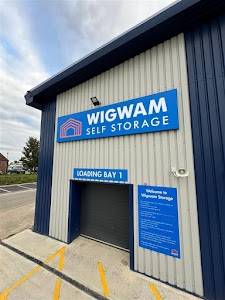
Just need somewhere for a few weeks while the dates sort themselves out?
Completion dates rarely line up. You hand back the keys on a Friday and the new place is not ready until the following week, or the week after, or whenever the solicitors finally sort out the chain. There is a gap, and you need somewhere for a houseful of belongings while you wait.
The question is never whether storage exists. It is whether the terms work for a move that nobody can time to the day. That is what this page is for.
In a hurry? Here is what you need to know.
- Two-week minimum stay. No long contract to sign.
- No deposit, so there is nothing to reclaim after you leave.
- 14 days notice to go. Unused days refunded.
- Get a quote: quote.wigwamstorage.co.uk
When a move needs storage

Short-term storage is not a niche or a workaround. For a lot of movers, it is simply the practical solution to a gap that opens between one date and another. The situations that send people to storage during a move are usually one of three things.
The gap between moving out and moving in
This is the most common one. You have a moving-out date, but the new place is not ready on the same day. It might be a week, it might be three weeks. The removal van arrives, the house is emptied, and everything needs to go somewhere that is not a lorry.
A short-term unit covers exactly this. You move your belongings in, and you collect them when you are ready. There is no pressure to move out of the unit on a fixed date because the notice period is short and any days you have already paid for are refunded when you go.
When the chain breaks or completion slips
A slipped completion or a broken chain is one of the few parts of a house move that is entirely out of your hands. When it happens, the gap you planned for can suddenly stretch. Storage gives you one thing you can control in a situation where everything else is in someone else’s hands.
The important thing here is that Wigwam’s units are self-access. Sites are unmanned, so when you arrive to drop off or collect, you go straight to your unit. If you have arranged for a removals firm to bring your belongings and you are not there yourself, a member of your own party needs to be present to oversee the delivery. Wigwam does not sign for removals vans or couriers on your behalf.
Clearing rooms for viewings, decorating or a deep clean
Not every storage situation during a move is about a gap between dates. Sometimes the trigger is earlier: you want to clear the house for photographs, show it with empty rooms, or get the decorators in before the boxes arrive. This is often a shorter spell than a chain-break gap, and the two-week minimum fits it well.
How short is short-term? The two-week minimum, explained

The shortest rental at Wigwam is two weeks. That is the minimum stay, and it is designed precisely for move-gap situations. You are not committing to a month, a quarter, or a rolling contract with a long exit clause. You take the unit, you use it for the time you need, and you leave when you are ready.
Two weeks is a practical floor. It is long enough to cover most move-gap scenarios, and short enough that if your completion comes through faster than expected, you can give notice, clear the unit, and get the unused days back. For a mover who has no idea exactly when the new keys will land, that is the point.
Notice, and getting your money back

These three things are what most movers want to know before they sign anything, and they are the three places where storage providers tend to stay vague. Wigwam does not stay vague.
There is no deposit
No deposit is required when you take a unit. Nothing is held back, so there is nothing to reclaim when you go: you serve your 14-day notice, vacate the unit, settle the account, and that is that. There are no conditions buried in the small print; the full terms are on the website if you want to read them before you commit.
This matters because a deposit that disappears at the end of a stressful move is the kind of thing that turns a reasonable experience into a bad one. There isn’t one to disappear.
14 days notice to leave
When you are ready to go, you give 14 days notice. That is it. The notice period is short enough to work even when a completion date shifts at the last moment, which is not uncommon. You do not need to know your exact moving-in date when you first take the unit. You give notice when you know, and you go when the time comes.
Unused days refunded when you go
If you have paid for a period and you clear the unit before it ends, the days you have not used are refunded. This is not standard practice in the self-storage industry; one PAA answer on the UK search results flags the refund of unused rent as “a very rare feature.” Wigwam does it because it is the fair thing to do for someone who moved sooner than expected.
Take a unit, use the time you need, and get the rest back. That is the commitment.
If the terms work for your move, the next step is a quote. It takes a couple of minutes: quote.wigwamstorage.co.uk
What size unit do I need for a house move?

Sizing a unit before a move involves a bit of guesswork, but a rough rule by room count is usually accurate enough to start with.
A few rooms versus a full house
A one-bedroom flat or the contents of two or three rooms typically fits in a small unit. A two- or three-bedroom house usually needs a medium unit. A large family house with furniture, white goods and accumulated storage may need something larger still. The easiest way to check is on the pricing page, where unit sizes and their rough equivalents in room count are set out alongside the rates.
If you are uncertain, err on the side of slightly larger. A cramped unit mid-move is harder to manage than a roomier one, and the cost difference is usually small.
Moving house storage containers versus a fixed unit
If you have seen pod-to-door container services advertised, it is worth being clear about the distinction. Wigwam is a fixed-site self-storage facility, not a container delivery service. You bring your belongings to us in a van or removal lorry, and you access them at the site during opening hours. We do not drop a container to your door.
For most house moves, this works well. You load the van, drive to the unit, and unload at your own pace. The difference is that you do the driving, not us.
Keeping furniture and boxes safe in a unit mid-move
Wigwam’s units are clean, dry and secure. Each unit is individually alarmed. That combination is what matters for furniture, soft furnishings, mattresses, and cardboard boxes mid-move: a dry environment and a secure alarm on your specific unit, not a shared space.
There is no climate control at Wigwam sites. The units are not temperature or humidity regulated. What they are is weathertight, dry and properly alarmed, which is what household goods and furniture actually need for a short-term gap.
What short-term storage costs for a move

The honest answer is that the rate depends on where you are and what size unit you need, and the best place to find that number is the pricing page. There are no prices on this page, because a headline figure without a unit size and a location attached to it is not useful to a mover trying to plan a budget.
What is worth knowing before you look at rates: contents protection is a separate consideration. Cover for your belongings while they are in storage is mandatory at Wigwam. You can take Wigwam’s own policy or provide evidence of your own, but cover must be in place. The details are on the contents protection page. Declare the full replacement value of what you are storing. If you under-insure, any claim is settled in proportion to the declared value, not the actual one.
Wigwam’s contents insurance is underwritten by RSA. This is a signpost, not insurance advice; your own circumstances will determine what cover you need.
Getting to your belongings while you are mid-move

Access at Wigwam is by smart entry, available from 6am to 10pm, seven days a week. There are no staffed hours to work around. If you need to drop off the first van load early in the morning or collect a box in the evening, you can.
Sites are unmanned. You go to your own unit, which has its own individual alarm. If you are arranging for a removals firm or courier to bring or collect anything while you are not at the site yourself, you need someone from your own party to be there to receive and oversee it. Wigwam staff are not on site to sign for deliveries, manage lorries, or handle your belongings on your behalf.
The access hours are not 24 hours. The window is 6am to 10pm. For most house moves, that is more than enough.
Where you can store with us

Wigwam operates across our UK market-town locations, a short drive from the kinds of places where people are buying and selling homes rather than city-edge sites at the end of a motorway junction.
Two examples of where you will find us: Wigwam Self Storage Bath in Somerset, and Wigwam Self Storage Lincoln in Lincolnshire. For the full list of towns, the locations hub is the right place to start.
If you are in or near London, we are honest about not being the right fit. Wigwam is a market-town operator. The locations hub will tell you where we are; if the nearest site is not practical for your move, it is better to know that at the start than to find out later.
How to get a quote and what to expect
Getting a quote is straightforward. Go to quote.wigwamstorage.co.uk, enter your location and the size of unit you think you need, and you will have a figure in a couple of minutes. There is no obligation attached to a quote.
If you want to read the full terms before you commit, they are at wigwamstorage.co.uk/terms-conditions/. The notice period, the refund of unused days, the contents cover requirement: it is all there in plain language.
Wigwam was built for the kind of move that does not go exactly to plan. Most moves fall into that category. A two-week minimum, no deposit, 14 days notice, and unused days back when you go: those are the terms because they are the ones that are fair to someone who cannot predict exactly when the solicitors will exchange.
When you are ready to secure a unit, get a quote in a couple of minutes at quote.wigwamstorage.co.uk. The terms are on the page. There are no surprises.
Frequently Asked Questions
You can still use a unit, but the two-week minimum is the shortest period you pay for, so a few days effectively costs the same as the fortnight. The minimum is a floor, not a trap: it exists because setting up and closing a unit has a fixed cost, and a two-week base keeps the arrangement simple and the price honest rather than padding it with admin fees. For a move-gap that turns out to be only three or four days, you take the unit, use it for the days you need, and the minimum charge stands.
The good news for a short, uncertain gap is that you are not penalised for leaving early after that point. If your new place comes good faster than expected and you clear the unit before a paid period ends, unused days beyond the minimum are refunded. So if you book expecting a fortnight and finish in ten days, you are not paying for the four you did not use. For a mover who cannot pin down the exact day the keys arrive, that combination, a short floor and a refund on the rest, is what makes booking now low-risk.
Two practical points. The minimum is short enough that even a brief gap is covered without committing you to a month or a rolling contract with a long exit. And there is no deposit on top of any of it. So for a few days’ use, the cost is the two-week minimum, and any unused days come back to you.
Because there is no deposit, there is nothing to wait for after you leave beyond a refund of unused days. That is worked out once three things have happened: your 14 days notice has run, the unit is empty, and the account is settled with nothing outstanding. The notice, the move-out and the refund are separate steps rather than one instant event, so a little timing helps.
Here is the order in plain terms. You give 14 days notice when you know you are leaving. You clear the unit, taking everything out and leaving it as you found it. The account is then settled, meaning any charges due are paid and any refund of unused days is worked out. With nothing owing and the unit empty, any unused days come back to you. For a short move, the practical tip is to give your notice as soon as your moving-in date is confirmed, so the clock is already running and your refund is not held up waiting on a fortnight’s notice you could have started earlier.
This is also why “settled account” matters: once everything due is paid and the unit is clear, any refund can be worked out and sent. The full mechanics are in the terms and conditions, in plain language, so you can read exactly how the notice and the refund of unused days fit together before you book.
Either works, and for a small move-gap load a few car trips can be perfectly sensible. Wigwam is a fixed-site facility, not a container delivery service, so however the goods get to us, you bring them to the unit and unload at your own pace. For the contents of one or two rooms, a hatchback or estate over a couple of evenings may be all you need, especially since access runs 6am to 10pm, seven days a week, so you are not squeezing it into office hours.
For a full house, a van or removal lorry is the realistic option, and our market-town sites are built to take one: you drive in, unload at your unit, drive out. If you are using a removal firm and will not be there yourself when they deliver to the unit, remember the sites are unmanned and we do not sign for or oversee deliveries on your behalf, so someone from your side needs to be present with smart entry access. If you are doing it yourself in a car, that is not a concern, since you are the one with access.
A couple of practical notes for either approach. Load so the things you might want first during the gap are nearest the door, with a clear path down the middle and boxes labelled, so retrieval mid-move is quick. Heavy items low. And if you are unsure how much you actually have, our team can help you size the unit from a description, which is more accurate than guessing and stops you booking a unit that is too big for a car-load or too small for a van-load. Err slightly larger if in doubt; a cramped unit mid-move is harder to manage than a roomy one, and the cost difference is usually small.
Cover is not optional, it is mandatory for the whole time your goods are with us, however short the stay. That is deliberate, and it is in your interest: it means nothing ever sits in a unit unprotected, even for a fortnight. So the question is not really whether to have cover, but which route to take. You either take Wigwam’s own policy, underwritten by RSA as a “Self Storage Customers’ Goods” policy, or you prove that your own cover extends to goods in a self-storage facility. Either is fine; one or the other must be in place before the goods go in.
For a short move-gap, the value is easy to see when you think about what is in the unit. A short stay does not mean a small risk. The entire contents of a house, mid-move, sitting in one place, is exactly when you would least want to be uninsured. The cover protects against the perils set out in the policy for however long the goods are stored, whether that is ten days or ten weeks. Read the schedule so you know the terms: theft claims, for example, require evidence of forced entry, and climatic damage is excluded.
The one thing that matters whatever the duration is the declared value. Declare the full replacement value of what you are storing, because under-insurance is settled in proportion, so half the declared value means half the payout on a valid claim. It takes a few minutes to add up a houseful honestly, and it is the one part of the cover you control. The detail of the Wigwam option is on the contents protection page. This is a signpost, not insurance advice: for whether your own policy already covers stored goods, ask your insurer, not us.
Keep anything irreplaceable or anything you will need before you are properly into the new place. A short move still involves a gap, and the worst moment to find a passport, a charger, or the completion paperwork sealed in a box at the back of the unit is the evening you actually need it. So pack a separate essentials kit and keep it with you, not in storage, even for a stay of only a fortnight.
That kit usually wants a few things. Documents: passports, completion and legal paperwork, anything you might be asked for at short notice. Valuables: jewellery, laptops, anything small and worth a lot, which are also better with you than in a unit. Daily life: a change of clothes for everyone, medicines, phone and chargers, a kettle and mugs, bedding for the first night or two, and school bits if there are children. And anything sentimental and irreplaceable, a few photographs or keepsakes, that you would rather keep within reach than trust to any gap in any move.
Everything else, the bulk of the furniture, boxes, out-of-season clothes, things you will not touch until you are in, goes into the unit, which is clean, dry, secure and individually alarmed. Bear in mind we store household goods only, so pets, plants and anything perishable travel with you regardless. Pack the unit with the things you are most likely to want nearest the door, label every box, and the short storage gap becomes the calm, sorted part of the move rather than another thing to worry about.