Tenant gone but their belongings left behind — are you allowed to touch them?
You’ve got the keys back. The tenant has gone. But the flat isn’t empty.
There’s a sofa, a few boxes, and what looks like a bin bag of paperwork sitting in the corner. Your next tenant is lined up. You’ve got decorators booked. And now you’re standing in someone else’s belongings, wondering if you’re allowed to touch a single thing.
The short answer is that the law does give you a route through this. It is not the fastest route, and it isn’t entirely simple. But it is clear enough, and the practical part, finding somewhere safe to put the goods while the clock runs, is easier than most landlords expect.
When a tenant leaves things behind

The situation catches most landlords off-guard, because most tenancies don’t end this way. You’ve planned for a checkout inspection, a key handover, a deposit negotiation. You haven’t planned for a sofa that nobody came back for.
The situation most landlords do not plan for
Finding a tenant’s belongings in a property you’ve just regained doesn’t mean you’ve done anything wrong. It happens across every type of let, at every price point, in every part of the country. What matters from this point forward is how you handle what’s in front of you. The law steps in immediately, whether or not you’ve asked it to.
Why you cannot simply remove or dispose of the items
It is worth saying this plainly, because the instinct to just clear the place out is understandable. Under the Torts (Interference with Goods) Act 1977, those belongings are still the tenant’s property. Disposing of them, moving them without documentation, or treating them as abandoned without following the correct procedure could expose you to a claim. The Act gives you a defined route. It requires you to take the goods somewhere safe, notify the tenant, and hold them for a reasonable period. We will come to what that means in practice.
What the law says: the Torts (Interference with Goods) Act 1977

The Torts (Interference with Goods) Act 1977 is the framework that most UK landlords will be working within when a tenant leaves possessions behind.
A note on jurisdiction: Everything in this guide applies to England and Wales. Landlord and tenant law in Scotland and Northern Ireland follows different statutes and procedures. If your property is outside England and Wales, please take advice from a solicitor qualified in the relevant jurisdiction before acting.
The Act places a legal duty on you, as the person in possession of someone else’s goods, to take reasonable care of them. It gives you the right to recover your storage and reasonable costs from the proceeds if the goods are eventually sold, and it sets out the procedure for doing so. What it does not do is give you a simple clearance date you can write in your diary. That is where the interpretation comes in, which is why the NRLA and a qualified solicitor are the right people to guide you through the specific steps.
Rent arrears do not make the goods yours
This is one of the most common misunderstandings. If a tenant owes you rent, that debt does not transfer ownership of their possessions to you. The goods remain theirs. You may, under the Act’s procedure, offset your reasonable storage and removal costs against any sale proceeds if it comes to that. Any balance remaining after costs must be held for the tenant. The two things, the debt and the goods, stay separate until a formal process is followed.
Where to get the right advice
The NRLA (National Residential Landlords Association) publishes guidance on the abandoned-goods procedure, including template abandonment notices, and is the first port of call for most private landlords. For anything beyond the standard template, or if the tenant contests the process, a solicitor with landlord and tenant experience is the right step. Wigwam does not give legal advice, and nothing in this guide is a substitute for that.
Is the property actually abandoned, or just empty?

Before any goods move, you need to be reasonably confident that the tenancy has genuinely ended and the property has been vacated. A property can look empty without being legally abandoned. Getting this distinction wrong is where things become complicated.
Signs that point toward abandonment
No single sign is conclusive on its own. What you’re building is a picture. The factors most commonly cited as evidence of abandonment include: rent unpaid for two or more months, post piling up uncollected, utilities disconnected or not in use, confirmation from neighbours that the tenant has not been seen, and the tenant’s keys not returned. If you have access to the property and the personal items inside look like the kind of things someone would take with them if they had left by choice, that is relevant too. Document each of these points as you find them. Dates and photographs matter.
The abandonment notice and the Protection from Eviction Act 1977
Even where abandonment seems obvious, serving an abandonment notice is a step most landlords should take before acting. The Protection from Eviction Act 1977 sits alongside the Torts Act and makes clear that a tenancy cannot simply be assumed to be over without the right process. The NRLA publishes a standard abandonment notice template. Serving it to the property and to any last known contact address gives the tenant a formal opportunity to respond, and creates a documented record that you followed the process, which matters if they reappear later. Confirm the correct form and serving procedure with the NRLA or your solicitor before you use it.
Document everything before you move a single item

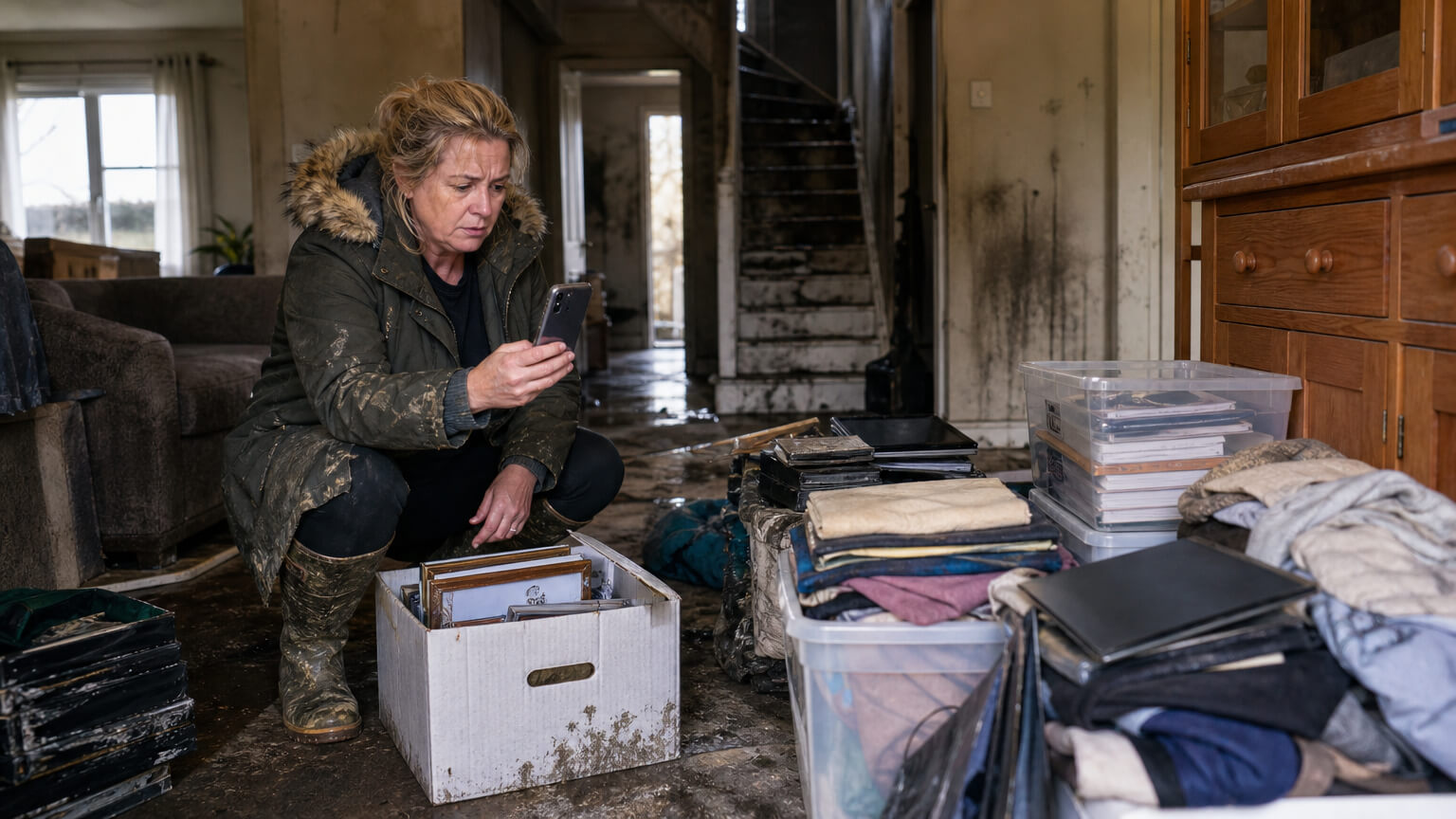
Before one box leaves that flat, make a record. This is the step that protects you if the tenant comes back, and it costs you nothing but an hour of time.
Take timestamped photographs of every item in the property. Go room by room. Photograph items individually where you can, and always photograph the general state of each room before anything is disturbed. Write a written inventory alongside the photographs: a brief description of each item, its apparent condition, and where it was found. If you have a letting agent or a friend who can witness the process, ask them to do so and note their name and the date.
The inventory becomes your evidence if there is ever a dispute about whether something was damaged in your care, or about what was present at all. A clear, dated record of what you took in and what condition it was in makes you much harder to argue with.
How long must you keep a tenant’s belongings?
There is no single fixed number written into UK statute, but the figure most commonly cited in UK landlord guidance is two to four weeks. That is the range treated as a reasonable storage period under the Act.
The “reasonable period” in practice
The two to four week window is not a guaranteed safe harbour. It is a commonly used benchmark, and it reflects what courts have generally regarded as reasonable in standard residential cases. Your circumstances may differ, and the NRLA and your solicitor can advise on whether a longer period is appropriate in your specific situation. What is clear is that the obligation is time-limited. The goods do not become your permanent responsibility.
When the period starts and what can shorten it
The storage period generally starts from the date you regained possession of the property and the abandonment can be evidenced. It is not an open-ended clock. Two categories of item are generally understood to fall outside the normal storage obligation: perishable goods (food, plants, anything with a short natural life) and hazardous materials. If a tenant has left these, you should seek specific advice on how to handle them rather than assuming the standard procedure applies. Document everything before you act.
Where to store the goods safely

The law tells you what to do with a tenant’s belongings. It says keep them safe, keep them for a reasonable period, keep a record. What it does not tell you is where to actually put a sofa, three boxes and a bin bag when you need the property clear by Friday.
That is the practical gap most guides miss.
Why a self storage unit fits the legal window
Wigwam’s two-week minimum stay maps almost exactly onto the two to four week period the law treats as reasonable. You are not signing up for six months. You take the unit, you put the goods in, you follow the procedure, and when the period ends you leave. If the matter resolves earlier, whether the tenant collects or the process completes faster than expected, unused days are refunded. There is no deposit, so nothing of yours is tied up while the procedure runs.
For a situation where you do not know how long you will need, and you want to stay by the book without locking yourself into a long commitment, that flexibility matters. You can see what self storage costs in the UK on our pricing page, and our full terms and conditions cover the notice arrangements in detail.
Clean, dry, secure and individually alarmed
When you are holding someone else’s possessions under a legal duty of care, the condition of the storage matters. Every Wigwam unit is individually alarmed, and the sites are clean, dry and secure. There is no climate control; we do not market that, and we would not want to imply it. What we do offer is a unit that protects household and business goods from the straightforward risks: damp, access without authorisation, and damage from poor conditions.
If the tenant left a vehicle, caravan, motorbike or boat, Wigwam cannot store those. Our units are for household and business goods. You will need to find specialist vehicle storage for anything in that category.
Access 6am to 10pm, a unit you control
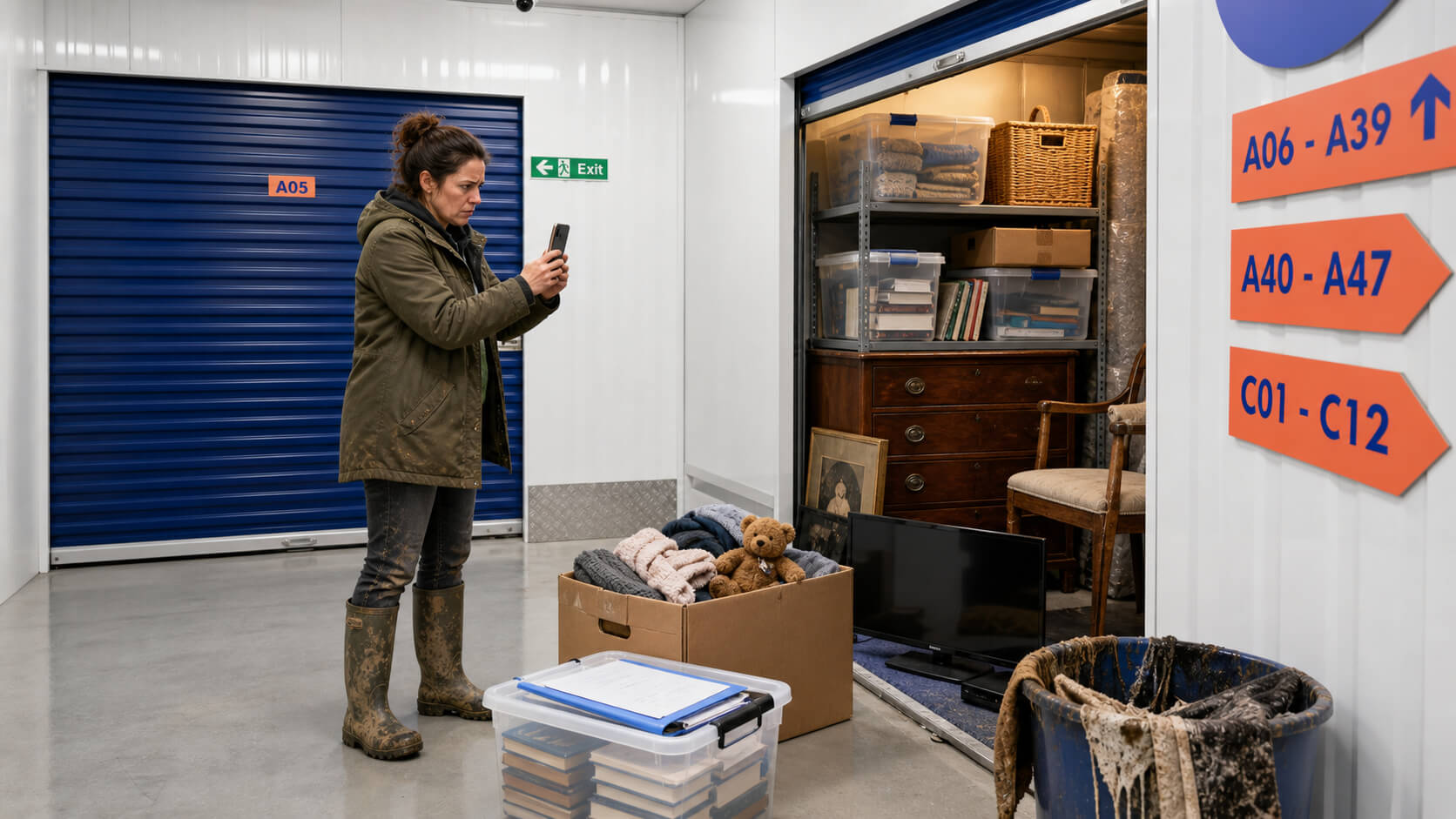
Smart entry is available every day between 6am and 10pm. Our sites are unmanned. That means access is yours, on your schedule, without needing to arrange anything with us in advance. You can bring the removals firm on a day that suits you, within those hours. If the tenant comes to collect within the storage period, you can arrange access for them to do so.
One practical point: because our sites are unmanned, if you are using a removals company or courier, someone from your side needs to be present. Wigwam does not receive deliveries or sign for goods on a customer’s behalf. You control the unit, which means you manage access to it.
If you need somewhere close to your let, you can get a quick quote at quote.wigwamstorage.co.uk.
After the storage period: selling, returning or disposing
Once the storage period has run and the correct notice procedure has been followed, the law does give you options for what happens next.
Offsetting your costs and holding the balance
If the goods are sold, you are entitled to offset your reasonable and documented storage, removal and sale costs from the proceeds. What remains after those costs belongs to the tenant. That balance must be held for them, not kept. The exact procedure for giving notice of the intended sale and accounting for the proceeds is one you should confirm with your solicitor or the NRLA before acting. Wigwam has no role in this step. Our part ends when the unit is vacated.
What happens if the tenant returns to collect
If the tenant makes contact and wants to collect their goods while they are still in store, that is a straightforward outcome. Return the items, take a note of the handover, and exit the unit. If there is a dispute about condition or about what is missing, your documented inventory from before the goods went into store is the record you rely on. Early departure from the unit is possible, with a refund of unused days once the account is settled and the 14-day notice has run. For any dispute about the goods themselves, your solicitor is the right person to advise.
Insuring goods you are holding but do not own
This is the question most landlords think of late, if at all. You are in legal possession of someone else’s property. If something happens to those goods while they are in your care, who is liable?
Does your landlord policy cover a tenant’s goods?
Your own buildings or contents policy may not extend to third-party possessions you are holding under a legal duty. It is worth checking with your insurer before the goods go into store, not after. Do not assume the cover transfers automatically. What your insurer tells you is their territory; what we can tell you is ours.
Contents protection at Wigwam
All goods stored at Wigwam must be insured. You can take out our contents protection policy, underwritten by RSA, or you can provide evidence of your own equivalent cover. If you use Wigwam’s policy, you will need to declare the full replacement value of the goods. Under-insurance is settled proportionally, meaning if the declared value is lower than the actual value, any claim payout is reduced in proportion. We cannot advise on whether your own policy is adequate; that is a question for your insurer.
Find a Wigwam unit near your let
We have sites across our UK market-town locations. If your let is in Lincolnshire, Wigwam Self Storage Lincoln is a short drive from most of the county’s residential stock. If you’re letting in Somerset or the wider Bath area, Wigwam Self Storage Bath covers that ground. For other towns across our network, the locations hub will show you what’s nearest.
For a quick quote on a unit close to your property, go to quote.wigwamstorage.co.uk. It takes a couple of minutes, and there is no obligation.
Frequently Asked Questions
The account should be in the name of whoever will actually hold the smart entry credentials and take responsibility for the unit, the payments and the contents cover. In practice that is usually the landlord, since it is the landlord who holds the legal duty of care over the goods under the Torts (Interference with Goods) Act 1977. If a letting agent is managing the matter on your behalf, the account can sit with them, but be clear between you about who controls access, because only the credential holder can get into the unit. The sites are unmanned, so there is no front desk where a second party can be let in on request.
What we cannot do is decide that question for you, or hold the goods jointly between two parties who each want independent access. One account, one set of credentials, one person in control. Settle between landlord and agent who that is before the goods move. On the legal side, who carries the duty of care and how costs are accounted for are questions for the NRLA or a solicitor with landlord and tenant experience. We provide the secure space and the access. The legal framework around the goods themselves sits with your adviser.
Under the Act’s procedure, you may be able to offset your reasonable and documented storage, removal and sale costs against the proceeds if the goods are eventually sold, with any balance after costs held for the tenant. That is the route the statute provides, and it is why keeping clear records of what the unit costs matters from day one. Keep your invoices and your dated inventory together, because they are the evidence that your costs were reasonable if it ever comes to accounting for the sale.
A debt for rent arrears is a separate matter from the goods, and one does not cancel the other. Owing you rent does not make the tenant’s possessions yours, and storing them does not let you simply keep them against the debt. The exact procedure for giving notice of an intended sale and for accounting for the proceeds is one to confirm with the NRLA or your solicitor before you act, because getting it wrong can expose you to a claim. We are not the right people to advise on cost recovery: our part is providing the unit and a clear record of what it cost. The legal mechanics belong with your adviser.
This is exactly the situation where you slow down rather than speed up, and take advice before acting. Even where you cannot reach the tenant, the goods remain their property, and the Act still expects you to take reasonable care of them, notify the tenant at any last known address, and hold them for a reasonable period. Serving an abandonment notice to the property and to any last known contact address, using the NRLA template, gives the tenant a formal chance to respond and creates a documented record that you followed the process. That record protects you if they reappear later.
The practical step is to put the goods somewhere safe while the clock runs, which is where a short-stay unit fits the two to four week window most guidance treats as reasonable. The legal step, how far you must go to trace someone and what counts as sufficient notice when you cannot, is one for the NRLA or your solicitor, not for us. Do not treat goods as abandoned simply because the tenant has gone quiet. Document everything, serve the notice, store safely, and take advice on the timing. We can give you the secure space quickly. The judgement on whether the process is complete is your adviser’s territory.
Be careful here, because the instinct to clear out low-value items quickly is where landlords most often trip. Even items that look like rubbish to you remain the tenant’s property until the correct procedure has been followed, and disposing of them without that process could expose you to a claim. The fact that something has little resale value does not, on its own, let you skip the documentation, the notice and the reasonable holding period. Photograph and inventory everything before it moves, regardless of apparent worth.
There are two categories that are generally understood to sit outside the normal storage obligation: perishable goods, such as food or plants, and hazardous materials. If the tenant left those, seek specific advice on handling them rather than assuming the standard procedure applies, and note that hazardous and perishable items cannot go into a storage unit in any case. For the ordinary low-value clutter, the safer path is usually to store it briefly while the notice period runs, then deal with it through the proper route once the period has expired. The short two-week minimum and refund of unused days mean storing it for the legal window is not an expensive commitment. What counts as a complete process before disposal is a question for your solicitor or the NRLA.
Possibly not, and that is precisely why you should check with your insurer before the goods go into store rather than after. A standard buildings or contents policy may not extend to third-party possessions you are holding under a legal duty of care, and you should not assume the cover transfers automatically. A quick call to your insurer to confirm the position is an hour well spent, because if something happens to the goods while they are in your possession, the question of who is liable will come up.
When the goods are stored with us, contents cover is mandatory either way: you can take Wigwam’s RSA “Self Storage Customers’ Goods” policy, or provide evidence of your own equivalent cover. If you use the Wigwam policy, you declare the full replacement value of the goods, and under-insurance is settled proportionally, so a value declared too low reduces any payout in proportion. We do not give insurance advice and we cannot tell you whether your own policy is adequate. That is a question for your insurer. The full detail on the contents protection available through us is on the contents protection page. We are signposting only.