The table’s for the grandchildren one day — but where does it wait until then?
There is a dining table in my neighbour’s spare room that has not been eaten at in four years. It belonged to her mother. Her eldest grandson is in his second year at Sheffield, and the flat he shares has nowhere near enough space for it. Her youngest is still in sixth form. The table will be someone’s one day, and everyone in the family knows it. For now, it just sits there, taking up a room she could use.
That is the situation a lot of families are in. Not a crisis, not a house move, not a clearance. Simply a gap between one generation finishing with the good pieces and the next generation being ready to receive them. A pause. And pauses, if you hold them the right way, turn out fine.
Self storage was not designed for this, but it handles it well. A unit you rent by the month, that you can access whenever you need to, with no one else’s hands near your things, is a straightforward answer to a situation that has no other obvious one. This page explains how to make it work for heirlooms specifically: what a unit can and cannot do for them, how to prepare them before the door closes, and what you can expect from the costs and the exit over a long hold.
Holding it in trust: why families store heirlooms for years
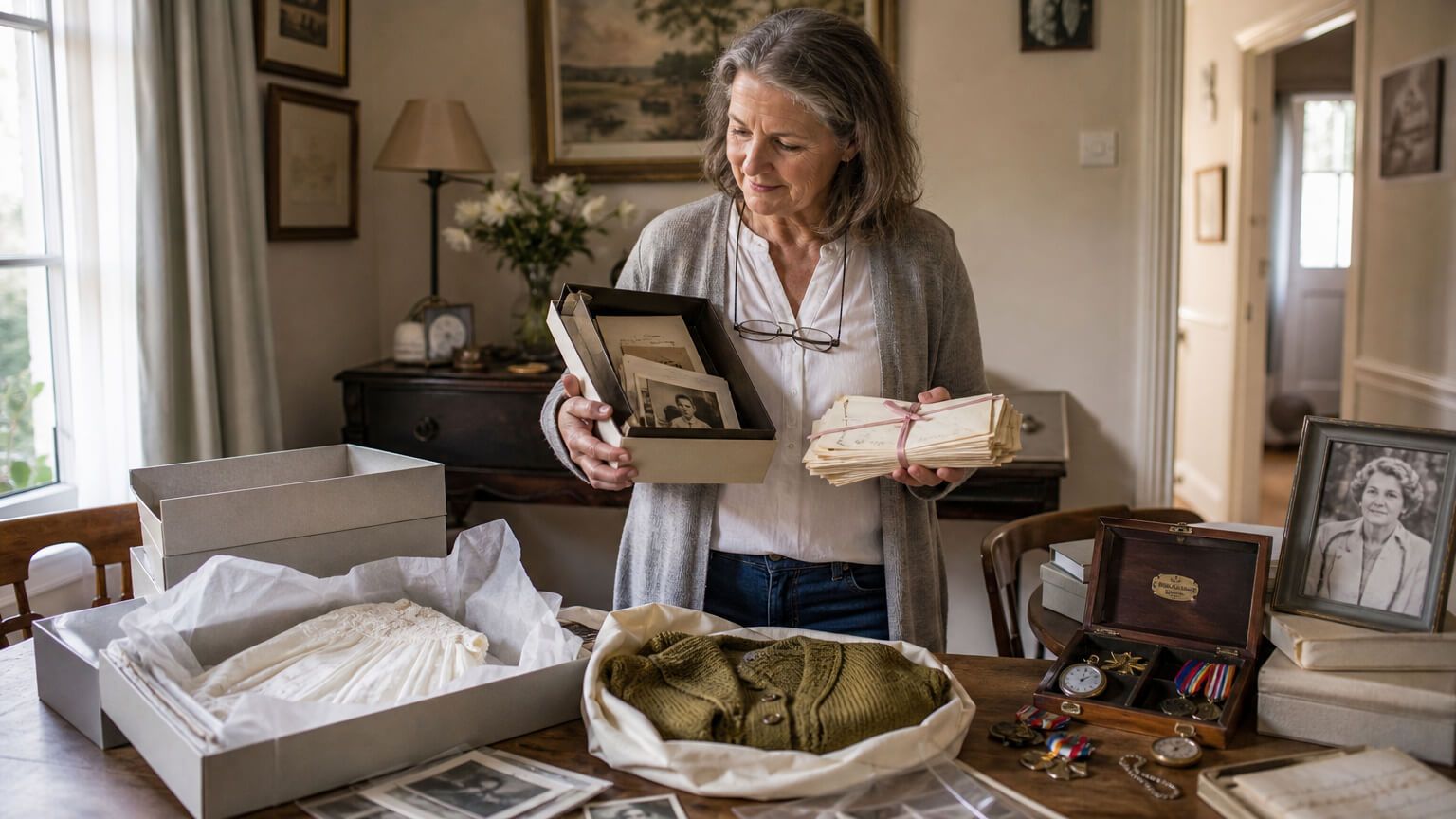
Most people who store family heirlooms long-term are not putting things away. They are keeping a promise.
The pieces matter because of what they represent: the table where Christmas happened every year, the dresser that stood in a grandmother’s bedroom, the clock that has been on a mantelpiece since before anyone alive can remember. The plan is not to keep them forever in a unit. The plan is to keep them safe until the grandchildren have a home large enough to take them in, and to hand them on intact.
When the next generation does not have room yet
The grandchild renting a studio flat in Bristol is not in a position to take a six-chair dining set. The one still at university has a bed and a small wardrobe. The youngest has not left home yet. None of this is a failure of planning; it is just the shape of how people move through their twenties now. Rental tenancies, first flats, shared houses and the slow road to a first mortgage are the reality. The furniture will fit somewhere, eventually. It just does not fit anywhere yet.
Self storage fills that gap without anyone having to let go prematurely. The pieces are yours, in your own unit, and they wait on your terms. There is no obligation to decide anything permanently until the grandchild has keys and a spare room.
Self storage versus the attic, the garage and a relative’s goodwill
The alternatives to a storage unit are worth naming plainly, because most people have already considered them. The attic has real limits: weight tolerances, condensation, access that gets harder as the years pass. A damp attic over a long hold is not kind to wood, textiles or paper. The relative’s garage is often a short-term favour with an unspoken expiry date. When circumstances change at their end, the furniture becomes someone else’s problem at short notice.
A unit of your own has no conditions on it beyond the rent. No one’s goodwill to rely on, no expiry date tied to someone else’s life, no need to renegotiate after a year. It is a quiet, unglamorous solution and it works.
What counts as long-term storage and when it makes sense
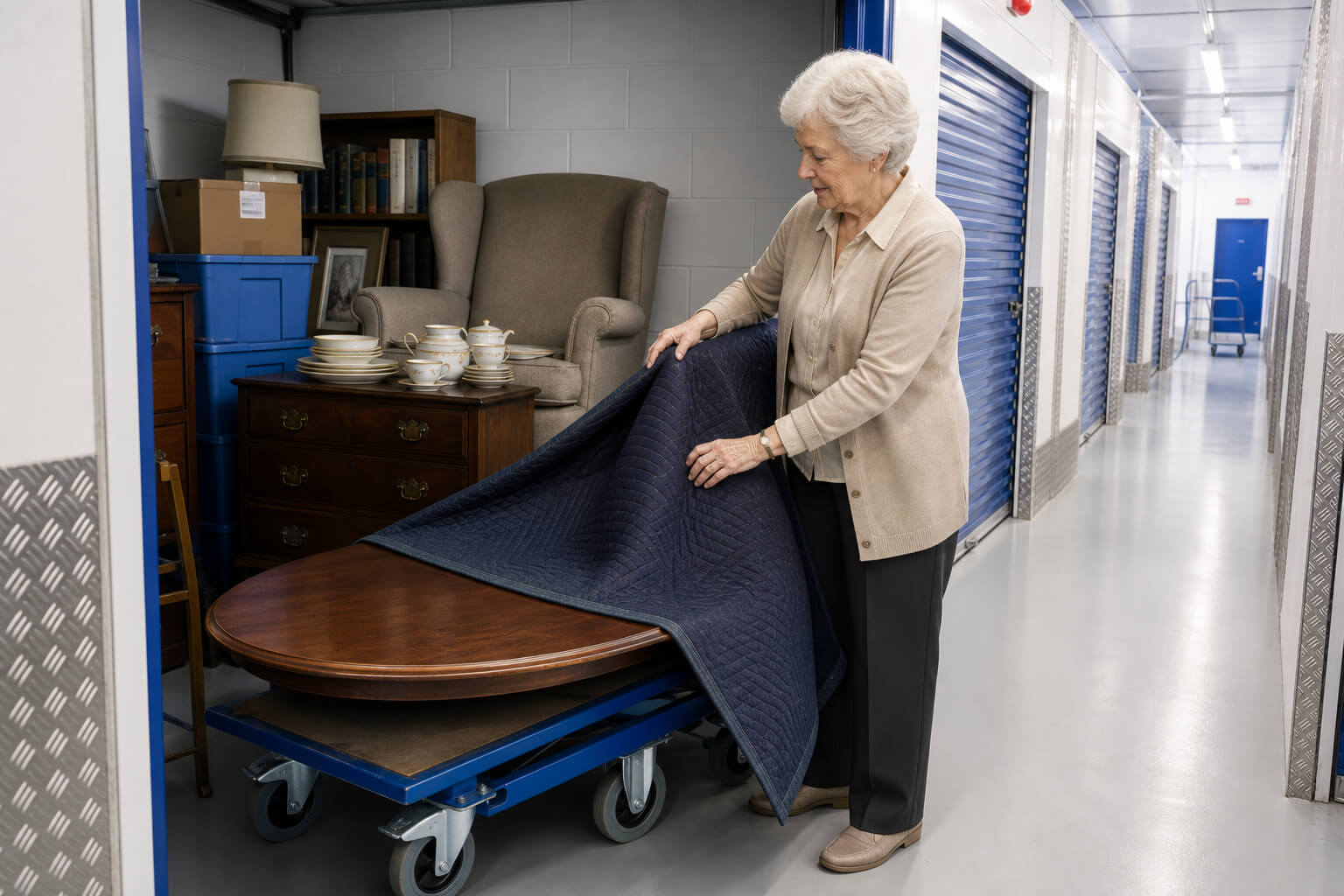
Long-term self storage has no official definition, but for most families holding heirlooms it means years rather than weeks. The commitment is open-ended by design: you are not booking a slot, you are taking out a unit until the situation resolves itself at the other end.
Months and years, not weeks: the minimum stay and refund of unused days
At Wigwam, the minimum stay is two weeks. That minimum is actually a kind of reassurance rather than a constraint, because it tells you what the floor is. There is no day-rate trap, no need to book for a longer period to get a sensible price.
The arrangement is straightforward at the other end too. When the grandchild finally has the space, you give fourteen days’ notice, vacate the unit, and settle the account. There is no deposit to reclaim, because we don’t take one. If you leave before the end of a paid period, unused days are refunded. You are never paying for time you have not used. For a hold that might last five or ten years with an uncertain end date, that fairness at exit matters.
For the full terms, see the terms and conditions page.
How to think about the cost across a multi-year hold
A monthly storage cost is a predictable overhead. It does not escalate in the way that borrowing a relative’s garage can, which is to say it never costs you a relationship. Over a five-year or ten-year hold, the relevant question is not whether you can afford this month, but whether you can afford it consistently, and whether the cost is stable and foreseeable.
There are no prices quoted on this page because unit sizes and costs vary by location and change over time. For current pricing, the pricing page has what you need. The point here is that the structure of the cost is monthly, notice-based, and transparent: you know what you are paying, and you know you can leave with fourteen days’ notice when the time is right.
Do heirlooms really need climate control? An honest answer
Most heirlooms do not need climate control. What they need is a unit that is genuinely clean, dry and secure, and the right preparation before they go in. We do not offer climate control at Wigwam, and we are going to explain exactly what that means for you rather than pretend the question does not exist.
The AI-generated answers that appear when you search for heirloom storage will often lead with climate control as the essential requirement. That framing comes from national shed operators who sell it as a premium service to every customer regardless of what they are storing. The honest position is more nuanced: climate control manages temperature variation and humidity swing, which matter significantly for museum-grade items, very old documents, and certain photographs in long-term archival storage. For most domestic heirlooms, the risks that actually need managing are different.
What clean, dry and secure actually protects against
The real threats to most domestic heirlooms in UK storage are damp, dust, pests and unauthorised access. A unit that is clean removes the debris and organic matter that pests need to establish. A unit that is dry addresses the primary cause of damage to wood, textiles, paper and upholstery: moisture. A unit that is secure means your padlock on your own individually alarmed unit, not shared access to a building.
Temperature variation over UK seasons is real, but it is within the range that most domestic furniture has already experienced over decades in a British home. A dining table that survived forty winters in a Victorian terrace is not fragile to the point that a unit in a UK market town will destroy it. What it needs is protection from the damp and from being poorly wrapped.
What we do not offer, and how to prepare your items because of it
Wigwam units are clean, dry and individually alarmed. They are not climate controlled. Here is what that means in practice for the most common heirlooms, and how to prepare them because of it.
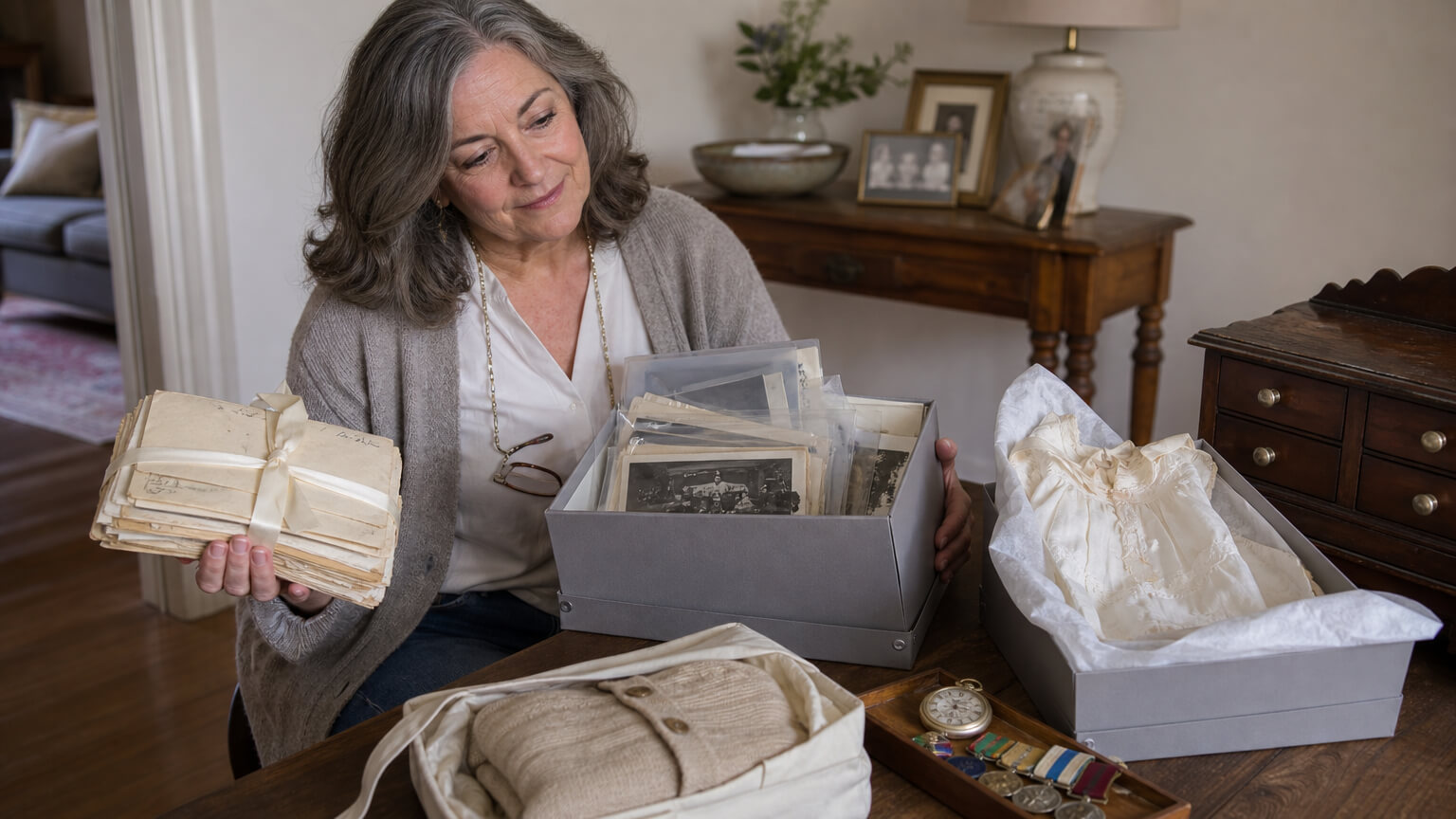
Wooden furniture. Clean the piece before it goes in. Polish or wax if appropriate to the finish. Wrap in breathable fabric: cotton dust sheets work well. Do not use plastic sheeting or bubble wrap directly against the wood; both trap moisture. Raise the legs off the floor on wooden blocks if you can manage it, to remove any ground-level damp risk. Disassemble where the joints allow, to reduce stress on the piece over a long hold.
Textiles, linens and upholstered pieces. Acid-free tissue is the standard for wrapping anything delicate; newspaper bleeds and degrades over time and will mark what it touches. Where possible, roll textiles rather than fold them to avoid crease lines setting permanently. Cover upholstered chairs and sofas with breathable cotton rather than plastic, for the same reason as the furniture.
Paper, photographs and documents. Archival boxes are better than standard cardboard, which off-gasses acids over time. Place boxes on shelving or raised off the floor. Do not store photographs in plastic sleeves or envelopes that can trap condensation. A sealed archival box on a shelf is a sensible minimum. If a document or photograph has particular value (a family archive, original papers), professional archival advice before storage is worth seeking from a local conservator or archivist.
China, glass, clocks and small objects. Wrap each piece individually. Pack plates and bowls upright rather than flat; they bear weight better that way. Label every box clearly, including an orientation arrow so no one places a heavy box on top upside down. For clocks, remove the pendulum and pack it separately from the clock body. Do not place heavy boxes on top of boxes containing china or glass.
How to store inherited furniture and heirlooms the right way
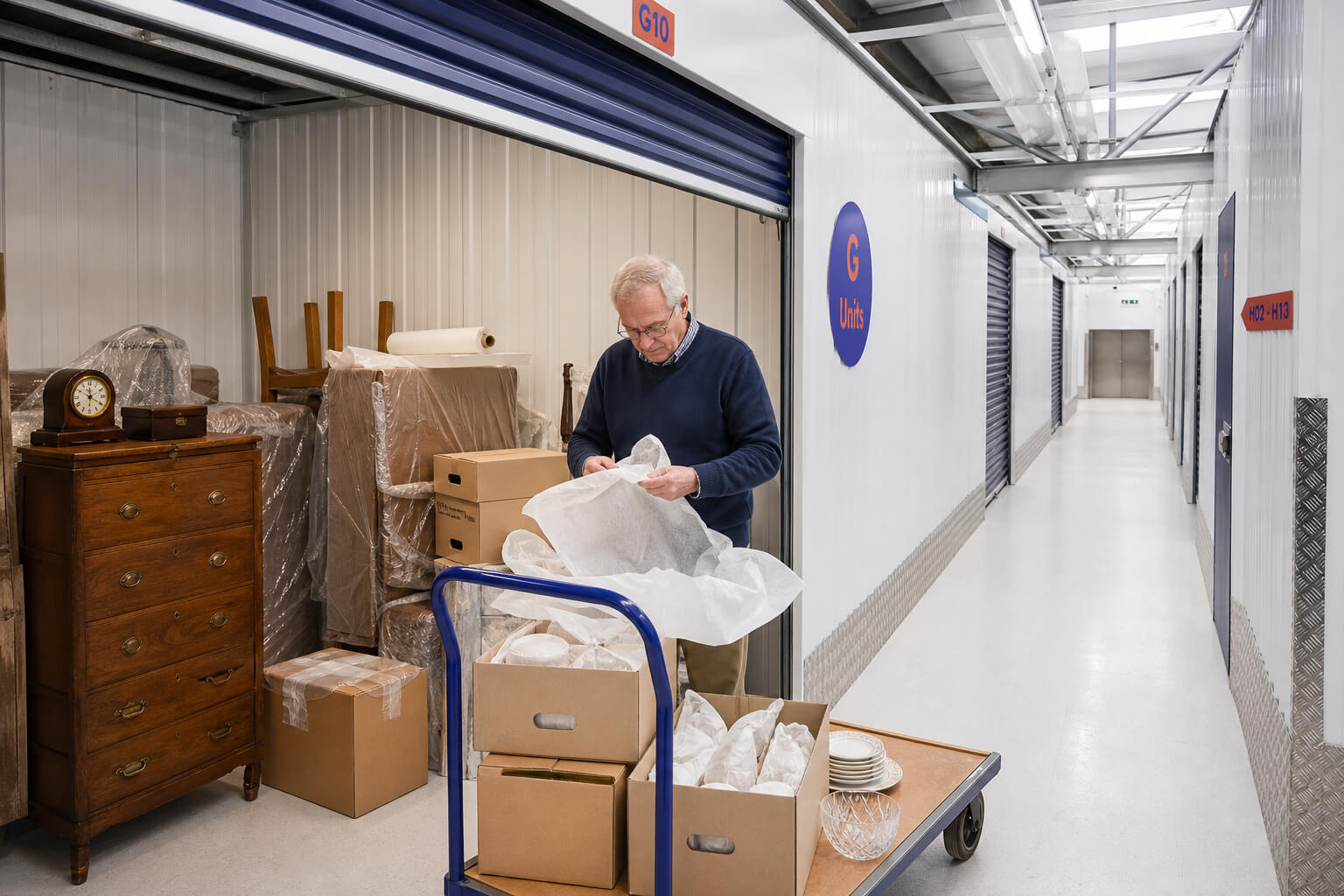
The way you pack and place items before the door closes matters more than most people realise. For a short-term move, average preparation is usually good enough. For a hold that may last years, these notes are worth following.
Wood: polish, raise off the floor, breathable covers not plastic
Start with a clean, dry piece. Polish or wax if the finish benefits from it. The goal is a surface that is not drawing in moisture. Wrap in cotton dust sheets; the piece needs to breathe. Raising the legs on blocks is a small effort that removes the risk of the legs sitting in any trace moisture that might accumulate on a concrete floor over years. Where joints allow, take the piece apart: a table with its legs removed is easier to store and puts no stress on the joints.
Textiles, linens and upholstery: acid-free tissue, not newspaper
The failure mode for stored textiles is damp and acid degradation. Acid-free tissue or clean cotton wrapping prevents the second. Cotton dust sheets on upholstered pieces prevent the first. Roll textiles rather than fold where the item allows it. If you fold, check the crease lines and re-fold at a different line after a year or so if you visit the unit. Newspaper is not a substitute for acid-free tissue; it contains lignin and acids that will transfer to fabric and paper given enough time.
Paper, photographs and documents: boxed and off the ground
The minimum for paper and photographs is an acid-free or archival box, sealed, placed on a shelf or raised off the floor. Photographs degrade when they are stored against each other without interleaving paper; acid-free tissue between prints prevents this. Do not use standard cardboard boxes for a multi-year hold; they off-gas acids and can attract pests. If the collection is significant, seek advice from a conservator before storage.
China, glass and clocks: padded, labelled, upright
Individual wrapping for each piece. Plates stored upright take their weight on the edge, which is structurally stronger than lying flat. Boxes containing china should be labelled clearly with what is inside and which side faces up. Clocks should have the pendulum removed; the movement can be padded inside the clock body with soft cloth. Heavy boxes should never be stacked on top of boxes containing breakable items.
What size unit do you need for furniture and heirlooms
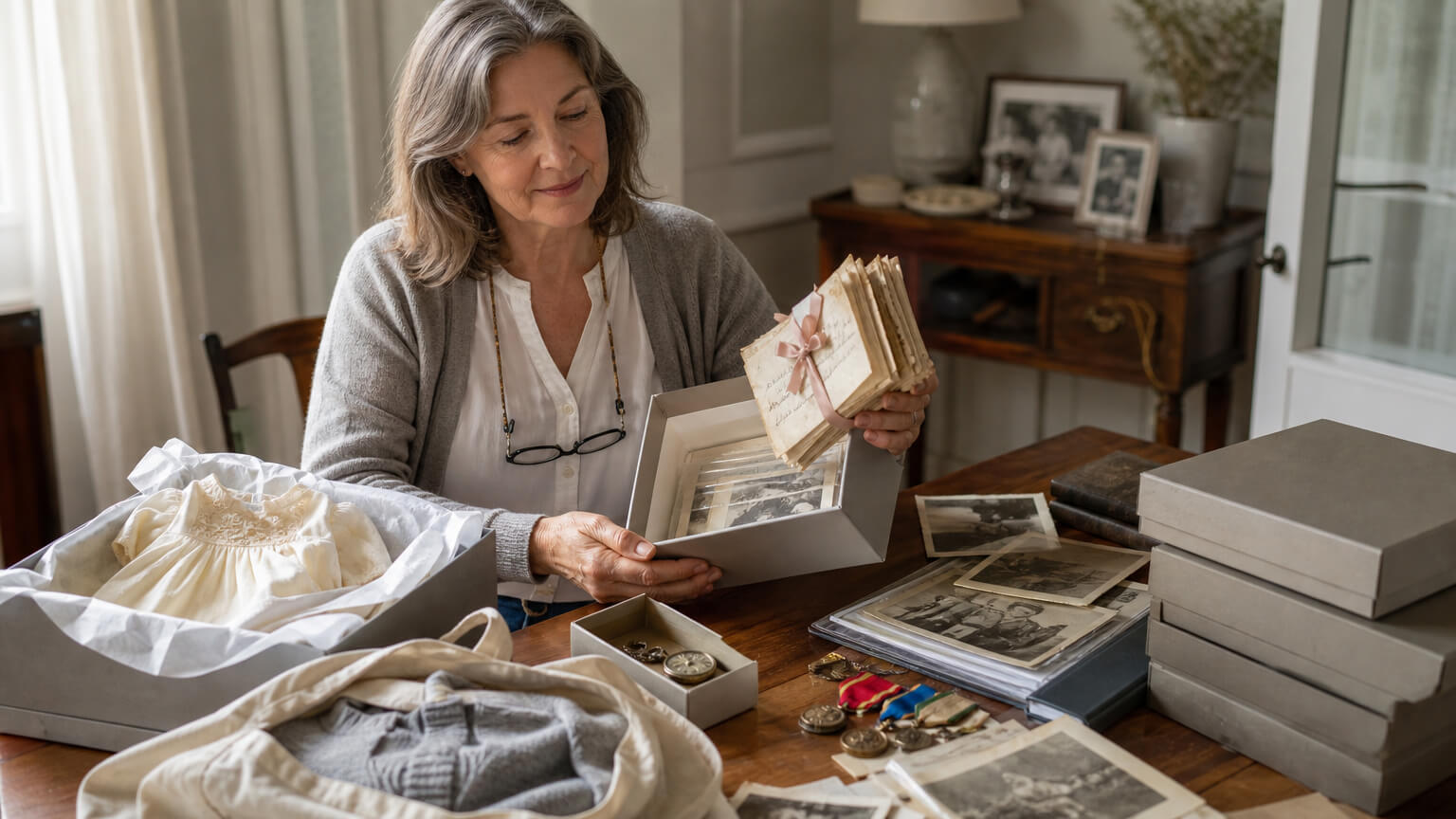
The most common question at the inquiry stage is a practical one: how much space does a dining table and a few boxes actually take up? Here is a rough guide to help you plan.
A rough guide from a few pieces to a full room
A small collection, a few boxes of china, photographs, documents and linens, will fit in a small unit. If you are adding a couple of chairs or a small occasional table, you are looking at a slightly larger space. A dining table, a set of chairs, a dresser, and associated boxes of heirlooms typically fills a mid-range unit. A full room’s worth of furniture, the kind of complete contents that accumulates over a lifetime in one house, needs a larger unit, and packing it efficiently (using the vertical space, stacking sensibly) makes a real difference.
These are rough guides. For current unit sizes and costs, the pricing page will give you the specifics by location. If you are unsure how your particular collection translates into floor space, a quote through quote.wigwamstorage.co.uk will let you describe what you have and get a recommendation.
What long-term storage actually costs over years

Long-term storage cost is worth thinking about in years rather than months. The monthly figure is steady; what matters is that it does not change unexpectedly and that the exit is fair.
Keeping multi-year storage affordable and predictable
The structure of self storage pricing is monthly, and at Wigwam it is not a long fixed-term contract. You pay month to month. The notice period is fourteen days, so the maximum you pay beyond the day you decide to leave is two weeks. That is as close to a fair exit as monthly storage gets.
No prices are quoted here because they vary by unit size and location. The pricing page has current rates by town. The framing that helps with multi-year thinking is this: you are paying a monthly overhead to hold the family story intact until the next generation can receive it. That overhead is transparent, it does not escalate with someone else’s goodwill, and it ends cleanly when the time is right.
No deposit, the 14-day notice and how exit works
There is no deposit when you start your rental. When you are ready to leave, you give fourteen days’ notice. Once you have vacated the unit and the account is settled, that is the end of it. If you leave before the end of a paid period, unused days are refunded, less anything owed.
For a hold that might last anywhere from two to fifteen years with an uncertain end date, that fairness at exit is not a small thing. The full terms are at wigwamstorage.co.uk/terms-conditions/.
Ready to find out what a unit would cost for your situation? Get a quote at quote.wigwamstorage.co.uk. No obligation, and the team can help match unit size to what you have.
Keeping your heirlooms secure

Every unit at Wigwam is alarmed individually. That is not a detail; it is the reason your unit is protected on its own rather than as part of an undifferentiated shared building. If someone were to interfere with another unit, yours remains independently alarmed.
Individually alarmed units, smart entry and your own padlock
Access to Wigwam sites is via smart entry, available from 6am to 10pm, seven days a week. Sites are unmanned; you access your own goods. You bring your own padlock for your unit. If you are expecting a delivery during a long hold, someone from your side needs to be present; the site team is not on hand to sign for or receive goods on your behalf.
This arrangement suits the custodianship situation well. You are not dependent on someone else’s availability to reach your unit. You can visit when it suits you, within the access hours, and the unit is yours alone.
Contents cover for stored heirlooms: what to think about
Contents cover is mandatory at Wigwam. When you take out a unit, you either enrol in the RSA Self Storage Customers’ Goods policy or provide proof of equivalent cover from your own insurer.
The key points to understand before you choose:
- Cover is on a New-for-Old basis.
- There is a GBP 50 excess.
- You must declare the full replacement value of what you are storing. If you declare less than the full value and make a claim, any settlement is proportional to the proportion you declared.
- Theft is covered where there is evidence of forced entry.
- Atmospheric and climatic damage is excluded from the policy.
For heirlooms with significant sentimental or monetary value, it is worth looking carefully at the declared value. Underinsurance is the most common point of difficulty at claim stage.
For full details of the contents protection available through Wigwam, see the contents protection page. This page gives information only; it is not insurance advice. For advice on whether your own policy covers stored goods to their full replacement value, speak to your insurer directly.
A note on jurisdiction. Contents insurance settlement and policy exclusions are matters for your policy provider. If the heirlooms you are storing have been inherited as part of an estate, legal questions about ownership, valuation or inheritance should be directed to a solicitor. Estate and inheritance law in Scotland and Northern Ireland differs in some respects from the law in England and Wales. If you are in any doubt about the legal position of items you are holding in trust, seek advice from a solicitor who practises in your jurisdiction.
Long-term storage in your market town
Wigwam’s UK market-town locations are within reach of the kinds of communities where families actually live. Not a city industrial estate, not a motorway-side national shed, but a town you know, close enough to visit without planning an expedition.
Wigwam Self Storage Bath and Wigwam Self Storage Lincoln are two verified examples among our UK market-town locations. For the full list of where we operate, the locations page will show you the nearest site to you.
The person behind Wigwam is Simon Fothergill, the managing director, and the team are local people who understand what it means to hold a family’s history rather than shift boxes. That is not a claim a national shed can make credibly. We can.
Find your nearest Wigwam location and get a quote. Visit quote.wigwamstorage.co.uk to tell us what you have, where you are, and when you need to start. We will do the rest.
Frequently Asked Questions
Visit it. A check every few months is the single most useful habit for a multi-year hold, and it costs you nothing but an hour. Smart entry runs from 6am to 10pm, seven days a week, so you can drop in whenever suits without booking or telling anyone. A short visit lets you do three things that protect the pieces. First, you can re-fold linens and textiles at a different crease line so the fold marks do not set permanently. Second, you can lift a corner of a dust sheet and check for any sign of damp, dust or pests, catching a small problem before it becomes a settled one. Third, you can confirm nothing has shifted or been stacked badly since your last visit, particularly boxes of china or glass under heavier loads. None of this is onerous. It is the long-hold equivalent of opening a window. If the unit is in your own market town rather than a depot forty minutes away, the visit is genuinely a quick errand rather than an expedition, which is part of why a local site suits a hold that may run five or ten years. Keep a short note of what you checked and when. Over a decade, that record is reassuring to whoever finally inherits the pieces, because it shows the family story was actively looked after, not simply parked.
This is the question families rarely ask out loud, and it deserves a plain answer. The storage account is a contract in your name, so on your death it becomes part of your estate, and your executor takes responsibility for it alongside everything else. The practical steps are straightforward: your executor keeps the account in good standing (the rent continues to be due) until they either transfer the rental into another family member’s name or clear the unit, giving the standard fourteen days’ notice. To make this easy on whoever is left, do two things now. Tell your executor and the intended grandchild that the unit exists, where it is, and what is in it. Keep your inventory and the storage paperwork somewhere they will find it. We can talk an executor through transferring or ending an account, but the legal questions, whether the heirlooms pass under your will, how they are valued for the estate, who has authority to act, are matters for a solicitor, not for us. We hold the goods securely and keep the terms fair. The ownership and inheritance side belongs with your solicitor. A unit that is documented and known about is a gift to your family at a hard moment; an unknown one is a puzzle.
In most cases, yes, and it is often the tidiest way to pass things on. Rather than you vacating the unit and the grandchild renting a fresh one, the rental can be transferred so the account moves into their name while the heirlooms stay exactly where they are. That saves a double move and means the pieces never sit unprotected in transit. The practical points are these: the grandchild becomes the account holder, which means they take on the rent, the contents cover requirement, and the smart entry access from that point. Contents cover must be in place in their name before the handover completes, either Wigwam’s RSA Self Storage Customers’ Goods policy or proof of their own. Any outstanding balance is reconciled as part of the changeover, and with no deposit on either account there is nothing to transfer. Speak to the team when you are ready and they will set out what they need to make the transfer cleanly; this is a storage and account matter they handle routinely. What they cannot do is advise on the inheritance side, whether the items are formally yours to give, or any tax position, which is a question for a solicitor. If the grandchild is taking the pieces into their own home rather than continuing to store them, you simply give fourteen days’ notice and vacate in the normal way once they have collected.
A small number are, and it is honest to name them rather than pretend a clean, dry unit suits everything. The pieces that genuinely need managed temperature and humidity are the archival exceptions: very old or fragile documents and manuscripts, certain early photographic processes, some fine art on paper, raw silk or other highly moisture-reactive textiles, and museum-grade items where a conservator has specifically advised controlled conditions. For the ordinary contents of a family home, dining tables, dressers, chairs, china, linens, framed pictures, a clean, dry and secure unit with the right preparation is a sound answer, because these things already lived through decades of ordinary British household conditions. The dividing line is value and fragility combined: if a single item is irreplaceable and known to be sensitive, treat it separately. For those few pieces, the sensible route is to take advice from a local conservator or archivist before storage, and either keep them in managed conditions elsewhere or pack them to a higher archival standard (acid-free materials, sealed archival boxes, silica gel where advised). You can store the bulk of the family pieces with us and handle the handful of true exceptions on specialist advice. Trying to make one unit serve both is where people get the balance wrong.
It can affect both, and it is worth getting ahead of rather than discovering at claim stage. On home insurance: once items leave your house, many home contents policies stop covering them, or only cover goods in storage for a limited period and up to a capped amount. That is precisely why contents cover at the unit is mandatory, you either take Wigwam’s RSA Self Storage Customers’ Goods policy or prove equivalent cover of your own. The point to grasp is that the two should not be assumed to overlap; check with your home insurer what, if anything, they still cover once the pieces are off the premises, and make sure the unit cover declares the full replacement value. Under-declaring leaves you settling proportionally on any claim, which is the most common difficulty families hit. On the estate side: heirlooms held in storage remain part of the owner’s estate and should appear in any probate valuation at their reasonable value, the same as if they sat in the house. Storing them off-site changes nothing about who owns them or how they are assessed. We give information only on the cover we offer and signpost the policy detail; we do not give insurance, legal or financial advice. For whether your home policy covers stored goods, ask your insurer. For valuation and inheritance questions, ask your solicitor.
Write it down, and write it down now while you are the one making the decision. A unit gives every piece one fair, neutral address, but it does not by itself record who is meant to receive what. The simplest safeguard is a clear inventory: list each item, where it came from, roughly what it is worth, and who it is intended for. Photograph the pieces and date the photographs. Keep that list with your will and tell your executor it exists. If specific heirlooms are promised to specific people, the cleanest way to make that binding is to name them in your will or in a letter of wishes alongside it, which is a conversation for your solicitor rather than for us. Keeping the inventory updated as things change protects everyone, because when the time comes nobody is relying on memory, and memory after a bereavement is notoriously unreliable. Storing the contents together in one documented unit also avoids the slow erosion that happens when pieces drift to different relatives’ houses “for safekeeping” and quietly become contested. Our part is the secure, equally accessible space and fair terms. The fairness between family members is built by the record you keep and the advice your solicitor gives, not by the unit alone.