How small a unit does a single term’s worth of stuff really need?
The pile on the bedroom floor looks bigger at the end of term than it ever did during it. Bedding rolled up and shoved against the wall. Boxes of books that felt essential in October. A kettle, a desk lamp, a monitor you dragged from home. Standing there with a van booked for the morning, it is hard to know whether all of it fits in a storage unit, whether you need one the size of a small room, or whether you are already worrying about nothing.
The honest answer is that most students need less space than they think. A single bedroom’s worth of belongings, packed well, fits into a unit that is smaller than a bathroom. And the smallest units will handle most of what a student leaves behind for the summer, unless a mattress or a bike is going in as well.
This page takes a real end-of-term bedroom, item by item, and shows you exactly what goes in and where the line sits.
What “Summer Storage” Actually Means in a Market Town

It is not a warehouse on an industrial estate at the edge of a motorway. Summer storage for a student is a unit you walk into, set your own padlock on, and leave. Clean, dry and secure space you control, accessed at a time that suits you, in a town that is near where you actually live or study.
How Long the Summer Really Runs, and the Two-Week Minimum
Most university summer breaks run from May or June through to September, and very few students need to store for that entire period. You might be away for eight weeks, or ten, or you might come home a fortnight early when the flat above yours floods and everyone moves out.
At Wigwam, the minimum stay is two weeks. If you come home earlier than planned, unused days are refunded. The bill matches the break, not a calendar month of empty air. That is worth knowing before you price anything, because it means you are not committing to a fixed season. You pay for the time you actually use.
Where Wigwam Fits: Market Towns Near Universities
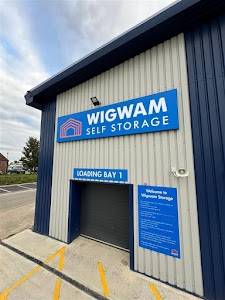
Wigwam is deliberately not an out-of-town industrial shed. Our UK market-town locations sit in the kind of town centres students already travel through, which means you are not hiring a van for a 40-minute drive just to drop things off.
Wigwam Self Storage Bath serves students from the University of Bath and Bath Spa. Wigwam Self Storage Lincoln covers the University of Lincoln in the centre of that city. You can see all our locations at the locations hub, with each one listed by town so you can check what is nearest to campus or to home.
What Fits in the Smallest Unit, Item by Item

Two suitcases. Four medium boxes. A duvet rolled into a bag, a pillow in a bin liner. A desk lamp. A kettle. A small monitor. A box of textbooks. That is the smallest Wigwam unit in a normal end-of-term clear-out, with room left over for a second kettle if your flatmate is being practical about it.
That is what fits. Now here is the detail.
The Student Packing List, Item by Item
Most students leaving a single bedroom are packing some version of the same list. The unit handles:
- Two medium suitcases or holdalls (standing upright or stacked)
- Four to six medium boxes (the kind you buy from a supermarket or a storage facility)
- Bedding: a rolled duvet, one or two pillows in bags
- A desk lamp and any small desk items that are not staying with you
- A kettle, a toaster or other small kitchen appliances
- A 24 to 27-inch monitor, if you did not bring it home in person
- A box of books or textbooks
- Small personal items in bags or totes, such as stationery, chargers, a bathroom kit
The key is packing vertically. Boxes stack. Soft bags compress. A well-packed unit holds considerably more than a haphazardly filled one.
The units are clean, dry and secure, with individual alarms. They are the right environment for clothes, books, small electronics and household goods. They are not climate-controlled in the technical sense, so if you are concerned about very sensitive equipment, that is worth thinking through separately, but the standard end-of-term kit, clothes, bedding, books, kitchen gear, stores well without any additional concern.
A Footprint You Can Picture, Without Calling It a Shed
The industry tends to describe storage units as “a wardrobe” or “a garden shed,” which does not tell you much about what goes inside them. A more useful way to picture the smallest unit is the floor area of a standard bath. Roughly that long, roughly that wide, and you stack things into it from floor to ceiling.
That footprint holds everything in the list above with room to move. If you are bringing in anything longer than a standard suitcase, such as a flat-pack shelf unit still in the box, think about whether it stands upright or needs to lie flat, because that affects how much floor space it takes.
The One Item That Changes Everything: The Mattress Question
A mattress is the single item that pushes most students out of the smallest unit. A single mattress is typically around 190 cm long and 90 cm wide. It can stand on its side in a unit, but it takes up the full length of the wall, which immediately limits what else fits alongside it.
If a mattress is going in, size up. There is no point squeezing it into a unit that is technically too small and spending the summer worrying about whether it is damp against the wall. A unit with a slightly larger footprint keeps the mattress upright, clear of the walls, and leaves you room to stack boxes beside it comfortably.
A bicycle is a different matter. A bike fits into a larger smallest unit or a small unit without too much difficulty if you remove the front wheel and turn the handlebars. If a mattress and a bike are both going in, take the small unit.
The Size Ladder: Smallest Unit to Whole Shared House

There are three levels most students land on, and the difference between them is usually one or two large items.
The Locker or Smallest Unit: A Few Boxes and Soft Bags
The smallest unit is for the student who has already shipped most things home, or who only has a handful of items that will not fit in the car. Think three or four boxes, one suitcase, a rolled sleeping bag, a bag of electrical cables. If your bedroom is already mostly clear and you just need a place for the last few things, this is the level.
It is also the right level for a student in a catered hall who does not accumulate much in the way of kitchen gear or furniture, and who is only storing personal items over the break.
The Small Unit: One Full Bedroom, the Student Standard
This is the level most students book. A single room at the end of term, cleared properly and packed into boxes, fills a small unit without stretching it. You get everything listed in the packing section above, plus a little more, and it is comfortably accessible without having to unstack everything each time you visit.
If you are a first-year student who has been given furniture by the halls and is returning to furnished accommodation in September, the small unit is almost certainly the right call.
When to Size Up: Furniture, a Mattress, a Bike, or a Shared-House Clear-Out
Size up when any of the following are true:
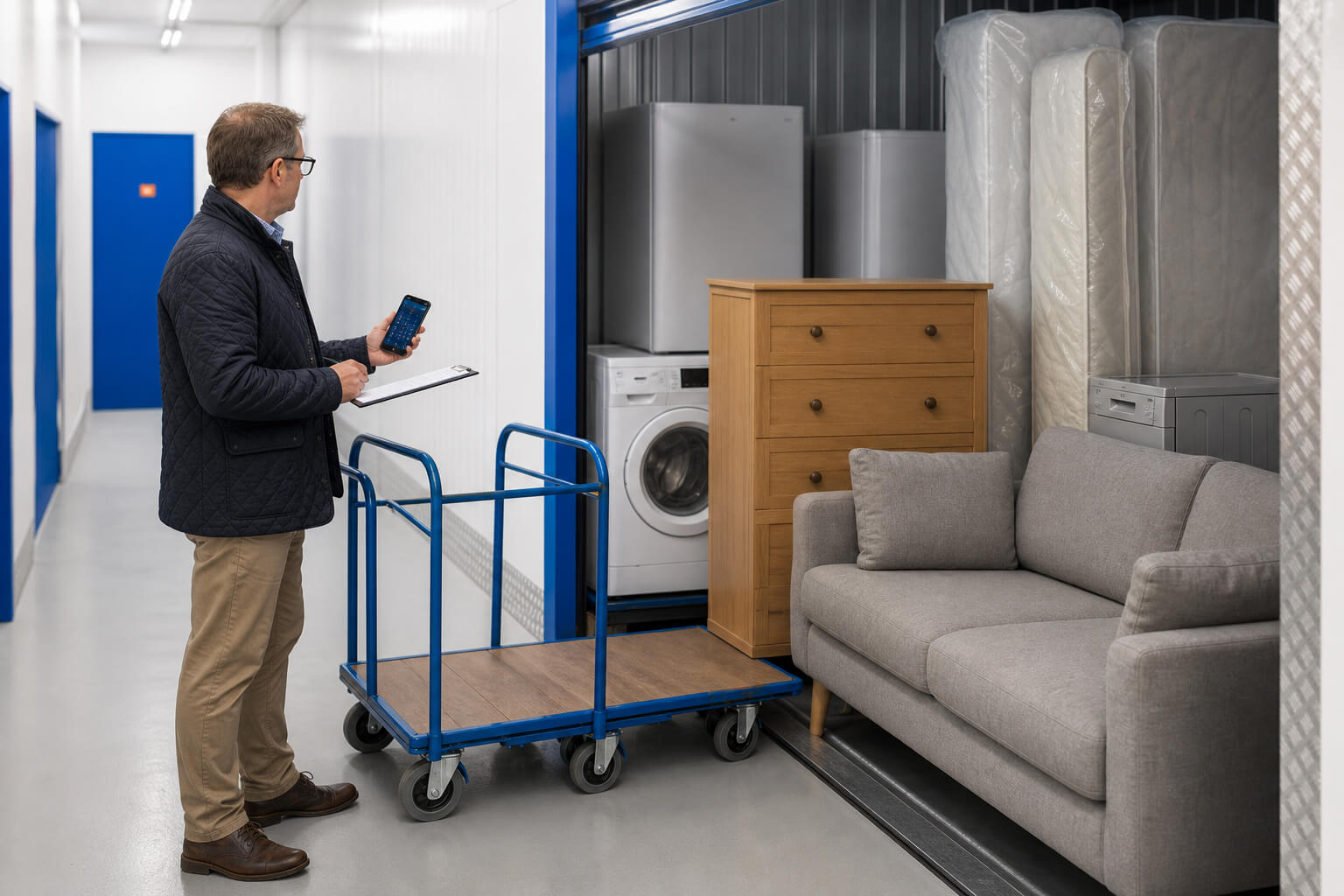
- A mattress is going in
- You have a desk, chest of drawers, or any flat-pack furniture that belongs to you
- A bike is going in alongside more than a couple of boxes
- Two or more students from a shared house are combining their belongings into one unit
On that last point: splitting a unit with flatmates is worth thinking about. More on that below.
What It Actually Costs Over a Summer

The cheapest summer is not the one with the lowest price per square foot. It is the one where you do not pay for a unit full of empty air because you booked one size too large in a panic.
Why Right-Sizing Is the Real Saving
The combination of a two-week minimum and unused-days refund means you only pay for what you use, down to the day. If you book a unit from the end of May and come home from a summer job in late July rather than September, you give your 14-day notice and stop paying when you vacate. You are not locked into a three-month summer contract.
That makes right-sizing the primary cost lever. Getting the size right matters more than finding a facility with marginally lower weekly rates, because a unit that is one size too large adds to the cost every single week.
See current rates and size options on the pricing reference page.
Ready to find the right size in your market town? Get a quote in a few minutes at quote.wigwamstorage.co.uk. Tell us what you are storing and we will show you the right unit for it.
Splitting One Unit with Flatmates
If two or three students from the same shared house are all storing roughly the same amount, it is worth doing the maths on splitting a larger unit rather than booking three separate small ones.
The practical consideration is access. You all need to be comfortable with whoever has the code or the padlock key being able to access the unit independently. For flatmates who trust each other, splitting is often cheaper than booking separately. For flatmates who are only loosely connected, individual units are cleaner.
There is no specific group discount to claim here; the saving comes from the fact that a unit twice the size of a small unit costs less than two small units. Check the sizes on the pricing page and compare against what you would each book individually.
How Summer Storage Works at Wigwam, Plainly

Most storage pages bury this in the terms. We will say it here, clearly.
No Deposit, the Notice Period, and What You Get Back
There is no deposit when you book. When you are ready to vacate, you give 14 days’ notice. Once you have moved out and your account is settled, any days you paid for but did not use are refunded, less anything owed.
That is the honest version. No surprises at the end. The full terms are at wigwamstorage.co.uk/terms-conditions.
Access Hours and How the Smart Entry Works
You access your unit using smart entry, which is available seven days a week from 6am to 10pm. There is no 24-hour access; those are the actual hours. If you need to get something out at 9am on a Saturday before a family event, that is fine. If you need to get in at midnight, that is not how this works.
The sites are unmanned. You access your own unit; there is no member of staff on site to unlock anything for you. If you are expecting a delivery or a courier at the unit, someone from your own household needs to be present to receive it. Wigwam does not sign for couriers or accept deliveries on your behalf.
Contents Cover, Signposted Plainly
Contents cover is a condition of storage. You can take Wigwam’s contents protection policy or demonstrate that you already have your own adequate cover. Either way, you need to declare the full replacement value of what you are storing. If you under-declare, any claim is settled proportionally, which means you bear part of the cost yourself.
For the details of what the policy covers and how to set up cover, see the contents protection page. This is signposting, not advice; for anything specific to your situation, speak to your insurer.
Storing Near Your University or Market Town

Storage near campus or storage near home? Both work, and the answer usually comes down to how you are getting things there.
If you have a car and are driving home anyway, the nearest location to your home address is simplest. You drop the unit off on the way past and collect in September when you drive back. If you do not have a car and are relying on a hired van for a single day, picking a location close to your term-time address cuts the loading time and the mileage.
Wigwam Self Storage Bath is central enough for students at both Bath universities to use without a long drive. Wigwam Self Storage Lincoln is in the city centre, close to the University of Lincoln campus. For students in Reading (Berkshire), Cheltenham (Gloucestershire) and other market towns with a Wigwam presence, the full list is at the locations hub.
The market-town model means you are not factoring in a 40-minute drive to an industrial park before you even start loading.
Self Storage vs By-the-Box: An Honest Comparison
By-the-box storage has its place. This is the honest version of when each one makes sense, without overselling either.
When By-the-Box Works, and When It Does Not
A by-the-box service sends you boxes, you pack them, they collect them and store them in a warehouse. It can work well if you have a small number of items, no furniture, and no plans to access anything until September. You do not need to hire a van, and you do not need to think about what fits in a unit because someone else handles the loading.
It becomes less useful when you have more than six to eight boxes, when furniture is involved, or when you might want to retrieve something mid-summer. By-the-box services typically require you to book a collection slot to get anything back, which is fine in theory but less convenient if you discover in July that your summer job requires a suit that is at the bottom of box number three.
The Access Question: Why Mid-Summer Retrieval Changes the Maths
With Wigwam, you access your unit from 6am to 10pm, seven days. If you want to collect a specific item mid-summer, you drive over, open the unit, take what you need, and leave. No booking, no collection slot, no waiting. That flexibility is the meaningful difference when you are comparing self storage to a by-the-box service.
If you know with certainty that you will not need anything until September and your belongings are compact enough to fit in a handful of boxes, by-the-box is a reasonable option. If there is any chance you will need access, or if the volume is larger than a van boot, self storage is the more practical call.
Ready to Find the Right Size Near You?
You now know what fits, where the line sits, and how the terms work. The next step is a quote for the right unit size in your market town.
Wigwam units are clean, dry and secure. There is a two-week minimum stay, unused days are refunded once you vacate and your account is settled, and there is no deposit. Smart entry is available from 6am to 10pm, seven days a week.
See sizes and indicative pricing at the pricing reference page, find your nearest location at the locations hub, and get a quote at quote.wigwamstorage.co.uk.
Frequently Asked Questions
Pack it like a wall, heaviest and sturdiest at the bottom and back, lightest and most fragile on top and at the front. The smallest unit rewards vertical thinking: floor space is fixed, but you have height to use, and a well-stacked unit holds far more than a heap. Start with the boxes you will not need until September against the back wall, stacked book-boxes lowest because they are the heaviest and most stable. Build upward in even tiers so nothing leans. Soft items earn their place by filling gaps: a bagged duvet or pillows can go on top of a box stack or wedged down the side to stop things shifting. Keep anything you might want mid-summer, a textbook, a suit, a charger, in a clearly labelled box right at the front where you can reach it without unstacking. A few rules save grief: do not put a heavy box on top of one holding a monitor or kettle; label box tops so you are not opening everything to find one thing; and leave a narrow channel to the front if you can, so a mid-summer visit does not mean unloading the whole unit. The point of right-sizing is undermined if you pack badly, a small unit packed well beats a medium unit packed loose, and it costs you less every week too.
Yes, for ordinary clothes and bedding it is, provided you pack them dry and off bare contact with the floor. The units are clean, dry and secure, which is the honest claim, there is no climate control, meaning no managed temperature or humidity, but a British summer in a dry, secure unit is well within what cotton, bedding and books cope with. The risks worth managing are simple ones. Pack everything bone dry; a damp towel or a duvet bagged before it fully aired is what causes a musty smell, not the unit. Use breathable storage where you can: clothes in fabric bags or boxes rather than sealed plastic that can trap moisture against the fabric. If you are stacking bedding, keep the lowest layer up off the concrete on a pallet, a box, or even a couple of timber offcuts, which removes any ground-level contact. For a summer hold, that is plenty. What the units are not is an archive for genuinely sensitive items, a fragile instrument, irreplaceable old documents, anything that actively needs fixed humidity, but a student’s clothes, bedding, books and kitchen kit are nowhere near that threshold. If you want belt-and-braces, a couple of silica gel sachets in a clothes box cost almost nothing and absorb any stray moisture. The honest summary: dry in, dry out, no special measures needed for the standard end-of-term kit.
One person holds the contract and is responsible for the account; everyone else who needs in must have their own smart entry access set up. That single fact shapes everything else. The named account holder carries the rental, the payments, the notice period, and the contents cover requirement, no matter how you divide the cost between yourselves privately. So the first decision is whose name it goes under, and that person should understand they are the one on the hook if a flatmate stops chipping in. Access is the second decision. The unit is yours alone, nobody outside your group can get in, but within the group, anyone who needs to come and go independently should have access arranged at the outset rather than relying on sharing a single padlock key and coordinating in person. For flatmates who genuinely trust each other and are storing similar amounts, splitting one larger unit is usually cheaper than booking separate small ones, because a unit twice the size of a small one costs less than two small units. For flatmates who are only loosely connected, separate units are cleaner and avoid awkwardness over who took what. We cannot mediate the arrangement between you, so agree the basics in writing first: whose name it is in, how you split the cost, and what happens if someone leaves early. The terms set out how access and the account work; read them before booking.
It is far better to size it right at the quote stage than to bank on switching on moving day, because a bigger unit being free at that exact moment at that exact site is not guaranteed. Availability moves with demand, especially over the summer when student bookings cluster, so the smallest unit you book might be the only thing free if you arrive and find you have under-ordered. The sensible approach is to estimate honestly before you book: count the boxes, decide whether a mattress or bike is going in (the mattress is the item that most often pushes a student up a size), and whether any flat-pack furniture is coming. If you genuinely cannot tell, book slightly larger rather than smaller, the worst outcome on the day is a unit that will not hold everything and a van still half full. Because unused days are refunded and there is only a two-week minimum, sizing up slightly does not lock you into a long commitment, you simply pay for the space while you use it. If after moving in you find you have over-ordered and want to drop to something smaller and cheaper, raise it with the team at your branch; whether a smaller unit is available there and then determines what is possible. The cleanest path remains getting the size right first time, and the quote process will give you a size recommendation if you tell it what you are storing.
The honest answer is that it varies by town and by current rates, so the figure comes from the quote rather than this page, but the way to think about it is per-week, multiplied across the whole break. A unit one size larger adds its difference every single week you hold it, so over a ten-week summer a small weekly gap becomes a meaningful sum. That is precisely why right-sizing, not chasing the lowest headline rate, is the real saving. The trap students fall into is panic-booking a size too large “to be safe,” then paying for empty air for the entire summer. The opposite trap is squeezing into something too small and either failing to fit a mattress or risking a cramped, badly packed unit. Get the size honest and you spend the least. A few levers genuinely lower your cost: pack vertically so you need less footprint; split a larger unit with flatmates if you trust each other, since one shared unit beats two separate small ones; and end early if you come home before September, because unused days are refunded once you give fourteen-day notice and vacate. There is no specific student or NUS discount to claim, and no group rate, the saving is structural, from sizing correctly and only paying for the time you use. To compare the two sizes for your town, check the pricing reference page for current rates and run a quote, which will price both against what you are actually storing.
It comes down to how you are transporting things and where the loaded trip starts and ends. The principle is to store wherever cuts the most driving on both the June clear-out and the September return, not wherever feels closest in the abstract. If you have a car and are driving home for the summer anyway, the location nearest your home address is usually simplest: you drop the unit off on the way past and collect on the way back. If you do not have a car and are relying on a hired van for a single day, picking the site closest to your term-time address cuts the loading time and the mileage on that one expensive day. The mistake to avoid is storing on the far side of the university town from where you load, which adds a leg to every trip. Because Wigwam is a market-town operation, the nearest site may be in a town a short hop from campus rather than in the city centre, which can actually be more convenient than an out-of-town industrial park you would otherwise face a long drive to reach. Check the locations hub against both your term-time and home addresses and pick the one that makes the loaded journey shortest. If neither is genuinely close, weigh the storage cost against simply taking everything home, and get a quote so you are comparing real numbers rather than guesses.