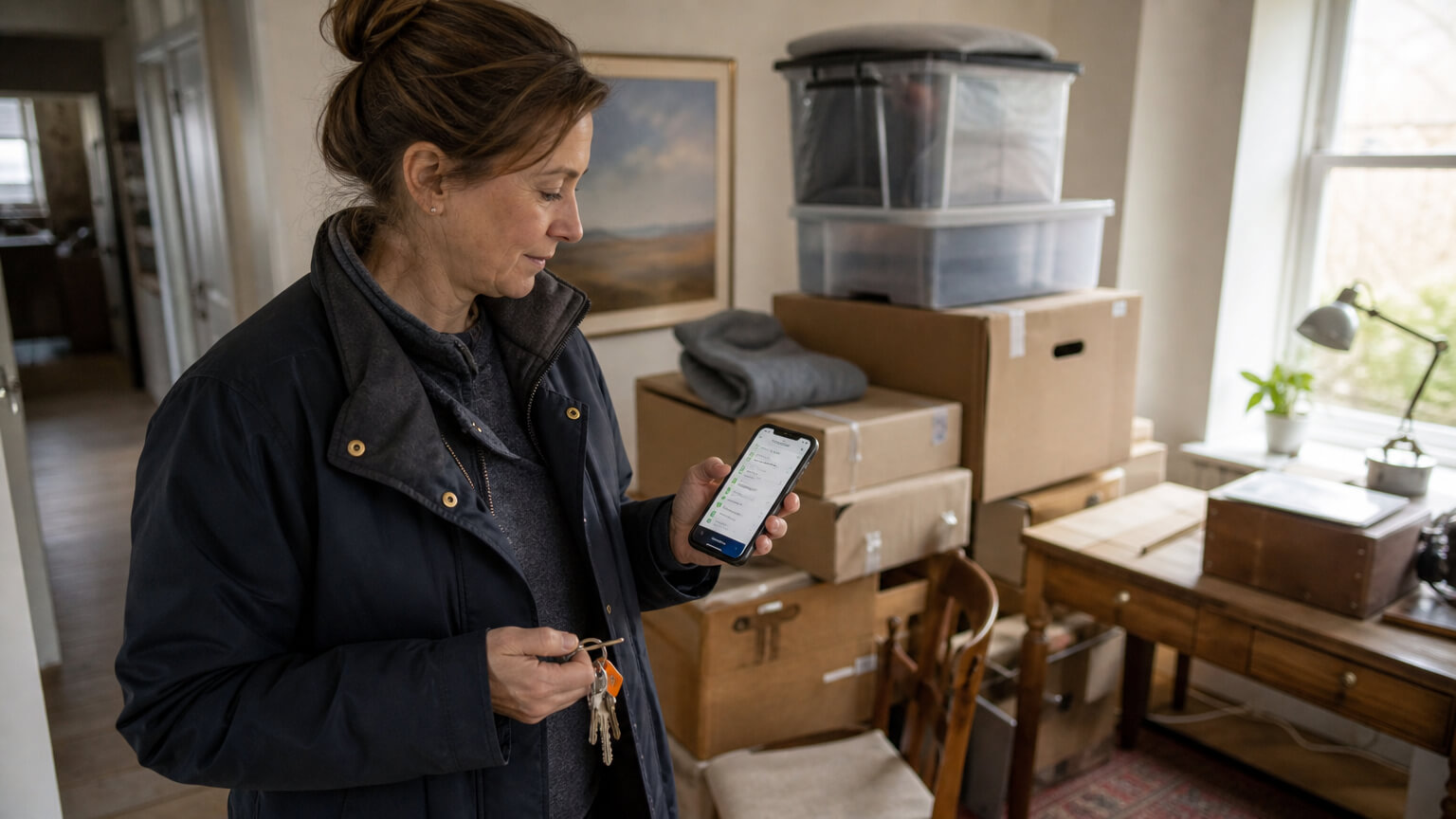
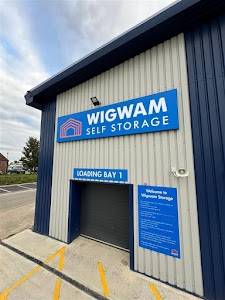
Ever wonder why the storage chains built everywhere but your town?

There is a pattern to where the big storage chains build. Same as where the big supermarkets build, really. Same as where the big anything builds. They find a city ring-road, somewhere the land was cheap and the traffic already passes, and they put up a large sign. The towns a few miles inland do not feature in that calculation. They rarely do.

Whole communities get used to the drive. Forty minutes there, forty minutes back, van loaded, weather unpredictable, delivery window already missed. It is not that nobody wants storage. It is that nobody thought the town worth serving.

That is the gap Wigwam was built to fill. And this is how it happened.

The towns nobody built for

The storage industry, for all its growth, has followed the same logic as most logistics businesses: concentrate where the volume is highest and the build costs are lowest. That tends to mean city fringes, motorway junctions and distribution corridors. It does not tend to mean Warminster, Wiltshire. It does not tend to mean Tewkesbury, Gloucestershire, or Bromsgrove, Worcestershire, or the dozens of other market towns where people live, work, start businesses, downsize, renovate and move home, exactly as they do anywhere else.

Where the chains cluster, and where they do not

The self-storage landscape in the UK is more developed than most people realise. There are hundreds of facilities, operated by a mix of national brands and regional independents. But their geography tells a story. Cluster them on a map and the same shapes keep appearing: orbital routes around London, the M6 and M62 corridors, the edges of Birmingham, Manchester and Leeds. The market towns between those points are, in most cases, a gap.

For the person arriving in one of those towns, that gap has a real cost. Not a statistical cost. A Tuesday-morning-with-a-van cost. You search, you find the nearest chain, you discover it is thirty-five minutes away in a direction you did not want to go. You book it anyway, because there is nothing else obvious. You do the journey every time you need your things. You wonder whether there is a better answer.

What a long drive to a storage unit actually costs you

Time is the obvious one. If you are mid-move, mid-renovation, or running a local business that needs access to stock, an out-of-town unit is a job in itself. Every visit is a half-morning. Every forgotten item is a round trip. The inconvenience does not make headlines, but it is real.

Beyond time, there is the question of belonging. Part of choosing to live or trade in a market town is the sense of knowing the businesses there, of being a customer rather than an account number. A unit thirty miles away, operated by a brand that has no presence in your town, cannot offer that. It is just a shed you happen to use, managed by people who do not know where you live.

Why Simon Fothergill built Wigwam the other way round

Simon Fothergill, founder and Managing Director of Wigwam Self Storage, made a deliberate decision. Not the decision the industry defaults to, which is to build where the build costs are lowest and the volume is already there. The other decision: to build in the towns the chains drove past, and to put his name on every door.

That decision is not a marketing position. It is the business. Every site Wigwam operates is in a place that the national operators had, at that point, largely left alone. And the terms Wigwam operates under, the deposit that comes back to you, the notice period stated plainly, the hours that are what they say they are, exist because a named person decided that is how it should work.

A name on every door, in towns we know

In a market town, the name on a business door carries weight. It means someone made a choice to be there. Not a property portfolio choice or a logistics optimisation choice: a choice about which places deserved to be served. When you see a local business name rather than a national logo, you can, in principle, find the person behind it. You can look them up. You can ask questions and expect someone who knows the answer.

Wigwam Self Storage was built on that principle. Simon Fothergill’s name is not on a website footer for brand purposes. It is on the record because this is his deliberate work, and the terms and standards at every location are his responsibility.

The towns we chose, and why

The Wigwam network covers UK market towns that most national operators have passed over. Wigwam Self Storage Bath in Somerset and Wigwam Self Storage Lincoln in Lincolnshire are two of them. Beyond those, our UK market-town locations include Burton upon Trent in Staffordshire, Cheltenham in Gloucestershire, Warminster in Wiltshire, Tewkesbury in Gloucestershire, Dorking in Surrey, Bromsgrove in Worcestershire, Leatherhead in Surrey, Marlow in Buckinghamshire, and others. The full list is at the locations hub.

These are not accidental choices. They are towns where people needed a storage option and there was not a good one. That is the starting point each time.

What “serving a town properly” means in practice

Choosing the town is one thing. What you build there is another. At each of our UK market-town locations the units are clean, dry and secure, individually alarmed. The access is by smart entry, with stated hours. The terms are written plainly and the same at every site. This is not the only way to run a storage business, but it is how Wigwam runs one, and the consistency matters. You should not have to wonder whether the Lincoln site works like the Bath site. It does.

What a Wigwam unit actually looks like

Before anyone commits to a unit, they want to know what they are actually getting. That is a fair question and it deserves a plain answer.

Clean, dry and secure, individually alarmed

The standard phrase we use is clean, dry and secure, individually alarmed units. Those words are chosen carefully. Each unit has its own alarm, not a shared perimeter system. The buildings are maintained to the standard that keeps stored goods in the condition they went in. Temperature and humidity control are not things we offer or claim; if a stored item requires a precisely managed climate environment, we are not the right answer for it.

What we do offer is what the phrase says: clean, dry, secure and individually alarmed. For household goods, business stock, furniture, documents, tools and the usual contents of a home or a small business, that is the standard that matters.

How access works (6am to 10pm, smart entry)

Smart entry, 6am to 10pm, seven days a week. That is the access window at our UK market-town locations.

We know that some competitors state or imply 24-hour access. We will not. We are not open at 3am and we will not tell you we are, because the moment a claim like that turns out not to be true, it costs you something real. We would rather state the hours plainly and let you plan around them. If you can work within a 6am to 10pm window, seven days, you will find it sufficient for most practical needs. If you cannot, that is worth knowing before you book.

The honesty about hours is the same honesty as the rest of the terms. If we are straight about when you can get in, you can trust what else we say.

What we do not do, and why that matters

Some things are worth stating directly rather than leaving to be discovered.

We do not offer climate-controlled storage. No temperature regulation, no humidity management. Our claim is clean, dry and secure, and that is accurate.

We do not offer vehicle storage. No cars, caravans, motorhomes, boats or similar. Our units are for household goods and business goods.

Our sites are unmanned. You access your own unit using your own smart-entry code. We do not have staff on site who can sign for parcels, receive deliveries, or handle goods on your behalf. If a courier needs to deliver to or collect from your unit, someone from your own business or household needs to be present. Wigwam does not receive or sign for anything.

These are not apologies. They are the edges of what we do, stated so you know them before you commit, not after.

See what is available in your town. Check unit sizes and availability at quote.wigwamstorage.co.uk. No pressure to book; just an honest look at what is there.

Honest terms, plainly stated

The self-storage category has a convention. Competitors tend to lead with “no deposit, no reservation fee, no notice period” because it sounds like the simplest possible thing. We do not lead with that, because it is not true of us, and we would rather tell you what is true.

Your deposit comes back to you

There is a deposit. We will say that plainly. When you take a Wigwam unit, a deposit is paid at the start.

Here is the equally plain thing: it comes back to you. The deposit is refundable. When you give 14 days’ notice, vacate the unit, and settle any outstanding balance on your account, the deposit is returned. The conditions for its return are not buried in fine print designed to catch you out; they are stated in the terms and conditions and they are straightforward.

A deposit that comes back is proof that the terms run in both directions. You are not being asked to hand over money to a business that has no intention of returning it. The money is yours; we are holding it for the duration of your stay, and it comes back when the stay ends properly. That is fair dealing, and it is a different claim to the “no deposit” headline, which in practice sometimes means something more complicated than it first sounds.

Two-week minimum, 14-day notice, and the days you don’t use

The minimum stay is two weeks. That is the minimum period you commit to when you take a unit.

When you are ready to leave, 14 days’ notice is required. That is the notice period, and it is the same at every Wigwam location.

If you leave before the end of a billing period, you are refunded for the days you did not use. You pay for what you used. Not for the time on a calendar that you had already vacated.

Each of these terms is a thing you know before you sign. There are no surprises at the end. The pricing reference page at wigwamstorage.co.uk/how-much-is-self-storage-in-the-uk covers the cost structure in more detail; no prices are quoted on this page because they vary by location and unit size, and the quote tool gives you the accurate figure for your town.

Contents cover: your goods, properly protected

Contents cover is mandatory at Wigwam. You either take out Wigwam’s contents-protection policy or you provide evidence of your own equivalent cover. That is not optional.

The Wigwam policy is the RSA “Self Storage Customers’ Goods” arrangement. If you take it, you declare the full replacement value of what you are storing. Under-insurance is settled in proportion, so it is important to declare accurately. For theft claims, forced entry is required. Climatic damage is excluded.

We are not insurers and we are not giving insurance advice here. The details of the contents-protection option are at wigwamstorage.co.uk/contents-protection/, and if you have specific questions about whether your own cover is sufficient, your insurer is the right person to ask.

A note on jurisdiction: the contents-protection arrangements described here apply to England and Wales. If you are storing goods in Scotland or Northern Ireland, legal frameworks and terms may differ. For legal questions specific to your situation or jurisdiction, please consult your solicitor or insurer.

Who uses a market-town unit

Storage is not only for people in crisis. Most of the people using our UK market-town locations are in ordinary transitions: moving home, creating space, running a small business sensibly.

Movers and people between homes

The most common use is the simplest. You are moving in, moving on, or waiting for a chain to complete. The house is sold but the new one is not ready. The flat sale came through faster than expected. You need somewhere secure and local to put your furniture, your boxes, your things, while the timing sorts itself out.

A unit in your own town means the transition does not require a long drive every time you need something. Household goods, furniture, books, kitchen equipment, the contents of a home: these are what the units are for.

Local traders and small businesses

A number of our customers are local traders or small business owners who need storage for stock, tools or equipment close to where they work.

The permitted use is storage of goods. That is the boundary worth stating clearly. Sites are unmanned, which means there is no business-premises function: no trading on site, no workshop use, no customer visits to the unit. For deliveries and collections, someone from your own business must be present; Wigwam does not sign for or receive goods on your behalf.

Within those terms, a unit in your own town, for your own stock, is a practical and fair arrangement. Local access, local terms, a location you can reach without planning your morning around it. For many sole-traders and small business owners, that is exactly what they need. If you want to explore the cost, the pricing reference page is the place to start.

Downsizers and people making space at home

Downsizing rarely happens all at once. There are things that will not fit in the new place but you are not ready to part with yet. Furniture inherited from parents, a study’s worth of books, the objects that need a decision you are not ready to make in the middle of a move. A unit nearby gives you that space without pressure.

If your town is on our list, you do not need a long drive and you do not need a national account you never quite feel at home with. You need a clean, secure unit, locally run, with terms you can read in five minutes and trust.

Find your town

Our UK market-town locations

The most direct thing we can offer is this: check whether there is a Wigwam location in or near your town.

Our UK market-town locations are listed at wigwamstorage.co.uk/self-storage-locations/. Wigwam Self Storage Bath and Wigwam Self Storage Lincoln have their own location pages. For other towns in the network, the locations hub is the place to look; each listed site has its own detail there.

We use the phrase “our UK market-town locations” deliberately. The number changes as we grow, and we would rather point you to the live list than put a figure in print that may not be current by the time you read this.

What to check when you visit a location page

Each location page shows the unit sizes available, access details, and a route to a quote. There are no prices on this page because they vary by unit size and town; the pricing reference page gives context on how self-storage costs are structured in the UK, and the quote tool gives you the actual figure for your location.

If your town is listed, the next step is to see what size fits what you need. The sizing guide article covers that in more detail if you are not sure where to start.

The honest case for choosing local

What you get from a named operator that a logo cannot give you

Simon Fothergill’s name is on this business because the decisions that shaped it were his. The choice to build in market towns rather than city ring-roads. The choice to run with a refundable deposit and plainly stated hours rather than convenience claims that do not hold. The choice to keep the site standard consistent across every location.

A chain can give you a unit. It cannot give you that. The logo on the bypass does not carry a founder’s decision; it carries a brand. The difference matters if you are the kind of person who wants to know who you are dealing with, and why they are in your town.

Fair terms as a form of respect

The deposit comes back. The unused days are refunded. The hours are stated and they are what they say. None of this is complicated. It is the baseline of how a business should work if it is treating its customers as people rather than as revenue.

We are not claiming to be uniquely virtuous. We are claiming to have chosen fair terms and to apply them consistently. The reader can check those terms in the terms and conditions before committing to anything. That is the point: you should be able to check, and you should find what we said.

A name you can come back to

If something changes in your situation, if the move extends, if the renovation runs long, if the business grows faster than expected, you are dealing with a network of UK market-town locations run by a named person with a named team and a consistent standard. You can come back. You can ask questions. You are not an account number in a warehouse database.

The name on the door means something. It always did, in a market town.

Ready to see what is available in your town?

Get a quote for your town

If anything in this piece has answered the question you came with, the next step is simple. See what is available at your nearest Wigwam location, what unit sizes exist, and what it costs for your situation.

Start at quote.wigwamstorage.co.uk. No commitment required; just the facts for your town.

Questions before you commit?

It is normal to have questions before taking on a storage unit, particularly if you have not used one before. The FAQ section below this article covers the most common ones: which towns we serve, the deposit and notice terms in more detail, access hours, what is and is not permitted in a unit, and the contents-cover requirement. If your question is not there, the team can help.

We are a plain-speaking business. If the answer is yes, we will say yes. If the answer is no, we will say no and tell you why.

Get a quote for your town at quote.wigwamstorage.co.uk

Frequently Asked Questions

Is a market-town independent like Wigwam more expensive than a national chain on a city ring-road?

Not as a rule, and the comparison is usually more even than people expect once you count the whole cost rather than the headline rate. The instinct is to assume a national operator buys cheaper land and passes the saving on, but the picture is more complicated. Ring-road sites carry their own costs, big buildings, lift access, central marketing, and those feed into the rate too. What a market-town site changes is the cost that does not appear on the price page: your time and fuel. A unit thirty-five minutes away turns every visit into a half-morning and every forgotten item into a round trip, which is a real expense if you are mid-move, mid-renovation, or running a local business that needs regular access. A unit in your own town removes that. We do not publish prices in this piece because they vary by unit size and location, and we would rather show you the live figure than a number that may be stale, so the honest way to compare is to get a quote for your town and weigh it against the all-in cost of the chain, including the drive. What you can rely on is the structure: a refundable deposit that comes back, a two-week minimum, fourteen-day notice, and a refund of unused days if you leave early. Those terms are the same at every Wigwam site, and they tend to matter more to the final bill than a small difference in the weekly rate.

What happens to my unit and my terms if Wigwam opens new towns or the network grows?

Your unit, your rate as agreed, and your terms stay as they are; growth elsewhere does not change the arrangement you already hold. We deliberately describe the network as “our UK market-town locations” rather than fixing a number in print, precisely because the count changes as we add towns, and we would rather point you to the live list than publish a figure that dates. For an existing customer, the practical answer is that the standards are designed to be consistent across every site, so a new location works the same way yours does: clean, dry and secure units, individually alarmed, smart entry from 6am to 10pm, the same plainly stated deposit and notice terms. That consistency is the point of running it the way we do, you should not have to wonder whether the newest site behaves like the one you use. If a new town opens closer to you than your current site, that is simply more choice; it does not oblige you to move and does not alter your existing rental. And because there is no long fixed-term contract, you are never locked in regardless of what happens to the network, you hold the unit month to month, give fourteen-day notice when you are ready, and the refundable deposit comes back once you have vacated and settled. The name on the door, and the responsibility for the standards behind it, stays with Simon Fothergill across all of it.

Can I run my small business from a market-town unit, or only store stock in it?

You can store goods in it; you cannot trade from it. That distinction is the boundary worth being clear on before you book. A unit is a storage space, which suits a local trader or small business keeping stock, tools or equipment close to where they work, and for many sole traders that is exactly the practical arrangement they need: local access, local terms, a site they can reach without planning the morning around it. What a unit is not is business premises. Because the sites are unmanned, there is no premises function attached to it. In plain terms, that means:

  • No trading or selling from the unit, and no customer visits to it.
  • No workshop use, no working on goods inside the unit as a place of business.
  • No staff based there, because there is nobody on site at all.
  • For any delivery or collection, someone from your own business must be present to receive it, as Wigwam does not sign for or accept goods on your behalf.

Within those limits, a unit for your own stock in your own town is a fair and useful arrangement. If your need is genuinely a place to work rather than a place to store, a storage unit is the wrong product and it is better to know that now. The support team can help with sizing, availability, access and pricing, but they handle storage matters only and will not get into planning or advising on your business itself.

The article mentions a refundable deposit. How much is it, when exactly does it come back, and could I lose any of it?

The deposit is genuinely refundable, and the conditions for getting it back are plain rather than buried. We do not quote the deposit figure in this piece because amounts and rates are confirmed at the quote stage for your town and unit size, so the accurate number comes from there. What matters more is the mechanism, which is the same at every site. The deposit is paid at the start and held for the duration of your stay. It comes back to you when three things have happened: you have given the fourteen-day notice, you have vacated the unit, and you have settled any outstanding balance on the account. At that point the deposit is returned, less anything you actually owe. So the honest answer to “could I lose any of it” is that it is not designed to be forfeited, it is returned in full on a correct exit, and the only thing that would reduce it is a genuine outstanding charge on your account, such as unpaid rent, not a hidden admin fee or a penalty for leaving. This is a deliberately different claim from the “no deposit” headline some competitors lead with, because a deposit that reliably comes back is proof the terms run in both directions. The full conditions are written plainly in the terms and conditions, which you can read before committing rather than discovering afterward. Separately, if you leave before the end of a billing period, unused days are also refunded, that is a distinct thing from the deposit, and you can receive both.

What can I not store in a Wigwam unit, and why are those things excluded?

Two clear categories are out, vehicles and anything that makes the unit unsafe, and the exclusions exist to protect every customer’s goods, not to be awkward. On vehicles: Wigwam does not offer vehicle storage of any kind. No cars, no caravans, no motorhomes, no boats, no leisure vehicles. The units are for household goods and business goods, full stop, so if what you need is somewhere to park a vehicle, Wigwam is not the right answer and it is honest to say so upfront. On safety: hazardous and flammable materials are excluded, things like fuel, gas bottles, solvents and similar, because their presence is a fire risk to the whole block and would compromise the cover that protects everyone’s stored goods. Beyond those, the unit is for ordinary household and business contents: furniture, books, kitchen equipment, documents, tools, stock, the usual contents of a home or a small business. There is also a use boundary worth repeating, the unit is for storage, not for trading, working or receiving customers, because the sites are unmanned. If you are unsure whether a specific item is allowed, the support team can tell you, and the full position is set out in the terms and conditions. The simple test for most people is this: if it is a normal household or business good and it is not a vehicle or a fire hazard, it almost certainly belongs in the unit; if it is a vehicle or something that could endanger the block, it does not.

If my circumstances change, can I move to a bigger or smaller unit, or extend, without renegotiating everything?

Yes, the arrangement is built to flex with your situation rather than tie you to a fixed term you have to unpick. Because you hold the unit month to month rather than on a long contract, extending is the simplest thing of all: you do nothing, the rental just continues for as long as you need it, whether that is the renovation that runs long, the move that drags, or the business that grows faster than expected. There is no renegotiation to extend; you only act when you want to leave, by giving fourteen-day notice. Changing size is a little different, because it depends on what is available at your site at the time. If you need to move up to a larger unit or down to a smaller, cheaper one, that is a conversation with the team at your location, and whether a suitable unit is free there and then determines how quickly it can happen. The terms themselves, the deposit, the notice period, the refund of unused days, carry across; you are not signing a wholly new deal, you are changing the unit within the same plainly stated framework. This is part of why a named, locally run operation suits changing circumstances: you can come back, ask questions, and adjust, dealing with a team that knows the site rather than an account number in a distant database. Get a quote for the new size you have in mind and the team can tell you what is possible at your branch.

Customer Reviews

Wigwam Self Storage place picture
4.8
Bruce Joynes profile picture
Bruce Joynes
2 days ago
Very glad we chose Wigwam. everything ran smoothly and the unit is perfect.
Lovely clean place and the app was faultless.
Highly recommended.
Lisa Anderton profile picture
Lisa Anderton
1 week ago
Very easy transaction via phone/email to book a unit. Very pleasant helpful staff during initial contact.
Once contract in place very easy app use to access site and unit, very clear easy to follow instructions. Very happy and would definitely recommend
Clarissa Ardy profile picture
Clarissa Ardy
1 week ago
Wigman Self Storage consistently delivers superb customer service. I received comprehensive assistance throughout the process of securing my storage unit. The facility is impeccably clean, and the procedure was straightforward. The staff I interacted with over the phone were consistently polite, making the entire experience thus far truly marvelous. I highly recommend Wigman Self Storage to anyone in need of storage solutions.
hedi fakhfakh profile picture
hedi fakhfakh
2 weeks ago
Easy quick no hassle
Easy to set up and access the location. Friendly and helpful staff.
Jeanine Hirschl profile picture
Jeanine Hirschl
3 weeks ago
I left a well-known storage unit for Wigwam, mainly because of cost, wigwam are more reasonable, the unit is clean and is entry availablity is upto 10pm. You work off an app that allows entry not only to the building also to your rented unit. It is safe, No fear of loosing keys. The staff very helpful. Highly recommended.
Bryan Sujana profile picture
Bryan Sujana
3 weeks ago
Wished they would tell me the actual total of my 4 months rent and wasn't off by £40+ so I had to redo my budgeting :( other than that great place great staff and the storage is clean and secure👍
Lydia Ebiuwhe profile picture
Lydia Ebiuwhe
3 weeks ago
Lenny was great at helping me get my storage over the phone, and was engaging and fun. I also received some help from a nice guy at the location; I think his name is Adam, a very lovely fellow. Friendly staff they've got. First time using a storage unit, and it was seamless to set up and easy to use the app without any confusion. The price was also really affordable, beyond what I assumed it would be, and I still got a 50% discount for the first 8 weeks. I highly recommend Wigwam.
Sue Hazell profile picture
Sue Hazell
3 weeks ago
Excellent Service & product !
Very easy access with parking right outside the door.
Plenty of trolleys, so no need for muscles ! It maybe a little more expensive than some others, BUT the cleanliness & ease of use perfect.
The staff are VERY patient, explaining how each unit works.
It is great to know the manned office hours & how to make contact if not.
Plenty of accessible hours too.
Ps.... they do like a biscuit or 2 in the office I hear !
J J profile picture
J J
4 weeks ago
Really easy to deal with, Lenny was very helpful and I would recommend.
Chris Hathaway profile picture
Chris Hathaway
4 weeks ago
Really good, staff very helpful.
Units were good and secure.
only critisms - lights turned off automatically too quickly and no onsite toilet.
Sara Hardy profile picture
Sara Hardy
4 weeks ago
Very happy with the service. The staff are very helpful and friendly and explain the whole process right from the start. I can access my belongings easily via an app, which is easy to use.
I Highly recommended this company.