Walked out at half six to a van door that isn’t quite shut?
Most tradespeople know the feeling before they even get to the van. You walk out at half six, coffee in hand, and something about the street looks different. The side door is not quite shut. There is glass on the kerb. And then you know, before you even open it, that your morning has changed completely.
It happens to sole traders up and down the country. An electrician loses a set of Milwaukee drivers and a cable stripper. A plumber finds the van wiped clean overnight: everything from the channel bender to the crimping kit. A joiner who has spent fifteen years building up a set of Festool gear drives to site with hire tools and a sick feeling in his stomach. The tools were insured. That part is fine. What nobody tells you before it happens is everything else that comes with it.
This page does the sum that the renewal letter never shows you. Not a scare. A plain comparison, done honestly, so you can decide at the kitchen table whether a self storage unit pencils out for how you work.
If you have just had tools taken:
Your first call is your insurer to log the claim. While you are waiting, write down everything that was taken: model numbers, approximate replacement values, any serial numbers you have. Then come back here for the longer-term thinking.If your renewal just arrived and it has gone up again:
The section for you is “The cost comparison” below. That is where the numbers live.Not sure a unit suits how you work?
“Does a unit actually suit how you work?” is where Wigwam names the honest catch on access times. Read that first if you are the type who could get a call-out at midnight.
Why the van is the weak point
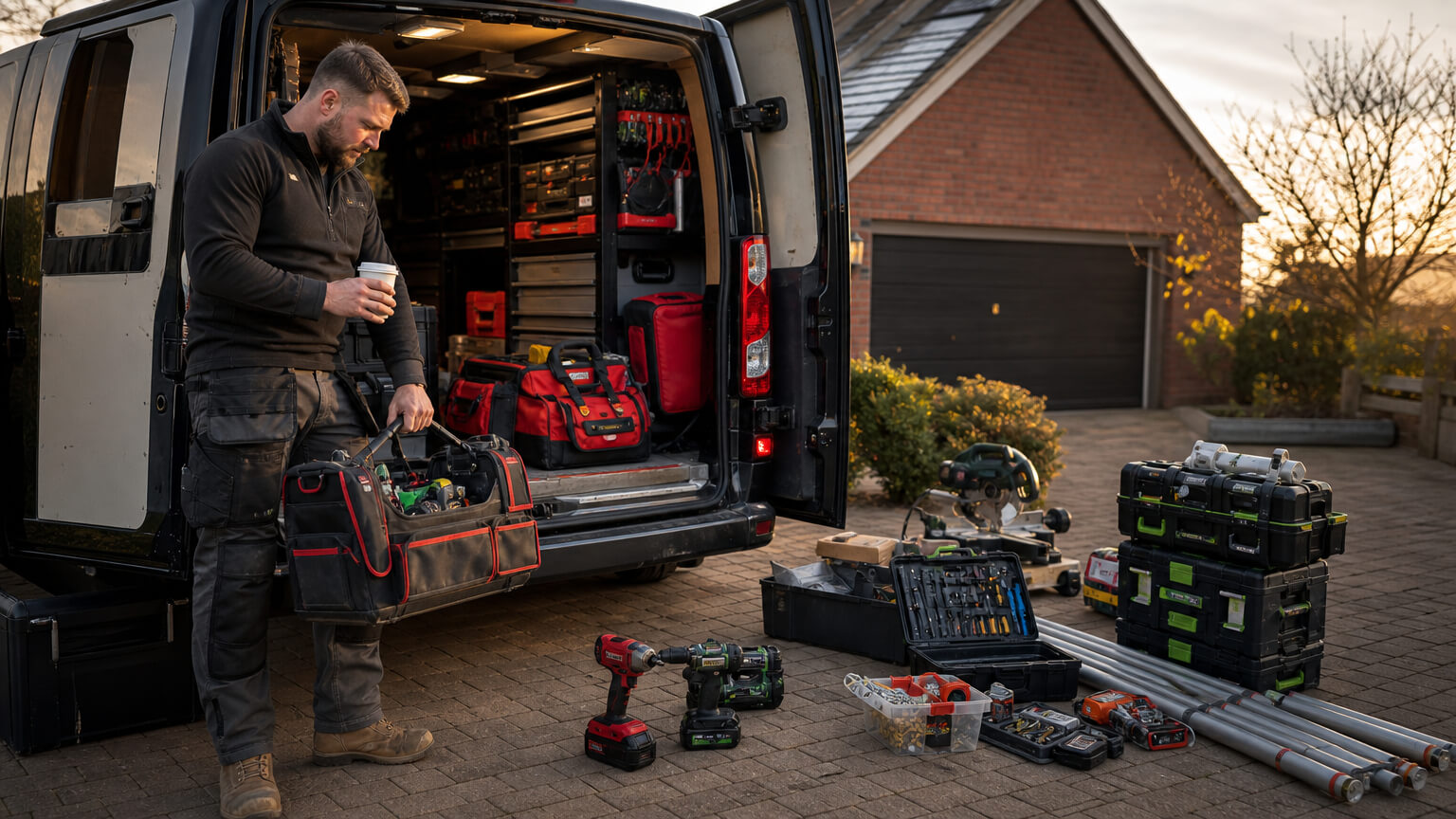
A van loaded with tools is not a mystery to anyone standing on a residential street at 11pm. The outline of a drill case, the shape of a pipe cutter through the panel, the SDS rattling when the door was not shut quite right: a working van tells you what is inside it without any help. That is the problem.
When it happens, and who it happens to
Overnight breaks happen most often when a van is parked away from its usual yard, on a residential street, without lighting. Sole traders and small firms are targeted more than large fleets because the kit is identifiable and the security is typically lighter. A single van, parked on the road, is the softest target in the street. The tools inside are worth real money: most working tradespeople carry five thousand to twenty thousand pounds of equipment as a matter of course, and that kit is what they use to earn.
Trade bodies including the Federation of Master Builders and NFU Mutual have reported on the scale of tool theft affecting UK contractors. What every tradesperson who has been through it will tell you is the same thing: they saw it coming. They just had nowhere else to put the tools.
What a break-in actually costs (not just the tools)
Here is where it gets wider than most people expect. A van break-in is not one cost. It is usually four.
First there is the tool replacement: whatever the policy pays out, less any wear-and-tear adjustment, less the excess. Then there is the excess on the van’s own policy, typically somewhere between two hundred and fifty and five hundred pounds, for the damaged door or window. Then there are the hire-tool costs for the days you are waiting for replacements to arrive: even a few days of hired kit adds up quickly. And then there are the cancelled jobs, the customers who have to wait, and in some cases the subcontractor day rates you have to pass on because you cannot complete the work yourself.
Those are the costs of a single incident. The fifth cost, which does not show up in that week’s accounting, is what we cover in the next section.
The two real options, honestly compared

Here is the choice as it actually sits. Two options, both real, both worth considering depending on how you work. Neither is right for everyone.
An external unit for overnight storage
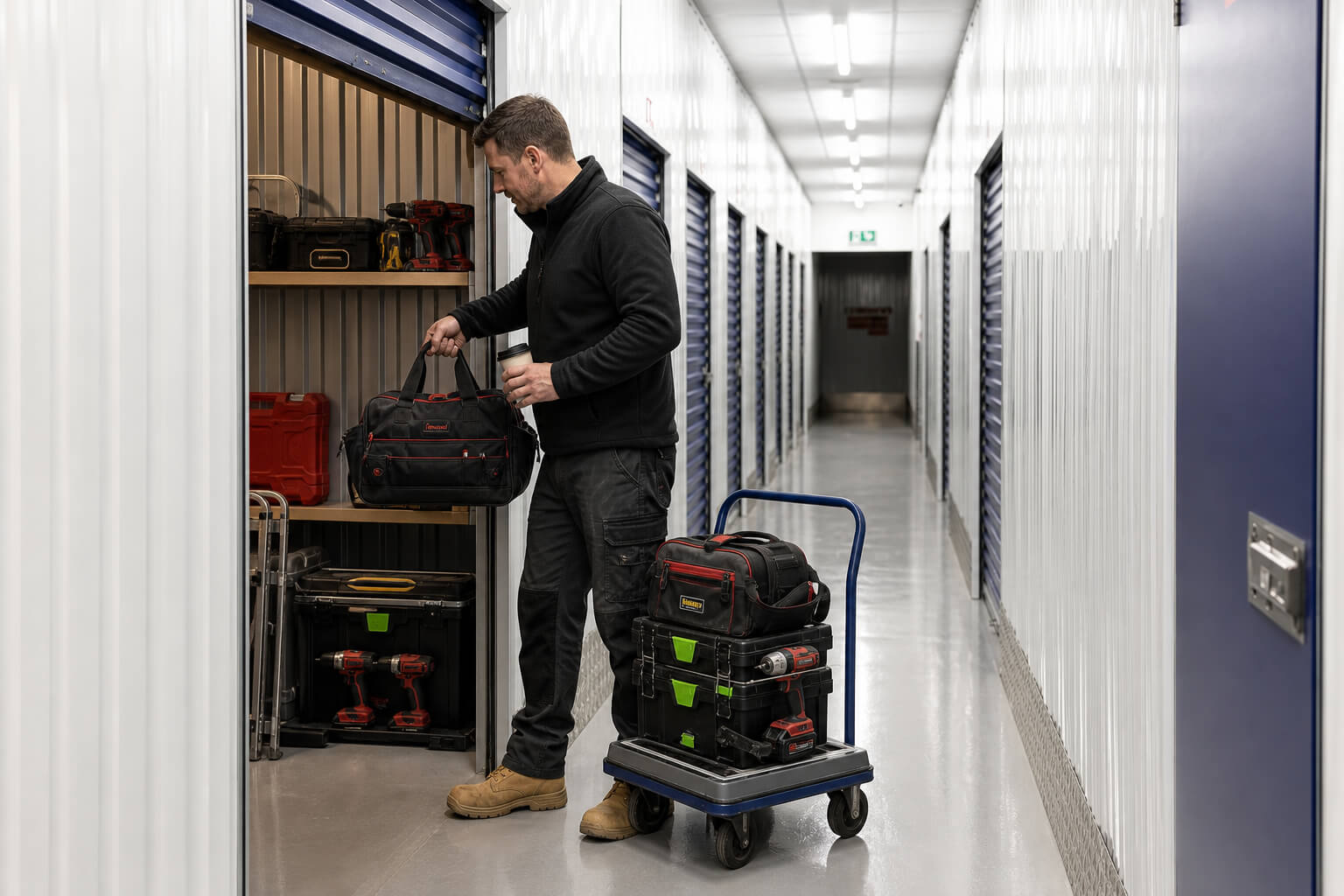
The external unit is the option that removes the target entirely. If there are no tools in the van, there is nothing to take. You drop the kit on the way home, pick it up before the first job in the morning, and drive an empty van overnight. It suits the tradesperson who starts and ends each day at the same base, whether that is home, a yard, or a site within a sensible radius of a storage location.
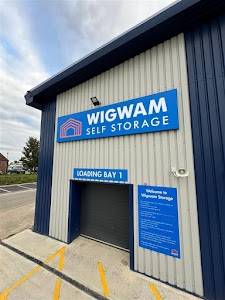
At a Wigwam unit you get an individually alarmed space, clean, dry and secure, with smart entry between six in the morning and ten at night, seven days a week. There are no staff on site, which means you are in and out on your own time. The footprint of a small unit is usually enough for hand tools, power tools, fixings, ladders, and site equipment without taking up more space than you need.
A bolted-in van vault, and where it falls short
The van vault, products like the Van Vault 2 or the Armorgard TuffBank, is the option for the tradesperson who needs kit with them across multiple sites during the day and cannot drop everything at a fixed base each evening. It slows a casual thief and resists an opportunistic raid. The better ones are bolted to the van floor and take time to remove.
The honest limit is this: the vault is still inside the vehicle. A determined thief with time, a decent grinder, and a quiet street can get through most of them. And if the van itself goes, everything inside it goes with it. The vault reduces the risk of a quick smash-and-grab. It does not cap the downside in the way a unit does, because the tools are still in the van.
The cost comparison: storage vs your insurance premium
The renewal letter shows you one number. What it does not show you is the four components that number is trying to cover, or what happens to it after you make a claim.
The four costs of a single break-in
Write these out on a piece of paper and the comparison becomes clearer.
One: the tools themselves. Your policy covers replacement, but check whether that is new-for-old or adjusted for age and condition, and check what the excess is before you assume the payout is what the tools are worth.
Two: the van damage excess. When the side door has been jemmied, that is a separate claim on the van’s own policy. Typical excesses run from two hundred and fifty to five hundred pounds, sometimes more on older vehicles. That comes straight out of your pocket.
Three: hire tools. If you are waiting for replacement kit, you are either hiring or not working. A week of hired gear for a busy sole trader adds up to several hundred pounds, depending on what you need.
Four: the cancelled jobs. The customers who rebook, the ones who do not. The lost day rate for a sole trader who cannot get to site is real money. Often it is money that cannot be recovered.
Soften all of these to “typically” and “often” when you do your own sums. Your actual figures depend on your policy, your excess, and your kit. But name them all, because the renewal letter only addresses one of them.
Why a claim follows you: the premium ratchet
The cost of a claim does not end when the cheque clears. A van insurance claim reduces your no-claims bonus, which moves you onto a higher premium at renewal. Make another claim in the following years, or fail to rebuild the no-claims discount before the next incident, and the premium ratchets again. Many sole traders are paying significantly more on their van policy than they were three or four years ago, and a history of tool theft claims is one reason.
The precise effect on your premium depends on your policy and your insurer. If you are wondering whether storing tools out of the van might lower what you pay, that is a question worth asking your insurer directly: they can tell you whether your policy pricing changes if the overnight tool risk is removed. Wigwam cannot advise on that; your insurer can.
A fixed monthly cap vs a rising annual risk
Here is the reframe. The van risk is variable. Some years nothing happens. One year everything happens at once, and the cost lands on you in a single week. That variability is hard to plan around.
A self storage unit is a fixed monthly line. You know what it costs. You can put it in the accounts and forget it. Whether or not the van gets hit that year is no longer the question that keeps you up. The tools are off the van.
We do not list prices on this page because unit size and location affect the figure. You can see what a unit costs in your area at our pricing guide. Most sole traders need a small unit. The comparison is worth making.
Ready to run the numbers for your town?
See what a unit costs near you at quote.wigwamstorage.co.uk.
Does a unit actually suit how you work?
A self storage unit is not the right answer for every tradesperson, and Wigwam will say that plainly because the alternative is a customer who signs up, finds it does not fit, and does not come back. The fit depends on two things: your working pattern and your hours.
One base vs multiple sites
A unit works for the tradesperson who starts and ends each day at a consistent base. You drive to the unit on the way home, unload, lock up, drive home. You come back before the first job, load what you need for the day, and go. It is a five-minute habit when the unit is nearby.
It does not work well if you are driving from a compound to five different sites and need the angle grinder at site three at two in the afternoon, because you loaded it at seven in the morning and it is not in the van. If your working day is genuinely multi-site with kit moving between locations, a vault in the van is more practical than a unit you have to return to.
For a sole trader with a regular yard start, a predictable run of jobs, and tools that go on and come off the van each day anyway, a unit near home or the yard is a simple fit.
Access is 6am to 10pm, not 24-hour
This is the catch. Say it plainly.
Access at Wigwam is by smart entry, six in the morning to ten at night, seven days a week. That covers most of the working day for trades that start at a base. If you are on site by seven, you can load at six thirty without a problem.
What it does not cover is a midnight emergency call-out where you need a tool you left in the unit. If your work regularly takes you back out after ten at night, a unit is not the right answer for overnight kit access. That is an honest thing to say, and it is worth knowing before you sign up rather than after.
If your day starts at six or seven from a home base, the access window fits without much adjustment to how you already work.
What to look for in a tool storage unit
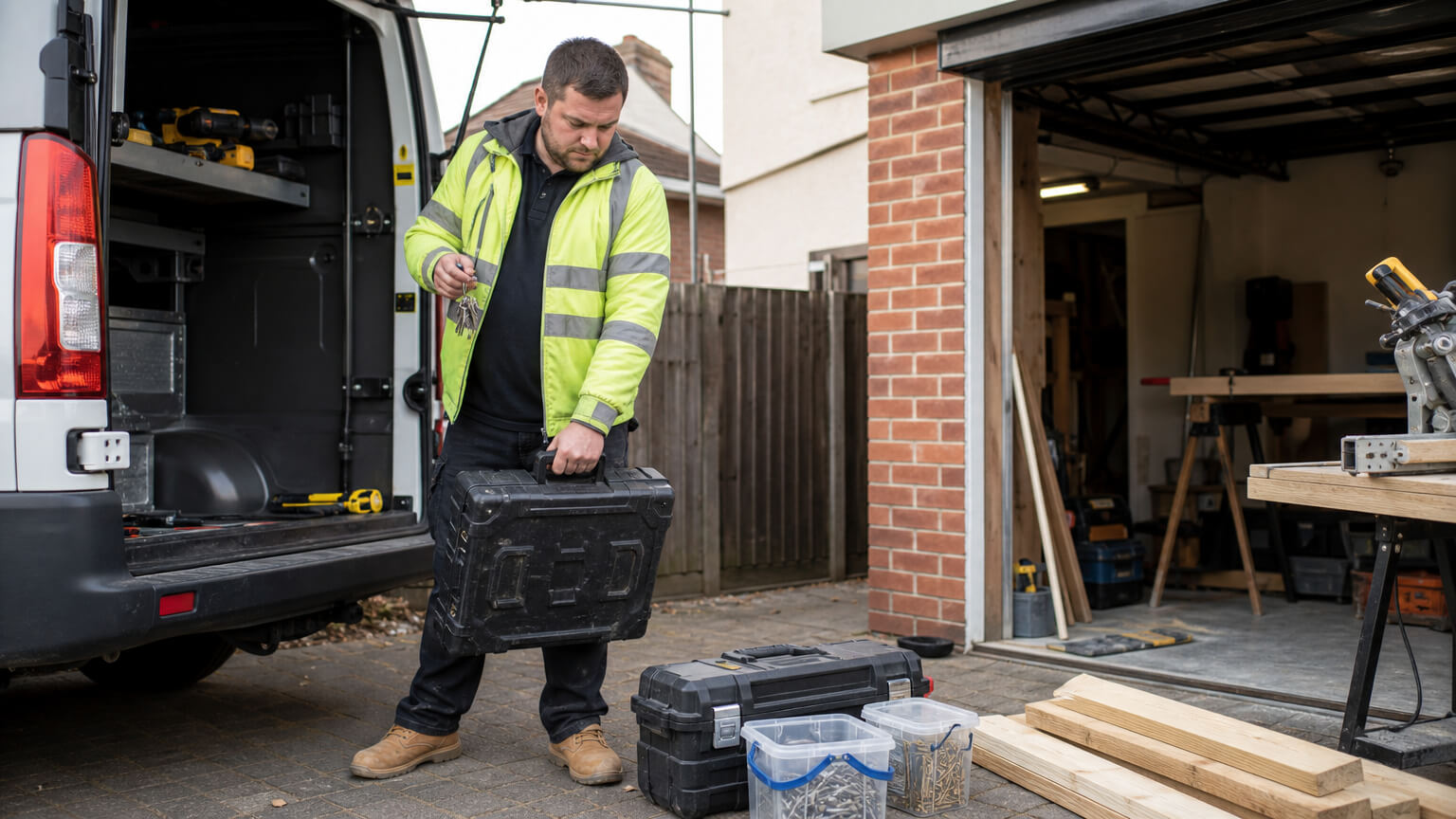
Not all storage is the same. These are the things worth checking before you commit to any provider.
Individually alarmed units, not just perimeter CCTV
There is a difference between a site with a camera on the gate and a site where every individual unit has its own alarm. A perimeter camera records what happened after the event. A per-unit alarm triggers on the door, which means the moment someone interferes with your space, the site knows about it.
At Wigwam, units are individually alarmed. Clean, dry and secure is the standard: no climate control is implied or offered, just a proper, weathertight space that keeps tools in the condition they left in. Smart entry handles access without needing staff on site.
Low commitment matters when you are testing a new habit
The minimum stay is two weeks. If you try it and find that the habit does not fit how you work, or the location is not convenient enough, you give fourteen days’ notice and leave. Any unused days are refunded. There is no deposit to reclaim once you have vacated and the account is settled.
That is not a long commitment for something you are testing. A lot of tradespeople who try it for a month to see whether it suits them are still there two years later, because the habit turns out to be easier than they expected and the van drives quieter in the evening.
Sites are unmanned, which means you come and go without waiting for staff. If you are expecting a delivery to the unit, someone from your own business needs to be present to receive it; Wigwam does not sign for or accept deliveries on your behalf.
What you can and cannot store
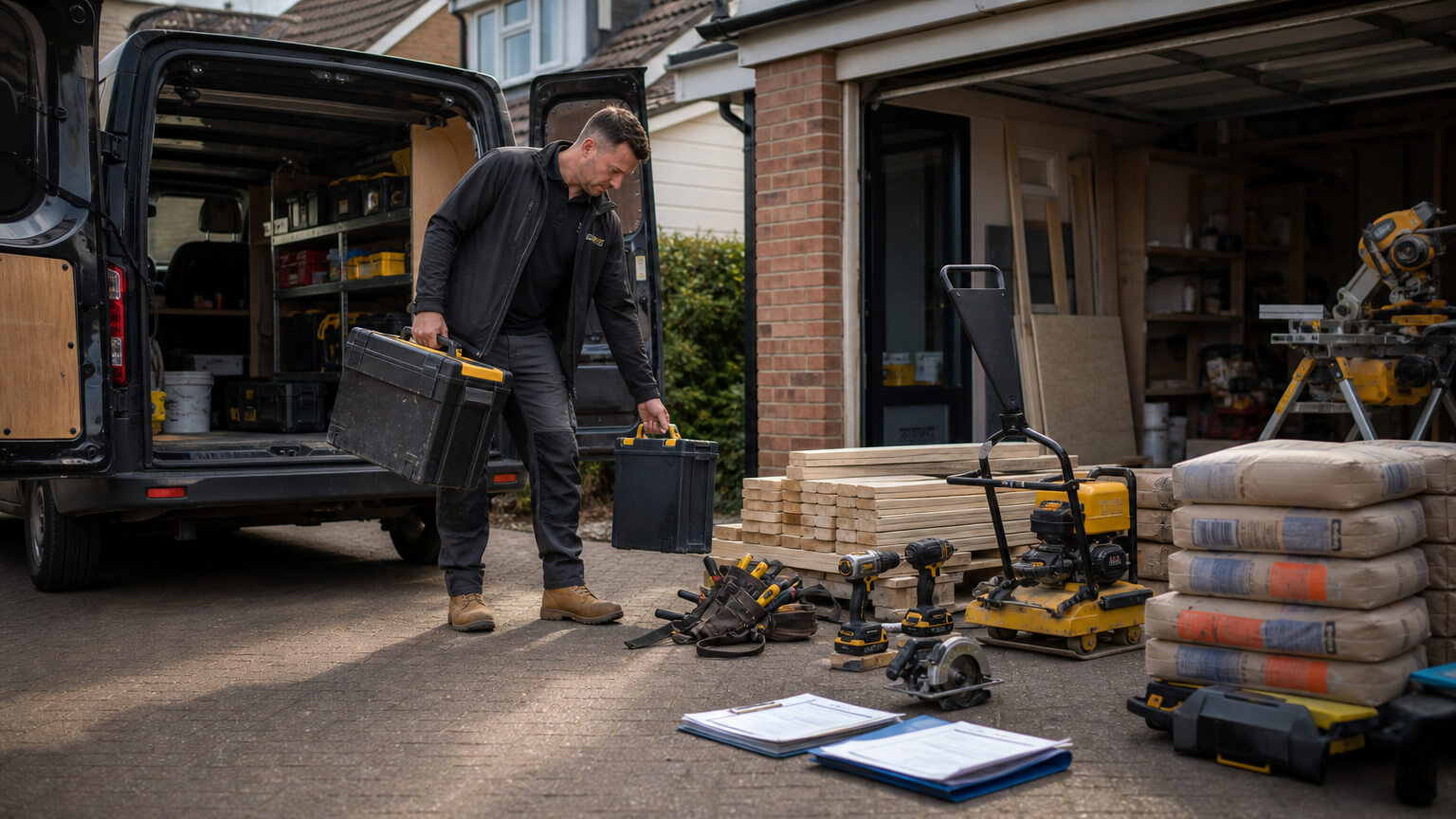
What goes in without question
Hand tools, power tools, charged and uncharged batteries (check your specific unit policy on lithium batteries, as some sites have guidance on this), ladders, fixings, site equipment, and spare materials all go in without issue. If you are also between houses or clearing a property, household goods are welcome alongside the trade kit. The unit is your space.
What stays out, and why it matters
No fuel. No gas bottles. No paint thinners, solvents, or flammable liquids. Not because Wigwam is being unnecessarily awkward, but because these materials are a fire risk that could put every other customer’s stored goods at risk, and their presence would invalidate insurance cover for the whole block.
No vehicles. The unit is for tools, not the van. Wigwam does not offer vehicle storage.
No hazardous materials.
The full terms are at wigwamstorage.co.uk/terms-conditions.
Rules on hazardous goods storage and how exclusions interact with your policy can differ in Scotland and Northern Ireland. If you are in either jurisdiction, check your policy wording and speak to your insurer or a solicitor with commercial insurance experience in your area. The guidance here applies to England and Wales.
If you still need some tools in the van overnight
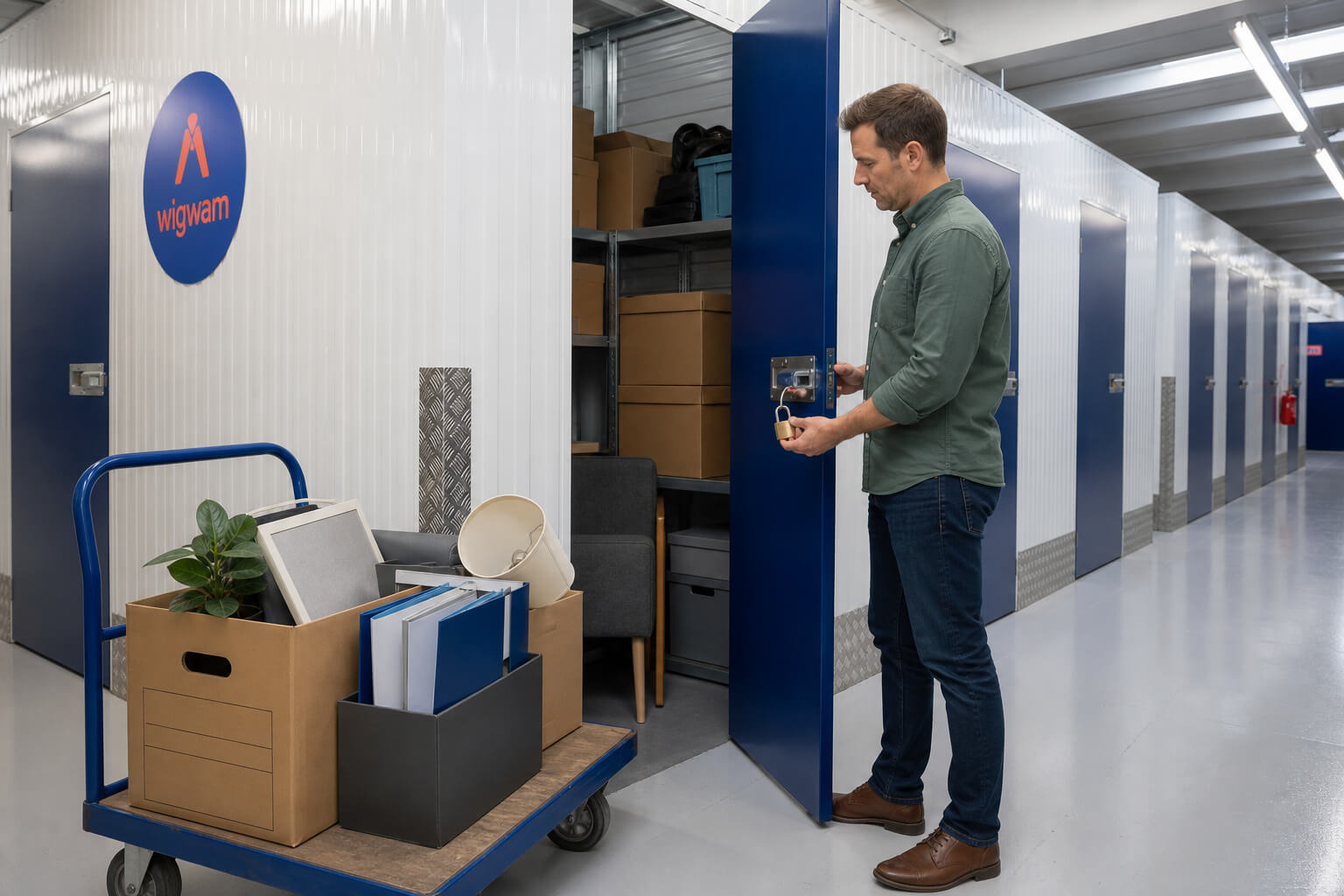
Not every tradesperson can clear the van completely every evening. Sometimes the job is two hours from the yard and driving back is not realistic. Sometimes the kit is too bulky to load and unload daily. This section is for when the unit is not the whole answer.
Reduce the target value: park smart and mark your kit
Park doors-to-wall or boot-to-wall wherever you can. A solid wall or building against the loading door means the most common entry point is blocked. Lit areas are harder to work in than dark ones. If you can avoid residential streets and use a commercial car park with CCTV, do so.
Remove anything visible from the cab window. The outline of a tool bag on the back seat is an invitation. An empty-looking cab is less interesting.
Record serial numbers for every significant piece of kit. Write them down somewhere you will find them if you need to make a claim. Mark tools with postcode-coded engraving: trade bodies report that marked tools are recovered at higher rates than unmarked ones. Even if the tools never come back, marked kit is harder to sell on, which reduces the incentive for theft.
What an in-van vault actually protects against, and what it does not
A bolted-in vault, whether that is a Van Vault 2 or an Armorgard TuffBank, is a real deterrent for an opportunistic thief. A casual raider who does not have the tools or the time to deal with a welded steel box will move on. That is a genuine advantage.
What it does not protect against is a determined thief with time, the right equipment, and a quiet street. And if the van is taken, the vault goes with it. The vault caps the downside of a quick raid. It does not cap the downside of a clean-out or a vehicle theft. That is the honest distinction.
Layering the two is an option for some trades: a unit for the kit you do not need overnight, a vault for the tools you genuinely cannot move each day.
Protecting the value of what you store: contents cover
The unit is only as good as the cover behind it. This section is signposting, not advice: speak to your insurer for anything specific to your situation.
Declare the real replacement value, not what you paid five years ago
When you take out contents protection for a storage unit, declare the full current replacement value of everything inside. Not what you paid for the tools when you bought them. Not a rough estimate. The figure it would cost you to replace them today, new-for-old.
The reason is underinsurance. If the declared value is below the actual replacement cost, a claim is typically settled proportionally: you bear part of the loss yourself in the same proportion as the underinsurance. Declare accurately, so that if something does happen, the cover is real rather than partial.
Wigwam offers RSA “Self Storage Customers’ Goods” contents protection as an opt-in. The policy is New-for-Old, with an excess of fifty pounds. You can also prove your own cover if your existing commercial policy extends to stored goods at a third-party location. Details are at wigwamstorage.co.uk/contents-protection.
Do not quote premium rates from this page; they are not listed here and depend on the value you declare. Speak to Wigwam or check the contents protection page for current figures.
Theft from a storage unit: how it differs from van theft
A theft from a van almost always involves forced entry. The door is jemmied, the window is broken, the lock is defeated. That is the normal trigger for a van insurance claim.
The RSA contents protection for a storage unit works on a similar principle: theft cover applies after forcible entry to the unit. Given that units are individually alarmed and the site uses smart entry, forced entry to a Wigwam unit is harder to pull off than forced entry to a van on a residential street. The alarm triggers on the unit door. The access system logs entries. That is a meaningfully different risk profile from a van parked overnight.
For anything specific to how a claim would be assessed in your circumstances, speak to your insurer. See the full terms at wigwamstorage.co.uk/terms-conditions.
Insurance policy terms and how claims are assessed can vary across the UK. If you are based in Scotland or Northern Ireland, speak to your broker or a solicitor with commercial insurance experience in your area before relying on the England-and-Wales framing here.
Take the tools off the van
The sum is not complicated. A van break-in costs more than most people account for before it happens: the tools, the van excess, the hire kit, the lost days, and then the premium that climbs afterward. A self storage unit converts that unpredictable cluster of costs into a single flat monthly figure you can see and plan around.
It works for trades that start and end each day at a base. Access is six in the morning to ten at night, which covers the working day for most. The minimum stay is two weeks, and unused days are refunded if you leave early. There is no deposit to find at the start or to reclaim at the end. There is no long-term commitment to worry about while you are testing whether the habit fits.
If you are ready to see what a unit costs in your town, a quote takes two minutes.
Get a quote at quote.wigwamstorage.co.uk.
Find your nearest location at wigwamstorage.co.uk/self-storage-locations. If you are in Lincolnshire, Wigwam Self Storage Lincoln is one of our market-town locations. In Somerset, Wigwam Self Storage Bath covers the area. For other towns, the locations hub will show you what is closest.
Frequently Asked Questions
The honest answer is that it lowers your risk for certain, and it may lower your premium, but only your insurer can confirm the second part, so ask them directly. Removing the tools from the van overnight removes the single most common loss event for a tradesperson, the overnight break-in on a residential street, and that genuinely changes your exposure. Whether it changes what you pay depends entirely on how your particular policy is rated. Some insurers price the overnight tool risk separately and will adjust if you can demonstrate the kit is stored elsewhere; others bundle it and may not move the number much. The way to find out is a specific question to your insurer or broker: “If my tools are not in the van overnight and are kept in a secured, alarmed storage unit, does that change my premium or my cover terms?” Be ready to describe the storage, individually alarmed unit, smart entry access, forced-entry-based theft cover, because that detail is what they will assess. We cannot advise on your premium; that sits with your insurer, and pretending otherwise would be giving insurance advice we are not qualified to give. What we can say plainly is that the unpredictable cluster of costs from a break-in, the tools, the van excess, the hire kit, the lost days, and the premium climb that follows, becomes a single flat monthly figure when the tools are off the van. Even if the premium itself does not fall, the risk you are carrying does, and that is worth a conversation with your insurer before your next renewal.
You can store ordinary cordless tool batteries, but check your specific unit’s policy on lithium batteries first, because some sites give particular guidance and the rules around quantity and condition matter. The general principle is that the everyday batteries for drills, drivers and saws are fine in normal numbers, what is excluded across the board is bulk fuel, gas bottles, solvents and flammable liquids, which are a fire risk to the whole block. Lithium batteries sit in a sensible-precautions category rather than a banned one, so treat them with a bit of care:
- Store them charged to roughly half rather than fully flat or fully full, which is kinder to the cells over a long idle period.
- Keep them dry; the units are clean and dry, but pack batteries in a box rather than leaving them loose on the floor.
- Do not store visibly damaged, swollen, or fire-damaged batteries, which are a genuine hazard.
- Keep terminals from shorting against metal by leaving them on the tool, in their case, or with terminal caps on.
There is no climate control, meaning no managed temperature, but a dry, secure unit is well within what tool batteries tolerate over the kind of overnight-and-weekend cycle most trades use. If you are storing a large quantity, or anything beyond ordinary tool packs, raise it with the team so you are clear on that site’s guidance. When in doubt, ask before you store rather than assume, and check the terms and conditions, which set out what is and is not permitted.
The mechanics are similar, theft cover hinges on forced entry, but the risk profile of a unit is meaningfully better than a van on the street, which changes the picture. On a van, theft almost always means forced entry: a jemmied door, a broken window, a defeated lock, and that is the normal trigger for a van insurance claim. The RSA “Self Storage Customers’ Goods” contents protection works on the same principle: theft cover applies where there is evidence of forcible entry to the unit. The difference is how much harder forced entry is to achieve at a unit. Each unit is individually alarmed, so the alarm triggers on your specific door rather than just a perimeter camera recording after the fact, and the smart entry system logs access. That is a different proposition from a van parked overnight on an unlit residential road, which is the softest target on the street. For a claim, the practical steps are the same discipline you would apply to any loss: report it, document what was taken with model and serial numbers, and provide evidence of the forced entry. The single most important thing you control in advance is the declared value, declare the full current replacement cost of your kit, because under-insurance is settled proportionally and you carry the shortfall yourself. The policy settles New-for-Old with a fifty-pound excess. For exactly how a claim would be assessed in your circumstances, speak to your insurer; we provide the secure space and signpost the cover, we do not assess claims or give insurance advice.
Do not assume it does, because many tools-in-transit and van policies cover the kit while it is on you, in the van, or on site, and stop at the door of a third-party storage unit. This is exactly why contents cover at the unit is a condition of storing rather than an optional extra. You have two routes. First, take Wigwam’s RSA “Self Storage Customers’ Goods” policy, which is built for goods in a unit and settles New-for-Old with a fifty-pound excess. Second, prove your own cover, but only if your existing commercial policy genuinely extends to goods stored at a third-party location, which is the specific wording to check. A lot of tradespeople discover at claim stage that their tools-in-transit cover lapsed the moment the kit went into storage, leaving a gap nobody intended. So the practical move before you book is a direct question to your insurer or broker: “Does my current policy cover my tools while they are stored overnight in a third-party self storage unit, and if so, up to what value and on what terms?” If the answer is yes, you can present proof of that cover. If it is no or unclear, the unit’s own contents protection closes the gap. Whichever you choose, declare the full replacement value, because claims settle in proportion to what you declare and under-insurance leaves you carrying part of the loss. We give information and signpost only; whether your own policy is adequate is a question for your insurer, not for us, and a phone call now is far cheaper than a shortfall later.
That is the honest catch, and it is worth facing squarely before you commit: access runs 6am to 10pm, seven days, by smart entry, and it is not 24-hour. If your work regularly takes you back out after ten at night for emergency call-outs, a unit is not the right place for the kit you might need at 2am, because you genuinely cannot get into the unit in those hours and there is no member of staff to let you in, the sites are unmanned. For most trades that start and end the day at a base, this is not a problem: you load before the first job and unload on the way home, all comfortably inside the window. The pattern that does not fit is the emergency electrician or plumber on call through the night who could need a specific tool at any hour. There are two sensible responses. One, split your kit: store the bulk of your gear in the unit, where it is off the van and out of harm’s way, and keep the small set of genuine call-out essentials in a bolted-in van vault for out-of-hours work. That caps the overnight theft risk on the bulk while keeping the emergency kit reachable. Two, if almost all your work is unpredictable night call-outs, accept that a unit with stated hours may not suit overnight kit access at all, and a vault is the more practical primary answer. Either way, knowing the window is 6am to 10pm before you book means you build the right habit rather than discovering the limit at the worst possible moment.
Yes, the unit is your space and there is no rule that it has to hold only trade kit, household goods are welcome alongside the tools. This suits the common situation where a sole trader is both running a business and between homes, or clearing a parent’s property, and would rather not pay for two separate units. Furniture, boxes, kitchen equipment, the ordinary contents of a home all sit happily next to hand tools, power tools, fixings and site equipment. A few practical points keep it sensible. Pack so that heavy tool cases are not stacked on top of boxes holding breakables, and keep anything you need regular access to, daily tools, for instance, near the front so you are not shifting the household side every morning. The exclusions are the same whatever the mix: no fuel, gas bottles, solvents or flammable liquids, because they endanger the whole block and would invalidate cover; no vehicles of any kind, the unit is for tools and goods, not the van; and no hazardous materials. The units are clean, dry and secure, individually alarmed, which suits both furniture and tools, there is no climate control, but the ordinary contents of a home and a working kit do not need it. One thing to get right on the cover side: declare the full replacement value of everything in the unit, tools and household goods together, not just one or the other, because the contents protection settles proportionally against what you declared. If the mix changes significantly during your stay, update the declared value to match.