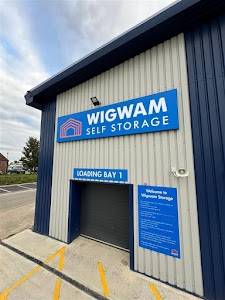
Been caught out by someone else’s small print before?
Most people who go looking for storage terms have already been caught out by something else. A tenancy that ran long. A gym that kept billing after the cancellation. A phone contract with a clause they missed. By the time they type “self storage notice period” into a search engine, they are not curious. They are wary.
That is a reasonable place to be. And it is the reason this article exists. These are Wigwam’s actual terms, explained in plain English, from the customer’s side.
There is nothing in here designed to catch you out. There never was.
The four things people worry about before they book storage

Before you sign anything, four questions usually come up. Here are Wigwam’s answers to all four.
Am I locked into a long contract?
No. There is a two-week minimum stay, and after that the agreement rolls on for as long as you need it. There is no fixed long term, no annual commitment, and no penalty for leaving once you have given proper notice. If your house move completes quickly or your clearance takes less time than you planned, you are not paying for weeks you never used.
Will I lose money if I leave before the end of a billing period?
No. Unused days are refunded. This is worth pausing on, because it is not universal in the industry. Some providers bill in advance and keep the remainder if you leave early. At Wigwam, if you have paid ahead and you vacate before the period is up, you get the unused days back. The financial risk of a move that goes faster than expected sits with us, not with you.
Is there a hidden minimum stay?
Two weeks. That is the whole minimum. It is stated plainly before you commit, not tucked into a footnote. After those two weeks, you stay for as long or as short as you need. The refund of unused days applies from the first period onward. There is no further lock-in.
Can someone else get into my unit?
Your unit has its own individual alarm, and access is yours to manage. Wigwam’s sites are unmanned, which means nobody is roaming the corridors with a master key. You come in during access hours, you go to your unit, and you leave. Some providers’ terms include language about the right to enter a unit or break a lock. Wigwam’s terms are built around the opposite principle: your goods are in a secure, individually alarmed space that you control.
Why there is no deposit

There isn’t one. Here is exactly what that means for you.
What that means for your money
Nothing is held back against your unit, so there is nothing to claim at the end and nothing anyone can quietly keep. Leaving is three plain steps: give your 14-day notice, empty and clean the unit, and make sure there is nothing outstanding on the account.
You can read the precise wording in Wigwam’s full terms and conditions. That page is the authoritative version. What we are doing here is explaining the shape of it in ordinary language.
Leaving cleanly
When the time comes to leave, the process is straightforward:
- Give 14 days’ notice
- Remove everything from the unit
- Take your padlock off
- Make sure your account is settled, with nothing outstanding
Do those four things in the right order and you are done, with any unused days refunded to you. That is what a fair exit looks like.
Ready to see a clear quote with the terms in writing?
Start at quote.wigwamstorage.co.uk
The 14-day notice period, explained plainly

We ask for 14 days’ notice. Here is what that means in practice.
How to give notice
Notice is a formal step, not a phone call. The full process is set out in the agreement, and the terms page is the right place to read exactly how it works. We are not going to paraphrase a legal mechanism here in a way that could mislead. Read the agreement. If something is unclear, ask us directly.
What we can tell you plainly: 14 days is the figure. It applies to everyone, on every unit, at every one of our UK market-town locations. No exceptions based on unit size, no extended notice for longer-stay customers.
What happens to your billing when you give notice
Once notice is given, the clock runs. If you have paid ahead and you vacate before the 14 days are up, the unused portion comes back to you. If you want to understand the billing cycle in detail before you commit, the pricing page covers how costs work. No prices appear on this page. The quote tool will give you the real figure for your unit, your location and your dates.
The two-week minimum stay

Every storage booking at Wigwam starts with a two-week minimum. That is the whole minimum.
Two weeks is in line with what serious operators across the industry charge as a floor. It is not designed to trap you. It is long enough to make the logistics work on both sides, and short enough to be genuinely flexible for a house move or a clearance that takes less time than you expected.
After that first two weeks, the agreement rolls on and you stay for as long as you need. There is no secondary lock-in, no escalating commitment, no penalty for going. If you are storing for a long renovation project and you end up needing the unit for six months, it rolls with you. If the move completes in three weeks, you give notice and leave. The refund of unused days means you are never paying for time you are not using.
This is what flexible actually means. Not a sales word. A practical fact.
How our terms compare, in plain English

It helps to know what is normal in UK self storage, so you can see where Wigwam sits.
What “rolling” and “flexible” mean in practice
The AI Overview on this query cites Big Yellow and Safestore as requiring 14 days’ written notice, and Access Self Storage as asking for seven to 14 days on standard units. Wigwam’s 14-day notice puts us in line with the better operators. The notice period itself is not the differentiator.
What is different is what happens around it. Some providers bill on a rolling monthly cycle and keep the remainder if you leave early. Some list the right to enter your unit as a standard term. Wigwam does not run billing that way, and Wigwam does not build entry rights into the customer-facing position. The terms are designed around your exit being clean, predictable and fair.
The phrase “flexible contract” appears on most providers’ websites. At Wigwam, the flexibility is measurable: you get unused days back, there is no deposit to argue over, and a two-week minimum is all that stands between you and leaving when you need to.
What cooling off and changing your mind look like
If you book and then your move collapses or your plans change, the minimum two-week stay applies. The honest thing to say is that there is a floor, and that floor is two weeks. The refund of unused days softens that: if you vacate inside the minimum period and have paid ahead, you get the remaining days back. The full terms at wigwamstorage.co.uk/terms-conditions/ cover the precise mechanism. Do not rely on this page for contractual decisions. Read the agreement.
What is actually in a Wigwam storage agreement

A Wigwam agreement covers the practical things. Here is what is in it and what is not.
What is in it:
- A two-week minimum stay, stated plainly before you sign
- A 14-day notice period to end the agreement
- No deposit at all, so there is nothing to reclaim when you go
- A refund of unused days if you leave mid-period
- Access hours of 6am to 10pm by smart entry, seven days a week
- An individual alarm on your unit
- Household goods only (and business goods); the agreement does not cover vehicle or leisure storage
What is not in it:
- A long fixed term
- A rolling annual commitment
- Hidden escalators or penalty clauses for leaving
The full terms and conditions are the authoritative document. Read them. They are not long and they are not written to confuse.
A note on legal questions. If you have a question about how a storage agreement interacts with your lease, your probate process, a business liability, or any other legal matter, Wigwam is not the right place to ask. A solicitor is. This applies particularly if you are storing in Scotland or Northern Ireland, where some contract and property rules differ from England and Wales. The Wigwam agreement is written under English law, and this article does not address other jurisdictions.
Access, hours and what to expect on site

Before you start storing, here is what access to your unit looks like day to day.
Smart entry, 6am to 10pm, seven days
Access is by smart entry, from 6am to 10pm, seven days a week. You do not need to call ahead or arrange a time. You arrive during those hours, use the smart entry system, and go straight to your unit. Sunday morning before most people are awake, that works. A late run after work on a Friday, that works too.
The hours are fixed at 6am to 10pm. This is not 24-hour access, and we would rather you knew that up front than found out when it mattered.
Unmanned sites and deliveries
Wigwam’s sites are unmanned. There is no on-site team waiting for you when you arrive. You access your own goods. The system works because everything is secure and individually alarmed, and you are in charge of your own unit.
One thing to know before your removal firm or a courier turns up: Wigwam does not sign for deliveries and does not receive goods on your behalf. If a courier or removal team is dropping something off at your unit, someone from your side needs to be there to accept it. This is not a limitation we apologise for. It is the honest shape of how the site works, and knowing it now means there are no surprises on moving day.
Honest about what we do not offer
Wigwam’s storage is for household goods and business goods. The honest claim for every unit is clean, dry and secure.
There is no climate control at Wigwam sites. If you need temperature or humidity management for specialist items, a different facility would serve you better, and we would rather tell you that now.
There is no vehicle, caravan, motorhome or boat storage. Our units are for goods, not leisure or transport equipment. If you are looking for vehicle storage, Wigwam is not the right fit.
We say this because honesty about what you do not offer is itself a trust signal. A firm that is clear about its limits is easier to trust on the things it does promise.
Find a location and get a clear quote
If the terms make sense to you and you are ready to see what a unit costs, here is where to go next.
Wigwam operates across our UK market-town locations. Two examples: Wigwam Self Storage Bath covers the Somerset area, and Wigwam Self Storage Lincoln covers Lincolnshire. For the full list, the locations hub is the right starting point.
A note on contents cover. Storage at Wigwam requires contents cover. You can take Wigwam’s own policy or prove your own policy covers goods in a third-party storage facility. Either way, declare the full replacement value of what you are storing. Under-insurance is settled in proportion, which means if you declare half the value, a claim pays out at half the rate. The contents protection page has the detail. We signpost it here, but this article does not give insurance advice. For any questions about whether your existing policy covers storage goods, speak to your insurer.
When you are ready, get a clear quote with the terms in writing at quote.wigwamstorage.co.uk.
Frequently Asked Questions
The first thing to know is that falling behind does not mean someone walks into your unit. The practical answer is that you should talk to the support team early, because the situation is far easier to sort before a balance builds up than after. The terms set out what happens with arrears, and the full terms and conditions are the authoritative document on the precise consequences, so read them rather than relying on a paraphrase here.
In plain terms, the account needs to be settled for a clean exit: give notice, vacate, and clear any outstanding balance. Because we hold no deposit, an unpaid balance is simply a balance to resolve, not something set against money of yours that we are holding. A missed payment is a balance to resolve, not an instant loss of your goods, and the sensible move is to contact the team and agree how to bring the account back in order.
What the support team can help with is the storage account itself: invoicing, what is owed, and how to settle it. What they cannot do is give you financial advice or restructure your wider finances, because that sits outside storage. If you are in genuine difficulty, free debt advice services exist and are the right place for that. For your account specifically, contact the team, and read the terms for the exact wording on arrears.
Day to day, no. The sites are unmanned, nobody roams with a master key, and your unit has its own individual alarm that is yours to control. The customer-facing position is built around the opposite of an open entry right: your goods sit in a secure, individually alarmed space that you manage through smart entry. That is the normal state of things and it is the principle the whole agreement is written around.
There are limited circumstances any storage agreement has to address, such as an emergency, a legal requirement, or a long-unpaid abandoned unit, and those are governed by the precise wording of the contract rather than by anything we would summarise loosely here. This is exactly the kind of clause where you should read the full terms and conditions rather than trust a plain-English gloss, because the detail matters. We are not going to paraphrase a legal mechanism in a way that could mislead.
If you have a question about how those provisions interact with your own situation, a probate, a business liability, or a dispute, that is a question for a solicitor, not for us. This applies particularly in Scotland and Northern Ireland, where some contract and property rules differ from England and Wales, and the Wigwam agreement is written under English law. For the everyday reality, though, the answer is simple: your unit is yours, it is alarmed, and no one is entering it in the normal course of things.
The honest answer is that the contractual floor is the two-week minimum stay, and the refund of unused days is what softens a change of mind, rather than a separate cooling-off window we set out on this page. If you book and your plans then collapse, the minimum two weeks applies, but if you vacate inside that period having paid ahead, you get the remaining days back. So the financial sting of a cancelled move is limited, even though the minimum is real.
Whether any statutory cancellation right applies to your booking depends on how and where you signed up, and that is a matter of consumer law rather than something we would rule on here. We are not legal advisers, and we will not tell you what your statutory rights are, because getting that wrong would not serve you. The full terms and conditions are the authoritative document, and for a definitive view on any cancellation right, a solicitor or a consumer-advice service is the right place to ask.
What we can say plainly is the shape of it: a two-week minimum, a 14-day notice period, unused days refunded, and no deposit. Those four together mean changing your mind is rarely as costly as people fear. Do not rely on this page for a contractual decision; read the agreement, and if something is unclear, ask us directly before you commit.
Yes, in practice this is usually straightforward, but you need to tell the support team rather than simply staying put, because once notice is given the clock is running toward your exit. People often give notice expecting a move to complete, then find the timeline slips. The sensible step is to contact the team as soon as you know, so the account can be kept open rather than closed out at the end of the notice period.
The terms are built to be flexible in both directions. There is no long lock-in, so extending is not a matter of signing a fresh long contract; the agreement simply rolls on as it did before, for as long as you need it. The two-week minimum has already been met by that stage, so there is no fresh floor to clear. Practically, withdrawing or pausing a notice is an account change, and the team handles account changes during office hours.
What you should not do is assume an extension happens automatically. Notice is a formal step set out in the agreement, and so is keeping the unit beyond it, so confirm it with the team rather than leaving it to chance. The exact mechanism is in the terms and conditions. If your situation is uncertain and you are not sure whether to give notice at all yet, it is often easier to hold off and give it once your dates are firm, given the notice is only 14 days.
There is no deposit to return, because we never held one. A clean exit is still the same three steps: give 14 days’ notice, remove everything and take your padlock off, and settle the account so nothing is outstanding. Nothing in those steps is hidden or unreasonable.
Where a charge could still arise is if there is a genuine cost left behind, for example goods or rubbish not removed, or damage beyond normal use. With no deposit held, that would reach you as an invoice rather than a deduction. The way to avoid any question is to leave the unit as you would want to find it: emptied, padlock off, swept out, with nothing left for someone else to deal with. That is what a clean exit looks like, and it is the same care most people would take anyway.
The precise wording on the condition the unit should be left in is in the full terms and conditions, which is the authoritative version; this is the plain-English shape of it. If you are ever unsure what counts as a clean exit for your unit, ask the support team before your last visit. They handle the account and the exit process directly, so a quick check beforehand removes any doubt.