Standing in a house you or your parents have lived in for thirty years, the question is never really “what do we throw away.” It is closer to “how do we decide, fairly and kindly, what a whole family’s history is worth keeping.” The sideboard from the wedding. The good china nobody uses. A loft of toys and school reports nobody has quite been able to bin. You are not disorganised for finding this hard: you are standing in front of an unintentional museum, and someone has just asked you to curate it on a deadline. It does not have to happen that way. This can be a decision you make in stages, not a single brutal sort.
In a hurry? Pick the line that fits:
- If you are the one leaving the house, go straight to the negotiated-partial method.
- If you are helping a parent decide, go straight to the negotiated-partial method.
- If moving day is already booked and you are out of time, go straight to long-stay versus a fixed deadline.
Why downsizing looks different in Dorking than it does elsewhere
Dorking sits inside Mole Valley, and Mole Valley is now the oldest district in Surrey by median age: 47, up from 44 a decade ago, against 41 across the South East and 40 for England as a whole (ONS Census 2021, Mole Valley area profile). Nearly a quarter of the district’s population, 23.8 percent, is aged 65 or over, the highest share of any Surrey district. Managing a lifetime of belongings later in life here is not a personal failing, it is the recognised, evidenced shape of this specific place.
The oldest district in Surrey, by the numbers
Alongside that age profile, Mole Valley also has the smallest average household size in Surrey, at 2.35 people (Surrey County Council 2021 Census data), with almost 30 percent of homes now occupied by just one person. Family-sized houses built two or three decades ago for a larger household are increasingly held by fewer people than they were designed for. That gap between house and household is the quiet engine behind a lot of downsizing decisions in this area.
Why Mole Valley Council actively wants people to downsize
This is not just a demographic observation. Mole Valley’s own council housing scheme, HomeChoice states there is an “extreme shortage of family sized accommodation” locally, and gives priority to applicants downsizing out of larger homes, precisely because the district needs those homes freed up for families. If you are weighing this decision in Dorking, you are part of a pattern the local authority itself is trying to encourage, not an outlier managing an unusually hard case alone.
The museum of home: what makes a long-held house hard to clear
A house held for thirty-plus years is not clutter, it is an unintentional exhibition. Every drawer and cupboard has quietly filled with evidence of a family’s life, and none of it was meant to be sorted in a single weekend. Clearing it against a fixed moving deadline turns curation into panic, and that is where the guilt creeps in.
What accumulates in thirty years
A sideboard nobody quite loves but nobody can part with either. China that only comes out at Christmas. A loft of children’s books, outgrown toys and school reports belonging to people who now have children of their own. None of it is valuable in the way an auction house would recognise, and all of it carries weight anyway.
Why a hard deadline turns curating into erasing
When every one of those items has to be judged in a single clearance, “maybe later” stops being an option. The fear underneath that pressure is real: that rushing the sort makes the family look like the kind that carelessly threw its own history away, rather than one that thought it through.
Why a skip-hire deadline makes downsizing harder, not easier
Booking a single skip-hire clearance ahead of completion day feels efficient, but it forces every undecided item into a binary choice, keep or bin, under legal time pressure. There is no room for “I am not sure yet,” and that is exactly the category that matters most in a decades-old family home.
What a fixed clearance date forces
A hard deadline does not just clear a house, it collapses every “maybe” into “bin” whether or not that was the right call, simply because there was no time left to decide properly.
The relief of removing the deadline, not the cost
Long-stay storage works differently. It removes the deadline from the decision, not the price of it, so you decide when you are ready rather than when completion day forces your hand.
The negotiated-partial: keep one, store the maybes, let go of the rest
Most families who handle this well are not choosing between “keep everything” and “clear everything.” They work through a three-way sort: what moves now, what gets stored while it stays undecided, and what genuinely goes. That middle category, the “maybes,” is where long-stay storage does its job.
The negotiated-partial, at a glance
| Category | What goes here | Why | Timing |
|---|---|---|---|
| Keep | Daily-use items and irreplaceable heirlooms already promised to specific grandchildren | Fits the new home now | Moves with the family on moving day |
| Store (the “maybes”) | Children’s books and toys kept for future grandchildren, seasonal items, furniture that might suit a grandchild’s first flat one day | No deadline forces the decision yet | Long-stay, open-ended, ended by giving notice whenever the family is ready |
| Let go | Duplicates and anything genuinely unused in over a year | The “one-year rule,” a widely recognised decluttering heuristic, not a Wigwam invention | Before or shortly after the move |
How to sort a lifetime of belongings without a deadline
The one-year rule is a simple, honest filter: if nobody has touched something in over a year and it has no clear future use, it is safe to let go of it. Everything else falls into keep or store, and store can stay undecided for as long as it needs to.
The “maybes” box: why storing undecided items is the sensible choice, not procrastination
Putting something into long-stay storage while you decide is not indecision, it is a responsible, adult compromise, and it is the option that protects you from a rushed regret later.
If this is the stage you are at, Wigwam Self Storage Dorking can talk through sizing and long-stay terms, and so can the Long Term Storage page if you want to understand how long-stay actually works before you speak to anyone.
The worked case: the attic, the grandchildren, and what “long-stay” means in practice
This is a pattern many downsizing families in the Dorking area will recognise, told as an illustrative composite rather than one named customer. A family home held for well over thirty years, a loft full of the children’s old toys and books, three generations of photographs and school reports. The family sorts it using the method above: the “maybes” go into long-stay storage with no fixed end date, ended only when the undecided items find their real destination, sometimes months later, sometimes years.
What stayed, what was stored, what was let go
The pieces with daily use, and the few heirlooms already promised to specific grandchildren, went straight into the new, smaller home. The loft’s contents nobody could bin on moving day, but which did not fit the new home yet, went into long-stay storage: books and toys earmarked for grandchildren “when they are old enough,” seasonal items, a piece of furniture that might one day suit a grandchild’s first flat. Duplicates, genuinely untouched in over a year, were let go before the move.
The terms that make an open-ended “maybe” possible
Three separate, plain facts make this workable: a deposit is required at the outset, a short notice period ends the arrangement whenever the family is ready, and any unused days are refunded. There is no penalty for deciding sooner than expected, and the exact notice period is confirmed when you book, not guessed at here.
What Wigwam’s Dorking site offers
The terms above only work because the operational basics behind them are straightforward and honestly stated.
Access hours and how the site works day to day
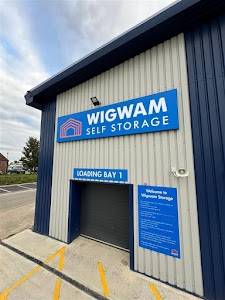
The Dorking site is open for access from 6am to 10pm, seven days a week. It is unmanned, with smart entry rather than a member of staff on the gate, and storage is kept clean, dry and secure.
If a house-clearance company or courier needs to collect for you
If you want a house-clearance company or courier to collect from your unit on your behalf, someone from your own household or business needs to be there with them. Because the site is unmanned, Wigwam’s team cannot let a third party in unaccompanied, even with permission given in advance.
What storage can’t do for you: when to bring in a professional
Storage solves the physical and timing problem: where things go, and when you have to decide. It does not solve the legal or financial one.
Questions Wigwam’s team can help with, and questions for a solicitor or financial adviser
Wigwam’s team can talk through sizing, availability, access and booking. Anything touching probate, equity release, or the timing of a conveyancing sale sits outside that, and deserves a conversation with a solicitor or financial adviser instead.
Close: curating the museum of home, on your own timeline
The goal was never a clearance. It was a considered curation of a family’s own history, done at a pace that respects it. Long-stay, notice-based storage is what makes “decide later, decide kindly” possible, rather than a nice idea a moving deadline cancels out.
Ready to talk through your move
When you are ready, Wigwam Self Storage Dorking can talk through sizing, availability and long-stay terms, and the Long Term Storage page is worth a read if you are still weighing whether long-stay is the right fit. Ask the Dorking team about current offers when you call.
Frequently Asked Questions
There’s no fixed maximum. You give notice whenever you’re ready to end the arrangement, and any unused days are refunded, so an open-ended “maybe” doesn’t cost you for time you don’t use. Ask the team for the exact notice period when you book.
That’s exactly what long-stay storage is for. Use the negotiated-partial: keep what fits the new home now, store the genuine maybes, and let go of anything unused in over a year. A deposit is required at the outset, notice ends the arrangement, and unused days are refunded, so the undecided items can stay undecided until you’re ready.
Yes. The site is unmanned with smart entry rather than a member of staff, and access runs from 6am to 10pm, seven days a week.
Only if someone from your own household or business is there with them. Because the site is unmanned, Wigwam’s team can’t let a third party in unaccompanied.