If your completion date has slipped, or your solicitor has gone quiet for the third week running, and everyone else’s house move online sounds faster than yours, you are not imagining it and you have not done anything wrong. A Cotswold stone cottage has usually stood for two or three hundred years and it is not going anywhere in a hurry. The same qualities that make it worth buying are often the same qualities that slow its sale down.
In a hurry? Start here.
- Your property (or the one you are buying) is listed, or sits in a conservation area: skip to why listed and conservation status add steps.
- There is a second home or holiday let somewhere in your chain: skip to the second-home factor.
- Nothing unusual about the property, but the chain itself feels shaky: skip to why chains make everything slower.
Is it actually normal for Chipping Norton completions to feel slow?
There is no official figure proving that Chipping Norton or the wider Cotswolds runs a set number of days slower than a UK average, because no such figure has ever been published. What is true, and what we can point to directly, is that this area carries an unusually high concentration of three things that are each independently linked to longer or more complex conveyancing: listed buildings, conservation areas, and second-home or holiday-let purchases. Layer that onto the single biggest driver of delay anywhere in the country, being in a property chain at all, and you get a market that is structurally more exposed to running long, even without a headline statistic to prove it.
What “structurally exposed” means, and what it does not
It does not mean your solicitor is slow, your buyer has cold feet, or you have somehow got this wrong. It means the property type and the local market you are buying or selling into carry more steps than a plain, unlisted sale elsewhere in the country. The rest of this page walks through each of those steps in turn, then shows what to actually do if your date does move.
Why a listed Chipping Norton property adds extra steps

West Oxfordshire District Council’s own published figures show 43 Grade I listed buildings in the district, 211 Grade II* (Chipping Norton’s own Bliss Tweed Mill among them), and almost 3,000 Grade II listed buildings in total. Listed status does not add a fixed number of days to a sale. It adds extra steps, and each of those steps has its own turnaround time.
What a solicitor actually has to check
For a listed property, the solicitor needs to trace and confirm listed building consent for any past alterations, not just the current owner’s, but the history of work carried out by previous owners too. That means requesting records, sometimes going back decades, to confirm nothing was changed without the right permission.
Where this can slip
The delay rarely comes from the listing itself. It comes from gaps: a consent record that cannot be located, a past alteration nobody documented, or a council response that takes longer than hoped. None of these are unusual for a period Cotswold property. All of them are worth expecting rather than being surprised by.
Further detail on how listed status is assessed is available directly from West Oxfordshire District Council’s listed buildings page.
Conservation areas: the second layer of searches

West Oxfordshire has 51 conservation areas, and Chipping Norton is one of them, a long-established conservation area with its own character. Conservation status triggers a further round of local-authority searches and alteration-consent checks that sit on top of the standard conveyancing timeline, whether or not the individual property is also listed.
The extra search, in plain terms
The local authority is confirming what has and has not been altered within the conservation area boundary, and whether any past work needed consent it did not get. It is a check that protects the character of the town, and it is also a check that cannot be skipped or shortcut, however keen everyone in the chain is to move.
This runs alongside, and separately from, the listed-building checks above. A property can be in a conservation area without being individually listed, and each has its own source page and its own search. Full detail is on West Oxfordshire District Council’s conservation area maps page.
The second-home and holiday-let factor

West Oxfordshire District Council applies an additional 100% council tax premium on second homes, effective from April 2025. Councils only introduce a premium at that scale where second-home ownership is judged to be a genuine, significant feature of the local housing market, not a rare exception. That makes the premium a fair, verifiable proxy for how much of the Cotswolds property market is made up of second homes and holiday lets, even though it is policy evidence rather than a headcount.
Why this adds chain complexity indirectly
Here the honest answer is a little more nuanced than it might first appear. A second-home or holiday-let buyer is often a cash or otherwise simplified purchaser themselves, so the complexity does not usually sit with them directly. It more often sits with the seller’s own onward chain, or with a buyer who needs to sell their own primary home elsewhere before they can proceed. This is a reasoned inference from a genuinely local, policy-evidenced market feature, not a proven local statistic, and it is worth being upfront about that distinction.
Details of the premium are set out on West Oxfordshire District Council’s second homes page.
Chains: the one factor that makes everything worse, everywhere

The HomeOwners Alliance is direct on this point: conveyancing typically takes twelve to sixteen weeks, and if you are in a housing chain, a problem with any one transaction in that chain can delay everyone in it, anywhere in England or Wales. This is not a Cotswolds-specific finding. It is the national baseline for this system, and it is the thread that ties everything above together. (Scotland’s conveyancing runs through missives rather than exchange of contracts, so the timeline looks different there.)
Why Chipping Norton’s mix makes chain exposure more likely here
Listed properties, conservation-area properties and second-home or holiday-let purchases are all, by their nature, more likely to sit inside a longer or more layered chain than a straightforward first-time-buyer sale. Nobody has proven that Chipping Norton chains individually run longer than chains anywhere else in England; what is true is that this town simply has more of the property types that tend to sit at the slower-moving end of a pattern found everywhere.
If a chain does start to wobble, the practical logistics of the move itself still need solving, and we will come back to that shortly. For now, the reassurance is emotional rather than transactional: this is a known, named pattern, not a sign that your particular sale has gone wrong. More on the national picture is available from the HomeOwners Alliance conveyancing timeline guide.
The Cotswold cottage, three ways

This is an illustrative composite, not a real transaction, built entirely from the verified facts above, to show how the same nominal move, sell a house, buy a house, can look very different depending on which factors are in play.
| Scenario | Property or buyer type | What’s different in the process | Where it can slip |
|---|---|---|---|
| Case 1: Baseline | Unlisted, no conservation area, no chain, elsewhere in the UK | Standard searches only, nothing extra to trace or confirm | Sits at the shorter end of the twelve to sixteen week national range |
| Case 2: The listed Chipping Norton cottage | Grade II listed, within a conservation area | Solicitor must trace listed building consent history and confirm conservation-area status and any restrictions | A missing consent record or a slow council response can each add time |
| Case 3: The second-home buyer in a chain | Cash or simplified purchase of a second home or holiday let, but linked to a seller’s onward chain | The buyer’s own purchase may be straightforward, but the chain behind the seller is where delay usually sits | Any one weak link in that onward chain can hold up everyone behind it |
A solicitor or conveyancer remains the source of truth for any individual sale’s actual timeline. This table is here to show the pattern, not to predict your specific dates.
Why no one publishes a “Cotswolds is X days slower” number, and why that’s honest, not evasive

We looked for a published figure directly comparing Chipping Norton or the Cotswolds against a UK average, and it does not exist. What does exist is three separately, independently evidenced structural factors, each well documented on its own, that nobody has combined into a single day-count. That is a genuine gap in what gets published, not a gap in the underlying evidence. We would rather tell you honestly that the number does not exist than invent one to make this page sound more authoritative than it is.
If your completion date does slip: the practical next step
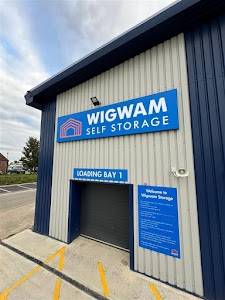
The stone cottage was never going to be rushed, and now you know why. Once you understand that, the practical question becomes simpler: what do you do while everything catches up? If moving day and completion day no longer line up, flexible short-term storage with no fixed minimum term is a straightforward way to keep your move on your own timeline rather than the chain’s. Wigwam Self Storage Chipping Norton, on Hook Norton Road, is the local option for exactly that. We have covered the full mechanics of bridging a gap between exchange and completion in detail elsewhere, so rather than repeat it here, our guide to what to do when the chain breaks is worth reading in full if that is the situation you are in right now.
What to check first, and with whom
None of this page is legal, planning or financial advice, and it is not meant to be. Before you assume anything about your own sale’s timeline, confirm your property’s listed or conservation status, its consent history, and your contract dates with your own solicitor or conveyancer, and where relevant, with West Oxfordshire District Council’s planning team directly. They hold the actual records for your property. We hold the pattern that explains why those records take the time they do.
If you would like to talk through unit sizes for Chipping Norton, our pricing guide for the area and our wider UK storage pricing guide are both there to browse in your own time. When you are ready, get a no-obligation quote online, or call the Chipping Norton store direct on 01608 656300.
Frequently Asked Questions
Listed status itself does not add a fixed number of days, but it does add steps. A solicitor has to trace and confirm listed building consent for any past alterations, which can take longer if records are incomplete. West Oxfordshire has 211 Grade II* and almost 3,000 Grade II listed buildings, so this is a routine part of buying or selling here, not an unusual complication.
It is a check by the local authority confirming a property’s status within the conservation area and whether any past work needed, and received, the right consent. Chipping Norton is one of West Oxfordshire’s 51 conservation areas, so this search applies to a large share of property sales in the town, separate from and in addition to any listed-building checks.
West Oxfordshire District Council applies a 100% council tax premium on second homes from April 2025, a step councils only take where second-home ownership is a significant, genuine feature of the local market. That is strong policy evidence of scale, though it is not the same as an exact headcount.
The HomeOwners Alliance is clear that being in a chain, anywhere in England or Wales, is the single biggest driver of conveyancing delay, because a problem with any one transaction can hold up everyone linked to it. Chipping Norton’s mix of listed, conservation-area and second-home transactions means a higher share of local sales sit inside longer chains, which is why the effect is felt here more often, not because chains here are proven to be worse.
First, confirm the actual position with your solicitor, since they hold the real records and timeline for your sale. If the practical logistics need solving while the paperwork catches up, flexible short-term storage from the local Chipping Norton store is a straightforward option with no fixed minimum term, and our guide to bridging the gap between exchange and completion covers the details in full.