Suddenly responsible for a whole house of belongings you never asked for?
Nobody plans to become an executor. One week you are a son or daughter, a sibling, a trusted friend. The next, you are legally responsible for a whole house of belongings, a probate application you have probably never seen before, and a family who are grieving and watching what you do. If you are reading this, you are most likely somewhere in the middle of all that. This guide is written to help.
What follows is not a legal textbook. It is the practical, ordered help that is hard to find elsewhere: what you are allowed to do now, what has to wait for the Grant, and how a nearby storage unit can give you the breathing room to clear the property properly, without pressure and without a skip outside the door before you are ready.
You are allowed to take this one step at a time. That is what this is for.
If you need to act quickly, here is where to start:
- Get a quote for a unit near the inherited property: quote.wigwamstorage.co.uk
- Find the nearest market-town location: wigwamstorage.co.uk/self-storage-locations/
- Help with size or access: our team can talk you through the right unit for the job
- Legal questions about probate: GOV.UK, Citizens Advice, or the estate’s solicitor
You did not ask for this job
Being an executor is not a punishment and it is not a privilege. It is a duty of care. Your job is to secure the estate, help establish its value, apply for the Grant of Probate, and then distribute the assets according to the will. Not all at once. In that order.
The reason this matters is simple. Most of the weight people feel when they are first named as executor comes from believing they have to do everything immediately. You do not. There are stages, and they have an order, and understanding that order is the first step to feeling less overwhelmed.
What an executor or administrator actually has to do
Your core responsibility is to protect the estate until it can be properly distributed. In practical terms, that means securing the property and its contents, having them valued, applying for the Grant, and then following the will. Nothing gets sold or given away before the Grant is issued. The contents of the home are part of the estate, and they are yours to manage, not to dispose of early.
This guidance applies to England and Wales. If you are administering an estate in Scotland, the process is different (it is called Confirmation, not Probate), and Northern Ireland also has its own procedures. If you are outside England and Wales, speak to a solicitor who knows your jurisdiction.
The order of operations
The sequence matters more than the speed. First, secure the property and its contents. Second, photograph and inventory everything. Third, apply for the Grant of Probate. Then, and only then, distribute.
Moving things into storage fits inside stages one and two. It is an act of preservation. It keeps the contents of the estate safe, insured, and under your control while the legal process runs. It is not rushing ahead; it is doing exactly what the role asks of you.
What you can and cannot do before the Grant of Probate

You can move the contents of an inherited home into a self storage unit before the Grant of Probate is issued. That is the short answer. As executor, your duty is to secure and preserve estate assets, and moving them to a clean, dry, individually alarmed unit you control is precisely that. The estate pays the storage fees, and they are reclaimable from estate funds before distribution.
What you cannot do yet is sell, gift, or distribute any of those contents to beneficiaries. The belongings belong to the estate until the Grant is in hand. Moving them into storage is not distribution; it is safekeeping. But your solicitor is the right person to confirm what is appropriate in your specific estate, so keep them in the loop.
This guidance applies in England and Wales. Readers in Scotland or Northern Ireland should consult a solicitor familiar with their local procedures.
Sorting and moving contents into storage is allowed
An executor’s job is to preserve the estate, not leave it at risk. If the property is sitting full of furniture, soft furnishings, documents and valuables while probate grinds on, moving those things to a secure unit near the property is a sensible, defensible act of stewardship. Courts and solicitors generally treat it as such. Photograph everything before it moves. Keep the inventory with you, not inside the unit. Then move with confidence that you are doing it right.
If you have any doubt about your particular circumstances, your solicitor will know. Do not let uncertainty keep things in an at-risk property longer than they need to be there.
What must wait until after the Grant
Selling, giving away, or distributing anything from the estate has to wait until the Grant of Probate is issued and you have legal authority to act. That includes giving a sibling a piece of furniture because they want it now, selling jewellery, or donating clothing. The impulse to be generous and efficient is natural. But acting early, even with good intentions, can create problems for you personally as executor and expose you to challenge by other beneficiaries.
The storage unit is there precisely so nothing has to be rushed. Things can sit safely, insured, and documented until the time is right.
Moving a beneficiary’s items into storage
As executor, you have legal authority over estate property. If a beneficiary wants a particular item moved into the unit for safekeeping, you can do that within your role. If a beneficiary wants to access a specific item early or receive it before the estate is settled, that is a different question and one for your solicitor. Keep a clear record of everything that moves and why. A simple dated log, signed by you, is enough.
Why empty the house at all while probate runs
The practical case for clearing the property early is stronger than most people realise when they first take on the executor role. Most home insurance policies reduce their cover, or stop it entirely, after a property has been unoccupied for 30 to 60 days. A full house of contents sitting in an empty property, unmonitored, can attract damp, vandalism, or worse. Moving the contents to a clean, dry, secure unit removes that risk.
This is a signpost, not advice. Check the position with the estate’s insurer and your solicitor, because policies and estate circumstances vary. But understanding the risk is part of doing this job well.
An unoccupied property is a risk while you wait
The property insurance that was in place when the deceased was living there may not remain in force on the same terms once the house stands empty. Some policies suspend contents cover entirely after a defined period. That matters when the estate holds antiques, artwork, or jewellery.
Get in touch with the insurer early and ask exactly what is covered, for how long, and under what conditions. Then factor that answer into your clearing timeline. In many cases, getting the contents out and into a properly insured unit is the safest thing the estate’s money can do.
Holding costs and landlord pressure
If the property is rented, the tenancy does not automatically end when someone dies. The estate may be responsible for ongoing rent until the tenancy is formally ended, and landlords may require the property to be cleared before it can be handed back. Even for owned properties, there are ongoing costs: council tax, utilities, maintenance and insurance. Getting the contents out into a unit nearby stops at least some of those clocks.
A unit at a nearby Wigwam location means the contents stay close to the family, accessible when they need to collect documents or keepsakes, while the property itself can be secured, handed back, or prepared for sale.
Sorting a whole home with a clear head

Before you move anything, it helps to have a method. Standing in the hallway of a parent’s house, looking at five decades of accumulated belongings, is one of the harder moments many people ever face. The storage unit does not remove that weight. But it gives you time to carry it properly, instead of making decisions in a rush.
Four piles, not chaos
A simple sorting method is more useful than a complicated one. Work through the house with four categories in mind: keep, give to a specific person, sell later, and let go. The unit is where most of the first and third categories go. Nothing in the unit has to be decided today. The unit gives you the months that probate takes to work out what each thing means and where it belongs next.
The guilt that comes with letting things go is real and common. You are not dishonouring the person who died by being practical. You are doing the job they trusted you to do.
What goes in the unit and what does not
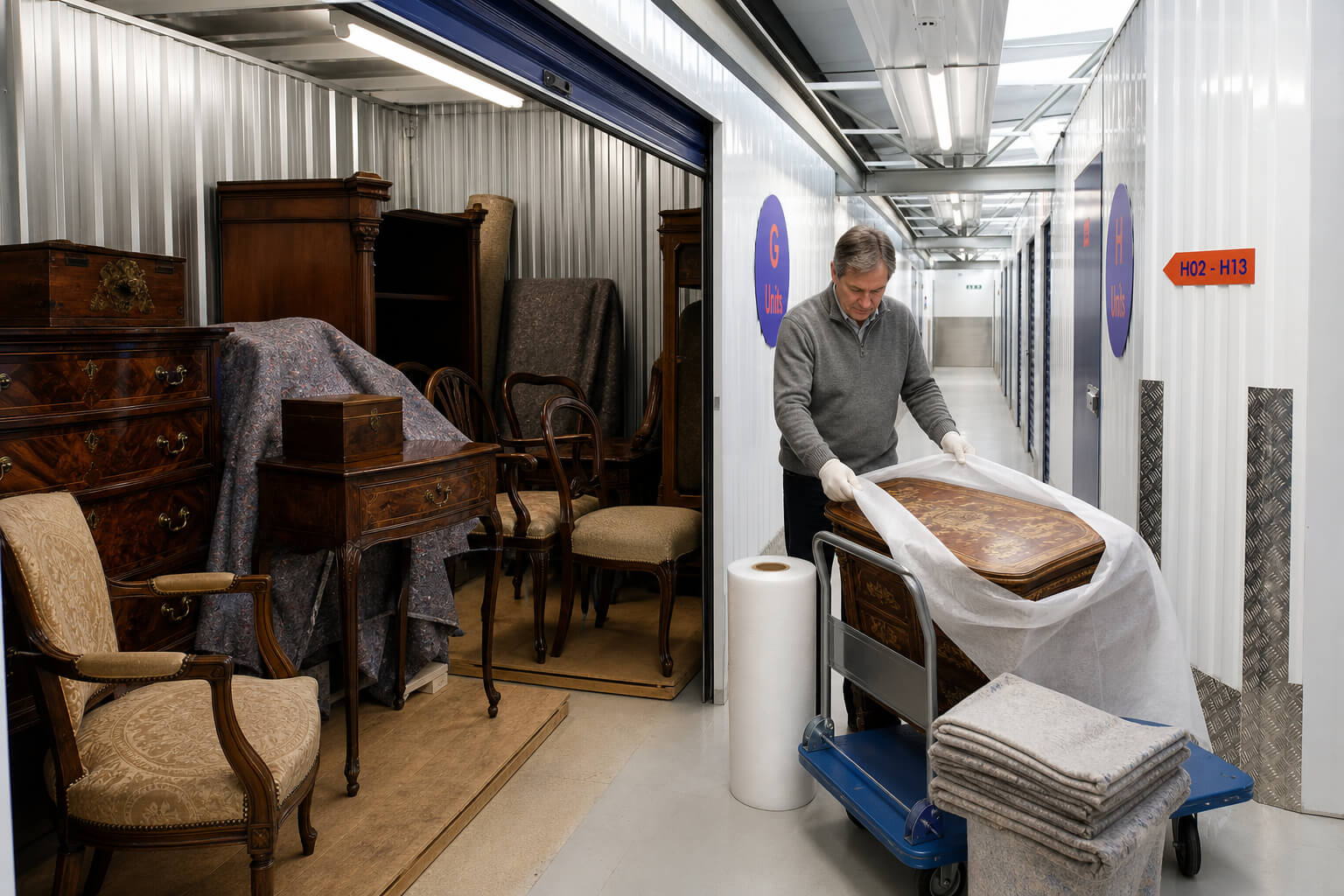
Household goods, furniture, soft furnishings, books, documents, artwork and antiques are all fine for a Wigwam unit. Hazardous materials, flammable liquids, and perishables cannot go into storage. Wigwam does not store vehicles, caravans or boats, so if the deceased owned any of those you will need a different arrangement for them.
Keep any documents you might need to access urgently during probate, such as the original will, insurance policies or bank correspondence, outside the unit where you can reach them without a trip. A fireproof box at home or a solicitor’s safe is better for those.
Bringing in help
A storage unit and a house clearance company are not competitors. They work together. A clearance firm does the physical job of emptying the property; the unit holds what is worth keeping, at a location you control and can return to. For most executors, that combination is the most practical route through a large property.
Because Wigwam sites are unmanned, someone from your side needs to be present when a removal crew arrives. Wigwam cannot receive goods, sign for deliveries, or supervise a move on your behalf. That is easy enough to arrange: you or a co-executor, a trusted family member, or the clearance firm itself, if you brief them in advance.
Protecting the estate: records, valuation and the solicitor

Good records are the thing that keeps executors safe. They protect you from challenge, they support the probate valuation, and they give beneficiaries confidence that the process was fair. Starting the record before you move a single item is the right way to do it.
Photograph and inventory everything before it moves
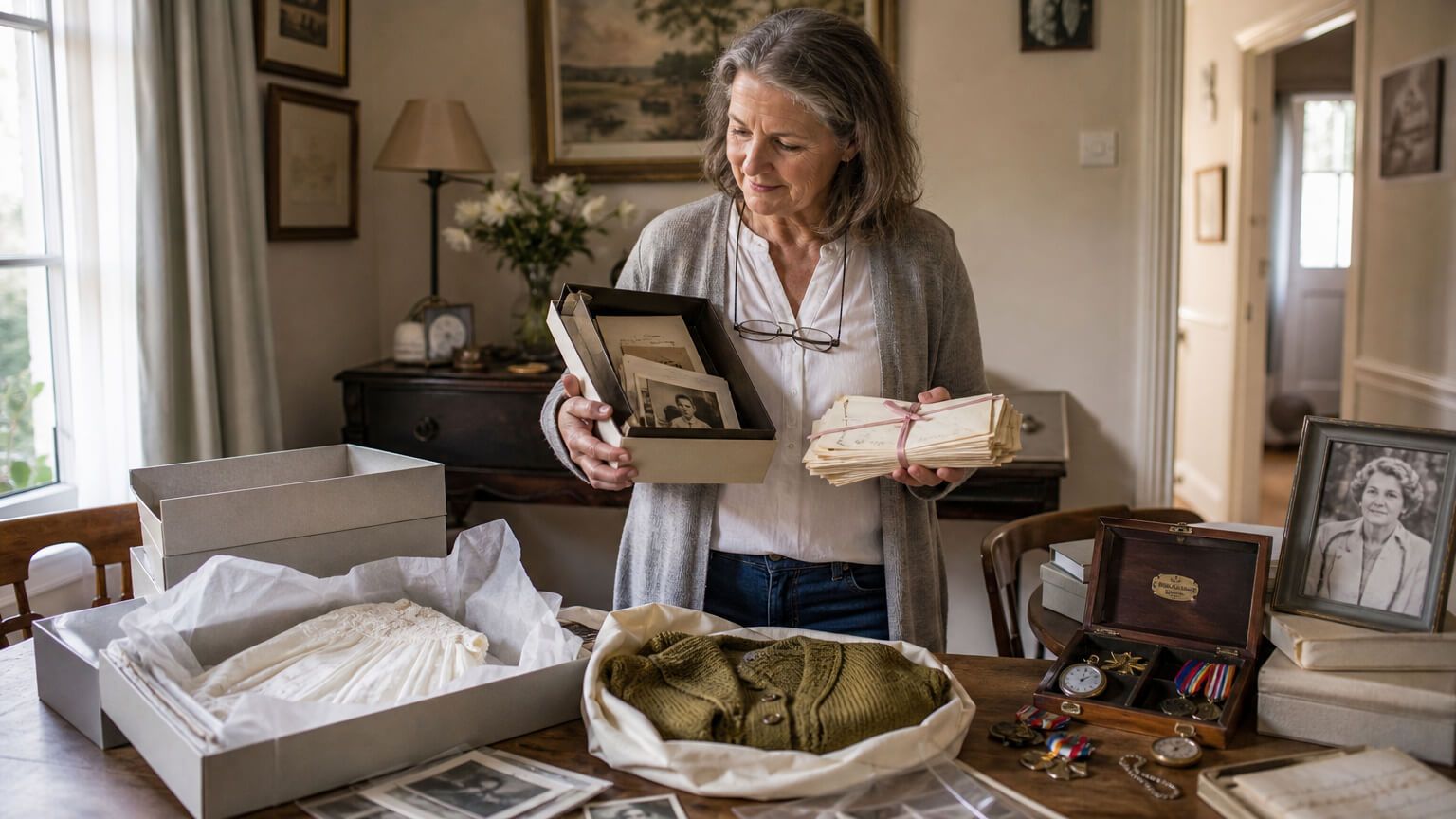
Walk through every room with a phone camera before anything is touched. Photograph collections, individual pieces of value, and the general state of each room. Then make a written list, room by room, of every significant item. Date it, sign it, and keep a copy somewhere other than the unit. This list is the foundation of the probate valuation and your defence against any future suggestion that something went missing or was undervalued.
For antiques, jewellery, artwork or any item of significant value, a professional valuation for probate purposes is worth arranging before the contents move. Ask your solicitor whether the estate warrants it; in many cases it does.
Keeping the solicitor in the loop
There is no universal legal requirement to notify your solicitor every time you move a box. But telling them you have placed the estate contents into storage, and providing the unit address and a copy of the inventory, is good practice. It demonstrates you are managing the estate responsibly. It also means that if a beneficiary asks the solicitor where the contents are, the answer is clear. Keep communication simple: a short email with the address, the unit number, and a note of the inventory date is enough.
Who pays for the storage
Storage fees paid by an executor in the course of administering the estate are generally treated as a legitimate estate expense, reclaimable from estate funds before the residue is distributed. That means the cost does not have to come out of your own pocket indefinitely. Confirm this with your solicitor, who will know whether specific costs in your estate are recoverable and in what order.
Wigwam’s terms are designed to suit an open-ended timeline. There is no deposit, and a two-week minimum stay. When you are ready to leave, give 14 days’ notice. Once the unit is vacated and the account is settled, any unused days are refunded. If probate takes longer than expected, the unit simply continues on the same terms. If it resolves faster, you are not locked in.
Full terms are at wigwamstorage.co.uk/terms-conditions/.
How much storage space an inherited home needs

A reasonable rule of thumb: a one-bedroom flat usually fits into a small to medium unit. A two-bedroom property might need a medium unit, depending on how much furniture and how many years of accumulated belongings are involved. A three or four-bedroom family home can need a large unit, or two mediums if the contents include bulky furniture, garage equipment, or a collection of any kind.
These are starting points, not guarantees. Antiques, wardrobes, dining sets and large sofas can change the picture quickly. The right answer for your specific estate is worth checking before you commit to a unit size, and that is something our team can help with.
A team member can help you size it
Selina and the wider Wigwam team can help you work out the right unit for the nearest branch. Because sites are unmanned, that conversation happens over the phone or by message rather than face to face, but the help is the same. Let them know roughly what the property contains, and they can point you to the right size for your situation.
A dedicated unit size guide is also available on the Wigwam site if you want to work through the options yourself before you call.
Choosing storage near the family home

Proximity matters more than most people expect when they first think about where to store an inherited home’s contents. You will need to return to the unit during probate, possibly more than once, to collect documents, retrieve keepsakes for family members, or prepare for the eventual distribution. A unit near the family home saves time and makes the process less effortful.
Wigwam serves UK market-town locations. Wigwam Self Storage Lincoln and Wigwam Self Storage Bath are two verified examples. For all other towns, the full list is at the locations hub, where you can find the branch closest to the inherited property.
Shared access for co-executors and family
The executor controls the unit. But probate often involves more than one person. A co-executor, or a trusted family member helping with the practical side, can access the unit independently within smart entry hours. Smart entry runs 6am to 10pm, seven days a week. There is no need to coordinate with a member of staff; access is via the Wigwam smart entry system, which operates across all sites.
If a co-executor or family member needs to collect a specific item, such as documents the solicitor has asked for or a keepsake a beneficiary has been allocated, they can come during those hours and do so. Sites are unmanned; there is no on-site team to let people in, but smart entry means you do not need one.
What to look for in a unit for estate contents
The things that matter most for holding the contents of an inherited home are simplicity itself: a unit that is individually alarmed, clean, dry and secure. Wigwam units are all three. There is no climate control and none is needed for standard household goods; the honest and accurate description is clean, dry and secure, and that covers furniture, books, soft furnishings, documents and most antiques.
If the estate includes items of significant value, check whether they have specific requirements. Some works of art or antiques benefit from professional storage conditions beyond a standard unit; your solicitor or a specialist valuer can advise if that applies to you.
Contents cover is mandatory for all items stored at Wigwam. You can take Wigwam’s RSA “Self Storage Customers’ Goods” policy, or demonstrate your own equivalent cover. If you use Wigwam’s policy, declare the full replacement value of everything in the unit, including antiques, artwork and jewellery. Under-insurance is settled in proportion, which means if you declare half the value and half the contents are lost, you recover half of what you should. Full details are at wigwamstorage.co.uk/contents-protection/.
Wigwam does not advise on how to value estate contents for probate purposes. That is your solicitor’s territory.
What it costs and arranging the move
Wigwam’s pricing is on the pricing page at wigwamstorage.co.uk/how-much-is-self-storage-in-the-uk. What matters most for an executor is not the headline monthly figure but the structure of the terms, because probate does not run to a predictable schedule.
The terms suit an open-ended timeline in two ways. First, if probate resolves faster than expected, you give 14 days’ notice and leave. Unused days are refunded. Second, if probate takes longer, the unit continues on the same terms with no pressure to rush or extend a fixed contract. There is no deposit to reclaim at any point. You are paying for the time you actually use, within a structure that does not penalise you for probate running long.
The minimum stay is two weeks. For most probate clearances, the estate will be in a unit for considerably longer than that.
When you are ready to look at a unit near the inherited home, get a quote at quote.wigwamstorage.co.uk.
A storage home for the estate while probate runs its course
Probate is a legal pause. Between the day a life ends and the day its belongings find their next home, there is a period that belongs to the estate, and to you as its custodian. That period has no fixed length. It can be a few months or it can be considerably longer. What it asks of you is care, order and patience, not speed.
The right storage unit is not a dumping ground. It is a holding space where things stay in the right order, under the right protection, until the law says it is time to move them on. You do not have to decide today what becomes of the dining table, the boxes of photographs, the paintings or the books. They can wait in a clean, dry, individually alarmed unit near the family home, safe from the risks of an unoccupied property, accessible when you or a co-executor needs to come in.
When the Grant arrives and the estate is settled, you give 14 days’ notice, collect the refund of unused days, and close the chapter. The contents of a life found their next home in the right order. That is all the job ever asked.
Get a quote for a unit near the inherited property at quote.wigwamstorage.co.uk, or find the nearest Wigwam location at wigwamstorage.co.uk/self-storage-locations/.
Frequently Asked Questions
Disagreement between executors is common, and storage can actually defuse it rather than inflame it. The honest answer is that where there is more than one executor, the law generally expects you to act together, so neither of you should be clearing or distributing unilaterally. Storage helps because it is a neutral, reversible step. Moving the contents into a unit is not a decision about who gets what. It is simply preservation, which is squarely within the duty you both share. Nothing is sold, gifted or thrown away, so no one’s position is prejudiced while you work things through.
In practice, the calmest route is to agree on the unit and the inventory first, before anything moves, and to keep the dated, signed list somewhere you both can see it. If one executor wants to clear quickly and the other wants more time, the unit lets you have both: the house is emptied and secured, and the slower decisions about distribution wait until the Grant is in hand and you have agreed the approach. Where a genuine deadlock develops, that is a question for the estate’s solicitor, not for us. We can hold the contents safely and indefinitely on the same terms while you resolve it. If you need more than one person to access the unit during that period, a co-executor can be added to smart entry and come in independently within the 6am to 10pm window, seven days a week.
The storage side is essentially the same, but your authority comes from a slightly different document. Where there is no valid will, the estate is dealt with under the rules of intestacy, and the person who steps forward applies for Letters of Administration rather than a Grant of Probate. The label differs; the principle does not. Until that grant of representation is issued, you can secure and preserve the estate’s contents, but you cannot sell, gift or distribute them. Moving the belongings into a clean, dry, individually alarmed unit is preservation, and it is exactly what an administrator is expected to do to protect an estate that might otherwise sit in an unoccupied house.
What changes under intestacy is who eventually inherits, and that is determined by a fixed legal order rather than by a will. That can take longer to establish, particularly where family relationships are complicated or beneficiaries are hard to trace. The longer that takes, the more useful a flexible storage arrangement becomes, because there is no fixed end date pressing on you. The unit continues on the same terms for as long as the administration runs, and when it resolves you give 14 days’ notice and recover any unused days. As always, your specific authority and the order of inheritance are matters for the estate’s solicitor. We hold the contents; the law decides the rest.
Not until the estate is settled, and even then it needs handling carefully. Before the Grant or Letters of Administration are issued, nothing leaves the estate, so a beneficiary cannot collect an item early simply because it is convenient. The contents belong to the estate, not to the individual, until you have the legal authority to distribute. Releasing something early, even to a much-loved family member who lives at the other end of the country, can expose you personally as executor and is best avoided. If a beneficiary is pressing for an early collection, that is a conversation for the solicitor.
Once distribution is properly authorised, the unit can make a long-distance handover straightforward. Because the sites are unmanned and run on smart entry, you do not have to coordinate around an office or staffed hours. You can meet the beneficiary at the unit at a time that suits a long drive, or release the specific items to them in person. Keep a dated, signed record of what was handed over and to whom, just as you did when things went in. One important practical point: our sites are unmanned, so we cannot receive a courier or sign for goods on your behalf. If a beneficiary is sending a removal firm rather than coming themselves, someone from your side must be present to let them in and oversee the collection. That keeps your record clean and your responsibility discharged properly.
Generally yes, storage falls into the same broad category as other reasonable costs of administering the estate, but the detail belongs to your solicitor or accountant rather than to us. Storage fees paid while you are securing and preserving estate assets are usually treated as a legitimate estate expense, recoverable from estate funds before the residue is distributed to beneficiaries. That means you should keep every invoice and note the dates, exactly as you would with valuation fees, house clearance charges or property insurance. Those records support the estate accounts and show beneficiaries that the money was spent properly.
We can help on the practical side by giving you a clear invoice and a straightforward record of the period you held the unit. What we cannot do is advise on whether a particular cost is recoverable in your specific estate, in what order it ranks against other liabilities, or how it should be presented in the accounts. Those are questions for the solicitor or accountant handling the estate, and the answer can depend on the size of the estate and the terms of the will. The structure of our terms is designed to make this easy to account for: no deposit, a two-week minimum stay, and a refund of unused days when you leave, so the net cost to the estate is simply the time the unit was genuinely needed. This is a signpost, not financial advice.
The unit is built for exactly this uncertainty, and there is no penalty for the timeline running long. Probate does not keep to a schedule, and a contested estate can add many months or even years before distribution can happen. Our terms are deliberately open-ended for that reason. There is no fixed contract length to renew and no escalating penalty for staying. If the administration takes longer than you hoped, the unit simply continues on the same terms, holding the contents clean, dry and secure while the legal process works through. If it resolves faster, you give 14 days’ notice and leave, recovering any unused days.
A contested estate adds one practical consideration: preservation matters even more when there is a dispute, because the contents may need to be produced or accounted for later. Keep your dated inventory and photographs safe, keep the solicitor informed of the unit address, and resist any pressure to release items to one party while the dispute is live. The neutral, documented holding that a unit provides is genuinely helpful here, because it shows that nothing was disposed of or distributed prematurely. Decisions about how to handle the dispute itself, who can access what, and when distribution can proceed, all sit with the solicitor and ultimately the court. Our role is simply to keep the estate’s belongings safe and under your control for as long as that takes.