When the filing room becomes an obstacle, where should the boxes go?
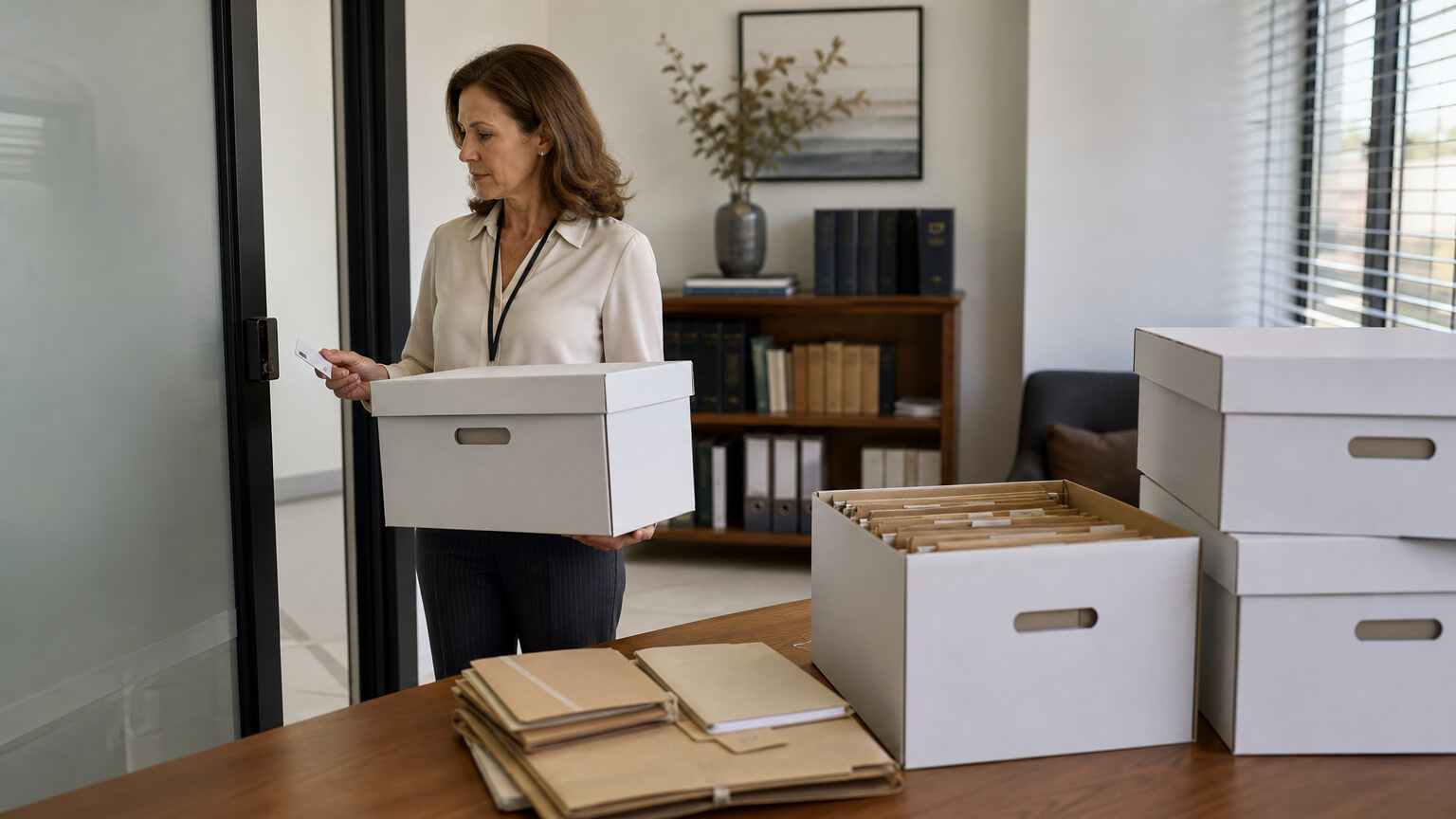
There comes a point in most offices when the filing room stops being a filing room and starts being an obstacle. Boxes stacked against the wall, shelves bowing under ring binders, the spare chair permanently buried under last decade’s conveyancing files. It is not a crisis. It is just a slow accretion of paper that nobody has had time to deal with yet.
When that moment arrives, most people search for “document storage” and find a wall of results. Some describe a clean room you rent and access yourself. Others describe a managed service where a company catalogues your files, retrieves them on request, and eventually shreds them when the retention period expires. The search results rarely explain which is which. This article does. Because the two things are genuinely different, and choosing the wrong one is an easy mistake that only shows up after you have moved forty boxes.
We offer the first kind: a room you control, a key you hold, and boxes you move yourself. Here is exactly what that means in practice, what it does not mean, and how to decide whether it fits what you need.
What people mean by “document storage”

Two very different services share the same phrase, and the confusion is worth clearing up before anything else.
A room you control versus a service someone runs for you
A self storage unit is a secure room that you rent by the month. You bring your boxes, you access them when you need to, and you take them away when you are done. Nobody else enters the room. Nobody catalogues your files or retrieves a specific folder on your behalf. You are the sole keyholder.
A managed archive service is an entirely different proposition. A records management company collects your files, indexes them into a catalogue, stores them off-site in their own facility, and retrieves named boxes or individual documents when you request them. When files reach the end of their retention period, they can arrange certificated destruction. Some of these services are climate-controlled vaults designed for sensitive or irreplaceable material. The price is higher, the service is broader, and the control is shared.
Neither is better in the abstract. They solve different problems. A self storage unit is a good answer if you need to move boxes off the office floor, keep them accessible, and retrieve them occasionally on your own timetable. A managed archive is a better answer if you need daily retrieval by a third party, indexed searching, or certificated destruction without any involvement from your side.
Where most search results quietly blur the two
Almost every page that appears on the first screen of results for “self storage for documents” describes the service as “secure, climate-controlled” with “24/7 access.” Some of those pages are selling self storage. Some are selling managed archives. Almost none of them are explaining which is which.
That framing is worth pausing on. Climate-controlled vaults and round-the-clock access are features of the managed archive market. They are not standard features of a self storage unit. A self storage unit is a clean, dry, secure room, which is a meaningful standard and a real promise, but it is a different thing. If you read the results without knowing what to look for, it is easy to assume all document storage is the same. It is not.
What a Wigwam self storage unit does well
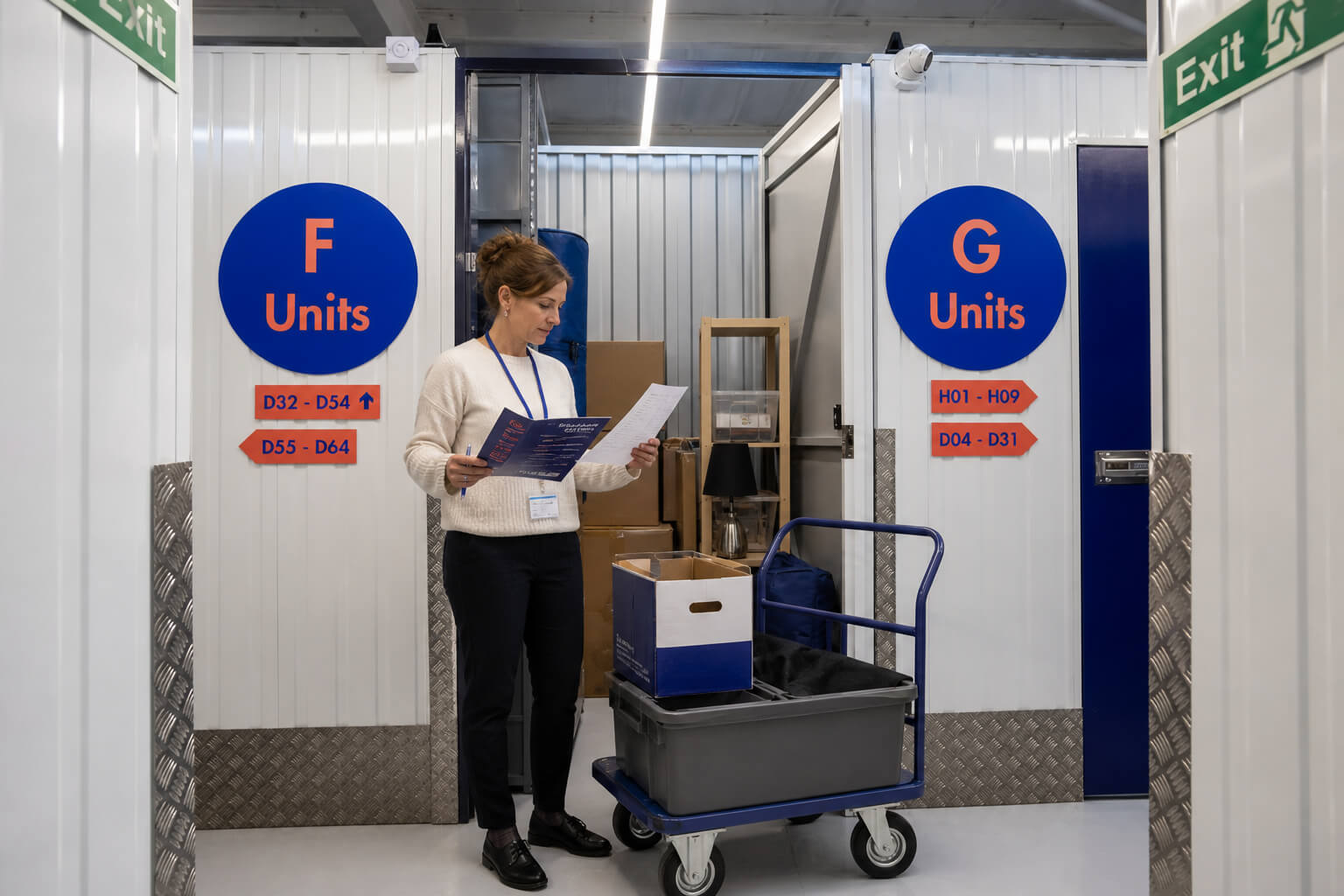
The genuine strengths of a self storage unit are real, useful, and worth stating plainly.
A clean, dry and secure room
Start with what matters most for paper records: the environment. A Wigwam unit is clean, dry and secure. That is the operating standard, and it is the one we stand behind. It means your boxes go into a room that is properly maintained, weathertight, and not a damp outbuilding or a leaky container.
For most paper records held for regulatory compliance or routine business purposes, clean, dry and secure is fit for purpose. It is not a temperature-controlled vault. It is not a humidity-regulated archive facility for irreplaceable historical material. That is a different product, and it is honest to say so. If your documents include rare materials or items sensitive to small variations in temperature or humidity, that is worth factoring into your decision.
The contents protection policy reinforces this point. The RSA “Self Storage Customers’ Goods” policy, which covers what you store with us, excludes atmospheric and climatic damage. That exclusion makes sense precisely because a self storage unit is a well-maintained room, not a climate vault. We say so clearly so you are not surprised later.
You hold the only key (individually alarmed units, smart entry)
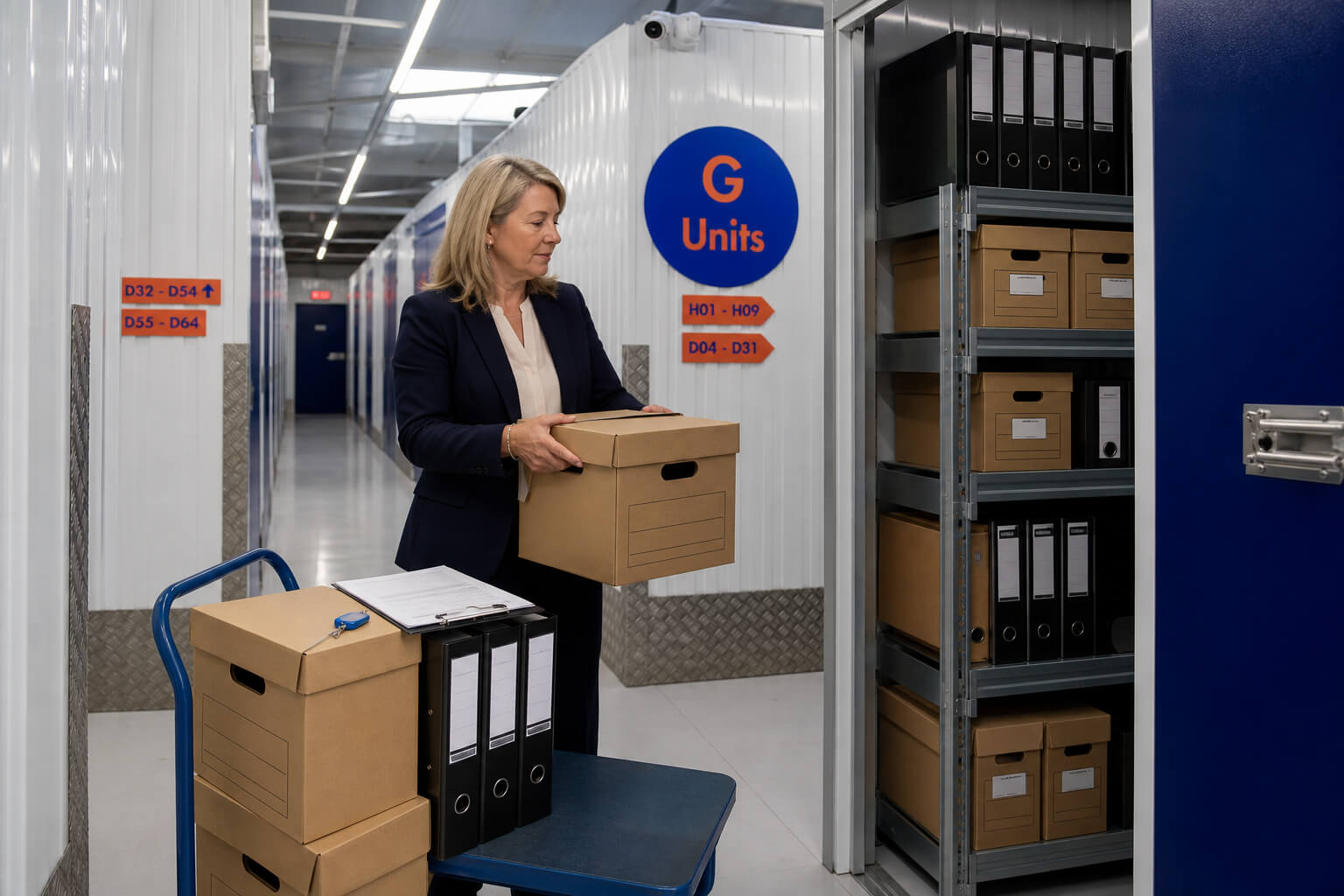
Each Wigwam unit is individually alarmed. When you take a unit, you are the sole keyholder. That is not a marketing phrase; it is an operational fact. Nobody from Wigwam holds a master key that grants access to your unit. Staff cannot enter it. Neither can another customer. Access comes through smart entry, which means you can get to your unit during access hours without needing anyone to let you in.
For a practice manager or records keeper, this matters at a practical level. The boxes in the unit are under the same sole-keyholder discipline as a locked cabinet at the office. Nobody else handles them. That is relief rather than a feature: you do not need to think about who else might have opened the door.
Flexible duration: two-week minimum, unused days refunded
Self storage for documents is often a transitional need. A premises move, a file clear-out before digitising, an office downsizing. The two-week minimum stay at Wigwam reflects that. If your archive project finishes ahead of schedule, unused days are refunded. You are not paying for time you did not use.
The start of a rental involves no deposit. When you are ready to leave, you give 14 days’ notice. Once you have vacated and the account is settled, any unused days are refunded, less anything owed. There is no lock-in beyond the notice period, and no minimum term beyond the initial fortnight. Full details are in the terms and conditions.
What a self storage unit does not do

This section is the one most likely to save you from a mismatch. Read it before you move the boxes.
It does not index, catalogue or retrieve your boxes for you
A self storage unit is a room. When you need a file, you go to the unit, find the box, and take the document out. Nobody does that on your behalf. There is no catalogue, no reference numbering system managed by us, and no retrieval service where you call ahead and collect a labelled box from reception.
If your firm needs someone to pull a named document at short notice, or if retrieval is too frequent to manage yourself, a managed archive service is the right category. That category exists and does the job well. It costs more and involves a service contract rather than a room rental, but it is the right fit for high-retrieval use. The point here is not to steer you toward Wigwam if the unit model does not match your working pattern. It is to make sure you know which model you are signing up for before you move.
It is not a shredding or destruction service
When paper records reach the end of their retention period, you will need to arrange secure destruction. Wigwam does not provide this. A records management provider or specialist shredding company handles end-of-retention disposal, and many offer a certificated destruction service that satisfies regulatory requirements. That is a separate arrangement you make directly.
It is not climate-controlled, and what “clean, dry and secure” really means
Clean, dry and secure is a real standard. It means the room is properly maintained, moisture-free, and weathertight. What it does not mean is temperature-controlled to a narrow band, or humidity-regulated. No Wigwam unit is described or marketed as climate-controlled, because none of them are.
For the vast majority of business paper records, this is not a limitation that matters. Standard archive boxes of legal files, tax records, accounts, conveyancing documents, or clinical correspondence do not require a climate vault. They require a room that is dry and secure. That is what a Wigwam unit provides.
If your documents include photographic negatives, fine-art prints, magnetic media, or any material with specific conservation requirements, a self storage unit is not the right answer. A specialist archive facility is. Say so once, clearly, before anyone commits.
Sites are unmanned, so nobody signs for couriers on your behalf
Wigwam sites are unmanned. That is part of how they operate efficiently for customers: smart entry means you access your unit during hours without needing a member of staff to open up or let you in. The trade-off is that there is nobody on-site to receive a delivery or sign for a courier on your behalf.
If you are expecting a delivery to your unit, someone from your own business must be present to receive it. Wigwam does not sign for packages, accept goods, or hold deliveries on customers’ behalf. If your document-storage workflow involves regular incoming deliveries of files, factor this into the planning. A colleague will need to be there.
Access and retrieval: 6am to 10pm, your key
Access to a Wigwam unit runs from 6am to 10pm, seven days a week, via smart entry. That is the access window. No exceptions are made outside those hours, and 24-hour access is not offered.
Why 6am to 10pm by smart entry fits most document-storage needs
For most professional offices, the filing retrieval pattern is: occasionally, during business hours, by the practice manager or a colleague. A solicitor needing an old conveyancing file, an accountant retrieving last year’s tax records, a GP practice manager pulling a historical patient summary. These retrievals happen within working hours and are planned rather than urgent.
6am to 10pm covers the working day and a margin either side. Smart entry means access without needing to arrange a meeting or wait for a member of staff. For this kind of low-to-medium retrieval pattern, the access window is not a constraint. It is simply what the service is.
When the access window does not fit and what to do instead
There are circumstances where 6am to 10pm is a genuine limitation. If your firm needs someone other than the keyholder to retrieve files on your behalf without accompanying you, that is not something a self storage unit supports. If you need access at midnight or before six in the morning, that is also not available.
If daily third-party retrieval, outside-hours access, or indexed pulling of named documents is essential to how your firm operates, a managed archive service is the right fit. The honest answer is to tell you this rather than let you discover it later.
Ready to move the boxes out of the office? If a clean, dry, secure unit under your own lock and key suits what you need, get a quote for a location near you at quote.wigwamstorage.co.uk.
Sizing and duration: how much space, how long

Getting the unit size right before you book saves a second trip. The numbers are simple.
Rough sizing by number of archive boxes
A standard banker’s archive box takes roughly one cubic foot of space. A small unit of around 25 square feet holds approximately 50 boxes stacked comfortably, with room to access them without unpacking everything. Larger units scale proportionally. If you are unsure, our team can help you scope the right size based on what you are moving. Better to ask before booking than to find the unit is a foot too narrow on collection day.
For context, a standard office of ten people generating a reasonable volume of paper might fill 50 to 80 boxes over five years of filing. That is a rough guide, not a survey. Your volume will vary by how much you have already digitised and how actively you archive rather than shred.
What it costs (no quotes on this page)
Unit pricing depends on location and size. We do not quote prices on this page because rates vary across our UK market-town locations and are best checked directly. For current UK self storage pricing, see our self storage pricing guide.
Self storage is almost always cheaper per month than a managed archive service at comparable volumes. The trade-off is that retrieval is your responsibility. That trade-off suits some firms well and does not suit others. Knowing that early is the point of this article.
Retention periods are your obligation to know, not ours to advise on
How long you are required to keep particular types of records is a matter for your professional body, your regulator, and the legislation that governs your sector. We do not advise on retention periods.
These obligations also vary by jurisdiction. The rules that apply to a solicitor’s firm in England and Wales are not identical to those that apply in Scotland or Northern Ireland. If you are unclear about your retention obligations, the right source is your professional body or a solicitor who can advise you directly. Do not rely on a self storage provider to answer this question.
Keeping your paperwork safe

Security for off-premises documents is a practical and often a regulatory concern. Here is what a Wigwam unit provides, and what to do about cover.
Security in practice: individually alarmed units, smart entry, sole keyholder
Each unit at a Wigwam site is individually alarmed. Your unit has its own alarm, not a site-wide system that protects everything loosely. Smart entry controls access to the site during operating hours. You are the sole keyholder: no Wigwam employee holds a key or access credential that opens your specific unit. CCTV is in operation at sites.
For a records keeper who needs to demonstrate that files are kept securely, these are real, verifiable controls. They are not vague assurances. The sole-keyholder model means you can say, with confidence, that access to the stored files is controlled by your firm and no one else.
Cover for what you store: RSA contents protection, opt-in or prove your own
Contents protection is mandatory at Wigwam. You either take the RSA “Self Storage Customers’ Goods” policy or provide evidence of your own existing cover that satisfies the requirement.
A few things to understand about the RSA policy before you commit:
It is New-for-Old. The excess is GBP 50. You are required to declare the full replacement value of what you store. If you under-declare, any claim is settled in proportion to the declared value versus the actual value. Declare accurately.
For theft, a claim requires evidence of forced entry to the unit. If a lock is removed but there is no physical evidence of forced entry to the unit itself, that affects the claim.
Atmospheric and climatic damage is excluded from the policy. That exclusion is consistent with the “clean, dry and secure” standard: this is not a climate vault, and the policy does not cover damage attributable to humidity, temperature change, or air quality.
The full terms of the policy are at the contents protection page. We signpost rather than advise. If you have questions about whether the policy meets your specific requirements, speak to your insurer or broker. Claims terms may also be interpreted differently in Scotland and Northern Ireland; we recommend seeking advice from an insurer familiar with your jurisdiction if you have any doubt.
Storing documents near you
One practical advantage of Wigwam’s model is location. Our UK market-town sites tend to sit closer to the offices that use them than a large national operator on the ring road.
Market-town locations across the UK
Rather than a single city-centre warehouse, Wigwam operates across our UK market-town locations, which means there is more likely to be a unit within a short drive of your office, rather than a committed trip across town. For a practice manager who retrieves files occasionally, proximity matters: the closer the unit, the more workable the retrieval pattern.
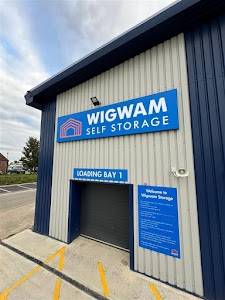
Two verified locations worth naming: Wigwam Self Storage Bath serves practices across the Bath area; Wigwam Self Storage Lincoln serves businesses across Lincolnshire. For all other towns, the locations hub lists every site currently operating.
Is a unit right for your documents? A plain decision guide
By this point you have the picture. Here is a clean steer before you decide.
When a self storage unit fits
A self storage unit is a good fit if: your records are kept for regulatory compliance or routine reference rather than active daily use; retrieval is occasional and you or a colleague can go to the unit during 6am to 10pm hours; confidentiality matters and you want sole-keyholder control rather than a third-party records company handling your files; and you want the flexibility to leave with two weeks’ notice and unused days refunded, without a long service contract.
Most professional practices storing completed case files, closed accounts, or historical clinical records fit this pattern. The files need to be reachable, not immediately to hand.
When a managed archive service fits better
A managed archive service is the better fit if: you need someone other than your own team to retrieve named documents on request; retrieval happens daily or outside 6am to 10pm; you require an indexed catalogue that a third party maintains; or you need certificated destruction at the end of a retention cycle without your team’s involvement.
These are not obscure requirements. They are the normal requirements of a firm with high document throughput and limited in-house resource to manage retrieval. If that is the situation, a managed archive is the honest answer, and it is available from records management specialists with exactly that service.
Next steps with Wigwam
If a clean, dry, secure room under your firm’s sole control is the right fit, the next steps are straightforward. Check the locations hub for a site near you. Get a sense of pricing at the self storage pricing guide. And if you have questions about sizing or the contents protection requirement, the contents protection page covers the policy detail.
At the start, you will pay your first period and confirm your contents protection arrangement. There is no deposit. The minimum stay is two weeks. After that, access is yours, 6am to 10pm, seven days, by smart entry. The key is yours. The boxes are yours. That is the whole arrangement, stated plainly, because that is the kind of operator we are.
Find a unit near you and get a quote at quote.wigwamstorage.co.uk.
Frequently Asked Questions
Yes, if you arrange it. The unit is under your firm’s control, and access works through smart entry rather than a single physical key handed to one named individual. That means a practice can set up access for more than one authorised person, so the partner who signed up is not the only one who can pull a box when they are out of the office. The point to understand is that access stays inside your firm. Wigwam does not hold a credential that opens your unit, and the site team cannot open it for anyone, including someone claiming to act for your practice. So while you can authorise a second colleague, you cannot phone the site and ask staff to let an unverified third party in. For a records keeper, that is usually the right balance: enough flexibility that retrieval does not depend on one person, but no back door that sits outside your own control. If you want to add or remove an authorised person later, that is a straightforward conversation with the team about the access setup at your location. Decide who needs access before move-in day, brief them on the 6am to 10pm window, and keep your own internal note of who holds access as part of your records governance. That note is your audit trail, not ours.
This is a fair question to ask before you commit, because closed-matter files carry obligations that outlast the storage arrangement. In plain terms: the boxes are your firm’s responsibility, and the unit is a room you rent, not a custodian service. If the account falls into arrears, the terms and conditions set out the process, including any charges that accrue and the steps before a unit can be repossessed. Because we hold no deposit, an unpaid balance has to be settled directly rather than set against money of yours. The serious point for a regulated practice is succession. If a firm winds down, merges, or a sole practitioner retires, the retention clock on those files keeps running regardless of what happens to the business. Your regulator and your professional indemnity position will dictate who takes responsibility for the archive, and that is a question for your compliance officer or successor practice, not for a storage provider. We do not advise on it. What we can say is that storing the files in a clearly identified, well documented unit, with a retention log kept at the office, makes any handover far cleaner than a back room nobody catalogued. Read the full account terms at terms and conditions.
The honest answer is that a Wigwam unit is a clean, dry and secure room, individually alarmed, in a properly maintained building, but it is not a fireproof or flood-proof vault, and you should not treat it as one. No general self storage unit is. For most business paper records held for routine compliance, a dry, secure, well kept room is the appropriate standard, and good packing in sealed archive boxes off the floor adds a sensible margin. Where this matters most is your contents protection arrangement, because the physical room and the financial cover are two different layers of protection. The RSA “Self Storage Customers’ Goods” policy is what stands behind the value of what you store, and the specific perils it covers or excludes are set out in the policy document, not by us. Climatic and atmospheric damage is excluded, which is consistent with the room not being a climate vault. If your records are genuinely irreplaceable rather than reproducible, for example original deeds or wills with no copy, that raises a different question about whether off-the-floor archive storage is the right home at all, or whether a specialist archive facility with enhanced environmental and structural protection is more appropriate. We signpost; we do not advise. For the cover detail, see the contents protection page, and for anything specific to your firm’s risk, speak to your insurer or broker.
You can resize as your needs change, and for a document archive that is genuinely useful, because the box count rarely stays still. As matters close, the archive grows. As destruction reviews clear older boxes, it shrinks. The flexible terms are built for exactly that movement: a two-week minimum, then 14 days’ notice to leave or change, with unused days refunded if you have paid ahead. In practice, moving up a size at the same site is the common path. If your boxes have outgrown a 25 square foot unit, you take a larger unit at the same location and move the boxes across yourself during your access window, then give notice on the old one. Moving between different towns is also possible, but worth thinking through, because the practical value of a document unit is proximity to the office for occasional retrieval. There is no on-site team to carry boxes between units for you, and no porter service, so a resize means your own time moving stock, ideally planned for a quiet morning rather than the day before a hearing. If you expect steady growth, it can be worth sizing slightly ahead at the outset to save a move later. The team can talk through availability and the right size at your location before you commit. The cost difference between adjacent sizes is usually small against the hassle of an unplanned move.
Yes, the storage arrangement is a normal business cost and is invoiced as one, which matters for a practice that needs to account for it properly and recover VAT where eligible. Self storage in the UK is a standard taxable supply, so VAT applies to the rental in the usual way, and your invoice will reflect that. For a solicitors’ or accountancy firm, this is simply another line in the practice overheads, treated the same as any rented space, and your own bookkeeping will handle it accordingly. What the support team can help with is the practical side: making sure the account is set up in the firm’s name rather than an individual’s, confirming the billing arrangement, and providing the documentation your accounts function needs. What they will not do is advise on how you treat the cost in your accounts or your VAT position, because that is your own professional territory and you are far better placed to judge it than a storage provider. There is no deposit to record separately from the rental charge, which keeps the bookkeeping simple. If you need the invoice in a particular format or addressed a particular way for the firm’s systems, raise that with the team when you set up the account rather than after the first bill lands. The full charging structure, including the notice terms, is in the terms and conditions.