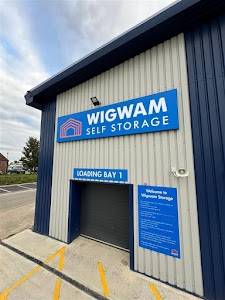
Paying office rent to house boxes nobody’s allowed to throw away?
Most practices reach the same point eventually. A corridor stacked with archive boxes. A filing room that was supposed to be a meeting room. Files nobody can throw away, because the rules say so, quietly consuming floor space the practice is paying rent on. It is not a crisis. It is just a slow, familiar squeeze.
We speak to a lot of office managers and practice partners in this position. They are not looking for a records-management company to take over their archive. They know what the files contain. They know the retention rules. They just need somewhere secure to put the boxes that is not costing them prime office space, and where they can get to a file themselves if they need it.
This page explains the self-storage route for business documents: what it includes, what it does not, and whether it fits your situation. If you need managed retrieval, indexing or secure shredding, we will say so plainly and point you somewhere better. If you need a secure, private, locked unit you control, read on.
Why practices keep boxes they cannot simply throw away
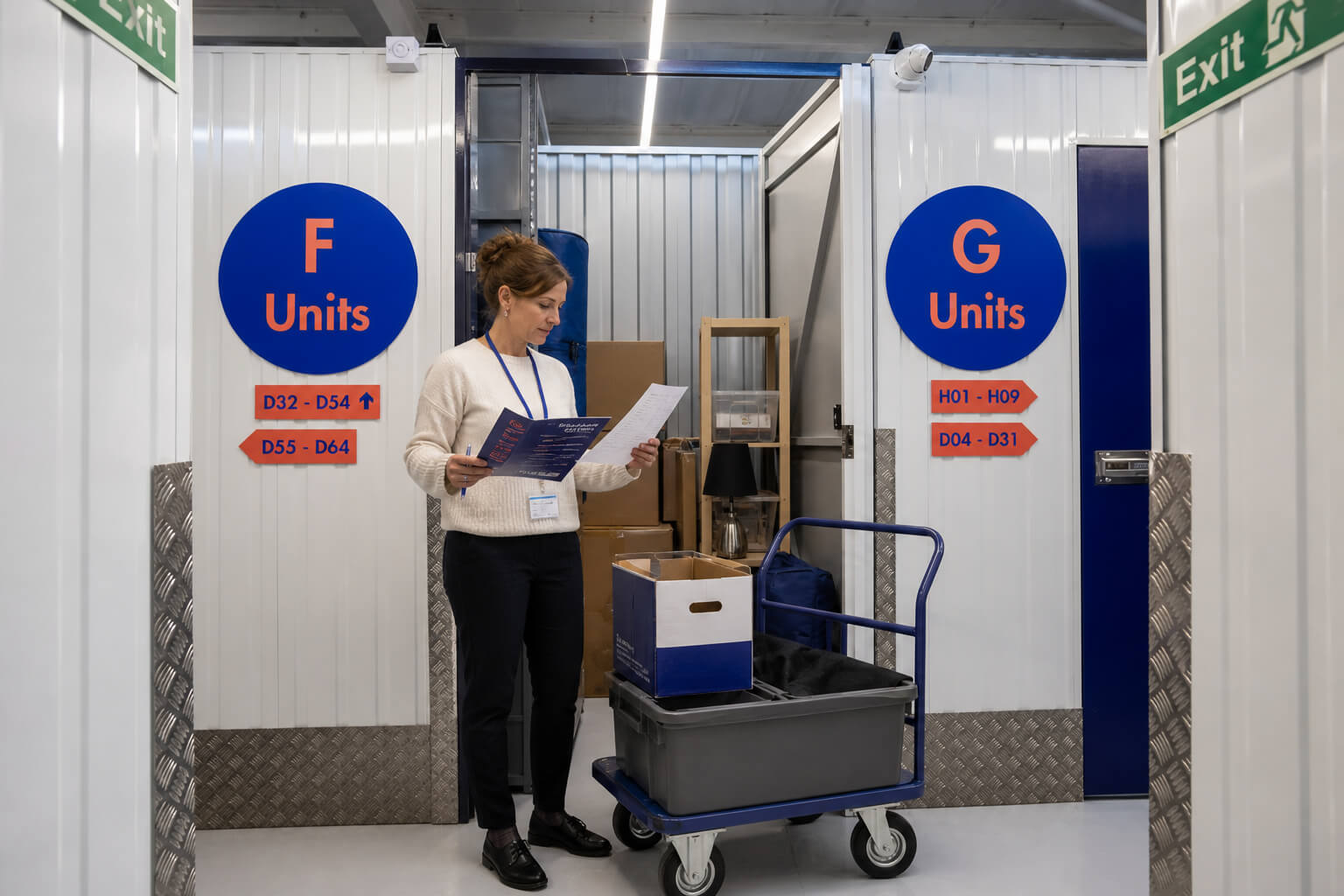
The decision to keep files long after a matter closes is not overcaution. For regulated professions it is a legal obligation, and the periods are longer than most people expect.
Retention rules vary by profession, and the periods are longer than most people expect
Solicitors operating under SRA rules typically retain client files for six years from the end of a matter, and much longer for property, wills, or anything involving a minor. Accountants regulated by ICAEW or HMRC generally hold client records for six years from the end of the relevant tax year, with some categories going further. GP surgeries and dental practices work under NHS and CQC guidance, which extends to ten years or more for adult patient records and until a patient’s 25th birthday for childhood records.
These are indicative figures only. The rules change, they differ by file type, and they differ if a claim has been raised. The SRA, ICAEW, and CQC publish current guidance for their respective professions.
Note on jurisdiction: the retention rules mentioned above apply in England and Wales. Scotland and Northern Ireland operate under different regulatory frameworks, with different professional bodies and different NHS governance. If your practice is based in Scotland or Northern Ireland, check with your own professional regulator or a solicitor qualified in your jurisdiction.
Our article on Records Retention for Solicitors and Accountants goes into more detail on specific periods by profession, when the counting starts, and what triggers an extension. The point here is simpler: for most practices, the archive is not going anywhere for years, and that is not a problem to solve. It is just a logistics question.
The office is not free: what archive boxes really cost
A standard archive box takes up about 0.05 square metres of floor space. That sounds small until you stack sixty of them in a room that was meant to be used for something else, and realise you are paying office rent on storage that earns nothing and retrieves rarely.
The cost is not just the floor space. It is the partner or receptionist time spent hunting for a file in a room with no system. It is the risk of misfiling in a space that is too full to organise properly. And it is the quiet administrative overhead of a filing room that nobody quite manages because it is not anyone’s job.
We do not publish storage pricing in this article because the right unit size depends on your volume and how it grows. You can see current sizes and costs at our pricing page. The comparison point is the rent per square foot you are paying for the space the archive is currently occupying.
When a managed records service is right, and when it is not
A managed records company collects your archive, holds it in their warehouse, and returns files on request. For some practices that is the right tool. If you need same-day courier retrieval of individual files, formal chain-of-custody documentation, indexed scanning, or secure shredding at the end of the retention period, a managed service is built for that.
Self storage is not. There is no retrieval team, no indexing, no shredding. What there is instead: a private, locked, individually alarmed unit that only you can open, at a fraction of the cost of managed records for sealed archives that you access occasionally yourself. If that fits the shape of your archive, the rest of this page is relevant. If it does not, a managed records service is the honest answer.
What Wigwam offers and what it does not

Before anything else: a clear statement of what is on the table, and what is not.
A secure, private, individually alarmed unit you control
Your unit is yours alone. No shared access, no shared floor space. The only way in is your smart-entry code. Every access is recorded digitally, so you have a log of who entered and when. That is your audit trail, held by you.
Each unit is individually alarmed. If the alarm activates on your unit, it triggers on your unit, not on a whole corridor. Access is available between 6am and 10pm, seven days a week. Units are clean, dry and secure.
There is no Wigwam staff member who holds a copy of your access code. Nobody from the Wigwam team can open your unit without your knowledge or consent. For a practice manager who is responsible for client confidentiality, that matters.
What is not included: managed records, retrieval, indexing, shredding, climate control
This is a self-access storage unit. Wigwam does not retrieve files, does not index your archive, does not provide shredding, and does not operate a chain-of-custody service.
Units are not climate-controlled. For most sealed business paper in archive boxes, that is not a problem. Paper held in a clean, dry, secure environment stores well for decades. Climate control is designed for humidity-sensitive materials like photographs, artwork, or certain electronic media. Standard office files in bankers boxes do not need it.
If a managed records service told you climate control was essential for paper archives, it is worth asking whether that is a feature of the product they sell rather than a requirement of the material you are storing.
We say this plainly because it is what we do not offer that earns trust here. No managed records, no retrieval, no indexing, no shredding, no climate control. For practices that need those things, a specialist managed service is the right route. For practices that need a secure, private, affordable place to hold a sealed archive they access themselves, Wigwam is worth considering.
Is self storage suitable for confidential files?
The short answer is yes, with the right understanding of what you are controlling.
Your unit is accessed only by you, via your smart-entry code. The digital access log records every entry. Wigwam does not hold a key to your unit. No third party has access to your files unless you give them your code.
Under GDPR, you remain the data controller for the personal data in your archive. Storing files off-premises in a unit you control does not transfer that responsibility to Wigwam. The ICO publishes guidance on data controller obligations for keeping personal data secure, and it applies whether your files are in your office, a managed records warehouse, or a self-storage unit.
We are not a compliance advisory service and this is not legal advice. If you have specific GDPR obligations or concerns about your firm’s data processing arrangements, your own data protection officer or a solicitor is the right person to speak to. What we can say is that the model itself, a private alarmed unit with recorded access and no third-party key holder, is a reasonable physical arrangement for sealed archives. Whether it meets your specific regulatory requirements is a question for your professional advisers.
Security and access: your own lock, your own log

The practical security picture is worth describing concretely, because “secure storage” means different things to different providers.
Smart entry and the recorded access log
Wigwam uses smart-entry technology. There is no physical padlock to cut, no key to lose, no code shared among site staff. You access your unit with your own code, and every entry is logged.
For a practice manager or compliance partner, that log is useful. If a regulatory query ever asks who accessed the archive files and when, you have a record. It is not a managed chain-of-custody system, but for a practice that accesses its own files on an occasional and controlled basis, the access log is a practical audit trail.
Access hours are 6am to 10pm, seven days a week. This is not a 24-hour facility. Plan your archive visits accordingly.
Individual alarms and site security
Each unit at a Wigwam site is individually alarmed. That means an incident on your unit triggers your alarm, not a site-wide alert that covers a hundred different tenants. The alarm is on your space.
Sites are enclosed and secured. We do not make fireproofing claims, because we do not offer a fireproof unit. Paper in a clean, dry environment in a secure building carries the same fire risk as paper in any other building. If fireproof document storage is a specific regulatory requirement for your profession, a specialist vault or managed records service with accredited fireproof storage is the right route.
Contents protection: what you need to have in place
Contents protection is mandatory when you store with Wigwam. You can take the Wigwam contents protection policy, or prove that your own business insurance covers goods stored off-premises.
Either way, declare the full replacement value of what you are storing. If you under-insure and make a claim, the settlement will be proportional to the declared value, not the actual value. For a practice archive, the value is probably not the paper itself. It may be the cost of reconstructing records, the professional liability exposure if files cannot be produced, or the regulatory consequence of losing a retention-compliant archive. Your insurer is the right person to help you place that value accurately.
You can find details of the contents protection options at wigwamstorage.co.uk/contents-protection/.
Note on jurisdiction: contents protection requirements and the legal interpretation of insurance obligations differ between England and Wales, Scotland, and Northern Ireland. Check the policy terms and speak to your insurer if you are in any doubt.
Access on your own schedule, no retrieval fees

The managed-records model charges you for access to your own files. Every retrieval is a transaction. That is fine when files are retrieved constantly. For a sealed archive that a practice visits twice a year, it is a premium you pay for a service you rarely use.
What it looks like in practice: pulling a file when you need it
A partner needs a client file from six years ago. With a managed records service, that means a phone call, a retrieval request, a wait for courier delivery, and a fee. With a Wigwam unit, it means driving to the site, entering your code, pulling the box, and leaving. Same morning. No charge beyond the unit you are already paying for.
That is the practical difference. Not every practice needs it. But for practices that visit their archive unpredictably, where a file might be needed for a complaint, an audit query, or a follow-on instruction, having direct access on your own schedule is worth more than the retrieval-fee arithmetic suggests.
Flexible terms: how the notice period and refund work
There is no long-term contract. Storage runs on flexible terms: give 14 days’ notice and your storage ends when you move out and settle the account. Unused days are refunded once you have vacated and cleared the balance.
No deposit is required at the start. The terms and conditions set out the full detail, and it is worth reading them before you start.
There is no lock-in beyond the notice period. If a practice changes size, moves premises, or digitises its archive, exit is straightforward.
Sizing: how much space does a business archive need?
A standard archive box is roughly 40cm x 30cm x 30cm. A 25 cubic foot unit holds approximately 40 to 50 standard boxes. A 50 cubic foot unit holds closer to 90 to 100. These are working estimates; how you stack and how much aisle space you leave affects the real number.
Most practices starting with a corridor’s worth of archive begin with a small to medium unit and increase if needed. Because terms are flexible, sizing up or down as the archive grows is straightforward.
No pricing appears in this article because it changes and varies by location. For current unit sizes and costs at the location nearest you, use the pricing page.
Ready to see what is available near your practice? Check unit sizes and get a quote at quote.wigwamstorage.co.uk. For a full list of sites, see our UK market-town locations.
How Wigwam compares to a managed records service

The comparison is worth making directly, because the two options serve different needs and the marketing of managed records services sometimes obscures that.
Cost comparison: per-box retrieval versus a flat unit fee
Managed records services typically charge in three ways: storage by volume, retrieval by box, and destruction by box. The storage cost is often lower than you expect. The retrieval cost is where practices get surprised, especially if a complaint or an audit generates a run of file requests.
Wigwam is a flat monthly unit cost. No retrieval fee. No destruction charge. No minimum order on access. The pricing page shows current costs. The comparison with your current managed records spend is a calculation worth doing before you dismiss self storage on price.
Control comparison: who holds the key
In a managed records warehouse, your files are in a facility you cannot enter. Retrieval is mediated by staff. The provider holds custody. That is a deliberate service model for high-volume managed archives, and it works well when the practice genuinely needs that infrastructure.
At Wigwam, you hold the only access code. Nobody from the Wigwam team enters your unit. The digital access log records every entry. If a regulatory body, an auditor, or a court asks who has had access to your files, you have a clean answer: you and anyone you have authorised.
For a practice manager who has personal accountability for client file security, the control model matters as much as the price.
When managed records is genuinely the better choice
There are situations where a managed records service is the right answer, and we will say so plainly.
If your practice needs same-day courier retrieval of files from a warehouse across the country, a managed service can do that. If you need your archive indexed so that individual documents can be retrieved without pulling an entire box, a managed service does that. If you need secure shredding with a certificate of destruction at the end of the retention period, a managed service provides it. If your profession requires formal chain-of-custody documentation on every file movement, a managed records contract is built for that.
Self storage does not do any of those things. If your archive access is occasional, self-managed, and the files go back and forth in boxes you carry yourself, the managed-records infrastructure is overhead you are paying for but not using. That is the gap self storage fills.
Finding a Wigwam unit near your practice

Wigwam operates across our UK market-town locations, chosen for exactly the kind of practice that carries a document archive: solicitors, accountants, GP surgeries, dental practices, and small professional firms in the towns and high streets where most regulated practices are based.
Our UK market-town locations
You can find the full list of sites at the locations hub. If your practice is in or near Bath, Wigwam Self Storage Bath is the nearest site. For practices in and around Lincolnshire, Wigwam Self Storage Lincoln covers that area. For all other towns, the locations hub will show which site is closest to you.
The drive time to a site is worth thinking about. Most practices access their archive unit a handful of times a year. A 20-minute drive to retrieve a file yourself is rarely a burden compared to the weekly cost of per-box retrieval fees on a managed contract.
Sites are unmanned: what this means for a practice
Wigwam sites are unmanned. There is no site office, no reception, and no on-site staff during access hours. You enter your unit using your smart-entry code, collect or deposit what you need, and leave.
This is relevant for practices that send deliveries to a storage address. Wigwam cannot sign for or receive deliveries on your behalf. If a courier is delivering archive boxes to your unit, someone from your practice must be present to accept them. Do not arrange deliveries to a Wigwam site expecting staff to receive them. The site is access-controlled, not staffed.
Starting your storage: what to expect
The process is practical and there is no long setup. Use the quote tool at quote.wigwamstorage.co.uk to choose a location, see available unit sizes, and get a cost. Read the terms and conditions before you start. No deposit is required at the outset.
Once the unit is confirmed, you move the archive in at your own pace. There is no Wigwam induction or onboarding process. You have a code, you have a unit, you have access from 6am to 10pm, seven days a week.
Questions we hear from practice managers

The specifics vary, but the questions that come up most often are about retention obligations, security, what we do not offer, and what happens to your contents cover when files go off-site. The FAQ section below covers all of these. If your question is not there, the most direct route is to use the quote form, which gives you the option to ask before you commit to anything.
What to do next
The next step is straightforward: find out whether there is a Wigwam location close enough to your practice to be practical, and see what a unit of the size you need costs.
Get a quote for your practice’s document archive
Use quote.wigwamstorage.co.uk to choose a location, check available unit sizes, and get a cost. There is no obligation and no call required. If you know roughly how many archive boxes you need to move, you will be able to narrow the unit size in the quote tool.
No pricing is published in this article because it varies by location and unit size, and because the right comparison for most practices is against their current managed-records contract or the cost of the office space the archive is occupying. The pricing page gives current figures by site.
Still not sure whether self storage is right for your situation?
If the archive is sealed, access is occasional, and cost control matters, self storage at Wigwam is worth a look. If retrieval is frequent, if individual documents need indexing, or if secure shredding is part of your obligation, a managed records service is the more appropriate tool. There is no hard sell here. The purpose of this page is to give you enough to make the decision yourself.
If you are a practice manager in a profession with specific retention duties and you have not checked the relevant regulator’s current guidance recently, that is worth doing before you design any storage arrangement. The SRA, ICAEW, CQC, and the relevant NHS bodies all publish current retention schedules. For Scotland and Northern Ireland, check the guidance from your equivalent professional body.
Related reading
Our article on Records Retention for Solicitors and Accountants covers the specific periods by profession in detail. The Business Storage section of the Wigwam site covers other common business uses alongside document archiving. Details of contents protection options are at wigwamstorage.co.uk/contents-protection/.
Ready to reclaim your filing room? Get a quote at quote.wigwamstorage.co.uk
Frequently Asked Questions
Since there is no managed indexing, the organising work is yours to do, but a small amount of discipline up front makes a self-access archive perfectly workable. The mistake to avoid is treating the unit as a place to stack boxes in the order they came off the shelf. The fix is a simple, consistent labelling scheme combined with a one-page location map you keep at the office, not in the unit. Most practices already number or date their archive boxes; the unit just needs that scheme carried through into how the boxes are physically placed.
A practical setup looks like this. Label every box on the side facing the aisle, not the top, because top labels vanish once boxes are stacked. Record on each box a unique reference, the date range, and the broad category. Then keep a master list at the office, ideally a spreadsheet, that maps each box reference to its rough position in the unit, for example “bay 2, third row, second from top”. Leave a central aisle so you can reach the back without unstacking the front, and put the boxes you are most likely to need, the most recent and the most claim-relevant, nearest the door. With that in place, retrieving a six-year-old file becomes a five-minute job rather than an afternoon of hunting. This is the trade-off of self storage over a managed service: you do the indexing, but you also avoid the per-retrieval fee every time you need something back.
You arrange the destruction yourself or through a specialist, because the unit is purely a storage space and we do not provide shredding or certificates of destruction. This is one of the genuine limits of the self-storage route, and it is worth planning for from the start rather than discovering at the end. When a file or a batch of files reaches the end of its retention period and you are satisfied, having checked the current regulatory guidance, that it can be destroyed, you have a few options. You can take the boxes to a commercial confidential-shredding service and receive a certificate of destruction from them. Some shredding firms will collect from a site by arrangement, though remember that the site is unmanned, so you would need to be present to hand the boxes over.
The important point is that destruction of records carrying personal data is itself a GDPR-relevant act, and you remain the data controller throughout. A casual trip to the tip with confidential client files is not appropriate; secure, documented destruction with a certificate is. If certified destruction at the end of retention is a frequent and significant part of your workflow, that is precisely the kind of need a managed records service is built around, and it may tip the balance for you. For a practice whose archive is largely dormant and whose destruction events are occasional and predictable, handling it yourself through a confidential-shredding specialist is straightforward and far cheaper than paying for a managed contract you otherwise rarely use. We can hold the archive securely up to the point of destruction; the destruction step itself is yours to arrange.
The archive stays exactly where it is, under your control, until you decide to move or transfer it, and the flexible terms make any of those changes simple to manage. There is no long lock-in beyond the 14-day notice period, so a merger, relocation or wind-down does not leave you trapped in a storage contract. If the firm relocates, you can simply keep the existing unit if it remains conveniently placed, or give notice and move the archive to a unit nearer the new premises. If the firm merges, the practical question is which entity becomes responsible for the records and the data-controller obligations attached to them, and that is a matter for the firms’ own advisers to settle, not for us.
A few sensible steps make these transitions clean. Keep the account details and the master box list somewhere accessible to whoever is managing the change, so the archive is not orphaned if a single individual leaves. Make sure the responsibility for the retention obligations and the eventual destruction is explicitly assigned in any merger or closure arrangement, because those duties do not disappear when a firm changes shape. When you do move or close the unit, you give 14 days’ notice, vacate, settle the account, and any unused days are returned. What we cannot advise on is the regulatory side of who inherits the records and the data-protection duties; that sits with your professional advisers and, where relevant, your regulator. Our part is to keep the archive secure and accessible throughout, and to make exit or transfer easy when the time comes.
That is a strategic decision for the practice, not one we can make for you, but a unit copes equally well with a shrinking paper archive as you digitise, and many firms run both in parallel for a period. Digitising has real attractions: searchable files, no physical bulk, and easier retrieval. It also carries its own considerations, including the cost of scanning, the need to ensure scanned copies meet any evidential or regulatory standard your profession requires, and the data-protection care needed during the scanning process itself. Whether a digital copy can replace the original, or whether you must retain certain originals on paper, depends on your profession’s rules, so that is a question for your regulator and your own advisers.
Where storage fits is as the flexible holding space while you work through it. Because the terms let you size up or down with 14 days’ notice, you can take a unit sized for the current paper archive and reduce to a smaller one as digitised batches are destroyed and the physical volume falls. There is no penalty for shrinking the footprint over time; that is exactly the kind of phased change the flexible terms are designed for. A unit can hold a mix without difficulty, the original paper you are still required to keep, the boxes awaiting scanning, and the batches cleared for destruction, all clearly labelled and separated by your own scheme. The honest summary is that self storage and digitisation are not competing choices; storage is the affordable, flexible home for the paper while you decide how far and how fast to digitise.
Access is controlled by the smart-entry credentials on the account, and managing who holds access as staff come and go is part of your own data-governance responsibility. The account holder controls who can enter the unit. If you want a trusted colleague, a partner, a practice manager or a designated records-handler, to be able to retrieve files independently, that access can be arranged so they can come in within the 6am to 10pm window, seven days a week, without coordinating with anyone, because the sites are unmanned. Every entry is logged digitally, which gives you a record of who accessed the archive and when, useful evidence of controlled access if a regulatory query ever arises.
Staff turnover is the point to stay on top of. When someone with access leaves the practice, their access should be removed promptly, exactly as you would revoke their access to your case-management system or the office itself. Leaving a former employee with the means to enter an archive of confidential client files is a clear governance weakness, and because you remain the data controller, keeping the access list current is your responsibility, not ours. A simple internal habit covers it: review who holds unit access whenever there is a joiner or leaver, and keep that review alongside your other offboarding steps. If you ever need to change the access arrangements on the account, that is a straightforward request. The model is designed so that access is always limited, recorded, and within your control, but it relies on you keeping the authorised list accurate as your team changes.