There is usually a shed door that will not shut properly any more, because the pots behind it multiplied over twenty summers and nobody ever thinned them out. A bench under an apple tree that has been there so long it has its own weather. A row of tools nobody remembers buying because half of them were somebody else’s first. When a village home in East Hampshire comes up for sale, this is the pile that stalls everything else. Not the furniture. Not the kitchen drawers. The garden.
In a hurry? Start here:
- Still turning it over, not sure yet? Read what the method actually is first.
- Decided, but stuck on the sort? Go to the real sticking point and how it played out for one Alton move.
- Already packing, staring at the maybe pile? Jump to the Alton move and what makes the trial realistic.
- Just want the honest facts before anything else? Go straight to what this doesn’t include or the Alton location page.
What the try-it-first method actually is
The try-it-first method is a simple rule for the pile you cannot decide on: store it for three months after you move, then decide what to keep, sell or let go, based on what you actually reached for, not on how you felt about it on moving day. It exists because moving day is the worst possible moment to judge whether you will miss something. You are tired, the van is waiting, and everything feels either irreplaceable or expendable depending on how many boxes are left. Three months later, living in the new place, you know.
Why three months, not a moving-day decision
Three months is long enough to live through a full change of routine in the new place, long enough to know if the courtyard really has room for the pots, or the tools really do not fit the new plot, and short enough that it never turns into an indefinite hold. It is not an arbitrary number picked to sound reassuring. It works because of how Wigwam’s own terms are structured: you give 14 days’ notice whenever you decide to stop, and any unused days on your final billing period come back to you. So choosing three months is not agreeing to a Wigwam plan. It is your own pacing, and you can shorten it the moment you know.
What if you decide before the three months are up
Nothing holds you to the full three months. If you know after six weeks that the bench fits and the rest of the tools do not, give your notice, collect what you want to keep, and the days you have not used are refunded. The three months is a ceiling for thinking it through properly, not a floor you have to sit through.
The village downsize’s real sticking point
In a village move, the hardest pile to sort is rarely the furniture or the kitchen things. It is the garden: the pots, the tools, the things that only make sense next to a bed you dug yourself. A sofa is just a sofa wherever it ends up. A terracotta pot holding a cutting from a rose that has already moved house once before is a harder thing to leave on the pavement for the council to take. Nobody plans to be undone by a trowel. It happens anyway.
How it played out for one Alton move
Here is how the method plays out in practice, for one composite village-to-bungalow move near Alton. It is not a real customer’s story. We have not shared any customer’s private circumstances. But it is the pattern this method is built to handle.
The moving-day pile
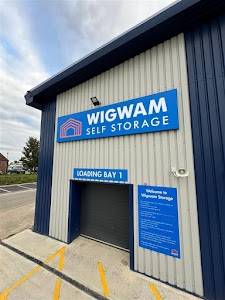
The reader in this example was leaving a cottage near Alton, in the kind of village where a garden is not incidental. The maybe-pile that would not resolve itself on moving day: terracotta pots collected over twenty-odd years, several holding cuttings from a rose bed that had already been moved once before, from the cottage before this one. A wooden bench that had sat under an apple tree for three decades. A near-complete set of garden tools, several inherited rather than bought. Two half-used bags of a soil improver almost certainly wrong for a bungalow with a paved courtyard. Rather than sort any of it under time pressure, the whole lot went into a single unit at Wigwam Self Storage Alton on moving day. Nothing was decided. Everything was simply kept safe.
What three months actually showed
The first few weeks were about settling in, and the paved courtyard turned out to have room for exactly two large pots, something that only became obvious once the reader was living there day to day, rather than still packing boxes. In month two, a trip back to the unit, no appointment needed, brought home the two pots with the strongest rose cuttings and the smaller hand tools. Everything else stayed in store, still undecided. By month three, once a corner of the new, smaller garden was confirmed to fit it, the bench came home too.
What was kept, sold or let go, and why
The tools sized for a garden that no longer existed went to a neighbour taking on an allotment. The soil improver was given away, not because it counted as clutter but because it was answered by a fact rather than a guess made in a rush: there was no bed left to put it on. Had everything been sorted on moving day instead, the likely result was either skipping the pots and cuttings entirely and regretting it once the courtyard proved big enough, or keeping everything just in case and turning the unit into a permanent hold rather than a real decision. The three months converted a moving-day guess into something decided from inside the new life. Two pots, the strongest cuttings and a bench under whatever tree comes next, carried forward rather than left behind.
What makes the trial realistic at Wigwam Alton
None of this works if getting back to your things turns out to be hard. Three real terms at Wigwam Alton back the trial up, not just goodwill.
The three terms that make three months low-risk
| Term | What it means for the trial | Source |
|---|---|---|
| Access 6am to 10pm, seven days | Go back for the pots or the bench without booking an appointment | Wigwam FAQs and the Alton location page |
| 14 days’ notice to leave | No long lock-in, the three months is your own pacing, not a contract minimum | How notice periods work |
| Unused days refunded | Ending the trial early, say you realise in month one that nothing is missed, costs nothing extra | How notice periods work |
If any part of the garden pile is already at Wigwam Alton, or you are weighing up whether it should be, it is worth seeing the unit for yourself before you decide anything about what goes in it.
What this method doesn’t include
A few things worth knowing before you start, because not every storage listing near Alton is upfront about them.
| What Wigwam Alton offers | What it isn’t |
|---|---|
| Clean, dry and secure storage | Not climate or temperature-controlled, worth knowing if you are storing garden tools or furniture through a change of season |
| Access 6am to 10pm, seven days | Not 24-hour access. Some local listings advertise round-the-clock entry; Wigwam Alton does not, and we would rather say so plainly than let you assume it |
| Personal and domestic unit storage | No container storage at this site. Wigwam offers container storage only at Shipston-on-Stour, Chipping Norton and Warminster, so if that is genuinely what you need, those are the three to ask about |
| Household and garden items | No vehicle, motorcycle or caravan storage |
No deposit is taken when you book. When you leave, your notice period is served, the unit is vacated and your account is settled, and any unused days are refunded. The full mechanics are on the notice periods page, and the team at Alton can confirm the exact amount for your booking.
East Hampshire’s villages and the garden habit
Alton sits at the edge of a run of villages where a garden is not incidental. It is part of daily life, which is exactly why leaving one behind takes more adjusting than the move itself. Two miles away is Chawton, Jane Austen’s village, still ringed with the kind of cottage gardens that make the whole area feel unhurried. Further out, Four Marks and Bentley sit toward the Farnham and Bordon corridor, against the edge of the South Downs: market-town and village life within a short drive of open country. It is not a coincidence that so many of the moves into and around Alton involve a garden of some kind. It is usually the reason the whole search started.
Your next step, in your own time
There is no deadline on deciding what the garden things are worth to you. The three months exist so you do not have to decide today. If you are still turning the idea over, or already halfway through packing and staring at a pile you cannot make a call on yet, the Alton unit is worth a look before you decide anything else. For the wider sort, beyond just the garden, our guide to downsizing after retirement covers the rest of the house at the same unhurried pace.
Frequently Asked Questions
Three months is what we suggest for the try-it-first method, long enough to know what you actually miss, but you are not locked into that figure. You can end your storage with 14 days’ notice whenever you are ready, and unused days are refunded.
Access at Wigwam Alton runs 6am to 10pm, seven days a week, with no appointment needed, so you can collect anything from your unit whenever you need it during the trial.
No. We don’t take a deposit. When you leave, your notice period completes, the unit is vacated and your account is settled, and any unused days are refunded. The full detail is on our notice periods page.
No. Wigwam’s container storage is only available at Shipston-on-Stour, Chipping Norton and Warminster. Alton offers personal and domestic unit storage; if container storage is what you need, our team can point you toward the right site.
Household and garden items are welcome, but there are general restrictions on hazardous items such as fuel, gas canisters and certain chemicals. Our team at Alton can talk you through what is and is not suitable for your unit.