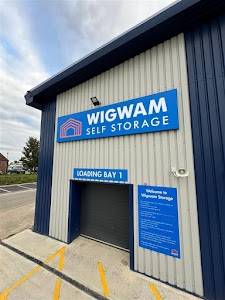
Will the pieces you staged this morning still be pristine for the next job?
You spend the morning moving furniture into a house that needs to look like somewhere people want to live. By the afternoon, you have a van full of the pieces you moved out, and a unit of props and decor that needs to be back in good shape for the next job. The furniture goes somewhere. The question is where, and whether it will still be in the same condition when you need it again.
Most storage pages are written for the homeowner who has just been told to declutter before the estate agent’s photographer arrives. This one is for the person who does the staging for a living, and for the homeowner they are going to refer on. The two needs sit alongside each other, but they are not the same thing.
If you are a home stager or property stylist looking for a trade base near your patch, or a homeowner who has just been told by their stager to clear the rooms before listing, read on. The answers to the practical questions are here.
Why home stagers use self storage
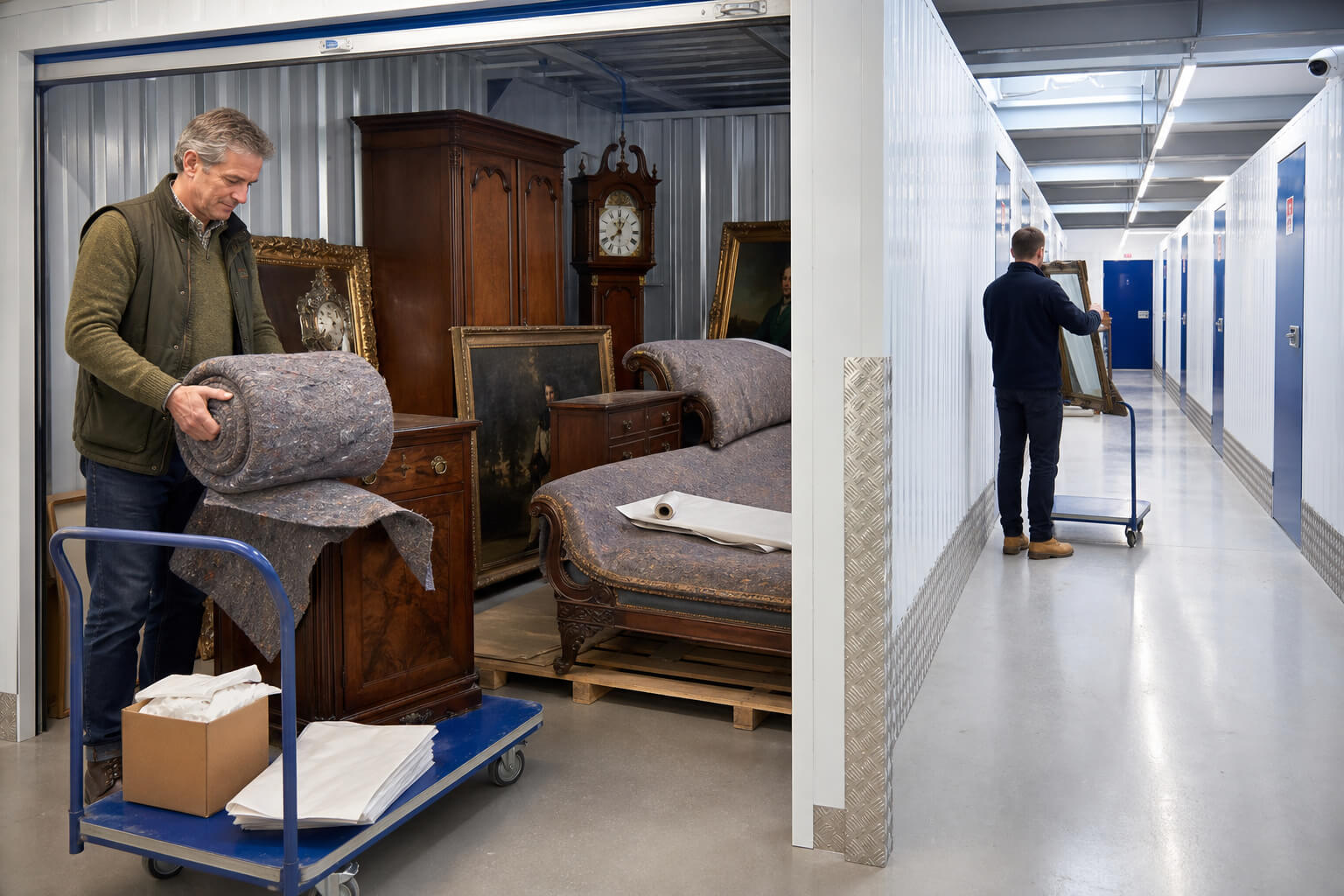
A staging inventory is a working asset, not a collection of spare furniture waiting for a home. Self storage gives it a fixed address.
Stock scattered between a van, a spare room and a lockup that made sense three years ago is stock that takes twice as long to load. Every restock run becomes a retrieval exercise. A fixed unit changes that. It gives you a place where the rugs are rolled, the lamps are stacked, the mirrors are padded and everything is where you left it. When the job brief lands, you know what you have.
A base for your styling inventory between jobs
Staging inventory is the kind of thing that needs to live somewhere consistent. Rugs get damaged when they are moved too often. Neutral cushions pick up marks from van floors. Accent chairs that live in three different places tend to look like they have done exactly that. A unit that holds your working inventory between commissions is not overhead. It is the infrastructure that makes the job possible.
A 25 square foot unit handles lighter decor: lamps, cushions, mirrors, framed prints, small decorative pieces. A 50 to 75 square foot unit is closer to what a mid-size staging inventory needs once you add accent furniture, a chair or two, rugs and props. How much space you actually need depends on what you carry and how many jobs you run in parallel. The sizing section below has more on that.
The furniture a client needs to clear before listing
When an estate agent or stager tells a homeowner to depersonalise before listing, the homeowner usually has the same question: where does everything go? The oversized sofa that makes the lounge feel tight. The chest of drawers that fills the spare room. The boxes that have been in the hallway since the last move.
A homeowner in that position needs somewhere safe for a short stretch, with no pressure to commit for longer than the sale takes. The flexibility section below covers how that works in practice.
What changes when storage is built for the way you work

Most storage is designed for someone who drops things off and collects them when they are done. A stager needs something different: in and out on their own schedule, not dependent on collection windows or fixed opening times.
The gap between those two things matters more than it sounds. A mobile drop-container service works on the container provider’s schedule. It takes the pieces away and returns them when you book. For a homeowner storing the sofa for three months, that is fine. For a stager who needs to pull a rug and two accent chairs for a job tomorrow morning, it is not a workable arrangement.
Drive in, load the van, load out the same day
Smart entry from 6am to 10pm, seven days a week, means you can be at the unit before 7am, loaded and at the property before the photographer arrives. You can drop everything back the same evening after the shoot, before the units close at 10pm. There is no booking window. You let yourself in, take what you need and leave.
That is what drive-up access means in practice. You load what you need, leave what you do not, and the unit is ready for the next visit exactly as you left it.
Individually alarmed, clean and dry units
Each unit is individually alarmed, and the condition is clean and dry. That is what keeps a white lamp shade white and a linen cushion smelling like a linen cushion rather than a damp lockup. For furniture, soft furnishings, rugs, lamps, mirrors and standard staging decor, that environment is what you need.
One honest note: Wigwam units do not offer climate control, meaning no temperature or humidity regulation. For most staging inventory, this makes no difference. For a stager holding genuine antiques, fine art on canvas, leather pieces or materials that are genuinely sensitive to humidity shifts, those items belong in a specialist facility built for them. We would rather say that plainly than have good stock deteriorate.
Why drive-up access beats a collected container for a working stager
A mobile storage container gives you a delivered box that goes when you are done with it. That is a reasonable answer for a homeowner who is clearing rooms once. It is not a practical arrangement for a stager who needs to restock from the unit twice a week on a schedule nobody else controls.
With a drive-up unit at one of our UK market-town locations, you are not waiting for anyone. You access your own unit in your own time, load what the job needs, and go. The sites are unmanned. You control your own access from 6am to 10pm. If a supplier or courier needs to drop staging stock at your unit, someone from your business needs to be on site to receive it. We do not sign for deliveries on your behalf, and the site is not staffed to do so.
Choosing a market-town base near your patch

Wigwam’s locations are in UK market towns, which means a unit is usually close to a residential staging patch without city-centre pricing or city-centre traffic at 7am.
Wigwam towns across the South and Midlands
The towns we cover include Bath, Cheltenham, Reading, Leatherhead, Marlow and more across the South and Midlands of England. If your patch runs through Somerset, a unit at Wigwam Self Storage Bath in Bath sits in the centre of one of the busiest residential staging markets in the South West. If your work takes you further north, Wigwam Self Storage Lincoln in Lincolnshire gives you a market-town base for the East Midlands.
For Cheltenham in Gloucestershire, Reading in Berkshire, Leatherhead in Surrey, Marlow in Buckinghamshire and all our other locations, the full locations list shows what is nearest to your work.
The right base is the one that cuts the most time out of your restock run. If you are driving 45 minutes to load the van before a job, that is time you are spending on logistics rather than staging. A unit ten minutes from your usual patch changes the day.
What size unit do you need

The size depends on whether you are holding a working inventory, clearing a client’s home, or both at once.
Holding a styling inventory
For a small and selective styling kit, a 25 square foot unit handles lighter pieces: cushions, lamps, framed art, smaller decorative objects, folded textiles. It is the right size if you work with a focused range of decor and do not carry large furniture.
For a fuller inventory with accent furniture, a unit in the 50 to 75 square foot range is closer to what most working stagers need. That gives you room for a couple of accent chairs, a stack of framed mirrors, rolled rugs, lamps with shades packed off, and the boxes of smaller decor that take up more room than you expect when they are properly padded.
How quickly you need to scale also matters. Some stagers need a larger unit in spring and autumn when jobs are busiest, and a smaller one in quieter months. Sizing and current prices are at the Wigwam pricing page, and a quote will give you an exact figure for the size and location you have in mind.
Clearing a client’s home
A three-bedroom home clearance for a homeowner who is staging before listing typically needs somewhere around 50 to 75 square feet, depending on how much furniture stays and what is being held. A four or five-bedroom property with larger pieces and more personal effects to clear generally needs 75 to 100 square feet or more.
These are guidance figures, not guarantees. The actual space needed depends on the specific property and how much is being moved out. The most useful starting point is a quote based on what you are holding. Get one at quote.wigwamstorage.co.uk.
How long does it run, and how does it flex around a sale
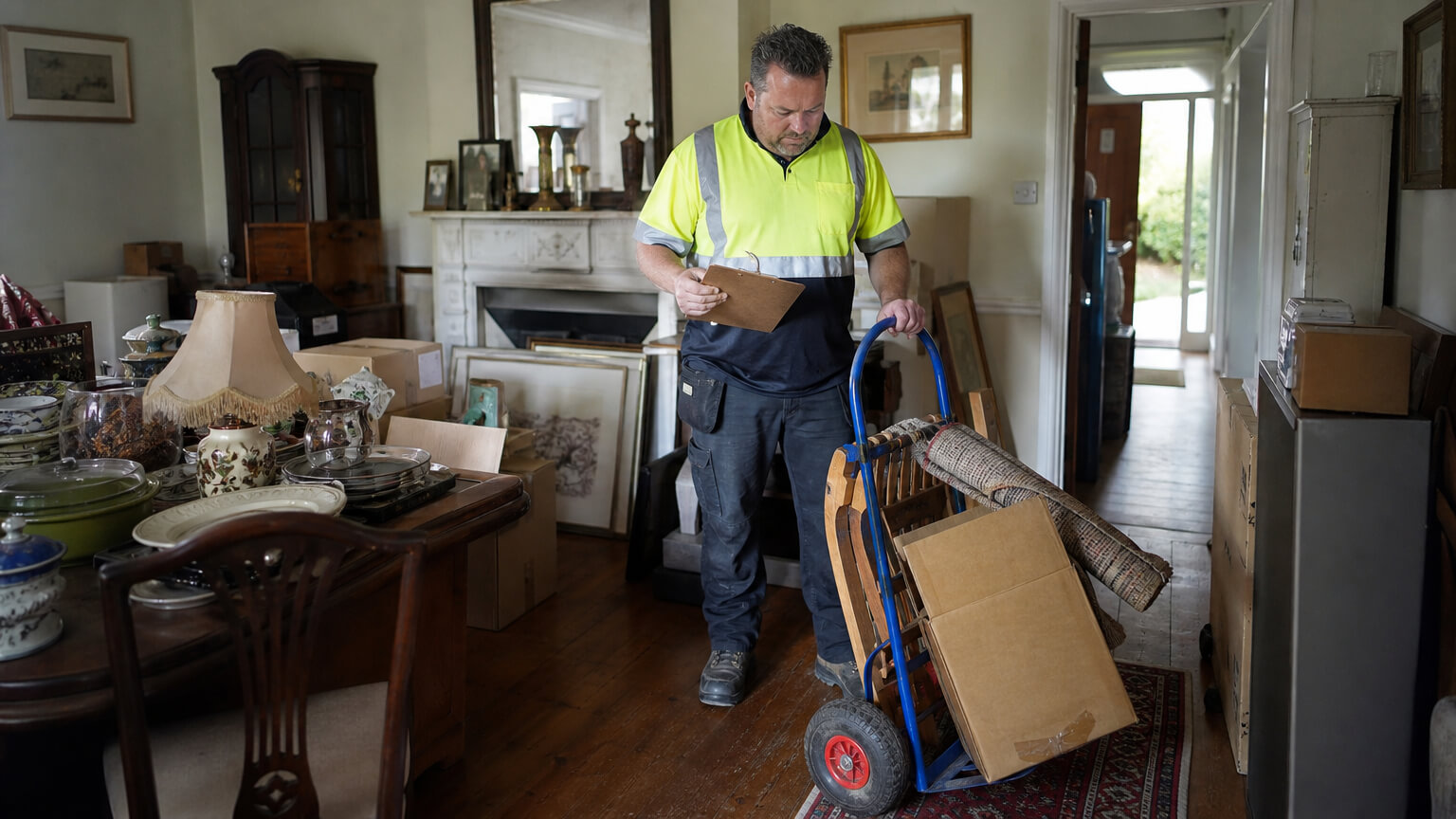
Storage tied to a commission or a house sale needs to move when the work moves. Wigwam’s terms are built for short, predictable stretches with a clear exit.
Two-week minimum, no deposit, 14-day notice and refund of unused days
The minimum stay is two weeks. That covers a standard staging job that runs from setup through to the first viewings, with room to extend if the sale takes longer than expected.
There is no deposit. Here is how leaving works: you give 14 days’ notice when you are ready to vacate, leave the unit empty, and settle any outstanding balance on the account. If you leave before the end of a paid period, the unused days are refunded. You are not paying for time you do not use.
For a stager, that means you are not locked into a unit between commissions if the next job is six weeks away. For a homeowner staging a sale, it means the storage flexes with the sale timeline rather than running on regardless.
The full terms are at wigwamstorage.co.uk/terms-conditions/.
Ready to work out what you need? If you know roughly what you are holding and how long the job runs, the quickest next step is a quote. Get a quote at quote.wigwamstorage.co.uk
What it costs
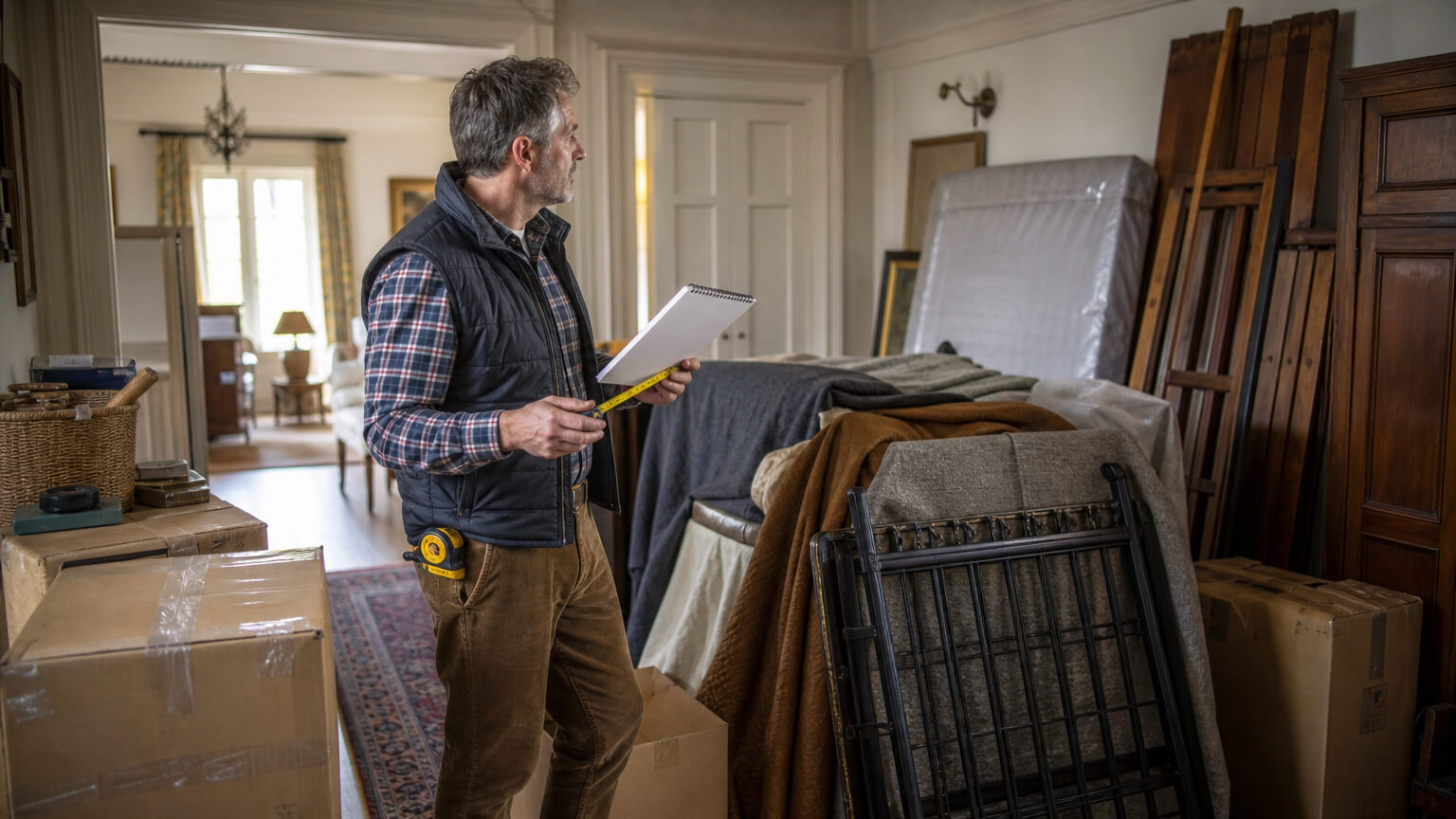
Unit prices depend on the size and the location. Current rates are on the pricing page.
How pricing works and where to see current rates
We do not list prices on this page because they vary by unit size and site. The clearest way to see what applies to your patch is the Wigwam pricing page, which covers how pricing works across our locations.
One thing worth noting: the two-week minimum and the refund of unused days mean you are only paying for the time you actually use. A stager who runs a unit for three weeks and then vacates is not subsidising a month they did not need. A homeowner whose sale completes earlier than expected can leave when the keys change hands and get the unused days back.
For an exact figure, a quote gives you the number for the specific unit size and location you are considering.
Protecting your inventory and your client’s belongings

Whatever goes into the unit is the responsibility of the person who rents it. If it belongs to a client, the stager’s reputation sits behind that responsibility too.
What clean, dry and secure means in practice
The units are individually alarmed, clean and dry. That is the real claim, and it covers what most staging inventory needs. Furniture, soft furnishings, rugs, lamps, mirrors, neutral decor, client personal effects: all of these are suited to a clean, dry, individually alarmed unit.
What it does not mean is climate control. Wigwam units do not regulate temperature or humidity. For staging inventory that does not include items genuinely sensitive to environmental conditions, this makes no practical difference. For a stager who holds original artwork on canvas, genuine antiques or materials that need a controlled environment to stay in good condition, those pieces belong in a specialist facility. We think it is more useful to say that clearly than to overstate what the unit offers.
Contents protection: take Wigwam’s policy or prove your own
Contents cover is mandatory. You either take Wigwam’s policy or provide proof of your own equivalent cover before moving in.
Wigwam’s policy is arranged through RSA under the Self Storage Customers’ Goods scheme. It is New-for-Old, carries a £50 excess, and requires you to declare the full replacement value of everything in the unit. If you declare less than the full value and you make a claim, the settlement is proportional to the shortfall. A stager holding a £12,000 working inventory who declares £6,000 and suffers a total loss will not receive £12,000. Declare accurately.
Stagers carrying professional inventory should check whether a standard home or public liability policy extends to stock in third-party storage, and what the declared-value requirements are. Homeowner clients should check whether their home insurance covers belongings held off-site and in what circumstances.
The details of Wigwam’s policy are at wigwamstorage.co.uk/contents-protection/. For questions about specific items or policy limits, speak to your insurer or broker.
A note on jurisdiction: Contents protection guidance on this page reflects the position in England and Wales. Insurance regulation, policy conditions and consumer protections in Scotland and Northern Ireland may differ. If you are based outside England and Wales, check with your own insurer or broker before relying on any general information about storage insurance.
Recommending Wigwam to your staging clients
When a client asks where to put the sofa you are replacing, your answer reflects directly on how you work.
What to tell a client who needs short-term clearance
A homeowner who has been asked to depersonalise before listing needs reassurance on three things: that their belongings are somewhere safe, that they can access their own things if they need to, and that they are not locked in for longer than the sale takes.
The practical answers: the unit is individually alarmed and the condition is clean and dry. Smart entry runs from 6am to 10pm, seven days a week, so your client can visit their unit during access hours without needing to contact anyone. The sites are unmanned; your client lets themselves in and manages their own space. If a courier or removal firm needs to drop items at the unit, someone from the client’s side needs to be present. The site is not staffed to receive deliveries on anyone’s behalf.
On the commitment question: the two-week minimum and 14-day notice period mean the storage ends when the sale is complete, not on a landlord’s schedule. Unused days are refunded after the 14-day notice, once the unit is empty and the account is settled. There is no deposit.
For the details your client can read themselves, point them to the terms page and the contents protection page.
Getting started with a quote
Whether you are getting a unit for your own staging inventory, setting one up for a client, or both at once, a quote gives you the number for the specific size and location that fits your work.
Find the nearest location to your patch at wigwamstorage.co.uk/self-storage-locations/, then get a quote for what you need.
Find a unit near your patch, or get a quote for a client job.
Get a quote – quote.wigwamstorage.co.uk
Find a location – wigwamstorage.co.uk/self-storage-locations/
Frequently Asked Questions
Yours, as the account holder, unless you arrange otherwise. When you rent the unit, contents cover is mandatory and it is based on the full replacement value you declare for everything inside. If you are holding a client’s belongings under your own account, those goods sit under the cover attached to that account, and the value you declare needs to include them. Declare short and any claim is settled in proportion to the shortfall, so a client’s sofa is only protected to the extent you have accounted for its value.
This is worth getting straight before you offer to hold a client’s things, because it carries a reputational risk as well as a practical one. There are two clean ways to handle it. Either you take Wigwam’s RSA Self Storage Customers’ Goods policy and declare the combined value of your inventory plus the client’s items, or the client takes their own unit and their own cover so the responsibility sits with them. For a homeowner clearing their house before listing, the second route is often tidier: their goods, their account, their cover.
What you should not do is assume your professional or public liability policy automatically extends to a client’s goods in third-party storage. It may, it may not, and the declared-value requirements differ. That is a question for your insurer or broker, not for us: we provide the storage and signpost the cover that applies inside the unit, but we do not advise on policy. If you are routinely holding client property, get the cover arrangement confirmed in writing so everyone knows where they stand.
Yes, and a lot of stagers do exactly this. Staging work tends to peak in spring and autumn and quieten in between, and there is no requirement to hold one fixed size all year. The way it works is that scaling up usually means taking an additional unit when a busy run of jobs needs more inventory out and ready, and scaling down means releasing a unit when the quiet months arrive. There is no penalty for either, beyond the two-week minimum that applies to any unit.
To release a unit you give 14 days’ notice, empty it, and settle the account; any days you have paid beyond the notice period are refunded once it is clear. No unit carries a deposit. To add space you simply book another unit, subject to availability at your site. Because Wigwam charges month by month with a short notice period rather than locking you into a long contract, the arrangement flexes with your workload rather than against it.
A couple of practical notes. Availability of a second unit at your chosen town is not guaranteed at peak times, so if you know spring is going to be busy, it is worth talking to the team early rather than assuming the space will be free. And there is no single unit that grows and shrinks: scaling means adding or releasing whole units, so plan which inventory lives where. Get a quote for the sizes you are considering and the team can talk through what is available at your patch.
Pack them dry, padded, and off the floor, and they will come out of a clean, dry unit in the same condition they went in. The unit gives you a clean, dry, secure environment, but the day-to-day protection of delicate decor comes down to how you pack it. The good news is that staging inventory is exactly the kind of thing this environment suits, so you are working with it, not against it.
Here is a simple approach by item type:
- Rugs: roll, never fold, to avoid permanent creases, and wrap in breathable material rather than sealed plastic. Stand them upright if you can so nothing heavy compresses them.
- Lamps: remove and box shades separately so they keep their shape, and pad bases to stop knocks. White and pale shades stay clean in a dry unit, which is the whole point.
- Soft furnishings: make sure cushions and throws are fully dry before they go in, and use breathable bags rather than sealed bin liners, which trap moisture against the fabric.
- Mirrors and framed art: pad and store upright, edge down, not flat where they can be leaned on.
Keep everything off the concrete on a pallet or shelving, label boxes so a restock run is quick, and pack consistently so you know what you have at a glance. The unit being clean and dry means there is no damp to fight; your job is simply to pack well and stack sensibly. There is no climate control, so for genuine antiques, leather, or canvas art that is sensitive to humidity, those pieces belong in a specialist facility rather than a general unit.
It usually is, but the detail is a question for your accountant rather than for us. For most self-employed stagers and styling companies, a unit used to hold working inventory is the kind of business overhead that is commonly deductible against trading profit, in the same way van costs, props and insurance often are. Plenty of working stagers treat their unit as a straightforward cost of doing business. What we cannot do is tell you how it applies to your specific setup, because we are a storage provider, not a regulated financial or tax adviser.
What we can give you is clean paperwork. We provide proper invoices for your storage as standard, which is what your accountant needs to record the expense correctly. Keep those with your other business records and your accountant can advise on the treatment.
A point to watch: if you use the unit for a mix of business inventory and personal items, the deductible portion may need to be apportioned, which is again a judgement for your accountant. And if you are holding client goods alongside your own stock, that does not change the storage cost but it may matter for how you account for it. For anything beyond the invoice itself, speak to your accountant. The support team here handles sizing, availability, access and booking; they do not advise on tax or on running your staging business.
Yes. If your staging work spans more than one area, there is nothing stopping you holding a unit at each relevant town, and for a stager covering a wide geography it can cut a lot of dead driving time out of restock runs. Each unit is a separate booking at the relevant site, with its own two-week minimum and its own notice period, and no deposit on any of them, but the terms are the same across the network.
The practical benefit is the one the article makes throughout: the right base is the one that cuts the most time out of getting the van loaded before a job. If half your commissions are around one market town and half around another forty minutes away, a single central unit means a long drive for every job on the far side. Two units, one near each cluster, can pay for themselves in time saved and in stock arriving job-ready rather than rattled around in the back of a van for an hour.
Set this up by getting a quote for each location and checking unit availability at both. Because Wigwam operates across UK market-town locations, there is often a site within reach of each patch you work. Manage them as separate accounts, declare the inventory held at each for contents cover, and release either independently with 14 days’ notice if a patch goes quiet. The locations hub shows what is near each of your areas, and the team can size both before you commit.