When exactly should the patio set come in for winter, and go where?
There is a particular kind of quiet dread that arrives in late September when you glance at the patio set you spent good money on and realise the nights are drawing in. You know you ought to do something. You are just not sure exactly when, or what, or whether the shed will actually do the job.
This piece answers all three. A UK winter gives garden furniture a tough five to seven months of rain, frost, damp and low-angle UV. Most materials handle that badly when left out unprotected. Stored properly, wood, rattan, metal and fabric can last three to five years longer than furniture left to take its chances. That is a meaningful return on a single afternoon’s work.
Here is when to pack it away, how to prepare it by material, where to put it, and the five mistakes that ruin garden furniture even when people believe they have stored it safely.
When To Pack Garden Furniture Away
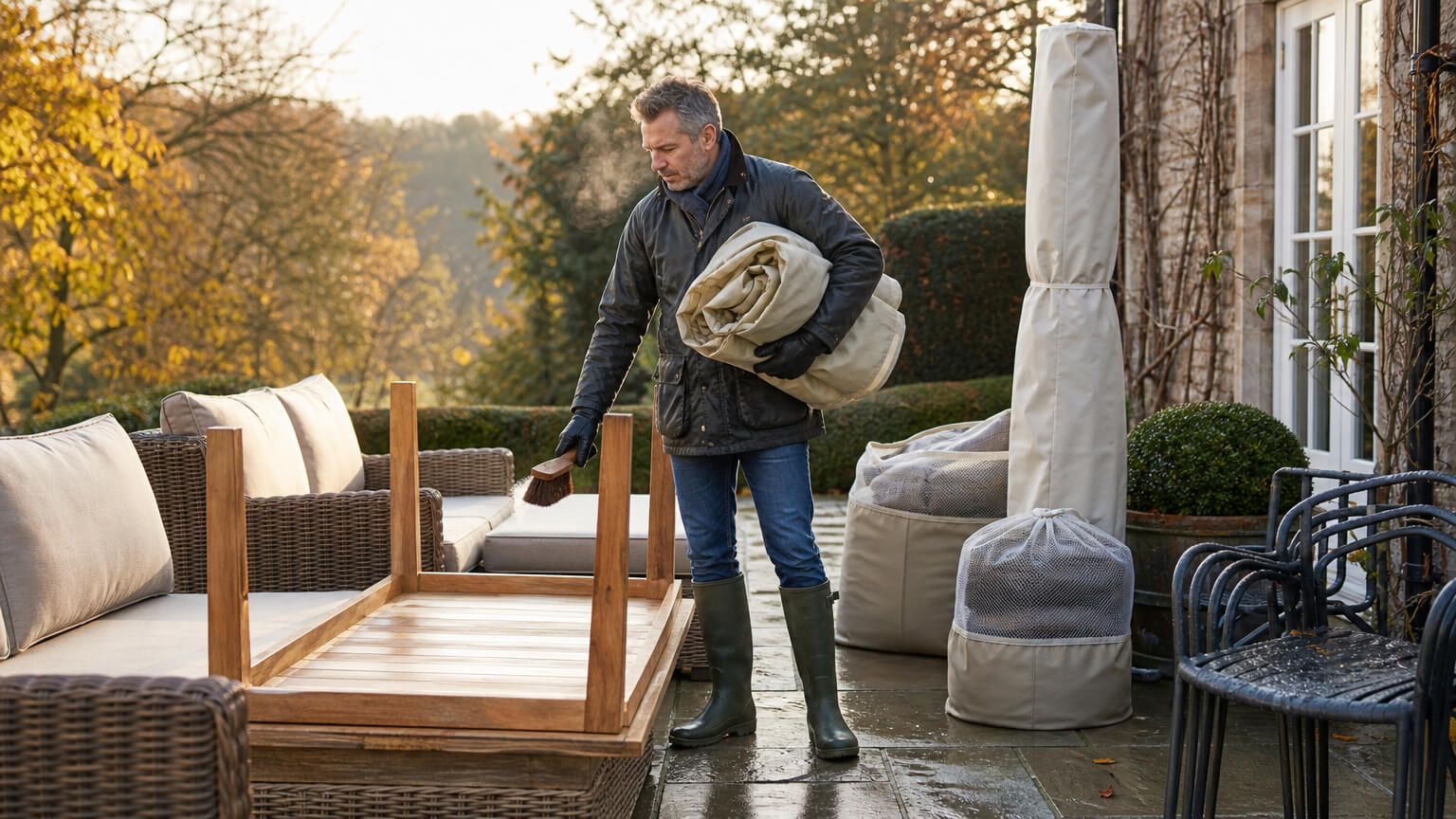
Mid-October is the practical target for most of England, and earlier is almost always better than later. The window between “it looks fine” and “the frost has already done damage” is shorter than most people expect.
The Last Warm Weekend Rule
A simple rule of thumb that works: pack garden furniture away the weekend after the last outdoor meal of the year. For most households in England that falls somewhere between mid-September and the end of October depending on where you live and how optimistic you are about the weather.
The frost risk threshold to watch is five degrees Celsius at night. Once overnight temperatures are consistently below that, moisture freezes in wood grain, rattan fibres and the seams of cushion covers. That freeze-thaw cycle begins accumulating structural damage very quickly. If night temperatures have been consistently cold for a week or two and the furniture is still out, act promptly.
Regional Variation
Timing shifts noticeably across the UK. Homeowners in the south of England – Somerset, Hampshire, Kent – may safely leave furniture out until late October in a mild year. Those in the north of England, the Midlands and most of Wales should be thinking about mid-September to early October as their practical window. Scotland is an earlier call still; the brief warm period between a Scottish summer and a Scottish autumn is shorter than most weather apps suggest.
The honest guidance is this: if you are north of Birmingham, treat mid-September as your planning date. In the south, the last week of October is the outer limit, not the target.
Why Earlier Is Better Than Later
Furniture that has sat through one hard frost is already degraded. The damage is often invisible – microfractures in rattan fibre, moisture that has worked into wood joints – but it compounds year on year. Storing a week early costs you one extra week of storage at most. Leaving it out until November “to enjoy the last of the season” can cost you years off the furniture’s working life.
The case for early action is straightforward arithmetic: the cost of a little extra storage time is tiny compared to the cost of replacing a rattan sofa set.
What Actually Damages Garden Furniture Over Winter
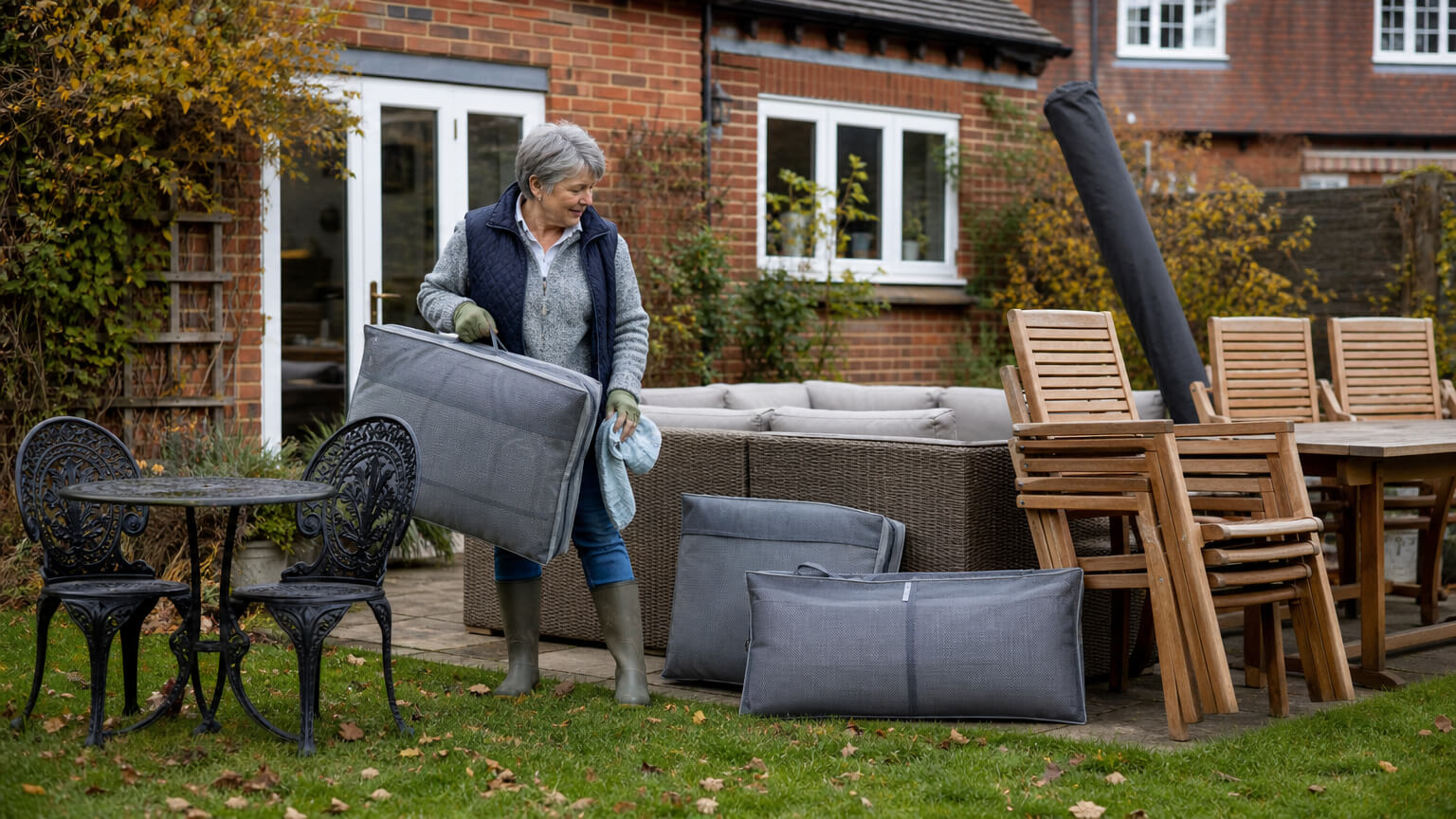
Moisture is the primary enemy. Everything else sits behind it, but all four destroyers are worth understanding because each one has a specific prevention step.
Moisture
Moisture causes rot in wood, mould in fabric, and rust in metal. What makes it particularly destructive in a UK winter is that it gets trapped rather than drying out. A tarpaulin thrown over damp furniture seals moisture against the surface for months. Wood joints hold water invisibly. Rattan fibres absorb it. Cushion fill soaks it up and holds it through the coldest months.
The prevention is straightforward – everything must be genuinely dry before it is wrapped or enclosed. Surface-dry is not enough. Two to three dry days minimum before covering is the baseline. For rattan, forty-eight hours is the minimum; seventy-two is better.
Frost Cycles
Water expands when it freezes. In practice, that means water inside a rattan fibre cracks it. Water trapped in a wood joint splits it. Water sitting in hollow metal tubing stresses the welded seams. A single frost event may leave furniture looking fine. Twelve weeks of alternating freeze-thaw cycles across a northern English winter cause cumulative damage that surfaces in spring as split joints, brittle weave and surface rust.
When you bring furniture out in spring, check all joints and fixings carefully. Problems caught early are inexpensive. Problems ignored become structural.
UV in Winter
This is the one most people get wrong. UV radiation continues through autumn and winter, particularly on south-facing patios where the low-angle winter sun hits surfaces directly for hours each day. Fabric fades. Wood finishes bleach. Plastic and resin components become brittle. An uncovered patio set facing south is receiving meaningful UV exposure even on a cold January afternoon.
Proper covers address this. So does storing furniture out of direct light entirely.
Pests
Mice nest in cushion fills. They find their way into folded cushion stacks and garden storage bags in late autumn when they are seeking warmth. Woodlice, slugs and various insects move into stacked wooden frames in damp conditions. A shed that has any sign of rodent activity is not a safe storage option for upholstered garden furniture, whatever the price difference. We will come back to this in the mistakes section.
How To Prepare Each Material Before Storing
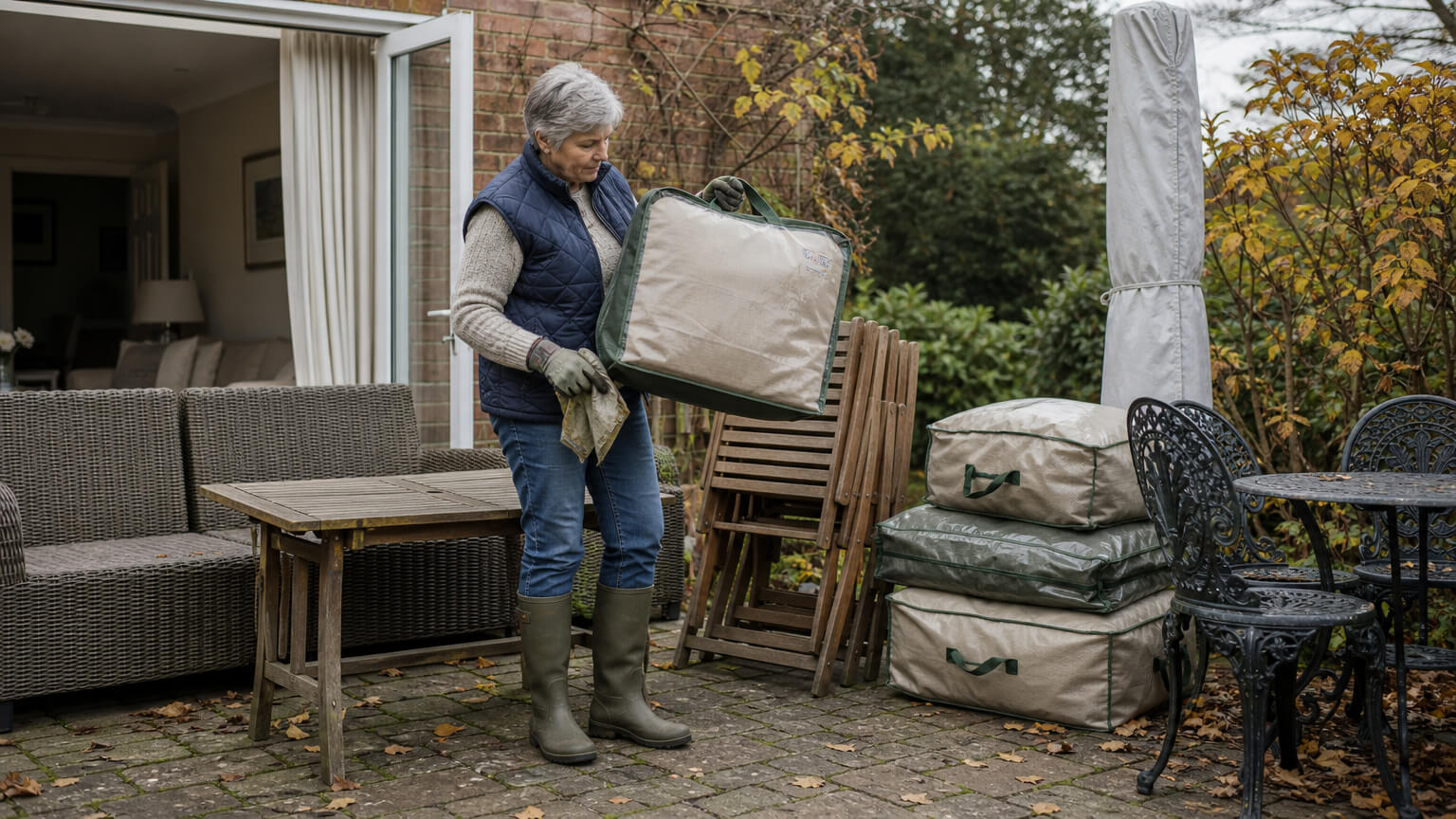
Clean it, dry it completely, treat the material, wrap it the right way. Those four steps apply to everything. What changes is the detail for each material type.
Wood (Teak, Oak, Hardwood)
Clean wood furniture with warm soapy water and a soft brush, paying attention to joints and corners where dirt accumulates. Rinse thoroughly and allow a minimum of two full dry days before moving on. Damp that is sealed in under a cover or inside a storage unit will cause rot over a long winter.
Once dry, apply teak oil or the appropriate wood treatment for your furniture type. This seals the surface against moisture uptake during storage. When wrapping, use breathable furniture covers rather than plastic sheeting – the furniture needs to be able to release any residual moisture vapour during the months it is stored. Avoid storing directly on a concrete floor; a pallet or breathable groundsheet under the legs prevents ground moisture from wicking upward.
Where your table can be disassembled, do it. Reducing stress on bolted joints during storage extends their working life.
Rattan and Wicker
Rattan is the most moisture-sensitive of the common garden furniture materials, and also the most commonly stored wrongly. Clean it with a soft brush and a mild soapy solution, working along the weave to clear out debris. Then leave it alone for at least forty-eight hours in a dry environment before you do anything else. Rattan that is still damp when wrapped or enclosed will develop mould across its surface by February, even in an otherwise dry space.
Store rattan with a breathable cover. Avoid basement-level or ground-floor storage where rising damp is a risk. If you have any doubt about moisture levels in your home storage space, a self storage unit is worth considering – the environment is clean and dry, which is exactly what rattan needs.
Metal (Aluminium, Steel, Cast Iron)
Metal furniture requires one extra step that most people skip: draining the water from hollow tubular frames. Tip or invert the furniture for a day before wrapping it so that any water trapped inside the tubing can run out. Water left sitting in a steel tube will rust the frame from the inside – invisible until the tube splits or a weld fails, by which point the damage is structural.
After draining, apply a protective wax or metal spray to steel and cast iron. Aluminium is more naturally resistant but benefits from a clean. Check any moving parts – recliner mechanisms, folding joints, height-adjustment fittings – for early rust spots and treat them before storage. Never store steel or cast iron directly on a damp concrete floor.
Cushions and Fabric
Cushions are the most commonly damaged garden furniture item and the most commonly forgotten when it comes to storage preparation. The frame goes into the garage; the cushions get stacked in the corner of the shed in a bin bag, and by March they are mouldy, smelling of damp, and destined for the skip.
Wash cushion covers if they are washable. Dry everything completely – both cover and fill – before storing. Breathable bags or vacuum storage bags work well; cushions compress significantly and take up much less space than you expect. Do not use sealed plastic bin bags for long-term storage. The fill holds residual moisture, and a sealed environment over five months will grow mould reliably.
A small 10 sqft locker is one of the cleanest solutions for cushions and accessories: dry, clean, individually alarmed, and no warmer or cooler than a well-ventilated indoor space. That is enough to keep fabric in good condition until spring.
If you need a clean, dry space that is not your loft or garage, we have small lockers from just a few square feet – right through to units that take a full patio set. Get a winter storage quote at quote.wigwamstorage.co.uk.
Where To Store It: Loft, Garage, Shed or Self Storage
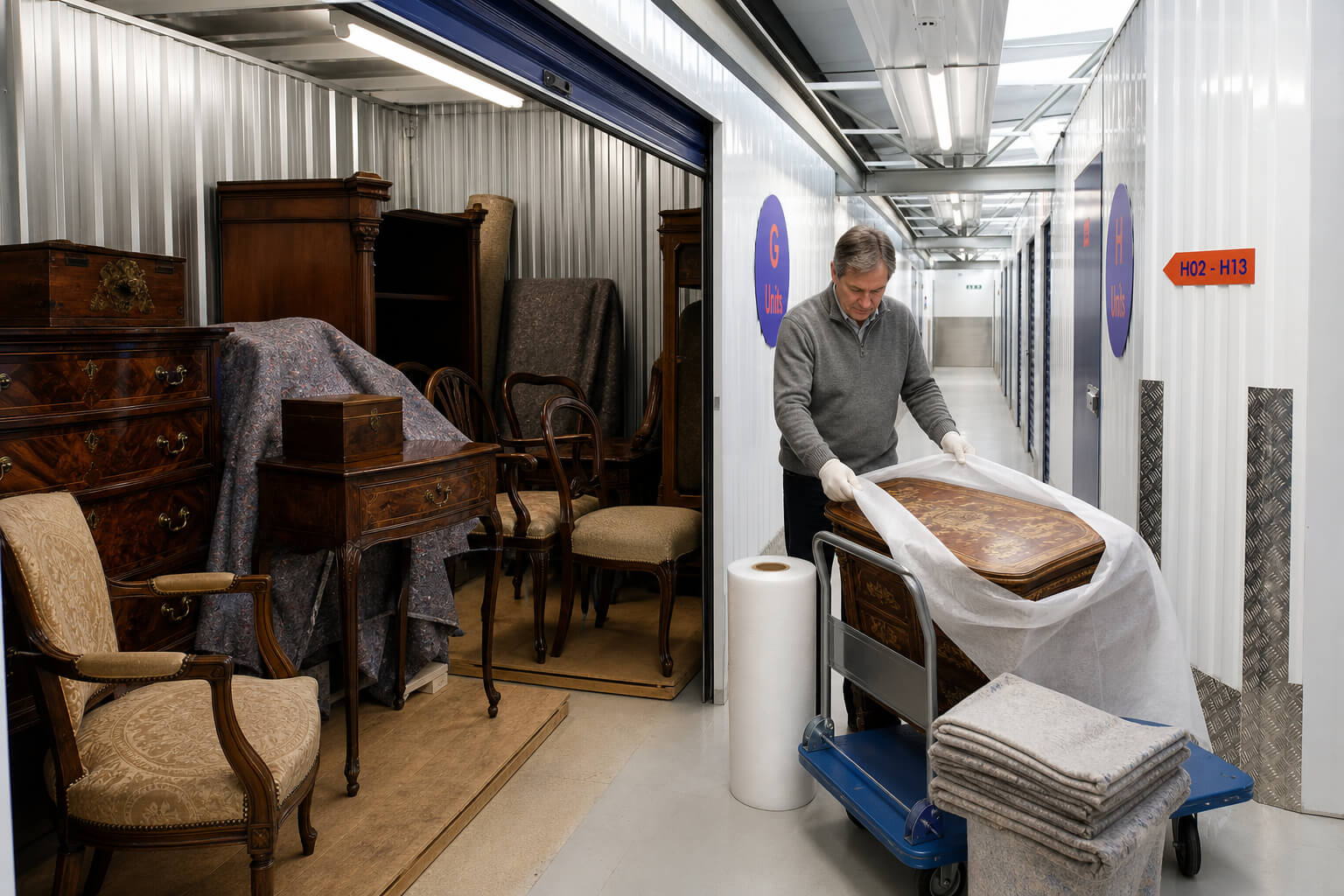
Each option works for some situations and not others. The honest picture is that the right answer depends on what you are storing, the condition of your home storage space, and the value of the furniture you are trying to protect.
Loft
A loft is a good option for cushions and small lightweight items. It is rarely suitable for large garden furniture frames – access is awkward, weight loading limits apply in most domestic lofts, and getting a full teak table up a standard loft hatch is a project. Temperature swings in an uninsulated loft are also wider than most people realise, which matters less for metal and treated wood than for rattan and fabric.
The practical rule: loft for cushions and accessories, not for frames.
Garage
A dry garage with reasonable ventilation is often the best home storage option for garden furniture frames. The difficulty is that many UK domestic garages have a damp problem – check for rising damp from the concrete floor and condensation on the walls before committing to long-term storage. A breathable groundsheet or pallet under items stored on concrete is a simple fix that makes a meaningful difference.
If your garage connects directly to the house via an internal door, think about security. A full patio set stored in an unlocked or poorly secured garage represents an accessible target.
Shed
A shed is suitable only if it is genuinely dry. Most garden sheds are not well-sealed, trap moisture effectively, and provide straightforward access for rodents. If your shed has a concrete base without a damp-proof membrane, ground moisture will affect anything stored on the floor over a long winter.
The honest verdict on sheds: fine for metal frames that have been properly prepared, and probably adequate for treated hardwood if you are careful. Risky for rattan, fabric cushions, and anything that depends on staying dry.
Self Storage
Self storage is the right call for high-value or large furniture, for homeowners whose home alternatives are genuinely unsuitable, and for rental landlords who cannot monitor a property over winter.
Wigwam’s units are clean, dry and secure with individually alarmed units and smart entry from 6am to 10pm, seven days a week. There is no climate control – Wigwam’s claim is “clean, dry and secure,” not temperature-regulated – but for furniture that has been properly prepared and dried, a dry secure unit is exactly the environment it needs. No humidity, no rodent access, no damp concrete floor.
A 10 sqft locker covers cushions and accessories. A 25 sqft unit takes most full four-to-six-seat patio sets, table, parasol and all. The minimum stay is two weeks, and unused days are refunded if you collect early and vacate with the account settled. Contents protection is mandatory: you can take Wigwam’s policy or prove your own. See details at wigwamstorage.co.uk/contents-protection/.
The Five Most Common Winter Storage Mistakes
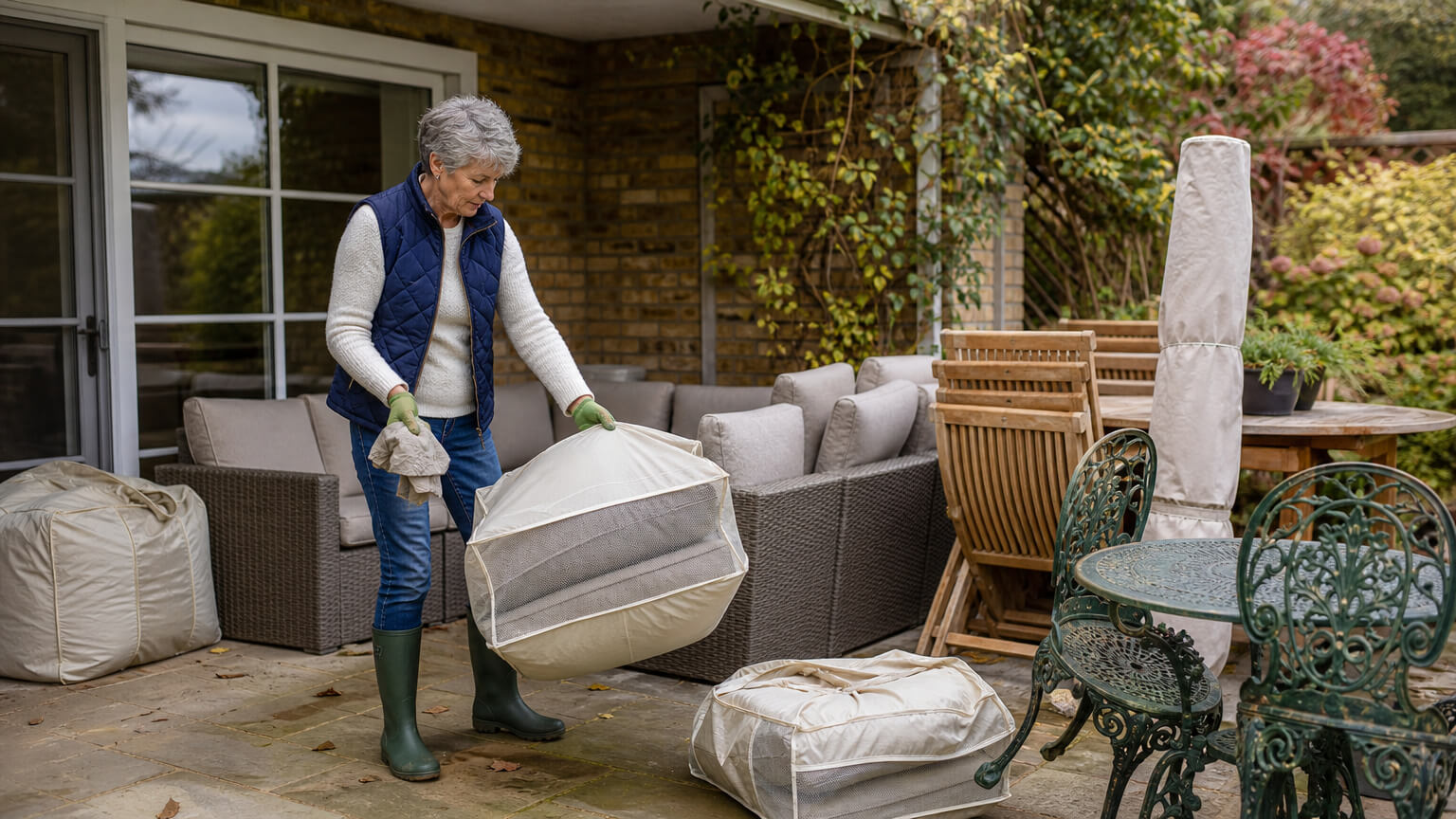
Here are the five things that ruin garden furniture even when the person storing it believes they have done it correctly.
Storing It Damp
This is the single most common cause of winter storage damage. Furniture that looks dry on the surface retains moisture in joints, under cushion covers, and inside rattan fibres. Packing it away into a cover or a storage space while it is still surface-damp creates the ideal conditions for rot and mould over a long winter.
The fix: allow a minimum of two to three dry days before covering or enclosing anything. If you are unsure, leave it another day. Then check the joints and covered sections before wrapping.
Wrapping in Plastic for Months
Non-breathable plastic creates a condensation cycle over a long winter. Any residual moisture in the furniture has nowhere to go; it condenses on the interior surface of the plastic and settles back onto the furniture. The furniture sweats inside its own wrapper. Over five months, this causes damage that a garden cover left outside in the rain would not.
The fix is simple: breathable furniture covers or loose cotton dustsheets rather than plastic sheeting. Plastic is fine for a rain shower. It is wrong for a five-month storage period.
Not Draining Water from Metal Frames
Hollow tubular steel holds water at welded joints. Stored upright in the normal position, that water sits in the tube all winter and rusts the frame from the inside outward. The damage is invisible until the frame fails.
The fix takes five minutes: invert or tilt the furniture for twenty-four hours before wrapping so the water drains out. Then seal the open tube ends with a breathable cap or a loose wrap of gaffer tape.
Forgetting the Cushions
The frame survives. The cushions are destroyed. Cushions are the most frequently replaced component of a garden furniture set in the UK, and the most commonly given inadequate storage. Stored in a sealed bag in a damp shed, they arrive at spring looking and smelling like something from a canal.
Cushions need the same level of care as the frames: wash, dry completely, store in a breathable bag, keep them off the ground in a dry space.
Storing in a Shed with Rodents
Mice nest in cushion fill. They find it warm, accessible, and – if the cushion is made from natural materials – useful for nesting. They also chew through rattan fibres and leave droppings on wood surfaces. A shed that shows any signs of rodent activity is not a safe storage place for upholstered garden furniture, regardless of what else recommends it.
A clean, sealed, individually alarmed storage unit is the only reliable alternative where a shed with rodents is the home option. Wigwam’s units are not garden sheds.
What Does Winter Storage Cost?

The right question to ask before looking at unit costs is a different one: what does your furniture cost to replace?
What Fits in a Small Locker (10 sqft)
A 10 sqft locker holds cushions, accessories, a parasol bag, table covers, and small folding chairs. For homeowners who can store frames in a dry garage but need a clean, dry space for fabric items, a locker is the entry-level answer. It is also the right size for a rental landlord storing a modest balcony or terrace set.
For current pricing, see wigwamstorage.co.uk/how-much-is-self-storage-in-the-uk. We do not publish prices in the article because they vary by location.
What Fits in a 25 sqft Unit
A 25 sqft unit takes a full four-to-six-seat patio set, table, parasol and cushions. For most homeowners with a mid-range or larger patio setup, a 25 sqft unit is the practical size. Again, current pricing is on the pricing page.
The Economics: Storing Versus Replacing
This is the number that most people do not work out before they make a decision. The comparison looks like this.
A mid-range rattan sofa and dining set costs between £500 and £2,000. A replacement cushion set for a mid-range suite typically runs to £100 to £200 or more. The cost of five months in a small locker or a 25 sqft Wigwam unit is, for most of our UK market-town locations, less than the cost of replacing a single set of cushions.
For furniture that cost £1,000 or more, that arithmetic becomes more compelling still. Proper winter storage – preparation plus the right location – extends the working life of most garden furniture by three to five years. The cost of a winter’s storage is recovered in extended furniture life within the first or second year.
Nobody has stated that comparison plainly for a UK audience. We are stating it now, because we think it matters.
The two-week minimum stay means there is no long commitment to worry about. Unused days are refunded if you collect early and vacate with the account settled. Full terms at wigwamstorage.co.uk/terms-conditions/.
Bringing Your Furniture Out in Spring

Storage is not permanent. The seasonal loop closes in spring, and that end of the process is worth planning for as well.
When To Bring It Back
April to May is the typical window for most of England: earlier in the south, closer to May in the north. The practical guide is to wait until overnight frost risk has passed. In most years, that means after Easter as a baseline. Bringing furniture out into a sequence of April frosts after a careful winter of storage is exactly the outcome you stored it to avoid.
Spring Cleaning and Re-Treating
If the storage preparation was done properly in autumn, the spring job is light. A wipe-down, a check of all joints and fixings, and a fresh application of wood treatment or metal protector where needed. Air cushions before use. That is a couple of hours at most, and the furniture should come out looking essentially as it went in.
This is the good-caretaker loop completing. The autumn work pays off in spring.
Refund of Unused Days If You Collect Early
If spring arrives ahead of schedule – if a warm fortnight in March makes the patio call you back – you can collect early. Wigwam refunds unused days when you vacate, provided the account is settled and the two-week minimum has been met.
Book for the full winter without worrying about being locked in if the weather turns in your favour. The details are in the terms at wigwamstorage.co.uk/terms-conditions/.
Get A Winter Storage Quote For Your Garden Furniture
Most homeowners need one of two things: a 10 sqft locker for cushions and accessories, or a 25 sqft unit for a full patio set. Either way, the booking takes five minutes and there is no long contract to worry about.
Wigwam has locations across our UK market-town locations – built for homeowners who want local access, not a long drive to a retail park. Smart entry from 6am to 10pm, seven days. No deposit at any point. Two-week minimum, unused days refunded if you collect early.
Contents protection is mandatory with any Wigwam booking: you can take our policy or prove your own. See what is covered at wigwamstorage.co.uk/contents-protection/.
Get a winter storage quote: quote.wigwamstorage.co.uk
Find a Wigwam near you: wigwamstorage.co.uk/self-storage-locations/
See our pricing: wigwamstorage.co.uk/how-much-is-self-storage-in-the-uk
Sort it before the first frost. Your patio set will last another decade.
Frequently Asked Questions
The metal furniture rules cover the appliances themselves, but the fuel does not go anywhere near a storage unit. A clean barbecue, a fire pit, or a patio heater can be stored the same way as any metal garden item: clean off the grease and ash, dry it fully, treat any bare metal against rust, and keep it off a damp floor on a pallet. What absolutely cannot go in is the fuel. Gas bottles, propane and butane cylinders, charcoal, lighter fluid, firelighters and any pressurised canister are excluded from self storage, and that is a firm rule across the industry, not a Wigwam quirk.
The reason is safety. A sealed unit is the wrong place for anything flammable or pressurised, and a gas bottle in particular is a genuine hazard in an enclosed space. So before a barbecue or heater goes into storage, disconnect and remove the gas bottle entirely and store that separately at home, outdoors and ventilated, following the manufacturer’s guidance. Empty the charcoal, clean out the grease tray, and let everything dry before it goes in.
Done properly, the appliance itself stores well in a clean, dry unit over winter and comes out in spring ready for the first cookout, with no rust bloom and no seized fittings. The grease left on a barbecue over winter is the thing that attracts pests and corrodes the metal, so the cleaning step matters as much for these items as for the furniture. If you are unsure whether a particular item or accessory is allowed, check with the team before you load it. The prohibited-items list is in the terms and conditions.
Disassemble what you can and stack vertically, and a four-to-six-seat set fits a 25 square foot unit comfortably. The trick is not to store it the way it sits on the patio. Take the legs off the table if they unbolt, stack chairs into each other or fold them flat, collapse the parasol and bag it, and store cushions in breathable bags either on top or slotted into the gaps. A set that sprawls across a patio takes up far less room once it is broken down and stacked sensibly.
A rough order that works well:
- Table top off its base, stored flat or on edge against a wall.
- Chairs stacked or folded, heaviest at the bottom.
- Parasol down, dried, and bagged, laid along one side.
- Cushions in breathable bags, kept off the floor on top of the stack.
- Accessories and covers boxed and labelled so a spring retrieval is quick.
Keep everything off the concrete on a pallet or groundsheet, as the preparation section explains, because that is where ground moisture sits. Leave a little air around items rather than compressing everything tight against the walls. If your set is unusually large, a corner suite, a big extending table, or a set for eight or more, size up rather than force it; a slightly larger unit costs little and saves you wrestling the furniture in and out. The team can talk through sizing if you describe what you have, and the pricing page sets out the unit sizes.
Yes, contents cover is mandatory at Wigwam, and you value it at full replacement cost. You either take Wigwam’s RSA Self Storage Customers’ Goods policy or prove your own equivalent cover before moving in. For garden furniture this is easy to underestimate, because people think of it as “just the patio set” and declare too little. The figure you declare is what the cover is based on, and under-insurance is settled in proportion: declare half the true value and a claim pays out against that lower figure.
So value it properly. Add up what it would cost to replace the lot today, new: the frames, the table, the parasol, the cushions, and any accessories going in. A mid-range rattan suite plus cushions can run well past a thousand pounds to replace, which is exactly the point this article makes about storing versus replacing. Cushions alone are often a hundred to two hundred pounds a set. Declare the genuine replacement figure rather than guessing low to shave the cost, because the maths on under-insurance is unforgiving.
Two honest notes. The RSA policy is New-for-Old, which suits garden furniture well, and it carries a fifty pound excess. And atmospheric or climatic damage is a standard exclusion, which is another reason the preparation steps in this article matter so much: the cover is built around physical loss and damage, not around furniture that was packed away damp and grew mould. For the policy detail see the contents protection page, and for advice on your own home insurance and whether it extends to goods in storage, speak to your insurer. We signpost the cover; we do not give insurance advice.
Yes, you can access your unit any day between 6am and 10pm, right through the winter. The unit is not sealed for the season once you have packed it. If a mild spell tempts you to bring a couple of chairs out for a sunny weekend, or you realise the spare parasol base is in there, you can let yourself in with smart entry, take what you need, and lock up again. There is no need to call ahead and no staff to arrange it around, because the site is unmanned and access is self-managed within those hours.
There are a couple of practical things to keep in mind for a midwinter visit. If you do take furniture out and then want to return it, follow the same drying rule before it goes back: anything that has been out in damp or frosty weather needs to be properly dry again, or you are sealing moisture in for the rest of the winter. And remember the early Saturday or Sunday access is there if a weekend is the only time you can get over, since the window runs seven days a week from six in the morning.
This access also matters for the bring-out at the end of the season. As the spring section explains, if a warm fortnight in March calls the patio back early, you can collect everything and vacate, and unused days are refunded once the account is settled and the two-week minimum has been met. So you are never stuck waiting for a fixed end date: the furniture is yours to retrieve whenever the weather turns in your favour.
For furniture that cost a few hundred pounds or more, storing it across several winters almost always works out cheaper than replacing it, and the gap widens the longer the set lasts. The article makes the single-winter case: the cost of a winter in a small locker or a 25 square foot unit is, at most of our market-town locations, less than the price of replacing one set of cushions. Run that across several winters and the comparison gets more favourable still, because proper storage extends the working life of most garden furniture by three to five years rather than letting it degrade season by season outdoors.
The arithmetic is simple. A set left out takes cumulative frost, UV and damp damage every winter, so it might give you a handful of years before the weave splits or the frame fails. The same set, prepared and stored dry each winter, can run well beyond that. Each winter of storage you pay for buys you extra years of furniture life, and for anything that cost a thousand pounds or more the cost is typically recovered within the first or second year.
There is a sensible point where this flips. Cheap, lightweight furniture that costs little to replace is not always worth the storage and the preparation effort; if a set would cost less to replace than a few winters of storage, replacing it may be the rational call. The honest test is to weigh the replacement cost against the storage cost over the period you expect to keep it. For a quality teak, cast metal, or good rattan suite, storing repeatedly is the clear winner. The two-week minimum and the refund of unused days mean you only ever pay for the months you actually use each winter, so there is no commitment carrying over between seasons.