You’re not being paranoid for wondering what actually stops someone getting in. It’s a fair question, and the honest answer isn’t a blanket “yes, it’s totally safe.” It’s a specific mechanism: what’s open, what’s shut, and why that gap matters more than any feature list.
Self storage security comes down to four things working together: a bounded access window, a monitored perimeter, entry tied to your own account, and an alarm on your unit alone, not the whole building. None of them work in isolation. Together, they’re what actually closes the gaps that let a break-in go unnoticed.
Is self storage actually secure? The honest answer
Security here isn’t one lock doing all the work. It’s four layers stacked on top of each other, each closing a different way in.
What “secure” actually means here
It doesn’t mean nothing bad could ever happen. It means every route in is covered by something specific: a time boundary, a camera, an entry system tied to you, and an alarm that only answers to your unit.
The four layers, named once
Here they are, together, the only place in this piece you’ll see them listed side by side: a defined access window, perimeter fencing with monitored CCTV, smart entry linked to your own account, and an individually alarmed unit. Everything below expands one of these at a time.
Why a 6am-10pm window is a control, not a compromise
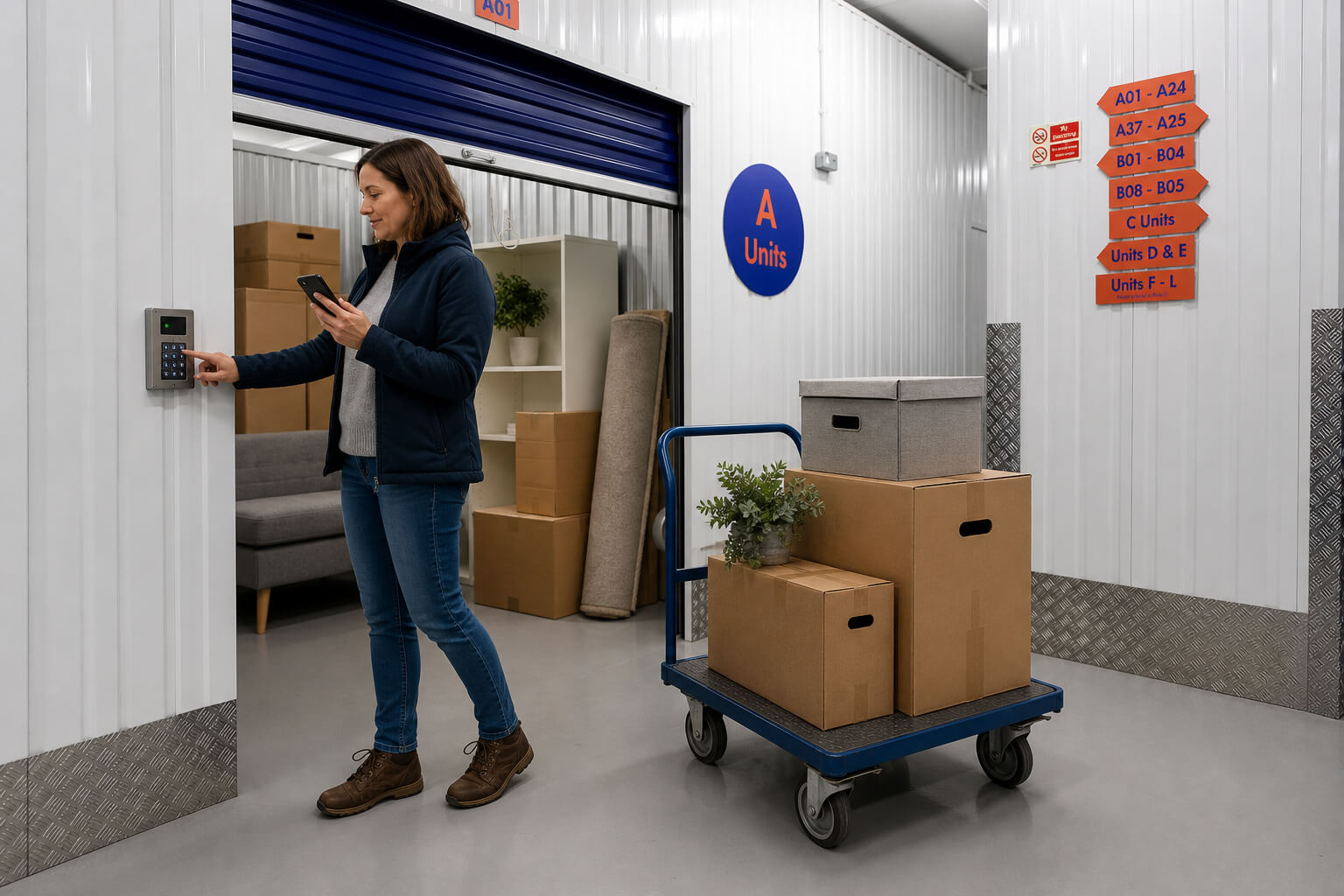
Wigwam’s access is 6am to 10pm, seven days a week. That’s not a limitation we’re apologising for. It’s the strongest security line in this piece.
What a bounded window closes that an always-open site cannot
An unwitnessed overnight entry is the one thing a defined window structurally rules out. If a site is only live during set hours, there’s no dead-of-night stretch where someone could come and go with nobody around to notice, because the entry systems themselves aren’t live outside those hours. Industry commentary has flagged the same pattern from the other direction: low-cost or 24-hour unstaffed sites are often the higher-risk target, precisely because that overnight gap never closes. We’d rather be honest about a defined window than sell you an “always open” promise that quietly works against you.
Warminster’s own hours as the concrete example
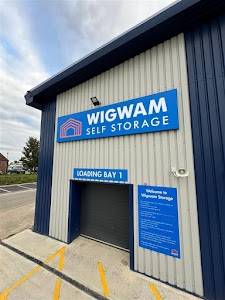
Take Wigwam Self Storage Warminster. Access there runs the same 6am to 10pm, seven days a week. The office itself keeps narrower hours again, Monday to Friday 9 to 6, Saturday 9 to 2, closed Sunday, so the site is unstaffed for a good part of even its own access window. That’s not hidden. It’s the whole point: the security isn’t coming from someone watching the gate. It’s coming from the systems that don’t need anyone standing there.
Get a price for your move: quote.wigwamstorage.co.uk
What someone would actually have to get past

Picture someone trying to get into a unit at Warminster at 2am.
The overnight window closes the door before it opens
They’d need to get past the facility itself outside its 6am-10pm access window first, and they can’t. The site is unmanned overnight, and the entry systems simply aren’t live outside those hours. There’s no unwitnessed after-hours access to begin with, staff or no staff. That’s the window doing its job before anything else even comes into play.
The daytime attempt: four layers, in order
Say they tried during the day instead, hoping to blend in. First they’d have to get past the perimeter fencing and the monitored CCTV, which is watched by professionals, not left to review footage after the fact. Then they’d need to get into a specific unit, which means the mobile-phone-linked smart entry tied to that customer’s own account, not a shared code or a key that can be lost, copied or handed on. And unlike a facility where one alarm covers the whole building, each unit at Wigwam is individually alarmed. Tripping into someone else’s unit doesn’t set off a distant siren somewhere in the building. It sets off an alarm on that specific door, immediately.
The industry contrast, kept general
A 24-hour, unstaffed site with a single shared gate code can’t close the overnight window at all, by design. And if that one code is lost, photographed or passed along, every unit behind it is exposed, not just one. That’s the practical difference between a shared system and one built around each customer’s own access.
Worth saying plainly: this is a walk-through of how the mechanism works, not a guarantee against all theft. No facility can promise that, and we won’t pretend otherwise.
Per-unit alarms vs one alarm for the whole building

An alarm that answers to your unit alone beats a shared building alarm because it triggers on the exact door someone’s trying, not somewhere general on the site.
Why “one alarm covers everything” is weaker than it sounds
A whole-building alarm has to cover every unit at once, which means it often can’t tell you where the problem actually is. A per-unit alarm doesn’t have that trade-off. If someone trips it, it’s your door, and it’s immediate.
| Feature | Whole-building alarm | Per-unit alarm (Wigwam) |
|---|---|---|
| Trigger scope | One alarm for the entire site | Individual alarm per unit |
| What a break-in attempt sets off | A general site alarm, may not localise | An alarm on that specific door, immediately |
| Who’s affected if one code or lock is compromised | Potentially every unit behind it | Only that one unit |
How it’s set and unset
You set and unset your own alarm with your mobile phone, when you arrive and when you leave. Nobody else’s comings and goings affect your unit, and yours don’t affect theirs.
Smart entry: tied to your account, not a shared code
Once you’ve booked online, you get into the facility and your own unit using your mobile phone. There’s no shared gate code, no key that can be copied, nothing that can quietly get handed on to someone it was never meant for.
How it works in practice
Book your unit, and your phone becomes the way in, for the facility and for your specific unit. It’s tied to your account, so it’s yours the way a key used to be, minus the risk of it turning up in the wrong pocket.
Why “smart entry” is the right word for it
We call it smart entry, or keyless access if you prefer, because that’s what it actually is: entry that knows it’s you, not entry through an app for its own sake. It’s not a gimmick bolted on for convenience. It’s the thing standing between your unit and anyone who isn’t you.
Get a price for your move: quote.wigwamstorage.co.uk
What happens if something still goes wrong

No facility, including ours, can promise zero risk. That’s exactly why Contents Protection exists, not as an afterthought bolted onto the end of a page, but as the backstop for the honest gap that’s left once every layer above has done its job.
The edge case, stated plainly
A bounded access window and four layers of security close the highest-risk gaps. They don’t make a break-in impossible. We’d rather tell you that straight than oversell you a guarantee we can’t back up.
Contents Protection’s forced-entry clause as proof
Our Contents Protection cover explicitly includes theft involving forcible entry or exit, one of the specific things it’s built to answer for. It’s required unless you can show your own equivalent cover within 14 days, in which case that requirement is refunded. Cover pays out new-for-old at full replacement value. Without it, our liability is capped at £100, which is exactly why we don’t treat this as optional small print.
If you’re storing on behalf of someone else, sorting a parent’s estate, say, and you’re carrying enough already: talk to us about probate storage. There’s no rush here, and no hard sell attached to that conversation.
Other risks, briefly
Fire, weather and pests are real considerations too, and they’re covered in more depth on our Contents Protection page. This piece is about theft and access, so that’s where the depth belongs.
A real example: Wigwam Self Storage Warminster

Everything above holds up at an ordinary market-town site, not just a flagship. That’s deliberate.
The facility itself
The Warminster site sits at 1 Norbeck Enterprise Centre, Furnax Lane, about five minutes from Warminster Railway Station via the A36. It serves Frome, Westbury, Trowbridge, Salisbury and Bradford-on-Avon, and it runs on exactly the same access window and the same four layers described above.
Why an ordinary site is the honest proof
We could have walked you through a flagship site built to look impressive. We used Warminster instead because it’s an everyday, working facility, not a showcase. If the mechanism holds up there, it holds up across the network, not just where we’ve put the most polish.
The bottom line on self storage security
The honest mechanism is what makes this secure, not a blanket reassurance. A defined access window, a monitored perimeter, entry tied to your own account, and an alarm that answers to your unit alone: that’s what’s actually standing between your things and anyone who shouldn’t be there.
Quick recap
A bounded 6am-10pm window that closes the overnight gap. Perimeter fencing and monitored CCTV. Smart entry tied to your account. An individually alarmed unit. Four layers, each doing a different job.
What to do next
If you’re ready to see prices and sizes for your move, get a price for your move at quote.wigwamstorage.co.uk. You can read the full detail behind everything above on our FAQs page.
Frequently Asked Questions
As safe as a layered system can make them: a bounded access window, monitored perimeter, account-tied smart entry and individual per-unit alarms all work together. No facility can promise zero risk, which is why Contents Protection exists as the backstop.
Your alarm is set and unset by your own mobile phone when you arrive and leave, so accidental triggers are rare. If it does go off, it alerts to that specific unit, so it’s dealt with quickly rather than triggering a site-wide response.
No. Access runs 6am to 10pm, seven days a week. That boundary isn’t an inconvenience, it’s the control that closes the overnight gap an always-open site can’t close.
Yes, through Contents Protection, which explicitly covers theft involving forcible entry or exit. It’s required unless you show your own equivalent cover within 14 days for a refund, and it pays out new-for-old at full replacement value.
Not around the clock. Office hours are limited (they vary slightly by site) and the facility itself is unmanned outside those hours. The security comes from the systems, not from someone watching the gate, which is exactly what the layered access model above is built to do.