Standing in a half-packed bedroom with a moving date that either fits or doesn’t is a familiar kind of stress. This guide gives you a clear order to pack in, and an honest answer for the boxes that don’t fit the van.
Everything fits the move date? Skip straight to the packing order below. Some of it doesn’t fit the date or the van? Jump to the fork near the end. Packing up a parent’s or family member’s room? The same steps apply, just take it at your own pace.
How Long It Actually Takes to Pack a Bedroom
A standard double bedroom takes roughly a packing session of a few hours, not days. That’s separate from how far ahead of moving day you should start, which is a different question entirely.
Where to start: least-used items first
Begin with whatever you haven’t touched in weeks, off-season clothes, spare bedding, anything in a drawer you rarely open. That leaves the things you actually use until last.
A rough time budget for a standard vs a larger or more cluttered room
A standard double bedroom is a few hours’ work. A larger room, or one that’s accumulated a lot over the years, can easily take the best part of a day. Either way, it’s a session, not a multi-day project, if you work through it in order. Trying to do the whole room in one uninterrupted push tends to be where the overwhelm creeps in, so it’s fine to split it across an evening and a morning if that suits you better.
Sort as You Pack, Not After

As you go, everything falls into one of two piles: moving with me now, or needs a short-term home. Deciding this at pack time, not on moving day, is what prevents a rushed decision later.
The two-pile method
You may have heard of the 5-4-3-2-1 rule or the 3-3-3 rule for decluttering before a move. Those work, but the two-pile method is simpler and tied to a real decision rather than an arbitrary count: does this need to travel with you on day one, or can it wait?
How to tell which pile an item belongs in
Ask two questions. Will you need it in the first week at the new place? Is it sentimental or fragile enough that it deserves proper protection rather than a rushed decision? If either answer points away from “moving with me now,” it goes in the second pile. Deciding this while the item is in your hands is far easier than trying to remember, weeks later, why a box got packed the way it did.
Clothes and Wardrobe Items
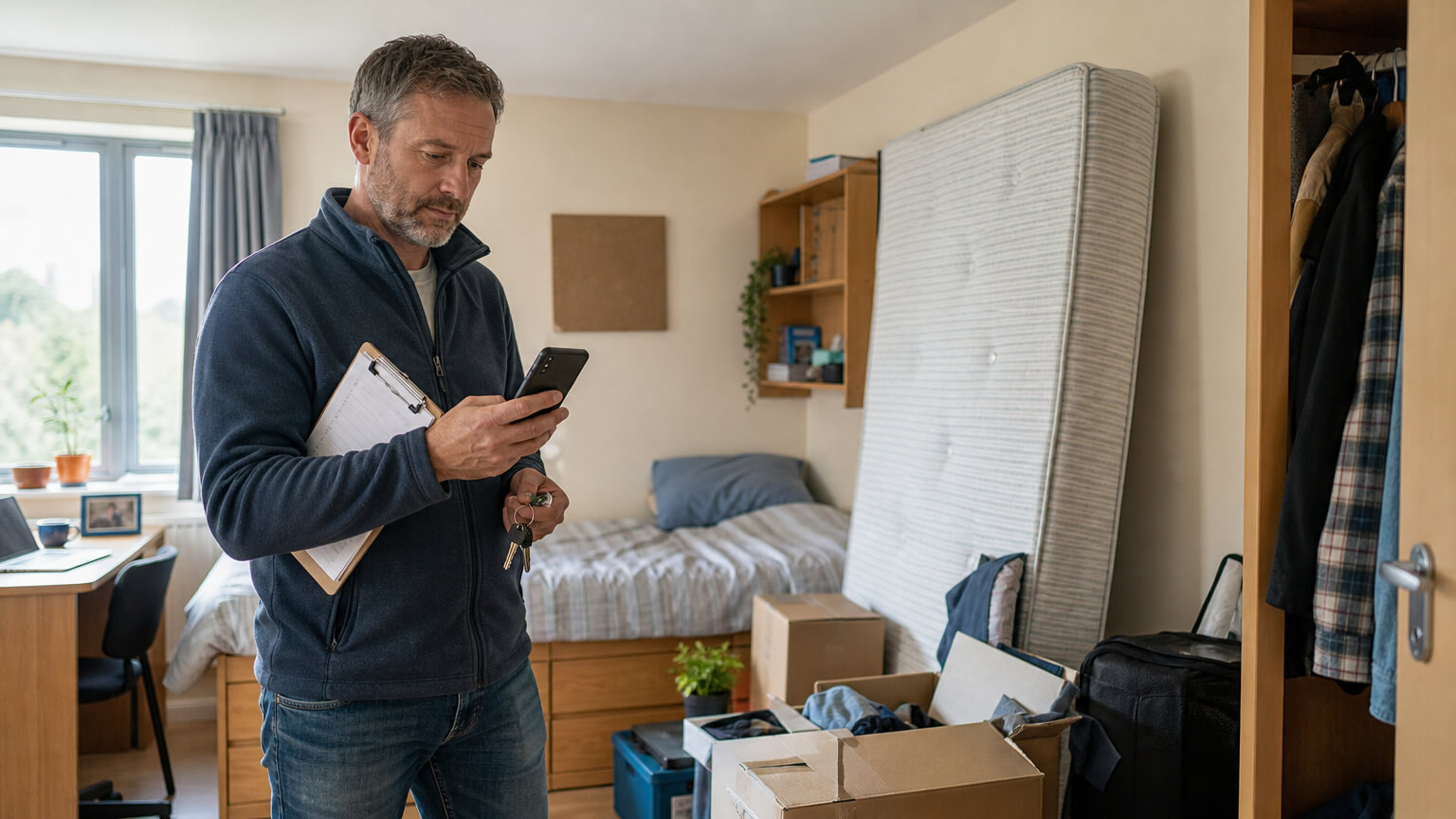
Hanging clothes go straight into a wardrobe box, no folding, no creasing, and the fastest thing to unpack at the other end. Folded items go into a standard box.
Hanging clothes: the wardrobe-box method
A wardrobe box lets you lift clothes straight off the rail and hang them directly in the box. It’s the single fastest way to pack and unpack a wardrobe.
Folded clothes and off-season items
Folded, in-season clothes can go with you. Off-season items are a strong candidate for the “needs a short-term home” pile if that pile is starting to run long, since there’s little point unpacking a winter coat into a new wardrobe in the middle of summer.
Bedding and Mattress Protection
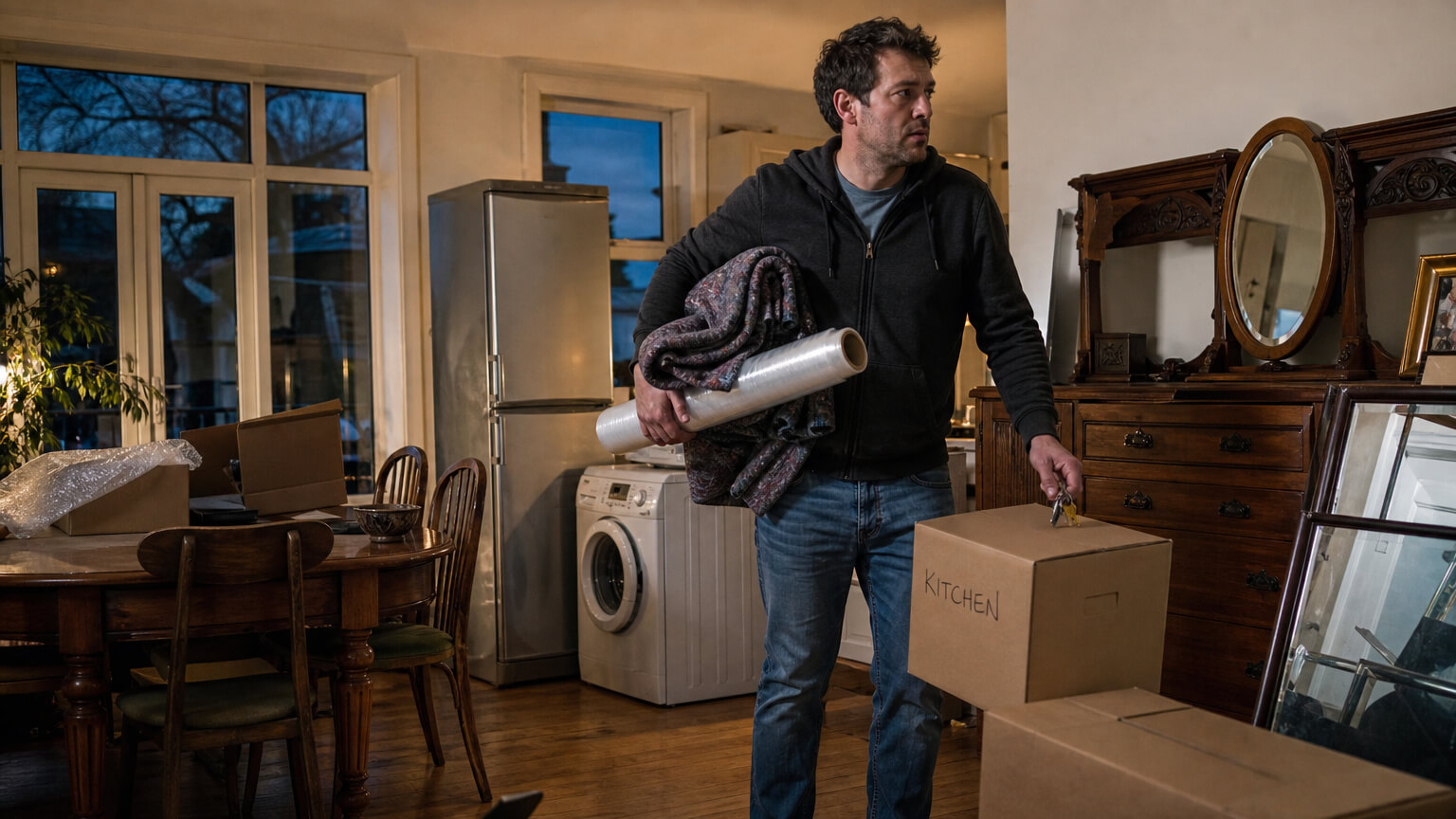
Strip and bag the bedding you’re using last, so you’ve still got somewhere to sleep the night before. Spare or off-season bedding can go first. Anything in transit for more than a day is better in a breathable cover than plastic sheeting, which can trap moisture against the fabric and cause problems that only show up once it’s unpacked.
Fragiles: Mirrors, Frames, Electronics and Jewellery

Mirrors and framed items travel best wrapped and stood upright, not flat. Electronics need their cables labelled before you disconnect anything.
Mirrors, frames and glass
Wrap glass and framed items well, then stand them upright rather than laying them flat, which spreads pressure more evenly and reduces the risk of a crack.
Electronics and cables
Before you unplug anything, label each cable with what it belongs to. It saves a genuinely frustrating half hour of guesswork when you’re setting the room back up, and it’s one of the few packing tips that actually earns its reputation rather than just getting repeated because everyone else says it too.
The First-Night Bag

Pack one bag last and unpack it first: sleepwear, chargers, any medication, a change of clothes and basic toiletries. It’s a small thing that makes the first night in a new place feel far less chaotic, and it means you’re not digging through sealed boxes at ten o’clock at night looking for a toothbrush.
Labelling and Inventory

Label boxes by room and by pile, moving now or needs a short-term home, and keep a one-line inventory per box. That way, whatever’s going into storage can go straight in without being re-sorted at the unit door, and whatever’s coming with you can be found the moment you need it rather than dug for.
What to Do With the Pile That Doesn’t Fit the Move
If your “needs a short-term home” pile turned out to be real, a small unit sized for a few bedroom boxes, not a full house, turns a guess into a safe, reversible decision.
Is it worth it for a few boxes?
You don’t need a large unit for a wardrobe box or two, some bedding and a handful of fragiles. Wigwam sizes its units well below a full house’s worth of contents, so a bedroom-scale overflow doesn’t mean paying for more space than you’re using. For a fuller sense of sizing, Wigwam’s room-by-room sizing guide covers the detail this piece doesn’t need to repeat.
What you actually get
Access runs 6am to 10pm, seven days a week, so you can get things back out the moment the new place is ready, whatever your schedule looks like that week. Units are individually alarmed, with smart entry and CCTV. A deposit and 14-day notice period apply, and if you leave earlier than expected, any unused paid days are refunded, so uncertainty doesn’t cost you. That’s the honest version, not a locked-in commitment and not a free-for-all either, just terms that don’t punish you for not knowing exactly when the new place will be ready.
Which pile does it go in?
| Moving with me now | Needs a short-term home |
|---|---|
| Everyday clothes, bedding in use, first-night bag, medications, chargers | Off-season clothes, spare bedding, framed art or mirrors, sentimental boxes, a disassembled wardrobe that won’t fit the new room yet |
What to pack it in
| Item | Best for |
|---|---|
| Wardrobe box | Hanging clothes, no folding needed |
| Medium, large and extra-large boxes | Folded clothes and books |
| Bubble wrap | Mirrors, frames and electronics |
| Furniture blanket | Headboards and dressers |
| Standard moving kit | A bundled set for a typical bedroom |
Current prices and availability are on Wigwam’s packaging page.
Somewhere close by
If you’re near one of Wigwam’s market towns, a few are worth knowing. Wigwam Self Storage Bath, Wigwam Self Storage Reading and Wigwam Self Storage Tewkesbury all work the same way, small units, honest terms, no lock-in beyond what’s stated.
If the fork applies to you, get a price for short-term storage.
A Packed, Protected Bedroom and a Plan for the Rest
That’s the whole job: a clear order to pack in, and if some of it doesn’t fit the move, a plan for where it goes that doesn’t cost you for uncertainty. If the fork applies to you, get a price whenever you’re ready.
Frequently Asked Questions
A standard double bedroom takes roughly a packing session of a few hours. A larger or more cluttered room can take closer to a full day.
Sort your bedroom into two piles as you pack, moving with you now and needing a short-term home. The second pile can go into a small storage unit until the new place is ready, with terms that don’t punish the uncertainty.
Yes. Access runs 6am to 10pm, seven days a week, so you’re not limited to office hours to get things back out.