A set of seasonal or spare tyres taking up garage or shed floor space, in the way, with a nagging feeling they might be degrading, is a familiar problem. Here’s a straight answer, then the correct way to actually deal with it.
Can I Put My Tyres in a Storage Unit?
No. We don’t store loose tyres, wheels, or any vehicle or leisure transport item, no exceptions, and the same is true of tyres specifically because of how they behave in storage, the oils and plasticisers that keep rubber flexible dry out and deform under load in ways a general storage unit doesn’t prevent. Full details are on our prohibited items page.
Why Tyres Don’t Belong in Any Storage Unit, Not Just Ours

Tyres degrade from the inside out as their oils and plasticisers dry out over time, and from sitting under their own weight if stored wrong. A general storage unit changes none of those conditions compared with a well-organised garage, which is why most storage providers, not just us, exclude them. It’s not a bureaucratic rule dressed up as a policy, it’s a genuine reflection of what tyres actually need, which a general unit doesn’t offer any better than your own garage does.
How to Store Tyres Safely at Home: The Verified Method

Clean, dry, bagged individually, stored upright and rotated if unmounted, or stacked or hung if mounted, in a cool, dark, ventilated space. Here’s the full method, cross-checked against manufacturer guidance.
Cleaning and inspecting before storage
Clean and dry each tyre fully with mild soap and water, no petroleum-based dressings, and inspect for cuts, bulges or embedded stones before putting them away.
Unmounted tyres: position and rotation
Store unmounted tyres upright, side by side, never hung, and rotate or turn them every few weeks so they don’t develop a flat spot.
Mounted tyres: stacking and hanging
Tyres on rims can be stacked flat, up to four high, or hung on proper wall hooks. The rim supports the tyre’s shape in a way loose rubber can’t.
Where to keep them: temperature, light and ozone
A cool, dry, dark, moderately ventilated space out of direct sunlight works well, a garage or dry shed is fine. Avoid attics for the heat and anywhere damp. Keep tyres clear of ozone sources and chemicals too, motors, battery chargers, solvents, fuels and oils all accelerate rubber degradation. Manufacturers including Michelin recommend exactly this approach, and it’s worth treating as general guidance rather than a substitute for your tyre manufacturer’s own instructions if they differ.
How Long Do Tyres Actually Last in Storage?

Tyres don’t go off on a fixed clock, but manufacturers generally recommend an ageing check from around five years and consider replacement by ten regardless of tread, when stored the way described above.
Mounted vs Unmounted: Which Storage Approach Fits Yours

Whether your tyres are on rims or not is the one decision that determines the right approach.
| Tyre type | Best position | Stacking or hanging limit | Rotation needed | Suitable location |
|---|---|---|---|---|
| Unmounted, no rim | Upright, side by side | Never stack loose | Yes, every few weeks | Cool, dark, dry, ventilated |
| Mounted, on rim | Flat stack or wall-hung | Max four high if stacked flat | Not required | Cool, dark, dry, ventilated |
What Wigwam Self Storage Actually Helps With, in This Exact Situation
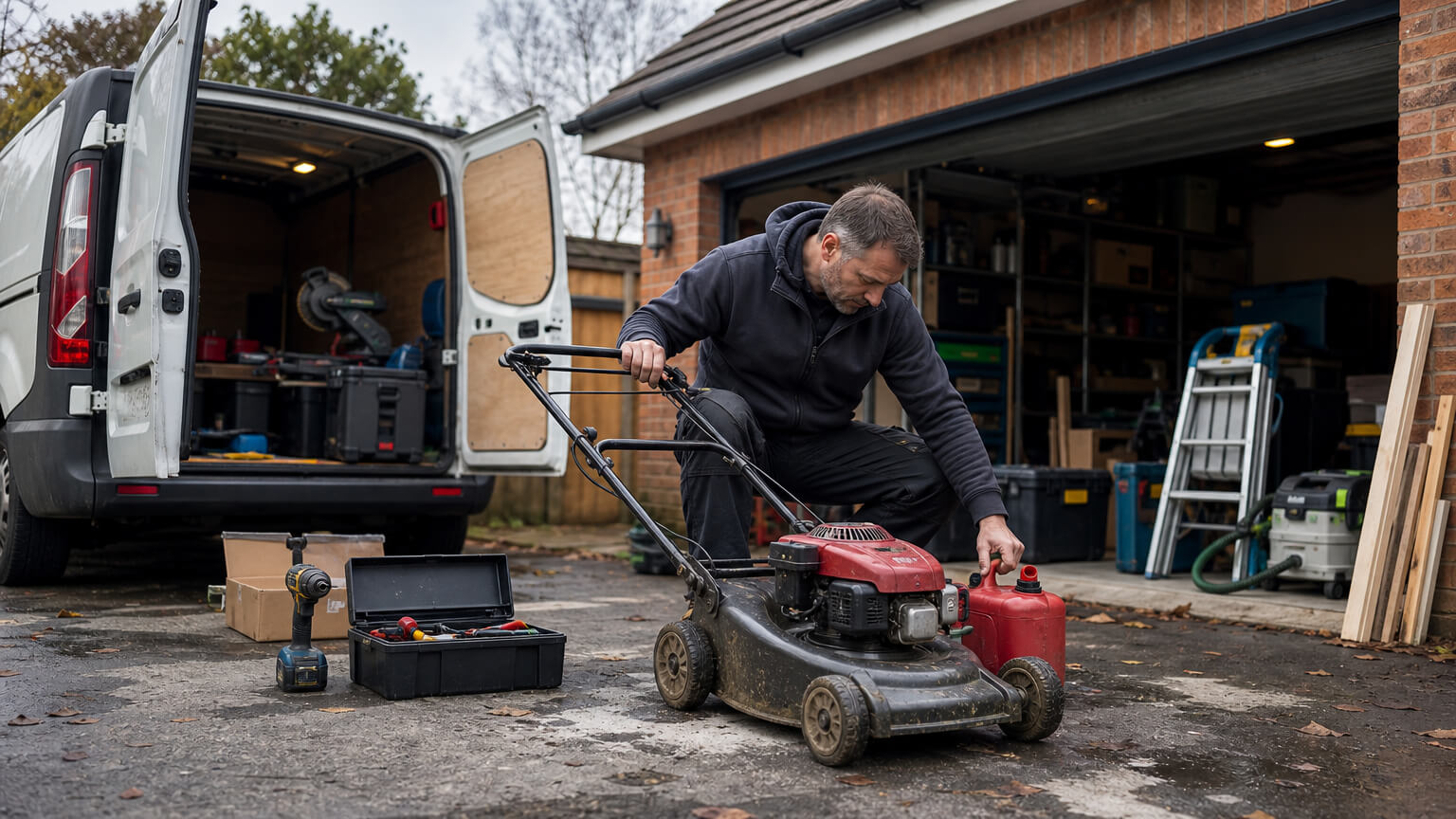
If the real problem is that the garage has no room to store tyres properly because it’s also holding decorating supplies, garden kit, house-move boxes or seasonal overflow, that’s what a Wigwam unit solves, not the tyres themselves.
A real example: clearing space at Wigwam Self Storage Leatherhead
Move the rest of that clutter into a unit at Wigwam Self Storage Leatherhead, or your nearest of our 15 UK locations, and the garage floor is clear enough to store the tyres correctly at home, exactly as described above.
Why the unit itself is a good home for the rest of the garage
Units are individually alarmed, with smart entry and unlimited access between 6am and 10pm. A deposit and 14-day notice period apply, and any unused paid days are refunded. Clean, dry and secure, not climate-controlled, which is honestly all household items need too, and it’s exactly what frees up the space for the tyres to sit properly on a shelf or pallet, the way the method above describes.
If you’d like a quote for the rest of the garage, we’re happy to help.
A Word on the Rest of Our Prohibited Items List

Tyres sit alongside other vehicle and leisure exclusions, along with flammable, perishable and illegal items. The full list covers everything.
Storing Everything Else Properly: Get a Quote
We’d rather tell you what we can’t do than sell you something that won’t work. For everything else that’s crowding your garage, personal storage, business storage and container storage are all worth a look, alongside a quote or a call on 0800 2545585.
Frequently Asked Questions
No, we don’t store loose tyres or wheels, no exceptions. See the full method above for storing them correctly at home instead.
Manufacturers generally recommend an ageing check from around five years, and consider replacement by ten, when stored correctly.
Unmounted tyres should stand upright and be rotated regularly. Mounted tyres on rims can be stacked flat or hung.
Yes, provided it’s cool, dry, dark and ventilated, and the tyres are kept off bare concrete.