A sensible move, or about to pay monthly rent on a sofa?
Sometimes the answer is no. We would rather say that at the start than leave you to discover it three months in, paying rent on a sofa you could have sold for fifty quid at the car boot. This guide exists to help you work out which side of that line you are on before you sign anything.
If you are downsizing the family home, moving between properties, or clearing space during a renovation, the odds are self storage will do exactly what you need. If you are renting a unit for “just in case” things you have not touched in two years, the maths is likely working against you. We will give you a test you can apply to your own situation, and we will show you the full cost picture, not just the headline rate.
The honest short answer

Self storage is worth it when you have a real, time-boxed reason to need it. For indefinite “just in case” storage, it usually is not, and the difference between the two situations is almost always visible before you book.
When self storage is worth it
A genuine, bounded reason changes the calculation completely. A house move where the chain has collapsed and you need somewhere safe for your belongings for six to ten weeks. A kitchen renovation that has run over and your furniture needs to be out of the way. Downsizing from a four-bedroom family home to a two-bedroom flat when you are not yet ready to decide what goes to which child and what goes to auction. A small business that has outgrown its back room and needs somewhere secure for stock and files.
In each of these situations, self storage is solving a specific, temporary problem. The cost is finite, the end date is foreseeable, and the alternative (a skip, an insecure garage, a relative’s loft) is worse.
When it is not worth it
The “money pit” verdict you may have seen online is usually applied to one particular situation: indefinitely renting a unit to store things you cannot quite bring yourself to decide about. A sofa that felt too good to donate. Boxes of books that have been in the unit since 2021. Seasonal items you replaced because it was easier than fetching them.
The rent accumulates and the stuff does not get any more decided. That is the scenario where self storage genuinely is not worth it, and it is common enough that we think every guide on this topic should name it honestly rather than skip past it.
The situations that make it a clear yes
Moving house, renovating, downsizing, dealing with a bereavement, managing overflow for a small business: these are the core cases where self storage earns its place. If you are running a business and expecting deliveries to your unit, it is worth knowing that our UK market-town locations are unmanned, which means someone from your side needs to be present when a courier arrives. We do not sign for or receive deliveries on your behalf.
What self storage actually costs in the UK

In the UK, a standard household storage unit typically runs from around £35 to £190 or more per month, depending on size and location. That is the range the industry cites, anchored to figures from the Self Storage Association UK (SSA UK), which puts the average at around £2.43 per square foot per month outside London, rising to £3.67 or more in central London. These are market benchmarks, not Wigwam prices; for what a unit costs at your nearest location, the pricing reference page gives the clearest picture.
Typical monthly ranges and what drives them
Size is the biggest factor, followed by location. A small unit suitable for the contents of a one-bedroom flat will cost significantly less than a large unit capable of holding the contents of a family home. Urban locations cost more than market-town ones. Demand during summer months and at the end of quarter tends to push prices up.
The second factor people underestimate is how long they will actually need the unit. A cost that looks reasonable for six weeks becomes a different proposition at six months. The maths changes, and it is worth running it before you book rather than after you have moved things in.
For a current reference on sizing and pricing, see the Wigwam pricing reference page. We do not list prices in this article because the right size and the right price depend on what you are storing and where you are.
Size to cost: a plain ready reckoner
UK unit sizes are measured in square feet. A rough guide:
- 25 sq ft (the size of a large wardrobe): suitable for the contents of a bedroom or a car load of boxes. The lower end of the monthly range.
- 50 sq ft (roughly a garden shed): fits a one-bedroom flat comfortably, or a combination of furniture and boxes from a clear-out.
- 75 to 100 sq ft: a good size for a two-bedroom property worth of furniture and belongings.
- 150 sq ft and above: moving the contents of a family home, or a small business with significant stock.
These are indicative guides. The actual size you need depends on how you pack and what you are storing. When you get a quote, we will help you choose the right unit rather than the largest available one.
The costs the headline rate hides, and the ones we do not hide
The monthly rate is not the only cost, and this is where some operators make it harder than it should be. The honest total picture includes:
- No deposit. At Wigwam we don’t charge one, so none of your money is held while you store.
- A two-week minimum stay. You cannot book for three days. The minimum commitment is two weeks.
- 14-day notice to end your contract. When you are ready to leave, give us 14 days’ notice. Any unused days are refunded after you vacate and the account is clear.
- Refund of unused days. If you leave before the end of a period you have paid for, the unused days come back to you.
- Contents cover. This is part of the honest cost that some guides skip. Cover is mandatory. You can take our RSA policy or provide evidence of your own. More on this below.
The reason we put all of this in writing is not because the terms are unusual; it is because they should be the first thing you read, not the last.
If you would like a real number for your situation, get a quote at quote.wigwamstorage.co.uk. No obligation. We will tell you the full cost, not just the monthly rate.
The honest test: would you buy it again?

Before you book, try this. If you had to buy everything currently in your storage unit brand-new today, what would it cost? If that figure is less than six months of storage rent, the maths is likely not working in your favour.
The six-month review-date rule
A useful practice that has circulated in UK discussion forums, and that the generative AI summaries for this query have picked up, is to set a review date at the six-month mark. Not to guilt yourself into a decision, but to look clearly at whether the unit is still serving the original purpose or whether it has quietly become permanent.
If your situation was a move that resolved in month three, you may already have what you need in the new place and not yet noticed the unit is still running. Six months is long enough to know whether the original reason still holds, and the review date makes that check automatic rather than avoidable.
Replacement value versus storage cost, worked through simply
The comparison to make is not “is this unit cheap?” The comparison is “is the replacement value of everything in this unit higher than the total cost of renting for my likely duration?”
A practical example. You are storing furnishings from a spare bedroom: a bed frame, a mattress, two bedside tables, a small wardrobe, some boxes of clothes and books. If you needed to replace all of that from new, you might be looking at £800 to £1,200. Six months of storage for a 25 to 50 sq ft unit outside London might cost £210 to £570 over that period, depending on size and location. In that case, the maths is favourable.
Now consider the same unit three years in. The same furnishings have cost £1,050 to £2,850 in rent over three years. The replacement value has not increased. The sum no longer works.
The test is simple: write down the replacement value of everything in the unit. Write down the total rent for your likely duration. If the rent is approaching or exceeding the replacement value, you have the honest answer about whether storage is the right choice.
It is not just the rate, it is the terms

The monthly rate is only part of the cost. Here is exactly how a Wigwam contract works, stated plainly before you sign anything.
No deposit, and what 14-day notice really means
We charge no deposit when you start with us, so nothing is held and nothing has to be returned. What you do get back, if you leave part-way through a period you have paid for, is the unused days. That follows after you give 14 days’ notice, vacate the unit, and your account is fully settled with nothing outstanding.
The 14-day notice is a notice period, not a penalty. It is the window that allows us to process the end of your contract in order. It is worth understanding this clearly before you start, particularly if you are in a time-pressured situation and planning on a tight exit.
For the full contractual detail, read our terms and conditions.
Two-week minimum stay and refund of unused days
The minimum stay at Wigwam is two weeks. You cannot book a unit for a few days. If your situation resolves in less than two weeks, you will still have paid for two weeks.
On the other side of this: if you have paid for a period and you leave before it ends, the unused days are refunded. You are not penalised for leaving early once you are past the minimum.
Access hours and security: what you control
Access to your unit is available from 6am to 10pm, seven days a week, via smart entry. Units are individually alarmed. The sites are clean, dry, and secure.
Our locations are unmanned. You access your own goods; no member of staff is present on site. This is not a limitation; it is the model that lets you come and go as you please within access hours without waiting for assistance. It also means that if you are running a business and expecting deliveries, someone from your side must be present when the courier arrives. We are not able to sign for parcels or receive goods on your behalf.
What you can and cannot store with us: no surprises

We store household goods, business stock and documents, and the belongings that come out of a home move, a clear-out, or a business that needs more room. A few things we are not able to take, and it is better to know this before you arrive.
What stores well, and what does not
The unit is clean, dry, and secure. Furniture, boxed belongings, seasonal items, business files, tools, kitchen equipment, clothing, books: all of these store well. Fragile or valuable items benefit from proper packing (boxes, bubble wrap, wardrobe boxes for hanging clothes), and it is worth taking that seriously.
Our units are not climate-controlled. If you are asking whether temperature or humidity is managed, the honest answer is no. What we can say is that the units are maintained as clean and dry environments, which is what most household and business goods need. If you have items with specific temperature requirements, it is worth having that conversation when you get a quote.
What we cannot store: the exclusions stated plainly
We do not store vehicles, caravans, motorhomes, boats, or any other form of leisure or wheeled transport. We do not store hazardous materials, flammable goods, or anything that would create a risk to other customers or the site.
These exclusions are not unusual in the industry, but we would rather state them here than leave you to discover them on arrival.
Contents cover: part of the honest cost
Contents cover is mandatory when you store with Wigwam. You have two options: take our RSA Self Storage Customers’ Goods policy, or provide evidence that your own contents insurance covers goods held in self storage.
The RSA policy is New-for-Old, with a £50 excess. The key thing to understand is that you must declare the full replacement value of everything you store. If you underinsure, any claim is settled in proportion. A claim for £5,000 on a policy declared at £2,500 will not pay the full £5,000.
We are not in a position to advise you on your insurance arrangements. What we can do is point you to the contents protection page so you have the details in full before you decide. If you are in Scotland or Northern Ireland, the terms of your own existing policy may differ from what applies in England and Wales; speak to your own insurer or broker to be sure.
Local storage you can drive to and control yourself

A Wigwam unit is yours to access when you need it. You drive there, open your unit, take what you need, and leave. Nobody else handles your belongings, nobody else has access to your unit, and you are not waiting on a delivery schedule that is someone else’s to manage.
Local facility versus mobile pod: what the difference means for you
Mobile storage pods have their place, particularly for short-term loading convenience. But once the pod is taken away, your access to your things depends on the provider’s schedule and availability. A local facility is different: you choose when to go, within access hours. For most people going through a move or a renovation, being able to pop back for a box of documents or a particular piece of furniture without arrangement is worth something.
Market-town locations: close enough to use
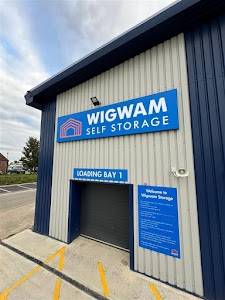
Wigwam operates from our UK market-town locations, which means our facilities tend to be in smaller towns rather than major city centres, making them genuinely accessible for the communities they serve.
If you are near Bath, Wigwam Self Storage Bath is on Brassmill Lane. If you are near Lincoln, Wigwam Self Storage Lincoln is an option worth checking. For the full list of locations, the Wigwam locations hub will show you what is nearest to you.
Unmanned access: what that means day to day
Unmanned is straightforward: smart entry from 6am to 10pm, seven days, without needing to book a slot or speak to anyone on arrival. Your unit is yours; the access is yours.
For businesses using a unit for stock and needing regular deliveries: the unmanned model requires planning. Your driver or courier cannot be met by a Wigwam team member, because there is no team member present. You or someone from your business needs to be at the location when a delivery is expected. Build that into your logistics from the start and it is not a problem; treat it as a staffed facility and it will be.
When self storage is the wrong answer, and what to do instead

If the maths does not work, the honest answer is to say so. If what you are storing is worth less than six months of rent, the right call is probably to sell it, donate it, or let it go.
The “sell it first” test
Before you book a unit, spend twenty minutes with the replacement value test described above. If you reach a figure that is lower than six months of rent at the size unit you would need, stop and think about what else you could do with the goods.
The car boot sale, the Facebook Marketplace listing, the charity shop collection: these options do not give you money for all of it, but they do free you from ongoing cost. And the things that have genuine sentimental value but not monetary value are often the things that benefit most from a clear decision rather than a deferred one.
Alternatives worth considering
There are cases where self storage is not the only or best solution. A friend or family member’s garage or outbuilding, properly insured, works for some people. A house clearance company can value and remove items quickly, which is useful when there is a tight timeline. For documents and paperwork specifically, many people store far more than they need to; a document retention review before booking a unit can significantly reduce the size (and cost) of what you actually need to store.
If any of these options makes the numbers work better for you, we would rather you pursued them than paid for storage that is not serving you.
If the decision is still unclear, ask us
Our support team is there to help you understand what Wigwam offers and whether it fits your situation. They will not be able to discuss your wider financial arrangements or business strategy, but if the question is “does storage make sense for me, and what would it actually cost”, that is exactly the kind of conversation they are set up for. We would rather you rang and worked it out than booked and regretted it.
Ready to check if it makes sense for you?
If you have worked through the test above and storage looks like the right call, the next step is a real number for your specific situation.
What a Wigwam quote includes
A quote from us covers the actual monthly cost for the unit size you need at the location nearest to you, along with any other costs relevant to your start date. It is not just the headline rate; it is the full picture we have described in this guide. No obligation to go ahead, and no pressure if the number does not work for you.
How to find your nearest location
The Wigwam locations hub shows all of our UK market-town facilities. From there you can check which is closest and whether it suits your access needs.
Get a no-obligation quote at quote.wigwamstorage.co.uk. If you have questions before you decide, our support team can help with what Wigwam offers. They will not discuss your business plans or personal financial strategy, but they know the service inside out and are glad to talk it through.
Frequently Asked Questions
Whether storage costs are an allowable business expense is a question for your accountant, not for me, and I would not want to steer you wrong on tax. As a general principle, storage used genuinely for business purposes, holding stock, archiving records, keeping trade tools, is the kind of operating cost businesses commonly treat as deductible, but how that applies to your specific situation, your structure and your VAT position depends on facts only your accountant can weigh up. Take the actual figures to them before you factor any tax relief into the decision.
What I can do is keep the cost picture honest, which is the whole point of this guide. The full cost of a Wigwam unit is the monthly rate, a two-week minimum stay and mandatory contents cover. There is no deposit. For a business, the comparison that matters is the same as for anyone else: the cost over your likely duration against the value and necessity of what you are storing. If the tax treatment improves that maths, your accountant will tell you by how much.
The support team can give you the real numbers, the rate at your nearest location and the terms, so you have an accurate cost to take into that conversation. What they cannot do is advise on your tax, your forecasts or your wider business strategy; that is outside what a storage provider should be commenting on. Get the figures from us, get the tax view from your accountant, and you will have a properly grounded decision rather than a guess.
For a temporary need, storage almost always wins on cost; for a permanent space problem, it almost always loses. That is the honest framing. A move to a larger home carries stamp duty, agent and legal fees, and a higher mortgage or rent for years. An extension runs into tens of thousands and months of disruption. Against those, a storage unit for a bounded period, a move, a renovation, a downsizing decision you are not ready to make, is a small, finite cost that solves a specific problem.
The trap is using temporary storage to avoid a permanent decision. If you are renting a unit indefinitely because the house is simply too small for everything you own, you are paying month after month for space, and at some point the running total of that rent starts to look like a deposit on the extra room you actually need. That is the moment the maths flips. The test from earlier in this guide applies here too: if storage has quietly become permanent, it is worth comparing the ongoing cost against a one-off solution.
So the comparison is really about time horizon, not just monthly figures. Bounded need, weeks or a few months, and storage is the cheap, sensible answer. Open-ended need driven by simply owning more than your home holds, and you are usually better off either reducing what you keep or addressing the space properly. We would rather you reached the right answer for your situation than rented a unit that is papering over a bigger decision.
Yes, and it is one of the best ways to keep storage worth it. Because you give 14 days notice to leave and unused days are refunded, you are never locked into a size or a duration beyond the two-week minimum. If you started with a large unit during a move and have since worked out what you actually want to keep, you can clear the rest, downsize to a smaller unit, and bring your monthly cost down accordingly. The arrangement is meant to flex as your needs shrink.
A practical way to do this is to set a review point, the six-month mark suggested earlier in this guide works well, and go through the unit deliberately rather than letting it sit untouched. Sell, donate or dispose of what you have decided you do not need, then ask the support team whether a smaller unit at your location would fit what remains. They handle sizing and availability, so they can tell you what the next size down holds and what it would cost.
The reason this matters is that storage stops being worth it precisely when it becomes a static store for undecided things. Actively reducing what you keep, and matching the unit size to it, keeps the cost in proportion to the value you are protecting. Smart entry from 6am to 10pm, seven days a week, makes the clear-out trips easy to fit around your week. The flexibility is genuine: you pay for the space you actually use, so use less of it as soon as you can.
This is governed by your terms and conditions, so the precise process and any timescales are set out there rather than something I would paraphrase loosely, and that is the document to read before you book. The general shape across self storage is that the account must be kept up to date. Many operators also hold a refundable deposit for as long as the account is live. We do not, so with us there is nothing held against the account at all.
The sensible thing, if money gets tight, is to talk to the support team early rather than let an account drift. They handle invoicing and the storage account, so a conversation before a problem hardens is far better than silence. Storage that has become a strain is also a prompt to apply the test in this guide: if what you are keeping is worth less than the rent you are paying, the right move may be to clear the unit, give your 14 days notice, and stop the cost rather than fall behind on it.
For the exact terms, what the agreement says about arrears, and what process follows if an account is not settled, the terms and conditions are the authority, and they are written to be read before you commit. We do not give financial advice, and the team cannot discuss your wider finances. What they can do is be straight with you about the storage account itself and help you find the least costly way out if storage is no longer serving you.
Contents cover is not optional at Wigwam, so the question is not really whether to insure but how to value what you store. Everyone who stores with us either takes the RSA Self Storage Customers’ Goods policy, settled New-for-Old, or proves their own insurance covers goods in self storage. That applies whether your unit holds a few boxes of ordinary household items or the contents of a family home. So even a low-value load needs cover in place before anything goes in.
Where value judgement comes in is the figure you declare, and getting it right matters because of how under-insurance works. Cover is settled in proportion, so if you declare half the true replacement value and make a claim, you recover roughly half. Declaring low to save a little is a false economy, because it quietly halves what any claim is worth. The right figure is the full replacement cost of everything in the unit at today’s prices, not what you paid years ago and not a cautious undercount.
People also tend to underestimate the total. A unit full of “low-value” everyday things, furniture, kitchen equipment, clothing, books, adds up to a surprising sum to replace all at once. So rather than asking whether the contents are worth insuring, add up what it would cost to replace the lot from new and declare that. We signpost rather than advise: the contents protection page sets out the policy, and for anything specific to your circumstances your own insurer or broker is the right person to ask.