You did the hard part. The bags went to the charity shop, the bin men took three loads, and you finally opened that cupboard you’d been avoiding for two years. Now there’s a smaller pile left, the stuff you meant to keep, and a quiet worry creeping in behind the satisfaction: did you get rid of enough, or are you about to rent a unit sized for a house you no longer have? The clear-out is the work. The unit should match what’s left, not what you were afraid to admit you’d keep.
Quick self-check, before you read on:
- A few boxes of keepsakes and seasonal things left? You likely want 10 sq ft.
- An edited set of furniture and boxes (one wardrobe, a chest of drawers, several boxes)? You likely want 25 to 50 sq ft.
- A genuinely large amount kept from a house or estate clearance? You likely want 75 to 100 sq ft.
- Eyeing anything past that? Pause. Read the gut-check section below before you book.
What size do you actually need for what’s left?
Most people who have genuinely decluttered land in the 10 to 50 sq ft range, not the 75 to 100+ sq ft band that “moving house” size guides push everyone toward. Wigwam’s own sizing runs in six tiers, and once you re-read them against what’s sitting in your hallway right now, rather than what an entire house holds, the right size tends to become clear fairly quickly.
| Residue after decluttering | Wigwam unit size | Why |
|---|---|---|
| A few boxes of keepsakes, seasonal decorations, documents | 10 sq ft | Matches the “small items, boxes, seasonal goods” tier |
| A handful of furniture pieces plus boxes (one wardrobe, a chest of drawers, several boxes) | 25 sq ft | Matches the “small furniture, multiple boxes” tier |
| A room’s worth of edited furniture (sofa, table, an appliance) | 50 sq ft | Matches the “larger furniture, appliances” tier |
| A genuinely reduced but still substantial set, e.g. after a house clearance where only some items were kept | 75 sq ft | Matches the “small apartment’s worth of contents” tier |
| Multiple rooms’ worth still remaining (rare after a real declutter) | 100 sq ft | A signal to double back and declutter further, not a default |
| Full household, estate or business volume | 150+ sq ft | Out of scope for most decluttered residue, see the gut-check below |
These are Wigwam’s own tiers, re-checked against the current size guide as of July 2026, then keyed here to what’s typically left after a real clear-out rather than to a whole house’s contents.
Here’s the difference in practice. Picture two people, each with roughly the same pile sitting in a hallway: a spare bed frame and what looks like eighty years’ worth of clothes. The first hasn’t sorted anything yet. They’re guessing, so the safe move for them really is to size up. The second has been through it properly, kept one wardrobe’s worth of clothes and three boxes, and let the rest go. They can book the 25 sq ft unit with confidence, because they know, not guess, what’s left. The whole point of this guide is helping you work out which of those two you are.
If you’ve decluttered ahead of a house renovation rather than a move, the same logic holds, just on a shorter timescale. The pile you’re storing is usually the furniture and boxes you’ve decided to keep out of the way while the work happens, not everything you own. That tends to land at 25 to 50 sq ft for most single rooms’ worth of kit, occasionally 75 sq ft if several rooms are being done at once. Size for what’s actually coming out of the house, not for the whole house as a precaution.
Why “just size up to be safe” isn’t your answer
You’ll see this advice everywhere in the storage industry, including from operators here in the UK: if you’re torn between two sizes, size up. It’s not bad advice. For someone who hasn’t sorted through their things yet, or who’s mid-move and still expecting more boxes to turn up, sizing up is a sensible hedge against surprises.
It stops being sensible once the sorting is done, though. If you’ve genuinely decluttered, you already know what’s left, and there’s nothing left to hedge against. Sizing up at that point means paying for space you’ll never fill, which quietly undoes the point of clearing out in the first place. The advice isn’t wrong. It’s just aimed at a different person than the one reading this.
There’s also a quieter cost to over-sizing beyond the extra you’ll pay each week. It’s the nagging sense that the decluttering didn’t really count, that you’re still carrying more than you meant to. Booking the size that matches what’s left is part of what makes a clear-out feel finished, rather than something you’ll need to revisit in six months.
Is this the right guide for you?
This page is specifically for people who’ve already decluttered and now need to size a unit for what remains. If that’s not quite your situation, one of these is probably a better fit.
Moved into a new flat and need to work out storage room by room? Wigwam’s Storage Unit Size Guide for a 1-Bedroom Flat covers sizing by property type rather than by what you’ve cleared out.
Want the fuller picture across every scenario, moving, seasonal kit, small business stock, downsizing generally? Wigwam’s guide to determining the perfect storage unit size is the broader companion to this page.
The gut-check: signs you haven’t quite finished decluttering
If you’re looking at the 100 sq ft tier or beyond, and this is off the back of a general clear-out rather than an entire house or estate move, treat that as a useful signal rather than a hedge. A genuinely large residual set, several rooms’ worth, still sitting there after a “declutter”, usually means there’s another pass to make before you book anything. It’s not a failure. It’s information: the clear-out isn’t quite finished yet, and finishing it will likely save you a size tier and the cost that comes with it.
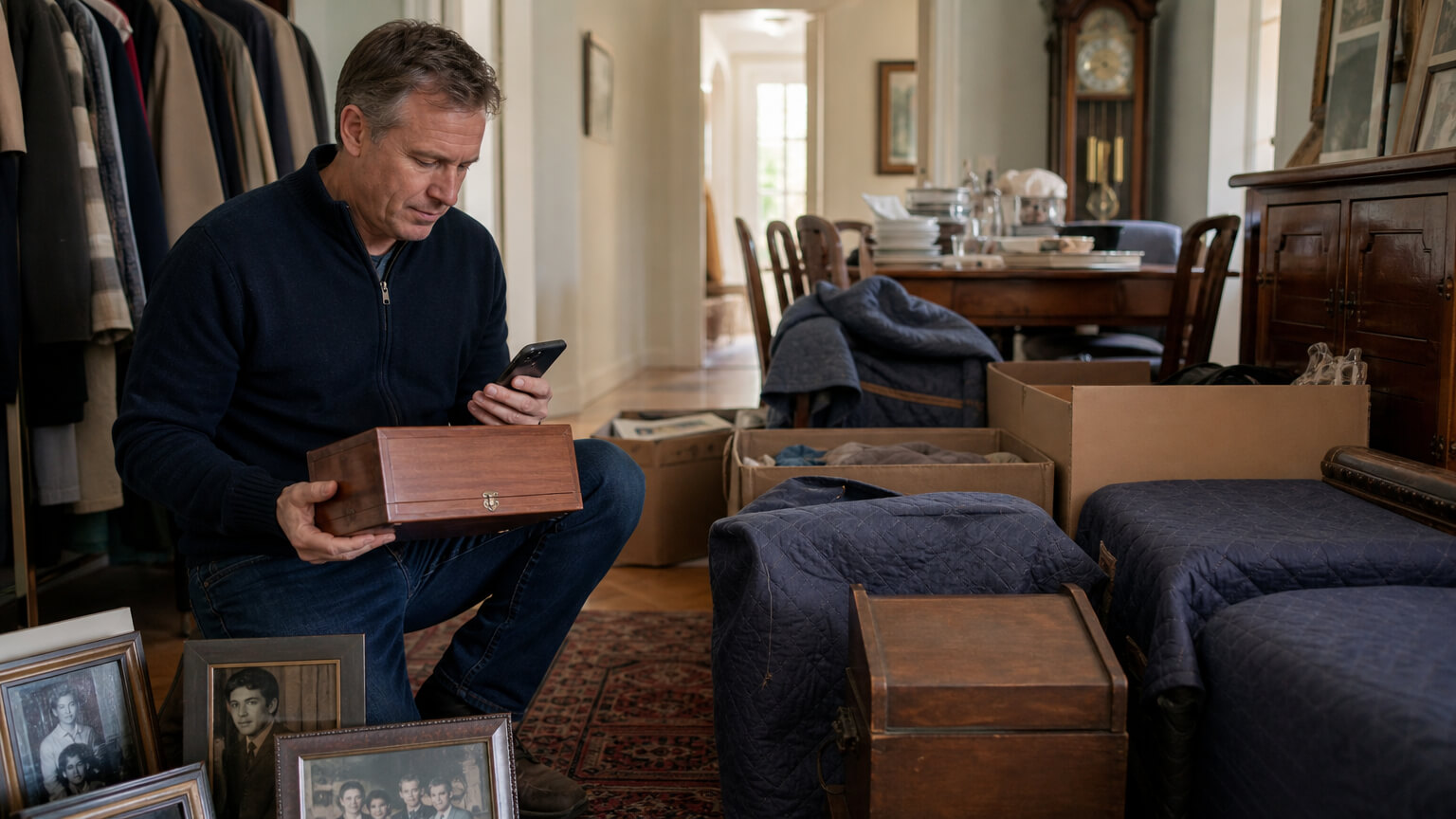
There’s one sub-state worth naming gently here. If you’ve recently sorted through a relative’s belongings after a bereavement, kept a modest, sentimental and useful subset, and let the rest go, you’re often looking at something closer to the 25 to 50 sq ft range rather than a whole-house volume, because the sorting has already been done for you by circumstance. It’s a smaller, edited pile, and it deserves a smaller, honest unit size, not the safety margin you might assume you need.
There’s no shame in a second pass, either. Most people underestimate how much a “final” clear-out actually reduces things until they physically stand in front of the pile again a week later with fresh eyes. If the gut-check above rings true, take the extra weekend before you book, rather than paying for a bigger unit to avoid it.
Booking the right unit: what happens next

Once you know your size, the practical steps are straightforward, and it’s better to state them plainly than gloss over them.
Booking works on your first four weeks upfront, with no deposit, and any unused days come back to you after you give 14 days’ notice to end your storage. Those are two separate steps, so it pays to know both rather than assume either covers the other.
Access runs 6am to 10pm, seven days a week, through smart entry rather than a member of staff letting you in. Most Wigwam sites are unmanned, which keeps costs down and access flexible, but it does mean that if a courier, van driver or a friend is helping you move items in, you’ll need someone from your own arrangements on site with them, not a Wigwam team member.
If you’re downsizing into a smaller home, book your unit before completion day rather than after, so the “keep but no longer room for” pile has somewhere to go the moment it leaves the old house. If you’re storing ahead of a renovation, the same applies: book for when the work starts, not when the mess has already spread across every room. Either way, the two-week minimum term means you’re not locked into anything longer than you actually need, whether that turns out to be a fortnight or a year.
Ready to see what your size costs at your nearest branch? Get your price and you’ll have a figure in minutes.
Pricing at a glance (and where to check current rates)

Price tracks two things above all: the size of the unit and where it is. A 10 sq ft unit in one market town won’t cost the same as the same size elsewhere, and that’s true across the storage industry, not just at Wigwam. Rather than quote a figure here that will drift out of date, the honest move is to point you straight at the live numbers.
Wigwam’s self-storage pricing page shows current rates by region so you can check exactly what your chosen size costs near you. If you’re not sure which branch is closest, the self-storage locations page will point you to your nearest one.
The two-week minimum term matters here too. It means you’re not committing to months of storage just to cover a short gap between decluttering and moving on, whether that’s completion day on a house sale, a renovation finishing, or simply getting round to selling or gifting the last few items you’re still deciding on.
Recap: match the unit to what’s actually left

If what’s left after your clear-out is a few boxes of keepsakes and seasonal things, that’s a 10 sq ft unit. An edited set of furniture and boxes puts you in the 25 to 50 sq ft range. A genuinely large amount kept from a house or estate clearance sits at 75 to 100 sq ft. Anything past that, on the back of an ordinary declutter, is usually a sign there’s more sorting left to do, not a size to book into.
The clear-out was the hard part, and you’ve already done it. The unit is just the easy bit that follows: matching what’s left, not hedging for what you were afraid to admit you’d keep. Get a price for the size you’ve decided on, and you’re done.
Frequently Asked Questions
It happens, and it’s a straightforward fix rather than a problem. Get in touch with your branch and they’ll talk you through moving up a tier. It’s far easier to size up once you’re using a unit and can see how full it is than to guess upfront.
Yes. If you clear out further while you’re renting and realise you need less space than you first thought, you can move down to a smaller unit. Speak to your branch about the options at your site.
The smallest tier is 10 sq ft, suited to a few boxes of keepsakes, seasonal items and documents, the kind of pile most people have left over even after a thorough clear-out.
Often, yes, if what’s left is edited down to a wardrobe’s worth of furniture and a handful of boxes rather than the flat’s entire contents. For sizing tied specifically to a one-bedroom flat rather than post-declutter residue, the 1-bedroom flat size guide is the more precise starting point.
No, that’s a different question about organising or clearing out a unit you already rent. This page is about choosing the right size unit for what’s left after you’ve decluttered your home, not what to do with a unit once you have one.