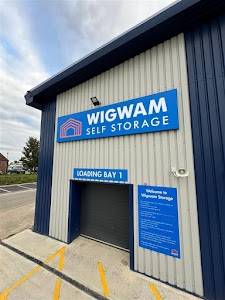
Landing in Reading before the new place is quite ready for you?

Most people get the big things right when they move. They book the removal van. They notify the utilities. They change the address. What catches them out is the gap, the few weeks where you have left the old place but the new one is not quite ready yet.

It is not a failure of planning. It is just how moves work, especially when a chain is involved. Completion dates shift. Lettings overrun. You find yourself in a short-term rental in Reading while you wait for the right house to come through. The boxes are real. The furniture is real. And they need somewhere to go.

That is what a storage unit is actually for. Not a warehouse at the edge of town. Not a last resort. A hinge, the quiet thing that holds the two halves of your move together while you get settled.

In a hurry? Here is what you need:

Why moving to Reading often needs a middle step

A move to Reading is rarely one clean event. It is almost always two: the move out, and the move in. Self storage is what makes that double move manageable rather than chaotic, and understanding how it fits your particular situation is the first thing worth sorting.

The gap between leaving and arriving

The most common trigger for storage is simple: your moving date and your completion date do not coincide. You need to hand back the keys to your old property before the new one is legally yours. Or the landlord at your short-term place wants you out in three weeks and the chain has another month to run.

In those few weeks, everything you own has to go somewhere. For most people, it goes into a unit. The goods are safe, the removal van is paid off, and you can breathe while the paperwork catches up with real life.

It is not a niche situation. It is one of the most common patterns we see: people moving into Reading from further afield who need a clean bridge between the two chapters.

When the chain slips or the new place is not ready

Even careful moves slip. A buyer’s mortgage offer takes longer than expected. A solicitor flags something that needs resolving. The sellers of your new house have their own complications upstream.

When that happens, storage removes the crisis element. Your goods are already in a unit. You are not paying for double removal costs. You are not sleeping on a friend’s floor surrounded by boxes. You give the chain a little more time, and you get on with setting yourself up in Reading in the meantime.

Moving to an unfamiliar town is a different kind of stress

Reading is a city people relocate to for work, for family, for the rail links west and into London. If you are coming from somewhere else in the UK, you are doing all of the practical work of a move without a local network to lean on. No neighbour to ask about the right removal firm. No family member to mind a van for an afternoon.

A trusted local operator, one who is straight about how their units work and honest about their terms, is actually worth something in that context. It is one less thing to figure out from scratch.

Three ways storage smooths a Reading move

The practical payoff is simple: a unit takes the time pressure off. Whether you are bridging a gap between completions, making the old property more saleable, or just arriving in Reading with room to think, here is how it works in practice.

Bridge the gap between completion dates

The mechanics are straightforward. Your goods leave the old property on day one, go into the unit, and follow you to Reading when the new home is ready. You are not rushing the completion, not paying for a second round of removals because the first attempt did not line up, and not living out of suitcases at a relative’s house.

The unit absorbs the mismatch. That is the job it does. And if the dates align more neatly than expected, you are not penalised: unused days are refunded.

Declutter the old place for viewings, and the new place for calm

If you are selling and buying simultaneously, a unit lets you stage the old property without drowning in it. Move out the furniture you are not ready to live with, the extra bedroom pieces, the loft boxes, the things that make rooms look small in photographs. The house shows better. The sale moves faster.

At the other end, you arrive in Reading without every box in every room on day one. You unpack when you are ready, not because you have no choice. The difference between starting a new chapter in control and starting it buried is usually about fifty cubic feet of storage space.

Keep furniture clean, dry and secure while you settle

Good furniture does not need a climate-controlled unit. It needs to be clean, dry and secure. Our units are individually alarmed, the buildings are secure, and the goods inside are stored at ambient temperature in dry conditions.

If you are in a short-term rental in Reading while you find the right permanent home, there is often no room for a sofa or a dining table. The unit holds it safely until you are ready. When you find the right place, you go and get it.

What size unit will you actually need

Most people overestimate. Furniture is bulky, but when it is stacked sensibly, a well-packed unit holds more than it looks like it should. A rough guide gives you a starting point.

A rough guide from a few boxes to a family home

A small unit of around 25 square feet suits a studio or a single room: a few boxes, a bike, a chest of drawers. A 50 square foot unit covers the contents of a one-bedroom flat comfortably. A two-bedroom home typically fits in 75 to 100 square feet once furniture is stacked well.

Larger family moves, three or four bedrooms, often need 150 square feet or more, but that depends on what you are keeping out for daily use versus what goes into the unit for the duration.

These are rough numbers. The Reading location page has a more detailed size guide. For current unit prices in Reading, see wigwamstorage.co.uk/how-much-is-self-storage-in-the-uk. No prices in this article: they vary by unit size and availability.

What to do if you are not sure

Get in touch with the Reading team before you book. They have helped plenty of people size up a move similar to yours, and they will give you a straight answer rather than defaulting to the biggest unit on offer. If you genuinely cannot tell what you will need, start slightly smaller: unused space costs money, and if you need more room, we can look at options.

The flexibility is part of the offer. This is not a long-term warehouse contract. It is a bridging tool, and the team treats it that way.

How long will you need it

The honest answer is: probably less time than you fear. Most bridging moves are a matter of weeks, and the terms are designed around that.

The two-week minimum and what it means for a bridging move

Two weeks is the floor. For most people bridging a completion gap, that is enough or close to it. If your move completes in ten days and you move out of the unit then, unused days from your billing period are refunded. You pay for what you actually used, not what you booked in advance.

The two-week minimum is short enough to match a narrow gap between properties, without forcing you into a month’s commitment when you only need a fortnight.

When the move runs long

If the chain slips again, or the new place is not ready when you expected, you simply stay in the unit. You are already in. There is no new contract to negotiate, no emergency arrangement to make.

When you are ready to leave, give 14 days’ notice. Once you have vacated the unit and the account is settled, the deposit comes back. That is how it works. No fine print, no ambiguity: 14-day notice, vacated, account cleared, deposit returned.

The deposit is required at the start. It is also refundable at the end. That is worth saying plainly because a lot of national operators are vague on exactly this point.

Getting in and out of your unit in Reading

Access is one of the questions people get wrong when they are planning a move. The expectation of round-the-clock access is common because some national operators market 24-hour entry. We do not offer that, and we think it is worth being upfront about it.

Smart entry, 6am to 10pm, seven days a week

Our Reading site uses smart entry. That gives you access from 6am to 10pm, every day of the week. Not 24 hours. We say that clearly, because the honest version of access matters more than the headline version.

In practice, 6am to 10pm covers nearly every realistic need. An early collection before work? Yes. A late run after the removal van finishes? Yes. An early moving day before the traffic builds? Yes. The window is wide enough for most moves. What it does not cover is a 2am retrieval, and if that is a firm requirement, we are better off telling you now.

Individually alarmed units and what clean, dry and secure means in practice

Each unit has its own alarm. The site is secure. Clean, dry and secure is the right description of what you are getting: not temperature-managed, not humidity-controlled, just a solid, alarmed, dry space that keeps your goods in the same condition you left them.

That is what furniture, boxes, clothing, kitchen equipment and the general contents of a home actually need during a move. The words matter. We do not oversell it because there is no need to.

Deliveries and couriers: what to know before you arrange one

Our sites are unmanned. That means there is no staff member on site to sign for deliveries or receive goods on your behalf.

If you are expecting a courier or delivery at the unit while your move is in progress, someone from your own household needs to be present to receive it. Wigwam cannot accept, sign for, or manage incoming deliveries. This is worth knowing before you give a storage address to an online retailer or a furniture supplier. Plan the delivery for when you can be there.

Ready to reserve a unit? Get a quote at quote.wigwamstorage.co.uk or visit the Wigwam Self Storage locations page for unit sizes and availability in Reading.

What it costs to commit, and how the terms actually work

Here is what you are committing to, stated plainly. A deposit, a two-week minimum, a 14-day notice to leave, and a contents protection requirement. None of these are hidden. All of them are in the terms.

The refundable deposit and the 14-day notice, explained plainly

You pay a deposit when you open the account. It is a standard part of the contract. What matters is what happens to it at the end: give 14 days’ notice, vacate the unit, settle any outstanding balance, and the deposit is returned.

There are no penalties for leaving on time. There is no situation where the deposit disappears into an admin fee. It comes back. That reassurance is worth writing out because national operators tend to either bury the deposit conditions in the small print or make the notice period hard to find. You can read the full terms at wigwamstorage.co.uk/terms-conditions/.

Unused days refunded and the two-week minimum, in plain English

If your move completes earlier than expected and you clear the unit before your billing period is up, unused days are refunded. You will not be charged for days you no longer need.

The two-week minimum means you need to commit to at least a fortnight at the start. For a bridging move, that is usually the right amount of time anyway. It is short enough to suit a narrow completion gap and long enough to give you a real cushion if things shift.

Contents protection: the requirement you should not overlook

Storing your goods does not automatically mean they are insured. You are required to have contents protection in place for the duration of your stay: either through Wigwam’s policy with RSA (Self Storage Customers’ Goods cover) or by proving your own existing cover is valid for goods in self storage.

The Wigwam policy is New-for-Old replacement with a £50 excess. When you declare the value of your goods, declare the full replacement value. If you understate it and a claim arises, the settlement is proportional, not full. This is not insurance advice. For the details, see wigwamstorage.co.uk/contents-protection/ and speak to your insurer or the Wigwam team about which route suits you.

What you can store, and what does not belong in a unit

The sorting question is simpler than most people expect. Almost everything in a household goes in. A small number of things do not.

The household goods that belong in a unit during a move

Furniture, boxed possessions, clothing, kitchen equipment, soft furnishings, books, bedding, appliances, ornaments, tools. The everyday contents of a home. If it lives in a room in your house, it almost certainly belongs in a unit during a move.

Goods are stored at ambient temperature in dry, clean conditions. That suits standard household furniture, including wood and upholstered pieces, without any issue.

What Wigwam units are not designed for

Vehicles do not go in. No cars, no vans, no motorbikes, no caravans, no motorhomes, no boats. If your move involves a vehicle that needs storing, you will need a specialist vehicle storage facility for that piece.

There is no temperature-controlled or climate-controlled storage available at our sites. For most household goods, that is not a limitation. For wine collections, archive materials that need humidity management, or other sensitive goods, it is worth knowing in advance.

A note on hazardous and regulated items

Standard self storage prohibitions apply: nothing flammable or combustible, no perishables, no living things, no hazardous materials. The full list of prohibited items is in the terms at wigwamstorage.co.uk/terms-conditions/. Worth a read before you pack, not after.

Your calm landing in Reading starts here

The unit is the least interesting part of a move. That is exactly how it should be. When the storage piece is sorted, you can concentrate on the rest of getting settled: finding the good coffee, working out the parking, getting the new address registered everywhere. The boxes are safe and you know where they are. That is the whole point.

How to size your unit and get started

Three steps. Estimate what you have (the size guide on the Reading location page helps, or call the team and talk through it). Get a quote at quote.wigwamstorage.co.uk. Confirm a start date that fits your moving timeline.

There is no commitment to lock in before you are ready. The quote is the starting point, not the contract.

The Reading team and what they know

The team at Wigwam’s Reading site has helped movers through all the variations: the chain that slipped twice, the flat that was not ready on the day, the rental that ended before the completion came through. They are not a call centre reading from a script. They know what a Reading move looks like and they can size a unit around your specific situation.

If you are arriving in an unfamiliar town with a lot to organise, having one person in Reading who already understands the storage side of your move is worth something. That is the offer.

Ready for your calm landing? Get a quote at quote.wigwamstorage.co.uk, or explore our UK market-town locations at wigwamstorage.co.uk/self-storage-locations/.

Frequently Asked Questions

I’m commuting into London from Reading. Do the 6am to 10pm hours actually work around a commute?

For most commuters the 6am to 10pm window works well, because it brackets the normal working day at both ends. If you catch an early train to Paddington, you can reach the unit before you leave, and if you are back in the evening, the site stays open until 10pm, which covers a late return on a delayed service. The honest caveat is the one this article makes plainly: it is not 24-hour access, so a genuine middle-of-the-night need is not catered for.

In practice, the kind of access a relocating commuter needs is rarely at 2am. It is more often a Saturday load-in, an early collection before catching the train, or an evening visit to fetch something for the weekend. All of that sits comfortably inside 6am to 10pm, seven days a week. The point of stating the hours clearly is so you can plan around them rather than discover a limit at the worst moment.

If your schedule is genuinely unusual, the sensible move is to think through when you will actually need the unit during your settling-in weeks and check that against the window before you book. For the overwhelming majority of Reading commuters bridging a move, the hours are wide enough that access never becomes the problem. The site is self-access and unmanned, so within those hours you simply let yourself in by smart entry whenever it suits, with no slot to book and nobody to wait for.

Can I have new furniture delivered to the unit before I move into my Reading home?

No, the unit cannot receive deliveries on your behalf, because the sites are unmanned and Wigwam does not sign for or accept goods. This catches people out, so it is worth being clear before you give a storage address to a retailer or furniture supplier. There is no staff member on site to take in a delivery, so if a courier turns up to an unmanned site with nobody there, the delivery will not be received.

What you can do is be present yourself, or have someone from your side present, to accept the delivery and put it straight into the unit during access hours. So if you have bought furniture ahead of moving into your Reading home and want it held in the unit until the place is ready, the workable version is to arrange the delivery for a time you can personally be at the site between 6am and 10pm, meet the courier, and store it then. The delivery is received by you, not by Wigwam.

This is not an arbitrary restriction; it is the same principle that keeps your unit secure, that only you and people you authorise can access or receive goods. Plan any delivery around when you can attend, rather than treating the unit as a depot that accepts parcels. If you are coordinating several deliveries during a move, it is worth grouping them into windows when you know you can be there. That small bit of planning turns the unmanned model from an inconvenience into the reason your goods stay under your control.

Is self storage a sensible option for a short-term rental in Reading while I house-hunt?

Yes, a unit pairs particularly well with a short-term Reading rental, because the rental rarely has room for everything and the storage flexibility matches the open-ended nature of house-hunting. As this article describes, plenty of people relocate to Reading into a temporary let while they wait for the right permanent home, and a short-term rental simply does not have space for a sofa, a dining table and the contents of a previous home. The unit holds what will not fit until you have your own place.

The terms suit an uncertain timeline. The two-week minimum is short enough to start without a big commitment, and because the arrangement rolls on, you are not penalised if house-hunting takes longer than expected. You simply stay in the unit. When you do find your permanent home and are ready to leave, you give 14 days notice, vacate, and the refundable deposit comes back along with any unused days. There is no need to predict your house-hunting timeline in advance and over-commit to cover it.

A practical tip for this situation: when you first load the unit, put anything you might want during the rental period, seasonal clothing, a specific item, near the front, since access runs 6am to 10pm seven days a week and you may dip in more than once over a long search. Keep a rough note of what is in there. For someone bridging an indefinite gap between a previous home and a future Reading one, a flexible unit is often the calmest way to avoid renting somewhere larger and pricier than you need just to hold furniture.

What’s the difference between using storage and just leaving everything with the removal company between dates?

The main differences are control, access and cost, and for anything beyond a day or two of gap, a unit usually wins on all three. Some removal firms will hold your goods between dates in their own storage or on the van, which can suit a very short overlap. But once the gap stretches to weeks, which is the common Reading pattern when a chain slips, the picture changes.

A few points to weigh:

  • Access. With a unit, you can reach your goods yourself, 6am to 10pm, seven days a week, by smart entry. Goods held by a removal firm are usually not accessible to you on demand, so if you need one box, you may be stuck.
  • Cost. Extended storage with a removals firm, or a second round of removals because the dates did not line up, can add up quickly. A unit lets you pay for the bridging period directly, with unused days refunded if you finish early.
  • Control. The unit is yours, with your own access and your own contents cover. Your goods are not sitting on someone else’s schedule.

The honest version is that a removal firm holding goods overnight or for a couple of days is fine and often simplest. For a genuine multi-week gap between leaving and arriving in Reading, a unit gives you a fixed, accessible, separately insured space you control, rather than your entire household waiting on a third party’s availability. The two even work together: the firm delivers into your unit, and you take it from there.

Does my contents cover for the unit also protect my things while they’re in transit to or from Reading?

Not necessarily, and this is an important gap to check, because the storage contents cover is for goods while they are in the unit, not while they are being moved. The RSA Self Storage Customers’ Goods policy, or your own cover if you prove it extends to self-storage, protects what is sitting in your unit. Transit, the period when your belongings are on a van travelling to or from Reading, is a different risk and is usually covered, if at all, by your removal company’s goods-in-transit insurance.

So there can be a window, during loading, the journey, and unloading, where the storage policy may not apply. The practical step is to ask your removal firm directly what their goods-in-transit cover includes, what it is worth, and what excesses or exclusions apply. Do not assume the storage cover and the transit cover overlap, because they are designed for different moments in the move.

A note on the unit cover itself, so the boundaries are clear: it is New-for-Old with a £50 excess, theft claims require evidence of forced entry, and atmospheric or climatic damage is excluded. Declare the full replacement value, because under-declaring means a claim is settled proportionally. The full policy detail is at wigwamstorage.co.uk/contents-protection/. This is signposting, not insurance advice: for any question about whether your transit and storage risks are both properly covered, speak to your insurer, your broker, or your removal company, who can confirm exactly where one cover ends and the next begins.

Customer Reviews

Wigwam Self Storage place picture
4.8
Bruce Joynes profile picture
Bruce Joynes
2 days ago
Very glad we chose Wigwam. everything ran smoothly and the unit is perfect.
Lovely clean place and the app was faultless.
Highly recommended.
Lisa Anderton profile picture
Lisa Anderton
1 week ago
Very easy transaction via phone/email to book a unit. Very pleasant helpful staff during initial contact.
Once contract in place very easy app use to access site and unit, very clear easy to follow instructions. Very happy and would definitely recommend
Clarissa Ardy profile picture
Clarissa Ardy
1 week ago
Wigman Self Storage consistently delivers superb customer service. I received comprehensive assistance throughout the process of securing my storage unit. The facility is impeccably clean, and the procedure was straightforward. The staff I interacted with over the phone were consistently polite, making the entire experience thus far truly marvelous. I highly recommend Wigman Self Storage to anyone in need of storage solutions.
hedi fakhfakh profile picture
hedi fakhfakh
2 weeks ago
Easy quick no hassle
Easy to set up and access the location. Friendly and helpful staff.
Jeanine Hirschl profile picture
Jeanine Hirschl
3 weeks ago
I left a well-known storage unit for Wigwam, mainly because of cost, wigwam are more reasonable, the unit is clean and is entry availablity is upto 10pm. You work off an app that allows entry not only to the building also to your rented unit. It is safe, No fear of loosing keys. The staff very helpful. Highly recommended.
Bryan Sujana profile picture
Bryan Sujana
3 weeks ago
Wished they would tell me the actual total of my 4 months rent and wasn't off by £40+ so I had to redo my budgeting :( other than that great place great staff and the storage is clean and secure👍
Lydia Ebiuwhe profile picture
Lydia Ebiuwhe
3 weeks ago
Lenny was great at helping me get my storage over the phone, and was engaging and fun. I also received some help from a nice guy at the location; I think his name is Adam, a very lovely fellow. Friendly staff they've got. First time using a storage unit, and it was seamless to set up and easy to use the app without any confusion. The price was also really affordable, beyond what I assumed it would be, and I still got a 50% discount for the first 8 weeks. I highly recommend Wigwam.
Sue Hazell profile picture
Sue Hazell
3 weeks ago
Excellent Service & product !
Very easy access with parking right outside the door.
Plenty of trolleys, so no need for muscles ! It maybe a little more expensive than some others, BUT the cleanliness & ease of use perfect.
The staff are VERY patient, explaining how each unit works.
It is great to know the manned office hours & how to make contact if not.
Plenty of accessible hours too.
Ps.... they do like a biscuit or 2 in the office I hear !
J J profile picture
J J
4 weeks ago
Really easy to deal with, Lenny was very helpful and I would recommend.
Chris Hathaway profile picture
Chris Hathaway
4 weeks ago
Really good, staff very helpful.
Units were good and secure.
only critisms - lights turned off automatically too quickly and no onsite toilet.
Sara Hardy profile picture
Sara Hardy
4 weeks ago
Very happy with the service. The staff are very helpful and friendly and explain the whole process right from the start. I can access my belongings easily via an app, which is easy to use.
I Highly recommended this company.