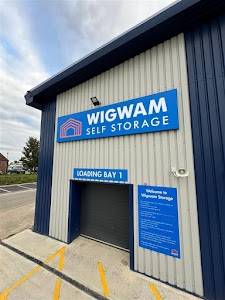
Orders climbing steadily but nowhere left to pack them?
There is a moment most online sellers recognise. The orders are coming in steadily, which is the good news. The bad news is that there are parcels on the kitchen table, bubble wrap wedged behind the sofa, and no clear floor to pack on. The spare room that started as a temporary stockroom now belongs entirely to the business, and you are beginning to wonder whether this is actually sustainable.
A self storage unit is the practical answer a lot of small sellers land on at that point. And it is a good one. But before you commit, you deserve a straight account of what a unit can genuinely do for a pick, pack and post operation, and just as importantly, the two things it cannot. That honesty is what makes the setup work.
This guide is written for one-person or very small online selling businesses: Etsy shops, eBay stores, Vinted and Depop sellers, Shopify and TikTok Shop operations. If that is you, read on.
Yes, you can run your online shop from a unit, and here is what that actually means

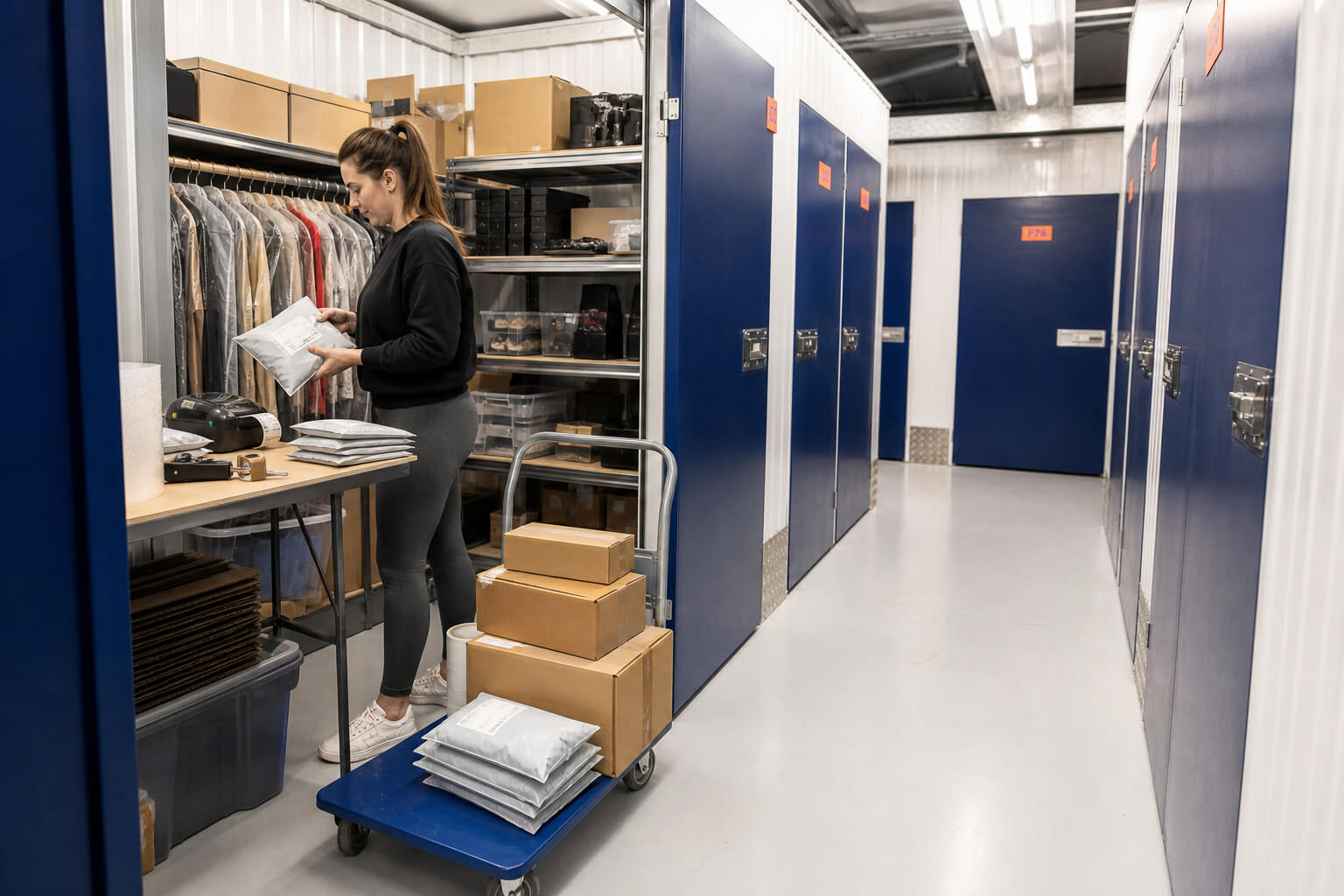
Running your e-commerce operation from a self storage unit is genuinely workable for a small online seller. The unit becomes your dedicated stockroom and packing space. You arrive, pull the orders for the day, pack them at a folding table, label them up, lock the unit, and head to the post office. That is the whole operation, and it works well.
What a typical working day looks like
You access the unit via smart entry from 6am, seven days a week. Most small sellers find a morning visit fits naturally: in early, pack the overnight orders, post by 9am or 10am, and the rest of the day is yours. The unit gives your operation a home that is not your kitchen. Stock is in one place. Packing happens in one place. You are not tripping over boxes in the hallway.
There is no manned reception, no queue, no one to check in with. You use your own access, you lock your own unit, and you control your own schedule within the access window. For a one-person operation, that simplicity is exactly right.
The kinds of stock that work well in a clean, dry and secure unit
Clothing, homewares, books, craft supplies, small electrical items, prints, ceramics, dry goods of most kinds: these all store well in a Wigwam unit. The conditions are clean, dry and secure. Fragile or high-value items are fine to store, but the insurance declaration matters more in those cases. See the insurance section below, and the contents protection page for what the cover includes.
No vehicle or leisure storage. If your business involves caravans, boats, motorbikes or similar, a Wigwam unit is not the right place. Stock only.
The business types this does not suit, said plainly
A self storage unit is not a registered business address, not a shopfront, and not a space where you can have customers visit. It is not a full-time office. You can pack and organise stock there. You cannot run a workshop open to the public or conduct regular client meetings from the unit. If you have questions about what constitutes a trading address for your specific business structure, take a look at Wigwam’s existing guide on running a business from a storage unit, and speak to your own adviser if you need clarity.
The honest rules: store and pack, not a trading address

A self storage unit is entirely legal for running a pick, pack and post operation. There are some clear lines worth knowing upfront, and they are not complicated.
Jurisdiction note: the guidance below reflects the position in England and Wales. Rules on business registration addresses and what constitutes a trading address differ in Scotland and Northern Ireland. If you are based in either nation, Companies House guidance and your own solicitor are the right places to check.
Packing on site is fine; desk-working and customer visits are not
Pick, pack and post is exactly what a self storage unit is designed to accommodate. You can be on site daily, organising stock and preparing orders. What you cannot do is use the unit as a full-time office for desk-based work, or as a shopfront where customers come to browse or collect. The distinction is practical rather than bureaucratic: a unit is a storage and packing space, not a place of business in the trading sense.
It is not your registered business address or a shopfront
Wigwam units cannot be used as your registered address with Companies House. If you are a sole trader, you register your home address or use a separate registered address service. If you are a limited company and need a registered office address, that is a question for your accountant or solicitor, not for Wigwam. We can give you excellent, clean, secure stock storage; we cannot give you a business address.
What you do control: your unit, your access, your schedule
Within those clear lines, you have considerable freedom. You hold the access to your unit. You decide when you visit, within the 6am to 10pm window. You choose how the space is organised. You lock it yourself when you leave. No one else has access to your unit. For a small seller who has been running operations from a shared house or a garage, that level of control and separation is a real relief.
What a Wigwam unit is, and is not, said plainly

Several pages online will suggest looking for a “climate-controlled workspace unit” for e-commerce stock. That is not what Wigwam offers, and it is worth being direct about why that distinction matters.
Clean, dry and secure: what that means for your stock
The honest description of a Wigwam unit is clean, dry and secure. That covers the vast majority of what small online sellers stock. Clothing, books, homewares, gifts, craft materials, board games, art prints, small appliances: all of these store well in those conditions. You do not need climate control for most dry goods. The temperature and humidity in a well-maintained, dry self storage unit will not harm your stock.
Where it is worth thinking more carefully is with genuinely fragile or moisture-sensitive specialist items. If your stock is particularly sensitive to temperature swings or humidity variation, talk to the contents protection team before you move stock in, and consider your insurance declaration carefully.
What a Wigwam unit is not: it is not climate-controlled, it is not temperature-regulated, and it is not a refrigerated or humidity-managed facility. We say this not as an apology, but because being straight with you about it is more useful than a vague “premium conditions” claim.
Power, light and conditions: what to bring and what to expect
The practical kit for a small seller’s packing visit is simple: a folding table, packing tape and a tape gun, your packaging materials, a label printer if you use one, and a decent light if you prefer extra brightness for checking orders. Bringing what you need means you are self-sufficient for the visit, which suits the unmanned setup well.
If you have specific questions about lighting or power provision at your nearest Wigwam location, ask the team before you move in. We would rather you ask the question up front than discover something unexpected on your first morning visit.
Why the honest limits are a feature, not a drawback
The large self storage chains rarely tell you what a unit cannot do. They let you read the “yes” list and figure out the edges later. We have found that small sellers, especially those running on tight margins, do not need cheerleading. They need to know exactly what they are committing to. When we tell you the site is unmanned, the access is 6am to 10pm, and the conditions are clean and dry rather than climate-controlled, we are giving you the information that lets you make a clear decision. If the setup fits, it fits well. If it does not, we would rather you knew before you moved stock in.
Access hours: 6am to 10pm by smart entry, and why that suits a small seller

Access is available 6am to 10pm, seven days a week, via smart entry. Not 24 hours. Some sellers see that and wonder whether it is enough. In practice, for a one-person pick, pack and post operation, it is more than sufficient.
What 6am to 10pm covers for a one-person operation
Six in the morning is well before most post offices and courier depots open for drop-offs. Getting into the unit at 6am or 7am, packing the overnight orders, and posting by 9am gives you a clean morning routine with time to spare. If you prefer evenings, 10pm covers a late packing session after a full day elsewhere. The window suits a sensible working day. The question is not whether you need 3am access; it is whether the hours fit a real, sane routine, and they do.
Smart entry means you use a code or fob to access the site. You do not need to speak to anyone or wait for a member of staff. You access your unit directly and you leave when you are done.
Planning your visit around courier collection times
Because the sites are unmanned, your packing visit and any courier activity need to be coordinated by you. The practical answer is simple: plan your visit to close before your courier collection or post office drop-off. Pack, seal, label, then head straight to the post office or handover point. Most small sellers find this a natural rhythm within a couple of weeks.
Deliveries and couriers: the present-in-person rule

This is the section most worth reading carefully if you are comparing Wigwam to larger providers. Some chains offer a goods-in service: they receive supplier deliveries on your behalf. Wigwam does not, and the reason is straightforward: our sites are unmanned.
Why our sites are unmanned and what that means for inbound parcels
There is no member of Wigwam staff on site to sign for parcels, receive deliveries, or store incoming stock until you arrive. If a supplier or wholesaler is sending stock to your unit address, someone from your own business needs to be on site to receive it. Wigwam cannot sign for deliveries, cannot store incoming goods on your behalf, and cannot guarantee that a courier driver will find anyone at the site to accept a parcel.
The AI-generated summaries you might have read online sometimes attribute goods-in services to self storage providers generally. That information does not apply here. We say that plainly because a courier turning up to a locked, unstaffed site on a busy fulfilment day is not a situation you want to discover by accident.
A simple inbound-stock routine that works around it
The practical answer is coordination rather than compromise. Schedule your supplier deliveries to coincide with your regular unit visits. If you restock every two weeks, book the delivery for a morning you are already planning to be on site. For a one-person operation with a small number of suppliers, that is easy enough to manage.
Some sellers batch their inbound deliveries to one or two specific days a week: the delivery arrives, they receive it on site, they shelve it, and they continue with the morning’s orders. It adds a small scheduling step, but it is not a barrier. It is a routine.
What this looks like for a courier dropping off stock
The sequence is simple. You book the delivery window with your supplier. You are on site during that window. The driver arrives, you receive the goods, you bring them into your unit. You lock up. Done. There is no complexity once you have built the habit of aligning delivery windows with your site visits. Most sellers who use Wigwam units for their stock find the unmanned setup gives them more control, not less. No one else is handling your goods or making decisions about where to put them.
Picking the right size for your stock, and changing it as you grow

Choosing the right unit size is easier than most people expect. The key is to think in terms of your actual stock footprint plus working space, not an abstract square footage number.
How to estimate what you actually need (start smaller than you think)
Measure your current inventory. How much floor space does it take up when stacked reasonably? Add a rough allowance for a small folding table and clear access around your shelving. That gives you a working estimate of the unit size you need. Most small sellers start with a modest unit and find it more than adequate. If you overshoot the size, you are paying for space you are not using. If you undershoot, you can move up.
The pricing page has a size guide that can help you match your estimate to a real unit size. Take a look before you book.
The flexible terms: two-week minimum, 14-day notice, unused days refunded
The terms at Wigwam are designed for businesses that want flexibility, not a long lease. The minimum stay is two weeks. There is no deposit. The notice period is 14 days: you give notice, vacate the unit, and settle any outstanding balance on the account. If you leave before the end of a paid period, unused days are refunded.
Those terms mean you are not locked in for months if your stock volume drops after a slow season, or if you need to move to a larger unit as the business grows. You give notice, you vacate, and any unused days come back. See the terms and conditions for the full detail.
No prices appear on this page: unit costs vary by location and size, and the pricing page will give you an accurate picture for your nearest location.
Growing into more space as your operation expands
If you start small and your sales grow, you are not stuck. The flexible notice terms mean you can move to a larger unit without penalty beyond the standard notice period. Some sellers who started with a single modest unit are now in a larger space at the same site. The terms make that progression low-risk. You are not committing to a warehouse lease you cannot unwind if a quiet quarter hits.
Ready to see what a unit near you would cost? Get a quote at quote.wigwamstorage.co.uk.
Insuring your stock the right way
Contents cover is mandatory for every Wigwam unit. This is not optional, and it is worth understanding what that means for your business stock before you move in.
Jurisdiction note: the guidance below applies in England and Wales. Insurance requirements and policy terms may differ in Scotland and Northern Ireland. If you are based in either nation, or if your stock situation is complex, speak to your broker or solicitor for advice specific to your circumstances.
Why contents cover is required: what you need to know before you move stock in
Every customer must either take out Wigwam’s RSA Self Storage Customers’ Goods policy or provide evidence of equivalent cover from their own insurer. There is no middle option. The requirement protects your stock and ensures that if something goes wrong, there is a clear route to a claim.
If you have an existing business policy that covers goods in storage, check the wording carefully and be ready to provide evidence of that cover. If you are not sure, Wigwam’s policy is available and straightforward to arrange. The contents protection page has the detail. For complex business stock situations, speak to your broker rather than assuming your general business insurance extends to a self storage unit.
Declaring full replacement value: why getting this right matters
When you take out cover, you declare the replacement value of everything in your unit. Under-insurance is settled in proportion. If your stock is worth £10,000 and you declare £5,000, and the whole lot is lost, you receive £5,000. You cover half the loss yourself. That proportional settlement is standard across most storage insurance policies, and it is the most common mistake sellers make when they are in a hurry to move stock in.
Take a few minutes to count the replacement value of what you are storing, not the price you paid for it, and not the resale value. Replacement value means what it would cost you to replace the stock at today’s cost. If you are unsure how to calculate that figure for your business, your insurer or broker can advise.
What Wigwam’s RSA cover includes: a plain summary
The RSA Self Storage Customers’ Goods policy covers stock on a New-for-Old basis. Theft from the unit is covered provided there is evidence of forced entry. The policy has a £50 excess. Climatic damage and flooding are excluded. The contents protection page sets out the full terms. If anything in the policy wording is unclear, talk to the insurer directly rather than assuming. Insurance advice is not something Wigwam can give; the policy document and your broker are the right places for specific questions.
Your local Wigwam: market towns near you
Wigwam operates across our UK market-town locations, all of them in towns rather than on ring roads or industrial estates. That distinction matters for a small seller: you want your stock close to home, close to the post office, and close to where your day already takes you.
How to find the nearest location to you
The Wigwam locations page lists all current sites. Two verified examples with direct links: Wigwam Self Storage Bath and Wigwam Self Storage Lincoln. For all other towns, the locations hub will take you to the right page. Do not rely on guessed web addresses for individual towns; use the hub to get to the right place.
Why market-town storage works for a local e-commerce seller
A unit near the town centre means the post office is a short drive, sometimes a short walk. Supplier drop-offs at the unit are not a detour to a distant logistics park. You can slot a morning pick, pack and post run into a day that still includes school pick-up, a client call, or whatever else your schedule holds. That proximity is worth something. The large sheds on the edge of a retail park are not unreasonable for bulk pallet storage. For a one-person daily packing routine, a unit in your own town is simply more convenient.
A typical morning at a Wigwam unit: a small seller’s routine
You arrive at 7am. Smart entry opens the site. Your unit is individually alarmed; it has been locked since your last visit, and no one else has been in it. You pull up today’s order list on your phone. You pick from the shelves, pack at the folding table, seal and label. An hour later, or maybe two on a busy day, you have a bag of parcels ready to go. You lock the unit, load the car, and head to the post office for a 9am drop. The orders are dispatched before most people have finished their first coffee.
That routine works 7 days a week, from 6am. It is quiet. It is yours. Nothing about it requires a manned team, a loading bay, or a climate-controlled workspace. It just requires a clean, dry, secure unit in a sensible location, and a habit.
See what a unit near you would cost. Get a quote at quote.wigwamstorage.co.uk.
Frequently Asked Questions
Plan a returns corner from day one, because returns are the part most small sellers forget until a parcel lands back on them. A self storage unit handles returns perfectly well, but only if you leave room for them. The practical rule is not to pack the unit to the ceiling with sellable stock. Keep a clear shelf or a marked box for incoming returns, so when one arrives you have somewhere to triage it rather than balancing it on a pile. Your returns workflow inside the unit is simple: open the parcel, check the item against the order, and route it. Sellable stock goes back to its shelf. Damaged or unsellable items go in a separate, clearly marked box for write-off or disposal. Items needing a closer look get set aside for a dedicated session rather than blocking your morning pack run. The reason this matters for a one-person operation is timing. Returns do not arrive on your schedule, they arrive on the customer’s, and they cluster after busy selling periods. If you have no space reserved, a wave of returns turns your packing area into chaos at exactly the wrong moment. The fix costs nothing: reserve a slice of the unit, perhaps fifteen to twenty percent of your space, for returns and the inevitable overflow. Because the site is unmanned, returns come back to you directly through the normal post, not to a reception, so build a quick triage into one of your regular visits rather than letting them stack up.
This is genuinely a question for your local council and your accountant, not for me, but here is the honest shape of it so you know what to ask. Business rates on commercial property are a matter between the occupier, the Valuation Office Agency, and the local authority, and how they apply to a self storage unit used by a small seller is not something a storage provider can rule on for your specific situation. What I can say plainly is that a Wigwam unit is a storage and packing space, not a registered trading address, not a shopfront, and not a place customers visit. That distinction is exactly the sort of thing that feeds into how any rates question is assessed, which is why it is worth getting clear advice rather than guessing. The sensible move is to speak to your accountant about your business structure and, if there is any doubt, to ask the local council directly how they treat a storage unit used for stock and fulfilment. Many small sellers operate from a unit as a straightforward stock and packing space, but your circumstances, turnover, and how you use the space all feed into the answer, and only a qualified adviser who knows your business can give you a reliable one. Wigwam gives you a clean, secure unit and clear terms; we cannot and do not advise on rates, tax, or your trading status. Rules also differ across Scotland and Northern Ireland, so if you are based outside England and Wales, take advice local to your nation.
Be careful here, and treat it as a question with two different answers. For outbound postage, the sender address on a label is a practical matter and many sellers use a unit as the dispatch point, but the unit is not a manned address and nobody is there to receive anything sent to it unless you are present. That is the heart of the issue. If you print the unit address on a returns slip, you are inviting customers to post items back to a site that has no reception and no staff to take them in. Royal Mail and couriers deliver returns the same way they deliver any inbound parcel, and the present-in-person rule applies: someone from your business must be on site to receive a delivery, because Wigwam does not sign for or hold parcels on your behalf. A returns parcel turning up at an unstaffed site when you are not there is exactly the situation you want to avoid. Many small sellers handle this by using a returns service or a separate returns address they can reliably staff, while using the unit purely as their own dispatch and storage base. Whatever you decide, do not treat the unit as a registered business address with Companies House, because it cannot be used that way. The cleaner setup is to keep your trading and registered address arrangements separate from the unit, and to coordinate any inbound post around your own visits. If you are unsure how to structure that for your business, speak to your accountant rather than guessing.
For most dry, shelf-stable stock the answer is straightforward yes, but perishables and anything with a temperature or shelf-life sensitivity need a careful look, because the unit is clean, dry and secure rather than climate-controlled. There is no temperature regulation, no refrigeration, and no humidity management, so anything that genuinely needs cool, stable, or controlled conditions is not suited to a standard unit. Sealed, ambient-stable goods are usually fine: tea, coffee beans, dry packaged food with a long shelf life, sealed cosmetics and toiletries that are not heat-sensitive. Where you need to think harder is anything that melts, spoils, expires quickly, or degrades in warmth, such as chocolate, fresh or chilled food, or cosmetics with active ingredients sensitive to temperature. For those, a dry storage unit on its own is not the right environment. There is also a hard line worth knowing: hazardous, flammable, and certain regulated goods cannot be stored, which can catch out sellers of aerosols, some nail and beauty products, or anything classed as dangerous goods. If your stock sits anywhere near that boundary, check with the team before you move it in, and check the manufacturer’s and any regulatory storage requirements for the product itself. Honesty here saves you a ruined batch. The unit protects dry goods very well; it is not a substitute for cold storage or a controlled environment, and we would rather tell you that up front than have you discover it with spoiled stock in July.
Do not assume there is power in the unit itself, and plan your visit around being self-sufficient. Power and lighting provision varies, and a unit is fundamentally a storage space, not a kitted-out workshop with a socket waiting for your label printer. The practical answer most small sellers settle on is to run a battery setup for the packing visit: a thermal label printer that runs off its own battery or prints from a charged device, a phone or tablet for pulling the order list, and your own light if you want extra brightness for checking orders. Charge everything at home, bring it charged, and you are independent for the morning, which suits the unmanned, self-service model perfectly. That is genuinely how most one-person operations run, and it works smoothly once it becomes a habit. If your operation depends on mains power at the unit, for a desktop printer, a heat sealer, or anything that has to be plugged in, do not guess: ask the team about power provision at your specific location before you commit, because it differs site to site. They would far rather answer that question up front than have you arrive on your first morning with a printer and nowhere to plug it in. The same goes for lighting if you are a stickler for checking colour or condition on items. A quick call before you book tells you exactly what to expect and what to bring, and means your first packing run goes smoothly instead of teaching you a lesson.