Who signs for the pallet when there’s no one at a desk?
The question we hear most from online sellers is not whether a storage unit is big enough. It is who signs for the delivery if they are not there. And tucked inside that question is something more specific: what actually happens when a pallet turns up and there is no one at a desk to receive it?
Here is the honest answer. And for a lot of sellers, once they understand how self-access works in practice, the answer is better than they expected.
This piece explains the two main models, walks through exactly how a delivery works at a Wigwam site, and sets out the one rule that matters. There are no brochure promises here, only a plain account of how the handover actually works and why, for the kind of seller who trusts their own operation more than a shared reception, it is often the more reliable choice.
How deliveries to a self storage unit work: the two models
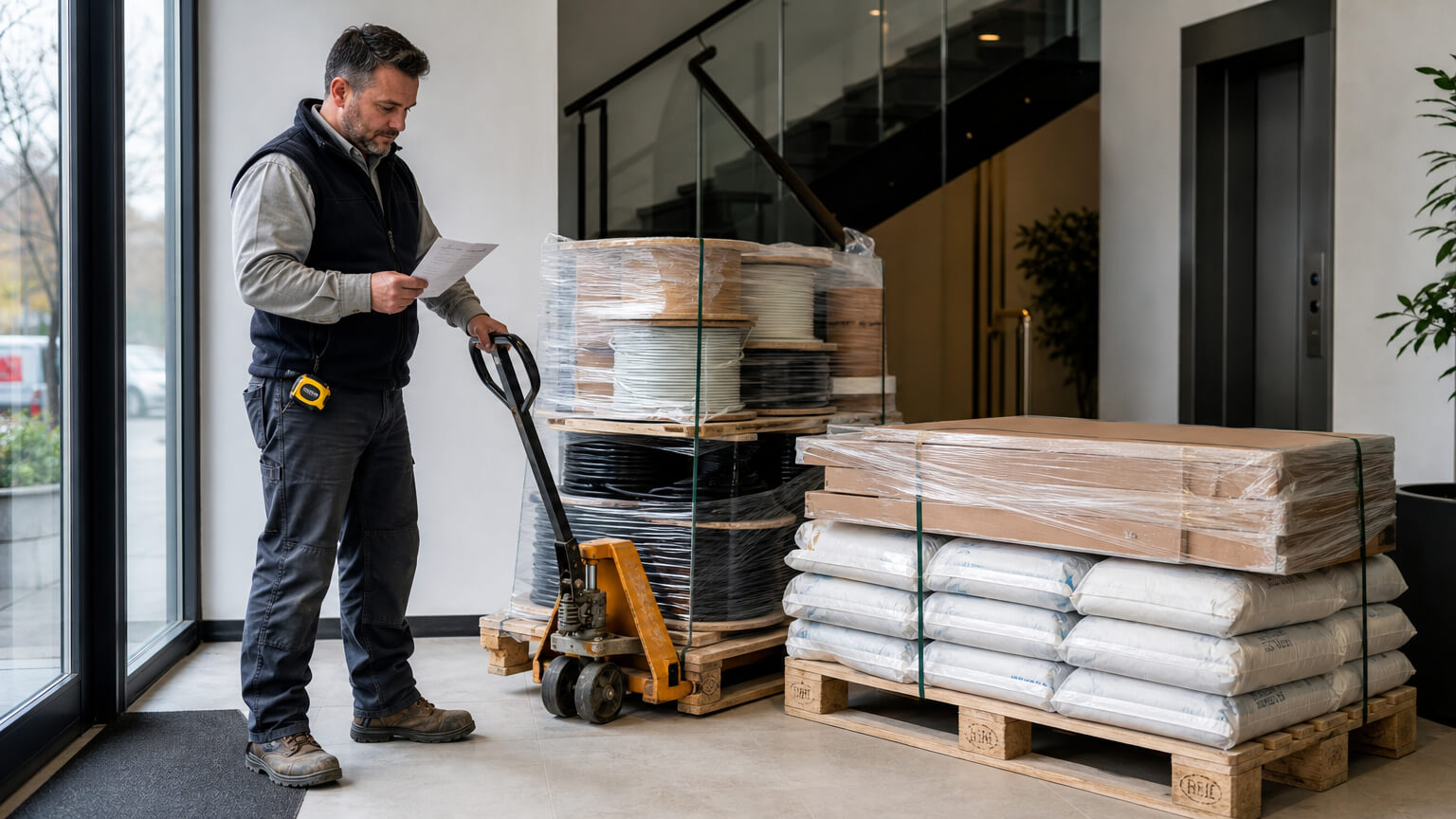
There are two distinct ways that self storage facilities handle stock deliveries. Most people do not realise there is a choice until they are already comparing providers. The two models work very differently in practice, and which one suits you depends entirely on how you want to run your operation.
The reception sign-off model, and why it sounds better than it is
Most national chains offer what they call a package acceptance or delivery acceptance service. A member of staff is on site, the courier hands the delivery to them, and your goods are held at reception until you arrive. Big Yellow, Safestore and others position this as the headline benefit of business storage with them.
It sounds convenient. The limitation only becomes visible when you look at the detail. Reception sign-off depends entirely on the desk being open when your delivery arrives. If the courier is early, or late, or your supplier books the slot without checking reception hours, the handover fails. You are also relying on a third party to sign for goods whose condition is your responsibility. If something is damaged in transit and the staff member signed for it without noting the damage, you are the one who absorbs the cost. For sellers who have had stock misdirected, held behind a desk outside business hours, or accepted with a signature before anyone checked the boxes, that dependency is a real operational risk.
The self-access model: what Wigwam actually does
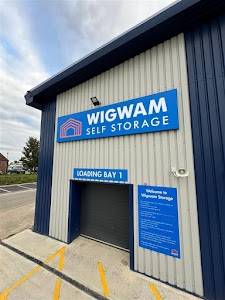
Wigwam sites are unmanned by design. There is no reception desk, and Wigwam does not sign for couriers. That is the honest boundary, stated plainly, because it is the right thing to say before you book.
What the model gives you instead is direct control. You open your own unit using smart entry, between 6am and 10pm, seven days a week. Someone from your business is there. You meet the courier or haulier yourself. You sign for your own stock, you check it in on the spot, and it goes straight into your individually alarmed unit. No third party between you and your goods.
This is not a workaround. It is the product. For sellers who want to know exactly what arrived and in what condition, being the person who signs for it is the only way to be certain.
Which model works for which kind of seller
Staffed reception suits a seller who wants total distance from the logistics side, who is happy to rely on another business’s opening hours and staff capacity, and who does not need to check goods in personally. Self-access suits a seller who wants to control the intake, who can arrange a delivery window, and whose instinct is to be present when stock arrives. Neither model is wrong. But they serve genuinely different operators, and you should know which one you are getting before you sign up.
The Wigwam self-access model, step by step
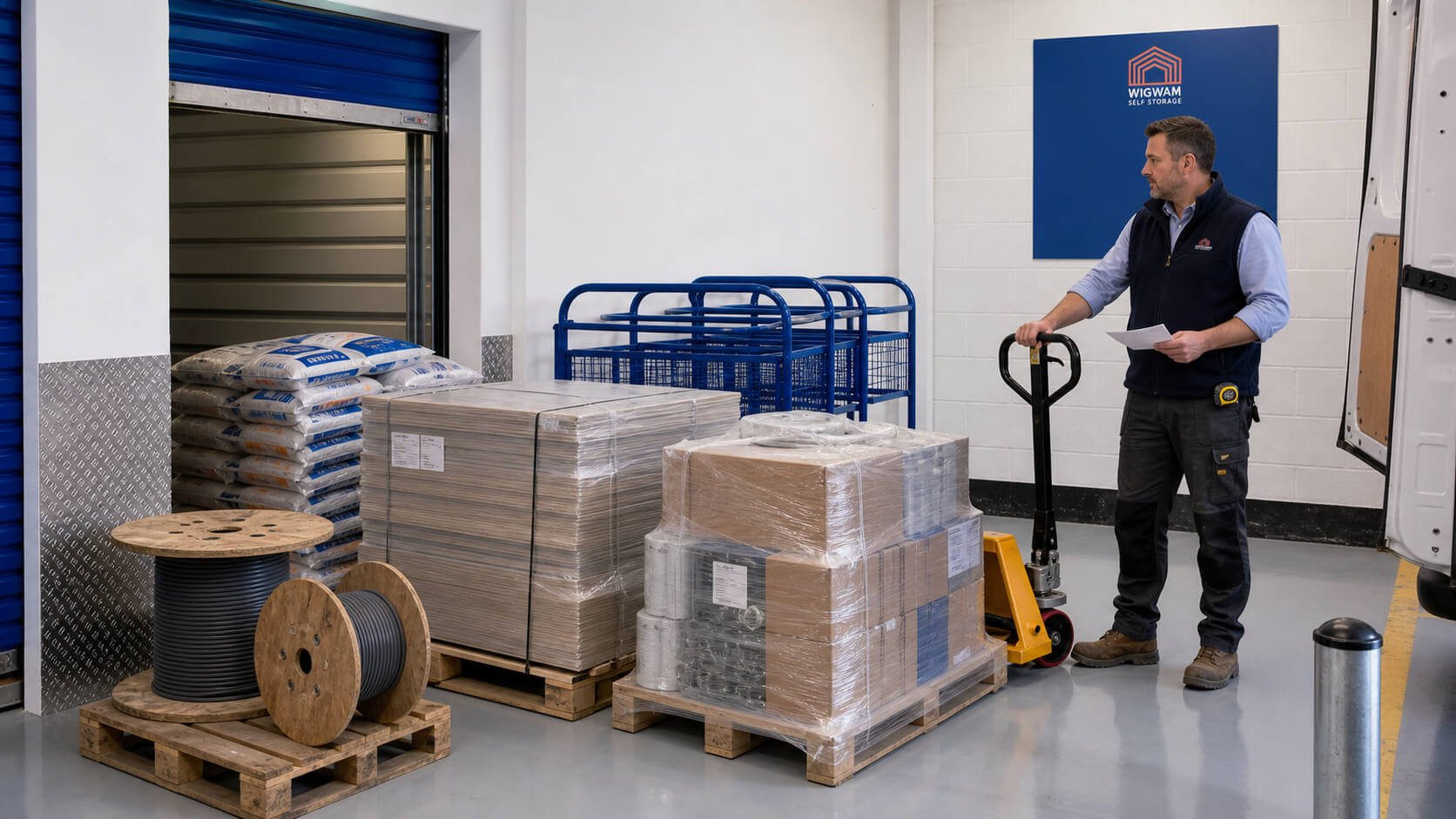
The best way to understand self-access is to walk through a real delivery. Picture a seller at Wigwam Self Storage Lincoln (Lincolnshire). She has a pallet of new stock arriving from her supplier at 7am. She arranged the window with the haulier, briefed them on the site address and the access hours, and she is there at 6:55. Here is what happens next.
Smart entry and access hours
She opens the site and her unit by smart entry. No waiting on a member of staff, no calling ahead, no key collection. Smart entry is the access mechanism: she uses it to open the site gate and her unit door herself. Access runs from 6am to 10pm, seven days a week.
That seven-day window is the planning tool. She books the supplier delivery into it, arrives before the driver, and the handover happens on her schedule. There is no reception desk to coordinate with, no risk that the site team has gone home before the lorry arrives.
One point worth being clear about: access hours are 6am to 10pm. Wigwam sites are not 24-hour. Plan deliveries inside that window.
The courier handover rule, and what it means in practice
Because Wigwam sites are unmanned, someone from the customer’s own business must be present for any delivery. Wigwam does not sign for couriers or accept stock on a customer’s behalf. That is the central rule, and it is not a gap in service: it is the point.
You sign for your own stock. You check the pallets, the boxes, the condition of the goods, before you sign the driver’s paperwork. If something is damaged, you catch it at the handover, not a week later when you finally collect from a shared reception. The intake is yours.
In practice, this is straightforward to arrange. Brief your courier or haulier with the site address, the access hours, and the instruction that you or someone from your team will be on site to receive. Most hauliers and couriers accommodate time-window requests without difficulty. For regular supplier runs, a standing instruction covers it.
Checking stock into your individually alarmed unit
Once the goods are off the lorry and into the site, they go straight into your unit. Each unit at Wigwam is individually alarmed, so the security travels with your specific space rather than depending on shared CCTV or a communal lock-up. The units are clean, dry and secure.
Count the delivery in, stack it as you want it, and lock up. Your stock is now in a space that only you hold the access to.
One thing that is not offered, and worth being clear about: there is no climate control. The real and verified claim is clean, dry and secure. If you store stock that is sensitive to temperature or humidity, check with your insurer or the product manufacturer about suitability before you book.
Running a small business from a storage unit: what you can and cannot do
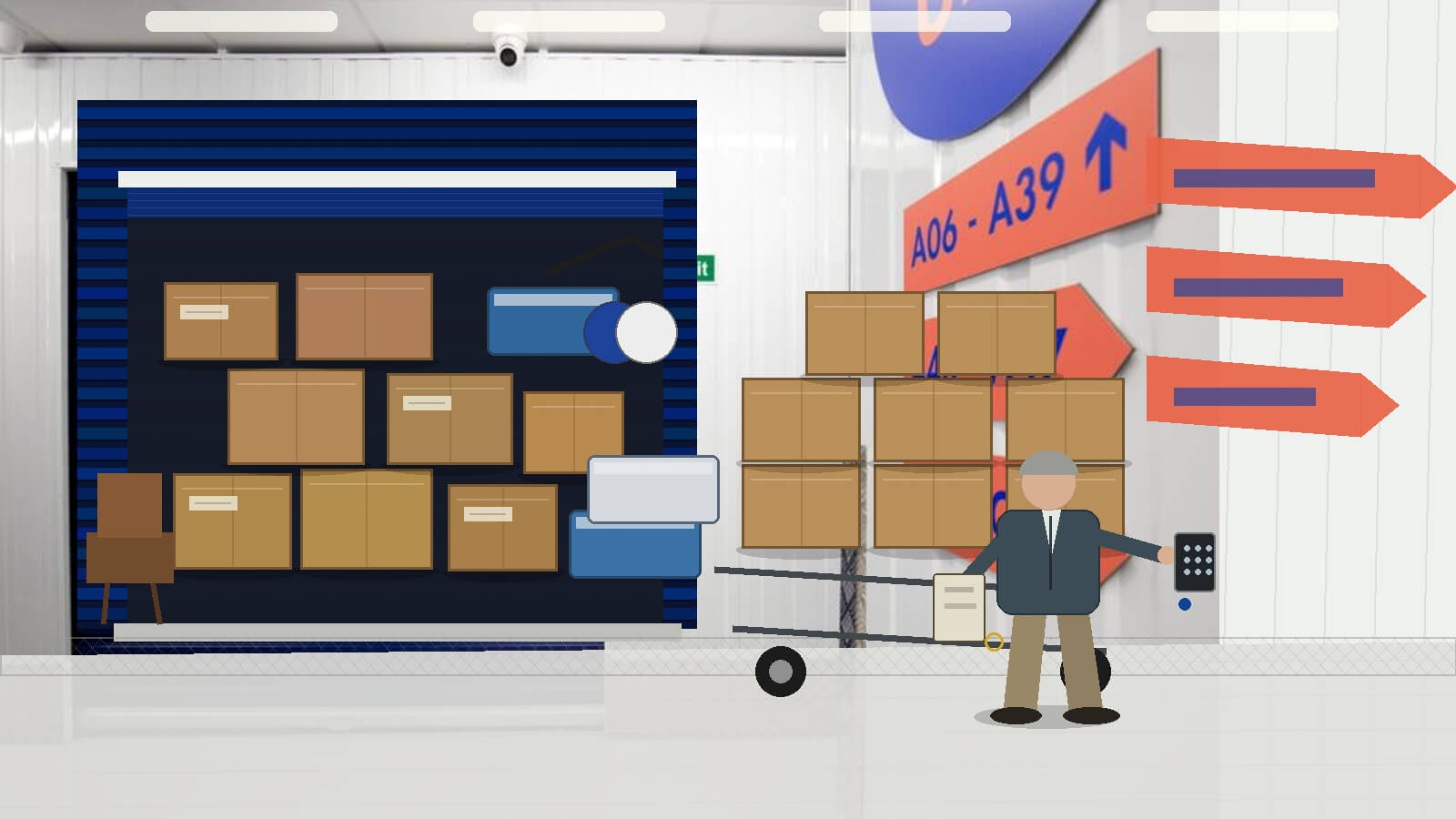
Self storage is genuinely well-suited to certain kinds of business use. It is not suited to others. A short, honest account of where the boundary falls is more useful than a list of promises.
For the fuller picture, see Wigwam’s business storage pages; the section below covers the most common questions and keeps to the delivery and fulfilment context.
What works well: stock storage, picking and dispatch
Storing product, picking orders, packing shipments and dispatching them from the unit is practical, legal in most cases, and well-suited to Wigwam’s self-access model. You have a clean, dry space you can access across a wide daily window, with stock you control from intake to dispatch.
Wigwam does not restrict legitimate business use of this kind. The sites are unmanned, which means there is no one checking what you are working on inside your unit. What the support team will not do is discuss your business plans, advise on your logistics setup, or assist with your operation. They can answer queries about the unit, the site and the terms. Beyond that, the business is yours to run.
What does not work: walk-in trade, staffed office, unattended deliveries
A self storage unit is not a trading counter. You cannot receive walk-in customers at the site. There is no staffed reception for your clients to check in with, and no communal area set up as a workspace or office for customer-facing activity.
Unattended deliveries are also not possible. A courier cannot access your unit without someone from your business present; Wigwam does not receive goods on your behalf, and there is no site team to coordinate a handover.
For questions about whether your specific use of a unit is legally permissible under planning, business rates or trading regulations, your solicitor or local council is the right point of contact. Wigwam does not advise on this. Planning and trading rules in this article reflect England and Wales; the position may differ in Scotland and Northern Ireland.
Pallets, large items and vehicle access
Pallet deliveries are workable with some preparation. There is no on-site forklift at Wigwam sites, so pallet deliveries need either a haulier who brings their own pallet truck, or your own equipment. Check that your unit size can accommodate the pallet footprint before you book. For help sizing a unit, the quote tool is the best starting point.
Vehicle access to the site is good for standard delivery vehicles. If you are expecting an unusually large artic or a specialist vehicle, check the site specifics when you visit or when you get your quote. Getting these logistics confirmed before the delivery date saves everyone’s time.
Terms worth knowing before you book
Good terms do not lock you in when business conditions shift. Here is the plain-language version of what Wigwam’s terms look like for a small business using storage for stock.
Two-week minimum, no deposit, and 14-day notice
The minimum stay is two weeks. There is no deposit to secure the unit. When you are ready to leave, you give 14 days’ notice. Once you have vacated and your account is settled, any unused days are refunded, less anything owed.
For a seller whose order volume is still moving, that structure means you are not locked into a long-term commitment. You can scale up, hold steady, or scale back, and the terms move with you.
The full terms are at wigwamstorage.co.uk/terms-conditions/.
Pricing reference
Unit prices are not listed on this page. They vary by location, unit size and availability, and the right place to find them is the pricing page. For a unit that fits your stock volume and your budget, the quote tool gives you a figure for your specific location.
Ready to price up a unit for your stock? Get a quote at quote.wigwamstorage.co.uk and find out what a self-access stockroom costs at a location near you.
Protecting your stock: security and insurance

A stocked unit is an investment. Here is what Wigwam provides and what you need to arrange yourself.
Security: individually alarmed, clean, dry and secure
Each unit is individually alarmed. That means the alarm is attached to your unit, not to the site as a shared perimeter. If someone interferes with your space, your alarm triggers. Combined with the unmanned, self-access model, which removes the possibility of a third party handling your goods, the security picture is straightforward: your unit, your alarm, your access.
Sites are clean, dry and secure. There is no shared stockroom, no communal cage, no area where your goods sit alongside someone else’s. Stock goes from the handover into your locked, alarmed unit.
As noted above: clean, dry and secure is the real claim. Wigwam does not offer or market climate-controlled storage.
Insurance: the RSA contents policy in plain terms
Contents cover is mandatory at Wigwam. You either take Wigwam’s policy or prove you have your own equivalent cover in place before you move stock in.
Wigwam offers an RSA “Self Storage Customers’ Goods” policy. It is New-for-Old cover, which matters for business stock. When you declare your stock’s value, declare the full replacement cost, not a rough estimate or a lower figure to reduce the premium. If you understate the value and make a claim, any settlement is proportional to the gap between what you declared and the true value.
A few points to be aware of: theft claims require evidence of forced entry, and climatic damage is excluded. Beyond that, the policy terms are for your insurer to confirm, not us. If you have questions about cover, eligibility or policy specifics, speak to your broker or insurer directly.
For full information on how your stored goods are insured, see the contents protection page. This section is a signpost, not insurance advice.
Note: insurance information in this article reflects the RSA policy available through Wigwam. Policy terms and eligibility are the insurer’s to confirm. This does not constitute insurance advice.
Choosing a Wigwam location for your stock operation

Wigwam operates across our UK market-town locations, which means sites close to where a lot of smaller e-commerce sellers and fulfilment operations are actually based, rather than concentrated in major city centres.
Market-town locations close to where sellers operate
Two named locations with confirmed site pages: Wigwam Self Storage Lincoln in Lincolnshire, and Wigwam Self Storage Bath in Somerset. For all other locations across the UK, the full list is at our UK market-town locations.
Town-centre and near-town-centre sites tend to work well for stock operations because access routes are straightforward for standard delivery vehicles and the sites are within a reasonable drive for daily or weekly picking runs.
What to check when you visit a site before you book
Before you commit, it is worth a site visit with the specific delivery in mind. Walk the vehicle access route with the delivery footprint in your head: will a standard 7.5-tonne delivery vehicle get in and out cleanly? Does the unit door width work for your largest item? Where exactly will the pallet truck or trolley go?
Set up your smart entry access on the first visit so you can walk in and out independently from day one. Knowing the site and the unit before your first stock delivery lands saves the kind of friction that costs time when a driver is waiting.
How the self-access model compares: five questions to ask any provider
If you are comparing Wigwam against other storage providers for a stock or fulfilment operation, these five questions cut through the brochure language quickly.
The five questions to ask any self storage provider about deliveries
1. Does the facility sign for couriers on your behalf?
If yes, confirm the hours the desk is staffed and what happens if a delivery arrives outside those hours. Find out the process if goods arrive damaged and a member of staff has already signed for them.
2. What are the access hours?
For a stock operation, the difference between 6am to 10pm and 9am to 6pm is significant. Confirm the hours, and check whether they vary by day.
3. Is there a staffed reception, and what are its hours?
Reception hours and site access hours are often different. Confirm both.
4. Is there a separate fee for a package acceptance or business club service?
Some providers charge extra for the ability to have deliveries received on your behalf. Know what you are paying for.
5. Who holds the access to your unit?
At Wigwam, you hold the access. The site team does not open your unit. That is the one-line version of what unmanned by design means.
What “unmanned by design” means for your stock operation
The spine of this piece is worth saying plainly once more. Wigwam sites are unmanned by design. You hold the key. You sign for your own goods. You are the only checkpoint between the supplier and the stocked unit. For sellers who have had stock go missing in a shared reception, or who have absorbed a damaged-goods cost because someone else signed without checking, that model is not a limitation. It is the product.
The most reliable way to receive stock is not to depend on someone else being at a desk. It is to control the handover yourself.
Getting started with Wigwam for stock storage
If you have read this far and the self-access model fits how you operate, the path to getting started is short.
What you need before you book
Unit size. Use the pricing page and quote tool to match the unit to your stock volume. If you are not sure, go one size larger than you think: you will use it. The quote tool gives you a figure for a specific location and size without commitment.
Contents cover. Mandatory before you move stock in. Either take Wigwam’s RSA policy when you book, or bring evidence of your own equivalent cover. Declare the full replacement value of your stock.
Courier and supplier briefing. Once you have your unit, brief your regular suppliers and couriers with the site address, the access hours (6am to 10pm, seven days) and the instruction that someone from your business will be on site to receive the delivery. For standing orders, a one-time briefing covers all future runs.
Site visit. Recommended before the first delivery. Confirm vehicle access, walk the route from the gate to your unit, and set up smart entry so you can operate independently from day one.
Links, terms and your quote
Everything you need to go further is linked below. These are the verified, resolving pages; do not use any other URLs for Wigwam.
- How much self storage costs (pricing reference, no unit prices on this page)
- Terms and conditions (notice period, refund of unused days)
- How your stored goods are insured (RSA policy, what to declare)
- Our UK market-town locations (full site list)
When you are ready, the quote tool is the fastest way to price a unit at the location closest to you.
Get a quote and find your nearest site at quote.wigwamstorage.co.uk. No obligation, and you will know the cost before you commit.
Frequently Asked Questions
The delivery fails, and it fails the same way it would at any unstaffed premises: the driver finds no one to receive the goods, cannot get into your unit, and takes the parcel or pallet away again. Wigwam does not sign for it, does not hold it, and has no reception to leave it at, because the site is unmanned by design. That is the honest mechanic, and it is exactly why the present-in-person rule is the one thing to plan around. What happens next depends on your carrier. A parcel courier will usually attempt redelivery or return the item to the depot, costing you a day or more. A pallet haulier may charge a failed-delivery or redelivery fee, which is real money on a bulk inbound. So the cost of a missed window is not catastrophic, but it is avoidable friction you do not want during a busy fulfilment period. The fix is entirely in the booking. Brief your courier or haulier with the site address, the access hours of 6am to 10pm, and a firm instruction to deliver inside an agreed window when you or a colleague will be on site. For one-off deliveries, confirm the window the day before. For regular supplier runs, set a standing instruction so every future delivery lands at a time you are already planning to be there. The model rewards a little coordination up front and punishes turning up blind. Treat the delivery window as something you control and set, not something that happens to you, and missed deliveries stop being a problem.
Yes, and a standing arrangement is the smoothest way to run a self-access stockroom once you have a regular supplier. Because you are the one receiving and signing for every delivery, the whole thing hinges on aligning the supplier’s delivery slot with a time you are reliably on site, and a standing instruction does exactly that. Rather than negotiating a window every single time, you agree a fixed recurring slot with your supplier or haulier, for example a Tuesday morning, and you build your own week so you are at the unit during that slot. Most hauliers and couriers are happy to work to a standing time-window request for a regular customer, because predictability suits them too. The briefing to give your supplier once, and then leave in place, is the site address, the access hours of 6am to 10pm, the agreed recurring window, and the instruction that someone from your business will be present to receive and sign. From there it runs itself. A standing slot also makes your own operation calmer: you know stock arrives on a known day, you plan your check-in and put-away around it, and you are not reacting to surprise deliveries mid pick-and-pack. If your volume grows to the point of multiple regular suppliers, stagger their standing slots across different days rather than stacking them on one morning, so you are not trying to receive and check three deliveries at once. The self-access model turns a recurring supplier relationship into a simple rhythm, provided the recurring slot and your on-site presence are locked together from the start.
This is where self-access works in your favour, because you are the one inspecting the goods at the moment of handover rather than collecting them later from a desk where someone else already signed. Check before you sign. With the driver still present, look over the pallets and boxes for crushing, water damage, or a broken seal, and open and spot-check the contents where the delivery and your time allow. If something is wrong, note the damage clearly on the driver’s paperwork or proof-of-delivery device before you sign, and where you can, photograph it there and then with the driver and the vehicle in shot. A signature given without a damage note can be read as accepting the goods in good condition, which weakens any later claim against the carrier or supplier, so the note at the point of handover is the protection. If a delivery is badly damaged, you are within your rights to refuse it or to accept it formally marked as damaged, depending on what suits your situation and your supplier’s terms; that is a commercial decision between you and your supplier, and it is yours to make because you are the one standing there. Contrast that with a staffed-reception model, where a member of someone else’s team may sign for your goods without checking, leaving you to discover the damage days later with a signature already on the docket. The whole point of controlling your own intake is that the condition of the goods is verified by the person who actually cares about it. Keep your photographs and the annotated paperwork, raise it promptly with your supplier or carrier, and your position is far stronger than it would be after a blind reception sign-off.
Returns follow the same self-access logic as inbound stock, with one difference worth planning for: customer returns arrive on the customer’s timetable, not yours, so they are harder to schedule into a delivery window. A returned parcel comes back through the normal post or courier network, and like any inbound delivery to an unmanned site, it needs someone from your business present to receive it, because there is no reception to take it in. That makes a single returns parcel turning up at a random hour the awkward case. Most fulfilment sellers handle this by not using the unit as the published returns address at all, instead routing customer returns to an address they can reliably staff, or to a returns service, while using the unit as their own controlled dispatch and storage base. If you do receive returns at the unit, build a returns step into your regular visits: a marked shelf or box for incoming returns, a quick triage to route sellable stock back to its place and set damaged items aside, and a consistent rhythm so returns do not pile up unmanaged. Reserve a slice of unit space for them from the start rather than filling every cubic foot with outbound stock, because returns volume can be surprisingly high after busy selling periods and you need somewhere to process them. The security position is the same as for any stock: returns go into your individually alarmed unit that only you access, so nothing sits in a shared space. The planning point is purely about timing and address strategy. Decide up front where customer returns physically land, and keep that decision separate from the unit unless you can reliably be on site to receive them.
Standard delivery vehicles are well catered for, but an artic or anything unusually large is a check-before-you-book question, not an assumption. Vehicle access at our sites is good for the normal run of delivery vehicles, the kind of rigid lorry or 7.5-tonne truck most suppliers use, and drive-up access at the unit shortens the distance goods have to travel from the tailgate to your door. Where you need to confirm specifics is the genuinely large or specialist vehicle: a full articulated lorry, a vehicle needing a wide turning circle, or anything requiring particular manoeuvring room. Site layouts vary, and what works easily at one location may be tight at another, so the only reliable answer for your situation is to check the actual site. The sensible move is a site visit before your first big delivery, walking the access route with the delivery vehicle and footprint in mind: can the lorry get in and turn, is the approach clear, where will it pull up to unload, and does your unit door and floor space take what is coming off the back. Confirm this when you get your quote or when you visit, and brief your haulier honestly about the access so they send an appropriate vehicle rather than one that cannot get in. Remember too that there is no forklift on site, so a heavy or palletised load needs a haulier with a tail-lift and pallet truck, or your own handling equipment, regardless of vehicle size. Getting the vehicle and the handling sorted before the delivery date is the difference between a smooth intake and a driver stuck at the entrance with goods he cannot unload. A short conversation up front settles it.