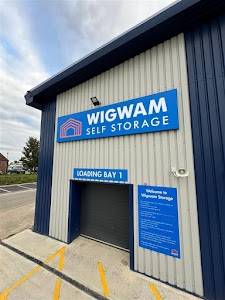
A new job in a new town is enough on its own. You don’t need a removal lorry parked outside your new house for six hours while people you haven’t met yet decide what to make of you. If you’re relocating to Cheltenham and would rather arrive quietly, settle in on your own terms, and let your furniture catch up when it suits you, there’s a pattern a lot of people here already follow.
In a hurry? Start here.
- Job starts before your move is sorted? Skip to Starting the job before the house is sorted.
- Family following once term or notice period ends? Skip to When the family follows later.
- Moving somewhere smaller? Skip to Store the excess, decide later.
Why nobody in Cheltenham asks “so what do you do?”
Cheltenham is publicly and officially home to GCHQ, and it’s why nobody here asks a new arrival what they do for a living. On its own website, GCHQ says plainly that “a large proportion of our workforce are based at our iconic site in Cheltenham, Gloucestershire in the South West of the UK.” One of the region’s largest employers has been based here since the 1950s, and the town has long since absorbed what that means day to day: people don’t ask, and you’re not expected to explain.
The public, non-speculative fact
That’s as far as this goes, and as far as it needs to go. We’re not going to speculate about who works where or what anyone’s day involves, and neither should anyone else. GCHQ states its own presence in Cheltenham on its own terms, on its own site. Everything else here is about a town’s habits, not anyone’s job.
A norm, not a secret
Plenty of towns have one employer whose scale shapes local manners. Cheltenham’s version of that is simply a lighter touch of curiosity than most places extend to a newcomer. Nobody’s being evasive. Nobody’s hiding anything. It’s just an ordinary regional courtesy that happens to suit people who’d rather get settled before they get interesting to their neighbours. That’s the whole idea behind the quiet-mover pattern below, and it has nothing to do with security or surveillance of any kind, on either side.
The quiet-mover pattern, in practical steps
The quiet-mover pattern is simple: you arrive first, your furniture arrives later, and there is no single day when your whole move is on public display outside your new front door. Most of what you own goes into storage before completion day, and comes home only when you’re ready to bring it.
Before the move
Book a unit sized for a proper household clear-out, not just the overflow that won’t fit in the car. The point of this pattern is that most of your belongings go into storage, not a token few boxes. Book with the two-week minimum in mind, allowing a buffer either side of your actual dates, and get your smart entry set up before completion day so there’s no admin to sort out once you’re already busy.
The move itself
The removal happens once, straight from your old address into your Wigwam unit, not into your new Cheltenham home. You travel separately, often with just a car full of essentials, and arrive at your new place with no lorry, no crew, no audience.
Settling in on your own schedule
You live lightly for a while. Work starts, routines form, and you meet your neighbours the ordinary way, in conversation, not via a removal van blocking the road. Nothing is on a clock here beyond your own storage notice terms, until you decide you’re ready.
Bringing the household home
When you’re ready, you book your own removal, on your own timeline, once the “getting to know you” period has already happened at your pace rather than a stranger’s. Give your notice, and any unused days come back once the unit’s vacated and any deductions are settled, as set out in your agreement.
| Stage | What happens |
|---|---|
| Before the move | Book ahead, size for a full clear-out, two-week minimum, smart entry ready |
| The move itself | One removal, old address to storage; you travel separately |
| Settling in | Live lightly, meet people normally, nothing on a clock |
| Bringing it home | Book your own second move when ready; give notice, unused days refunded after |
Spread across four stages like this, the transition stops being one event and becomes a sequence you control, each part happening when it suits you rather than when a removal van dictates.
For the solo starter and the family staging a move
Storage timing lets your job start date and your house-move date run on separate schedules instead of forcing one to bend around the other, whichever of these is closer to your situation.
Starting the job before the house is sorted
If your new role starts before the sale, let, or notice period on your old place has finished, you don’t have to time a removal lorry to the day you hand over keys. Move yourself into Cheltenham, start the job, and store everything else until the timing on both ends actually lines up.
When the family follows later
Where one of you goes ahead and the rest of the household follows once a school term or a notice period ends, the same pattern holds. The lead mover settles the essentials into the new home; the bulk of the household’s belongings sit in storage until everyone’s actually ready to unpack together, rather than half-moving in twice.
For the downsizing transferee
Coming into Cheltenham from a bigger property or a bigger-city role often means arriving with more than a smaller new home can immediately take, and that’s not a decision you should have to make in the first exhausted week.
Store the excess, decide later
Store what doesn’t fit rather than forcing a keep-or-go decision under moving-day pressure. Give yourself a proper run at your new space before deciding what actually earns a place in it. Call it deferring the decision to a calmer moment, because that’s exactly what it is.
What to have in place before you rely on this pattern
None of this works as a last-minute idea. A few practical things need to be in place before completion day, and none of them involve pricing you’ll need to chase down elsewhere.
Booking and the two-week minimum
Wigwam Self Storage Cheltenham runs on a two-week minimum stay, with no long-term contract forced on top of it. Book with your actual bridge period in mind, plus a little slack either side, rather than cutting it to the day.
Smart entry, set up before you arrive
Access runs through Wigwam’s smart entry system rather than a person on site meeting you at the door. Get it set up in the run-up to your move so it’s simply working when you need it, not something to sort out on an already busy day.
Access, and when you can get to your things
Wigwam Self Storage Cheltenham currently publishes access as Monday to Friday, 8am to 6pm, and weekends and bank holidays, 10am to 4pm. That’s narrower than round-the-clock, and it’s specific to this site, so build your move-day and move-home-day timings around those hours rather than assuming a different figure from somewhere else. Check the live location page before you rely on it, since hours can change.
Notice and getting your money back
Two separate things happen here. There’s no deposit to pay when you take the unit. You give fourteen days’ notice when you’re ready to leave, and any unused days within that notice window are refunded. Knowing the shape of that process before you book beats finding it out midway through your move, so treat it as three steps, not one tidy promise.
A note on what storage is (and isn’t) for here
This is a scheduling pattern, not advice on anything beyond it, and the line matters enough to state plainly.
What we can help with
Our team can help with sizing your unit, checking availability, getting your access working, and getting you booked in. That’s genuinely useful when you’re juggling a move and a new job at the same time.
What we won’t do
We won’t discuss your employer, your role, or your business plans, and we won’t offer legal, insurance, or security advice of any kind. Not because we’re being cagey, but because it isn’t our lane, and pretending otherwise would help nobody. If you need that kind of guidance, a solicitor or your own employer is the right place to ask.
The unspectacular alternative
Why the conventional move works against you here
A conventional move puts your whole transition on show at exactly the moment you have the least footing to handle it: no job history yet, no neighbours you know, nothing to say if someone asks what’s going on. The staged pattern takes that one exposed day off the calendar entirely, and replaces it with an ordinary Tuesday where nothing in particular happens outside your front door.
If that sounds like the version of moving day you’d rather have, Wigwam Self Storage Cheltenham is where to check unit sizes and get booked in. No form asking you to explain your situation, just sizes and availability.
Settling into Cheltenham on your own terms
Give it a few weeks, or however long you need, and Cheltenham starts to feel like yours in the ordinary way: through routines, through people, through simply having been here a while, not through a single loud day that announced you before you were ready.
When you’re ready for the rest of your house
When that time comes, book your own removal, in your own time, and bring the rest of your household home to a place that already feels lived in. If you’d rather sort the practical packing side of things first, our general Cheltenham moving guide covers that ground. When you’re ready to check sizes and get a quote for storage itself, that’s at quote.wigwamstorage.co.uk.
Frequently Asked Questions
No. Our team can help with sizing, availability and booking, and none of that requires a reason. What you’re storing and why is entirely your business.
Fourteen days’ notice before you vacate the unit. There’s no deposit involved at any point. Give yourself that window when you’re planning the “bringing the household home” stage of the pattern above.
Our sites are unmanned, and third-party access is built for a business context, where someone from that business is present for the drop-off. It isn’t set up as a general proxy drop-off service for individuals, so if you need someone else to access your unit on your behalf, plan for you or a named household member to be there.
There’s no minimum on volume, just a two-week minimum term on the unit itself. Book a size that suits a proper household clear-out if you’re following the full pattern above, or something smaller if you’re only storing the excess.