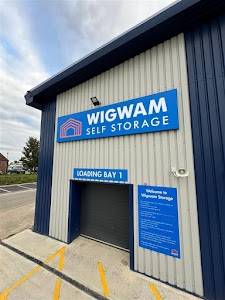
New town, new house, and three vanloads that don’t have a home yet?
Most families who have moved house will tell you the same thing: moving day is just the beginning of it. You get the van loaded, you hand over the keys, and then reality sets in. The new house is not quite the blank canvas you imagined. One room needs painting before anyone sleeps in it. The children’s beds need to go up tonight, and nobody knows where the duvet covers are. And somewhere in the middle of all that, there are three more vanloads of things that simply do not have a home yet.
That is not a failure of planning. It is just what a family move looks like. There are too many moving parts, too many people who need things right now, and not quite enough space to absorb everything at once.
The question is not how to get everything into the new house on day one. It is how to get the people settled first, and give everything else a safe, nearby place to wait while you do.
If you are mid-move and need the quick facts:
- Two-week minimum stay
- Smart entry from 6am to 10pm, seven days a week
- Get a quote now: quote.wigwamstorage.co.uk
- Find a location near your new town: wigwamstorage.co.uk/self-storage-locations/
Why a family move rarely happens in one clean go
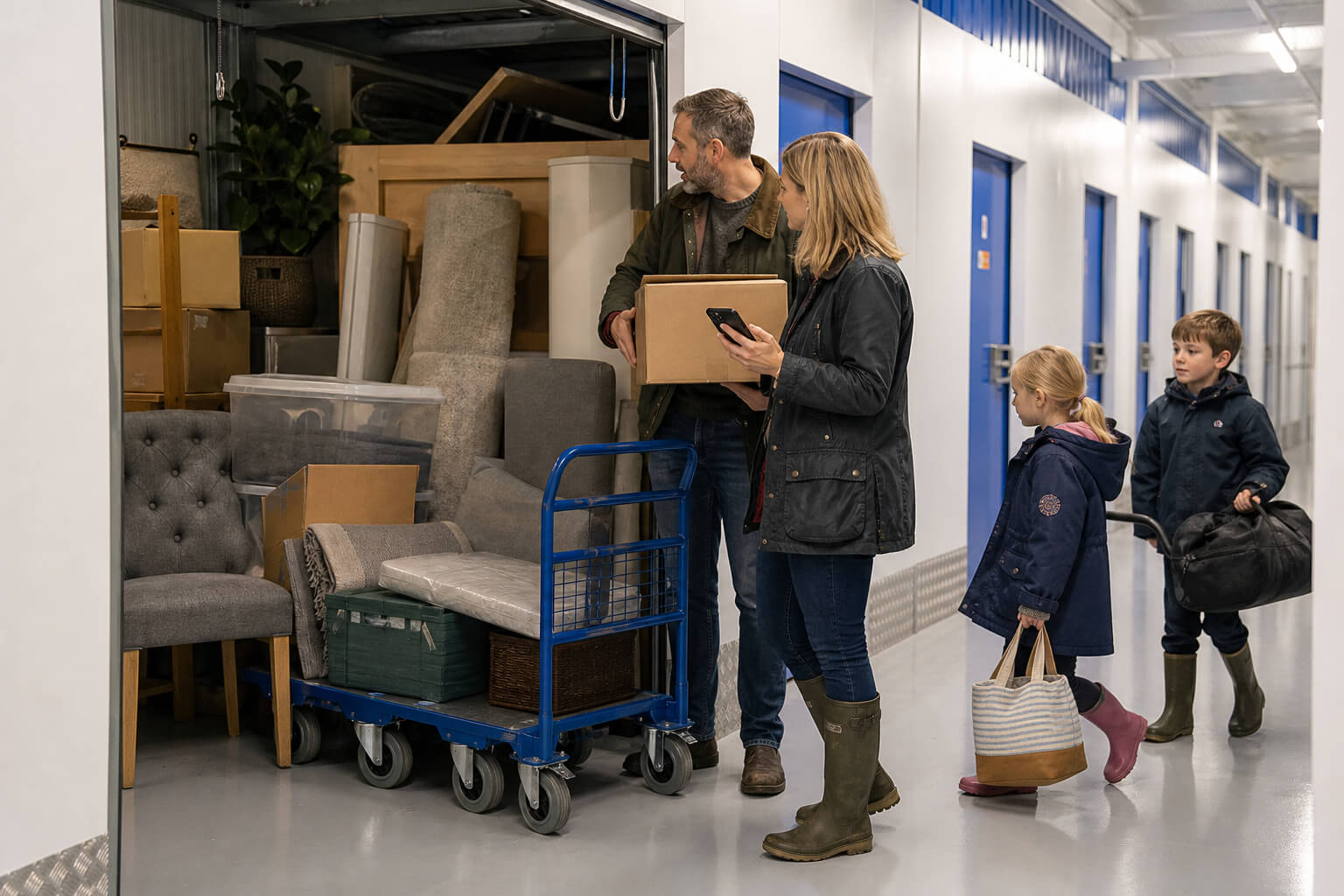
Most families who have been through a relocation will recognise this: what looked like a single event on the calendar turns out to be a process, and the process takes longer than anyone plans.
When completion dates do not align
Completion dates slip. Chains wobble. The buyers of your old house want to move on a Thursday, and the sellers of your new house are not ready until the following Monday. Suddenly you have four days when your furniture has nowhere to be, and a removal firm booked for the Thursday who cannot wait. It is a practical logistics problem, and the answer is practical: a storage unit near the new town, booked ahead, gives the overflow a place to land while the dates sort themselves out. You are not in the lurch. You are just running the move in two stages instead of one.
A new home that needs a little work before the good furniture goes in
Sometimes the timing is not a chain problem at all. The new house is available, but the front bedroom needs a coat of paint, and there is a cracked tile in the bathroom you want fixed before the family is fully in. Putting the good furniture in before the work is done is how things get damaged. Storing the dining table and the good chairs for three weeks in a clean, dry, secure unit nearby means the decorators can work without moving around your belongings, and the furniture arrives in the room it was always going to, rather than dragged across fresh paint.
Settle the people first, store the overflow second
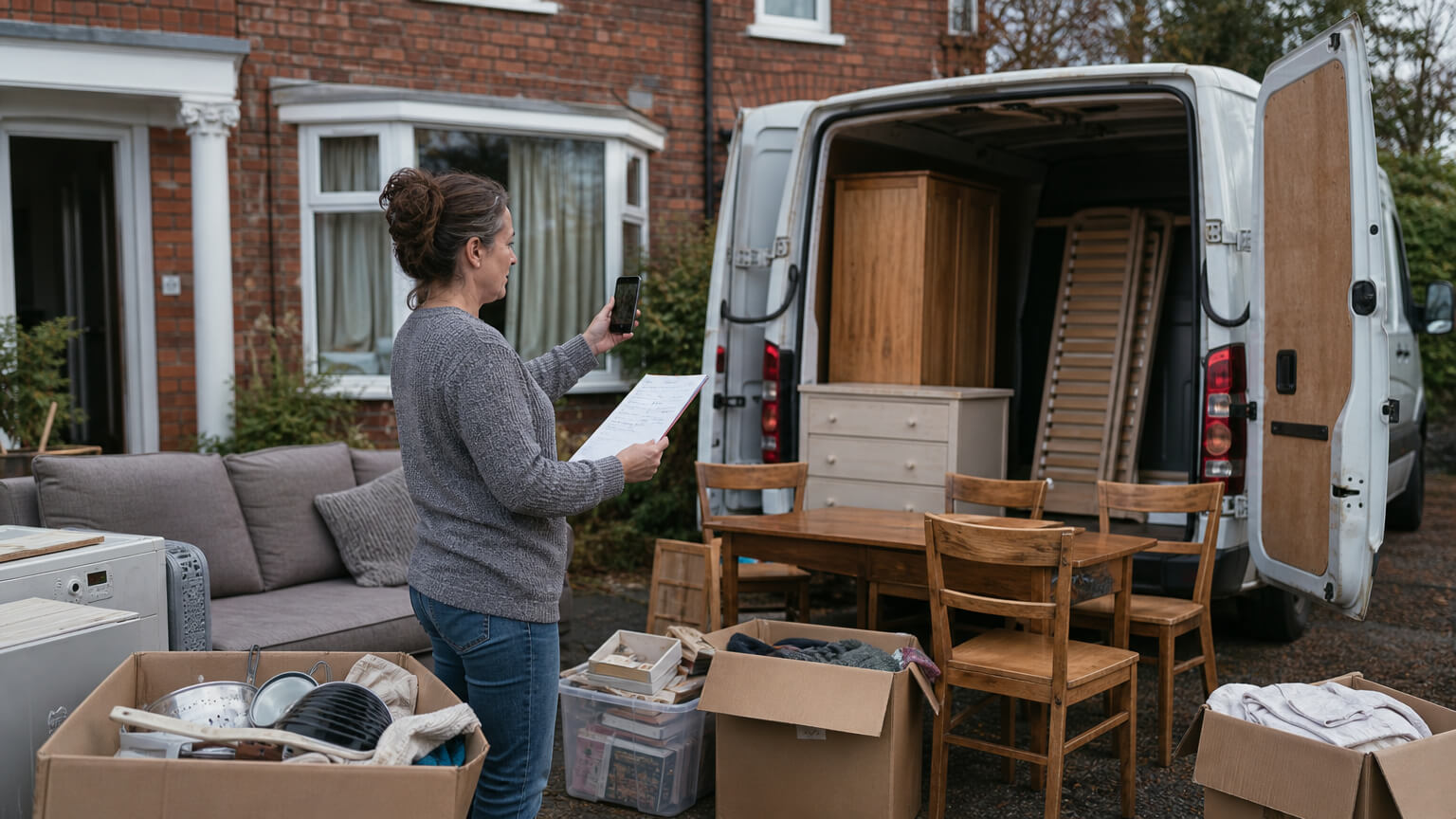
The governing principle for a family move is simple. Get the people into the new home. Get the beds up, the kettle on, the school bags by the door. Everything else can follow in the right order, at the pace real life allows.
What to keep with you
What goes in the van and stays with the family on night one is a short list. Children’s beds, bedding, and a week of clothing. School bags, uniforms, the car seats. Medication and the medical bag. The kettle, a few plates, the toothbrushes. The things that cannot wait a week in a unit and cannot be retrieved at short notice if someone needs them.
Keep that list tight. Everything that does not belong on it is a candidate for the unit.
One practical note: Wigwam sites are unmanned. If you are using a removals firm or courier to drop things at the unit, someone from your side needs to be present to open up and oversee the drop. The local team cannot sign for deliveries or be on site for you. Plan for that when you brief your removals company.
What can wait safely in a unit
The spare bedroom furniture. The seasonal equipment (camping kit, ski gear, garden tools that do not fit the new garage). The boxes labelled “study, deal with later” that you know will not be opened until month two. The second set of curtains that might not fit the new windows anyway.
This is not the overflow you failed to move. This is the overflow you chose not to move yet, because you were thinking clearly about what the family actually needs in the first week. That is a different thing entirely.
How much space a family move needs

For a three-bedroom family home, a unit around 75 to 100 square feet is a reasonable starting point for the overflow. That will hold the contents of two to three furnished rooms comfortably, with space to move around.
A rough size guide by home size
The estimates below are a useful starting point:
- One-bedroom home: around 50 square feet
- Two-bedroom home: around 75 square feet
- Three-bedroom home: around 100 square feet
- Four-bedroom home or larger: 150 square feet upwards, depending on what stays and what goes
These are starting points, not guarantees. The actual amount varies with how much the family is staging versus moving in one go, and how much the new house can absorb immediately. If you are in any doubt, book a slightly larger unit.
For cost expectations by unit size, the Wigwam pricing page gives a clear picture without requiring a quote.
Why it is fine to take a little more space and get the unused days back
If the family books a slightly larger unit and the move resolves faster than expected, you are not penalised for it. Unused days are refunded if you vacate early. That means you can book with a little breathing room rather than squeezing everything in to keep the invoice down, and if you are out of the unit in three weeks instead of six, you only pay for three weeks. For a family working against an uncertain timeline, that is a meaningful reassurance. The contract works in your favour, not against you.
How long you will need it, and how flexible that is
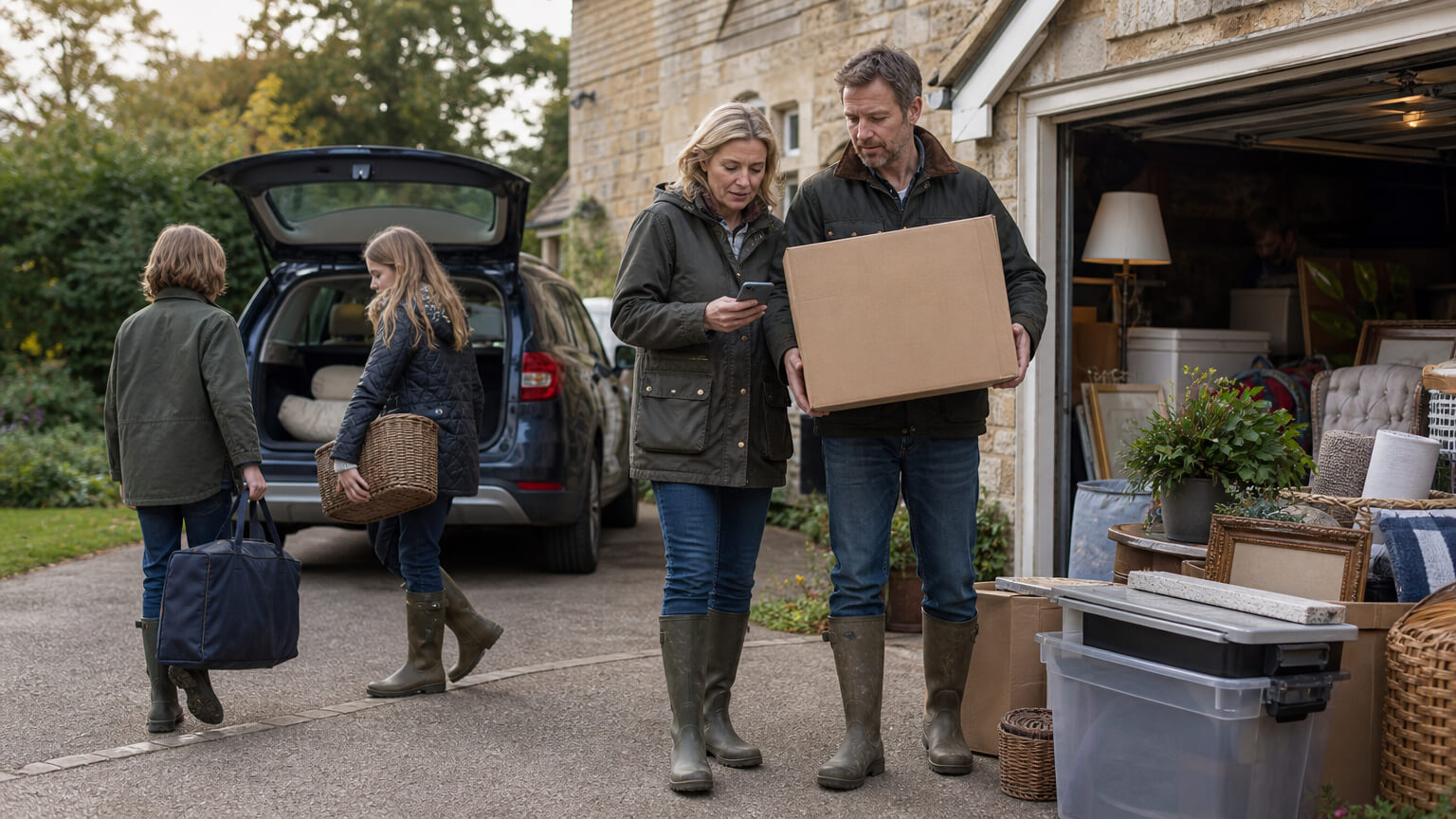
The two things worth knowing upfront: the minimum stay at Wigwam is two weeks, and ending the contract requires 14 days notice. Both are worth understanding before you book.
Two-week minimum stay and no guesswork on the end date
The two-week minimum means a short bridge between homes is straightforward. You are not signing up for six months of warehouse storage. You are booking a clean, dry, secure unit near the new town for as long as the gap between homes requires, with a two-week floor. Most families using storage as a bridge during a relocation find the unit for four to eight weeks covers the settling-in period and leaves room to deal with the overflow without pressure.
You are in control of the end date. When you are ready, you give notice.
Ending it with 14 days notice when you are settled
To end the contract, you give 14 days notice, vacate the unit, and settle anything outstanding on the account. After that, any unused days from the notice period are refunded. There is no deposit to come back, because we don’t take one. That is the whole process. You can read the exact terms at wigwamstorage.co.uk/terms-conditions/.
There is no deposit. Not reduced, not complicated: we simply don’t ask for one.
Ready to get a quote for your move? You can do that now at quote.wigwamstorage.co.uk. You do not need to commit to dates yet. The process is quick and you will get a figure for the size and location that suits you.
Packing the overflow so the next few weeks are easier

Label every box by room, not by content. That is the single most useful habit in a storage unit. When you come back three weeks later for the thing you need, you want to know it is in the “dining room” box, not that it is somewhere in the van’s worth of cardboard you stacked on arrival.
Label by room, keep an aisle, put the “might need soon” boxes at the front
Three habits make a storage unit usable rather than a wall of cardboard:
- Label by room. Write the destination room on the top and at least one side of every box. When you come back, you can read the labels without moving half the unit.
- Keep a clear aisle. Stack along the walls and leave a walking path down the centre of the unit. You will thank yourself the first time you need to reach something near the back.
- Stage the “might need soon” boxes at the front. If you think you might want the winter bedding, the spare towels, or the children’s books in the first fortnight, put those boxes nearest the door. The things you are sure you will not need for a month can go at the back and on top.
None of this takes extra time on moving day. It just takes a decision about what goes where before you start loading.
The hardest rooms to pack (the kitchen and the kids’ rooms) and how to stage them
The kitchen is the hardest room in the house to pack for a reason. Almost everything in it is both essential and awkward. The approach that works: pack a week’s worth of cooking and eating into one clearly labelled box that travels with the family. Everything else from the kitchen that does not fit the new setup yet goes to the unit. The duplicates, the rarely-used appliances, the mixing bowls you use twice a year. They are fine in a clean, dry unit for a few weeks.
The children’s rooms are harder in a different way. The children are watching. If packing feels like losing things, they feel it. The approach here is to keep each child’s essentials with them on the move, in a bag they helped pack: favourite toys, books, a comfort item, a week of clothing. What goes to the unit is the spare furniture, the extra toys, the things that can wait. The bedroom they sleep in on night one in the new house should feel like theirs. The rest can follow.
What to ask any storage company before you book

The AI Mode summaries that appear in search results when you look for moving storage in the UK often include a checklist of questions to ask any local facility. Here are those questions, answered plainly for Wigwam.
Access hours, security and how you get in
Access is by smart entry, from 6am to 10pm, seven days a week. That means you can pop in early before the school run or in the evening after work to grab a box you need. It is not 24-hour access, and that is worth knowing before you book if you anticipate needing things very late at night.
Units are individually alarmed. The site is clean, dry and secure. Sites are unmanned, which means you access your own unit directly. If you have a removals firm or courier dropping goods at the unit, someone from your own side needs to be there with you. Wigwam does not receive deliveries or sign for goods on a customer’s behalf.
Insurance and what is and is not covered
Contents protection is mandatory when you store with Wigwam. You can take Wigwam’s RSA-backed contents-protection policy, or you can demonstrate that your own home contents insurance extends to goods in storage. The Wigwam policy is New-for-Old and covers a wide range of household goods. Declare the full replacement value when you set up cover: if the declared value is lower than the actual value of what you are storing, any claim is settled in proportion, not in full. Theft from a storage unit requires evidence of forced entry.
For the full policy detail, read the contents protection page before you commit to a figure. If you have questions about whether your own home policy extends to goods in storage, speak to your insurer. For customers storing in Scotland or Northern Ireland, policy terms and the regulatory framework may differ from England and Wales, so check the policy wording or speak to your insurer directly.
Wigwam signposts the cover and the policy detail. They do not give insurance advice.
How much does self storage cost for a family move?

The cost depends on the size of unit, the duration, and the location. It varies between towns. No prices are listed here because the right size and the right location for your move will be specific to you.
What affects the price
Three things determine the cost of a storage unit during a family move:
- Unit size. Bigger units cost more. A rough size guide is in the section above.
- Duration. You pay for the time the unit is in use. Unused days are refunded when you vacate, so the final cost reflects what you actually used.
- Location. Prices vary between Wigwam’s market-town locations. A unit in a larger town will typically differ from one in a smaller market town.
For a realistic sense of cost before getting a quote, the Wigwam pricing page sets out what to expect.
Getting an accurate quote for your specific move
The quote tool takes the postcode and the size you think you need and returns an accurate figure for that location. It is quick and you do not need to commit to dates today. You can get a quote at quote.wigwamstorage.co.uk and use it to plan the cost into the move.
Storing near your new town with Wigwam
Wigwam has locations across UK market towns, so there is likely one near wherever you are landing. The point of a local unit is that it is practical in a way that a city depot an hour away is not: you can stop in on the way back from the school run, or collect a box on a Saturday morning when the house is quiet.
Find the location nearest your new town
If you are moving into a town served by Wigwam, the unit is close by rather than out of the way. For example, families moving into Bath can find their nearest facility at Wigwam Self Storage Bath, and those heading to Lincoln can see what is available at Wigwam Self Storage Lincoln. For other towns across the network, the locations hub has the full list.
Sites are unmanned. If you have questions about sizing a unit before you book, the quote tool is the quickest way to get a figure for the location you need.
Get a quote for your move
The minimum is two weeks and the contract is flexible. If the gap between homes closes faster than you hoped, you give 14 days notice, vacate, and get any unused days back. If you need longer, you stay on. You decide when you are settled, not the contract.
You can get a quote now at quote.wigwamstorage.co.uk. Tell the tool the postcode for your new town and the rough size you need, and it will give you a figure. It takes a couple of minutes and there is nothing to commit to at that stage.
The overflow has a clean, dry, secure place to wait. The family has time to settle. That is the right order for a move.
Frequently Asked Questions
Time it around whichever is harder to change, and for most families that is the school term. A house move can usually flex by a week or two. A school start date rarely can. If the children are changing schools and the new term begins on a fixed Monday, that date often becomes the real anchor for the whole move, and the storage simply bridges the gap between when you have to be out of the old house and when the new one is properly ready.
In practice this means booking the unit to cover the longer of the two windows. If completion is uncertain but term starts on the 4th, get the family settled and the children into school first, and let the overflow sit in the unit while the rest of the house comes together over the following weeks. The two-week minimum gives you a sensible floor, and because unused days are refunded when you vacate, booking a little longer to cover term-start week costs you nothing if you clear out sooner. You give 14 days notice when you are ready, vacate, and any unused days come back. The point is that the children should not be the part of the move that gets rushed. The boxes can wait. The first day at a new school cannot.
A storage unit is well suited to a rent-then-buy move, because the rental rarely has room for everything you own. Most families renting between sales take a smaller place than the one they sold, or a furnished let where their own furniture has nowhere to go. The overflow, the spare beds, the dining set, the garden things, sits in a unit near the new town until you complete on the house you actually want to live in.
The flexibility matters here more than on a quick move. A rent-then-buy timeline can run for months and you often do not know the end date when you start. There is no fixed ceiling at Wigwam: above the two-week minimum the unit rolls on for as long as you need it, and you give 14 days notice when the purchase completes and you are ready to bring everything into the new home. If the purchase falls through and you stay renting longer, the unit simply continues. You are not committing to a six-month block to get a flexible arrangement. One practical note: contents cover is required throughout, so if your own home insurance lapsed when you sold, you will need either the RSA contents policy through Wigwam or proof your new cover extends to goods in storage. Check that before the rental period starts, not after.
Yes, within access hours, and it is worth setting that expectation with them before you pack. Access is by smart entry from 6am to 10pm, seven days a week, so if a child suddenly needs the box of books or the spare duvet that went to the unit, you can collect it on the way back from school or at the weekend. It is not instant in the way the spare room would be, which is exactly why the body of this article suggests keeping each child’s genuine essentials with them on the move. But it is not locked away either.
The thing that helps most is how you packed. If the children’s overflow boxes are labelled by child and room and sat near the front of the unit, a retrieval trip is five minutes, not an unpacking exercise. Telling a worried child “your things are not gone, they are in our unit, and we can go and get them” is easier when you can actually do it quickly. For an anxious child, that reassurance is often worth more than the object itself. Sites are unmanned, so it is just you and your access code, no appointment and no waiting. Plan one or two retrieval trips into the first fortnight if you know certain comfort items will be missed, and put those boxes where you can reach them.
For a single family move, one unit sized correctly is almost always the simpler and better-value choice. You pay for the space you use, and a single unit means one access trip, one place to keep organised, and one set of labelled boxes to work through. Splitting across two smaller units rarely saves money and usually adds hassle, because you end up walking between two spaces trying to remember which one holds the thing you came for.
Where a second unit genuinely earns its place is a different situation: when you are merging two households, clearing a relative’s home at the same time as your own move, or when the overflow grows partway through and your original unit is full. In those cases a second unit is straightforward to add, and you can give notice on it separately once that portion is dealt with. The general rule for a standard family relocation is to size up rather than out. If you are unsure between two sizes, take the larger single unit. Because unused days are refunded when you vacate early, the cost of a little extra room is genuinely modest, and it is far less stressful than discovering on loading day that the wardrobe will not fit. The quote tool will size it for you if you describe what is going in.
No. Wigwam units are for household and business goods only. We do not store vehicles of any kind, no cars, vans, motorbikes, caravans, motorhomes, trailers or boats. So if part of your relocation involves finding somewhere for a second car or the touring caravan while you settle, that is a separate arrangement you will need to make elsewhere. A roof box, awning, bikes, camping kit or garden equipment are all fine in a unit as household goods, but the vehicle itself is not something we can take.
It is worth saying plainly because families relocating often have more on wheels than usual during the move, and it is easy to assume a storage company handles all of it. We do not, and we would rather tell you now than have you arrive expecting to park something. For the things that do belong in a unit, the contents need to go in clean and dry, the same commonsense care you would give any move. Keep liquids out of stored furniture, make sure anything from the garage is not damp, and lift items off the concrete floor where you can. The unit is clean, dry and secure, which suits the entire contents of a family home. It is simply not a parking space.