There is a particular kind of dread that sets in around week two of a renovation. You walk past the sitting room and notice a fine grey film settling on the sofa arm, in a room the builders were not even supposed to be working in that day. Or you think back to the box of Christmas decorations you put “temporarily” in the garage during the last job, and remember it came out six weeks later smelling faintly of damp. You paid for the work to improve your home. Watching your own things take the hit while it happens feels like the opposite of that.
If work has already started and dust is settling near your furniture now: move it out of the work zone this week, and skip to how storage helps and the terms that fit a slipping timeline.
If you are planning ahead and a builder is booked for next month: the part that matters most to you is the flexible terms, so go straight to how the notice and refund mechanic works.
If you have been burned before, or watched a neighbour lose something to a damp garage stint: the section on why the “free” options are not free names exactly what went wrong.
The “free” options carry a hidden cost
A spare room or the garage feels like the no-cost default while the builders are in. Neither is free of risk, and the risk each one carries is different enough that it is worth knowing before you decide.
The spare room isn’t a safe holding bay
The trouble with “just move it to the spare room” is that dust does not respect that boundary. It travels through hallways and under doorways well beyond the room being worked on, so items several rooms away from the job can still pick up a fine layer over a few weeks. Assuming the spare room is a safe holding bay is one of the quieter renovation mistakes homeowners make, precisely because nothing looks wrong until you look closely.
The garage carries its own risks
The garage removes items from the room being worked on, which feels like progress, but it introduces a different problem: garages run hot in summer, damp in winter, and are rarely sealed against pests over a period of weeks. A “temporary” stay that was meant to last a fortnight often runs much longer once a job slips, and that is exactly the situation where unnoticed damage accumulates. Worth being clear here too: Wigwam is off-site self storage you visit at a depot, not a portable container dropped at your house. If what you pictured was a container delivered to your driveway, that is a different service, and not one we offer.
Why dust is harder to keep out than it looks

Dust from renovation work travels further than most people expect, and the official position on controlling it is to stop it getting into the air in the first place, not to rely on masks or cleaning up afterwards.
What the HSE says
The Health and Safety Executive is direct about this. Its construction dust guidance states plainly: “The best thing is always to stop the dust getting into the air in the first place.” It goes on to note that dry sweeping can raise more dust than vacuuming or wet brushing, and that for indoor work it is best to stay away from the area where dust was created until the air has properly cleared, because fine dust stays suspended for longer than it looks like it should. Worth being precise about what this guidance is: it is written for contractors controlling dust at the tool and task level, for sites across Great Britain, not furniture-care advice for homeowners.
What that means for your furniture
Here is the inferential step, and we want to be honest that it is ours, not the HSE’s: if dust is this hard to contain even with the right tools and technique, it follows that furniture left in or near the work zone is exposed to it too. That is our own reasoning built on top of the HSE’s guidance, not a claim the HSE makes about furniture directly. For anything safety-critical in an older Tewkesbury property, such as suspected asbestos or lead paint, treat this article as general information only and go straight to your contractor and the HSE’s own guidance, not this page.
Where your furniture goes during the work, the real options compared

Off-site self storage removes your furniture from the dust and damp risk path entirely. A spare room or garage does not, because both keep items inside or next to the environment the risk is coming from.
The moment your things cross out of the work zone and into a sealed unit is the one boundary that dust and damp genuinely cannot cross. That is the whole logic of storing off-site rather than shuffling things from room to room.
| Option | Dust risk | Damp/pest risk | Timeline fit for a slipping job | Cost framing |
|---|---|---|---|---|
| Spare room | High, dust travels via hallways and doorways well beyond the work room | Low | Poor, nothing has left the house | “Free,” but not protective |
| The garage | Reduced versus the work room itself, but rarely sealed against nearby site dust | High, garages run hot, damp and are prone to pests over weeks | Poor, open-ended “temporary” stays are where damage builds up unnoticed | “Free,” but carries hidden risk to the items |
| On-site portable container | Low, fully removed from the house | Depends on the unit, some are not fully sealed or damp-proof | Good for short jobs, less flexible if it needs collecting on a fixed date | Mid-cost, delivery and collection fees |
| Self storage (Wigwam, off-site) | Lowest, fully removed from the work environment | Low, units are kept clean and dry (not climate-controlled) | Best fit, 2-week minimum stay and 14-day notice to end, with unused days refunded after notice | Currently from £6.50 a week for a small unit in Tewkesbury, worth checking current pricing before you commit |
To make this concrete: picture a homeowner who puts a chest of drawers and a few boxes in the garage for what they expect will be a two-week kitchen job. The job runs six weeks over, as renovations often do. By the time it finishes, the chest has swollen slightly along one edge from the damp, and a box of soft furnishings smells musty. The same items in a storage unit would have come back exactly as they went in, and the only admin involved would have been giving 14 days’ notice once the job finished, with the unused days refunded after that. This is an illustrative example, not a specific customer’s story, but it is the pattern we see repeat every renovation season.
Storage terms built for a renovation that won’t stick to a date
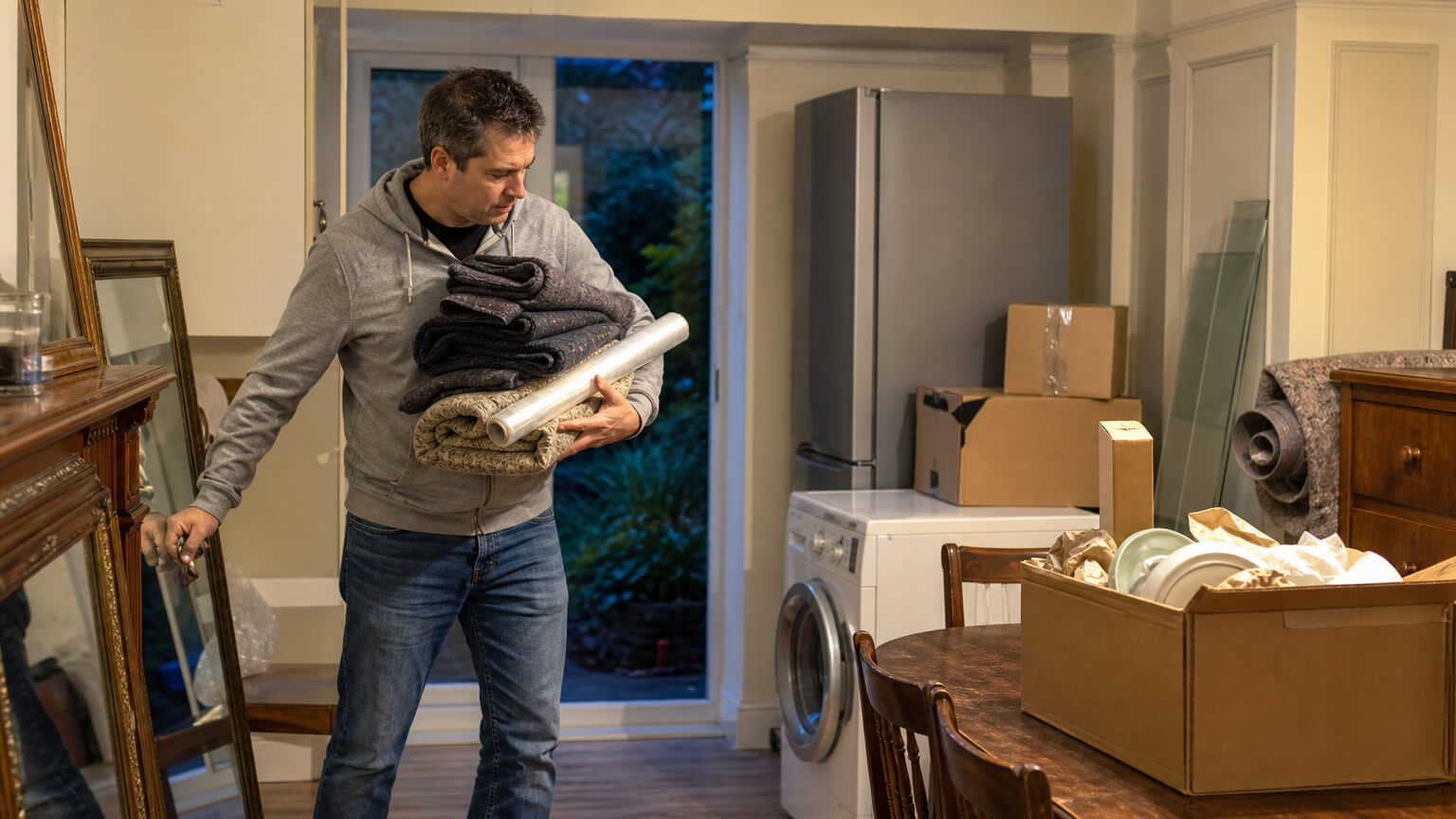
The terms are simple: a 2-week minimum stay, 14 days’ notice when you want to end it, and any unused days refunded once that notice has been given. That structure exists precisely because renovations rarely finish on the date the builder first quoted.
If you’re booking ahead of a job that hasn’t started yet
If your builder is booked for next month and you are planning ahead, the worry is usually about paying for space you don’t end up needing, or the opposite: being stuck if the job overruns. Here is how the two contractual steps work. First, you give 14 days’ notice when you know you want to end the booking. Second, once that notice period has passed, any days you did not use are refunded. Those are two distinct steps, not one, so there is no single date to guess at in advance. You are not locking yourself into a fixed end date you cannot predict.
See what a flexible booking costs for your timeline →
If you’re clearing a family property before a sale or move-in
The same flexibility matters just as much if you are renovating a property you have inherited, or are helping an older relative through, ahead of a sale or a move. These projects often run to their own unpredictable pace, and the same 2-week minimum, 14-day notice and unused-days refund apply regardless of why the property is being worked on.
What a Wigwam unit in Tewkesbury offers, and what it doesn’t

Units at Wigwam Self Storage Tewkesbury are clean, dry and secure. They are not climate-controlled, and it is worth saying that plainly before you assume otherwise for antiques or electronics.
The honest boundary
We don’t offer climate control, and we don’t store vehicles, caravans, motorhomes or boats. The claim we can make honestly is clean, dry and secure, and we would rather be precise about that than imply more than the facility delivers.
Getting in and out
Access runs 6am to 10pm, seven days a week, through smart entry rather than a member of staff on site. Sites are unmanned, so if a courier or contractor is dropping off or collecting anything at your unit, someone from your side needs to be there to let them in.
Local and practical: getting your things from the house to Ashchurch Business Centre

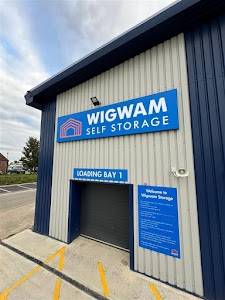
Wigwam Self Storage Tewkesbury is based at Ashchurch Business Centre, Alexandra Way, Tewkesbury, GL20 8NB, which makes the move from house to unit a short, practical trip rather than a project in itself.
Wrap soft furnishings and protect any exposed edges before the move, the same care you would use moving house, and you have done most of what matters.
Insurance and the practical questions renovation-storage customers ask

Contents insurance is required for anything you store with us, and that is a separate point from the unit itself being clean and dry. Full detail sits on our storage insurance page.
How the cover works
You can take Wigwam’s cover or prove you already have your own. It runs on a new-for-old basis, with a £50 excess, and you need to declare the full value of what you are storing, since underinsuring is applied proportionally against any claim. A theft claim needs evidence of forced entry, and climatic damage, meaning damp or humidity, is excluded from the policy. That last point matters: “clean and dry” describes the facility, not a guarantee the insurance itself makes about damp.
A few other questions come up often with renovation customers specifically: whether your home insurer needs telling, how the notice period works if your job runs early or late, and whether you can get to your things while the work is ongoing. We’ve answered those directly below.
Renovating in Tewkesbury? Here’s the one decision that protects your furniture
Moving your furniture off-site removes it from the dust and damp risk path completely. A spare room or a garage does not, whichever job you are about to start or already have underway.
Whichever situation brought you here, the same decision applies. If work has already started, move things out this week. If you are planning ahead, the flexible terms mean you are not locking into a date you cannot predict. If you have been burned before, this is the specific mechanism that goes wrong in a garage, and the reason storage avoids it. If you are working through a family property, the same terms apply regardless of the reason for the renovation. The reassurance worth repeating once more: 14 days’ notice, unused days refunded after that.
Get a quote for Wigwam Self Storage Tewkesbury → or check current unit sizes and pricing before you decide.
Frequently Asked Questions
Talk to your own contents insurer about how a renovation affects your home policy, as that is outside what we can advise on. Separately, anything you store with Wigwam needs its own contents cover, either Wigwam’s policy or your own proof of cover, on a new-for-old basis with a £50 excess and full value declared.
Give 14 days’ notice whenever you know you want to end your storage booking. Once that notice period has passed, any days you paid for but didn’t use are refunded. Those are two separate steps, so you are never locked to a single date you have to predict in advance.
Yes. Access runs 6am to 10pm, seven days a week, through smart entry rather than a staffed desk. Because the site is unmanned, if you are arranging for a courier or contractor to collect or drop off anything at your unit, someone from your side needs to be there with them.
No. Wigwam units are clean, dry and secure, but they are not climate-controlled. If you are storing antiques or sensitive electronics, factor that honestly into your decision rather than assuming temperature or humidity control that isn’t part of the facility.