Boxes you can’t open and can’t throw away, and a loft that’s already full?
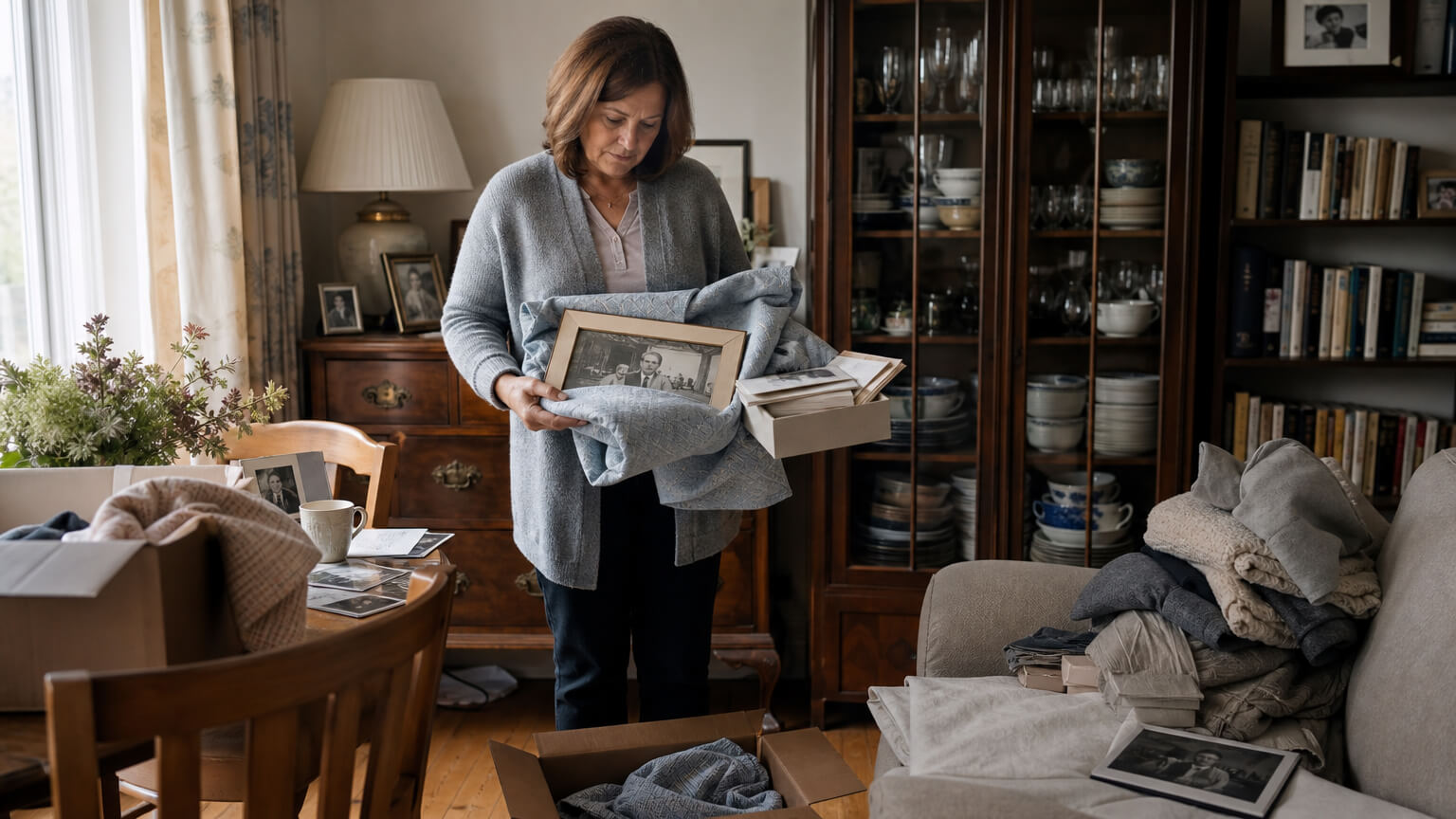
There are boxes in a lot of lofts that nobody can bring themselves to open. They hold photographs from someone’s childhood. A parent’s handwriting on a card. A christening gown folded in tissue paper. None of it is rubbish. All of it takes space that the house no longer has.
If that sounds familiar, you are not alone in it. Many people reach a point where the loft is full, the spare room has quietly become a storage room, and still the boxes keep coming, because some things cannot be thrown away and should not have to be.
A clean, dry, individually alarmed storage unit near you, on a long flexible stay, is one quiet answer to that problem. You do not have to make final decisions. You do not have to let anything go before you are ready. You simply give the things a safe, unhurried home while you work out what comes next.
When Keeping Is the Right Answer
There is no rule that says you must let go of the things that matter before you are ready. Nobody appoints a deadline for grief, and nobody should be pressured into discarding a late parent’s belongings on someone else’s timetable. Keeping is not hoarding. Storing the objects that hold your people in them is a considered, reasonable choice.
The Middle Path Between the Loft and Letting Go
Between cramming everything into a leaking loft and getting rid of things you will miss forever, there is a third option: a unit you can visit, things you can reach, and no decision forced before you have the space to make it calmly.
Some people find the 90/90 rule useful as one thinking tool: if you have not used something in ninety days and cannot imagine using it in the next ninety, it may be a candidate for letting go. But that rule was written for functional objects, not for a box of letters from your mother or a child’s first shoes. For things with memory in them, there is no shelf life. Storing them, keeping them safe, and returning to them when you are ready is not indecision. It is patience.
What You Are Actually Deciding When You Book a Unit
Booking a storage unit is a much smaller commitment than it tends to feel. The minimum stay at Wigwam is just two weeks, which means you are not locked into anything long. If you leave early, we refund the unused days. There is no deposit either, so nothing of yours is held back while you decide. You are not signing your things over to a warehouse for years. You are opening a door you can close again whenever you are ready.
That is worth knowing when the decision feels heavy. You are not giving anything up. You are buying yourself time and space, which is exactly what you need.
What Sentimental Things Actually Need from Storage

What every item in those boxes really needs is simple: a clean, dry, undisturbed space. That sounds ordinary until you compare it with what a damp loft or a busy spare room actually offers. Lofts are prone to condensation. Spare rooms fluctuate in temperature when windows are opened and heating is adjusted. Boxes stacked in corners can be knocked, damp can creep in, and nothing is individually protected.
A good storage unit changes each of those conditions at once.
Photographs, Letters and Paper Documents
Paper is vulnerable to moisture more than almost anything else. Old photographs yellow and stick, ink fades, and acid from poor-quality folders accelerates the damage. The essentials for long-term storage are simple: acid-free sleeves for loose photographs, archival boxes with lids, and keeping everything away from light and direct contact with cardboard that has not been tested for acidity. If the letters are in a biscuit tin or a plastic bag, transfer them to acid-free envelopes before they go into storage. A unit that is clean and dry removes the moisture threat; your packing method removes the acid and light threat. Between the two, paper documents can last a very long time.
Textiles, Christening Gowns and a Parent’s Clothes
Fabric holds memory in a way that very little else does. A parent’s favourite cardigan, a christening gown worn by three generations, a school uniform kept for reasons nobody quite wants to examine. These things deserve care in how they are packed, because the wrong wrapping does the same slow damage as damp.
Never store textiles in plastic. Plastic traps moisture and leads to mildew and yellowing over time. Breathable cotton bags or acid-free tissue paper inside a clean lidded box are the right answer. Cedar blocks tucked in alongside keep moths away without the chemical residue that mothballs leave behind. Folded carefully in a dry, individually alarmed unit, these things will come out the way they went in.
Wooden Pieces and Small Inherited Furniture
A grandmother’s side table. A father’s writing desk. A pair of dining chairs kept because they came from somewhere that no longer exists. Inherited wooden furniture often cannot be sold or given away because there is no practical decision to make; the items are simply waiting for a house large enough to hold them.
Wrap wooden surfaces with furniture blankets or old cotton sheets, not bubble wrap directly against the wood, which can trap condensation. Elevate pieces off the floor on pallets or boards if you can, which keeps air circulating underneath. The individual alarm on each unit means your access and your unit are separate from every other customer’s. Nobody else has a key to your space.
Trinkets, Medals and the Small Things
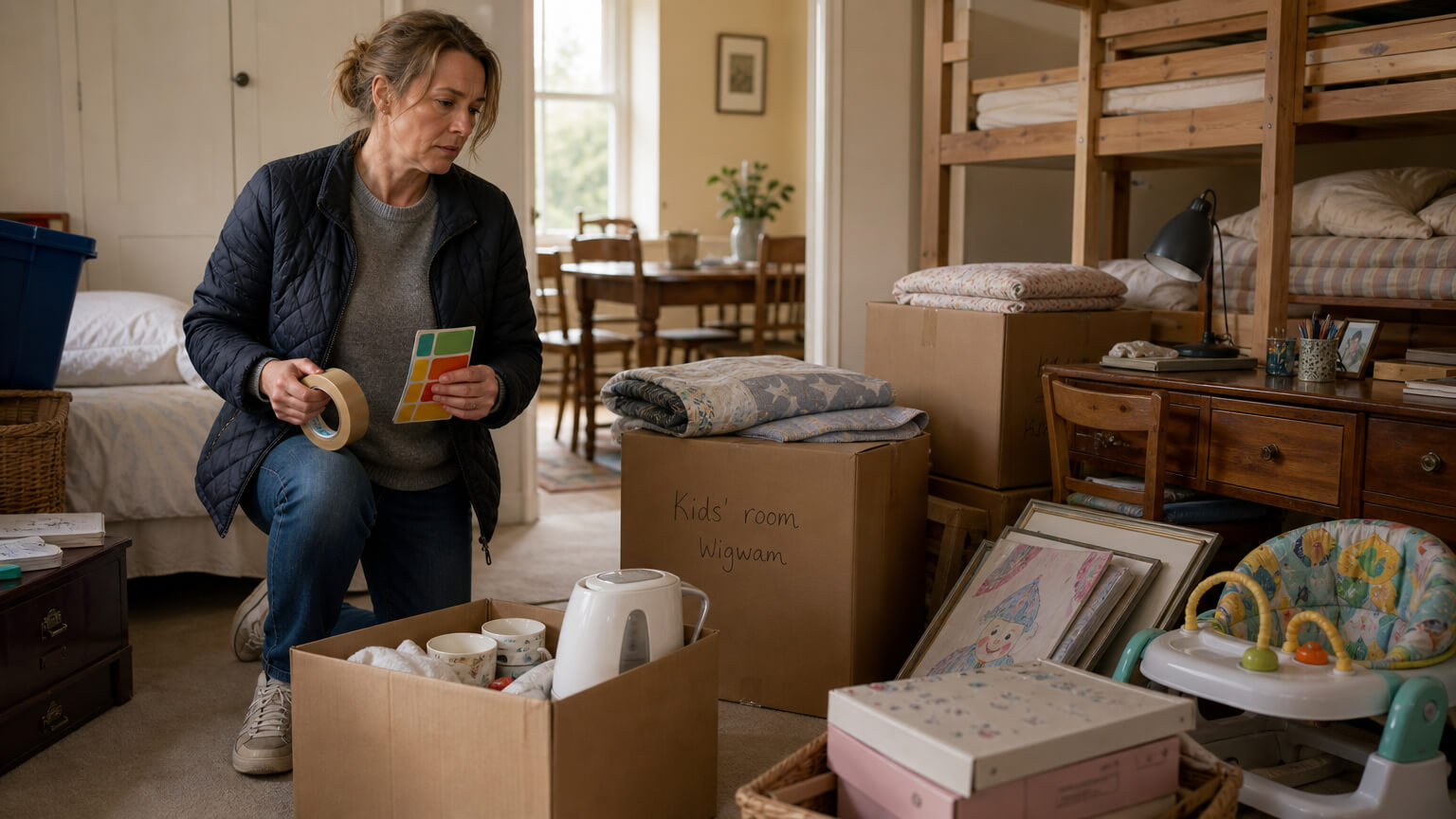
A box of small things, grouped by person, can hold an entire life. Medals, a pocket watch, a set of cufflinks, postcards in a rubber band, a photograph in a broken frame still worth keeping. These collections are easy to lose track of if they are not labelled clearly on the outside. Group them by person or by era before they go into storage. Write a name on the outside of every box. A small locker unit holds far more than people expect, and finding things quickly when you visit will matter.
Packing So the Memories Last

The most honest thing to say about storage is this: the biggest risk to your belongings is not the unit. It is poor packing before the unit. A clean, dry, individually alarmed space removes the external threats. Your preparation removes the rest. Most items that come out of storage in poor condition went in that way.
What to Use, and What Never to Use
Sturdy, double-walled cardboard boxes with fitted lids are worth the investment for anything precious. Cheap boxes collapse under weight and let damp in through weakened corners. Acid-free tissue paper is the right wrapping for photographs, documents and delicate textiles. Never use newspaper, however tempting it is: newspaper ink transfers to whatever it touches over time, and the acid content accelerates yellowing in paper items.
Label every box on at least two sides. Write what is inside and whose things they are. Clear labels make visiting the unit less distressing, particularly if some boxes contain things connected to grief, because you can find what you need without having to open everything at once.
Seal boxes properly. If lids do not fit firmly, tape them. Moisture finds gaps, even in a dry environment, and a well-sealed box is the last line of defence.
Why Clean and Dry Matters More Than Climate Control
The AI-generated summaries you may have read about storing sentimental items tend to lead with the same advice: choose a climate-controlled unit. It is worth addressing that honestly, because Wigwam does not offer climate control, and we are not going to pretend otherwise.
What climate control actually addresses is the fear of damp and humidity causing mould, fading and warping. That fear is legitimate. The solution, though, is not limited to temperature regulation. A unit that is genuinely clean and dry, where damp cannot enter through the fabric of the building, addresses the same risk. Combined with the right packing method, acid-free materials and breathable storage, the outcomes for photographs, documents and textiles in a clean, dry, individually alarmed unit are the same as in a more expensive alternative. We say “clean, dry and secure” because that is precisely what the units are, and because the packing section above shows how to do the rest.
If you have any remaining concerns about humidity and a specific item, the honest advice is to speak to a conservator for guidance on that piece, rather than pay a premium for a unit feature that may not be necessary.
Ready to find a unit near you? A quote takes a few minutes and there is no obligation. Get a quote at quote.wigwamstorage.co.uk
How Much Space a Few Treasured Boxes Really Take

Most people overestimate how much space their sentimental things need. A collection of boxes, files of letters and albums of photographs, packed well into double-walled boxes, typically fits into a small locker or a compact unit with room to spare. It costs considerably less than most people assume, and far less than the peace of mind it provides tends to feel worth.
From a Locker of Boxes to a Room of Inherited Furniture
The range of unit sizes covers the full spread of what people typically need to store:
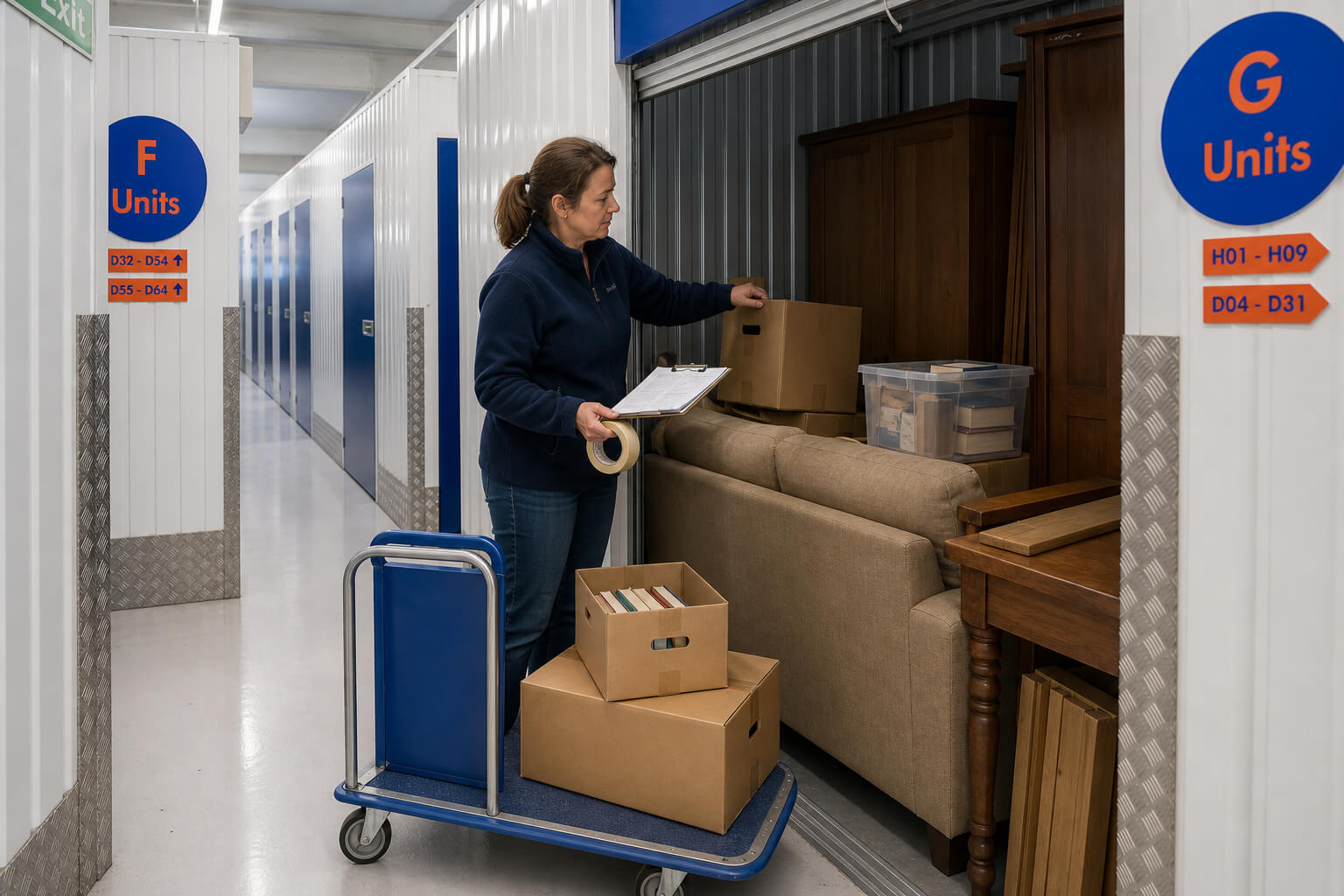
A small locker, roughly the size of a garden shed interior, holds several stacked boxes of photographs, documents, letters and small memory items comfortably. If you add textile items in bags and boxes of trinkets, you will still likely be well within a compact unit.
Add in a few pieces of inherited furniture and you move into a medium unit, which holds a small bedroom’s worth of furniture alongside the boxes. If you are clearing a family home and need to keep multiple pieces of furniture, a few boxes of belongings per person, and the accumulated smaller items, a larger room-sized unit gives you room to move around and access things without unpacking everything.
For specific sizes and what they typically hold, the unit size guide on the pricing page gives a clear breakdown. We do not publish prices on this page; see what self storage costs for current rates at your nearest location.
A Long Stay, Held as Long as You Need
There is no maximum on how long you can keep a unit. The minimum is two weeks. Unused days are refunded if you leave early. When you are ready to go, give fourteen days’ notice, clear the unit, and settle the account. Any unused days come back to you.
That structure means there is no pressure to rush decisions that should not be rushed. A unit can hold a late parent’s belongings for months while an estate is settled, while family members take turns visiting and choosing what they want, while the grief is still too raw to face sorting properly. There is no penalty for taking the time you need.
A Safe, Local Home for What Matters
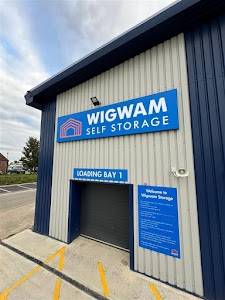
The reason people trust a locally run storage operator over a national chain on a ring road is simple: you know where it is, you can see it, and there are real people attached to it. That matters when you are storing things that cannot be replaced.
Individually Alarmed, Clean, Dry and Secure
Each unit at Wigwam has its own individual alarm, separate from every other unit on the site. That means access to your space does not carry any implication of access to anyone else’s, and an alert specific to your unit is triggered if anything changes. Sites operate by smart entry between 6am and 10pm, seven days a week, so you can visit at a time that suits you without needing to book ahead or ring anyone.
The sites are unmanned. You access your own goods directly. If you are using a removals firm or asking family members to bring things to the unit, someone from your household needs to be present to receive them. Wigwam staff are not on site to sign for deliveries or receive goods on your behalf. State this clearly to anyone helping you move items in.
Real People, Real Towns
Wigwam is a family-run UK self storage business, and the team behind it are the sort of people you can talk to before you commit. At some of our locations, team members including Selina are available to show you a unit in person so you can see what you are booking and ask questions before anything is signed. If you would find that helpful, it is worth asking when you enquire.
Wigwam Locations Near You
You can find us in market towns across the UK. Wigwam Self Storage Bath (Bath, Somerset) and Wigwam Self Storage Lincoln (Lincoln, Lincolnshire) are two of our established locations. For the full list of our UK market-town locations, the locations hub has everything in one place, with links to each site.
Protecting the Irreplaceable: Cover for Your Goods
Irreplaceable does not mean uninsurable. The things in storage can be covered, and Wigwam makes the arrangement straightforward.
How Contents Protection Works at Wigwam
Contents cover is mandatory for everything stored with us: you either take Wigwam’s policy or provide proof of your own. Our policy is provided through RSA Self Storage Customers’ Goods cover, arranged on a New-for-Old basis.
The most important thing to understand before you declare a value is this: if you under-insure and a claim is made, the settlement is proportional to the declared value, not the full replacement cost. So if you declare half the true replacement value of your goods, you receive half the settlement you would otherwise be entitled to. Declare the full replacement value, not a rough guess or a sentimental one.
A few things to note on what is covered and what is not. Theft is covered where there is forced entry to the unit. Atmospheric and climatic damage is excluded, which is another reason the packing section above matters: the cover is designed to complement a good physical environment and proper preparation, not to substitute for them.
This is a signpost, not advice. For questions about declared value, specific exclusions, or how the cover applies to goods held as part of an estate, speak to your insurer. If the items involve a probate matter, your solicitor is the right person to ask.
Jurisdiction note: Insurance terms, policy obligations, and estate-related storage arrangements are matters of English and Welsh law in our standard terms. Scotland and Northern Ireland may differ in relevant respects. If you are in doubt, speak to a solicitor or your insurer qualified in the relevant jurisdiction. See our full terms and the contents protection page for the details of what is covered.
Making It Easy to Get Started
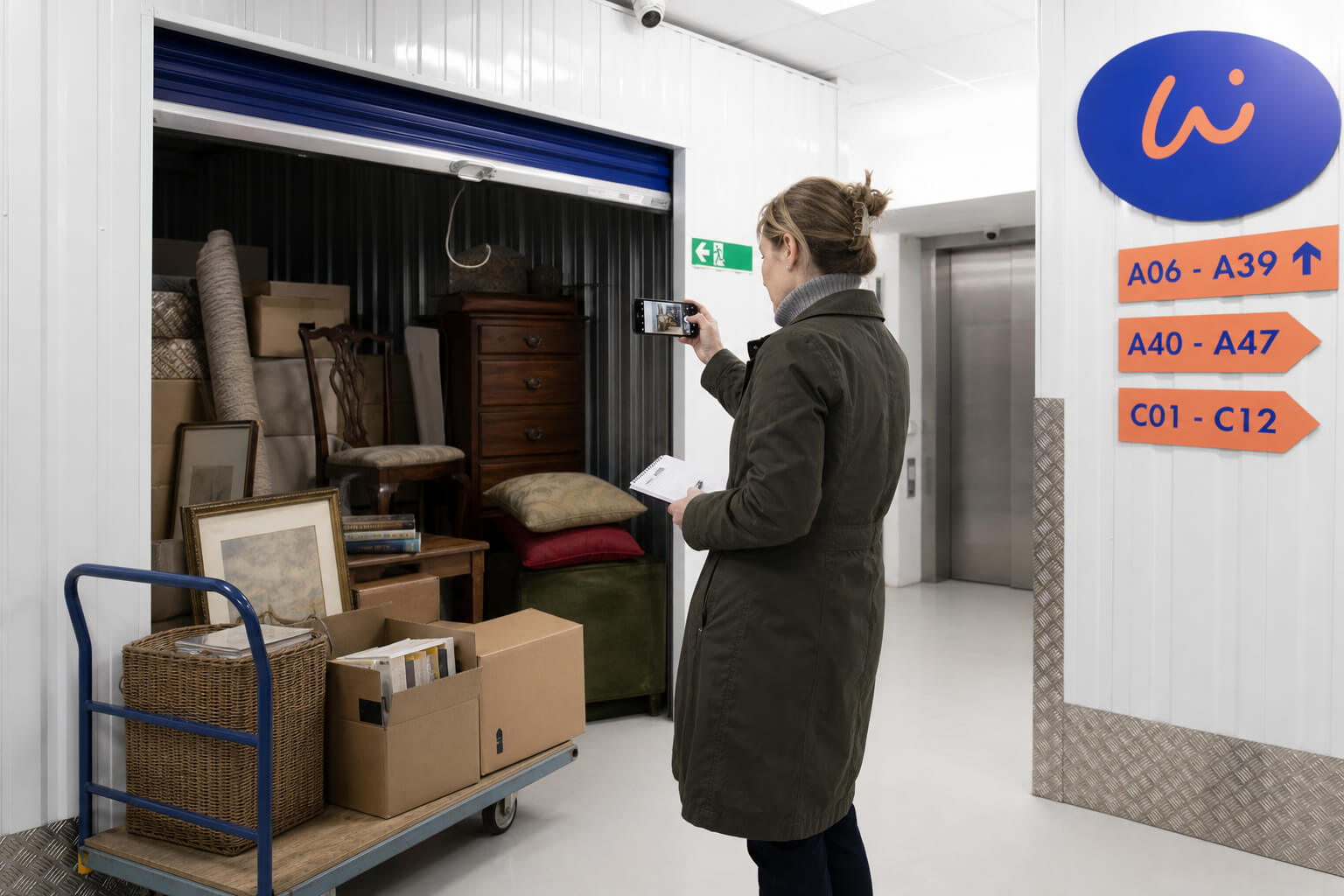
Getting a unit in place is quick. The lead time from enquiry to having your things safely stored is short, and the commitment, as described earlier, is as low as it can reasonably be.
What to Do Before You Book
If you can, visit the unit before you commit. At some locations, members of the team can show you around so you can see the space and ask anything you are unsure about. Confirm the unit size is right for what you are bringing. Make sure your contents cover is in place before you move anything in; the contents protection page explains how that works. Review our full terms so you understand the notice arrangements before you sign. For a clear picture of what different unit sizes cost, the pricing reference page is the right place to start.
Getting Your Things There
You can bring your belongings yourself, ask family to help, or use a removals firm. All of those are common. The one thing to plan for is this: the sites are unmanned, so if a removals crew is bringing items on your behalf, someone from your household needs to be present at the unit to let them in and receive the goods. Wigwam staff do not sign for deliveries or receive goods on your behalf. Build that into your arrangements with any removals company you book.
Ready When You Are
The things in those boxes deserve a safe, unhurried home. A dry unit with its own alarm, in a market town near you, is that home. You are not being silly for keeping them. You are not failing at decluttering. You are doing something considered and caring, and there is no deadline on that.
How to Get a Quote
A quote takes a few minutes and there is no obligation. You can hold a unit from two weeks, and there is no deposit to pay at any point. Get your quote at quote.wigwamstorage.co.uk.
Still Deciding?
That is fine. The things will still be here, and so will we. Take the time you need. If you want to keep reading, the pricing page gives a clear sense of what different unit sizes cost, and the locations hub shows you which of our market-town sites is nearest to you. No pressure. Just a safe place when you are ready.
Frequently Asked Questions
Yes, and this is one of the most common reasons families take a unit after a bereavement. Access runs on smart entry, so it is not tied to a single key handed over at a desk. Whoever holds the access for the unit can visit within the 6am to 10pm window, seven days a week, which means relatives can go at different times to sit with the things and choose what they would like, without everyone having to be there at once or coordinate around a staffed office.
The practical reality is that the account and the access sit with the named customer, usually whoever booked the unit. Anyone you share access with is doing so on your say-so, and the goods in the unit remain the responsibility of the account holder. For a family dividing a parent’s belongings, the workable approach is usually one person holding the booking and the others arranging their visits with them. It keeps the arrangement clear while still letting everyone have their turn.
There is a softer benefit to this that matters more than the logistics. Dividing a late parent’s things is rarely something a family can do in a single afternoon, and it should not have to be. Because the unit can be held for as long as you need, with a two-week minimum and no maximum, relatives can take turns over weeks or months as they feel ready, rather than under pressure on the day the house is cleared. The things wait, safe and dry, while the people decide.
Whoever is administering the estate is usually the right person to hold the unit, but how the cost is treated against the estate is a question for the executor and, where needed, a solicitor, not something Wigwam can advise on. Practically, the unit needs one named account holder who books it, holds the access and is responsible for the goods inside. During probate that is commonly the executor or a family member acting with the family’s agreement.
On the money side, storage taken to hold a deceased person’s belongings while an estate is settled is the kind of cost executors often deal with as part of administering the estate, but whether and how it is recovered from the estate is a legal and financial matter. Keep the invoices and a record of what is being stored and for whom. Wigwam’s support team handles storage questions, sizing, access, pricing, booking, and cannot advise on probate, executor duties or how costs are apportioned. For that, the right person is the solicitor handling the estate.
What the unit gives an estate is time without pressure. Probate can take many months, and during that period the belongings need somewhere clean, dry and secure that is not a relative’s already-full spare room. The two-week minimum and the absence of any maximum stay mean the unit stretches to fit the process, and there is no deposit tied up while the process runs. The terms are set out at wigwamstorage.co.uk/terms-conditions/, and the contents cover that protects estate goods is explained at the contents protection page.
Do both, rather than treating it as a choice between them, because a scan preserves the image while the original holds something a scan cannot. Digitising photographs, letters and documents is genuinely worth doing: it gives you a copy that survives if anything ever happens to the paper, it lets family members each have access to the images, and it means you can look at them without handling the fragile originals. For purely informational documents, a good scan may be all you practically need.
But for the things in those boxes, the original usually carries the weight. A parent’s handwriting, the texture of a card they chose, the photograph they held, none of that survives in a file. Many people find that digitising removes the panic, you know the images are safe, which then makes it easier to store the originals calmly rather than feeling they must be guarded at home at all costs. The scan is the backup; the unit is the safe, unhurried home for the things themselves.
If you do digitise, store the originals well afterwards, because scanning is not a reason to neglect them. Keep photographs and letters in acid-free sleeves and boxes, sealed against dust, away from light, in a clean and dry unit. The packing section above covers the method. And keep the digital copies in more than one place, because a single drive can fail just as a single box can be lost. The honest position is that storage and digitising solve different parts of the same worry: one protects the object, the other protects the image. Together they cover both.
The honest answer is that storage is a paid service, and an account that falls into arrears cannot simply continue indefinitely, so the most important thing is to talk to the team early rather than let it drift. Wigwam’s support team handles the account, the billing and the practicalities, and the right move if money becomes tight is to contact them before the account falls behind, not after. They can talk through options like moving to a smaller, cheaper unit if you have more space than you need.
The terms that govern what happens with an unpaid account, including any notice and the operator’s rights where charges go unpaid, are set out in full in the terms and conditions, and they are worth reading before you book precisely so there are no surprises later. The full terms are at wigwamstorage.co.uk/terms-conditions/. This is the kind of detail it is better to understand calmly at the start than to confront under pressure.
There are a couple of ways to reduce the risk of ever reaching that point. The cost of a small locker for a memory trunk and a few archive boxes is modest, and right-sizing to what you actually have, rather than taking more space than you need, keeps it that way. The two-week minimum and the unused-days refund mean you are never locked into a long commitment, so if your circumstances change you can give 14 days’ notice, clear the unit and walk away cleanly. If keeping everything becomes genuinely unaffordable, that is the moment to decide calmly what is truly irreplaceable and stays, and what can be photographed and let go, rather than losing the choice through arrears.
There is no single transfer that moves a unit from one town to another, but the flexible terms make relocating straightforward in practice: you take a unit at your new location and give notice on the old one, and the things travel with you in between. Because Wigwam is in market towns across the UK, there is a reasonable chance there is a site near wherever you are moving to, which you can check on the locations hub.
The mechanics are simple, even if the move itself takes a little planning. You book a unit at the new town, move your boxes and furniture across, then give 14 days’ notice on the original unit, vacate it and settle the account, and that is the end of it. Neither unit carries a deposit, so there is nothing to reclaim or pay again. The two-week minimum and the rolling arrangement mean there is no penalty for ending the old booking once you have moved out, and unused days on a paid period are refunded.
A few practical notes for the move. The same packing care applies on the road as in storage: keep photographs and documents in their acid-free boxes, keep textiles breathable, and do not let anything travel damp. The sites are unmanned at both ends, so if a removals firm is handling the move, someone from your household needs to be present at each unit with access to receive the goods, because Wigwam does not sign for or accept deliveries on your behalf. And if you would value seeing the new unit before you commit, ask when you enquire, as the team at some locations can show you the space in person.