A lock-up’s half the price — but is it safe enough for the good stuff?
There is usually a moment, somewhere between booking the plasterers and realising the house will be uninhabitable for three months, when someone spots a lock-up advertised on the council notice board or a local Facebook group. It is half the price of a self storage unit. It is round the corner. The maths look obvious.
Then you think about your grandmother’s dresser. The sash windows you had restored last summer. The stack of original tongue-and-groove you pulled from the back bedroom and cannot replace if something happens to it. And the question shifts from “which is cheaper?” to “which will give these things back to me in the same condition I left them in?”
That is the question this page tries to answer honestly. A lock-up is the right call sometimes. A self storage unit is the right call other times. The deciding factor is rarely the weekly rate.
The Quick Answer

Here it is, plainly: a lock-up garage can genuinely be the cheaper option and, for the right job, the sensible one. A self storage unit costs more per week, but it gives you something a padlocked garage on a council estate usually cannot: an individually alarmed unit, a clean and dry environment, and written terms that protect your money and your goods. The honest answer depends on what you are storing and how much you can afford to lose if it goes wrong.
When a lock-up genuinely wins
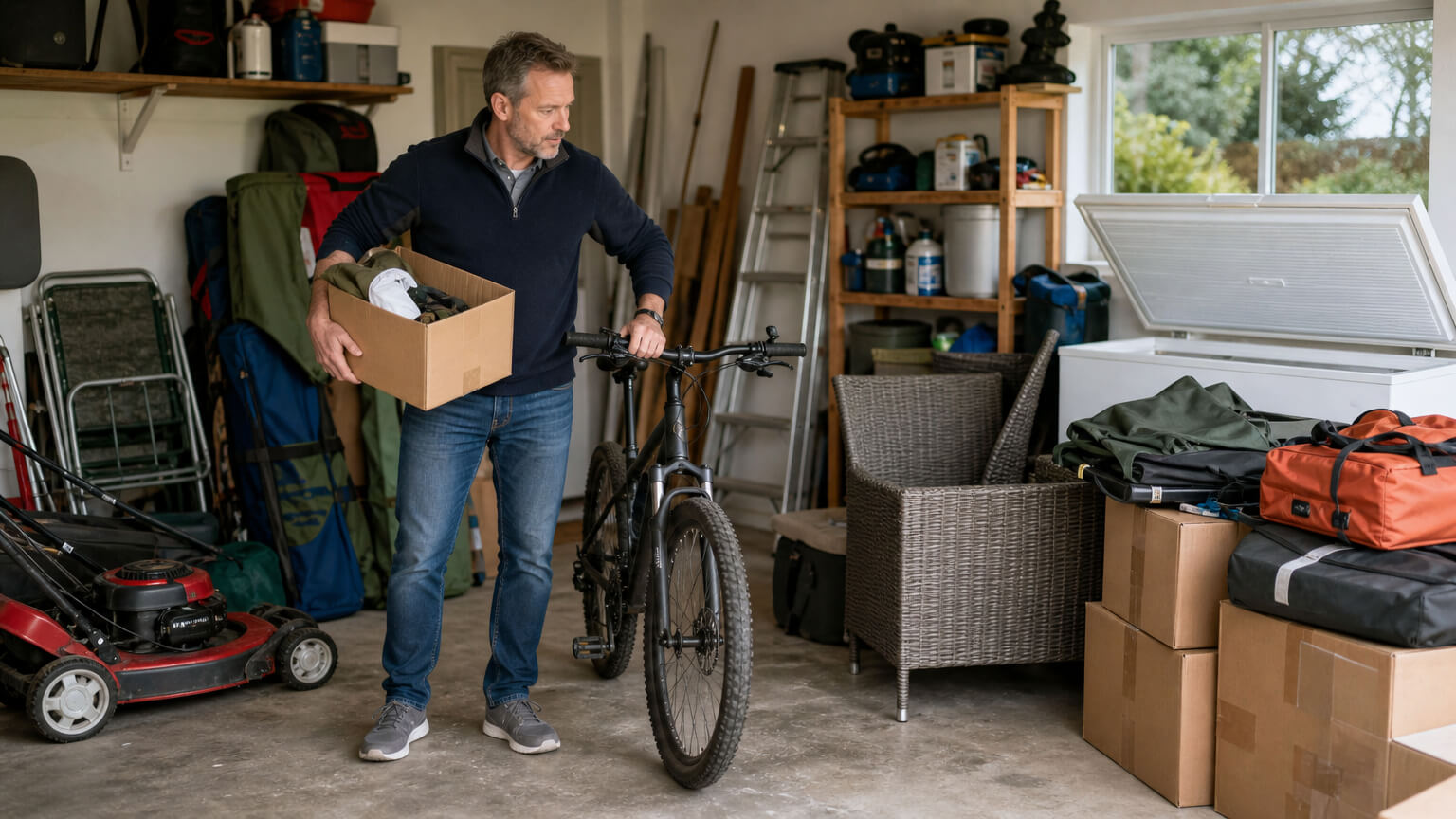
If cost is the primary driver and the goods are robust, a lock-up is worth serious consideration. Garden equipment, bikes, tools in hard cases, non-perishable trade materials where damp is not going to cause lasting damage: a basic lock-up handles all of that without fuss. And if you need to store a car, a motorbike, a caravan or a boat, a lock-up or a specialist vehicle storage site is where you should look, because that is a job we do not do at Wigwam. For Tradesman Tom weighing whether to upgrade from a council garage for his tools, the honest answer is: it depends on how exposed those tools are and how much is at stake if they are stolen or damp gets into the cases.
When a self storage unit is the better call
Period fittings, upholstered furniture, archived paperwork, mattresses, clothing, salvaged woodwork: anything that cannot afford three months in a damp brick box is in different territory. When the goods are irreplaceable, or when you need reliable access outside daylight hours, or when you want written terms that tell you exactly what you pay and what you get back if you leave early, a self storage unit changes the comparison. The weekly rate is higher, but the rate is only part of the total cost picture.
Cost Compared
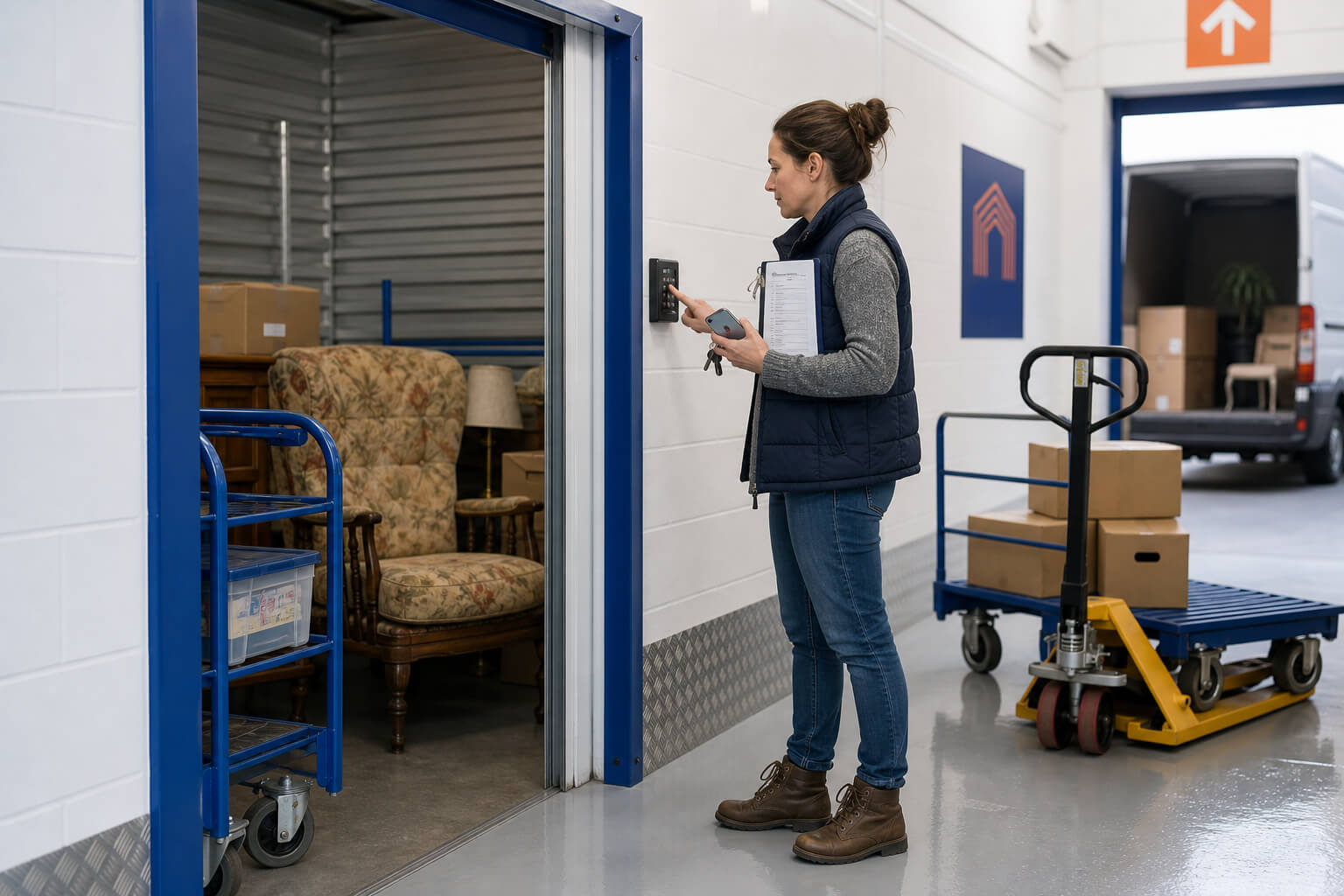
The two options are not as far apart as the advertised headline prices suggest, once you factor in what each arrangement actually includes.
What a UK lock-up typically costs
Council lock-ups in the UK tend to run from around £15 to £40 per week for a single garage, depending on location, though figures quoted in trade press vary and council pricing changes regularly. Private lock-up arrangements cover a wide range from informal landlord deals to commercial lock-up parks, and the prices move accordingly. The catch, beyond the price, is supply: council waiting lists for lock-ups in towns where demand is high can run to months, which means you may need to pay for alternative storage while you wait anyway. Private arrangements are easier to find but rarely come with anything written down.
How self storage pricing works and where to check
Self storage is priced weekly, with the rate set by unit size. The smaller the unit, the lower the rate; the bigger the town centre, typically the higher the price. There is no one universal rate, and comparing sticker prices between providers is tricky without checking like-for-like sizes. For a clear picture of how self storage pricing works, our pricing page sets out what affects the weekly cost and how to work out the right size for your job.
What the weekly rate does not tell you on its own is the full terms picture. At Wigwam there is no deposit when you move in. You give 14 days’ notice when you are ready to leave, and once you have vacated and the account is settled, any unused days are refunded less anything owed. If you leave before your expected end date, unused days are refunded. The minimum stay is two weeks. That is what the written terms look like. Compare that to a council tenancy or a private arrangement with no paperwork, and the two options are not really like-for-like on cost at all.
The costs a cheap lock-up does not show upfront
A padlocked garage on a shared site, with no individual alarm and no CCTV, carries a theft exposure that does not appear in the weekly rate. If a determined thief cuts a padlock, there is no unit-level alert, no record of who entered, and often no guarantee of recovery. For furniture, period fittings or anything with significant replacement value, that gap matters.
Damp is the second hidden cost. Many older council garages and private brick lock-ups are not sealed or maintained to a standard that protects upholstered furniture or wooden fittings over a period of months. The weekly saving looks different once you are factoring in the cost of replacing a warped door or a mildewed sofa.
And if there is no written agreement with a refund clause, there is no guaranteed route to get your deposit back if the relationship with the landlord sours, or any entitlement to a pro-rata refund if you leave early. That is a cost too, even if it does not appear on a weekly invoice.
Ready to see what a Wigwam unit would cost for your job?
Get a no-obligation quote at quote.wigwamstorage.co.uk
Security Compared

The security comparison is where the two options diverge most clearly, and it is worth being specific about what that means in practice.
A padlock on a shared site versus an individually alarmed unit
Most lock-ups offer a padlock on a metal door. That is the security provision. Some sites have perimeter fencing; some have CCTV at the entrance; very few have any alarm system that is specific to individual units. If someone forces the door on your lock-up, the alert, if there is one at all, is a general site alarm that does not identify your unit from anyone else’s.
Wigwam’s units are individually alarmed. A breach of your specific unit triggers an alert. That is a meaningful difference for anyone storing goods with significant monetary or sentimental value, and it is not something a basic padlocked garage can replicate without a significant additional cost.
Clean, dry and secure: what that actually means
The framing most self storage providers reach for is climate control, with references to controlled temperature and humidity management. That is not what we are claiming at Wigwam, and it is worth being clear about why. Our sites are clean, dry and secure. That means a maintained, weather-tight environment where the floor is not damp concrete, the walls are not weeping brick, and the unit is not open to the elements. It does not mean a thermostat.
For most household goods, that distinction matters less than the general storage industry suggests. Upholstered furniture, wooden period fittings, archived documents and clothing do not need a temperature-controlled laboratory. They need a clean, dry and secure space where damp cannot get at them over three or six months. The damp problem in older brick lock-ups is real and it is the condition risk that most people do not think about when they are comparing weekly prices. A clean, dry unit that does not let water in is the honest answer to that risk, without overstating what we offer.
If your goods genuinely require controlled temperature or humidity, such as fine art, wine or specialist electronics, a climate-controlled facility is the right route and they do exist in the market. That is not a gap we fill.
Access and Convenience

Access is the third variable in the comparison, and it is one where the two options behave quite differently.
Wigwam access hours and smart entry
Access to a Wigwam unit is 6am to 10pm, seven days a week, by smart entry. We are honest that this is not 24-hour access: if you need to be loading a van at 2am, a self storage unit is not currently the right option for that. But 6am to 10pm covers most practical renovation and moving scenarios comfortably. An early contractor start at 7am is within hours. An evening run after work to collect something you need the next day is within hours. Smart entry means you do not need to arrange key collection from a keyholder or coordinate with a site manager. You use the access system and go.
Our sites are unmanned. You access your own unit and your own goods. If you are expecting a delivery, someone from your side needs to be present to receive it; Wigwam does not sign for goods on your behalf and cannot receive deliveries in your absence.
What that means for a renovation or a phased move
A manual-key lock-up gives you access when you have the key, which in practice often means when the landlord is available, or when the site is open, or when you can arrange a handover. For a renovation that runs on a building site’s schedule, that rigidity creates friction. You need to move a piece of furniture on a Sunday morning before the plasterers arrive: a manual key arrangement may or may not accommodate that. Smart entry at 6am on a Sunday morning does.
For those working in or around specific locations, we have a number of UK market-town sites within reasonable reach. Wigwam Self Storage Bath and Wigwam Self Storage Lincoln are two verified examples. For the full list, see our UK market-town locations; there is a reasonable chance a Wigwam site is a sensible drive from where the renovation is.
What Goes Where: Matching the Option to Your Goods

The simplest way to approach this is by item type, rather than by provider first.
Things a lock-up handles well
Robust garden tools, power tools in hard carry cases, garden equipment, bikes with reasonable locks, non-perishable trade materials like off-cut timber or fixings in sealed containers: these tolerate a lock-up environment without much risk, as long as the site is not actively waterlogged. If the goods are replaceable, the risk is proportionate to the replacement cost. For Tradesman Tom with a set of professional tools, the right question is the insurance position and what the actual theft exposure is on the site in question, not just the weekly rate.
Vehicles, caravans and boats belong in a lock-up or specialist vehicle storage facility. Wigwam does not store any of these, and that is worth knowing before you commit to a unit.
Things that belong in a self storage unit
Upholstered furniture, wooden period fittings, sash windows, original doors, fireplaces, mattresses, archived documents and files, clothing, bedding and anything that will be damaged by damp or affected by prolonged cold and wet: these belong in a clean, dry and secure unit.
Contents protection is mandatory at Wigwam. You either take out Wigwam’s own contents cover or you evidence that your existing insurance extends to goods held at a self storage site. You declare the full replacement value of what you are storing; if the declared value is lower than the actual value, any claim is settled proportionally. The details of Wigwam’s policy, including what is covered and what is excluded, are set out at Wigwam’s contents protection policy. We signpost you there rather than summarise the terms here, because insurance is something to read in full rather than in a paragraph.
A Note on Vehicles and Climate Control
Two questions come up regularly in this comparison and both deserve a direct answer, even though neither answer favours Wigwam.
Wigwam does not store cars, motorbikes, caravans or boats. If vehicle storage is what you need, a lock-up or a specialist vehicle storage provider is the right route. We say that plainly, because the honest answer is more useful to you than a vague deflection.
Wigwam does not offer climate control. We do not manage temperature or humidity in our units. The correct description of what we offer is clean, dry and secure: a weather-tight, maintained environment that does not let damp in. For the majority of household goods, that is the protection that actually matters. For goods that genuinely need controlled temperature or humidity, a specialist climate-controlled facility is worth seeking out. Several operate in the UK; we are not going to name competitors, but they are not difficult to find.
These two honest admissions are, in our experience, more useful to a comparison searcher than a list of features. They also mean that when we say a Wigwam unit is the right call for your period fittings, you can trust that we have given you the full picture.
How to Decide
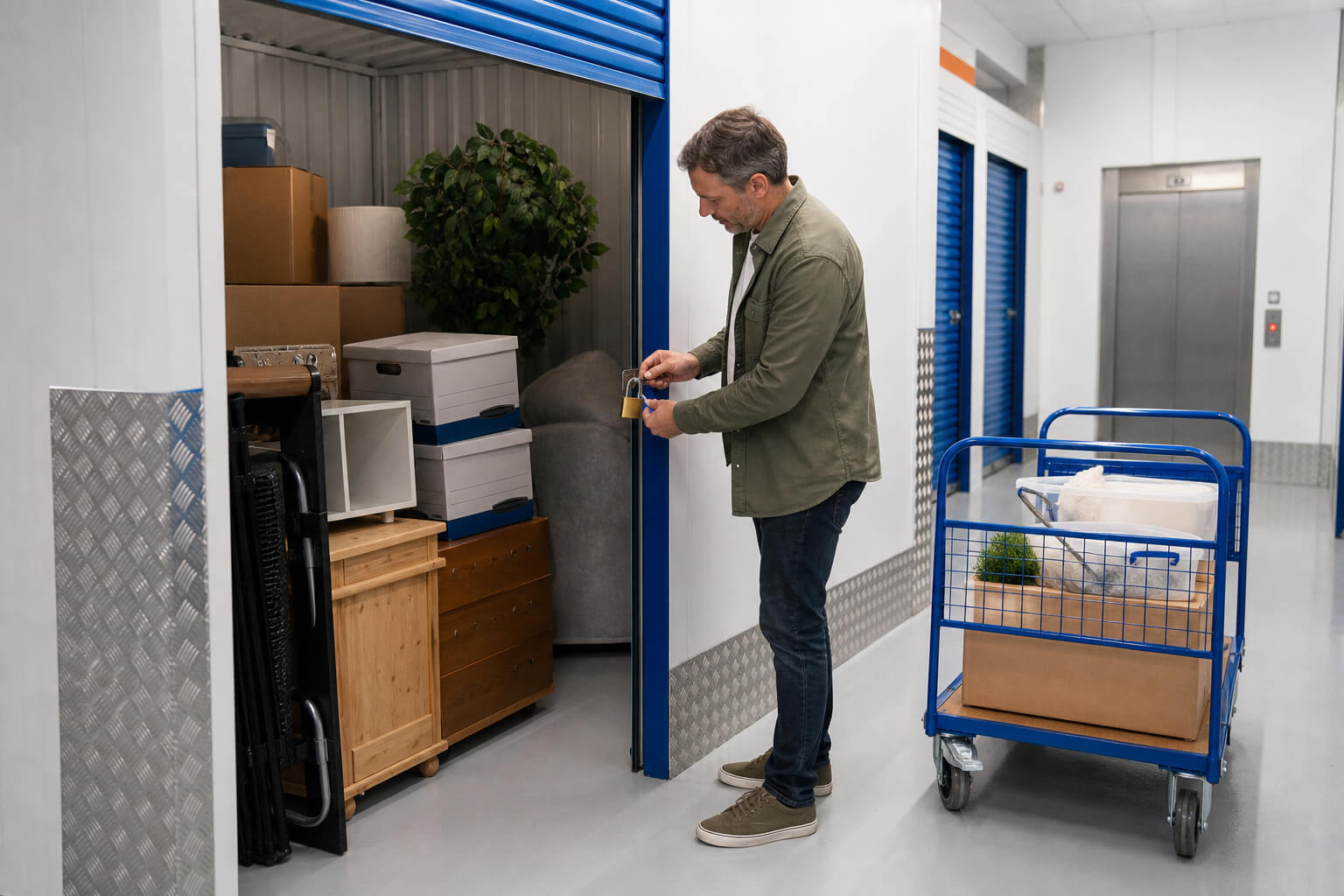
The decision comes down to three variables: what you are storing, how much you can afford to lose, and how much the written terms matter to you.
If what you are storing is robust, damp is not a realistic risk, theft exposure is proportionate to the replacement value, and cost is the primary driver: a lock-up is worth a serious look. Check the site condition, ask about security, confirm there is at least a basic written agreement, and price it properly including any deposit.
If you have household goods, irreplaceable period pieces, upholstered furniture, archived documents or anything where condition matters over months rather than weeks, the individually alarmed unit, the clean and dry site, and the transparent written terms change the calculation. The weekly rate is higher, but the rate is only part of what you are buying.
The written terms matter more than most people expect before they need them. No deposit, 14 days’ notice to leave, a refund of unused days if you go early, a minimum of two weeks: those terms are in writing and they are clear. A council garage tenancy or an informal private arrangement rarely offers equivalent protection. If you want to read the detail before you decide, see Wigwam’s full terms.
The moment that tells you whether the decision was right is not the day you carry things in. It is the day your things come out. A lock-up that looked fine in September can look very different in January once the damp has had three months to work its way into a walnut chest of drawers that belonged to someone’s grandfather. The saving on weekly rent is real. So is the loss.
If you are ready to see what a unit would cost for your specific job, a no-obligation quote is the quickest way to get a number.
Get a quote at quote.wigwamstorage.co.uk
What to Read Next
If you want to compare costs in detail before making a decision, the how self storage pricing works page sets out how weekly rates are structured and what affects the price. For the location nearest to you, our UK market-town locations lists all current sites. If you are unsure what size unit you need for your job, our unit size guide covers how to estimate the right size; reference that page in the navigation rather than guessing from this one.
Frequently Asked Questions
Probably not, and this is the gap most people miss when a cheap lock-up looks tempting. Standard home contents policies cover your belongings at the insured address, your house. The moment goods leave that address for a lock-up or any off-site space, many policies stop covering them, or cover them only under a limited “away from home” extension that may not stretch to long-term storage in a garage you rent. The result is that the lock-up’s headline saving can come with no cover at all on what is inside it, which for furniture or period fittings is a serious exposure.
The honest position is the same for both options: do not assume, check the wording. If you are leaning towards a lock-up, ring your home insurer and ask plainly whether your contents are covered while stored in a garage you rent away from your property, and under what conditions. Get the answer in writing if you can. With a Wigwam unit the requirement is built in rather than left to chance: contents cover is mandatory, so you either take our RSA “Self Storage Customers’ Goods” policy or evidence your own cover before anything goes in. That is not us being awkward; it means there is no scenario where your goods sit uninsured. A lock-up does not impose that discipline, so the responsibility falls entirely on you to arrange and confirm cover. We can point you to the contents protection page for what our policy covers, but for your own home policy and how it treats a lock-up, your insurer or broker is the right person to ask, not us.
This is the risk that does not show on the weekly rate, and it is worth thinking through before the saving wins you over. A private lock-up arrangement is often informal, sometimes with nothing written down, which means the certainty of your tenure rests on the landlord’s goodwill. If they decide to sell the property, reclaim the garage, or simply end the arrangement, you can find yourself needing to move a unit’s worth of belongings at short notice, possibly mid-renovation when you have nowhere else to put them. A council lock-up is more formal, but its own terms govern notice and there may be a waiting list pressure behind you. The point is that the exit is not always in your hands.
Compare that to written storage terms. At Wigwam the arrangement is set out plainly: no deposit, a two-week minimum, and when you choose to leave you give 14 days’ notice, vacate and settle the account, with any unused days refunded. The decision to end it is yours, on a known notice period, with a known process. You are not at the mercy of a landlord changing their mind. That predictability is part of what you are paying the higher weekly rate for. If certainty of tenure matters for your job, say a renovation of uncertain length where being told to clear out at two weeks’ notice would be a real problem, that is a strong mark in favour of written terms over an informal garage. For robust goods on a short, low-stakes basis where you could move them easily if you had to, the informality matters less.
Yes, and for some jobs it is genuinely the smartest way to keep costs sensible without compromising on the things that matter. The logic follows the article’s central point: match the option to the goods. Robust, damp-tolerant items, garden tools, off-cut timber, fixings in sealed containers, kit in hard cases, can sit happily in a cheaper lock-up. The vulnerable items, upholstered furniture, period fittings, archived paperwork, anything damp or theft would ruin, go in a clean, dry, individually alarmed storage unit. Splitting them means you are not paying storage-unit rates to keep a lawnmower dry, and you are not risking a walnut chest in a damp brick garage.
A few practical points if you go this route. Size the storage unit only for the vulnerable goods, because that is where the per-week cost is higher, and let the bulky robust stuff take the cheap space. Keep your contents cover straight: a Wigwam unit requires cover on what is inside it, and you will need to satisfy yourself separately about insurance on the lock-up contents, which your home insurer may or may not extend to. And remember the vehicle line, since people splitting storage often have a project car or a trailer in mind: Wigwam does not store vehicles, caravans or boats of any kind, so anything on wheels belongs in the lock-up or a specialist vehicle facility, never the unit. Done thoughtfully, the split gets you the security where it counts and the saving where it is safe. Done carelessly, you end up paying for two arrangements and managing two sets of keys for no real gain, so it is worth a quick sum first.
A storage unit, on both counts, and winter is precisely when the difference between the two shows up. The damp point is the one the article keeps returning to: older brick lock-ups are often unsealed and unheated, so through a cold, wet winter, condensation and ground damp work into anything absorbent over weeks. A Wigwam unit is clean, dry and secure, a maintained, weather-tight space where the floor is not damp concrete and the walls are not weeping brick. That is not climate control, and we do not claim it is, but it does mean your goods are not sitting through the worst of the weather in the conditions that warp doors and mildew sofas.
Access is the second half. A manual-key lock-up gives you access when you can get the key and when you can physically reach it, which in winter can mean an icy shared yard, a frozen padlock, and reliance on a landlord being around. A Wigwam unit runs on smart entry from 6am to 10pm, seven days a week, so a dark winter evening run after work, within those hours, is no different from a summer one: you use the access system and go, no waiting for a keyholder. The honest caveat is the access window itself, it is 6am to 10pm, not overnight, so a 2am winter visit is not possible at either option in practice and certainly not at a unit. But for the realistic comparison, the unit holds up better against cold and damp and is more reliable to get into when the weather is against you. That is exactly the season when a slightly higher weekly rate earns its keep.
Put both on a total-cost-of-the-whole-job footing rather than comparing two weekly headline numbers, because the weekly rate alone hides most of what actually separates them. The honest way to do it is to add up everything each option costs you over the full length you need it, and to put a realistic figure on the risks the cheap option carries. A like-for-like comparison includes the things that do not appear on a lock-up’s advert.
A fair comparison adds up, for each option:
| Factor | Lock-up garage | Wigwam unit |
|---|---|---|
| Weekly or periodic rent over the full job | Often lower | Higher |
| Deposit | May be non-refundable or undocumented | None taken |
| Refund if you leave early | Rarely offered | Unused days refunded |
| Contents cover | Usually arrange and pay separately, if your insurer will even extend | Mandatory, included in the arrangement either via our policy or your own proof |
| Damp risk to goods | Real in older brick lock-ups, cost of replacement | Clean, dry and secure, far lower |
| Theft exposure | Padlock only, no unit alarm | Individually alarmed unit |
| Certainty of tenure | Depends on landlord or council terms | Written terms, your notice |
Once you total those, the gap between the two narrows sharply, and sometimes reverses, because the lock-up’s lower rent is offset by uninsured exposure, possible damp replacement costs, and a deposit you might not get back. The test the article keeps coming back to is the right one: not “who is cheapest this week” but “who charges me what they quoted, what do I pay when I leave, and what is it costing me if something goes wrong”. For a current Wigwam figure to put in the table, the pricing page sets out how rates work by size, and a no-obligation quote gives you a real number for your specific job. Price the whole thing, including the risks, and the comparison becomes honest.