Why pay to store things that are already under your own roof?
There is a moment most people recognise. You are standing in the doorway of the spare room, boxes stacked to the wardrobe, and you are wondering whether you really need to pay someone to store the things that are already under your own roof. The question feels slightly absurd. You have the space. It is right there.
It is a fair question. And it deserves a fair answer, not a sales pitch from someone who profits either way.
This page gives you both sides of the sum. It puts the real cost of the spare room alongside the real cost of a paid unit, including the terms, the access hours and the things we cannot offer. Then it tells you plainly when the spare room wins. We would rather you made the right call than an expensive one.
The question behind the question
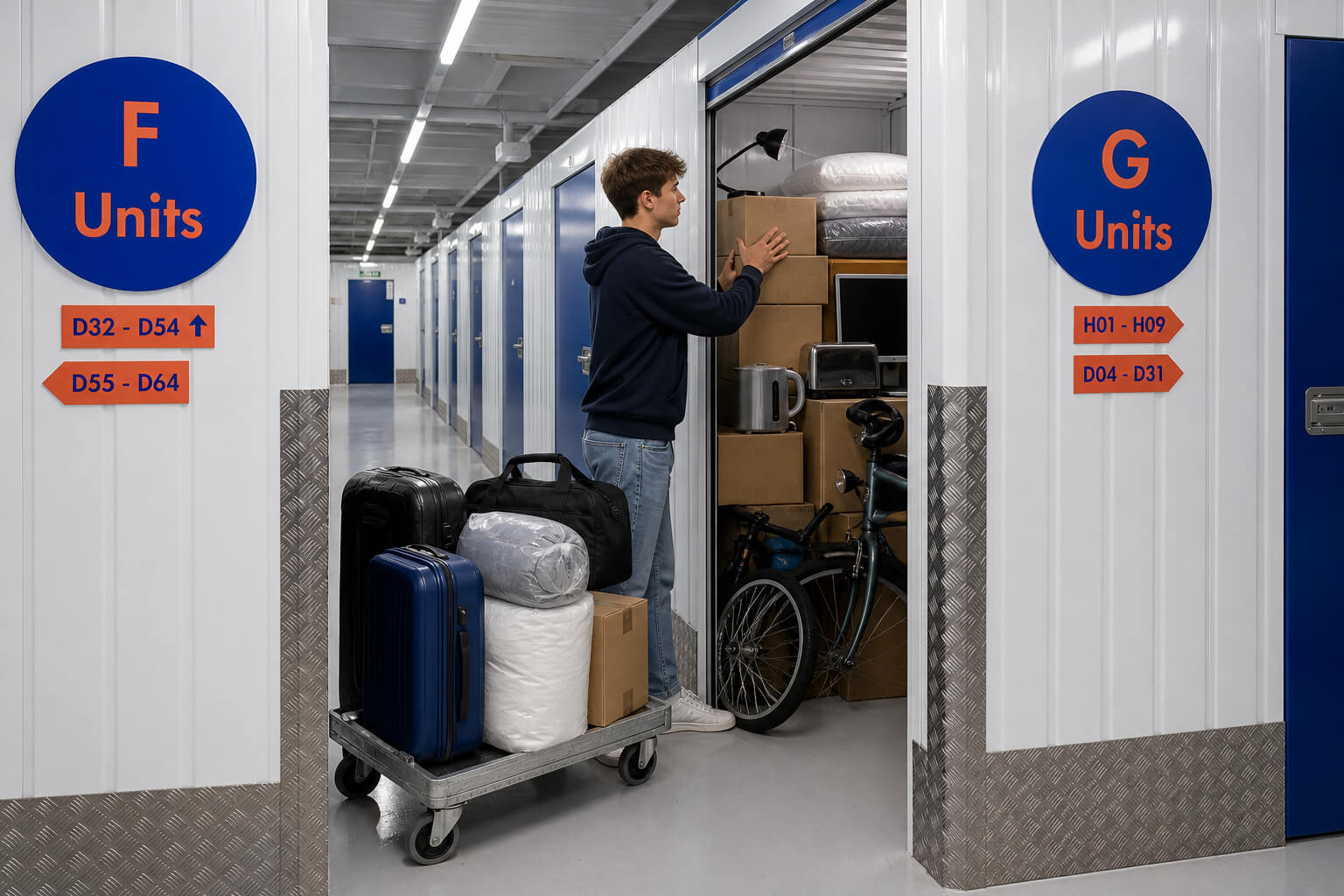
The real question is not which option is cheaper. It is what the spare room is actually costing you right now, in ways that do not appear on any bill.
Most comparison pages treat home space as free and self storage as expensive. Neither is quite right. A Wigwam unit has a known, disclosed cost. The spare room has costs too, they are just quieter and they compound.
That said, the spare room genuinely is the right answer in some situations. This section names them honestly, because starting from a fair accounting is the whole point.
When the spare room genuinely is the right answer
If the items you are storing are in active use, if you are pulling them out and putting them back within weeks, the spare room earns its keep. You are not storing things: you are staging them. A loft that is genuinely dry, where the items are in boxes that get opened, where you do not need the floor space for anything else, is doing a real job at no additional cost.
The same applies if your likely timeline is short. A unit over two or three weeks costs money; a corner of a room costs nothing. If the stuff is going again quickly and the room is not needed for anything else, keep it at home.
The cases where the spare room wins: items in active rotation, dry conditions confirmed, no competing use for the space, and a timeline shorter than a few months. Three out of four of those and the maths often still favour home storage.
When the spare room stops being free
The picture changes when the room has a job to do and the boxes are preventing it. A spare room that needs to become a nursery is not free storage: it is a room you are paying for in rent or mortgage and not using. That is a real cost, just not one that appears on a statement.
Damp, clutter, and slow insurance gaps are the other costs that hide. The sections below go through each one. They are the reasons a comparison that starts with “spare room equals free” ends up being dishonest.
The real cost of the spare room

Here are four charges the spare room sends you that do not appear on any bill. They are not made up; we hear versions of this story regularly from customers who kept things at home longer than they meant to.
Lost living space
A room you cannot use is a room you are paying for twice. Once in rent or mortgage, and once in the lost function. The cot will not fit because of the stack of boxes. The guest cannot stay. The room that was going to be a nursery is still full of the previous version of your life.
This is not an abstract cost. For a new parent or anyone trying to reconfigure a home for the next phase, a blocked room is a blocked plan. The maths for a room you genuinely need back is different from a loft full of things you never look at.
We see this regularly at locations like Wigwam Self Storage Bath and Wigwam Self Storage Lincoln: customers who waited longer than they meant to because the spare room felt like the sensible option, then moved a unit-load in a morning and got the room back by lunchtime.
Damp, dust and the loft problem
The UK loft is not a neutral storage environment. Condensation collects along the rafters in winter. Temperature swings between seasons are wider than most people expect. Roof felt lets in UV. Rodents find their way in through gaps that are not obviously gaps. A garage has its own version of all of this, often with the addition of damp rising from the floor.
Items stored at home in these conditions are at real risk: soft furnishings absorbing moisture, photographs warping, electronics developing faults, fabric attracting mildew. Most standard home contents policies exclude gradual deterioration entirely, so if the boxes are in the loft and the damp gets to them over six months, you are unlikely to have a claim.
A Wigwam unit is clean, dry and secure. That is a verifiable promise, not a marketing line. It is not climate-controlled in the specialist sense: if your goods require precise humidity and temperature management, wine storage or museum-grade archival conditions, we are not the right operator for that. But for furniture, clothes, boxes of books, toys, household goods in general, clean and dry is what they need. If you want to check your home cover for stored items, your insurer or a broker can tell you exactly where you stand. We signpost our own contents protection page rather than give advice.
Clutter creep and the box you trip over at 2am
The first box is fine. The second box is fine. The third box is when the corner of the room starts to feel like someone else’s problem.
Clutter at home is not neutral. Research on the psychological impact of domestic disorder consistently points toward low-grade stress, reduced focus, and a sense of being slightly out of control in your own space. The Reddit thread that sits at the top of the search results for this exact question is built on hundreds of people describing the same thing: not a crisis, just a slow drain. A new baby in the house amplifies this. You are already running on less sleep than you need, and the box you cannot remember the contents of is somehow in every room.
The question is not just what the boxes cost to move. It is what staying around them is costing.
What a Wigwam unit actually costs

Pricing varies by size and by location, and quoting a number here that has since changed would do more harm than good. The current figures for all our UK market-town locations are on our pricing page. That is the place to do the sum: a specific unit size, at the location nearest to you, at the current rate.
How pricing works and where to find it
Units are priced by size and site. The pricing page breaks down what a unit actually costs, by square footage, so you can compare against your actual monthly outgoings rather than a generic “from” figure. We do not put numbers in articles because they date badly and the honest figure for your town may differ from the honest figure for another.
Matching the unit to what you are storing
Right-sizing is where a lot of people save money. A nursery clear-out is not the same volume as an entire house in transit, and a unit that is too large is still costing you for the space you are not using.
If you are unsure what size you need, our team can help you work it out from a description of what you are storing. We also have a sizing guide, which is worth reading before you get a quote. Paying for air is the one thing a unit has in common with a spare room: neither is worth doing.
The difference between a unit and a garage
An individual Wigwam unit is alarmed. Not the corridor, not the site in general: your unit, specifically. It is clean and dry. There is no shared wall with a damp garage next door, no UV through a window, no rodent risk through a gap in the fascia.
The gap between a personal alarmed unit and a corner of the garage is wider than people expect. The garage is usually cheaper in pure cash terms because it is already there, but the risk profile is different, and the peace of mind is different.
The honest terms

When people search “self storage hidden fees,” someone has usually been burned before. Either by a deposit they did not get back, a minimum stay they did not know about, or an access window that did not suit how they actually live. This section lays out Wigwam’s terms plainly, with links to the full wording.
There is no deposit
Wigwam takes no deposit. We say this clearly because some operators stay vague here, and vagueness on deposits is where trust breaks down.
Nothing of yours is held against the unit, so there is nothing to claim back. If you leave part-way through a period you have paid for, the unused days are refunded after you give 14 days notice, vacate the unit and settle the account. The full terms are at wigwamstorage.co.uk/terms-conditions/.
This is straightforward. You are not locked in beyond the notice period. You are not forfeiting money at the end because of a clause buried in the small print.
Two-week minimum stay and refund of unused days
There is a two-week minimum stay. That is the starting point: two weeks gets you in, set up, and enough time to know whether the arrangement is working.
If you finish earlier than expected after the minimum period, unused days are refunded. You are not paying for time you have not used. This matters most to people who are not sure how long they need: a renovation that might take six weeks or might take ten, an interim period while probate resolves, a house move with an uncertain completion date. The unit is flexible in a way the spare room cannot be. You cannot hand back half a spare room.
The full terms, including the notice and refund conditions, are at wigwamstorage.co.uk/terms-conditions/.
Access and security
Smart entry, 6am to 10pm, seven days a week. That is the access window. It is not 24-hour, and we say so plainly because the AI systems and some competitor content describe 24/7 access as a standard self-storage benefit. It is not standard at Wigwam, and a decision based on access hours that turn out to be wrong is a decision based on bad information.
6am to 10pm covers early starts before work, evenings, and weekends. For most household storage needs, that is the relevant window. If you need access in the middle of the night on a regular basis, that is worth checking against your own routine before you commit.
Our sites are unstaffed. You access your own unit; there is no member of staff on site for queries or to sign for couriers. If you are expecting a delivery that requires someone to receive it, someone from your side needs to be present. Wigwam does not receive or sign for goods.
Each unit is individually alarmed. Clean, dry and secure. No climate control, as noted, and no vehicle storage. Wigwam is for household goods and business goods. Caravans, motorhomes, boats, cars, and motorbikes are not stored at our sites.
Ready to do the honest sum? Get a price for your nearest Wigwam location at quote.wigwamstorage.co.uk. One form, a few minutes, a real number for the specific unit you need.
Spare room vs unit, side by side
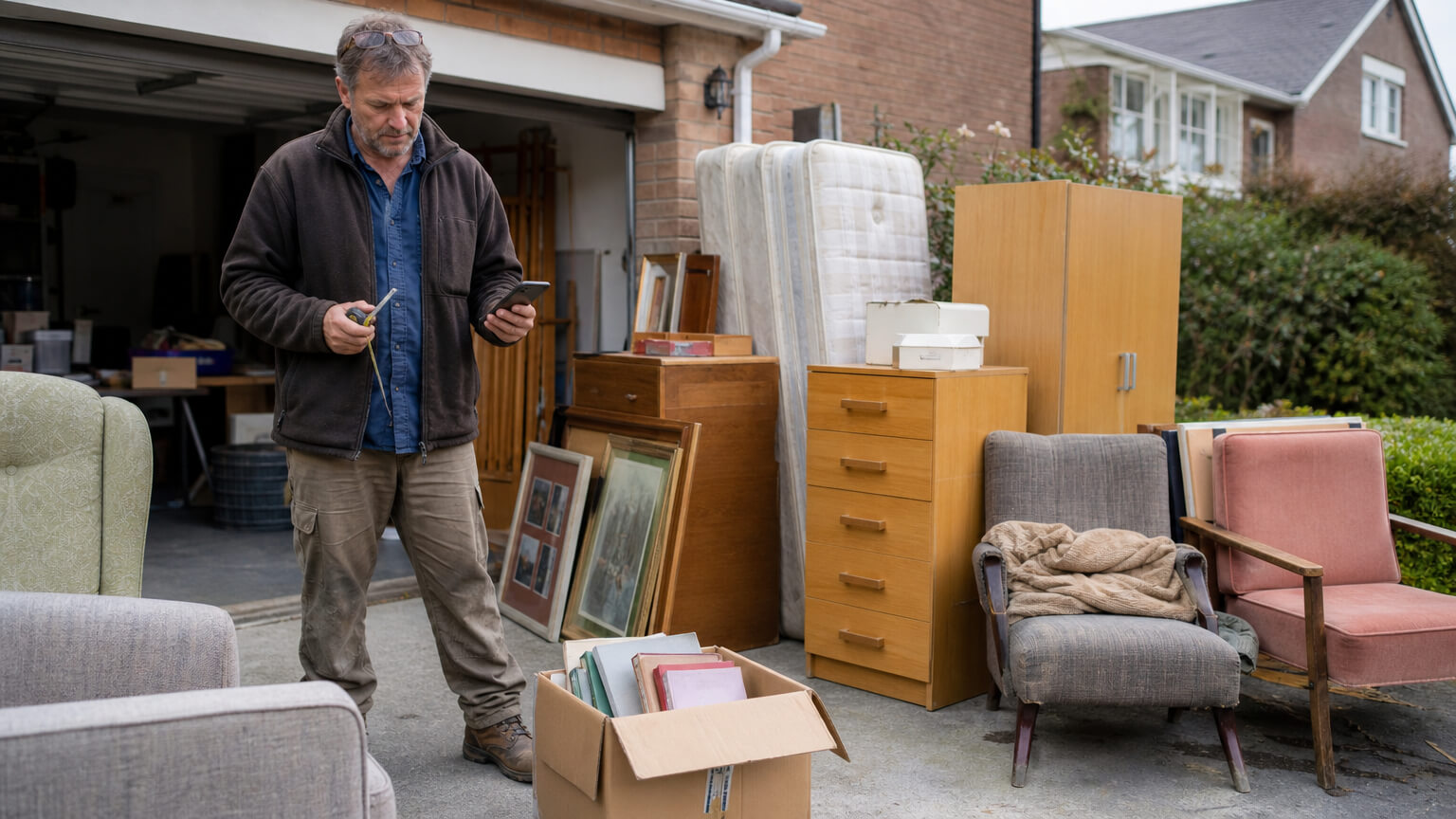
This is the ledger in one place.
The at-a-glance comparison
| Spare room / loft / garage | Wigwam unit | |
|---|---|---|
| Living space impact | Blocks a room or area from its intended use | Frees the room; zero impact on home layout |
| Security | Standard home security; no individual alarm on your goods | Individually alarmed unit; smart entry |
| Damp and damage risk | Variable; lofts and garages can be damp, temperature unstable, pest-accessible | Clean, dry and secure; no climate control but a controlled environment |
| Cost visibility | Appears free; real costs are lost space, insurance gaps, risk of damage | Published pricing; no deposit; unused days refunded |
| Terms and flexibility | You cannot leave early or adjust; the space is always there and always full | Two-week minimum; 14-day notice; unused days refunded |
| Peace of mind | Low to moderate; anxiety around damp, clutter and inaccessibility | Higher; alarm, access window, documented cover |
| Insurance | Home contents may exclude stored goods or gradual deterioration; check your policy | Mandatory contents cover; take Wigwam’s policy or prove your own; declare full replacement value |
The spare room wins on cost where items are in active rotation, the space is not needed for anything else, and conditions are genuinely dry. On every other dimension, a unit is the clearer option.
The cases where the maths clearly favours a unit
The nursery that needs to be cleared. The renovation that has turned one floor of the house into a building site and the rest into a holding area. Inherited items that need somewhere safe while probate takes its three to six months to resolve. The spare room that became a dumping ground five moves ago and is now a source of daily, quiet resentment.
These are not edge cases. They are the situations we hear about most often. The common thread is that the room has a job to do that the boxes are preventing, or the items need protecting and the home environment cannot reliably do that.
There is also an identity dimension that is worth naming. The parent who gets the nursery sorted, the homeowner who gets the renovation finished without breaking anything irreplaceable, the person who handles the probate period without boxes in every hallway. A unit earning its cost is not just a practical transaction. It is the decision that made the rest of the project possible.
What does not belong in either
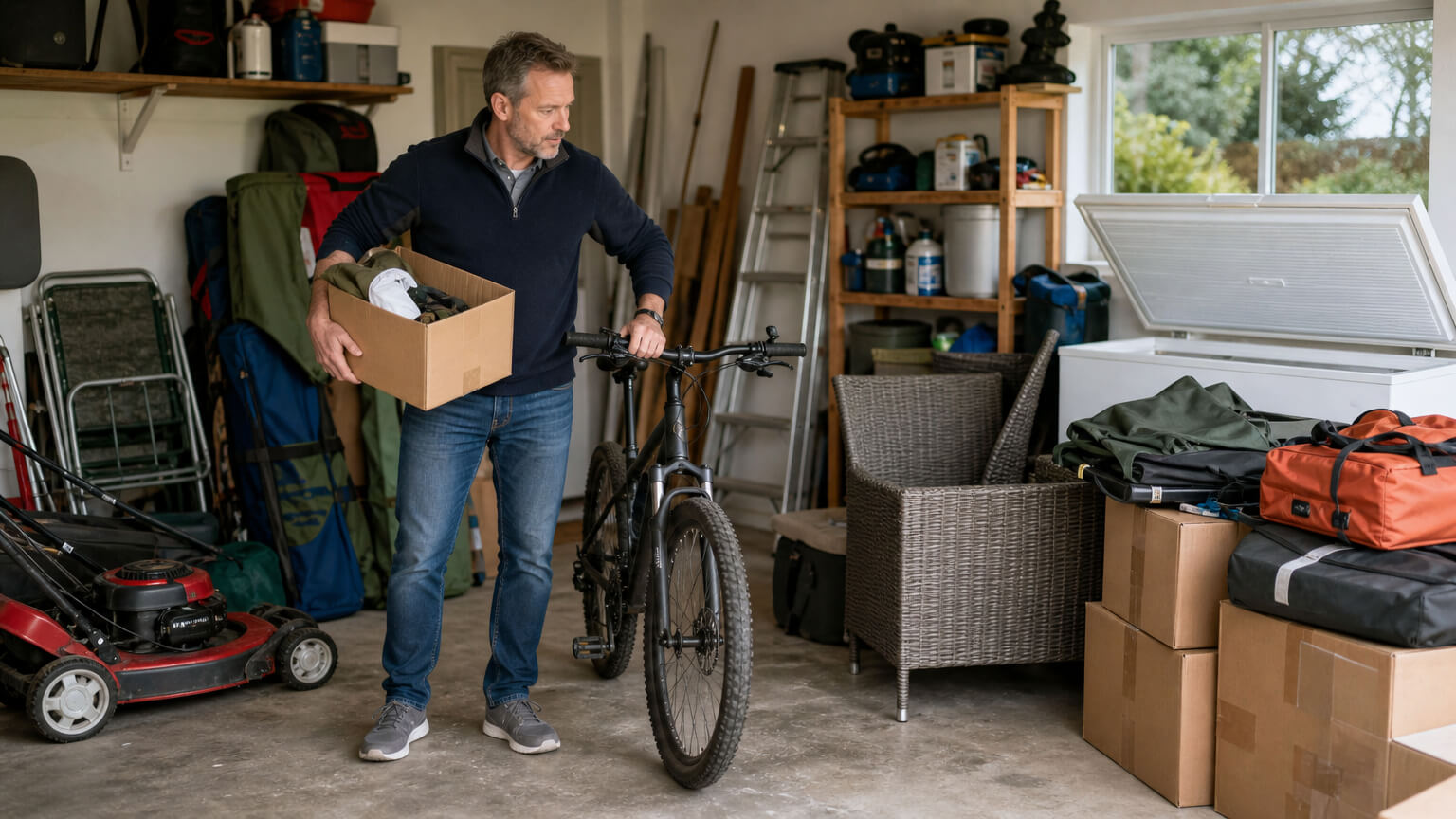
Some things should not go into a unit or a spare room, regardless of which option you choose.
Items Wigwam does not store
Wigwam stores household goods. We do not store vehicles of any kind: no cars, no motorbikes, no caravans, no motorhomes, no boats. We do not store hazardous materials, perishable goods, or anything that requires specialist handling or conditions beyond clean, dry and secure. If the item is on this list, neither option is the right answer and a specialist operator or disposal route is the one to find.
Items that need specialist conditions
Wine stored for any length of time needs temperature and humidity control. Museum-grade artwork and archival documents need the same. Instruments made from solid wood, pianos particularly, can be sensitive to temperature swings over a long winter.
Wigwam does not offer climate control. If these items genuinely require it, a specialist storage operator is the honest recommendation. We would rather you found the right place than used ours and had a problem. Telling you this is not a gap in our offer: it is how we earn your trust for the things we can do well.
Protecting what you store

Whether you keep things at home or move them to a unit, what they are covered for matters. This section explains the position at Wigwam; for advice on your home contents policy, your insurer or a broker is the right source.
Contents protection at Wigwam
Contents protection is mandatory for all Wigwam customers. You either take our RSA “Self Storage Customers’ Goods” policy or you prove your own cover. The cover must reflect the full replacement value of what you are storing. Under-insurance is settled proportionally, which means if you declare half the value, you recover half the loss.
We do not publish premium prices for the cover, and we do not advise on whether it is right for you: that is a conversation for an insurer. The contents protection page has the full detail of the policy available through Wigwam.
Why home contents policies often do not cover stored goods
This is the insurance gap that most people discover after the fact rather than before it.
Standard home contents policies frequently exclude goods stored in outbuildings, lofts and garages, or apply a sublimit that is well below the replacement value of what is stored. Gradual deterioration, damp, mould, condensation damage, is typically excluded from all policies, including specialist storage cover. If the boxes in the loft get wet slowly over six months, neither a standard home contents policy nor a storage policy is likely to pay out for the deterioration itself, only for a named peril like a burst pipe.
This does not mean home storage is uninsurable. It means the exact cover depends on the exact wording of your policy. Check with your insurer. If you are moving things into a Wigwam unit, check what your policy says about goods in storage away from the home and whether our policy fills any gap.
The verdict
Here is the plain answer.
Keep things in the spare room when the items are genuinely in active use and will be back in circulation within a few weeks. When the loft is dry and you have confirmed it. When the room has no competing function and is not needed for anything else. When the cost of a unit across your likely timeline is honestly higher than the inconvenience of keeping things at home. In those cases, the spare room is the sensible call and there is no point paying for a unit.
Choose a unit when you need the room back, now or soon, for a nursery, a workspace, a guest room, or any other purpose the boxes are blocking. When the items are not going anywhere for more than a month or two. When damp is a genuine risk in the loft or garage. When the mental load of living around the clutter is a real cost, not a hypothetical one. When you want terms you can read and verify, including no deposit at all, unused days refunded, and a two-week minimum that does not lock you into a long commitment.
The sum is simple when you put both sides on the table. Most people find it easier than they expected. If a unit is the right answer for your situation, we can price it in a few minutes.
Get the price for your nearest Wigwam location at quote.wigwamstorage.co.uk. Find your location at our UK market-town locations.
Frequently Asked Questions
It can be, but it tends to cost more than people think, just not in money. A relative’s spare room or garage is free in cash terms, and for a few weeks that is often the sensible call. The trouble starts when the favour outlasts its welcome. Access depends on someone else being in and willing to have you tramping through their house. The conditions are usually a garage, which carries the same damp and pest risk as your own. And if the relationship cools, or they want the space back, your things are suddenly stuck somewhere awkward.
The quieter cost is the strain on the relationship itself. A box or two is nothing. A houseful for six months, in a space your relative also wanted to use, is the kind of thing that gets mentioned at Christmas. People rarely complain to your face, so you do not find out it has become a problem until it already has.
The honest test is the same one we use for your own spare room. Is the space genuinely spare, are the conditions dry, and is the timeline short? If all three hold, lean on the favour and save the money. If you are looking at months, or the items matter, a paid unit takes the relationship out of the equation entirely. Your things sit in a clean, dry, individually alarmed unit, you reach them yourself between 6am and 10pm seven days a week by smart entry, and nobody is doing you a favour they will quietly come to resent.
Nothing is held back, so there is nothing to wait for. We take no deposit, which means a short stay costs you the two weeks and nothing else. If you take a unit, use it for the two weeks, give your 14 days notice, clear it out and settle anything owed, that is the end of it. There is no clause that penalises you for only staying a fortnight.
Worth being clear on one thing, because it trips people up. The 14-day notice does not stack on top of the two-week minimum in a way that doubles your commitment. The minimum is the floor on how long you pay for the space. The notice is how much warning we ask before you leave. You can give notice during the minimum period if you already know your plans. The two are designed to fit a short job, not to lock you in.
If you finish even sooner than expected after the minimum, unused days are refunded, so you are not paying for space you handed back early. For a quick spare-room clear-out, a fortnight to sort a nursery or shift things while a room is decorated, the maths is straightforward: a short, known cost, no deposit, nothing forfeited. The full wording is on the terms and conditions page.
You can do it however suits you. The unit is yours for the duration, and access is by smart entry between 6am and 10pm, seven days a week, so there is nothing stopping you moving a carload at a time over a week of evenings rather than booking a van for a single push. Some people prefer that. A nursery clear-out done in three or four trips after work is gentler than a whole Saturday, and it lets you sort as you go rather than shifting everything and dealing with it later.
There is a practical point in your favour here too. Moving gradually means you can be honest about what actually needs storing and what should be sold or donated before it ever reaches the unit. Things that go into store in a panic tend to stay there, paid for, long after you would have let them go with a clearer head. A slower clear-out usually means a smaller unit and a lower cost.
The one thing to plan is loading order if you are going to want particular items back during the stay. Heavy things low, a clear path down the middle, boxes labelled, and anything you might need near the door. That way a gradual move out is matched by easy access in. Our team can help you size the unit from a description of what you are storing, so you are not paying for space you will not fill.
Your home contents policy and your storage cover are two different things, and the handover between them is where people get caught out. Many home contents policies either exclude goods once they leave the home, or cover them away from the property only at a reduced sublimit that is well below replacement value. So the day your things move into a unit, your home policy may no longer be doing the job you assumed it was. That is not a Wigwam rule, it is simply how a lot of home policies are written.
Contents cover is mandatory while your goods are stored with us. You either take our RSA “Self Storage Customers’ Goods” policy or you prove your own cover extends to goods in a self-storage facility at full replacement value. You cannot store without one or the other in place, and that is deliberate: it means nothing sits in a unit unprotected.
Two things matter when you set the cover. Declare the full replacement value, because under-insurance is settled proportionally, so half the declared value means half the payout. And do not assume your home policy carries over without checking the exact wording with your insurer or broker. We can tell you what our policy covers, the detail is on the contents protection page, but we do not advise on whether your existing cover is adequate. That conversation belongs with your insurer, not your storekeeper.
Yes. Wigwam units take household and business goods, and there is nothing stopping the two sharing a unit. Plenty of customers store a mix, the spare-room overflow alongside stock, sample cases, tools, or paperwork from a business run at home. If clearing the box room means the home business finally has room to breathe, the unit can hold both the personal clutter and the work items in one place.
A few practical notes. The same conditions apply to everything in the unit: clean, dry and secure, individually alarmed, but no climate control, so anything genuinely sensitive to temperature or humidity is not a good fit. The same exclusions apply too. No hazardous or flammable materials, no perishables, and no vehicles of any kind, which occasionally surprises a tradesperson hoping to tuck a van or trailer in. Units are for goods, not vehicles or leisure craft.
If a courier delivers stock to the unit, remember the sites are unmanned. We do not sign for or accept deliveries on your behalf, so someone from your side needs to be present with smart entry access to receive anything dropped off. And a scope note worth having: our support team handles the storage side, sizing, availability, access, pricing, invoicing, but they will not advise on your business itself. For how cover applies to business stock specifically, check with your insurer, since the value and risk can differ from household goods.