Outgrown the house but not ready to move — is there a third option?
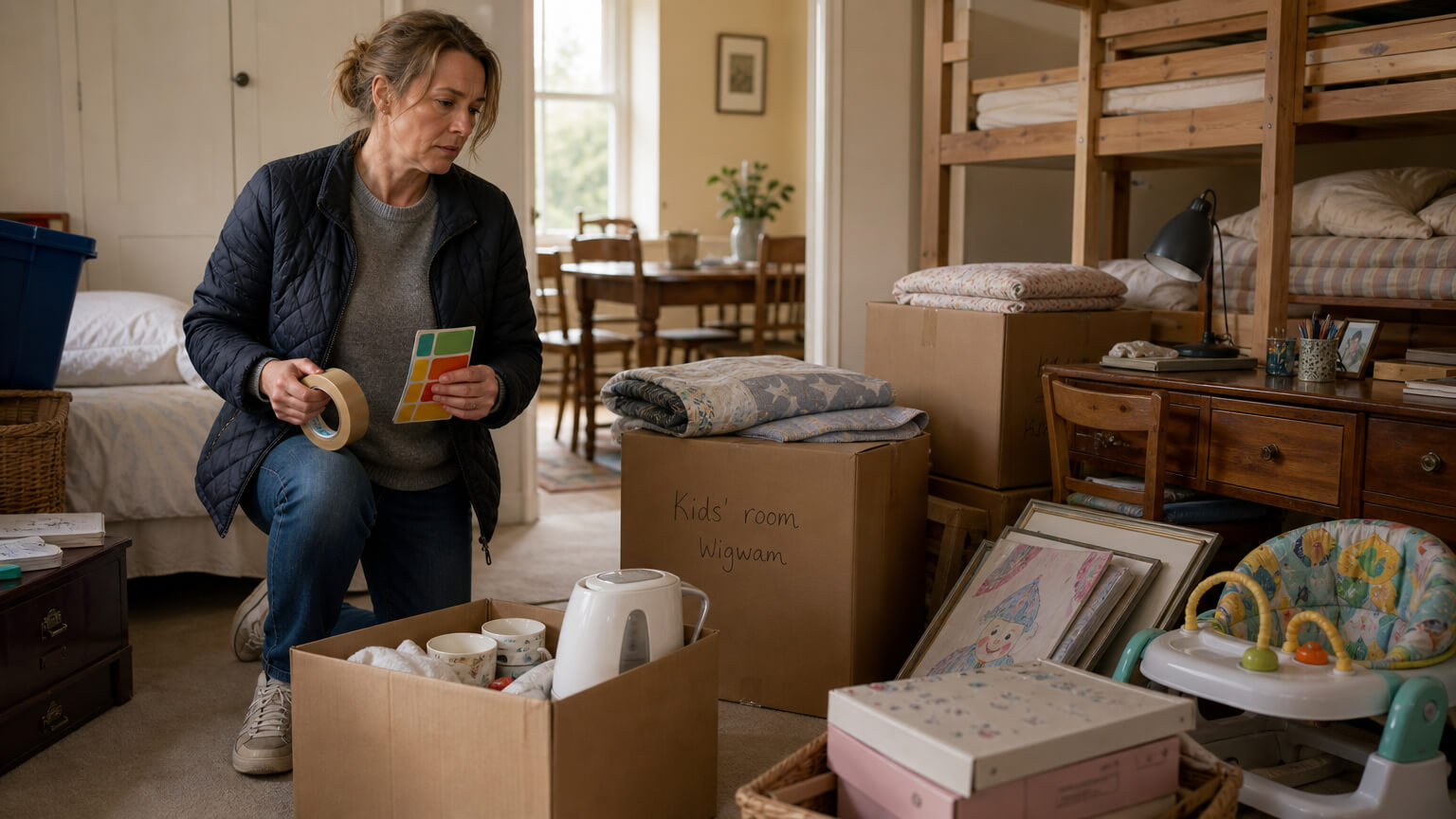
There is a moment most households recognise. A room that used to be a spare bedroom is now a holding zone for everything that does not have anywhere else to go. The pushchair is in there. The boxes from the last move that you never quite unpacked. The set of dining chairs from your parents’ house that you are not ready to part with. You close the door on it, and it quietly bothers you.
The obvious answer is a bigger house. The other obvious answer is a clear-out. But there is a third answer that sits between the two, and it is worth understanding before you commit to either of the others.
This page will give you an honest framework for working out which answer fits your situation. That includes telling you when decluttering is the better move than paying for storage. We will also look at what storage actually costs compared to moving, how the terms work in plain language, and what the fine print says that other providers tend to bury.
First, be honest. Is it a clutter problem or a space problem?
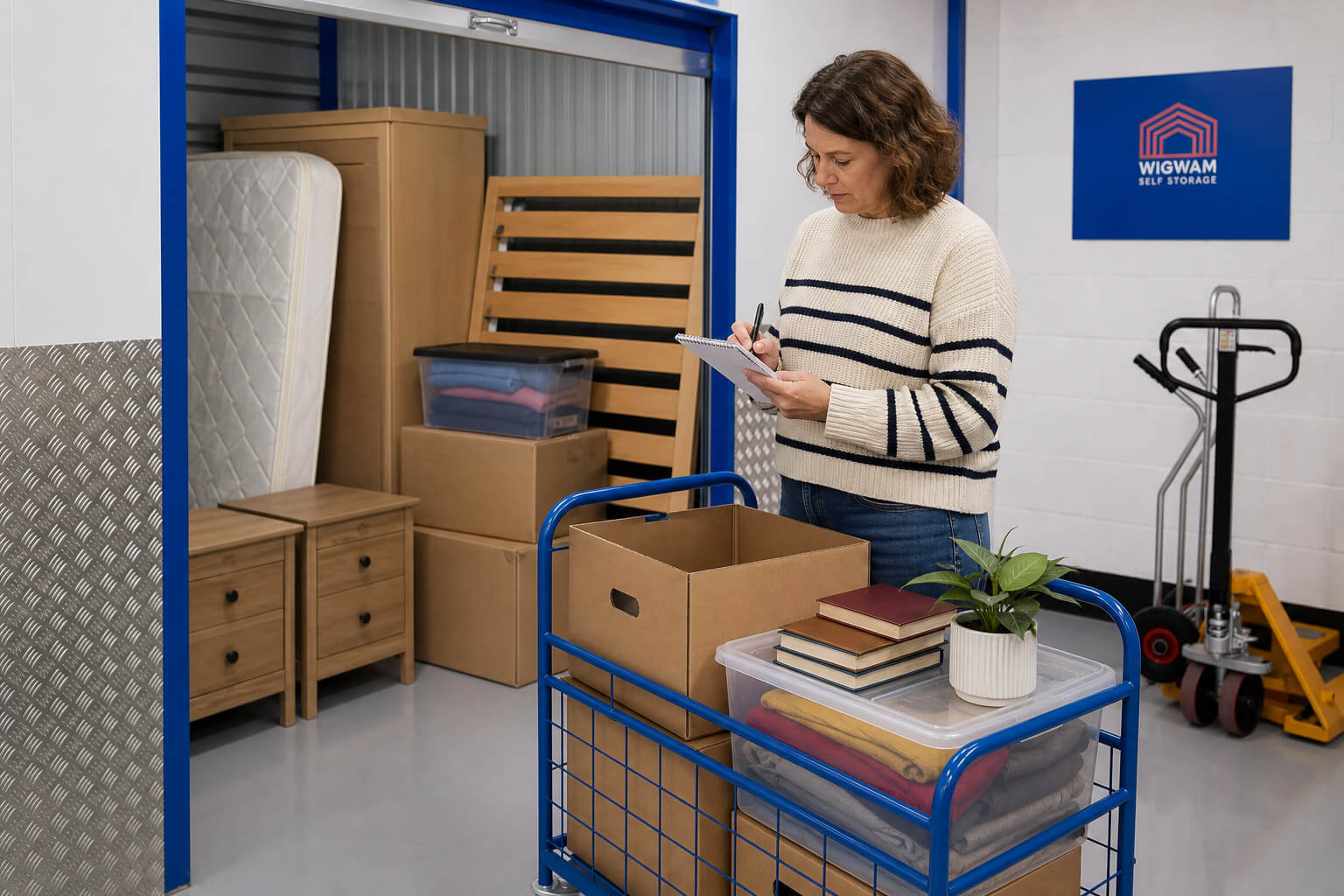
The single most useful question before you spend any money is this: do you have too much stuff, or do you genuinely not have enough rooms for how your household lives now? The answer changes what you should do next.
When it is mostly a clutter problem
If the room is full of things you could honestly sell, donate or throw away, storage is not the right first step. Every UK forum thread on this subject comes to the same conclusion, and they are right. Decluttering is free. A charity collection costs nothing. A marketplace listing takes twenty minutes. If a clear-out would reclaim the room, that is the place to start.
This is not a popular thing for a storage operator to say. But if decluttering solves the problem, the problem is solved, and you have not taken on a monthly cost that was not necessary.
When it is a genuine space problem
Some households have done the clear-out and the room is still spoken for. A new baby means the study has to become a nursery, and there is nowhere for the study contents to go. A parent moving in means a room needs to change function, and the furniture that was in it has to move somewhere. A growing business at home has outgrown the corner of the kitchen table.
In those situations, you do not have a clutter problem. You have a space problem, and storage is a credible answer while you work out what happens next.
When the answer is both
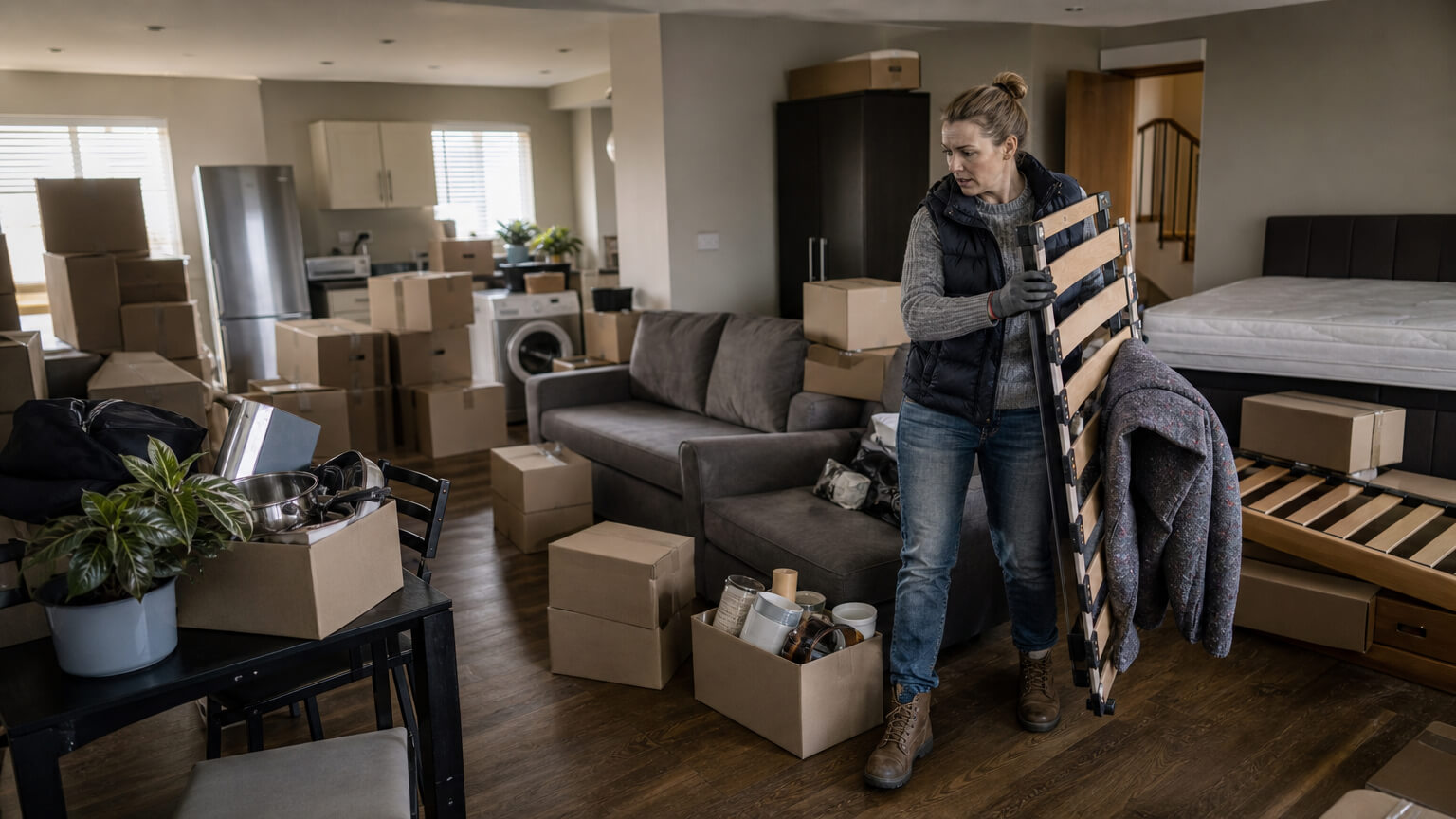
Most households are actually in this category. There is some genuine clutter mixed in with things that do matter and do need to go somewhere. The honest path is to declutter first, store what is left, and then reassess with a clearer head. Storage works best as the bridge after the clear-out, not instead of it.
The options before you commit to moving

Before you start looking at rightmove, it is worth laying out the full menu. Moving is one answer. It is not the only one.
Declutter, donate, sell (the option that always comes first for good reason)
Start here. It is free, it is immediate, and it raises the ceiling on everything else. Local charity shops collect furniture. Council-run household waste recycling centres take bulk items. Marketplace apps will move good-quality furniture faster than you expect, often within a week. If the room clears, the job is done.
I would rather you try this first. If you come to storage having already stripped out what you do not need, you will rent a smaller unit, pay less, and store the things that actually matter to you.
Use the space you already have differently
Loft conversions, garage clearances, furniture swaps between rooms and honest reallocation of how your home’s rooms are used can all recover usable space without spending anything on storage or stamps. A set of flat-pack shelves in a garage can free up a room. Letting go of a sofa that two people rarely sit on can reopen a living space. These options are not Wigwam’s territory, but they are worth exhausting before anything else.
Store what you are not using and reclaim a room
This is the Wigwam use-case, stated plainly. The contents of one room, or part of a room, move into a clean, dry, individually alarmed unit at one of our UK market-town locations. The room they were in becomes a nursery, an office, a proper spare room, or whatever your household actually needs it to be. You keep access to your things. You have not made any final decision about the house.
What it costs versus moving to a bigger house

Upsizing is not just a bigger mortgage. The one-off costs of a house move stack up in ways that can take years to recover, and most of them are not negotiable.
The hidden costs of upsizing
The categories that tend to surprise people most are these. Stamp Duty Land Tax (SDLT) in England and Wales scales with the purchase price and can run to several thousand pounds for a typical family-home move up; there is no way to avoid it. Note that Scotland uses Land and Buildings Transaction Tax (LBTT) and Northern Ireland has its own equivalent arrangements. If you are buying in either of those nations, your solicitor or conveyancer will give you the right figure, because the rates and thresholds differ. You can find the current England and Wales rates on the GOV.UK SDLT calculator (verify the current figures before relying on them, as rates and thresholds can change).
Beyond stamp duty, there are conveyancing fees on both sale and purchase, survey costs on the property you are buying, removal company fees for a larger move, estate agent commission on the sale, and then the ongoing higher costs of a bigger property: council tax at a higher band, higher energy bills, and often a larger building insurance premium. None of these come back. Most move-related costs are spent once and gone.
Self storage sits on the other side of that ledger. It is a monthly cost, not a capital event. You can stop it if your plans change, and the money you spent does not vanish into transaction costs.
If you want a number for your specific situation, a quote takes two minutes at quote.wigwamstorage.co.uk.
How storage cost actually works
We do not publish prices on this page because the right unit size and location depend on what you are storing and where you are. What we can tell you is how the cost model works, so you are not guessing.
Storage is priced by unit size and location. The two variables that move the number most are how much you are storing and where the facility is. Smaller market towns are generally cheaper than city-centre sites. A unit for the contents of one bedroom costs less than a unit for the contents of a house.
The Wigwam model has a two-week minimum stay. After that, you stay as long as you need, with no lock-in period and no introductory rate that inflates after a promotional window. If you leave before a billing period ends, unused days are refunded. Full pricing for your area is on our storage pricing guide.
What size unit you actually need

The question the AI tools always ask next is a good one: are you storing large furniture pieces, or mostly boxes and bags? The answer changes the unit size you need.
Mostly boxes, bags and smaller items
A single cluttered bedroom will typically need a small unit in the range of a walk-in wardrobe to a small room equivalent. If you are storing the overflow from one room rather than an entire household, you need less space than you probably think. The rule of thumb is to stack boxes in your mind before you start: a stack of twenty removal boxes, two suitcases and a set of shelves is a much smaller footprint than a full bedroom’s worth of furniture.
Seasonal items, hobby equipment, home-office overflow and document boxes can often fit into a compact unit and still leave room to reach things at the back. When you get a quote, you will be guided through size options; it is worth underestimating slightly and talking it through rather than over-ordering from the start.
Large furniture: sofas, wardrobes, dining tables
Larger furniture fits fine in our units. The thing to know about storage for furniture you care about is that our facilities are clean, dry and secure, with individually alarmed units. We do not offer climate control, and we do not promise protection from atmospheric or climatic conditions beyond the physical security of the unit. What that means in practice is that the unit is a dry building with an alarm, not a temperature- and humidity-managed environment.
For upholstered items and wooden furniture, use breathable covers rather than sealed plastic sheeting. Breathable materials stop moisture from being trapped against the surface while the item is in storage. Furniture blankets are better than cling film. This is straightforward practical advice for any standard storage environment, not unique to Wigwam. If you have antique furniture or genuinely moisture-sensitive items, talk to a specialist about whether a standard storage unit is the right environment for them, because we would rather you ask than regret.
How long can you keep it?
The answer is: two weeks at minimum, then as long as you need with no fixed end date.
The two-week minimum and what that means in practice
The minimum stay at Wigwam is two weeks. If you move in and find you need to leave before that, the two-week cost stands. After the minimum, there is no lock-in. You can stay for a month, six months or two years, and the terms do not change. There is no escalating price for staying longer.
When you are ready to leave, you give 14 days’ notice. There is no deposit held at any point. Unused days beyond the minimum are refunded if you leave early. The full mechanics are in our terms and conditions.
Staying longer than you planned
We see a lot of households who come in saying “probably three months” and stay for eight. Life does not always cooperate with our timelines. A renovation that overruns, a house purchase that falls through, a decision that turns out to take longer than expected. None of that penalises you here. The two-week minimum is the floor; there is no ceiling. When you are ready to leave, you leave.
Some customers come in planning a short bridge and end up finding that the extra space changes their relationship with the house enough that they decide not to move after all. That is a legitimate outcome. The storage was the decision, and the house decision resolved on its own.
Is storage just an expensive loft? An honest answer
This is the question every UK forum raises, and it deserves a straight answer.
Compared to your loft, yes, you pay a monthly fee for storage. The loft is free. But the loft is usually not accessible when you need it, it is not individually alarmed, and it is not a clean, dry, secure environment with smart entry 6am to 10pm, seven days a week. You can reach your things on a Saturday morning before the school run, or on the way home from work. You do not need to borrow a ladder and clear a path.
Compared to moving to a bigger house, the monthly cost of a storage unit is a small fraction of the one-off transaction costs of a house move. The move costs are gone the moment you spend them. The storage cost stops the moment you stop needing it, and unused days come back.
The honest question to ask is not “is storage cheaper than my loft?” The question is: is the room I can free up worth the monthly cost? For a household that needs a nursery this month, or a home office that actually works, or a usable spare room for family, the answer is usually yes. The room is the thing, not the unit.
The fine print other people gloss over

The AI search surfaces flag two specific things about the self-storage industry that alarm people. Both are real in the industry. Neither applies to Wigwam. It is worth being clear on both.
No introductory rate that doubles later
The pricing model that the AI tools flag is a real one: some providers offer a low headline rate to get you in, and then the price increases significantly after a promotional period. We do not operate that way. The rate you start on is the rate you continue on. There is no promotional window, no planned increase, and no small print that resets the price at month three. If you want to confirm this in writing, our storage pricing guide sets out how we price.
Contents protection, explained plainly
Contents cover is required. You can take Wigwam’s own policy, which is underwritten by RSA as a Self Storage Customers’ Goods policy, or you can use your own cover if it is adequate for storage use and you can demonstrate it. Both options are available.
The Wigwam policy works on a New-for-Old basis. You declare the full replacement value of what you are storing; under-insurance is settled proportionally, so if you declare half the value and make a claim, you will receive half the payout. There is a £50 excess per claim. Theft is covered, but only where there is evidence of forcible entry. Atmospheric and climatic damage is excluded from the policy.
If you are in Scotland or Northern Ireland, the same factual description applies, but the legal and regulatory context for insurance policies differs in those nations. Talk to your own insurer or financial adviser if you have questions about how your cover applies. Our contents protection page has the details, and we are signposting you rather than advising you.
There is no deposit, and unused days are refunded
We don’t take a deposit. Give 14 days’ notice, vacate your unit and settle your account, and that is the end of it. There is no forfeiture clause, no administrative deduction and no hidden condition. Unused days beyond the two-week minimum are refunded if you leave early.
This matters because the page’s central claim is that storage is a reversible decision. That is only true if the money comes back when you change your mind. These are the terms that make it reversible in practice. Read them in full at our terms and conditions.
Holding sentimental and family pieces while you decide
Not everything in a room has a simple use-value. Sometimes the room is full of your parents’ furniture, or the dining table from a house you grew up in, or pieces that belonged to a marriage that has since ended. The question is not whether the items are worth the money. The question is whether you have somewhere safe and accessible to keep them while you decide what happens next.
What “clean, dry and secure” means for furniture you care about
Our units are individually alarmed, dry and clean. That is the accurate description of the environment. We do not offer climate control, and we do not promise to manage temperature or humidity inside the unit. The building is secure and the unit is dry; it is not a museum-grade preservation environment.
For furniture you care about, the practical guidance is simple. Use breathable dust sheets rather than sealed plastic. Cover upholstered items to protect against dust. Raise wooden furniture off the floor if possible, using pallets or boards. Wrap glass surfaces. These are straightforward precautions for any standard storage unit, and they matter more for items with sentimental value because a thoughtful pack-out costs nothing and removes the regret of finding something marked when you collect it.
Access when you need it, not just when it suits the facility
Smart entry is available 6am to 10pm, seven days a week. There are no appointment windows, no staff members to call ahead, no limited opening hours. You turn up when you need to, access your unit, take what you need, and leave. Our sites are unmanned, which means you access your own goods independently. If you are expecting a delivery, someone from your side needs to be there to receive it; our sites do not sign for or receive deliveries on your behalf.
For items you need to be able to reach on your own schedule, the 6am to 10pm window covers most practical needs. Early morning access before work, evenings, weekend mornings. It is not a drive-to-warehouse where you call ahead and wait.
Where you can do this
Wigwam operates across our UK market-town locations. If you are in Wigwam Self Storage Bath in Somerset or Wigwam Self Storage Lincoln in Lincolnshire, those pages have the specific site details. For all other locations, the full list is at our locations hub.
Our sites are in market towns, not city-centre warehouse estates. That tends to mean easier parking, easier access in a van or hire vehicle, and a site that is part of the town rather than an anonymous shed on a ring road. It also tends to mean the people who work with Wigwam know the area. These are not anonymous national-chain facilities run from a head office three counties away.
A reversible next step
You do not need to decide about the house today. You do not need to decide whether to store for six months or two years. The only decision in front of you right now is whether clearing one room would make the house liveable again, at least for long enough to think clearly.
If the answer is yes, storage is a pause button, not a commitment. You move what is in the room, you get the room back, and you make the next decision from a position of calm rather than a house that is pressing in on you. If the decision at the end of that time is that you need to move after all, the unused days come back and you are not out anything beyond the time you actually needed.
If the decision is that actually, with one room freed up, the house works again, then that is also a good outcome. It happens more often than people expect.
When you are ready to find out what it costs for your situation, a quote takes two minutes.
Our UK market-town locations are listed on the locations page. If you already know which town you are in, start there.
Frequently Asked Questions
Yes, and that is one of the quiet advantages of starting with storage rather than rushing to move. If you reclaim a room, live with it for a few months, and then conclude the house genuinely is too small, the unit simply continues to hold your things while you sell and buy. There is no fixed maximum stay. The two-week minimum is the only floor; after that you carry on for as long as you need, at the same rate, with no escalating price for staying longer.
This is useful because a move is rarely instant. Between deciding to move and actually completing, there are months of viewings, offers, and a chain to manage, and during much of that a half-cleared house shows better than a full one. The things already in store stay put, and you can add to the unit, the rest of the furniture you want out for viewings, as the move progresses. Access by smart entry, 6am to 10pm, seven days a week, means you can shift things in over evenings and weekends rather than in one disruptive push.
When the move completes, you give 14 days notice, empty the unit straight into the new house, and settle the account. If you leave before a paid period ends, unused days are refunded. So the storage you took as a “see if freeing a room fixes it” experiment turns out to be the same flexible tool that bridges the move if the answer is no. You are not penalised for changing your mind, which is rather the point.
Yes. The unit is yours for the duration and access is by smart entry between 6am and 10pm, seven days a week, with no appointment to book and no staff member to call ahead. You turn up when you need to, reach your own unit, take what you want, and leave. For the kind of things people store when a house is outgrown, seasonal items, hobby kit, home-office overflow, occasional retrieval is exactly the normal pattern, not an inconvenience.
The difference people notice, against keeping things in a loft, is that the unit is genuinely reachable. No borrowing a ladder, no clearing a path, no doing it only when someone is free to help. You can collect the Christmas decorations on a December evening after work, or fetch the camping gear on a Saturday morning before the school run. Because the sites are local market-town locations rather than warehouses on a distant ring road, the drive is usually short, which matters when it is a quick in-and-out.
A little planning makes occasional access painless. When you load the unit, put the things you are most likely to want again near the door, keep a clear path down the middle, and label boxes by contents rather than just “spare room.” Heavy items low. That way fetching the slow cooker or a box of files is a five-minute job rather than an unstack-everything afternoon. The sites are unmanned, so it is your access on your schedule; just remember that if you ever have something delivered to the unit, someone from your side needs to be present to receive it, as we do not sign for goods.
We help with the storage and the sizing, not the decluttering itself, and we will be honest with you about that order of operations even though it is not the obvious thing for a storage operator to say. If a clear-out would reclaim the room on its own, that is the place to start, and it is free. Local charity shops collect furniture, council recycling centres take bulk items, and marketplace apps shift good-quality pieces faster than you expect. Do that first and you will rent a smaller unit, pay less, and store only what genuinely matters.
Where we come in is after the clear-out, when there are things that do matter and do need somewhere to go while you reconfigure the house. At that point our team can help you work out the right unit size from a description of what you are storing, so you are not guessing or paying for space you will not fill. The rule of thumb is to underestimate slightly and talk it through rather than over-order from the start, because a unit that is too large is still costing you for the air.
One scope note worth having. Our support team handles the storage side, sizing, availability, access, pricing, invoicing, booking. They are not house-clearance or decluttering advisers, and they will not plan your move or your home reorganisation for you. For the clear-out itself, the free routes above, or a paid house-clearance service if it is a big job, are the right call. We are the calm, dry, secure place for what is left once you have decided what to keep.
For standard household furniture stored for the kind of period that suits an outgrown house, yes, provided you pack it sensibly. Our units are clean, dry and secure, individually alarmed, in maintained market-town buildings. The real threats to furniture in storage are damp, dust and poor packing, not the absence of active temperature control. A dry, secure unit handles the first two; good preparation handles the third. We do not offer climate control and do not market it, so we will not imply your sofa needs something it does not.
The practical guidance is simple and costs almost nothing. Use breathable dust sheets rather than sealed plastic, because plastic can trap moisture against the surface. Cover upholstered items to keep dust off. Raise wooden furniture off the floor on pallets or boards. Wrap glass surfaces. Furniture blankets beat cling film. These are standard precautions for any storage unit, and they matter most for pieces you care about, because a thoughtful pack-out removes the regret of finding a mark on something when you collect it.
There is a line worth being straight about. If you have genuinely moisture or temperature-sensitive items, antique furniture you are worried about, a wine collection, fine art, or solid-wood instruments like a piano, a unit without climate control is not the right environment, and a specialist is the honest recommendation. For the ordinary contents of an outgrown room, sofas, wardrobes, dining tables, boxes, soft furnishings, clean and dry is exactly what they need. We would rather tell you where our answer ends than let you store something that needs conditions we do not provide.
It covers the ordinary goods a home business accumulates, stock, samples, tools, equipment, paperwork and the like, stored alongside or instead of household items, with the same conditions and the same exclusions. If outgrowing the house is partly about a business that has crept beyond the kitchen table, a unit can hold the work overflow and free the room, exactly as it does for personal clutter. Plenty of customers store a mix of the two in one unit.
The boundaries are the same as for household storage. The unit is clean, dry and secure but not climate-controlled, so anything genuinely sensitive to temperature or humidity is not a good fit. The standard exclusions apply: no hazardous or flammable materials, no perishable goods, and no vehicles of any kind, which catches out the occasional tradesperson hoping to store a van or trailer. Units are for goods, not vehicles or leisure craft. If you are unsure whether a particular item is suitable, ask before you book.
Two further points for a home business. The sites are unmanned, so if a courier delivers stock to the unit, someone from your side must be present with smart entry access to receive it, because we do not sign for or accept deliveries on your behalf. And our support team’s scope is the storage itself, sizing, availability, access, pricing, invoicing. They will not advise on your business, its plans, or how to value its stock for insurance. For cover on business goods specifically, which can differ from household contents, check with your insurer; our role is to point you to the contents protection options, not to advise.