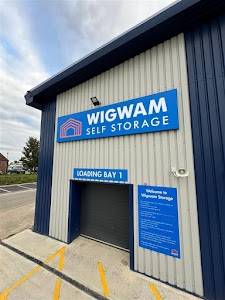
Between homes after a breakup and not sure yet where you’re going?
When a relationship ends, most people are not planning. They are reacting. A partner is moving out this weekend. Or you need your own things out of a shared place before it gets harder. You do not always know where you are going yet, and that is fine. You just need somewhere safe to put your belongings while you work it out.
That is exactly what short-term storage is for. Not a permanent answer. A bridge.
What follows is a plain account of how this works: the commitment involved, what it costs to start, what happens when you leave, and what you can and cannot store. No soft language. No traps.
The short version if you need it right now
- Minimum stay: two weeks
- Notice to leave: 14 days (no deposit; unused days refunded after you vacate and the account is settled)
- Access: smart entry, 6am to 10pm, seven days a week
- Get a quote now: quote.wigwamstorage.co.uk
When a relationship ends, your things need somewhere to go

This is not a dramatic statement. It is just true. When a shared home stops being shared, the practical question comes quickly: where do the things go while you sort out the next chapter?
Storage is not a permanent solution and it is not supposed to be. It is a way of buying yourself time without making a rushed decision about what to keep, what to let go of, and where it all ends up.
Buying yourself time, not making it permanent
When you put things into storage mid-separation, you are not committing to anything beyond a short stay. You are taking the physical pressure off the situation so you can think more clearly. The belongings are safe. They are yours. You can access them when you need to. And when your life settles into a new shape, you move them on.
People sometimes feel they should have a plan before they do anything. They do not. Getting things into a secure unit this week is the plan. Everything else can follow.
A neutral place that is just yours
One thing that matters when you are going through a separation is privacy. Your unit is your own. No one else accesses it. The sites are unmanned, which means no staff are handling your goods or observing your comings and goings. It is not a shared space. It is yours, for as long as you need it.
The units are individually alarmed, clean, dry and secure. Your belongings are looked after, and only you can get to them.
How short is short-term? The two-week minimum

The shortest stay at Wigwam is two weeks. That is the full extent of the minimum commitment. You do not need a long lease, a rolling six-month agreement, or any kind of long-term contract. Two weeks to start.
Stay as long, or as little, as you need
After those first two weeks, the stay is open-ended. There is no maximum. We have seen people move in for two weeks and move out in ten days once they found somewhere to land. We have seen people stay for six months. Both are completely fine.
The only commitments are the ones that are honest to state: a two-week minimum at the start, and 14 days’ notice when you are ready to go. That is it. You are never paying for months you do not need.
What the two-week minimum actually means in practice
In week one you bring your things in, get settled, and start making decisions at your own pace. In week two you know whether you need more time or whether things are resolving. If you are ready to go by the end of that fortnight, you give 14 days’ notice and you leave.
The full detail is in the terms and conditions. The headline, though, is simple: you are never trapped for longer than two weeks if things move faster than expected.
Leaving when you’re ready: 14 days’ notice and what comes back

When you are ready to go, give 14 days’ notice. That is the process. No complex paperwork. No negotiation. You tell us you are leaving, you vacate the unit, the account is settled, and that is the end of it.
There is no deposit to get back
We don’t take a deposit when you start, so there is no figure held and nothing to chase. Once you have given your 14 days’ notice, vacated the unit and settled the account, any days you paid for but did not use come back to you. That is the mechanism, stated plainly.
We know that when you are mid-separation, the fear of being caught out by fine print is real. This is one of the things we want to be completely clear about. You are not leaving money behind.
We refund the days you don’t use
If your situation resolves faster than you expected and you leave before the end of a paid period, you are refunded for the unused days. You pay only for the time you actually use.
This is not something many storage providers state clearly. We think it matters, especially when the end date of a stay is genuinely uncertain. You should never be paying for days you have vacated.
Ready to get a quote?
You can do it in two minutes at quote.wigwamstorage.co.uk. No commitment until you sign up.
What size unit do you need?

A studio flat’s worth of belongings will usually fit in a 25 to 50 square foot unit. A full two-bedroom flat’s contents typically needs something in the 75 to 100 square foot range. These are starting points, not rules.
A few boxes, a room’s worth, or a whole flat
If you are moving out quickly and taking only your own things, you may need less space than you think. A few boxes, clothes, a piece or two of furniture, and personal documents can fit in a small unit. One room’s worth of furniture and boxes fits in a medium unit. A whole flat’s contents needs something larger.
The right size depends on what you are moving and how neatly it is packed. If you are not sure, it is worth starting with a rough estimate of what you are bringing and then checking the pricing and unit size guide before you book.
Getting the size right so you don’t overpay
The single most practical thing you can do to keep costs down is to right-size the unit. An oversized unit costs more every week for no benefit. If you are unsure, the how much does storage cost page walks through the unit sizes and what they hold.
We do not quote prices on this page because they vary by location and unit size. The pricing page has the detail. What we can say is that starting with a smaller unit and upgrading is possible if your circumstances change and you end up needing more space.
What you can and cannot store here

Household furniture, clothes, bedding, books, kitchenware, personal effects, documents, electronics and sentimental items are all straightforward. If it came out of a home, it almost certainly fits into one of our units.
Household goods and personal belongings: all fine
The full run of things you’d move out of a flat or house is exactly what the units are designed for. Boxes of clothes, a sofa, a bed frame, kitchen equipment, paperwork, personal effects. All of it is fine.
If you have delicate or sentimental items you are concerned about, the units are clean, dry and secure. That is what we can say. We do not offer climate-controlled storage and we do not make that claim.
What we cannot take: the short list
No vehicles. No cars, caravans, motorhomes, boats or motorbikes. No hazardous materials. No perishables. No living things of any kind.
If you are losing access to a shared vehicle during a separation and are wondering whether a storage unit is a solution, the answer is no, for practical reasons: our units are not designed or licensed for vehicle storage. The same applies to any kind of vehicle, regardless of size.
There are no exceptions to the hazardous materials rule, and the prohibited items list in the terms and conditions covers the full detail.
Getting your things in: smart entry and self-access

You access your unit yourself, by smart entry, between 6am and 10pm, seven days a week. There is no staff member to check in with, no sign-in desk, no appointment needed. You arrive, you use the smart entry system, and you go to your unit.
Smart entry: 6am to 10pm, seven days
The smart entry system is available every day of the week from 6am to 10pm. That is the access window, stated clearly. It is not 24-hour access, and we will not pretend otherwise. Most people find the 6am to 10pm window gives them everything they need, including early morning access before the working day starts.
The system is straightforward to use. When you book, you will get the access details you need.
If you’re using a removal company
If a removal company or delivery service is bringing your things to the unit, someone from your side must be present. The sites are unmanned. Wigwam does not sign for deliveries, receive goods on your behalf, or supervise unloading. This applies whether the delivery is from a removal company or a courier.
Coordinate with your remover in advance so they know you need to be there when they arrive. It is a simple thing to plan for, and avoiding a wasted trip is worth a quick conversation beforehand.
Keeping your things safe while you’re between homes

Your unit is individually alarmed, clean, dry and secure. Only you have access. No one else can enter your unit, and the alarm is specific to your unit, not shared across the building.
Individually alarmed units, clean, dry and secure
The individual alarm means that if anyone attempts to access your unit without authorisation, it triggers independently of any other unit. Your things are not grouped in with someone else’s security.
Clean and dry is exactly what it says. Your belongings will come out in the same condition they went in. We do not claim to regulate temperature or humidity, and we do not offer climate-controlled storage. The environment is clean, dry and secure, and for the vast majority of household and personal belongings, that is what matters.
Protecting your belongings: contents cover
Contents protection is required. You can take Wigwam’s RSA-backed Self Storage Customers’ Goods policy, or you can prove you have your own adequate cover. Either works.
If you take the Wigwam policy, you will need to declare the full replacement value of what you are storing. If you under-insure, any claim will be settled proportionally. Theft claims require evidence of forcible entry. Climatic or atmospheric damage is excluded under the policy.
The full detail is at wigwamstorage.co.uk/contents-protection. We are signposting, not advising.
One point worth noting if you are going through a divorce or separation: questions about who legally owns the items being stored are not for us to answer. If there is any dispute about ownership of goods, speak to your solicitor before putting items into storage. This page covers England and Wales. Divorce and property law differs in Scotland and Northern Ireland, and readers in those jurisdictions should take local legal advice.
Find a unit in your market town
We have locations across UK market towns. The right one is usually the closest to where you are currently based, or halfway between your old home and your new one if you already have a rough idea where you are heading.
Towns we cover
Wigwam Self Storage Bath in Somerset and Wigwam Self Storage Lincoln in Lincolnshire are two of our market-town locations. For a full list of our UK market-town locations, the locations hub is the right place to start.
Each location page shows you the address, access details, and how to get a quote for that specific site.
Not sure which location is right for you?
If you are in transition and not yet settled in a fixed place, the practical choice is usually the location closest to where you are staying right now. If you have a rough sense of where you will land, somewhere between your current base and your next home can also work well.
The locations hub lists all our sites. If you are not sure which one suits, get in touch and we will point you in the right direction.
Ready to get a quote? It takes two minutes at quote.wigwamstorage.co.uk.
Frequently Asked Questions
In most cases, yes, but it depends on availability at your chosen site and on getting the account set up first. The booking and the smart entry credentials have to be in place before you can access a unit, so the practical step is to get a quote at quote.wigwamstorage.co.uk as early in the day as you can, rather than turning up at the gate and hoping. Once the account is live and contents cover is sorted, you have the access details and you can go straight to the unit within the 6am to 10pm window.
When a relationship ends, the timing is often forced on you. A partner is moving things out this weekend, or you have a narrow window to clear your share of a shared home. The honest position is that we cannot promise a unit will always be free at the exact size and town you want at no notice. What we can say is that the faster the account is started, the faster you have a space to move into. If you know the move is coming, even a day or two of warning makes the whole thing calmer. Get the quote in, settle the cover, and the unit is ready when you are.
The account goes in the name of the person who books it, and that person holds the smart entry credentials. Only they can access the unit. This is worth thinking about carefully when you are mid-separation, because the account holder is the one in control of the space and the one responsible for the payments and the contents cover.
If the goods inside genuinely belong to both of you, the storage account does not settle who owns what. We do not arbitrate that, and we cannot. Questions about ownership of shared property during a separation are for your solicitor, not for us. What we would say plainly: only store items you are clear are yours to store, or items both sides have agreed should sit in neutral storage while things are sorted. If there is any doubt about who owns a piece, get legal advice before it goes in a van. A short written note of what was agreed, dated and kept by both sides, is sensible. We are signposting here, not advising: divorce and property law differs across England and Wales, Scotland and Northern Ireland, and your solicitor is the right person to guide you.
You give 14 days’ notice, vacate the unit, and once the account is settled you are done. If you leave before the end of a period you have already paid for, the unused days are refunded, so you are not paying for time you did not use.
The point worth understanding is that the two-week minimum and the 14-day notice do not stack on top of each other into a month. The minimum stay is simply the shortest booking. The notice is how you end the rental cleanly. If you found somewhere to land in week three and you are ready to go, you tell us, the 14 days run, you clear the unit, and that is the end of it. For someone between homes, that matters: separations rarely run to a fixed timetable, and you should never feel trapped paying for an empty unit because your circumstances changed quickly. The whole arrangement is built to flex with a situation that, by its nature, is hard to plan.
No. Only the account holder holds the smart entry credentials, and only they can access the unit. We do not hand access to anyone else, we do not hold spare keys, and we will not let a third party in on request, whoever they say they are. The sites are unmanned, so there is no front desk where someone could talk their way in. The locked unit is yours and yours alone.
For someone going through a separation, that privacy is often the quiet reason storage helps in the first place. Your belongings are in a neutral space that is not the family home and not a relative’s spare room, both of which can become flashpoints. Nobody is observing your comings and goings, because there are no staff on site. If there is any genuine legal dispute about the goods themselves, that is a matter for solicitors and, if it comes to it, the courts, not something we can or should resolve at the unit door. But the day-to-day reality is simple: the access is tied to your account, and it stays that way.
No, and it is better to be straight about that. We provide the unit, the secure space and the access. We are not a removals firm and we do not collect goods on your behalf. The sites are unmanned, so there is no one here to drive a van, supervise a load, or sign for anything. If you are using a removals company or a man-and-van service to bring your things in, someone from your side has to be present at the unit to receive them, because we cannot accept deliveries for you.
The point about not being able to get into the old home is a separate problem, and an important one. If access to a shared property is contested, that is a legal question for your solicitor, not a storage question. Do not force the issue or remove items you are not clear you are entitled to take. Once you do have your things and a way to move them, the unit is ready to receive them within the 6am to 10pm window. Coordinate the removals slot so you are there when the van arrives, and you avoid a wasted trip. A quick call with your remover beforehand sorts that out.