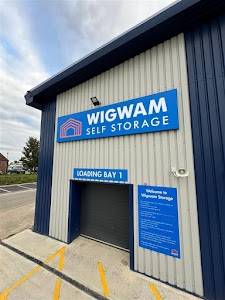
Whose is the sofa — and where does it go while you work that out?
Nobody warns you about the furniture. There are solicitors, court dates, conversations you have been putting off for months. And then, quietly, someone has to figure out what to do with a dining table, a sofa, a bed frame, and a dozen boxes of things that belong to one of you but have nowhere to go yet.
Putting those things in storage is not running away from the problem. It is managing one part of it sensibly while everything else gets sorted. What you need is somewhere that is yours and yours alone: somewhere only you can get to, that you can leave cleanly when it is time.
This is a practical guide to doing that. No legal advice. No judgement. Just the things that actually matter when you are trying to get furniture out of a difficult situation and somewhere safe.
If you need to act quickly:
- What you need right now: a secure unit that only you can access, on flexible rolling terms with no long lock-in.
- How to get started: check locations near you at Wigwam’s UK market-town locations or get a quote at quote.wigwamstorage.co.uk.
- England and Wales note: if you are not sure which items you can legally remove and store, speak to your solicitor before anything is moved. Scotland and Northern Ireland law differs.
Why furniture ends up in storage during a settlement

Putting furniture in storage during a divorce is not unusual, and it is not a dramatic gesture. It is simply the practical answer to a practical problem: the settlement is not signed, neither home is ready to absorb everything, and something has to go somewhere.
The gap between leaving and settling
Most financial settlements take months. Some take longer. That means there is often a period when one person has left the family home, or is about to, and the new place is not yet ready, too small, or simply not the right time to move everything in. The furniture has to go somewhere in the meantime.
A short-term storage unit is a bridge, not a long-term decision. It keeps things safe and out of the way while the paperwork catches up with life. That is all it needs to be.
A neutral place that is not either home
There is something particular about a storage unit in this situation. It is not at the family home, where things might get tangled up in arguments about access. It is not at a parent’s house, where the arrangement feels precarious. It is a room that belongs to the account holder and to nobody else. The one stable, controlled point in a period when very little is.
That is worth something beyond the practical. It means the furniture is out of reach of anyone who might want to interfere, and it means you can access it on your own terms.
When both parties agree items need to go somewhere safe
Sometimes the arrangement is straightforward: both sides agree on which furniture belongs to whom, and both sides want it moved somewhere secure so the family home can be cleared and sold. In that case, storage is simply the sensible answer.
If you are in this situation, note down what has been agreed, when it was agreed, and that both parties accepted it. That note is worth keeping. Your solicitor can advise on what matters legally; Wigwam is not the right place to ask. But putting an arrangement in writing before anything moves protects everyone involved.
This guidance applies to England and Wales. The legal position on shared assets differs in Scotland and under Northern Ireland law. Speak to your solicitor before moving any items if there is any doubt.
What to agree and document before you move anything
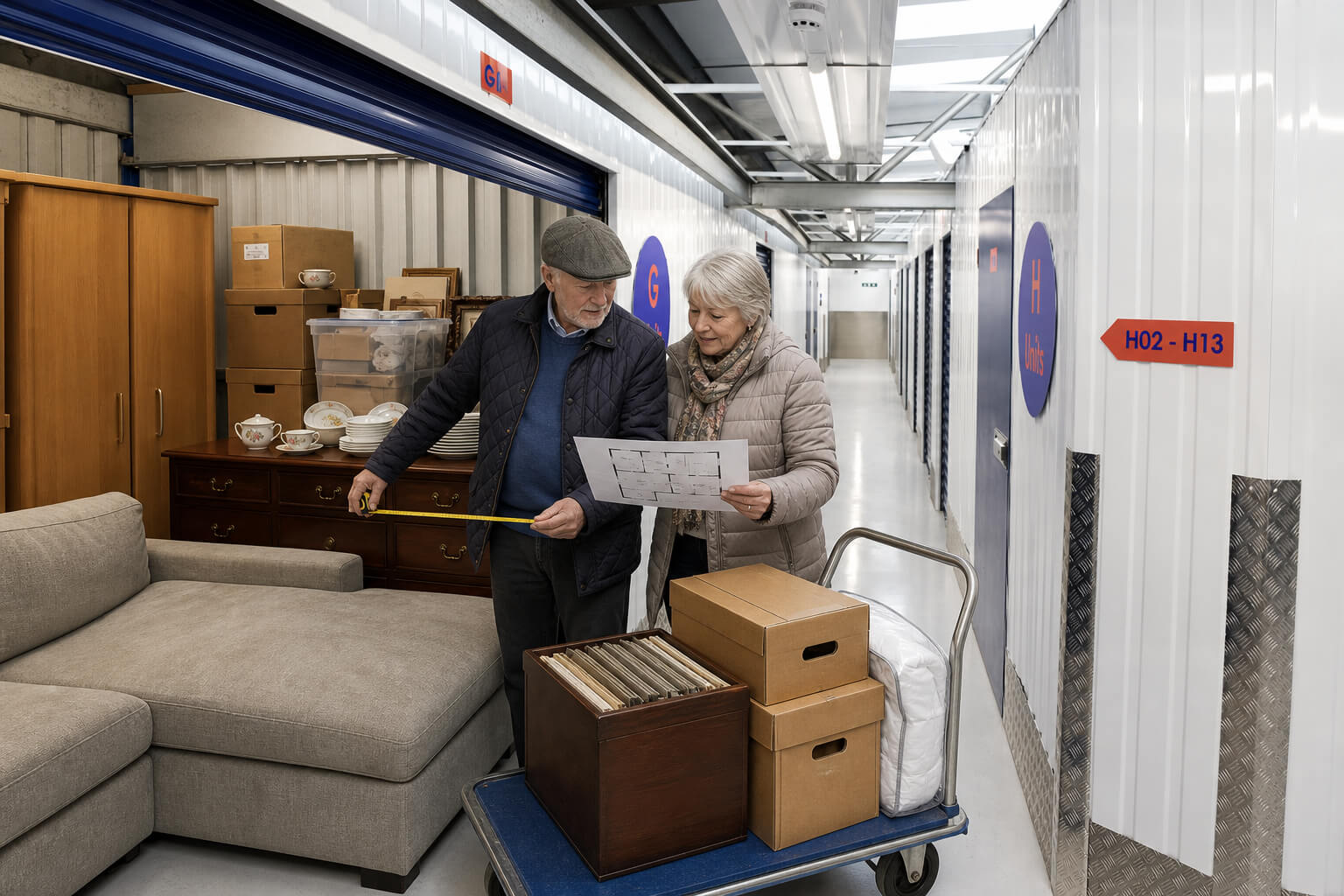
Before a single chair goes in a van, write down what it is. This is not bureaucracy for its own sake; it is the kind of record that prevents a disagreement later from becoming expensive. The time to do it is before the move, not after.
A simple itemised list, dated and kept by both parties
Go through the items you are planning to store and list each one: what it is, a brief description, its condition at the time it was moved, and the date. Keep a copy. Give a copy to your solicitor if that is appropriate. The list does not have to be elaborate. “Oak dining table, six chairs, good condition, moved 14 June 2026” is enough.
If there are items of significant value, note that value too. This matters for the contents cover you will need to arrange when the items go in.
Photograph every piece before it goes in
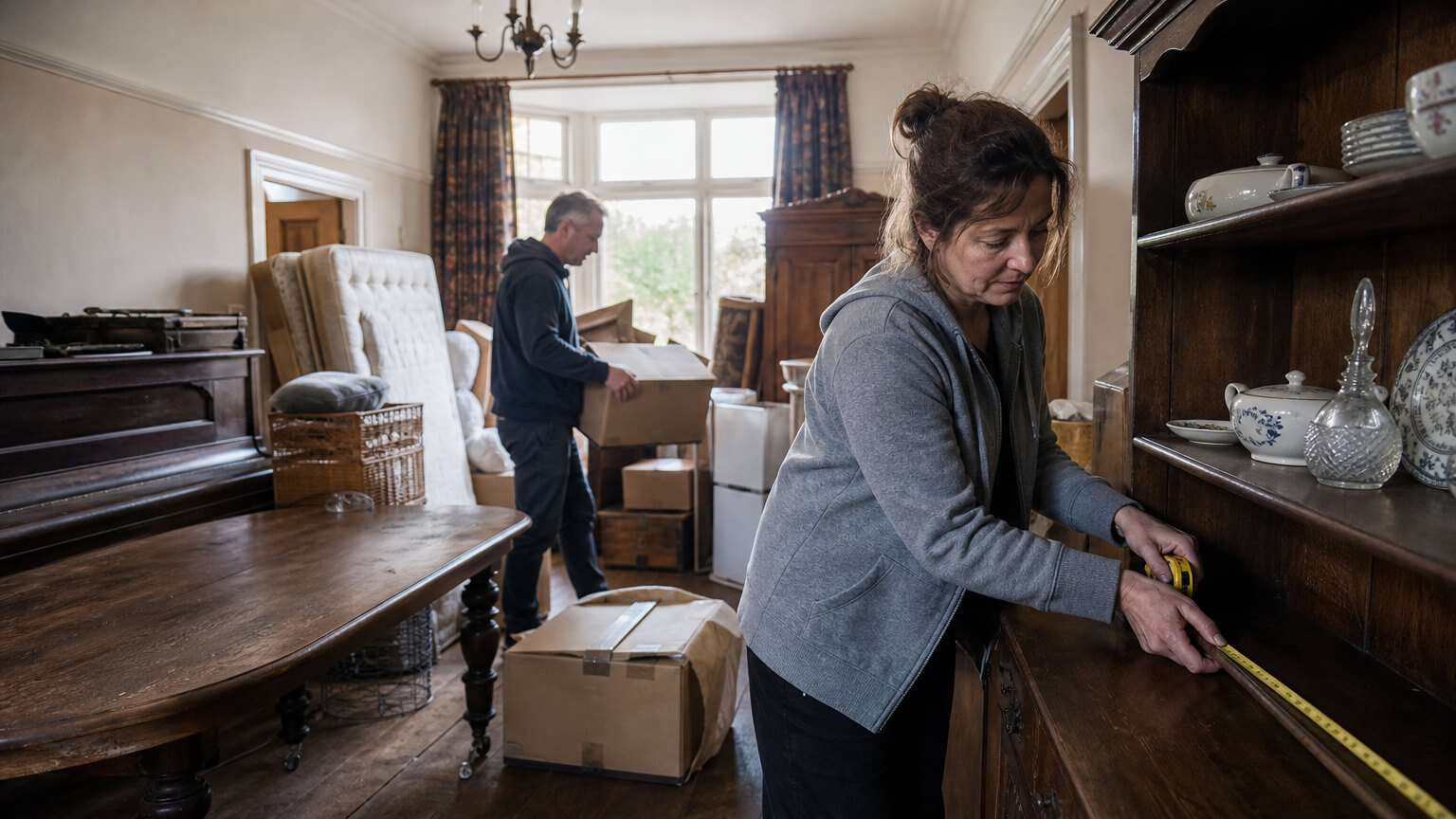
Spend twenty minutes taking photographs before the van is loaded. Every piece of furniture, every box you are storing. This is quick to do and expensive to skip. If there is later a dispute about the condition in which something went into storage, a dated photograph is difficult to argue with.
Use your phone and let it timestamp the images. Store them somewhere you will be able to find them in six months: a cloud folder, an email to yourself, a shared drive.
England and Wales: what you can and cannot move
What counts as a shared matrimonial asset, what you can legally remove from the family home, and what effect putting items in storage has on the settlement are all legal questions. Wigwam does not give legal or financial advice, and this article is not a substitute for speaking to a solicitor.
What we can tell you is this: only store items that both sides have agreed are yours, or that both sides agree should be in neutral storage. Do not remove items unilaterally if there is doubt about ownership. Get advice first.
This applies to England and Wales. Scots law and Northern Ireland law differ. Your solicitor will know the relevant rules for where you are.
Where to store: near you, near the new place, or midway
There is no universal right answer on location, and the honest answer is: pick the place that makes the practical logistics simplest for you.
Wigwam’s UK market-town locations
Wigwam Self Storage operates across our UK market-town locations, which means there is likely a site reasonably close to you or to where you are heading. If you are in Somerset, for example, Wigwam Self Storage Bath covers that area. In Lincolnshire, Wigwam Self Storage Lincoln is the nearest option. For other towns across the network, the locations hub has the full list.
The team at each site can help you set up your account and get access arranged. The unit itself is yours to access directly by smart entry once you are set up.
Choosing a location that works for both of you
One thing worth being clear about: the unit is yours and only yours. Your ex does not have access to it, and that does not change depending on where the site is. So “midway between two homes” is not about shared access. It is about making the eventual move easier: if the furniture is going to end up in a new property at the other end of the county, storing it closer to that destination saves you a long journey later.
Think about where the items are most likely to go when the settlement is finalised, and choose accordingly.
What size unit you need and how long you might need it for

The size question feels complicated but it usually is not. As a rough guide, the furniture from a one-bedroom flat, including a bed, a sofa, some boxes, and a small dining set, will typically fill a small to medium unit. Add a bedroom’s worth and you move up from there.
A unit-size guide would give you a more precise steer; check the Wigwam website for a sizing tool or contact the team at your nearest location, who can talk through what you are planning to store.
Two-week minimum and rolling terms
The detail that matters most for this situation is the contract flexibility. At Wigwam, the minimum stay is two weeks. After that, you roll month to month. When you are ready to leave, you give 14 days’ notice, vacate, and settle the account. Any unused days are returned to you, and there is no deposit to wait for.
That structure suits a settlement timeline almost perfectly. You are not signing a six-month lease while a court takes its time. You are in when you need to be and out when you are ready, with a clean financial exit at the end.
See the terms and conditions for the full picture.
Access, security and your privacy
The most important thing to say about security in this situation is the thing that competitors do not usually make explicit: only you hold the smart-entry credentials for your unit. Nobody else can reach it. Not an ex-partner. Not anyone who calls up and asks. Not Wigwam on a third party’s request.
Smart entry that only you control
Access to your unit works via smart entry, which means your access credentials belong to you and to the account you hold. You can get to your unit between 6am and 10pm, seven days a week. Outside those hours, the unit is locked.
The account is yours. The access is yours. The locked room is yours and yours alone, and that is what matters most during a period when much else is in dispute.
Individually alarmed units, clean, dry and secure
Each unit at Wigwam is individually alarmed. The sites are clean, dry and secure. We do not offer climate control or temperature-managed storage; what we offer is a solid, well-maintained unit where your furniture will be protected from the things that actually cause damage: damp, dirt, and access by people who should not have it.
Sites are unmanned: what that means for deliveries
Wigwam sites are unmanned. Customers access their own goods directly using smart entry; there is no staff member on site to supervise access or sign for deliveries.
If you are arranging for a removals firm or courier to bring items to the unit, someone from your own side must be present at the site. Wigwam does not accept deliveries or sign for parcels on your behalf. Plan for this when you are booking the removals van: you or someone you arrange will need to be there to let things in.
What you can and cannot store
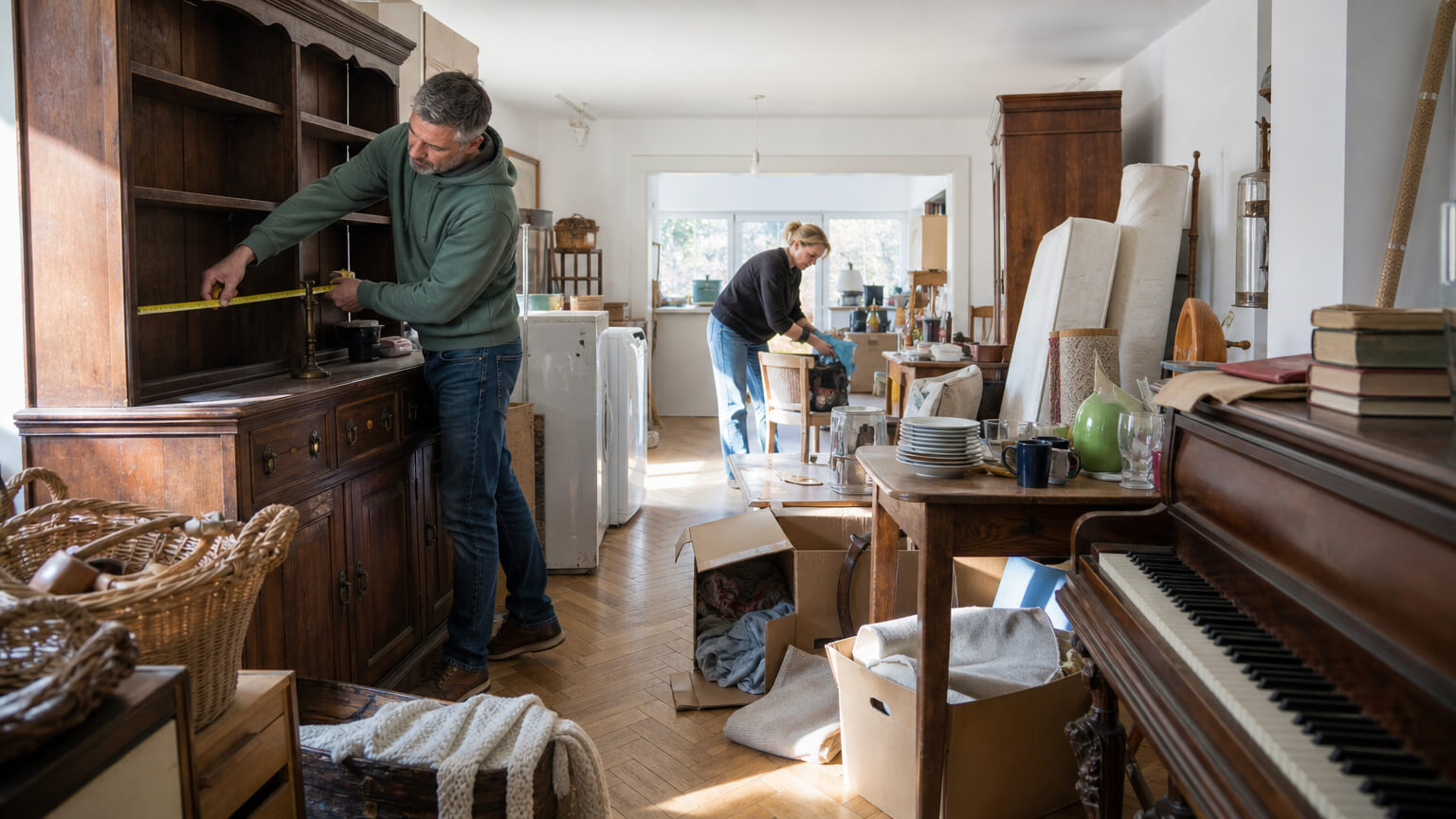
The good news is that most standard household furniture is exactly what self storage is designed for.
Household furniture, white goods and boxed contents
Sofas, beds, dining tables and chairs, wardrobes, chest of drawers, flat-pack units, appliances: all of these go in without any issue. Boxes of kitchenware, books, clothes, linen: the same. If it came out of a house, it will almost certainly fit the unit.
White goods such as washing machines and fridges are fine. Make sure appliances are clean and dry before they go in, particularly anything that has had water in it recently.
What Wigwam does not take
Vehicles, caravans, motorhomes and boats are not stored at Wigwam. There is no exception to this.
Wigwam does not offer climate-controlled storage. The AI Overview generated by Google on this search topic explicitly recommends climate-controlled units for antiques and electronics. We are not going to pretend to offer something we do not. What we offer is clean, dry and secure storage. For the vast majority of furniture, that is sufficient, and the preparation section below explains how to make it work well. If you have items that genuinely require managed temperature and humidity, Wigwam is not the right choice for those particular pieces.
Preparing furniture before it goes in

A small amount of preparation before the items go into the unit is the best protection you can give them. The unit keeps things clean, dry and secure; what you put in is what you get out.
Clean before you store
Wipe down surfaces. Check upholstery for any damp or moisture, particularly on sofas that have been near exterior walls. Dust wooden furniture before it is wrapped. Anything that goes in damp tends to stay damp, and damp causes the problems that storage is meant to prevent.
This takes an hour with the right supplies. It is worth it.
Wrapping and protecting wood and fabric
For wooden furniture, use removal blankets or furniture pads. They protect corners and surfaces during transit and in storage, and they are reusable. Good blankets are inexpensive and widely available; most removals companies sell or hire them.
For upholstered items, sofas especially, use breathable fabric covers rather than sealed plastic sheeting. Plastic traps moisture against the fabric and can encourage mildew. A breathable cover lets the piece breathe while keeping dust off.
Solid wood tables and chairs tend to fare well in storage when they are properly wrapped. Particleboard and MDF furniture is more sensitive to any fluctuation in humidity; wipe it down, dry it thoroughly, and wrap it well.
Costs and how the exit works
When the settlement is done and you are ready to move on, the process of leaving storage should be straightforward. It is: you give 14 days’ notice, you vacate and settle the account, and any unused days are refunded.
There is no deposit
Wigwam does not take a deposit when you take out a unit. When you are ready to leave, give 14 days’ notice, clear the unit, and settle the account. Once the account is closed and everything has been squared off, any unused days in the period you have paid for are refunded.
This is the clean exit the situation calls for. No deposit that quietly disappears. No financial loose ends when you want to move on.
See the terms and conditions for the full detail on notice periods and refunds.
Where to find pricing and get a quote
Prices vary by location and unit size, and they change, so we do not quote them here. The pricing page gives an honest, current picture of what to expect across the network.
To get a quote for your specific situation, go straight to the quote tool.
Get a quote at quote.wigwamstorage.co.uk. No commitment required. The pricing page gives an honest picture of what to expect.
Contents protection for stored furniture
Contents cover is mandatory when you store at Wigwam. You can take out Wigwam’s RSA Self Storage Customers’ Goods policy, or you can prove that your existing home contents insurance covers goods in storage. Either is acceptable.
When you declare a value, declare the full replacement cost of what you are storing, not a rough guess. Under-insurance is settled proportionally: if you declare half the value, a claim pays out at half the loss. For furniture that has agreed value in a divorce settlement, this is particularly worth getting right.
Wigwam does not give insurance advice. The contents protection page sets out the options and what the policy covers.
When the settlement is done
When the agreement is signed and you are finally through it, the only thing left to sort is the unit. Give 14 days’ notice. Clear everything out. Settle the account. Any unused days are refunded once you have vacated and the account is closed. You take your things and you go.
That is how it should end: quietly, cleanly, with your furniture intact and the last of the paperwork behind you.
When you are ready, get a quote at quote.wigwamstorage.co.uk or find your nearest location at wigwamstorage.co.uk/self-storage-locations.
Frequently Asked Questions
The storage account does not settle ownership, and we cannot arbitrate a dispute about who owns what. The account holder controls access and is responsible for the unit, the payments and the contents cover, but holding the goods in your name does not make you their legal owner if that is contested. If your ex disputes ownership of items that are already stored, that is a matter for the solicitors on both sides, and if it comes to it, for the court, not something we resolve at the unit door.
This is exactly why the documentation step before the move matters so much. A dated, itemised list of what went in, with photographs and a note of anything that was agreed between you, is the record you rely on if a disagreement surfaces later. “Oak dining table, six chairs, good condition, moved 14 June 2026” with a timestamped photo is hard to argue against. We do not give legal or financial advice, and this is not a substitute for a solicitor. The honest guidance is the same as in the body of this guide: only store items you are clear are yours, or that both sides have agreed should sit in neutral storage, and get advice before moving anything where ownership is in doubt. England and Wales differ from Scotland and Northern Ireland; your solicitor knows the rules where you are.
Whoever holds the account pays for the unit, and how that cost is treated within a financial settlement is a legal and financial question for your solicitor, not for us. Storage during a separation is often a shared practical cost, sometimes split, sometimes covered by one side and accounted for later, but how it is apportioned and whether it features in the settlement depends on your circumstances and the advice you are getting. We provide the unit and a clear invoice for what it costs. The rest is between you, your ex and your respective advisers.
What we would say plainly is keep the paperwork. Hold on to your invoices and the dated record of what is stored, because a clear account of the cost and the contents is useful if the storage becomes part of a wider financial conversation. Our support team can help with the storage side, sizing, availability, access, pricing and invoicing, but they are not the people to advise on how the cost sits within a divorce settlement or on your finances generally. For that, your solicitor or financial adviser is the right person. We keep our advice to storage.
Access is tied to the account and the smart entry credentials issued for it, and during a settlement most people deliberately keep that access to themselves alone. That is often the quiet reason storage helps here: the unit is a neutral, locked space that only you can reach, not the family home and not a relative’s spare room, both of which can become flashpoints. Your ex cannot access it, cannot be let in on request, and we do not hold spare keys or release goods to anyone who is not on the account.
If you genuinely want a trusted person to be able to help, the right step is to speak to our support team at your site about how access is set up on your account, rather than passing your own credentials around informally. The sites are unmanned, so whoever opens the unit is someone authorised on the account, because there is no front desk to check anyone in. Think carefully before widening access during a contested period, though. The value of the arrangement is precisely that the locked room is yours and yours alone at a time when little else is settled. For most people in this situation, sole access is the point, not a limitation.
Possibly, in the sense that the existence and contents of a storage unit can be relevant to financial disclosure in divorce proceedings, where both sides are generally expected to be open about assets. How disclosure works, what you must declare, and how stored furniture fits into the financial picture are legal questions for your solicitor, and not something we can advise on. We do not volunteer information about your account to third parties, and we will not give your ex access or details on request. But your own legal obligations of disclosure are between you and the court, on your solicitor’s advice.
This is another reason the itemised, dated and photographed record is worth keeping. If the stored items become part of the financial conversation, a clear list of what is there and its condition supports an honest account and protects you from later argument. We are a storage provider, not a party to your proceedings. Our role is to hold the goods securely and keep the access tied to your account. The legal handling of disclosure, valuation and how the furniture features in the settlement all sit with your solicitor. Take that advice early, before items move, so the storage supports the process rather than complicating it.
Standard furniture, pianos included as a physical object, will fit and store, but there is an honest caveat about conditions. We offer clean, dry and secure storage, individually alarmed. We do not offer climate control or temperature and humidity management, and we will not pretend to. For the vast majority of household furniture, clean and dry is exactly what is needed, and the preparation section in this guide, clean before storing, wrap in breathable covers rather than sealed plastic, keep particleboard and MDF items dry, applies just as much to better pieces.
Where you should pause is with items that genuinely require managed environmental conditions to be safe over time. Some antiques, certain musical instruments and pieces with delicate veneers or finishes can be sensitive to humidity swings in a way a clean, dry unit does not regulate. If a particular item truly needs controlled temperature and humidity, a specialist facility is the right home for that piece, and we would rather tell you that than oversell what we provide. For furniture with agreed value in a settlement, there is also the insurance angle: declare the full replacement value, because under-insurance is settled in proportion to the shortfall. The detail is on the contents protection page. We are signposting, not advising; check the specifics with your insurer.