How do siblings divide a full house without it turning into a fight?

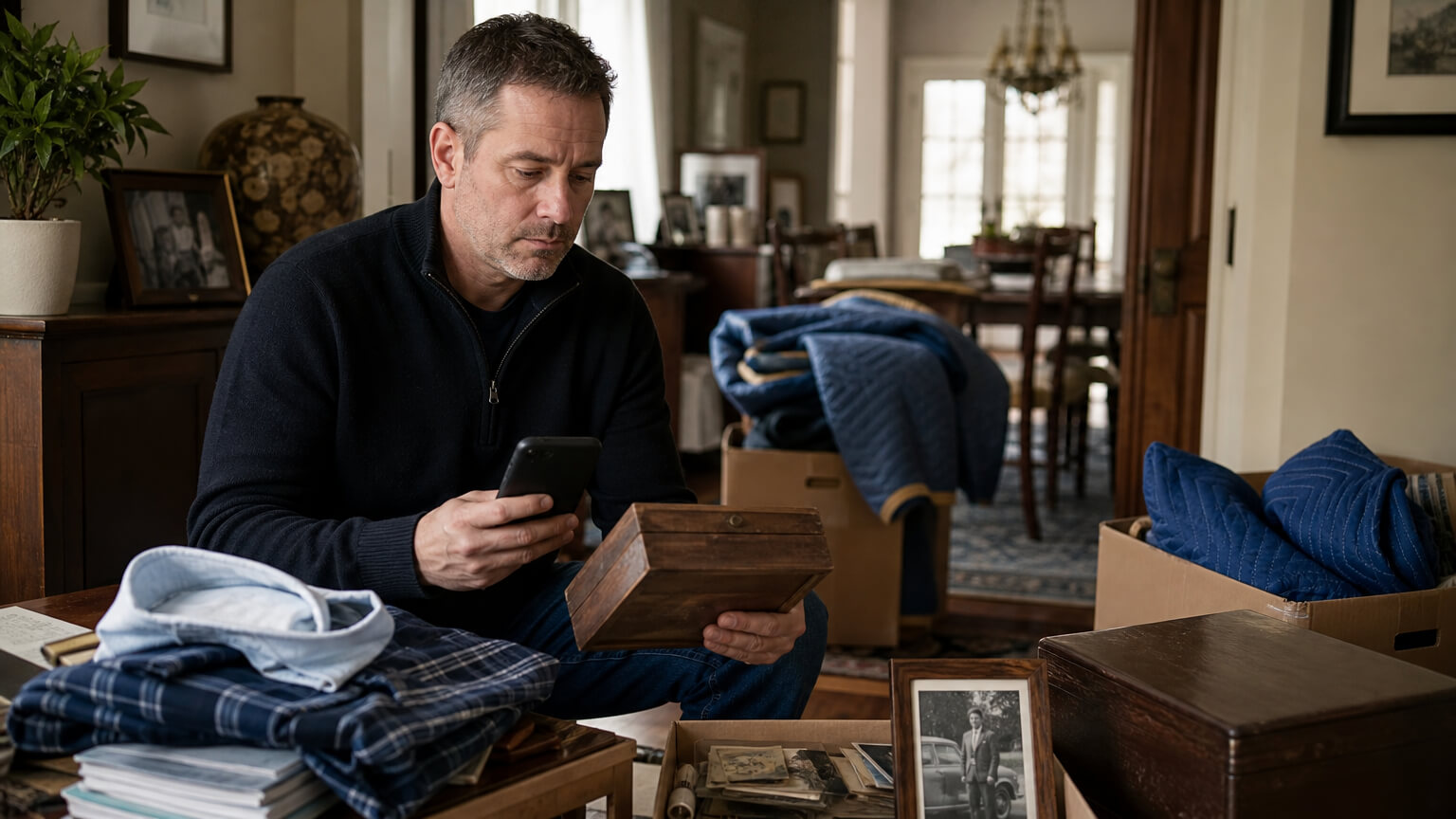
There is a particular kind of exhaustion that sets in a few weeks after a parent dies. The immediate grief is still raw, but now there are decisions to make. The house is full. The siblings are grieving in different ways, at different speeds, and none of them are quite sure what belongs to whom yet.

Most families handle it the only way that seems possible: leave everything where it is, visit when they can, and hope that nobody notices what nobody took. The trouble is that everything in an empty house starts to feel contested. A missing photograph becomes evidence of something. A piece of furniture that has moved becomes an accusation waiting to happen.

It does not have to work that way. A single storage unit, rented jointly and accessible to all, can change the whole geometry of the situation. Everything leaves the house. Everything has one agreed address. And nothing moves from that address without leaving a record. That is what this article is about.

If you need to move quickly and sort the details later:

  • Get a quote at quote.wigwamstorage.co.uk – no commitment, just a size and a price.
  • When you enquire, you will be asked for photo ID and proof of your executor role (grant of representation or letters of administration). Full details are in the section on paperwork below.
  • Two-week minimum stay. Flexible from there.

Why splitting a parent’s estate gets tense – and where the contents go wrong

When a family home stands full and the estate has not yet been settled, the contents exist in a kind of legal and emotional suspension. Nobody owns anything yet. Nobody can agree on anything yet. And the longer that suspension lasts, the more charged every object becomes.

The empty house becomes a contested space

It starts small. Someone takes a cardigan because they needed it to get through the funeral. Someone else moves a lamp to make space for boxes. Nobody means any harm, and yet the next sibling through the door notices what has changed and files it away. The empty house becomes a place where people count things instead of grieve.

This is not unusual and it is not a sign that the family is in trouble. It is what happens when shared grief meets shared property and neither has a clear resolution yet. Every absent item feels like a decision that was made without you. Every visit feels like an audit.

Why “sorting it later” can become sorting it in anger

The natural instinct is to leave everything in place until the solicitor has confirmed the position. That instinct is not wrong, but inertia has a cost. The sibling who visits most often gets quietly resented for being there. The one who visits least gets quietly resented for not pulling their weight. Assumptions accumulate. Timelines diverge. By the time everyone is ready to have a serious conversation about what happens to the contents, some of the goodwill in the room has already been used up.

A plan made early – even a simple one – takes the pressure off. It replaces a contested space with a shared one. And the simplest plan of all is: move everything off-site, into one place that belongs to no one sibling and is equally accessible to all.

What a shared plan actually looks like

It does not require unanimous agreement on who keeps the dining table. It just requires a decision to move everything to a neutral address while the estate runs its course. From there, the family has time. The solicitor has space. And the conversations about what goes where can happen without the backdrop of a half-empty house where things keep moving.

Why a storage unit works as neutral ground

The right storage unit does something a house cannot: it takes the contents out of any sibling’s territory. Nobody’s spare room. Nobody’s garage. One unit, one key arrangement, one place where everything is equally safe and equally inaccessible to any one person acting alone.

Off-site, logged, and equal for everyone

Smart entry means every access to the unit is recorded. That works two ways. It protects the sibling who visits most, because their visits are visible. And it protects the one who visits least, because nothing happens when they are not there. The record is not surveillance. It is proof, in both directions.

Nothing stays in the house where it can disappear quietly. Nothing goes to one sibling’s address where it could be kept or lost or forgotten. There is one agreed location, and everything in it is accounted for from the day the van arrives.

What “neutral” actually looks like at Wigwam

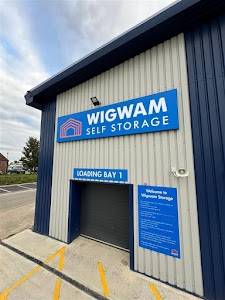
Each unit is individually alarmed. Smart entry gives access from 6am to 10pm, seven days a week – generous enough that any sibling, whatever their schedule, can visit by agreement within normal hours. Units are clean, dry and secure.

The financial side behaves fairly too. There is a refundable deposit, which is returned once you vacate, settle the account, and complete the 14-day notice period. If the estate settles sooner than expected and you clear the unit early, unused days are refunded. The terms are on the Wigwam terms and conditions page if you want to read them in detail before committing.

If this sounds like the right move for your family, get a quick quote at quote.wigwamstorage.co.uk – no commitment, just a size and a price.

Before you move anything: the executor’s duty

Moving items from a deceased person’s home feels like the natural, practical thing to do. But there is a legal dimension here that matters, and getting the sequence wrong can create problems that are harder to unpick later.

Why you should not clear the house before probate without agreement

Probate rules, timelines, and executor duties differ between England and Wales, Scotland, and Northern Ireland. This article is written with England and Wales in mind. If the estate is administered in Scotland or Northern Ireland, please take advice from a solicitor qualified in the relevant jurisdiction.

In England and Wales, moving assets from the estate before probate is granted, or before co-beneficiaries have agreed, can be challenged. That is not to say nothing can be done before probate: securing the property, making sure it is safe, and moving items to protect them can all be appropriate. But the standard here is what a reasonable executor would do to preserve and protect the estate, not what one beneficiary wants to happen first.

If you are in any doubt about what you can legally do before probate is granted, ask your solicitor before the van arrives. Wigwam provides the secure space. Your solicitor advises on the timing.

Agree the rules before the van arrives

A storage unit is only as neutral as the rules governing it. Before anything is moved, the family should agree – in writing, or at least in a group message that everyone can refer back to – who can access the unit, when, and whether visits should be made in pairs. This is not about distrust. It is about removing the conditions under which distrust grows.

Write it down. Who is on the account. Who has access. Whether any item can be taken from the unit before the estate is settled, or whether the unit is purely a holding space until distribution. The document does not need to be formal. It just needs to exist.

Wigwam holds the goods. The family or its solicitor sets the access protocol. That division of responsibility is important: the unit gives you a safe room, not a decision-making process.

Make a shared inventory before anything is moved

An inventory is the document that prevents the most arguments. Not because arguments are inevitable, but because grief makes memories unreliable, and a clear record protects everyone when memory differs.

Photograph and list every item, with rough values for probate

Before the van comes, go through the house room by room. Photograph everything. Assign rough replacement values where you can – this is also what a probate valuation needs, so the work is not duplicated. Every item that enters the unit should appear on the list: what it is, roughly what it is worth, and where it came from in the house.

This does not need to be a professional valuation. For probate purposes, reasonable estimated values are usually sufficient for lower-value household contents. For items that might be antiques, silver, or artwork of significant value, a professional valuer is worth instructing. Your solicitor can point you to one.

Keep meticulous records so no one can claim misappropriation

Once items are in the unit, keep the inventory updated. Date-stamp your photographs. Keep the list in a shared document that every sibling can read and comment on. If anything is removed from the unit before the estate is settled, note it: what was taken, when, by whom, and with whose agreement.

This is not paranoia. It is the practical kindness of documentation. It means that when the estate is finally settled, nobody’s memory is the only evidence of what happened. The record speaks for everyone.

What you need to set up a unit

The practical step is simpler than it can feel at this point. Enquire, confirm the size, and bring the right paperwork. Wigwam’s team will walk you through the rest when you make contact.

ID, proof of executorship, and the practical paperwork

You will need photo ID for the account holder. You will also need proof of your executor role: a grant of representation (probate) or letters of administration if probate has not yet been granted. If you are paying from the estate account rather than personally, you will need the relevant account details.

If probate has not been granted yet and you are in an urgent position – the property needs to be cleared, for instance, before it goes to sale – speak to your solicitor about what documentation you can provide in the interim. Wigwam can talk through the options when you enquire.

Setting up access for co-executors or named family members

The account holder sets up access to the unit. If all siblings are to have their own entry, this should be agreed and set up at the outset, not added later as an afterthought. Equal access from day one is cleaner and harder to dispute than access that was extended incrementally.

If the arrangement is that one sibling manages the account and the others can visit by agreement, write that arrangement down as part of the family protocol above. The unit works exactly as well either way. What matters is that the arrangement is agreed before the first box goes in.

Choosing the right size and finding a unit near the family home

Getting the size right matters. Too small and you are making a second trip; too large and you are paying for space you do not need. The good news is that the quote process will confirm the right unit size for your situation, and the minimum stay is two weeks, so there is no risk in starting and adjusting.

Sizing a houseful, room by room

As a general guide: a two-bedroom house typically fills a unit of around 50 to 75 square feet. A three-bedroom house is usually closer to 75 to 100 square feet. A four-bedroom house with a garage and loft to clear can need 100 to 150 square feet or more. These are indicative figures; the contents of any individual home vary considerably, and a quote through quote.wigwamstorage.co.uk will give you a more precise recommendation.

For large, fragile, or high-value items, it is worth thinking about how they will be positioned in the unit. Items you may need to access during the rental – for inspection, or for a beneficiary to collect once the estate is settled – are best placed at the front. Items going into long-term holding can go to the back.

If you are not sure, the team at your nearest location will be able to advise on the right size when you get in touch.

Finding a unit near the family home

Wigwam has locations across our UK market towns. If the family home is near Wigwam Self Storage Bath or Wigwam Self Storage Lincoln, those pages will give you address and access details. For all other locations, the Wigwam locations hub has the full list.

Proximity to the family home matters more than it might seem. In the weeks after a parent dies, people drive long distances repeatedly – solicitors, estate agents, clearance companies, siblings travelling from elsewhere. A unit that is genuinely local to the house means those journeys do not extend further than they need to.

How long can things stay – and ending the rental fairly

Probate timelines are unpredictable. A straightforward estate can be settled in a few months. A contested estate, or one involving property in multiple jurisdictions, can run considerably longer. The rental arrangement needs to flex with that reality.

Two-week minimum, flexible beyond that

The minimum stay at Wigwam is two weeks. Beyond that, the rental continues on a rolling basis for as long as the estate needs. There is no fixed term to commit to. You are not locked in to a six-month contract when the timeline is unknown. When the estate is ready, the unit can be emptied and returned.

This matters practically for a probate situation, because nobody can tell you in advance how long you will need. A flexible arrangement that can run for three months or eight months without renegotiation is a better fit than a rigid term that creates its own pressure.

Ending the rental – notice, deposit, and unused days returned

When the estate is settled and the unit is clear, give 14 days notice and vacate with the account settled. The deposit is then returned. If you empty the unit partway through a billing period, unused days come back.

The exit works in the same spirit as the rental: fairly, and without financial friction once you are done. Full details are in the terms and conditions.

What it costs and who pays

Cost matters at this point in an estate, and the “who pays” question is usually the more pressing one.

Paying from the estate

Storage costs incurred during probate are widely treated as a legitimate estate expense, settled from the estate before distribution to beneficiaries. Your solicitor can advise on whether that applies in your specific situation and how to document it correctly. Wigwam does not give legal or financial advice, but pointing the question to your solicitor is the right move.

For indicative market prices, the Wigwam pricing page sets out Wigwam’s own rates by unit size. No prices are quoted on this page because storage costs vary by location and unit size; the quote process will give you the actual figure for your nearest location.

Getting a quote

A quote through quote.wigwamstorage.co.uk carries no commitment. Knowing the likely cost before you present the plan to co-executors or the family’s solicitor means you are walking into that conversation with numbers, not estimates. That is a small but practical thing that makes the conversation easier.

Insuring inherited and sentimental items

Contents cover is a condition of renting with Wigwam. You can take Wigwam’s own RSA Self Storage Customers’ Goods policy, or prove your own equivalent cover. Either way, this step is required, and the detail matters.

The RSA policy is New-for-Old, with a GBP 50 excess per claim. It covers theft that involves forced entry into the unit, but not theft without evidence of forced entry. Climatic or atmospheric damage – including damp and condensation from the goods themselves – is excluded. Wigwam units are clean, dry and secure, but we do not market or offer climate control. Antiques and furniture that are sensitive to humidity should be prepared accordingly (wrapping, proper packing materials) before they go in.

The most important thing to get right is the declared value. Declare the full replacement cost of everything in the unit. Under-insurance is settled in proportion: if you declare half the value and make a claim, you may recover roughly half of what you lost. For inherited items – antiques, silver, artwork, jewellery – it is worth getting proper valuations if you are not sure.

For full details of the policy and what is covered, see the Wigwam contents protection page. This article signposts the policy; it does not constitute insurance advice.

When to bring in a mediator or solicitor

A storage unit resolves the question of where the contents go while the estate runs. It does not resolve questions about who keeps what, what the items are worth, or what to do when siblings cannot agree on distribution.

If the disagreement between beneficiaries is substantive – over the will itself, over the valuation of the estate, or over specific items of significant value – a probate solicitor is the right first step. If the dispute is more relational, a family mediator experienced in inheritance matters can sometimes achieve more than a legal process. Both options are worth exploring before positions harden.

Wigwam’s role is to take the contested space off the table. Once everything has one neutral address and nobody can be accused of taking advantage, the conversations that need to happen can happen on their own terms.

A quieter way through a hard few months

A storage unit will not resolve the family decisions. It will not speed up probate or settle the question of who keeps the dresser. What it does is give every item one fair, safe address while the family takes the time it needs. The house can be cleared without anyone feeling that the clearing was done unilaterally. The solicitor has space to work. And the siblings have one fewer thing to argue about.

We have helped families across our UK market towns through house moves, downsizing and bereavement for a number of years. The situations are all different. The relief that comes from having one agreed, neutral place for the contents is usually the same.

When you are ready, get a quote at quote.wigwamstorage.co.uk.

Frequently Asked Questions

What if one sibling refuses to agree to moving the contents into storage at all?

Then you do not force it, you slow down and get the right person involved, because a unit only works as neutral ground if the move to it is itself agreed. The whole value of one shared, logged, off-site address is that nobody can later claim the clearing was done unilaterally. If a sibling objects to the contents being moved, going ahead anyway risks turning the storage unit, which is meant to defuse suspicion, into another grievance. The practical sequence is this. First, separate the genuine disagreement from the practical worry: sometimes the objection is really about who controls access or who decides what stays, and that can be answered by setting up equal access from day one and writing down the rules before anything moves. Second, if the objection is substantive, about whether the house should be cleared yet, or who is entitled to what, that is not a storage question, it is a legal one, and the executor should take advice from the solicitor before the van arrives. The standard that governs what can be done before probate and before co-beneficiaries agree is what a reasonable executor would do to preserve and protect the estate, not what one beneficiary wants first. We provide the secure space; we do not arbitrate family decisions or advise on the timing, that is the solicitor’s role. If the relationship is the sticking point rather than the law, a family mediator experienced in inheritance matters can sometimes move things that a legal letter cannot. Rules differ across England and Wales, Scotland and Northern Ireland, so take advice for the relevant jurisdiction.

Can the storage cost be paid from the estate account, and how do we handle that practically?

Storage incurred while administering an estate is widely treated as a legitimate estate expense, settled from the estate before distribution to beneficiaries, but whether and how that applies to your situation is a question for your solicitor, not for us. The practical mechanics on the storage side are straightforward. The unit is set up in the name of an account holder, usually the executor, and if you intend to pay from the estate account rather than personally, you will need the relevant account details to hand when you arrange payment. Keep clean records of every storage payment: the invoices, the dates, and which account they were paid from. That documentation matters at two points, when the solicitor reconciles estate expenses before distribution, and if any beneficiary later queries how estate money was spent. A clear paper trail showing the storage was a reasonable cost of preserving the contents protects the executor. What we cannot do is advise on whether the cost is properly chargeable to the estate, how to account for it, or any tax treatment, those are legal and financial questions for your solicitor or the estate’s accountant. We give you accurate invoices and a clear record of what was charged and when. For indicative costs you can check the pricing page, though no figure is quoted here because rates vary by location and unit size, and a quote gives the actual number for your nearest location, which is useful to have before you present the plan to co-executors.

How do we set up the unit so several siblings can access it equally and fairly?

Set up equal access from day one rather than adding people one at a time, because access that is extended incrementally is harder to defend later if a dispute arises. The account holder sets up access to the unit, and if all siblings are to have their own entry, that should be agreed and arranged at the outset. Smart entry is what makes this work as neutral ground: every access to the unit is recorded, which protects the sibling who visits most, because their visits are visible and accountable, and the one who visits least, because nothing can happen when they are not there. Treat the access record as proof in both directions, not as surveillance. Alongside the technical setup, write down the family protocol, in a shared document or even a group message everyone can refer back to, covering who is on the account, who has access, whether visits should be made in pairs, and whether anything can be removed from the unit before the estate is settled or whether it is purely a holding space until distribution. The document does not need to be formal; it needs to exist. One division of responsibility is worth being clear on: Wigwam holds the goods and provides the secure, equally accessible room, the family or its solicitor sets the access protocol and makes the decisions. The unit gives you a safe, neutral space, not a decision-making process. If one sibling manages the account and the others visit by agreement, write that down too; the unit works equally well either way, what matters is that the arrangement is agreed before the first box goes in.

What happens to the unit if the executor changes, or if probate drags on for a year or more?

The rental simply continues, because it is held month to month with no fixed term, so a long or contested probate does not force a renegotiation or an early exit. That flexibility is deliberately suited to estates, where nobody can tell you in advance how long administration will take, a straightforward estate may settle in a few months, a contested one or an estate with property in more than one jurisdiction can run considerably longer. You are not locked into a six-month contract that creates its own pressure; you hold the unit for as long as the estate needs it and end it when you are ready with fourteen-day notice. If the executor changes during that time, through a grant being issued to a different person, an executor stepping down, or a co-executor taking over, the account needs to be updated to reflect who is now responsible, and the team can talk through transferring the account holder when that happens. The legal side of who has authority to act as executor is a matter for the solicitor and the grant of representation, not something we determine; what we handle is keeping the storage account correct and in good standing once you tell us who the responsible person is. Throughout a long hold, the unit stays exactly as set up: individually alarmed, clean, dry and secure, with smart entry access on the agreed protocol. The only ongoing obligation is that the rent continues to be due and contents cover stays in place. When the estate finally settles, you clear the unit, give notice, settle the account, and the refundable deposit is returned, with unused days refunded if you leave mid-period.

How do we handle one beneficiary collecting their inherited items while the rest stays in storage?

Plan the layout for it in advance, and document every removal as it happens, so that one beneficiary collecting their share never looks like something taken without agreement. The practical preparation starts before the goods even go in: place items that a beneficiary may need to collect once the estate is settled near the front of the unit, and put long-term holding to the back. That way a collection is a clean lift from the front rather than a full unpack that disturbs everyone else’s items. When the time comes for a beneficiary to take their allocated pieces, treat it as a recorded event, not a quiet errand. Note what was removed, when, by whom, and with whose agreement, ideally with the others’ knowledge, and update the shared inventory to match. Because smart entry logs access, the visit is already recorded; pairing that with a written note of what left closes the loop completely. The golden rule is that nothing should be removed before the estate is settled, or before distribution is agreed, unless the family protocol you wrote at the start specifically allows it. If the protocol says the unit is purely a holding space until distribution, then no item leaves until the solicitor confirms the position, and a partial collection waits. We provide the logged, secure space and the access record; we do not decide who is entitled to collect what, or when, that is governed by the will, the solicitor’s advice, and the family’s agreement. If there is any doubt about entitlement to a specific item, particularly anything of significant value, hold it until the solicitor confirms rather than releasing it on one beneficiary’s say-so.

Will the contents cover protect inherited antiques and sentimental items, and what should we watch for?

It will cover them, but only properly if you declare their full replacement value and prepare the fragile pieces correctly, so the detail genuinely matters with inherited goods. Contents cover is a condition of renting, and you either take Wigwam’s RSA “Self Storage Customers’ Goods” policy or prove your own equivalent cover. The policy settles New-for-Old with a fifty-pound excess per claim, covers theft where there is evidence of forced entry to the unit, and, importantly for old furniture, excludes climatic or atmospheric damage, including damp and condensation arising from the goods themselves. The units are clean, dry and secure but not climate controlled, so humidity-sensitive antiques, veneers, marquetry, and the like should be wrapped and packed properly before they go in rather than relied on to be protected by the unit alone. The single most important thing to get right is the declared value. Declare the full replacement cost of everything in the unit, because under-insurance is settled in proportion: declare half the true value and a claim may pay roughly half. For inherited antiques, silver, artwork or jewellery, where value is genuinely uncertain, it is worth getting proper valuations rather than guessing, the same valuations often serve the probate process too, so the work is not wasted. We signpost the policy and give information on the cover we offer; we do not give insurance advice, and whether your own cover is adequate for specific high-value items is a question for your insurer or broker. For full policy detail, see the contents protection page, and for valuations of significant items, your solicitor can point you to a valuer.

Customer Reviews

Wigwam Self Storage place picture
4.8
Bruce Joynes profile picture
Bruce Joynes
2 days ago
Very glad we chose Wigwam. everything ran smoothly and the unit is perfect.
Lovely clean place and the app was faultless.
Highly recommended.
Lisa Anderton profile picture
Lisa Anderton
1 week ago
Very easy transaction via phone/email to book a unit. Very pleasant helpful staff during initial contact.
Once contract in place very easy app use to access site and unit, very clear easy to follow instructions. Very happy and would definitely recommend
Clarissa Ardy profile picture
Clarissa Ardy
1 week ago
Wigman Self Storage consistently delivers superb customer service. I received comprehensive assistance throughout the process of securing my storage unit. The facility is impeccably clean, and the procedure was straightforward. The staff I interacted with over the phone were consistently polite, making the entire experience thus far truly marvelous. I highly recommend Wigman Self Storage to anyone in need of storage solutions.
hedi fakhfakh profile picture
hedi fakhfakh
2 weeks ago
Easy quick no hassle
Easy to set up and access the location. Friendly and helpful staff.
Jeanine Hirschl profile picture
Jeanine Hirschl
3 weeks ago
I left a well-known storage unit for Wigwam, mainly because of cost, wigwam are more reasonable, the unit is clean and is entry availablity is upto 10pm. You work off an app that allows entry not only to the building also to your rented unit. It is safe, No fear of loosing keys. The staff very helpful. Highly recommended.
Bryan Sujana profile picture
Bryan Sujana
3 weeks ago
Wished they would tell me the actual total of my 4 months rent and wasn't off by £40+ so I had to redo my budgeting :( other than that great place great staff and the storage is clean and secure👍
Lydia Ebiuwhe profile picture
Lydia Ebiuwhe
3 weeks ago
Lenny was great at helping me get my storage over the phone, and was engaging and fun. I also received some help from a nice guy at the location; I think his name is Adam, a very lovely fellow. Friendly staff they've got. First time using a storage unit, and it was seamless to set up and easy to use the app without any confusion. The price was also really affordable, beyond what I assumed it would be, and I still got a 50% discount for the first 8 weeks. I highly recommend Wigwam.
Sue Hazell profile picture
Sue Hazell
3 weeks ago
Excellent Service & product !
Very easy access with parking right outside the door.
Plenty of trolleys, so no need for muscles ! It maybe a little more expensive than some others, BUT the cleanliness & ease of use perfect.
The staff are VERY patient, explaining how each unit works.
It is great to know the manned office hours & how to make contact if not.
Plenty of accessible hours too.
Ps.... they do like a biscuit or 2 in the office I hear !
J J profile picture
J J
4 weeks ago
Really easy to deal with, Lenny was very helpful and I would recommend.
Chris Hathaway profile picture
Chris Hathaway
4 weeks ago
Really good, staff very helpful.
Units were good and secure.
only critisms - lights turned off automatically too quickly and no onsite toilet.
Sara Hardy profile picture
Sara Hardy
4 weeks ago
Very happy with the service. The staff are very helpful and friendly and explain the whole process right from the start. I can access my belongings easily via an app, which is easy to use.
I Highly recommended this company.