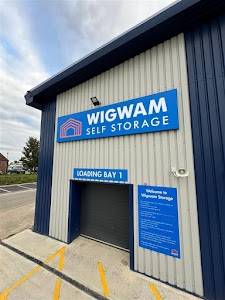
Moving house is stressful enough before you add a 40-minute round trip to a storage unit on top of it. Here’s the map the big chains drew, and the towns Wigwam drew instead.
Why the Big Chains Build Where They Build
The national chains’ own published figures show they concentrate the large majority of their UK revenue and store count in London, the South East and major cities.
What the chains’ own numbers say
Safestore’s own FY2023 results state that 63% of its revenue is generated by stores in London and the South East, that 73 of its 133 UK stores sit in London and the South East, and that it operates 50 stores within the M25 alone, more than any competitor. These are the numbers the operators themselves report, as of their most recently published results.
Why the economics work that way
A large-format storage store needs a big customer base to fill efficiently. Smaller market towns may have genuine demand, but not enough to fill that format quickly, so national chains rationally deprioritise them, even where land is cheaper. It isn’t a judgement on the towns themselves, it’s a spreadsheet decision, the revenue-per-square-foot math that works in a city catchment of hundreds of thousands doesn’t work the same way in a town of twenty or thirty thousand, however genuine the local demand actually is.
The Choice Wigwam Made Instead

Wigwam built the opposite bet: 15 sites in genuine market towns the chains’ own economics deprioritise, a deliberate site-selection choice, not an accident of scale.
One decision, stated once
Simon Fothergill, Wigwam’s founder and Managing Director, chose to build where the big operators’ own numbers say not to, and put his name on record as the person accountable for it. It’s a smaller-format bet by design, sized to what a market town actually needs rather than what a national spreadsheet says is worth building, and that’s a real trade-off, not a marketing line, smaller sites mean less scale to spread fixed costs across, which is exactly the maths the big chains are avoiding when they build in London and the South East instead.
What That Looks Like for Someone Moving House

A market-town resident gets the same core protections as a national chain, without the 30-40 minute drive.
Margaret’s move
Picture a family moving house in a market town like Tewkesbury. Under the big-chain model, the nearest branded national store is a 30-40 minute drive toward the nearest city or motorway junction, adding a return trip of over an hour to moving day on top of everything else already being juggled. Wigwam’s model puts a facility in the town itself: a short local drive, individually alarmed units, access from 6am to 10pm seven days a week, no deposit to pay up front, and 14 days’ notice to leave with a refund for any unused paid days. The family gets the same core protections a national chain offers, RSA “Self Storage Customers’ Goods” insurance, secure alarmed storage, without the drive. This is illustrative, not a named real customer.
Find your town and get a quote.
Chain Model vs Wigwam Model, Side by Side

| Factor | Typical national chain | Wigwam |
|---|---|---|
| Where they build | London, South East, major UK cities, M25 corridor | 15 named market towns across England |
| Typical format | Large institutional format, years to fully lease up | Smaller-footprint sites sized to genuine local demand |
| Access | Varies by operator and site | 6am to 10pm, seven days a week |
| Security | Varies by operator and site | Individually alarmed units |
| Deposit and notice | Varies by operator | No deposit, 14 days’ notice, refund for unused paid days |
| On-site staffing | Varies, some manned | Unmanned, anyone expecting a delivery needs someone from their own business present |
| Accountability | Corporate or national brand | Founder Simon Fothergill on record as Managing Director |
The 15 Towns Wigwam Actually Operates In

Wigwam operates across 15 market towns in England, chosen deliberately rather than defaulting to cities.
South and South West: Wigwam Self Storage Bath, Cheltenham, Tewkesbury, Warminster, Shipston-on-Stour and Chipping Norton.
South East: Dorking, Leatherhead, Marlow, Reading and Alton.
Midlands and East: Burton on Trent, Bromsgrove, Lincoln and March.
What Choosing a Market Town Actually Changes Day to Day

The site-strategy choice ties directly to real operational facts, not left as abstraction.
Access runs 6am to 10pm, seven days a week, via smart entry. Units are individually alarmed. No deposit applies, and 14 days’ notice ends the agreement, with a refund for unused paid days once notice ends. Contents protection is required, either the RSA “Self Storage Customers’ Goods” policy or proof of your own equivalent cover. Sites are unmanned, so any courier or delivery needs someone from your own business present. The real claim on unit condition is clean, dry and secure, never climate control, and Wigwam doesn’t offer vehicle or leisure storage. None of that changes town to town, the market-town choice is about where the site sits, not what it offers once you’re inside it.
Close: The Map Wigwam Drew

The big chains build for their own revenue-per-square-foot economics. Wigwam built where the towns actually needed it.
Find your town, get a quote. This isn’t a sale, it’s an invitation to check.
Frequently Asked Questions
All 15 Wigwam sites are in market towns, not major cities, a deliberate choice rather than an accident of scale.
Yes. Every Wigwam unit is individually alarmed and covered by required contents protection, the same core protections a national chain offers.
Alton, Bath, Bromsgrove, Burton on Trent, Cheltenham, Chipping Norton, Dorking, Leatherhead, Lincoln, March, Marlow, Reading, Shipston-on-Stour, Tewkesbury and Warminster.
Their own published figures show they concentrate revenue and stores in London, the South East and major cities, where large-format stores fill efficiently. Smaller towns have genuine demand but not enough to make that format work for them.